🫒 Olive
Olive articles: varieties, harvest, curing and table products
What kind of plant is the olive tree, which olive varieties are grown, and what is made from the fruit? Table olive varieties from Gemlik to Memecik, and the products of the olive.
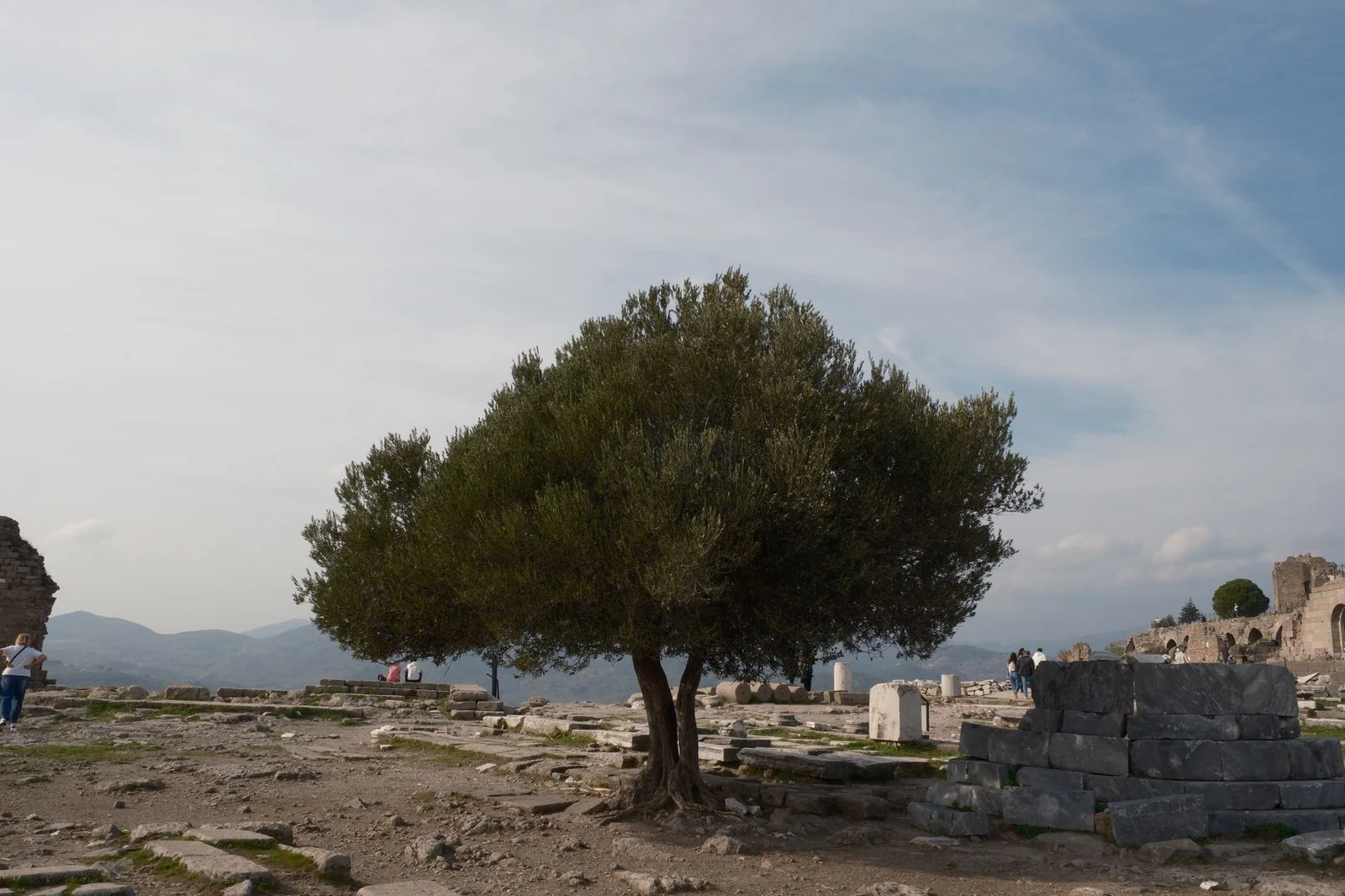
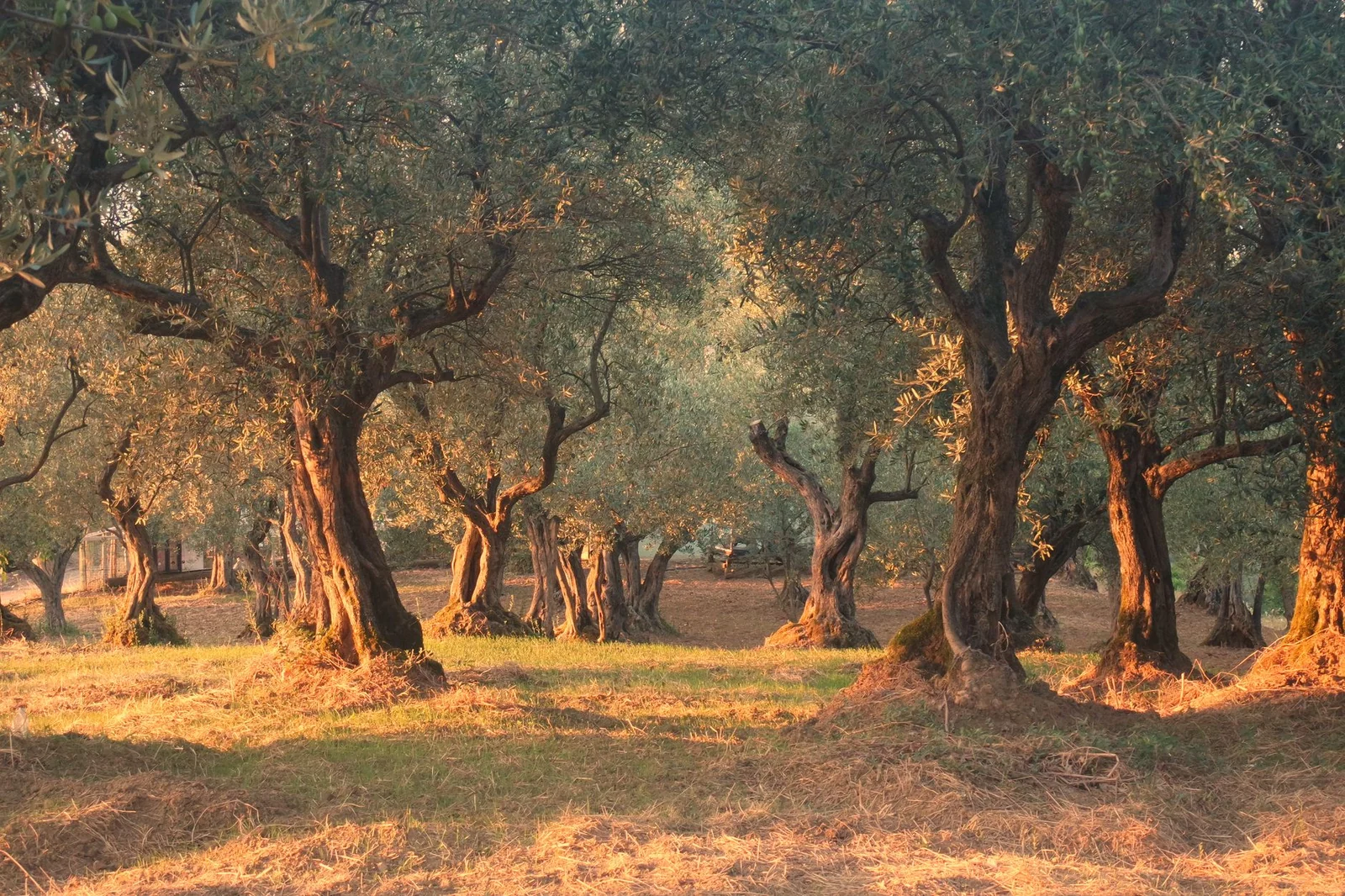
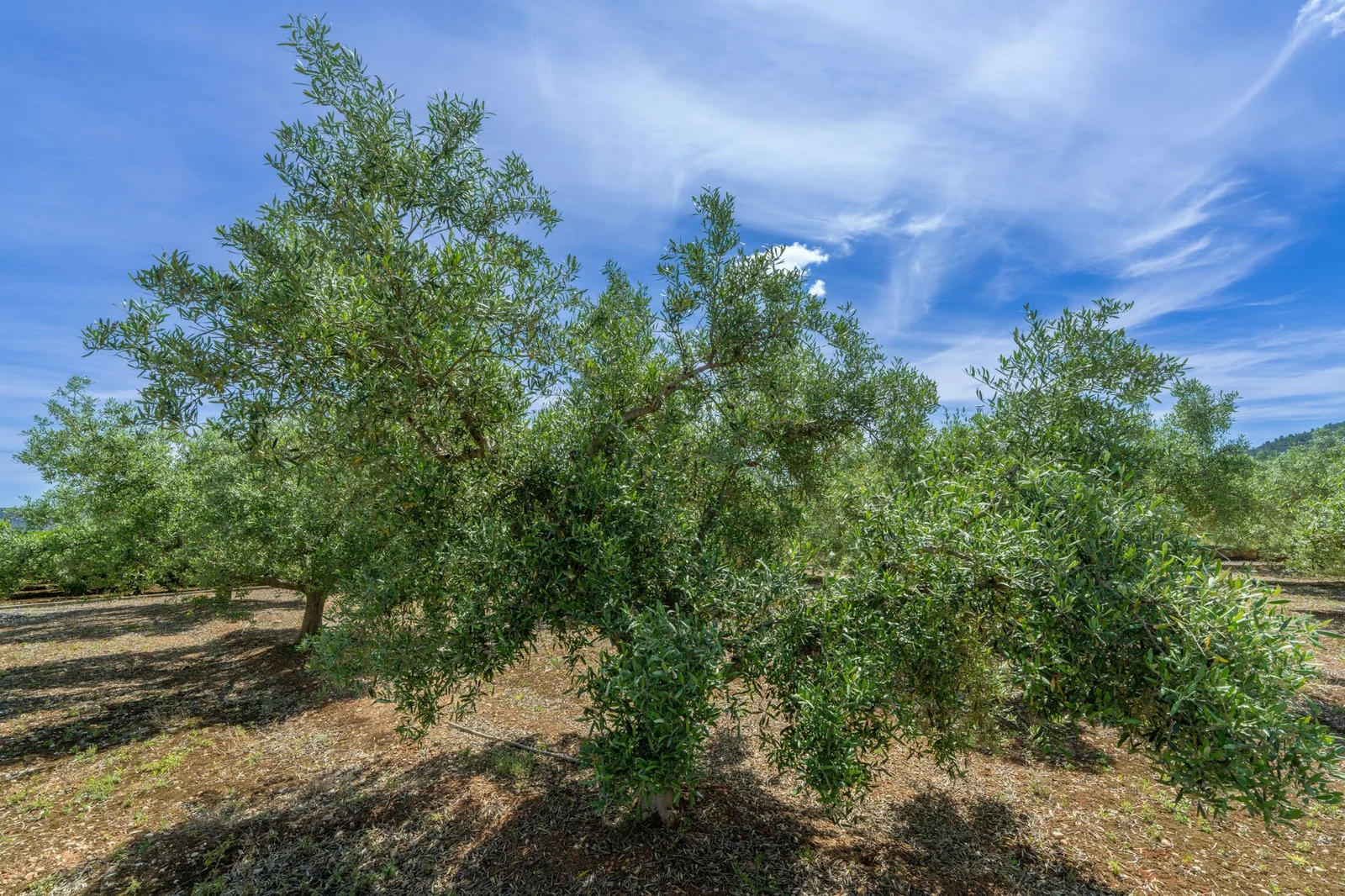
The olive is one of the oldest cultivated plants of the Mediterranean basin. An olive tree can live for centuries and bear fruit on dry, stony ground, which is why it stands for the continuity of farming in this geography.
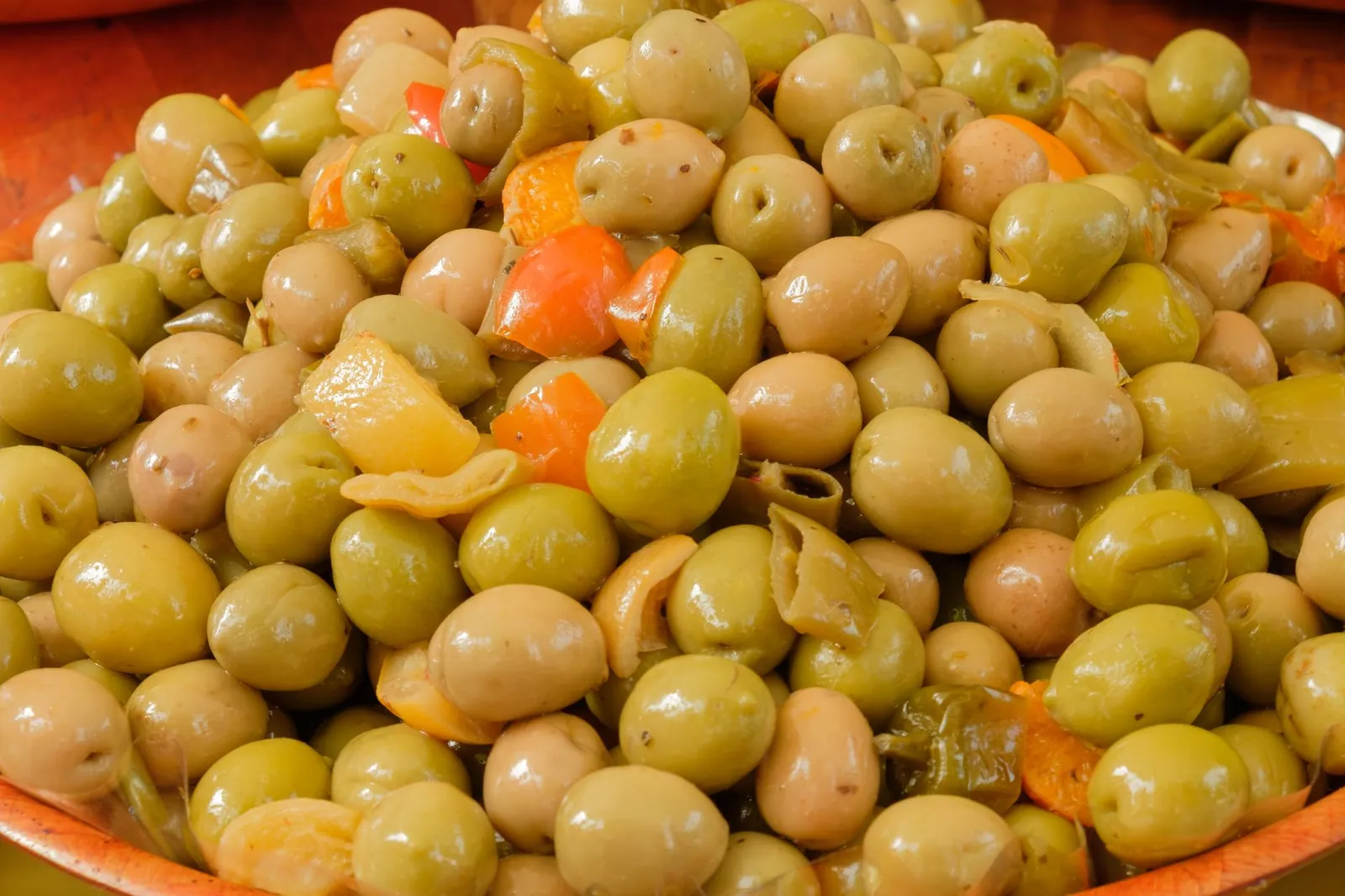
This section covers the botany of the olive tree, the principal olive varieties grown in Turkey — Gemlik, Ayvalık, Memecik, Domat, Nizip Yağlık — and the products made from the fruit. From how table olives are cured to olive leaf and pomace, you will find what each part of the tree is good for.
 Article
The Olive: Tree, History, Production and Future
The botany, history and uses of the olive tree; current production figures worldwide and in Turkey, provinces, varieties and the sector's future — with tables.
Article
The Olive: Tree, History, Production and Future
The botany, history and uses of the olive tree; current production figures worldwide and in Turkey, provinces, varieties and the sector's future — with tables.
 Article
The Olive Sector in Turkey: Structure, Exports and Challenges
Production, exports, business structure and price: the Turkish olive sector in figures, and where the chain breaks.
Article
The Olive Sector in Turkey: Structure, Exports and Challenges
Production, exports, business structure and price: the Turkish olive sector in figures, and where the chain breaks.
 Article
Geographical Indication Olives and Olive Oils of Turkey
Türkiye's registered olive and olive oil geographical indications: which product, which locality, under what conditions — and what registration means.
Article
Geographical Indication Olives and Olive Oils of Turkey
Türkiye's registered olive and olive oil geographical indications: which product, which locality, under what conditions — and what registration means.
 Article
Olive and Olive Oil Glossary
Oleuropein, lampante, pomace, malaxation, designation of origin… Short, verifiable definitions of olive and olive oil terms.
Article
Olive and Olive Oil Glossary
Oleuropein, lampante, pomace, malaxation, designation of origin… Short, verifiable definitions of olive and olive oil terms.
 Article
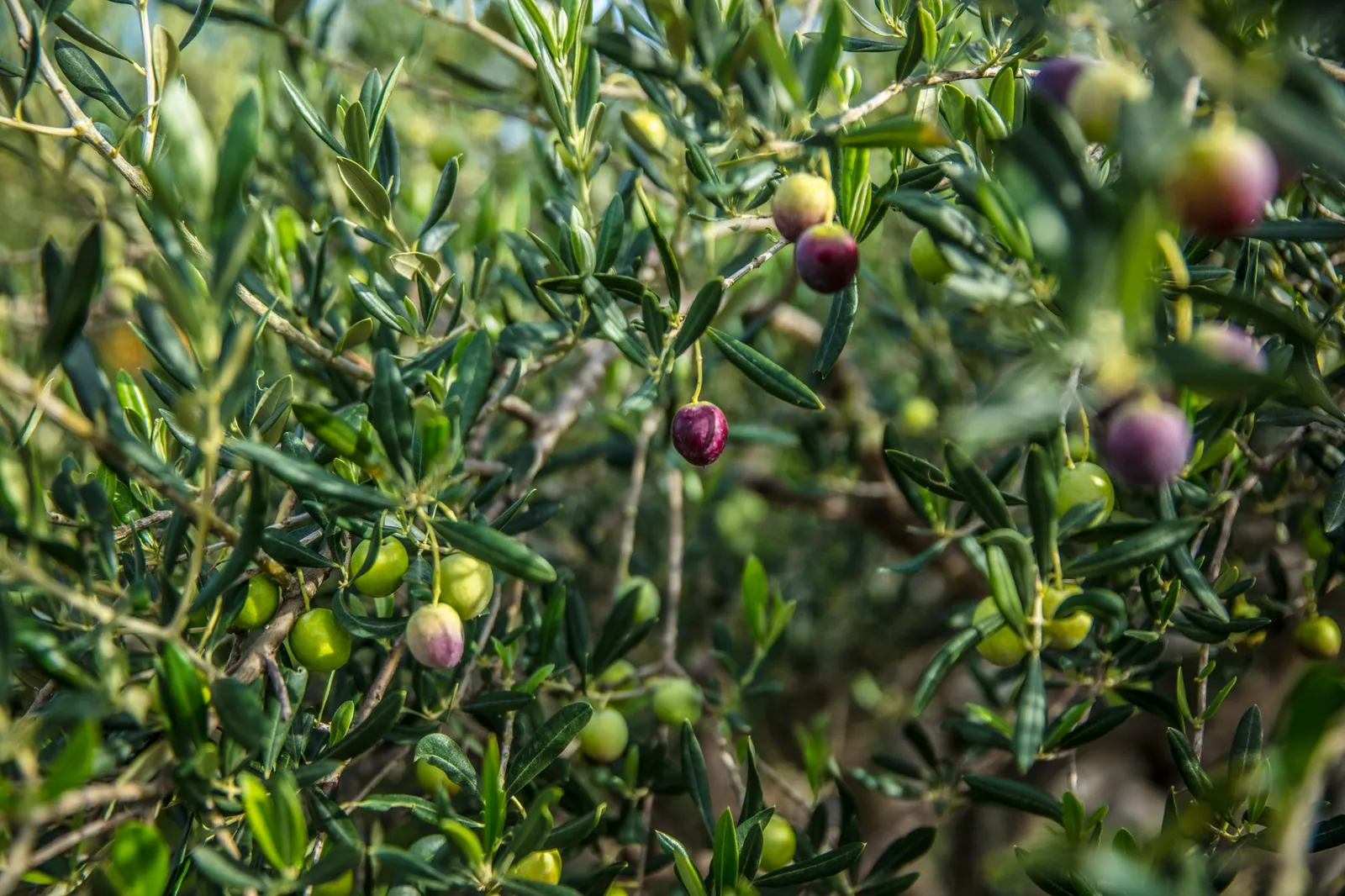
Olives and Olive Oil: Frequently Asked Questions
Does the fridge test work, what separates extra virgin from riviera, can you fry with olive oil? The 18 most common questions, answered briefly.
Article
Olives and Olive Oil: Frequently Asked Questions
Does the fridge test work, what separates extra virgin from riviera, can you fry with olive oil? The 18 most common questions, answered briefly.
 Article
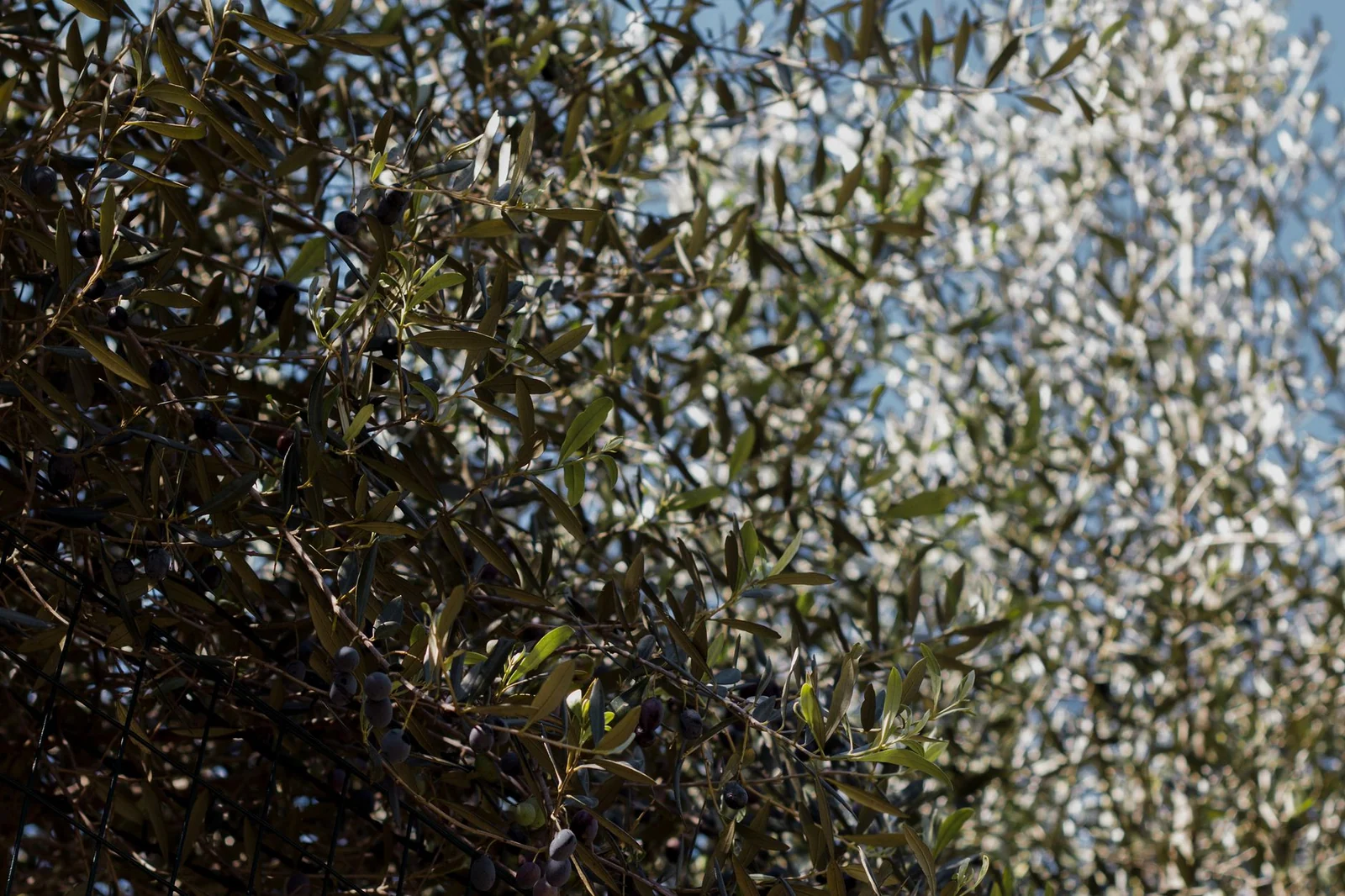
The Olive Calendar: The Olive Year Month by Month
When to prune, when it flowers, which olives are picked when — the year of the tree and the grower, month by month.
Article
The Olive Calendar: The Olive Year Month by Month
When to prune, when it flowers, which olives are picked when — the year of the tree and the grower, month by month.
 Article
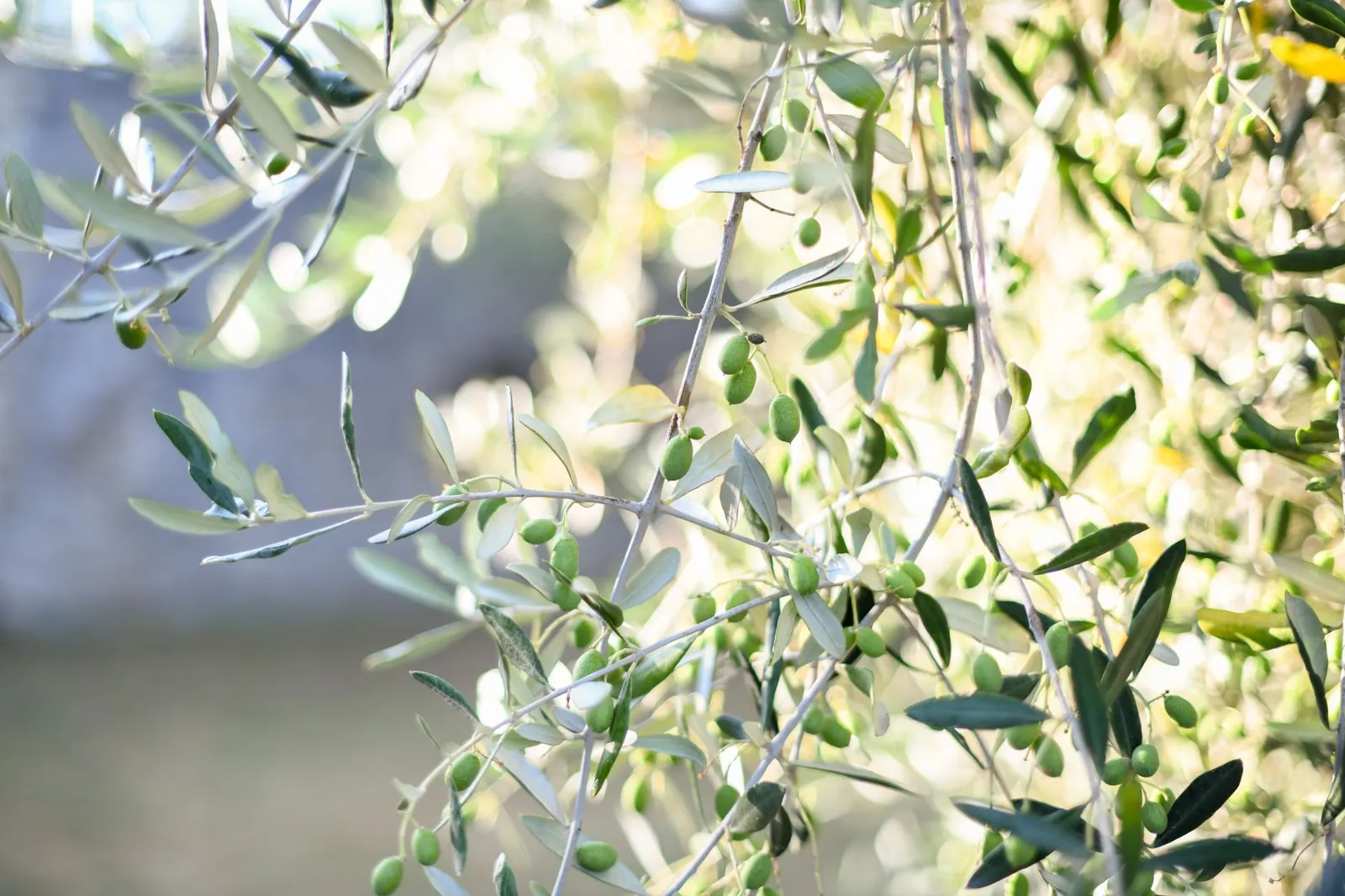
Olive Oil Soap: How It Is Made, Its Types and How to Choose
How saponification works, why curing takes months, and how to recognise genuine olive oil soap.
Article
Olive Oil Soap: How It Is Made, Its Types and How to Choose
How saponification works, why curing takes months, and how to recognise genuine olive oil soap.
 Article
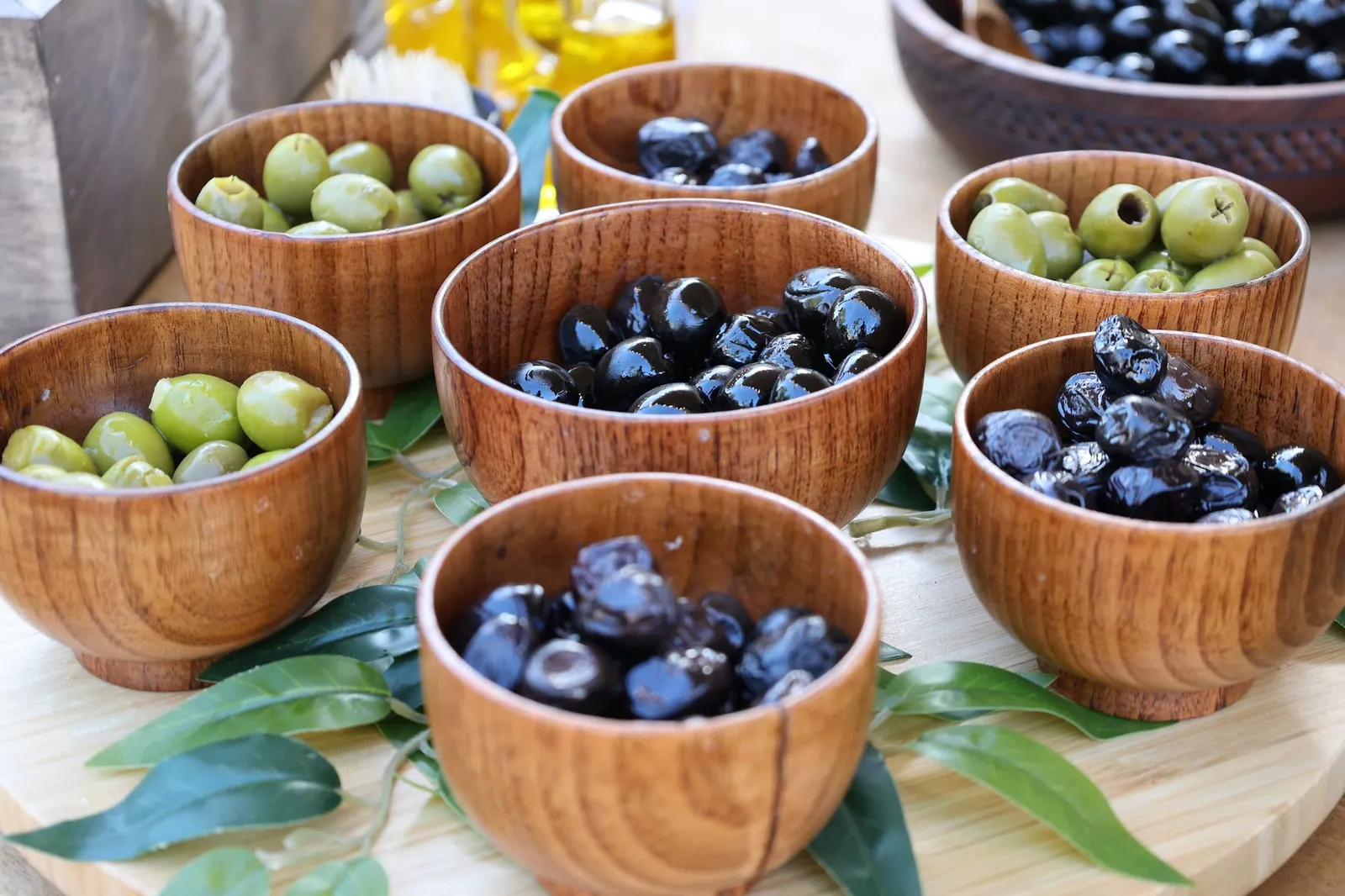
Table Olives: Types, Curing and How to Choose
From green to black, cracked to dry-cured: how table olives are made, chosen and kept.
Article
Table Olives: Types, Curing and How to Choose
From green to black, cracked to dry-cured: how table olives are made, chosen and kept.
 Article
How do you reduce the salt in olives?
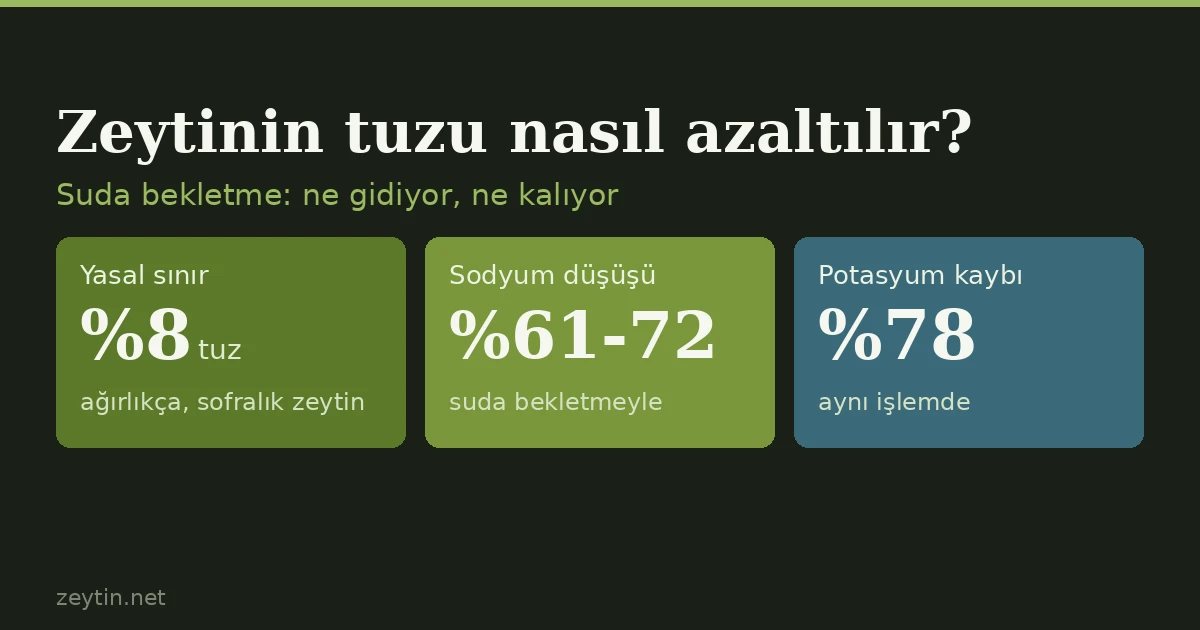
Draining the brine does not remove the salt — it has worked its way into the flesh. A Spanish study measured that soaking in water cuts sodium by 61-72%, but the same process also carries away up to 78% of the potassium and softens the fruit. The legal salt ceiling for table olives is 8% by weight, and the "low salt" claim requires no more than 4 grams per 100. Which method works how well, and what does each one give up?
Article
How do you reduce the salt in olives?
Draining the brine does not remove the salt — it has worked its way into the flesh. A Spanish study measured that soaking in water cuts sodium by 61-72%, but the same process also carries away up to 78% of the potassium and softens the fruit. The legal salt ceiling for table olives is 8% by weight, and the "low salt" claim requires no more than 4 grams per 100. Which method works how well, and what does each one give up?
 Article
How long does an olive tree live?
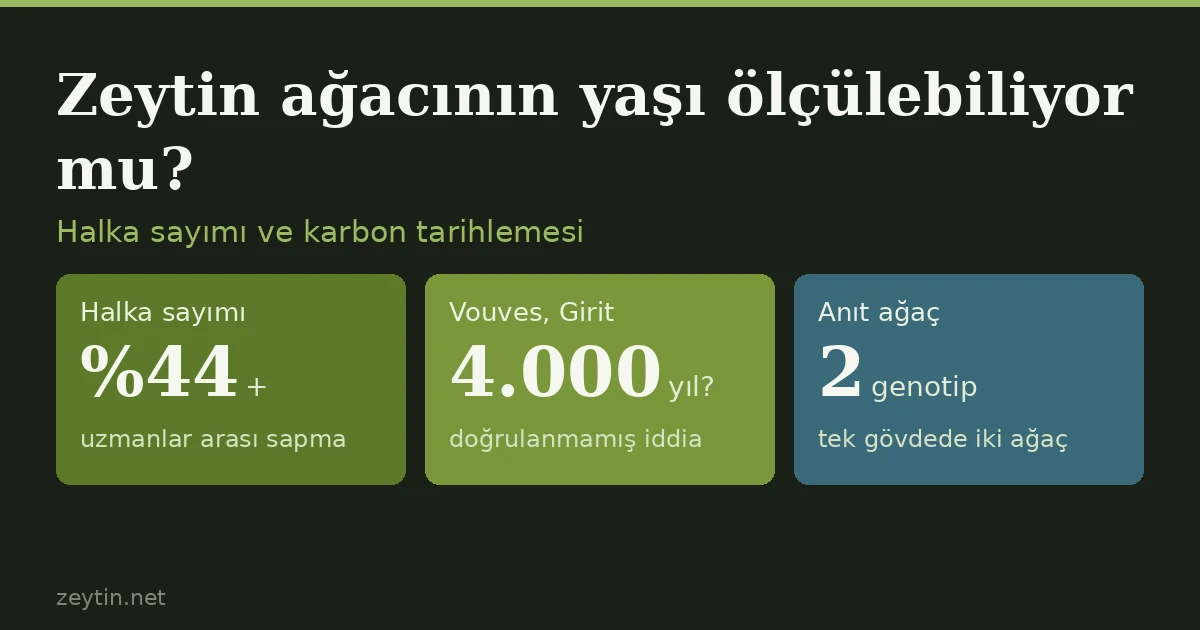
There are plenty of "thousand-year-old olive" signs and almost no measurements. Counting annual rings does not work on olive: when ten experts in five laboratories were given the same samples, their ring counts differed by more than 44%. Radiocarbon dating carries its own trap. So does the tree have a real age limit — and what does it mean that Crete's famous monumental olive turns out to consist of two different genotypes?
Article
How long does an olive tree live?
There are plenty of "thousand-year-old olive" signs and almost no measurements. Counting annual rings does not work on olive: when ten experts in five laboratories were given the same samples, their ring counts differed by more than 44%. Radiocarbon dating carries its own trap. So does the tree have a real age limit — and what does it mean that Crete's famous monumental olive turns out to consist of two different genotypes?
 Article
That white film on your olive brine: mould or yeast?
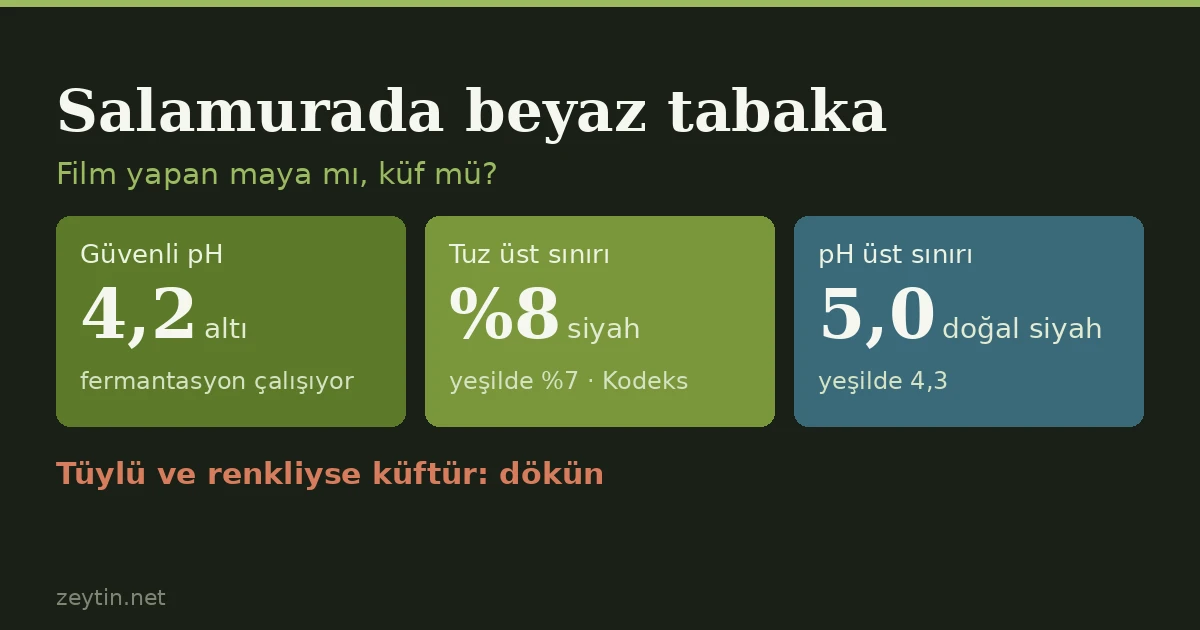
The white layer that forms on home-brined olives is usually not mould but a film-forming yeast — though that does not make it harmless. There are visible criteria for telling them apart. Together with the pH and salt ceilings the Turkish Food Codex sets for brine, here is what can be saved and what has to be thrown out.
Article
That white film on your olive brine: mould or yeast?
The white layer that forms on home-brined olives is usually not mould but a film-forming yeast — though that does not make it harmless. There are visible criteria for telling them apart. Together with the pH and salt ceilings the Turkish Food Codex sets for brine, here is what can be saved and what has to be thrown out.
 Article
Which provinces in Turkey grow no olives?
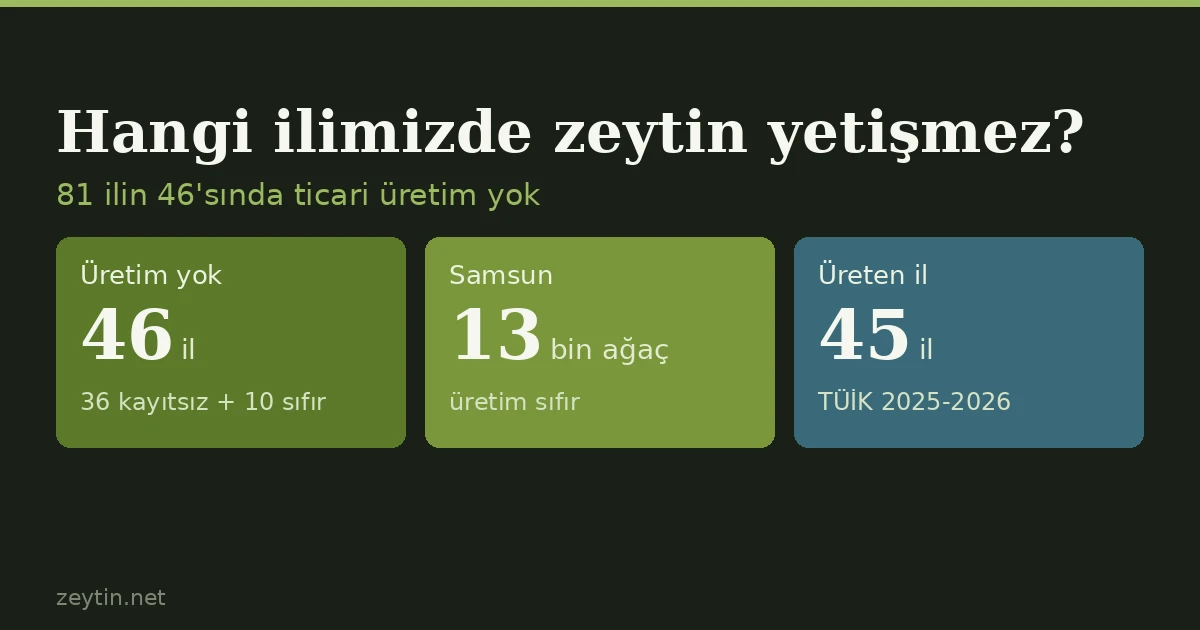
Forty-six of Turkey's 81 provinces have no commercial olive production: 36 absent from the statistics, ten reporting zero. Samsun has 13,000 trees and no crop.
Article
Which provinces in Turkey grow no olives?
Forty-six of Turkey's 81 provinces have no commercial olive production: 36 absent from the statistics, ten reporting zero. Samsun has 13,000 trees and no crop.
 Article
Do olive trees grow on the Black Sea coast?
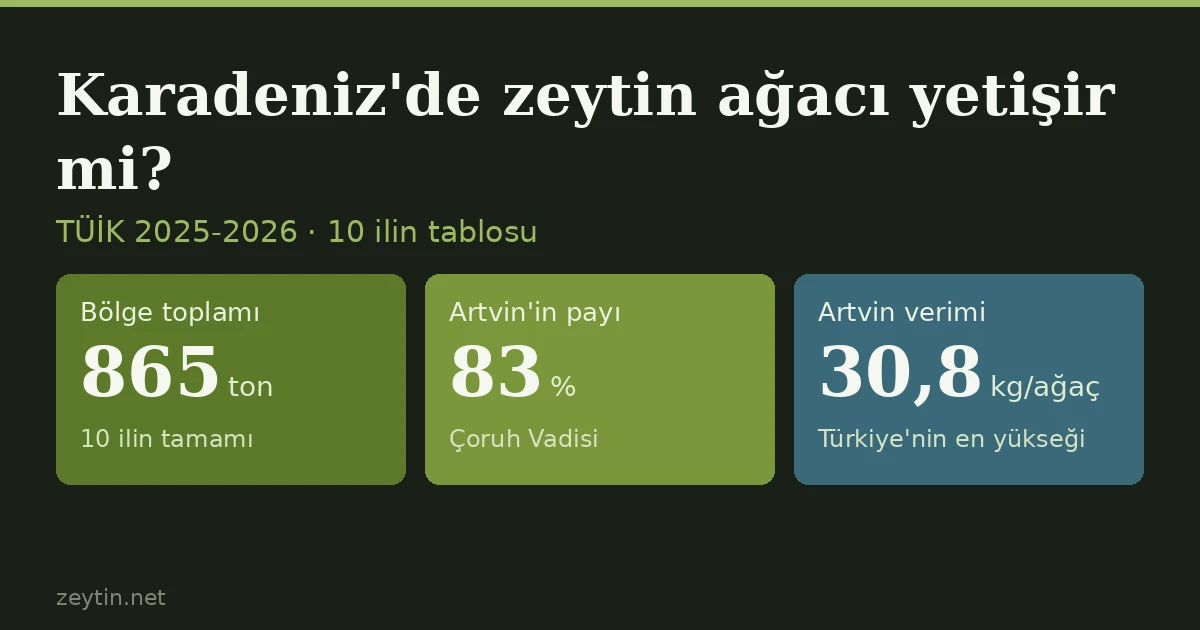
Ten Black Sea provinces produce 865 tonnes between them, 83 per cent of it in Artvin. Trabzon gets 98 tonnes from 36,000 trees; Samsun none from 13,000. The obstacle is humidity, not cold.
Article
Do olive trees grow on the Black Sea coast?
Ten Black Sea provinces produce 865 tonnes between them, 83 per cent of it in Artvin. Trabzon gets 98 tonnes from 36,000 trees; Samsun none from 13,000. The obstacle is humidity, not cold.
 Article
Where do olives grow in Turkey? The picture in 45 provinces
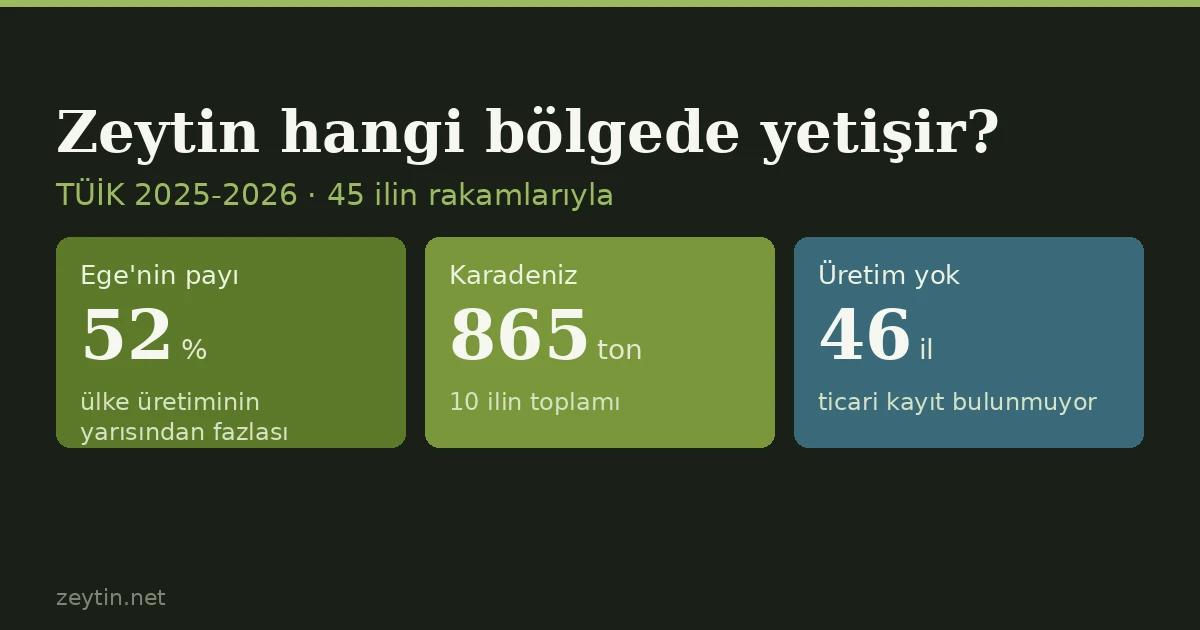
The Aegean alone produces half the national crop; ten Black Sea provinces together manage 865 tonnes. In 46 provinces there is no commercial production at all.
Article
Where do olives grow in Turkey? The picture in 45 provinces
The Aegean alone produces half the national crop; ten Black Sea provinces together manage 865 tonnes. In 46 provinces there is no commercial production at all.
 Article
How to store olive spread: homemade, opened jars and freezing
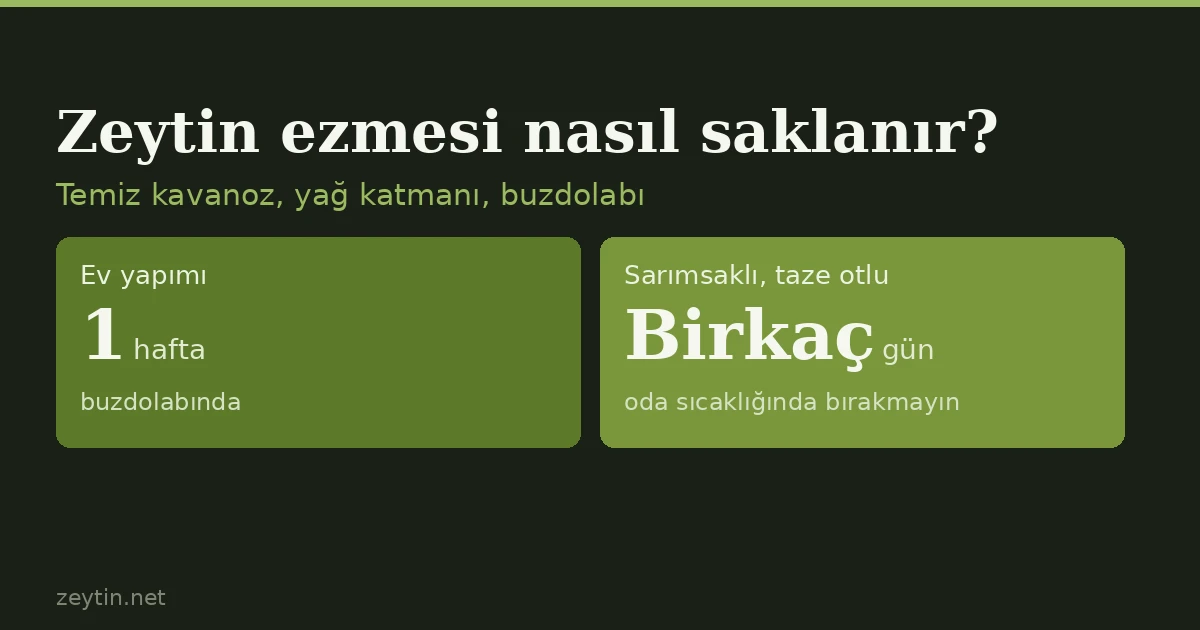
Homemade olive spread is kept in the fridge in a clean glass jar, covered with a thin layer of olive oil, and eaten within about a week. For opened shop-bought jars, the time on the label applies. Spread with garlic or fresh herbs should never be left at room temperature.
Article
How to store olive spread: homemade, opened jars and freezing
Homemade olive spread is kept in the fridge in a clean glass jar, covered with a thin layer of olive oil, and eaten within about a week. For opened shop-bought jars, the time on the label applies. Spread with garlic or fresh herbs should never be left at room temperature.
 Article
How to Store Olives: From an Opened Jar to a Winter Batch
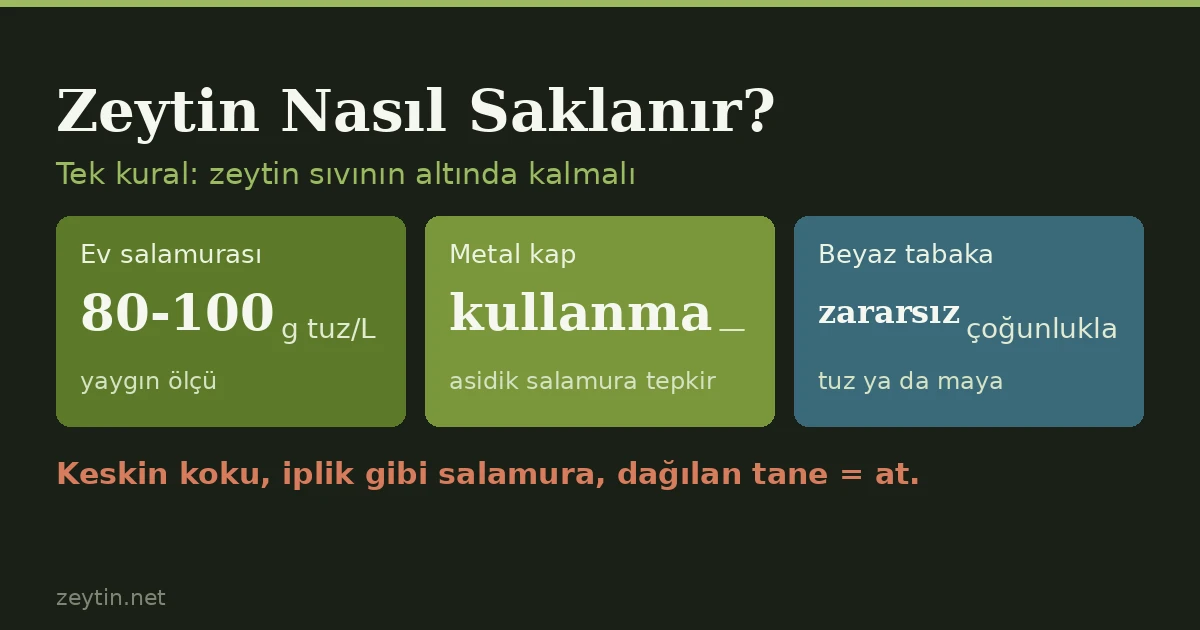
How long does an opened jar last, what to do when the brine runs low, how to keep dry-cured olives? Why mould forms and what the white film actually is.
Article
How to Store Olives: From an Opened Jar to a Winter Batch
How long does an opened jar last, what to do when the brine runs low, how to keep dry-cured olives? Why mould forms and what the white film actually is.
 Article
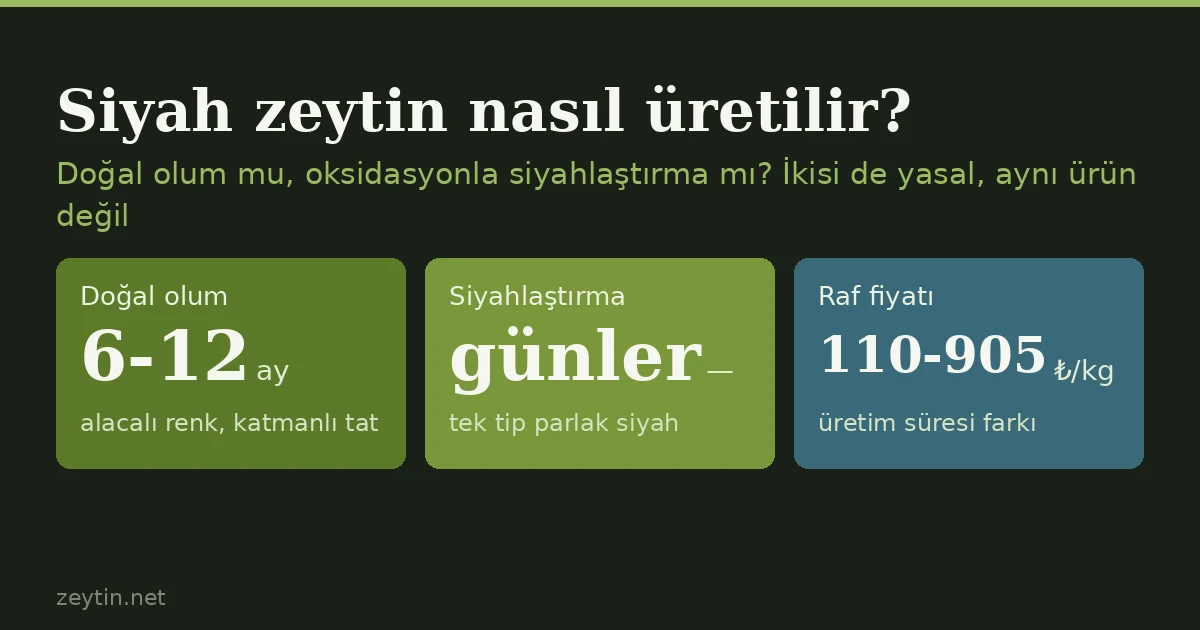
How are black table olives made? Natural ripening versus blackening
Two different black olives sit on the shelf: ripened on the tree and brined, or picked green and blackened by oxidation. Both lawful, but not the same product.
Article
How are black table olives made? Natural ripening versus blackening
Two different black olives sit on the shelf: ripened on the tree and brined, or picked green and blackened by oxidation. Both lawful, but not the same product.
 Article
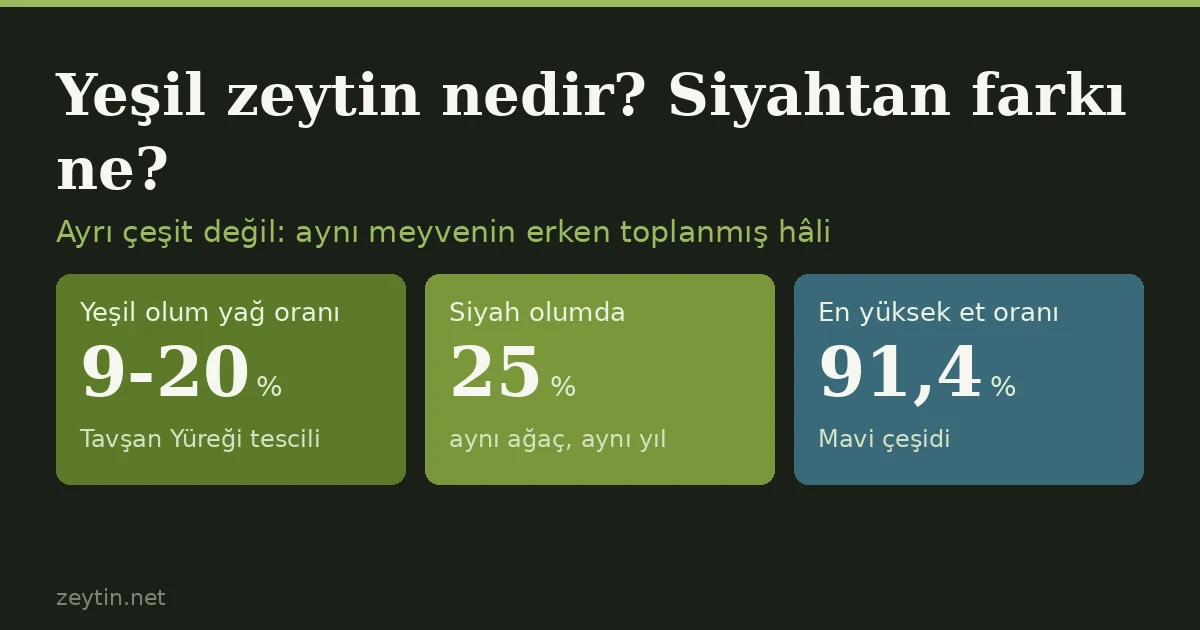
What are green olives, and how do they differ from black?
Green olives are not a separate variety but the same fruit picked early. What sets the colour, why pick green, and where the difference from black begins.
Article
What are green olives, and how do they differ from black?
Green olives are not a separate variety but the same fruit picked early. What sets the colour, why pick green, and where the difference from black begins.
 Article
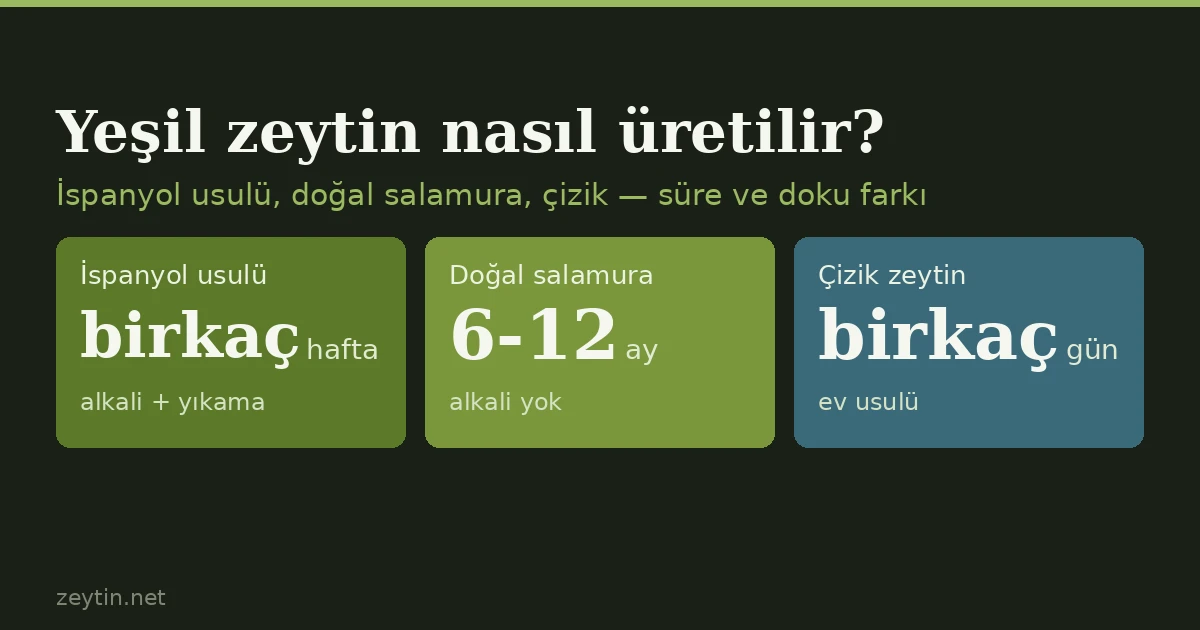
How are green table olives made? Three methods, three results
Green olives cannot be eaten off the tree; the bitterness must be removed. The difference between Spanish-style, natural brine and scored methods sets time, texture and taste.
Article
How are green table olives made? Three methods, three results
Green olives cannot be eaten off the tree; the bitterness must be removed. The difference between Spanish-style, natural brine and scored methods sets time, texture and taste.
 Article
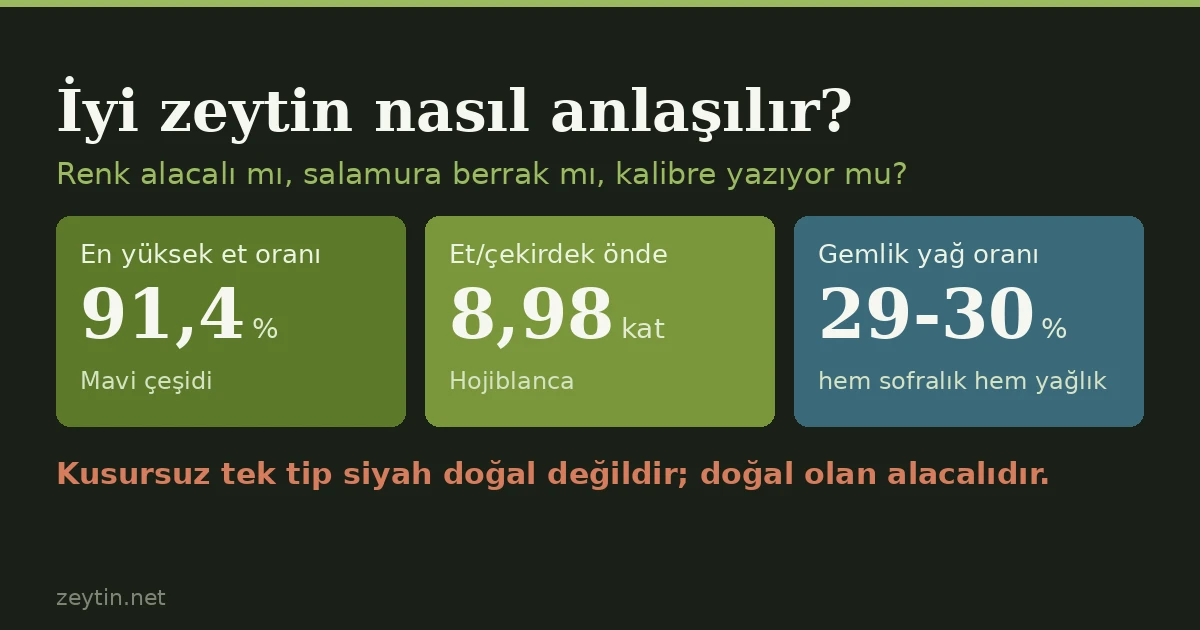
How to recognise a good table olive — and what to check when buying
Is the colour mottled, the brine clear, the calibre stated? Concrete checks for buying table olives, whether Gemlik is an oil or table variety, and how to store them at home.
Article
How to recognise a good table olive — and what to check when buying
Is the colour mottled, the brine clear, the calibre stated? Concrete checks for buying table olives, whether Gemlik is an oil or table variety, and how to store them at home.
 Article
Fraud in table olives: lye, artificial blackening, copper sulphate — how and why
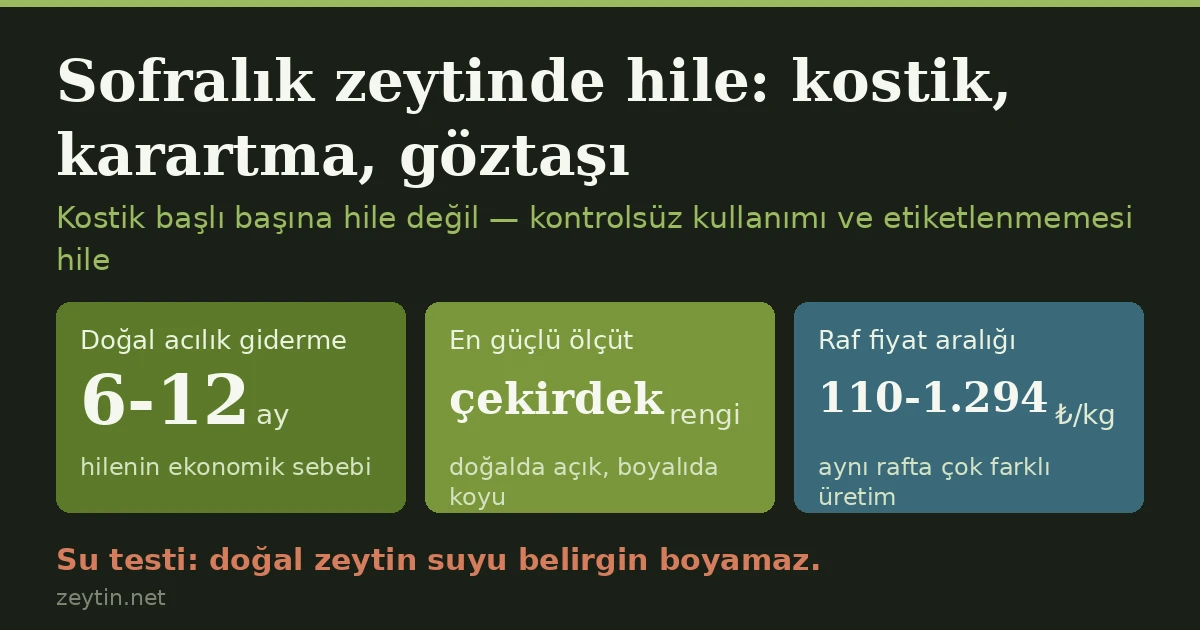
Natural debittering takes 6-12 months. Which of the methods that cut it to days are lawful, and which are fraud? Lye, artificial blackening, copper sulphate — and six ways to spot fake olives.
Article
Fraud in table olives: lye, artificial blackening, copper sulphate — how and why
Natural debittering takes 6-12 months. Which of the methods that cut it to days are lawful, and which are fraud? Lye, artificial blackening, copper sulphate — and six ways to spot fake olives.
 Article
The Çelebi olive family: seven types, two separate geographies
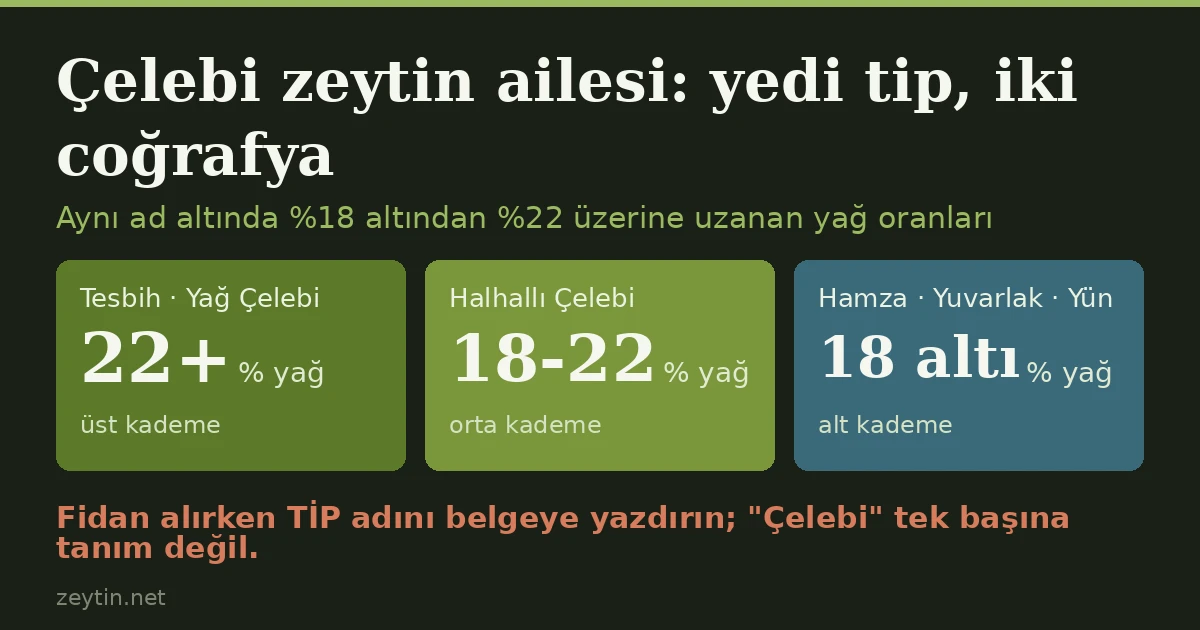
Çelebi is not one variety but a family name. Tesbih Çelebi yields above 22 percent oil while Hamza, Yuvarlak and Yün Çelebi stay under 18. Measured values for seven types.
Article
The Çelebi olive family: seven types, two separate geographies
Çelebi is not one variety but a family name. Tesbih Çelebi yields above 22 percent oil while Hamza, Yuvarlak and Yün Çelebi stay under 18. Measured values for seven types.
 Article
Which olive varieties have the highest oil content?
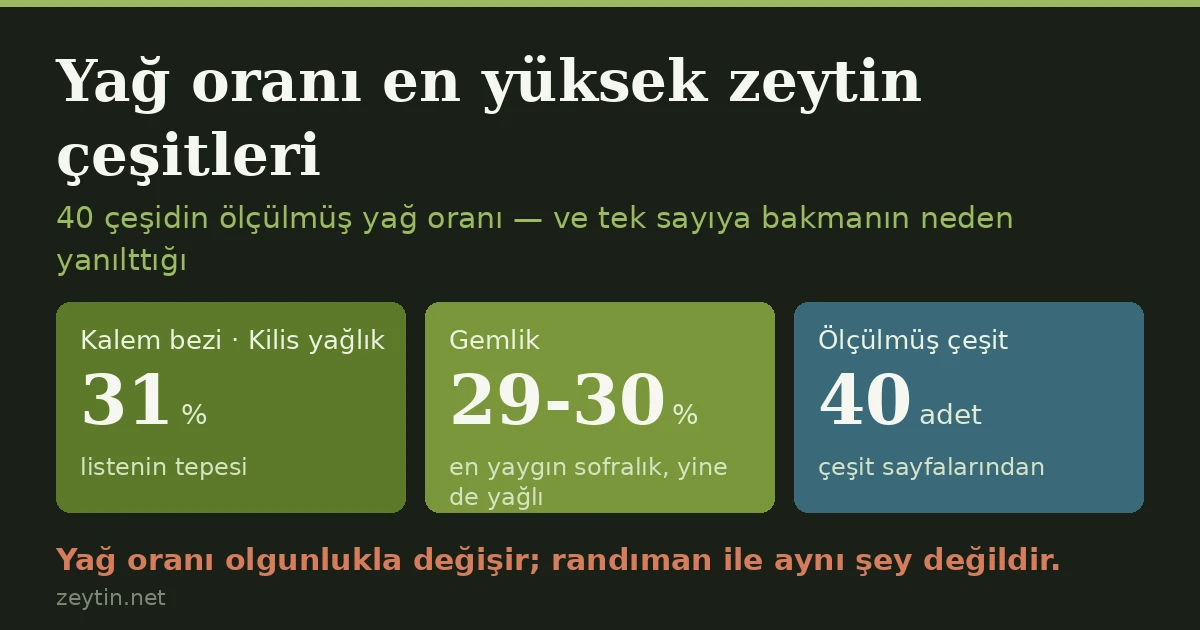
Kalem bezi and Kilis yağlık lead at 31 percent, with Gemlik just behind at 29-30. Measured oil content for 40 varieties — and what the figure does and does not tell you.
Article
Which olive varieties have the highest oil content?
Kalem bezi and Kilis yağlık lead at 31 percent, with Gemlik just behind at 29-30. Measured oil content for 40 varieties — and what the figure does and does not tell you.
 Article
Milas Çekişke Olive: the season's first table olive, picked in September
Protected as a geographical indication since 2021. The cultivar is Memecik, but the difference is timing: picked in September, green and by hand. The stage at which oil content is still low is exactly right for the table.
Article
Milas Çekişke Olive: the season's first table olive, picked in September
Protected as a geographical indication since 2021. The cultivar is Memecik, but the difference is timing: picked in September, green and by hand. The stage at which oil content is still low is exactly right for the table.
 Article
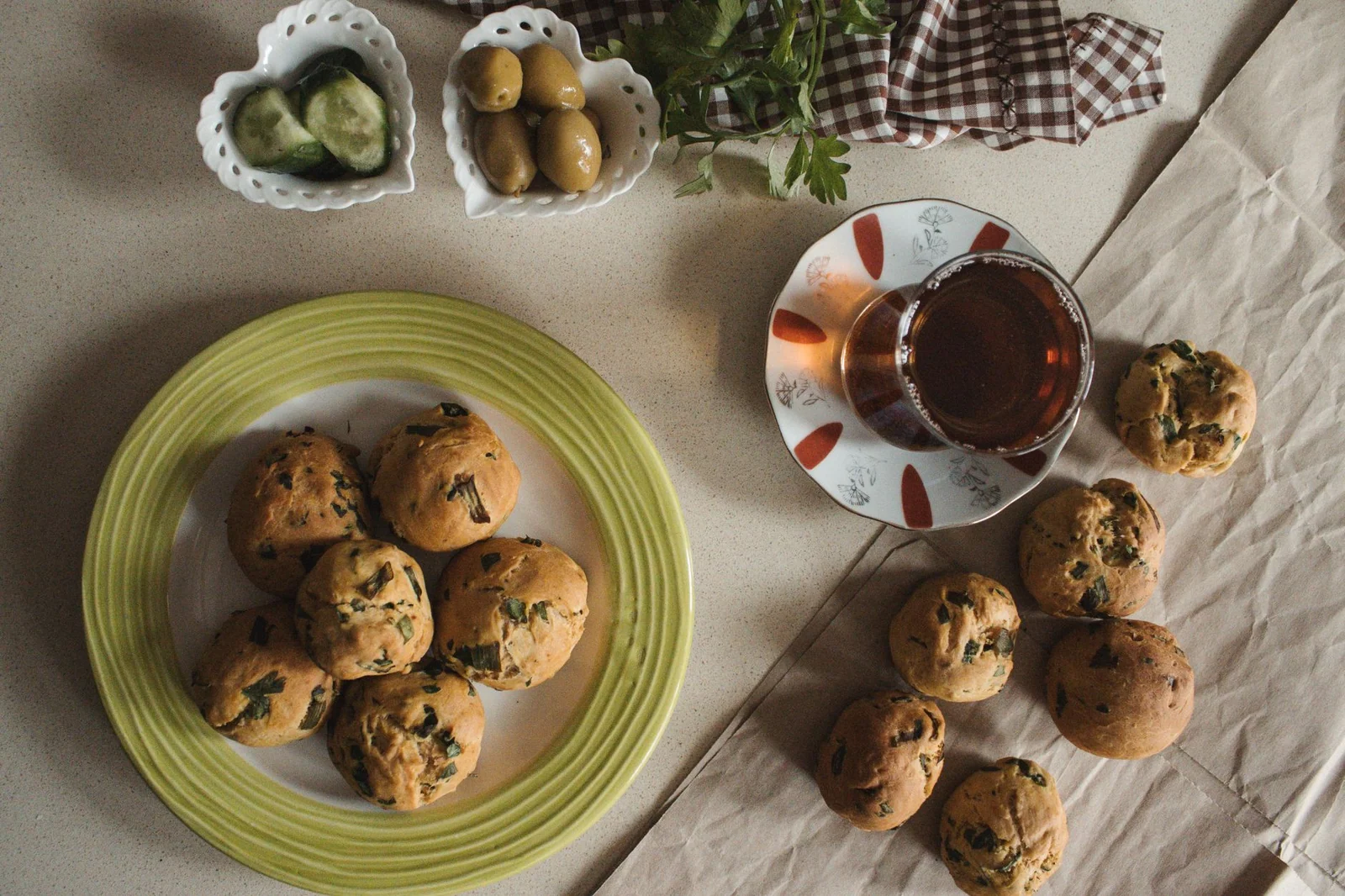
Gaziantep Green Olive Pastry: a registration that turns a recipe into a rule
The only prepared dish among olive geographical indications. The document binds the half-moon shape, the 14-15 cm diameter, the filling gram by gram, the sheep breed, and inspection twice a year. The olives used are oil-type, not table.
Article
Gaziantep Green Olive Pastry: a registration that turns a recipe into a rule
The only prepared dish among olive geographical indications. The document binds the half-moon shape, the 14-15 cm diameter, the filling gram by gram, the sheep breed, and inspection twice a year. The olives used are oil-type, not table.
 Article
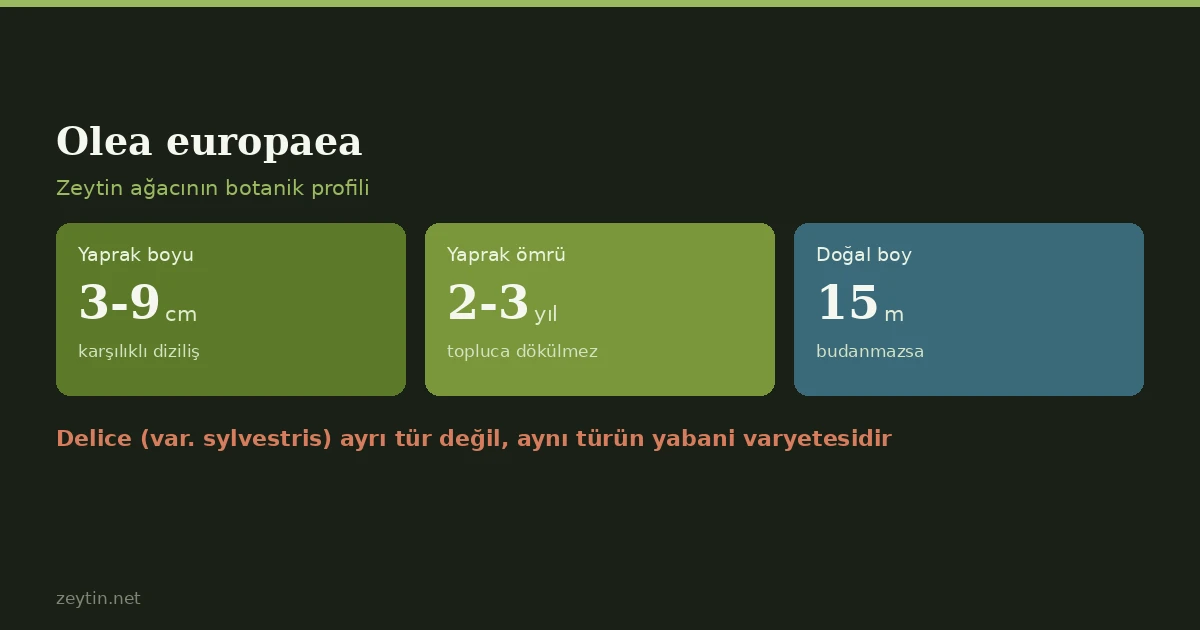
Olea europaea: the botany of the olive tree
The olive's scientific name and classification, why its leaves are silver, its floral structure, the layers of its fruit, its root system and lifespan — and how the wild oleaster relates to the orchard olive.
Article
Olea europaea: the botany of the olive tree
The olive's scientific name and classification, why its leaves are silver, its floral structure, the layers of its fruit, its root system and lifespan — and how the wild oleaster relates to the orchard olive.
 Article
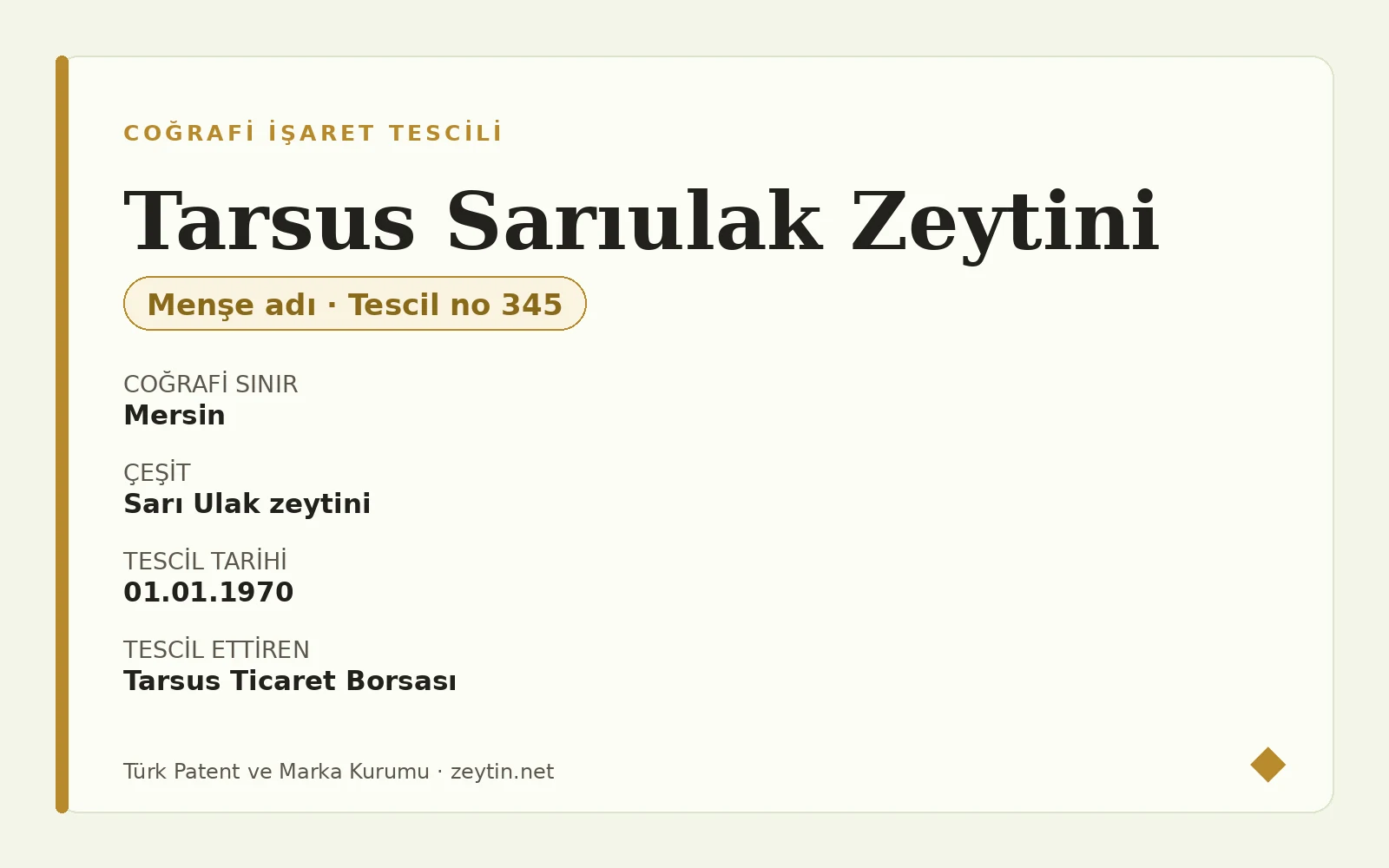
Tarsus Sarıulak Olive: the same cultivar behaving differently in one place
The certificate measures Sarıulak in Tarsus and generally, side by side: it flowers a month earlier, ripens a month later, and has larger fruit and more flesh.
Article
Tarsus Sarıulak Olive: the same cultivar behaving differently in one place
The certificate measures Sarıulak in Tarsus and generally, side by side: it flowers a month earlier, ripens a month later, and has larger fruit and more flesh.
 Article
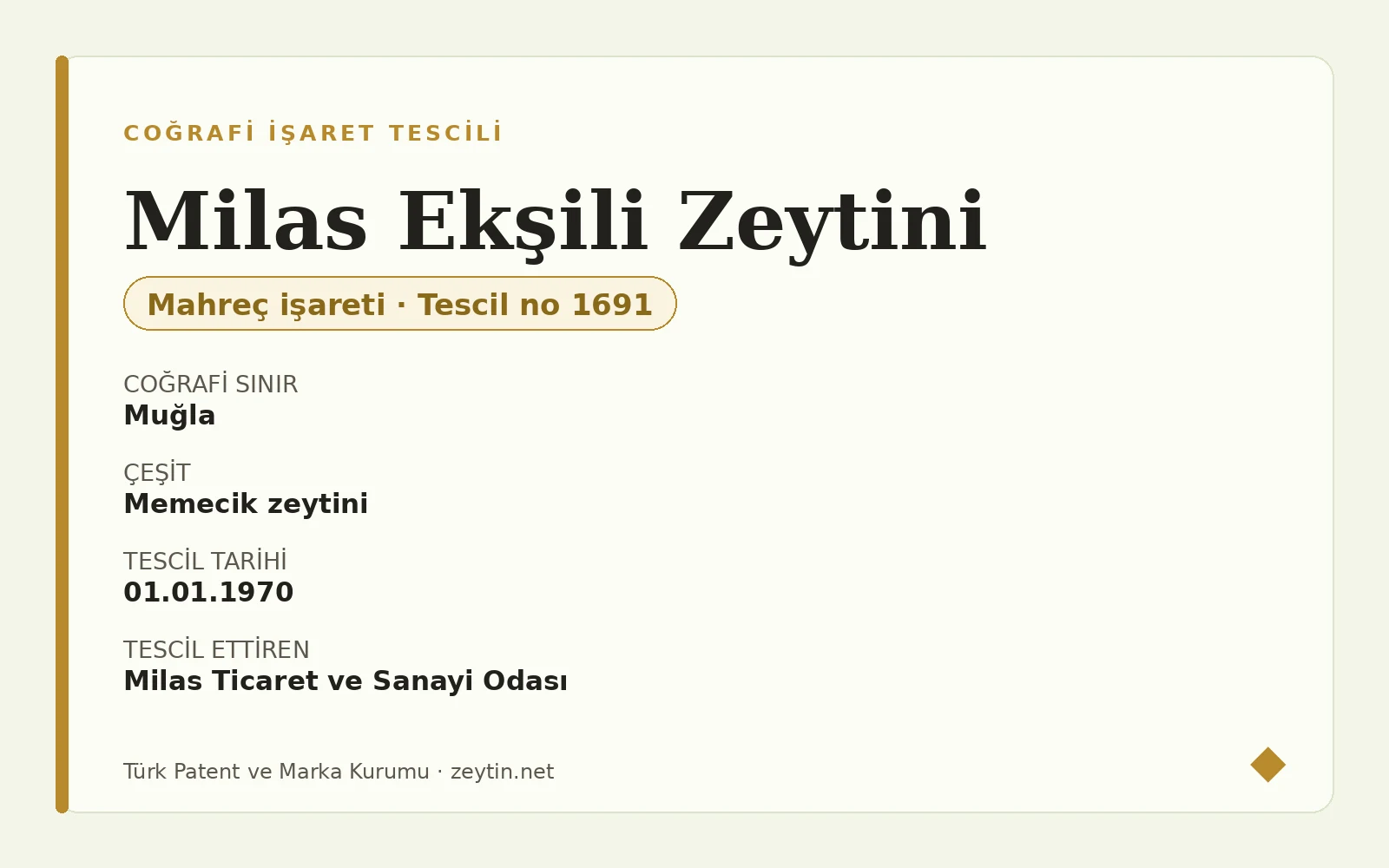
Milas Ekşili Olive: a table olive lightened with lemon
Registered in 2024. The aroma of lemon and olive oil is pronounced, and the astringency of other table olives is absent. Total phenols at least 135.38 mg/100 g.
Article
Milas Ekşili Olive: a table olive lightened with lemon
Registered in 2024. The aroma of lemon and olive oil is pronounced, and the astringency of other table olives is absent. Total phenols at least 135.38 mg/100 g.
 Article
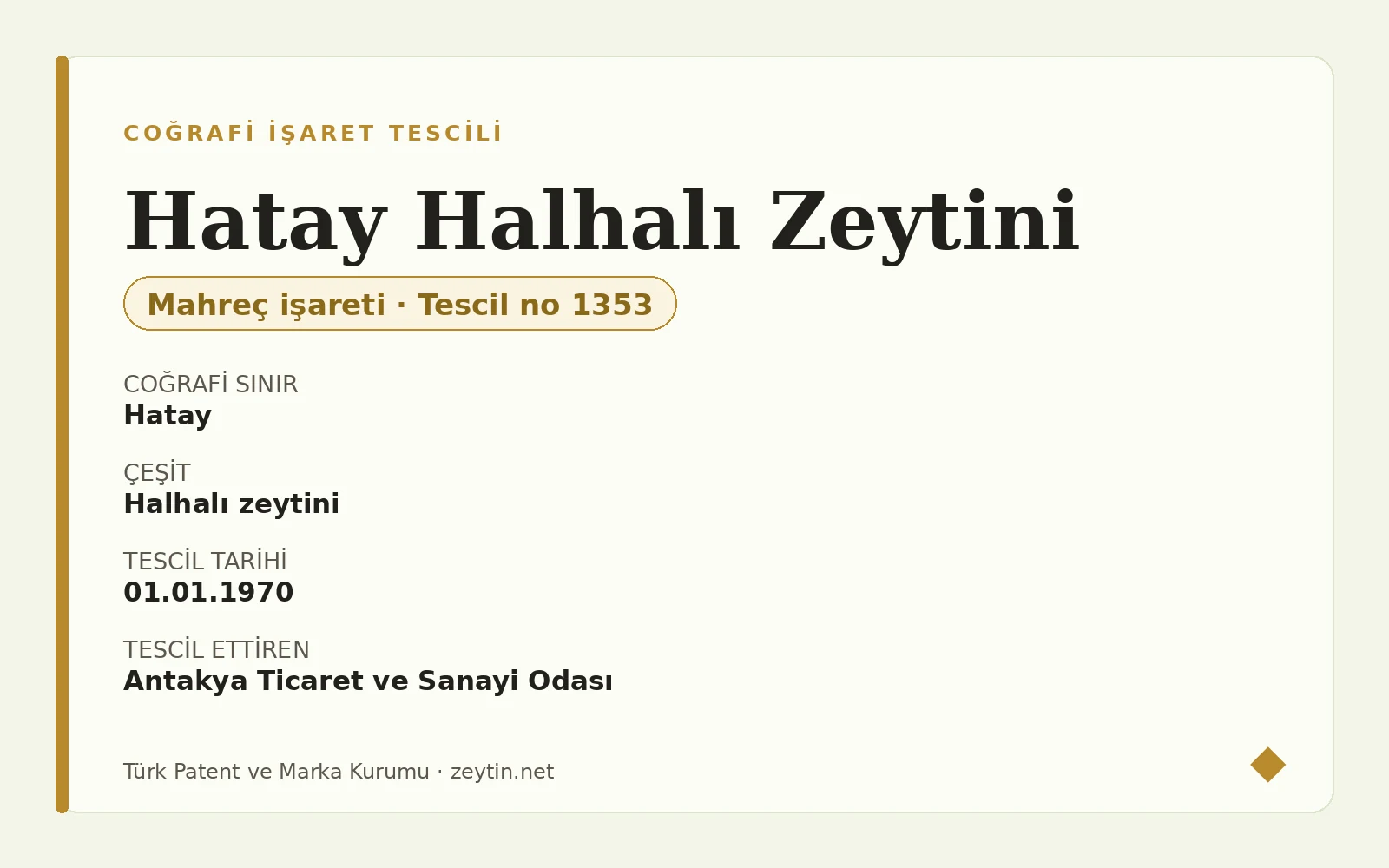
Hatay Halhalı Olive: what long sunshine hours do to phenol content
Registered in 2023. The certificate ties the high phenol content (322-525 mg/kg) directly to long sunshine hours, and defines two separate debittering methods.
Article
Hatay Halhalı Olive: what long sunshine hours do to phenol content
Registered in 2023. The certificate ties the high phenol content (322-525 mg/kg) directly to long sunshine hours, and defines two separate debittering methods.
 Article
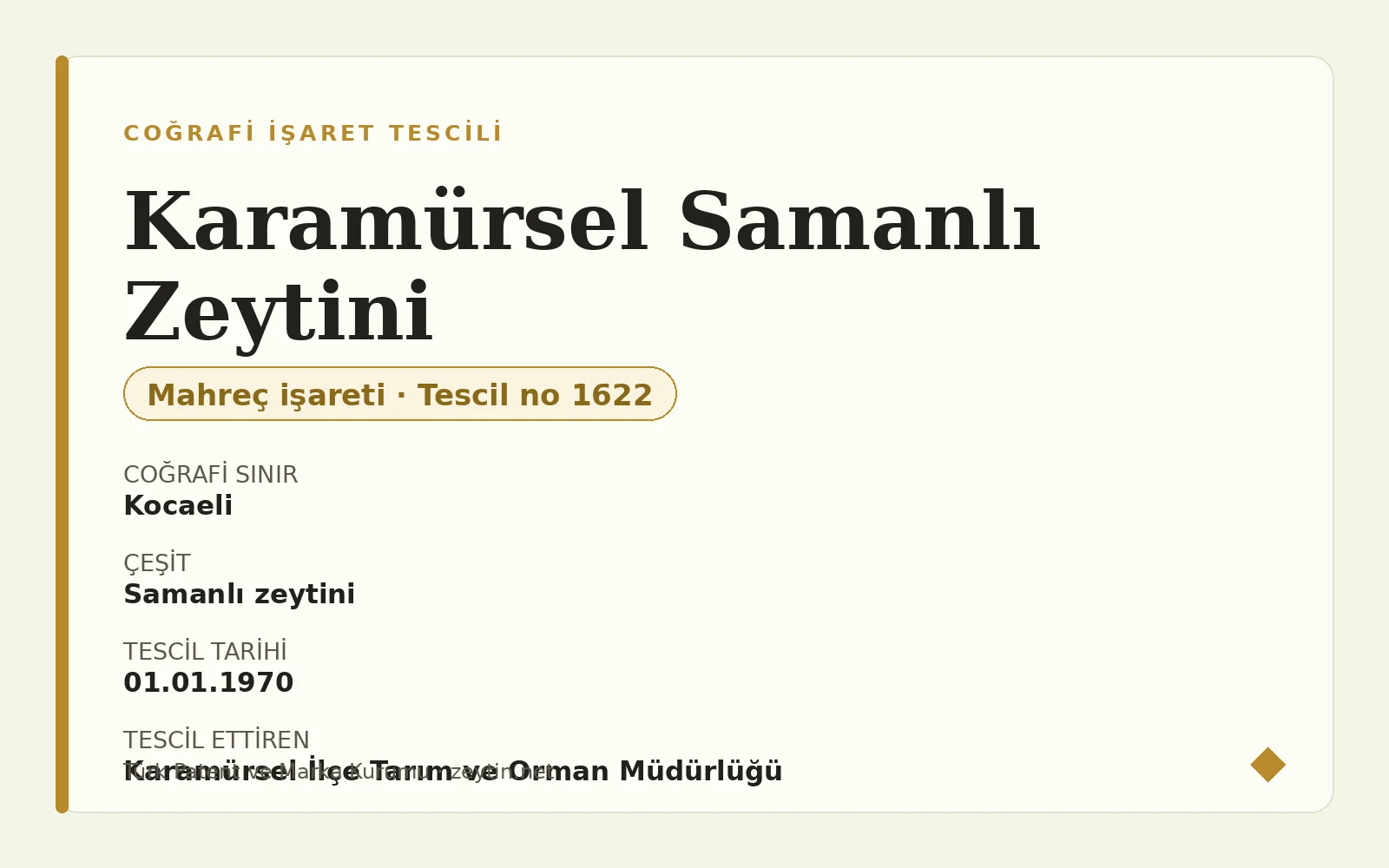
Karamürsel Samanlı Olive: low bitterness earns it the name “sweet olive”
Registered in 2024. Its oleuropein content of 6-8% is low, so it debitters quickly and is locally called the sweet olive. Its skin is 0.2-0.4 mm.
Article
Karamürsel Samanlı Olive: low bitterness earns it the name “sweet olive”
Registered in 2024. Its oleuropein content of 6-8% is low, so it debitters quickly and is locally called the sweet olive. Its skin is 0.2-0.4 mm.
 Article
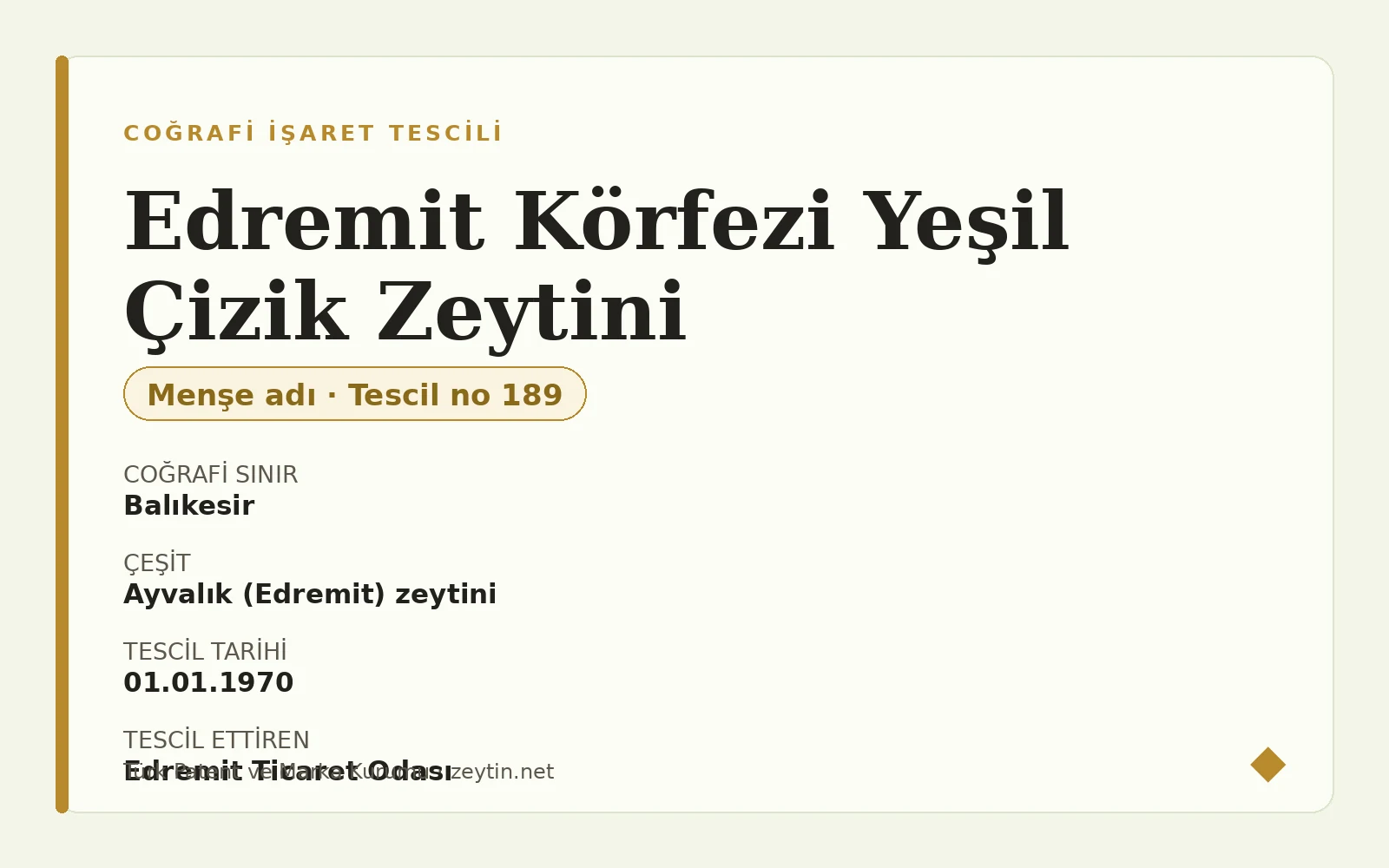
Edremit Gulf Green Scored Olive: a registration that defines altitude and slope
Registered in 2014. The certificate draws the boundary topographically as well as administratively: 50-250 m altitude, 5-6% slope. Debittering is entirely natural.
Article
Edremit Gulf Green Scored Olive: a registration that defines altitude and slope
Registered in 2014. The certificate draws the boundary topographically as well as administratively: 50-250 m altitude, 5-6% slope. Debittering is entirely natural.
 Article
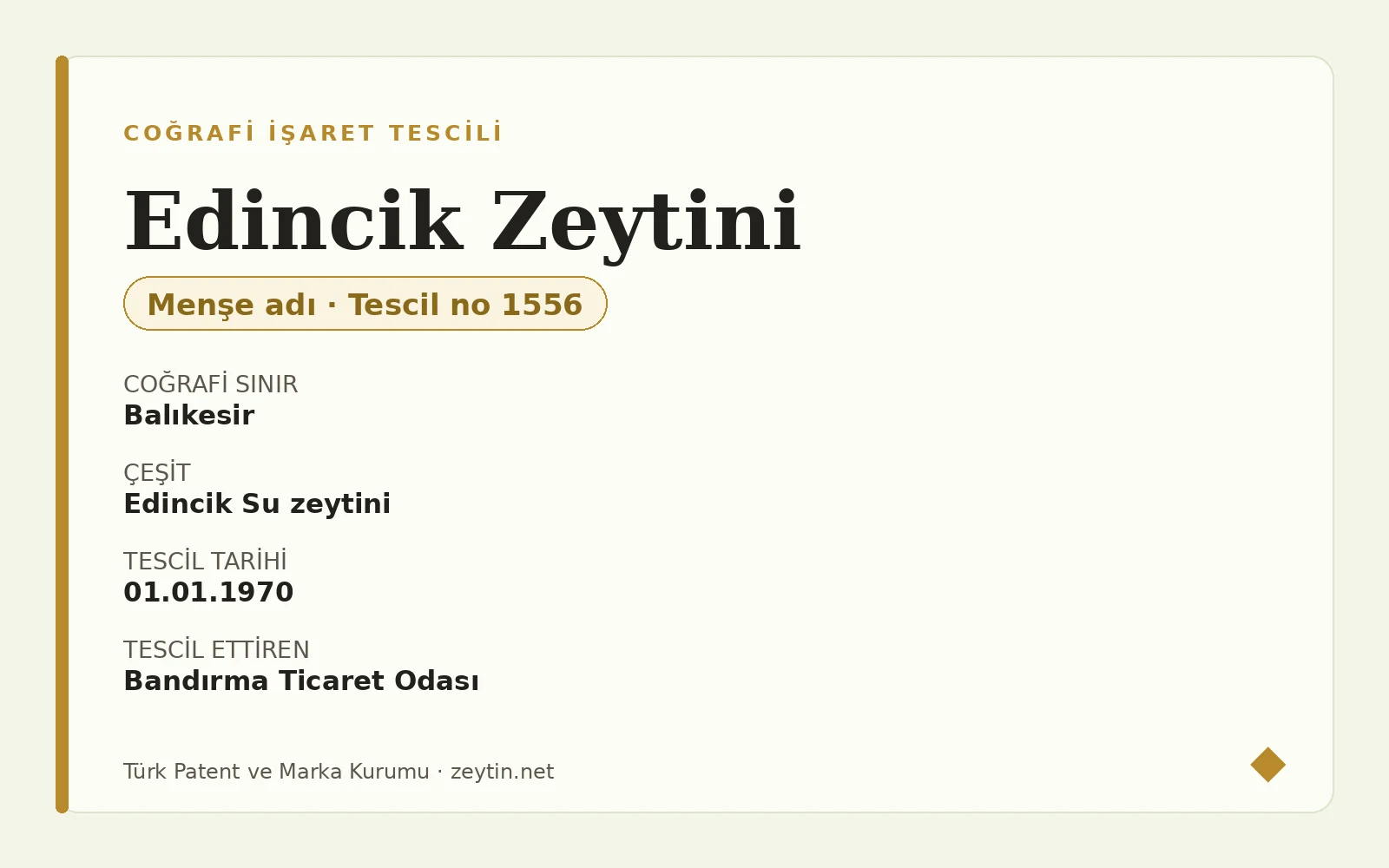
Edincik Olive: high water content makes it a table olive
Registered in 2024. The certificate gives one reason why the cultivar goes to the table: high water content. Its volatiles include 1.5-25% ethyl acetate.
Article
Edincik Olive: high water content makes it a table olive
Registered in 2024. The certificate gives one reason why the cultivar goes to the table: high water content. Its volatiles include 1.5-25% ethyl acetate.
 Article
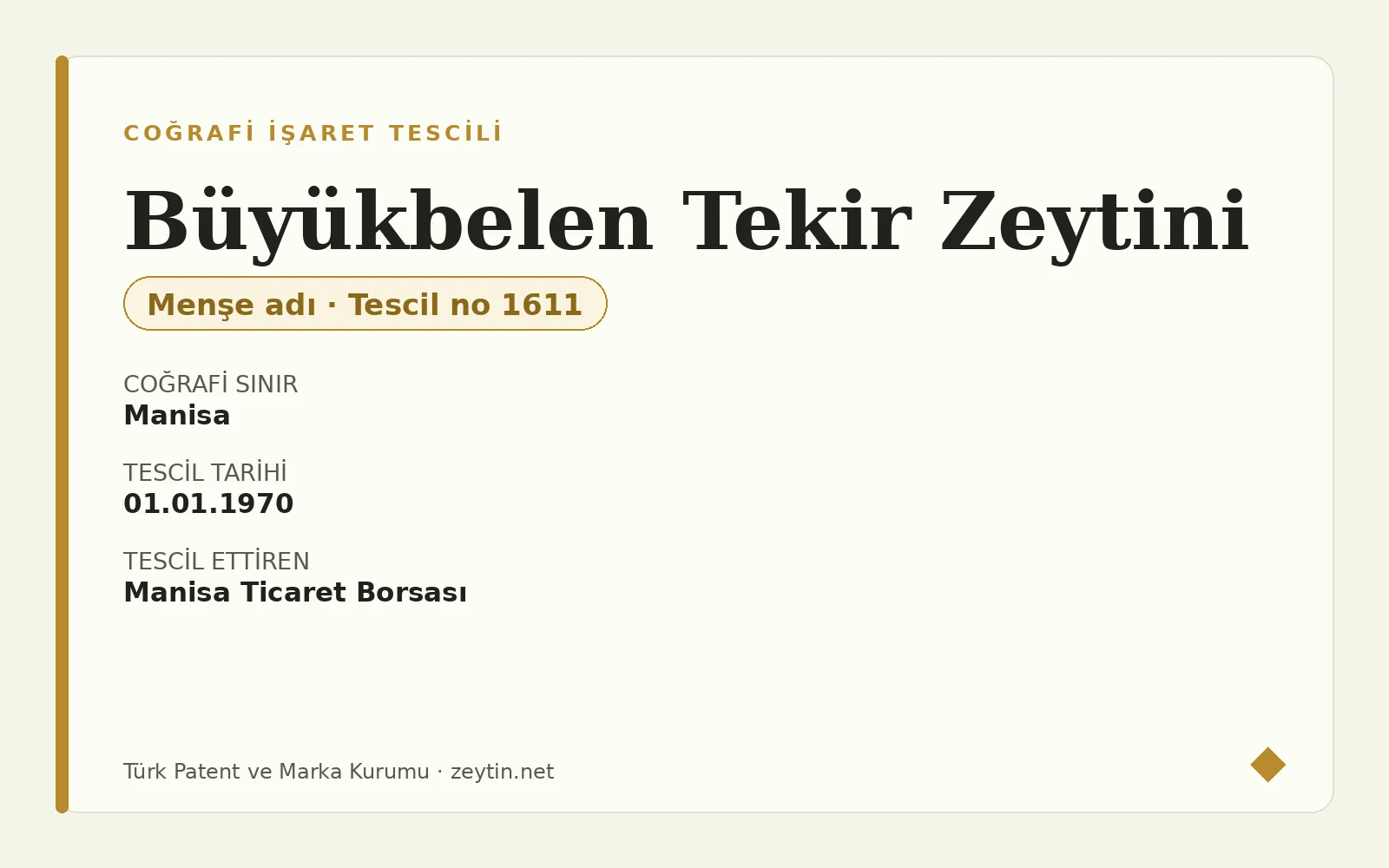
Büyükbelen Tekir Olive: a table olive born from grafting two cultivars
Registered in 2024. The Eşek (Ödemiş) cultivar is grafted onto Uslu seedling rootstock. The flesh does not soften after processing, giving a long shelf life.
Article
Büyükbelen Tekir Olive: a table olive born from grafting two cultivars
Registered in 2024. The Eşek (Ödemiş) cultivar is grafted onto Uslu seedling rootstock. The flesh does not soften after processing, giving a long shelf life.
 Article
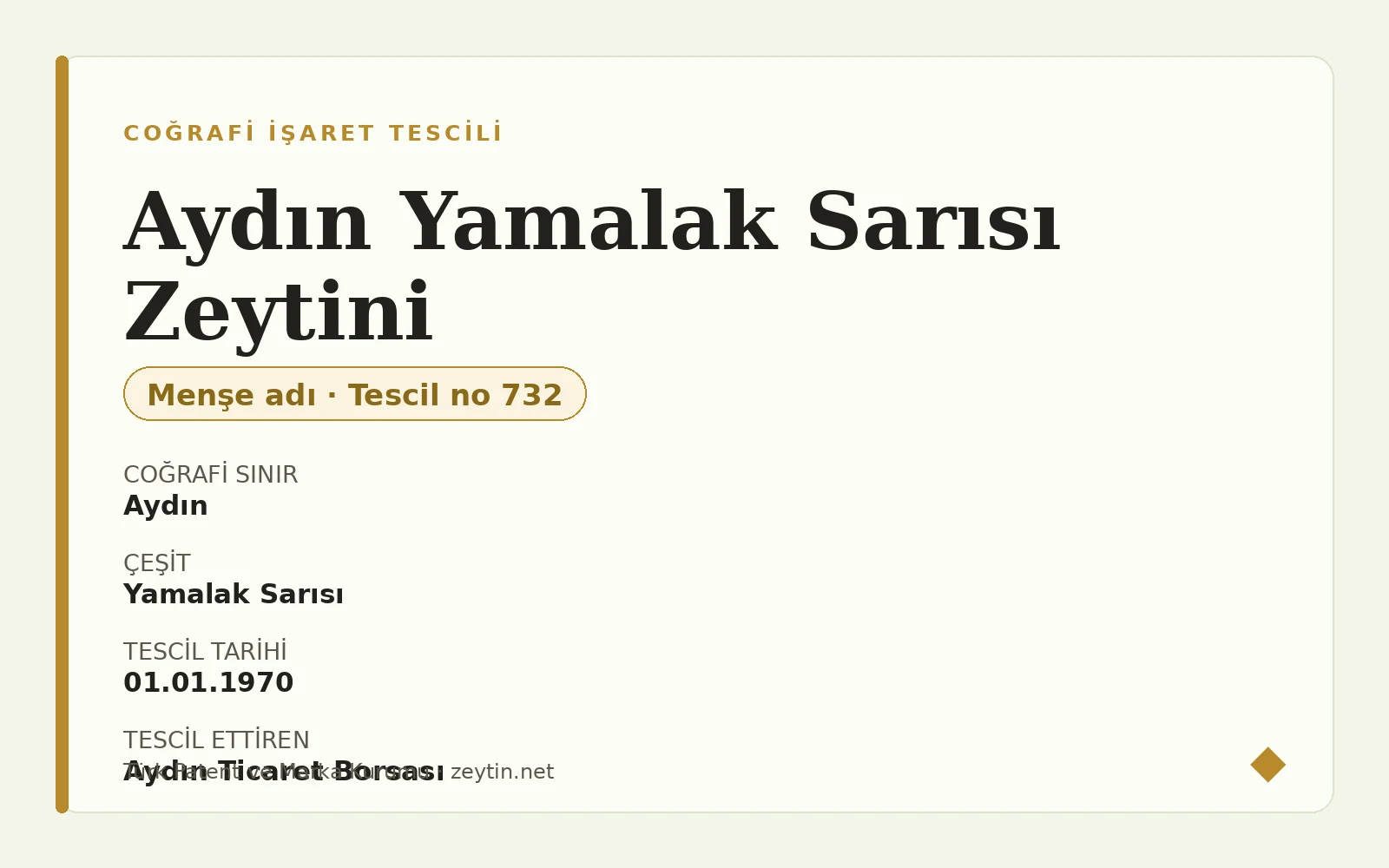
Aydın Yamalak Sarısı Olive: a table fruit reaching 11 grams
Registered in 2021. At 6-11 g the fruit is among Turkey's largest table olives. It is propagated by grafting onto wild rootstock and harvested in late September.
Article
Aydın Yamalak Sarısı Olive: a table fruit reaching 11 grams
Registered in 2021. At 6-11 g the fruit is among Turkey's largest table olives. It is propagated by grafting onto wild rootstock and harvested in late September.
 Article
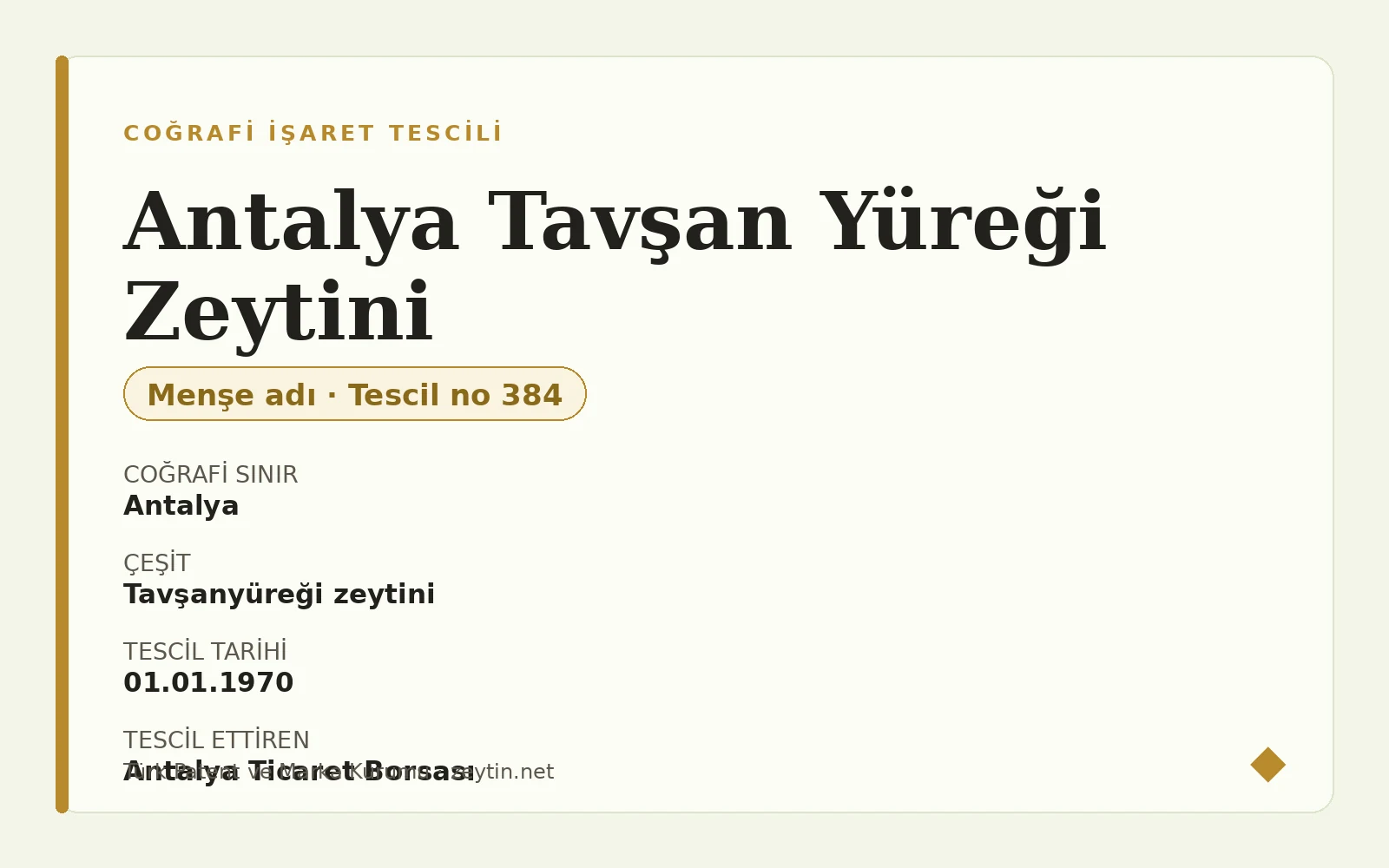
Antalya Tavşan Yüreği Olive: a registration named after the shape of its fruit
Registered in 2018. Fruit and stone are heart-shaped; picked green, its oil runs 9-20.2%, rising to 25% at black maturity.
Article
Antalya Tavşan Yüreği Olive: a registration named after the shape of its fruit
Registered in 2018. Fruit and stone are heart-shaped; picked green, its oil runs 9-20.2%, rising to 25% at black maturity.
 Article
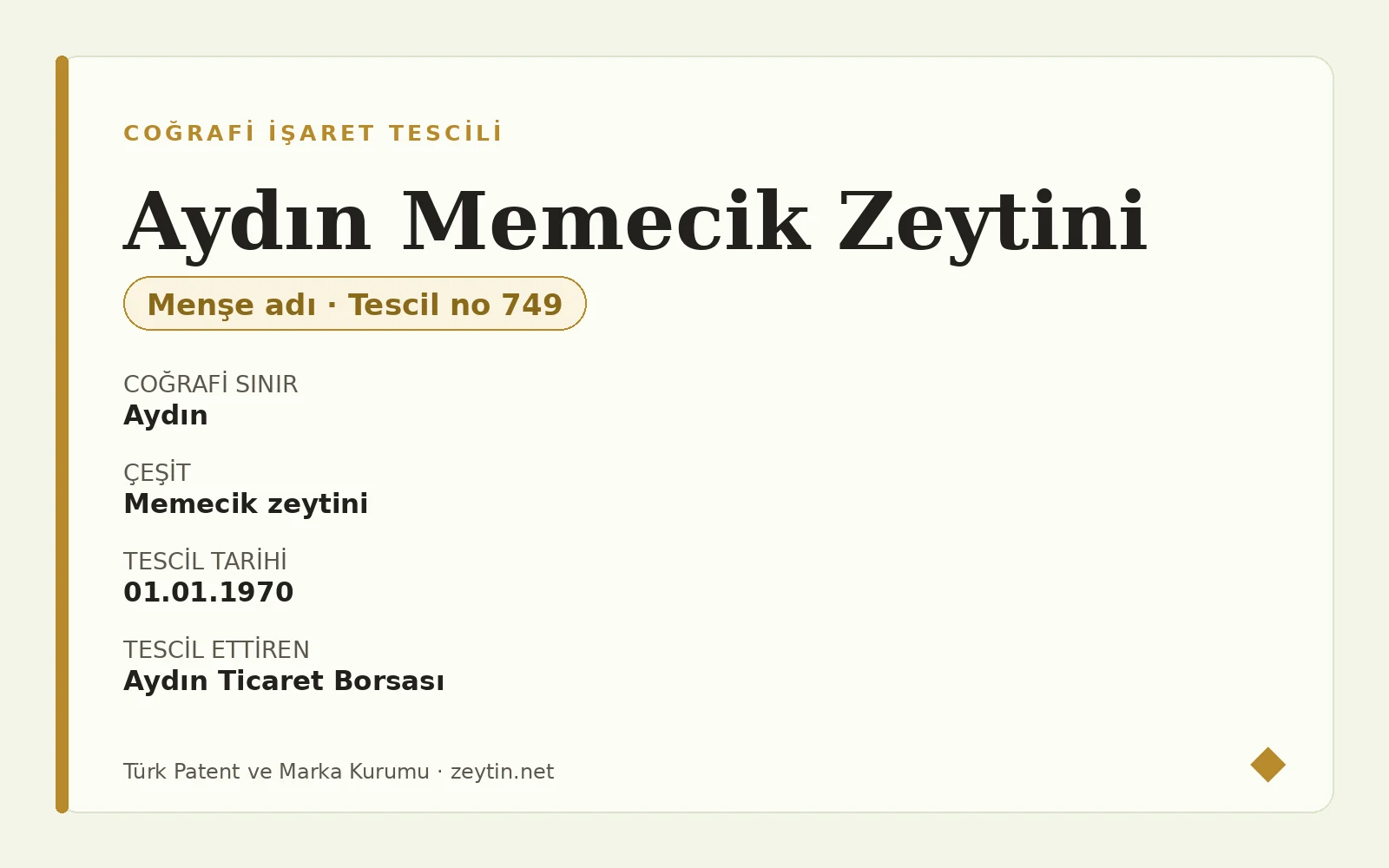
Aydın Memecik Olive: grafted on wild rootstock, a tree that yields for a century
Registered in 2021. The certificate ties the cultivar's key trait to longevity: grafted on wild rootstock, Memecik yields economically for 80-100 years and can then be rejuvenated.
Article
Aydın Memecik Olive: grafted on wild rootstock, a tree that yields for a century
Registered in 2021. The certificate ties the cultivar's key trait to longevity: grafted on wild rootstock, Memecik yields economically for 80-100 years and can then be rejuvenated.
 Article
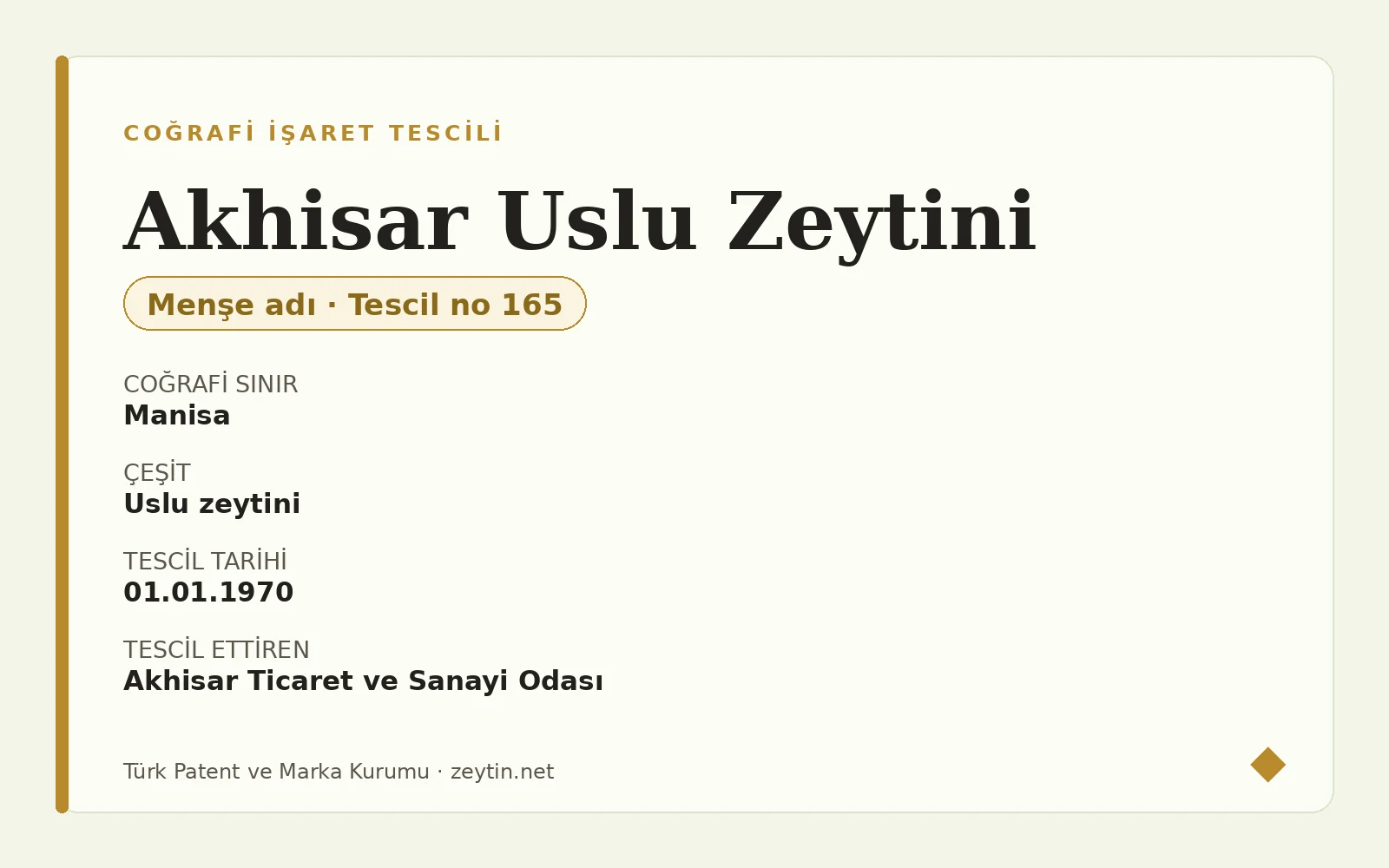
Akhisar Uslu Olive: the measured specification of a black table olive
Registered in 2010 as a designation of origin. The certificate defines the Uslu cultivar in figures — and corrects a published error: the flesh ratio is 85.17%.
Article
Akhisar Uslu Olive: the measured specification of a black table olive
Registered in 2010 as a designation of origin. The certificate defines the Uslu cultivar in figures — and corrects a published error: the flesh ratio is 85.17%.
 Article
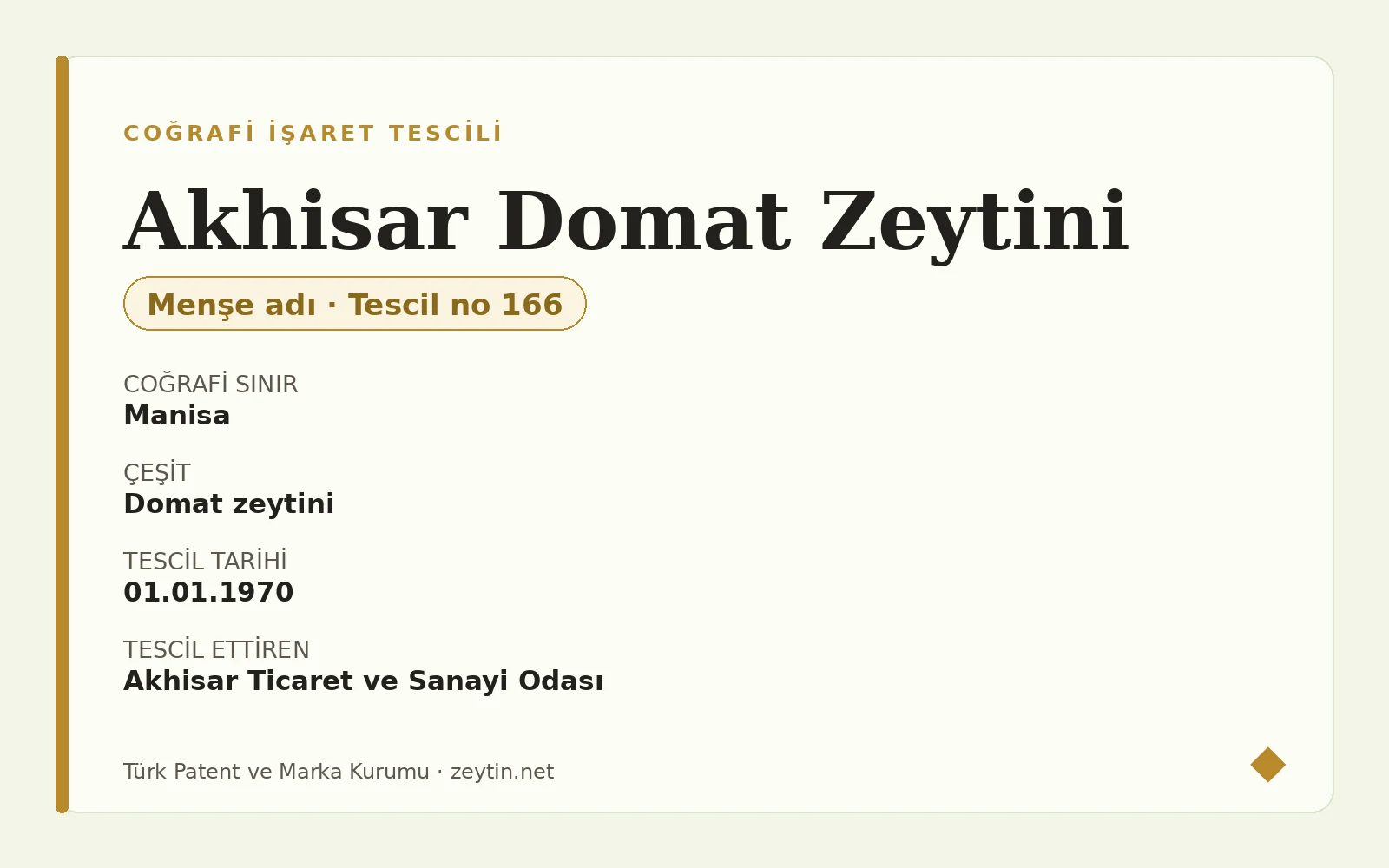
Akhisar Domat Olive: the specification behind stuffed olives
Registered in 2010. The certificate sets calibre separately for each product form — 170-290 for stuffed, 110-260 for cocktail. One cultivar, different sizes.
Article
Akhisar Domat Olive: the specification behind stuffed olives
Registered in 2010. The certificate sets calibre separately for each product form — 170-290 for stuffed, 110-260 for cocktail. One cultivar, different sizes.
 Article
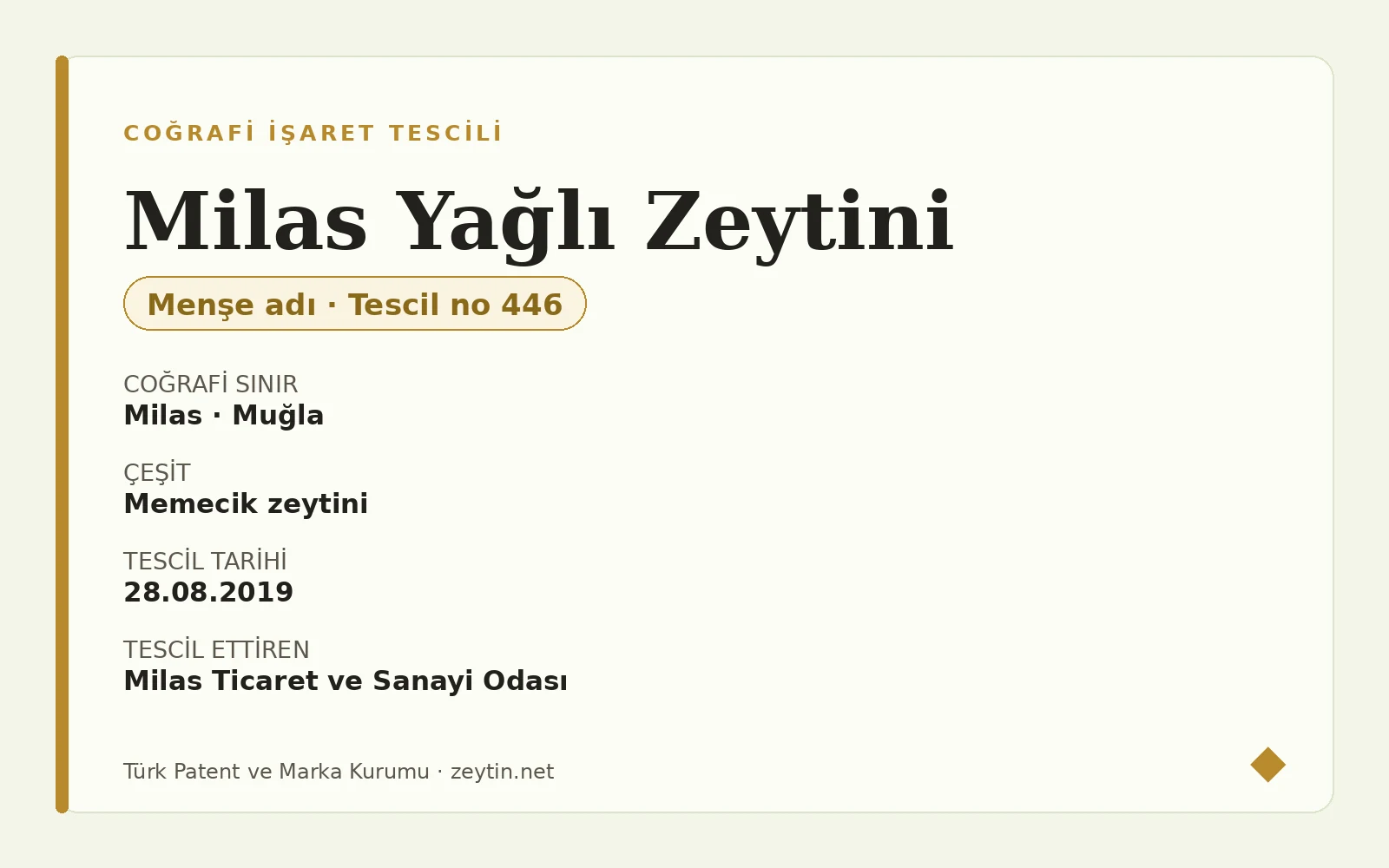
Milas Oil-Cured Olive: the one table-olive registration with measurements
Five of the six registrations are olive oils. This is the one table olive, and its certificate gives fruit dimensions, flesh-to-stone ratio and flesh firmness in figures.
Article
Milas Oil-Cured Olive: the one table-olive registration with measurements
Five of the six registrations are olive oils. This is the one table olive, and its certificate gives fruit dimensions, flesh-to-stone ratio and flesh firmness in figures.
 Article
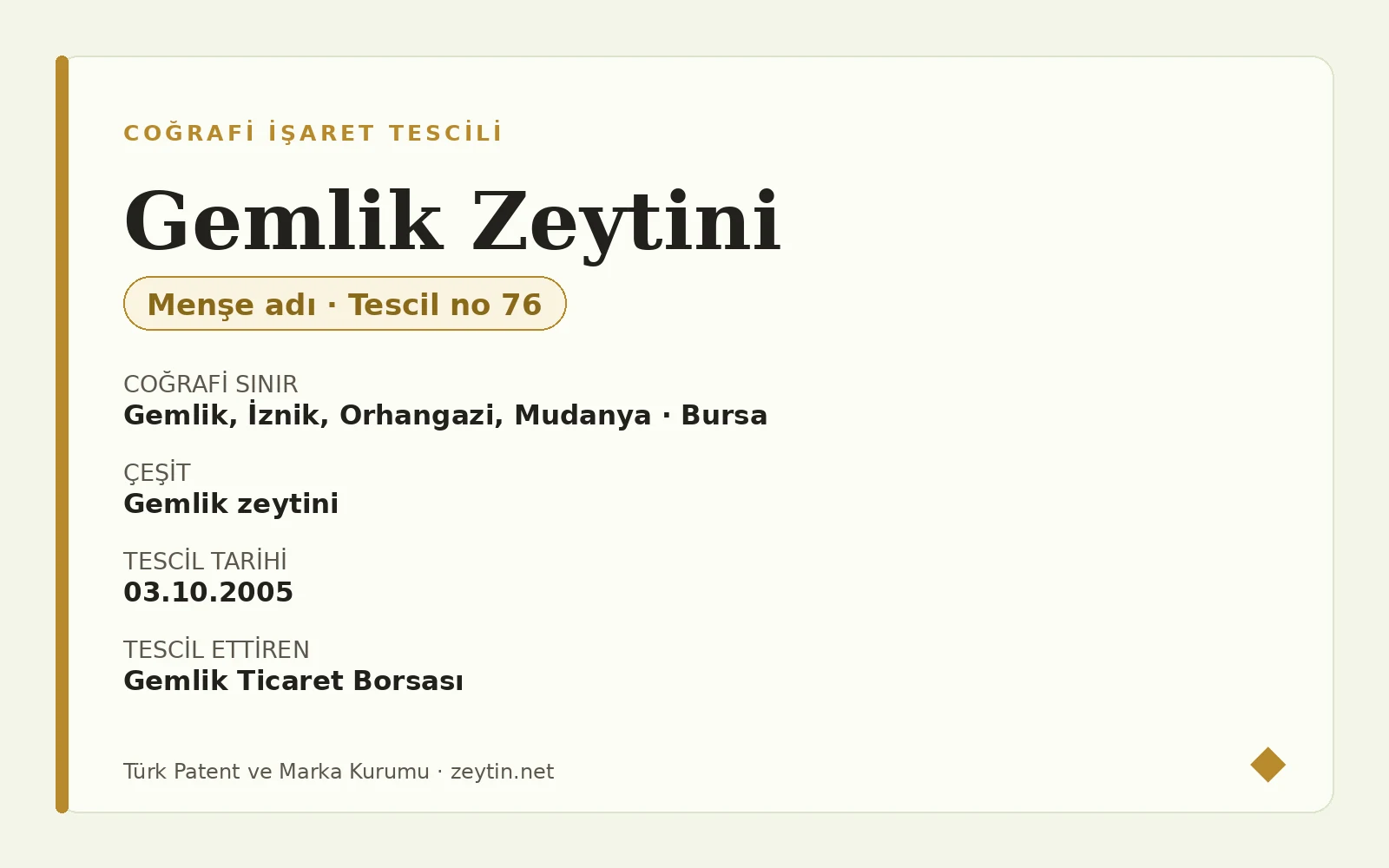
The Gemlik Olive designation of origin: what the certificate says
Turkey's first registered olive (2005, no 76). The certificate defines four districts, three cultivars, four curing methods and seven size grades — all of them binding.
Article
The Gemlik Olive designation of origin: what the certificate says
Turkey's first registered olive (2005, no 76). The certificate defines four districts, three cultivars, four curing methods and seven size grades — all of them binding.
 Article
Sat olive
Sat is a recorded variety of the Black Sea. No measured pomological data published.
Article
Sat olive
Sat is a recorded variety of the Black Sea. No measured pomological data published.
 Article
Patos olive
Patos is a recorded variety of the Black Sea. Described in the source.
Article
Patos olive
Patos is a recorded variety of the Black Sea. Described in the source.
 Article
Otur olive
Otur is a recorded variety of the Black Sea. Described in the source.
Article
Otur olive
Otur is a recorded variety of the Black Sea. Described in the source.
 Article
Marantelli olive
Marantelli is a recorded variety of the Black Sea. Described in the source.
Article
Marantelli olive
Marantelli is a recorded variety of the Black Sea. Described in the source.
 Article
Gölvala olive
Gölvala is a recorded variety of the Black Sea. No measured pomological data published.
Article
Gölvala olive
Gölvala is a recorded variety of the Black Sea. No measured pomological data published.
 Article
Butko olive
Butko is a recorded variety of the Black Sea. No measured pomological data published.
Article
Butko olive
Butko is a recorded variety of the Black Sea. No measured pomological data published.
 Article
Zoncuk olive
Zoncuk is a recorded variety of south-eastern Anatolia. No measured pomological data published.
Article
Zoncuk olive
Zoncuk is a recorded variety of south-eastern Anatolia. No measured pomological data published.
 Article
Melkebazi olive
Melkebazi is a recorded variety of south-eastern Anatolia. No measured pomological data published.
Article
Melkebazi olive
Melkebazi is a recorded variety of south-eastern Anatolia. No measured pomological data published.
 Article
Mavi olive
Mavi is a recorded variety of south-eastern Anatolia. No measured pomological data published.
Article
Mavi olive
Mavi is a recorded variety of south-eastern Anatolia. No measured pomological data published.
 Article
Kan Çelebi olive
Kan Çelebi is a recorded variety of south-eastern Anatolia. Described in the source.
Article
Kan Çelebi olive
Kan Çelebi is a recorded variety of south-eastern Anatolia. Described in the source.
 Article
Hursuki olive
Hursuki is a recorded variety of south-eastern Anatolia. No measured pomological data published.
Article
Hursuki olive
Hursuki is a recorded variety of south-eastern Anatolia. No measured pomological data published.
 Article
Belluti olive
Belluti is a recorded variety of south-eastern Anatolia. No measured pomological data published.
Article
Belluti olive
Belluti is a recorded variety of south-eastern Anatolia. No measured pomological data published.
 Article
Tavşanyüreği olive
Tavşanyüreği is a recorded variety of the Mediterranean. Described in the source.
Article
Tavşanyüreği olive
Tavşanyüreği is a recorded variety of the Mediterranean. Described in the source.
 Article
Büyük Topak Ulak olive
Büyük Topak Ulak is a recorded variety of the Mediterranean. Described in the source.
Article
Büyük Topak Ulak olive
Büyük Topak Ulak is a recorded variety of the Mediterranean. Described in the source.
 Article
İzmir Sofralık olive
İzmir Sofralık is a recorded variety of the Aegean. Described in the source.
Article
İzmir Sofralık olive
İzmir Sofralık is a recorded variety of the Aegean. Described in the source.
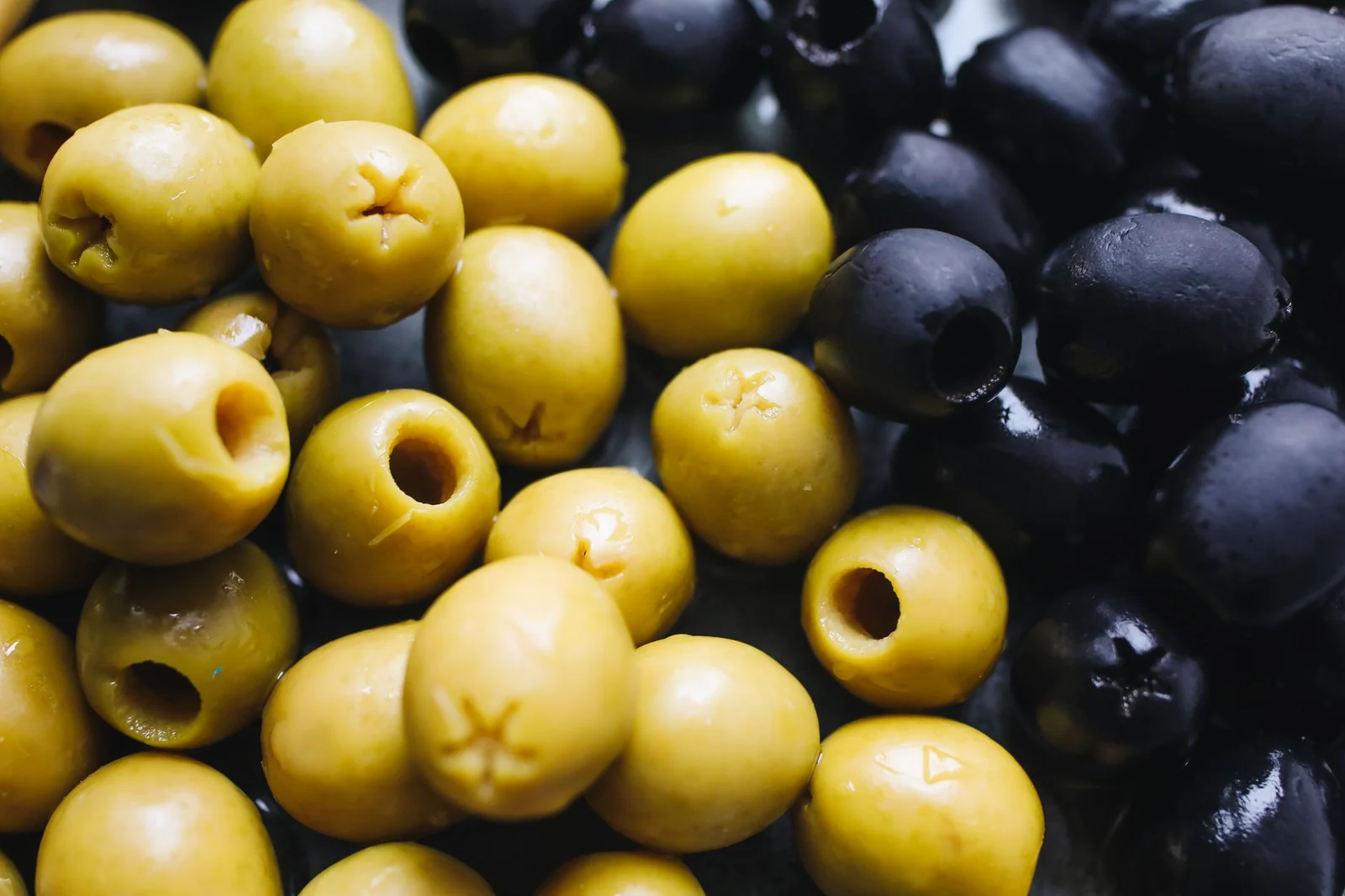 Article
Which type of olive is better?
Table or oil, green or black — choosing a variety by purpose, with a short regional map.
Article
Which type of olive is better?
Table or oil, green or black — choosing a variety by purpose, with a short regional map.
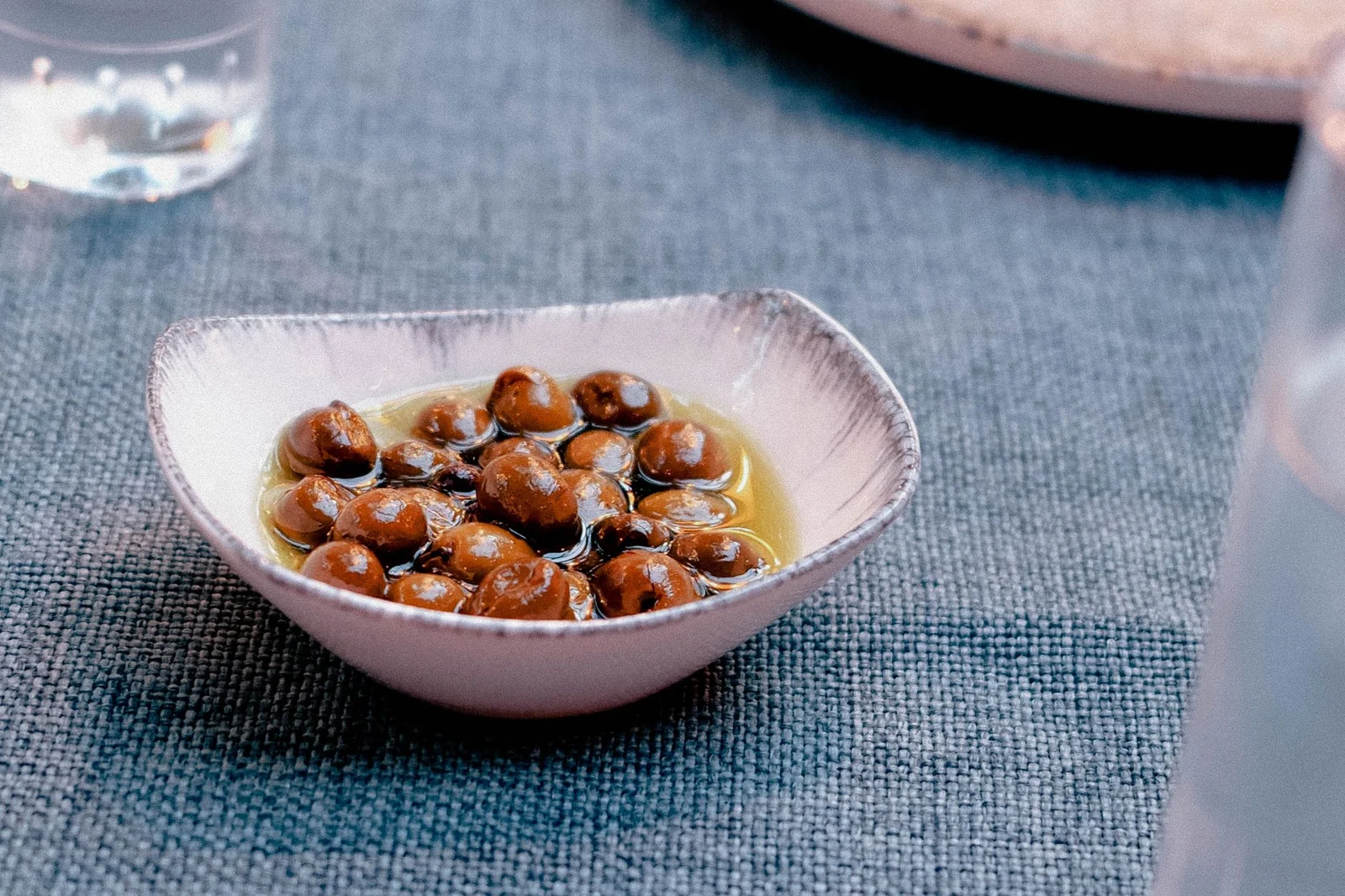 Article
Which table olive variety is best?
The leading varieties for black and green table olives, measured fruit weights, and how curing affects quality.
Article
Which table olive variety is best?
The leading varieties for black and green table olives, measured fruit weights, and how curing affects quality.
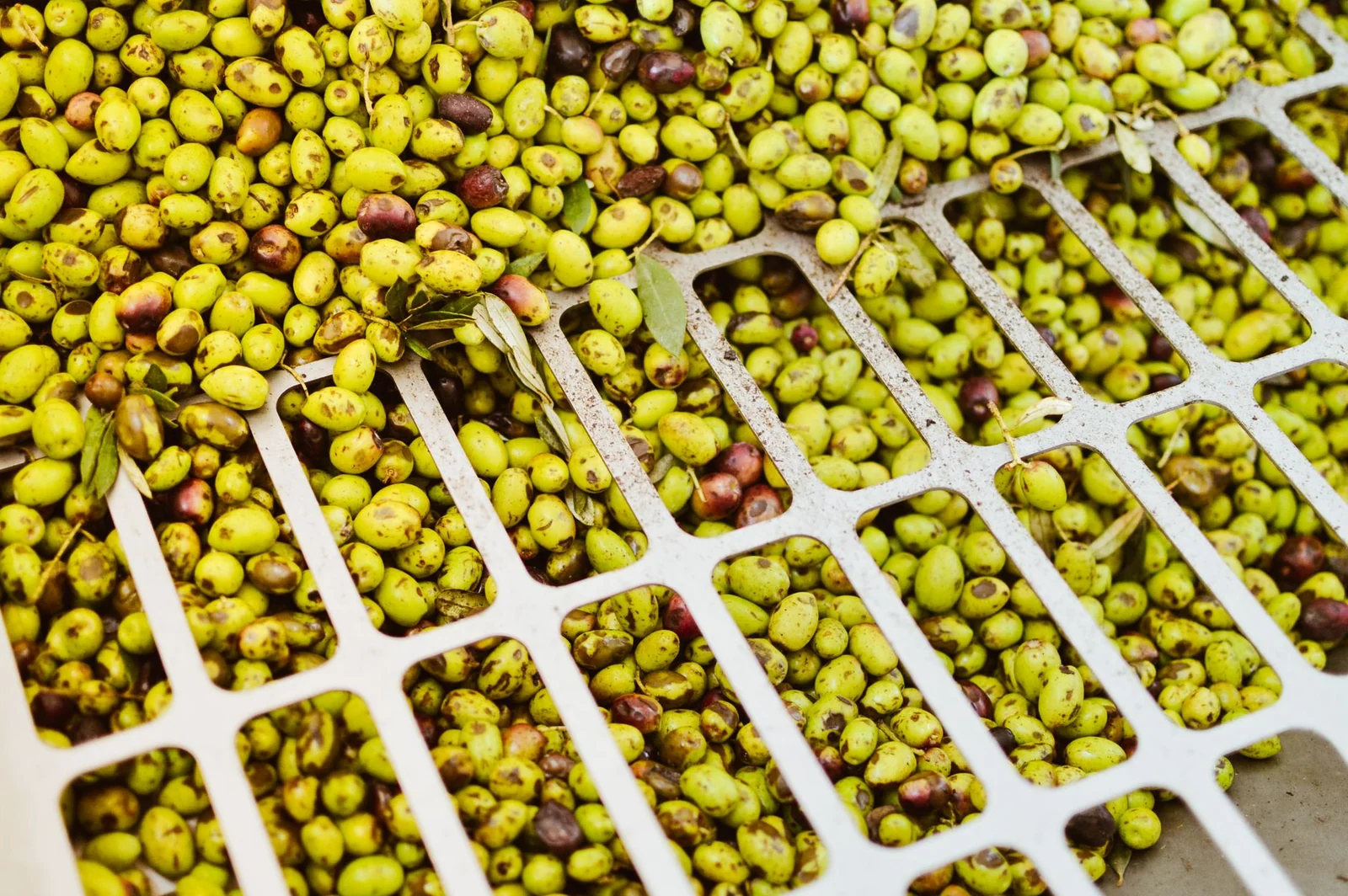 Article
Which is Turkey's best-quality olive?
Quality criteria and measured values for Turkey's main olive varieties — fruit weight, oil content and intended use.
Article
Which is Turkey's best-quality olive?
Quality criteria and measured values for Turkey's main olive varieties — fruit weight, oil content and intended use.
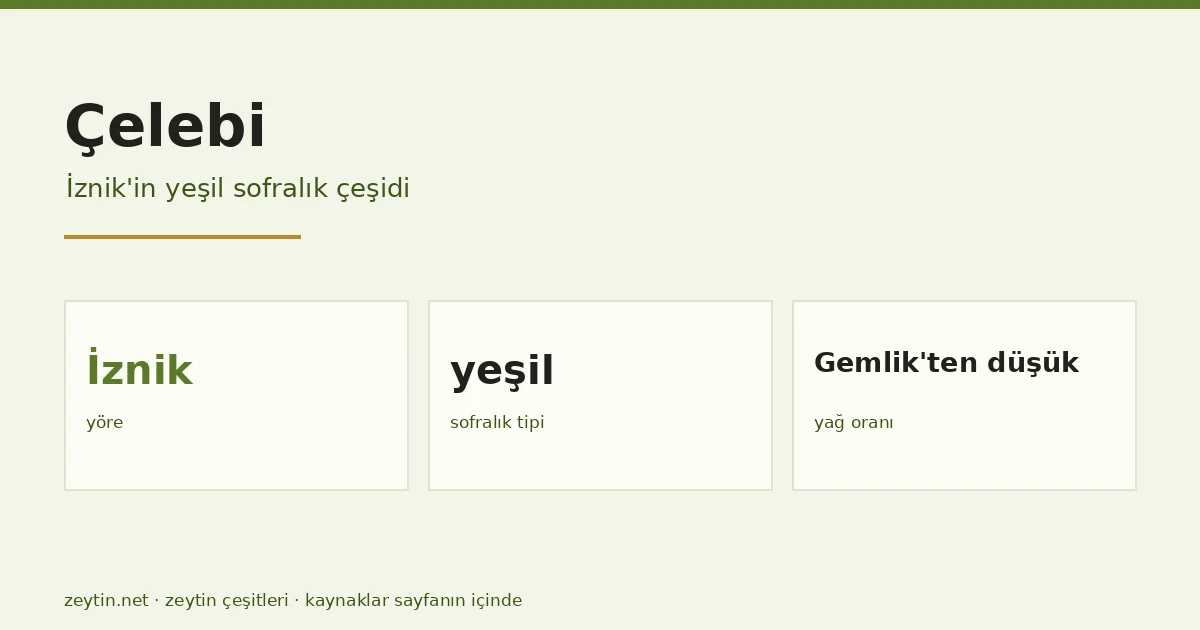 Article
The Çelebi olive: the green table cultivar of İznik
Grown around İznik in Bursa, Çelebi is a green table cultivar. Its oil content is lower than Gemlik's — which is no drawback for a table olive.
Article
The Çelebi olive: the green table cultivar of İznik
Grown around İznik in Bursa, Çelebi is a green table cultivar. Its oil content is lower than Gemlik's — which is no drawback for a table olive.
 Article
Yamalak Sarısı: the local table cultivar of Aydın
A local cultivar of Aydın counted among Turkey's most important table olives, and the subject of a phenotypic characterisation study.
Article
Yamalak Sarısı: the local table cultivar of Aydın
A local cultivar of Aydın counted among Turkey's most important table olives, and the subject of a phenotypic characterisation study.
 Article
The Edincik Su olive: the third black-table cultivar
One of the three cultivars widely processed as black table olives in Turkey, alongside Gemlik and Uslu. The cultivar of the Bandırma area.
Article
The Edincik Su olive: the third black-table cultivar
One of the three cultivars widely processed as black table olives in Turkey, alongside Gemlik and Uslu. The cultivar of the Bandırma area.
 Article
The Çakır olive: a cultivar that asks for a thousand hours of cold
Reported alongside Ayvalık and Domat with a 1000-hour chilling requirement — the group most at risk as winters warm.
Article
The Çakır olive: a cultivar that asks for a thousand hours of cold
Reported alongside Ayvalık and Domat with a 1000-hour chilling requirement — the group most at risk as winters warm.
 Article
The Çilli olive: large fruit, low chilling requirement
At 6.90 g it ranks among the large-fruited cultivars, and sits in the low chilling-requirement group — second only to Adana Topağı.
Article
The Çilli olive: large fruit, low chilling requirement
At 6.90 g it ranks among the large-fruited cultivars, and sits in the low chilling-requirement group — second only to Adana Topağı.
 Article
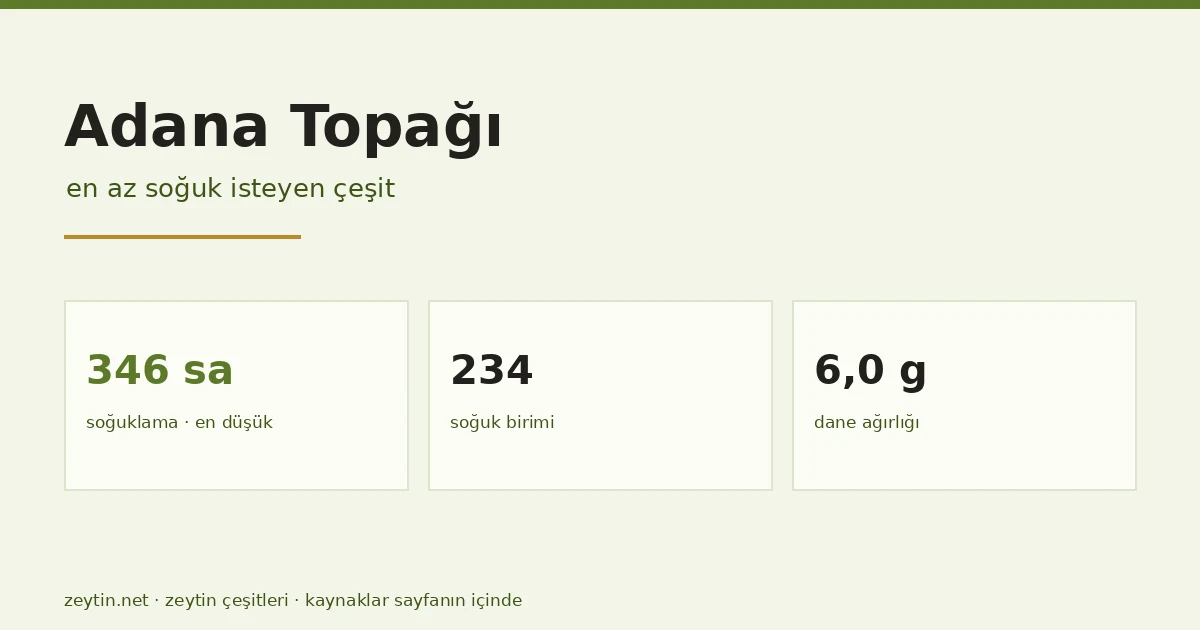
Adana Topağı: the olive cultivar that needs the least cold
The lowest chilling requirement among cultivars tested: 346 hours, 234 chill units. Why that matters as winters warm, and its 6-gram fruit.
Article
Adana Topağı: the olive cultivar that needs the least cold
The lowest chilling requirement among cultivars tested: 346 hours, 234 chill units. Why that matters as winters warm, and its 6-gram fruit.
 Article
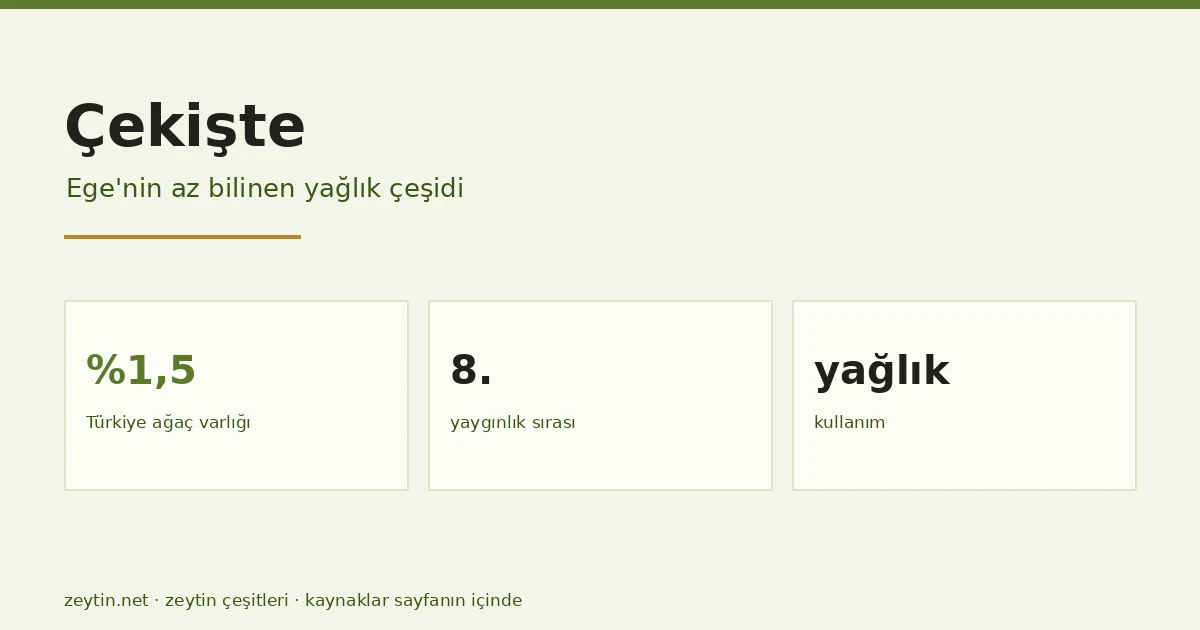
The Çekişte olive: the Aegean's lesser-known oil cultivar
Çekişte accounts for 1.5% of Turkey's olive trees — more widespread than Domat or Uslu, yet a cultivar whose name is almost never heard.
Article
The Çekişte olive: the Aegean's lesser-known oil cultivar
Çekişte accounts for 1.5% of Turkey's olive trees — more widespread than Domat or Uslu, yet a cultivar whose name is almost never heard.
 Article
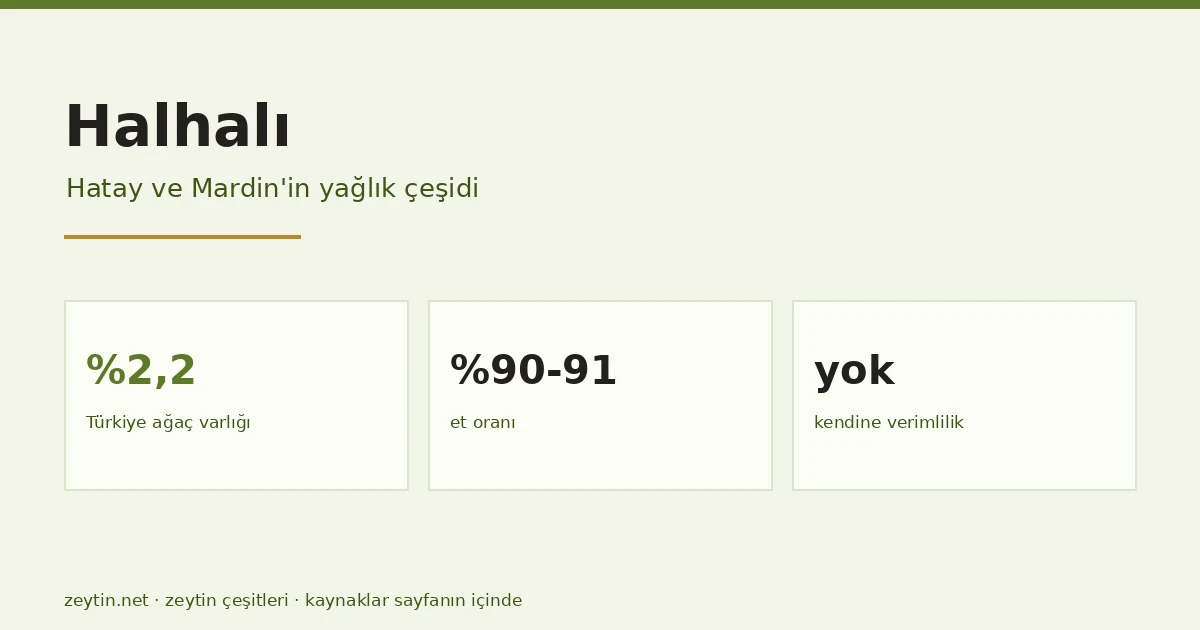
The Halhalı olive: Hatay's oil cultivar
Halhalı accounts for 2.2% of Turkey's olive trees, the main oil cultivar of Hatay and Mardin. The measured self-sterility of Yuvarlak Halhalı and what it means for orchard planning.
Article
The Halhalı olive: Hatay's oil cultivar
Halhalı accounts for 2.2% of Turkey's olive trees, the main oil cultivar of Hatay and Mardin. The measured self-sterility of Yuvarlak Halhalı and what it means for orchard planning.
 Article
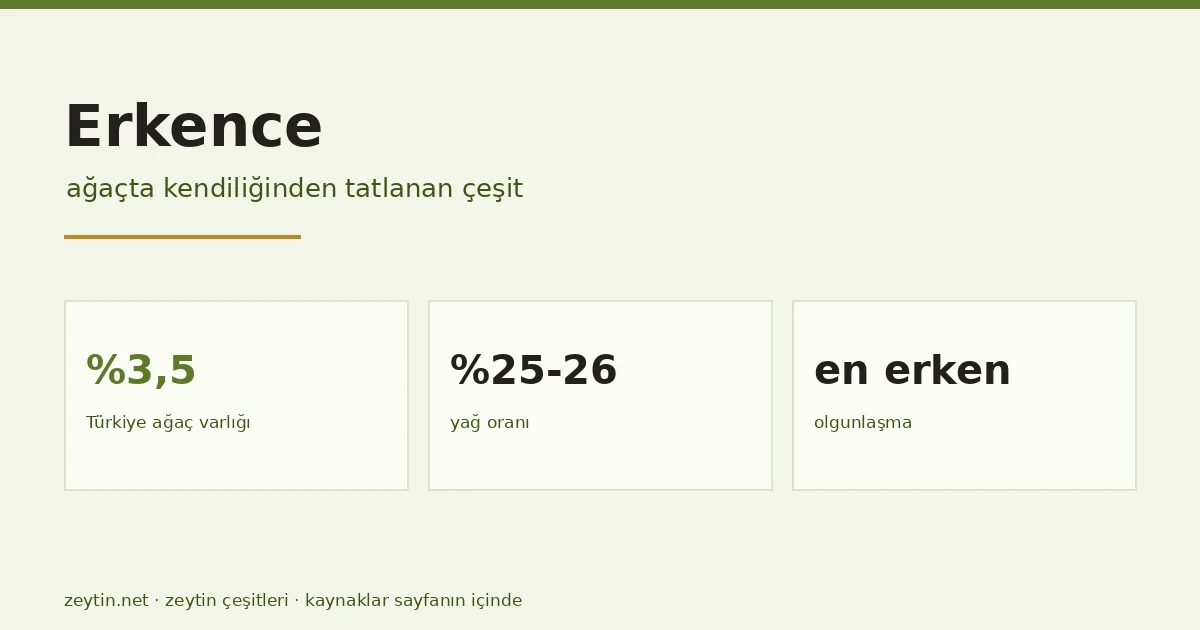
The Erkence olive: the cultivar that sweetens on the tree
Erkence accounts for 3.5% of Turkey's olive trees. It is the Aegean's earliest-ripening cultivar and has a property with few equivalents anywhere: the fruit loses its bitterness on the tree, without brine.
Article
The Erkence olive: the cultivar that sweetens on the tree
Erkence accounts for 3.5% of Turkey's olive trees. It is the Aegean's earliest-ripening cultivar and has a property with few equivalents anywhere: the fruit loses its bitterness on the tree, without brine.
 Article
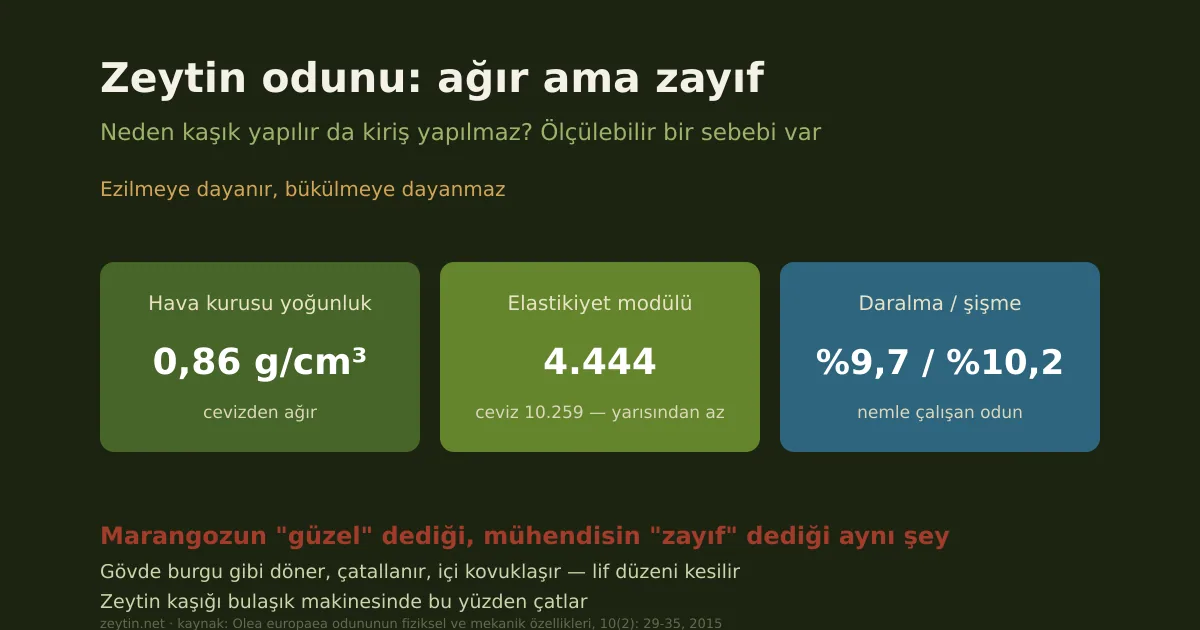
Olive wood: why spoons and not beams?
At 0.86 g/cm³ air-dried it is denser than walnut, yet its modulus of elasticity of 4,444 N/mm² is less than half walnut's. It resists crushing but not bending.
Article
Olive wood: why spoons and not beams?
At 0.86 g/cm³ air-dried it is denser than walnut, yet its modulus of elasticity of 4,444 N/mm² is less than half walnut's. It resists crushing but not bending.
 Article
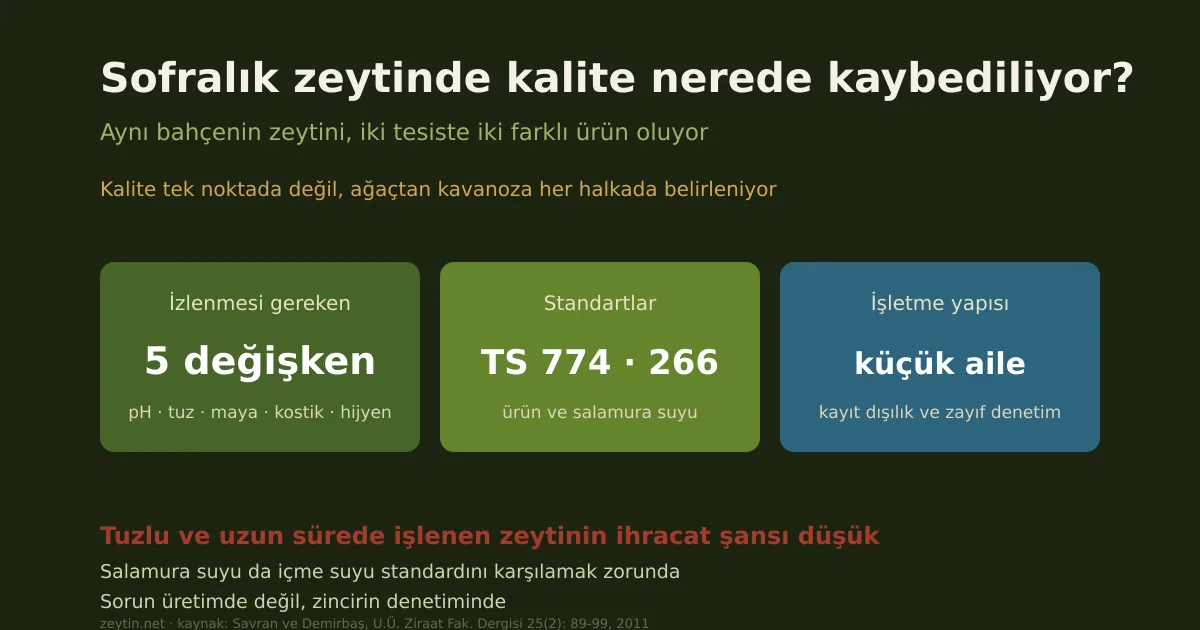
Where is quality lost in table olives?
Variety choice, harvest technique, fermentation control, sterilisation and the pre-packing check are each a separate point of loss. The structural problem is scale and inspection.
Article
Where is quality lost in table olives?
Variety choice, harvest technique, fermentation control, sterilisation and the pre-packing check are each a separate point of loss. The structural problem is scale and inspection.
 Article
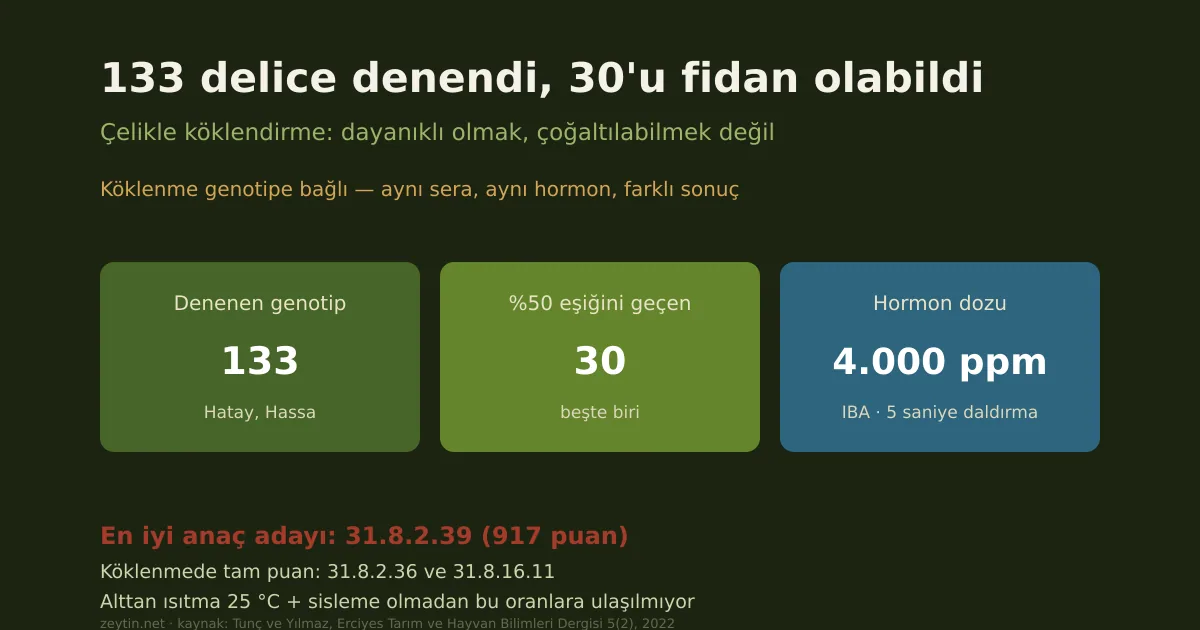
Rooting olive cuttings: 30 of 133 wild olives made it
In Hassa, Hatay, 133 wild olive genotypes were rooted from cuttings and only 30 cleared the 50% threshold. Rooting depends on the genotype, not the technique.
Article
Rooting olive cuttings: 30 of 133 wild olives made it
In Hassa, Hatay, 133 wild olive genotypes were rooted from cuttings and only 30 cleared the 50% threshold. Rooting depends on the genotype, not the technique.
 Article
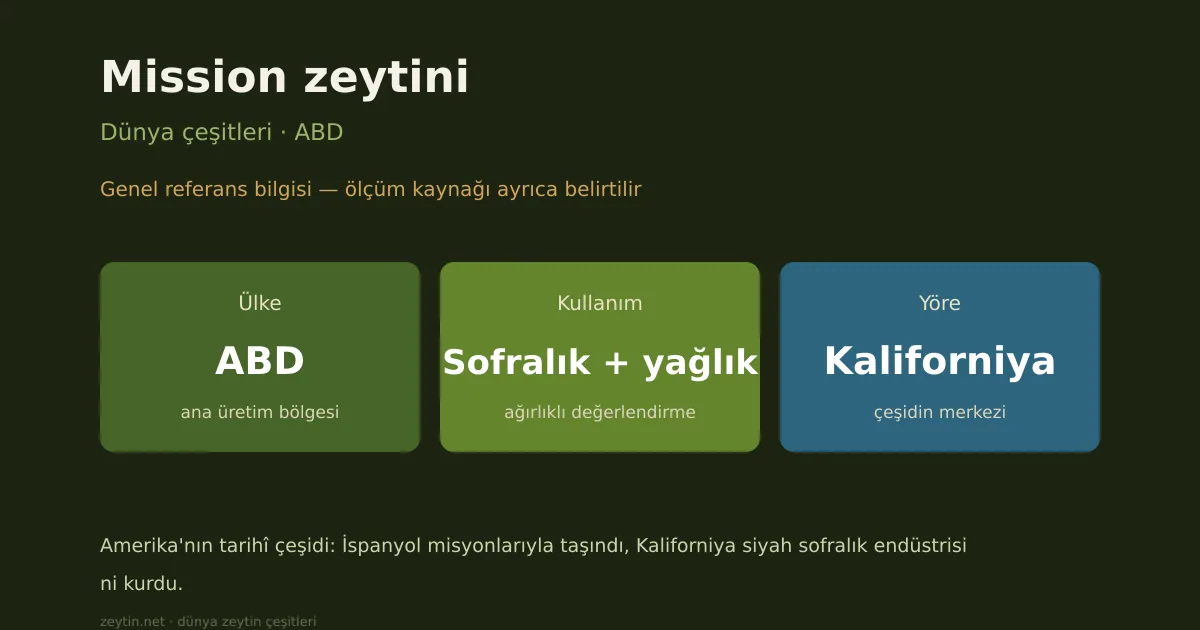
Mission olive: United States's table and oil variety
America's historic variety: carried by the Spanish missions, it built California's black table olive industry.
Article
Mission olive: United States's table and oil variety
America's historic variety: carried by the Spanish missions, it built California's black table olive industry.
 Article
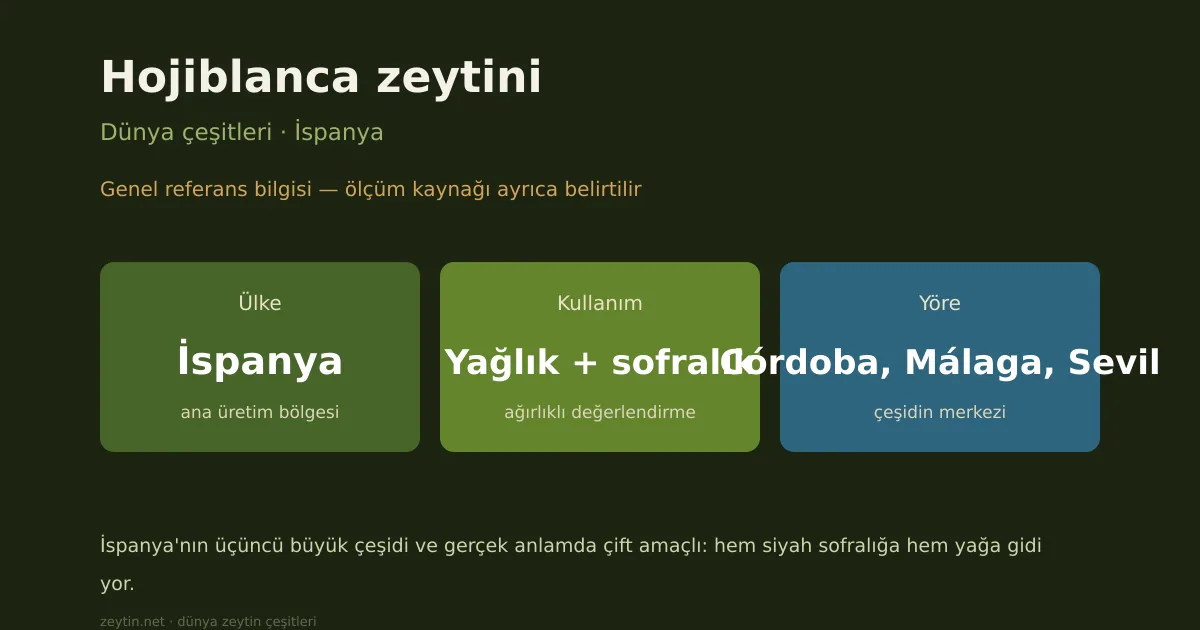
Hojiblanca olive: Spain's oil and table variety
Spain's third-largest variety and genuinely dual-purpose: it goes to black table olives and to oil alike.
Article
Hojiblanca olive: Spain's oil and table variety
Spain's third-largest variety and genuinely dual-purpose: it goes to black table olives and to oil alike.
 Article
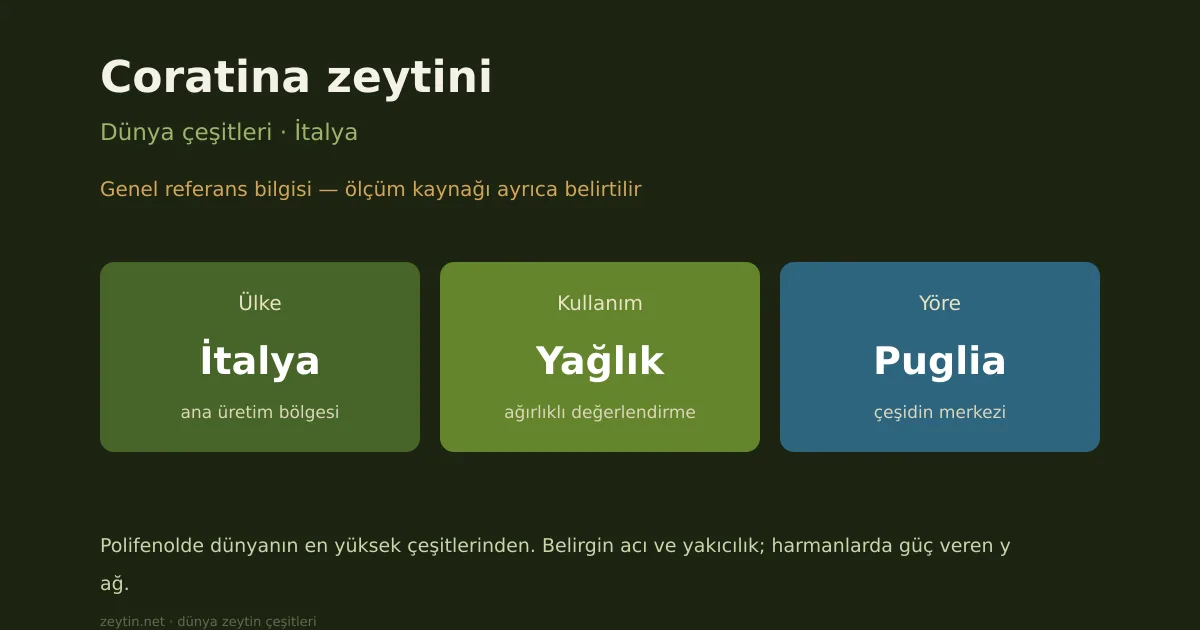
Coratina olive: Italy's oil variety
Among the highest-polyphenol varieties in the world. Distinctly bitter and pungent — the oil that gives blends their backbone.
Article
Coratina olive: Italy's oil variety
Among the highest-polyphenol varieties in the world. Distinctly bitter and pungent — the oil that gives blends their backbone.
 Article
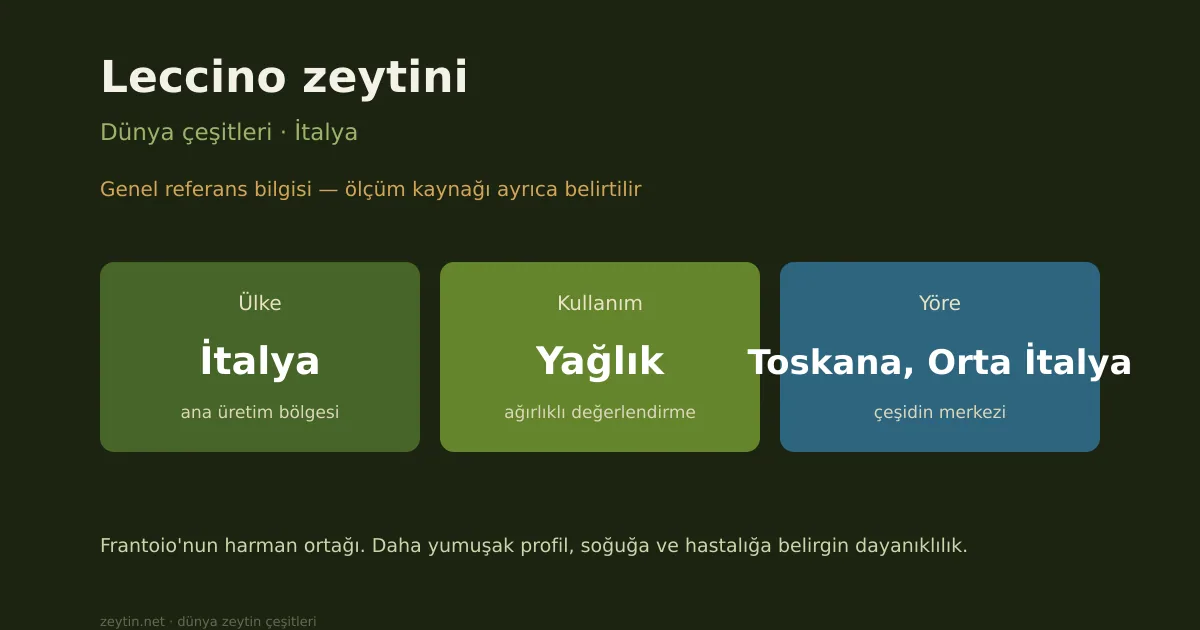
Leccino olive: Italy's oil variety
Frantoio's blending partner. A softer profile with notable cold and disease tolerance.
Article
Leccino olive: Italy's oil variety
Frantoio's blending partner. A softer profile with notable cold and disease tolerance.
 Article
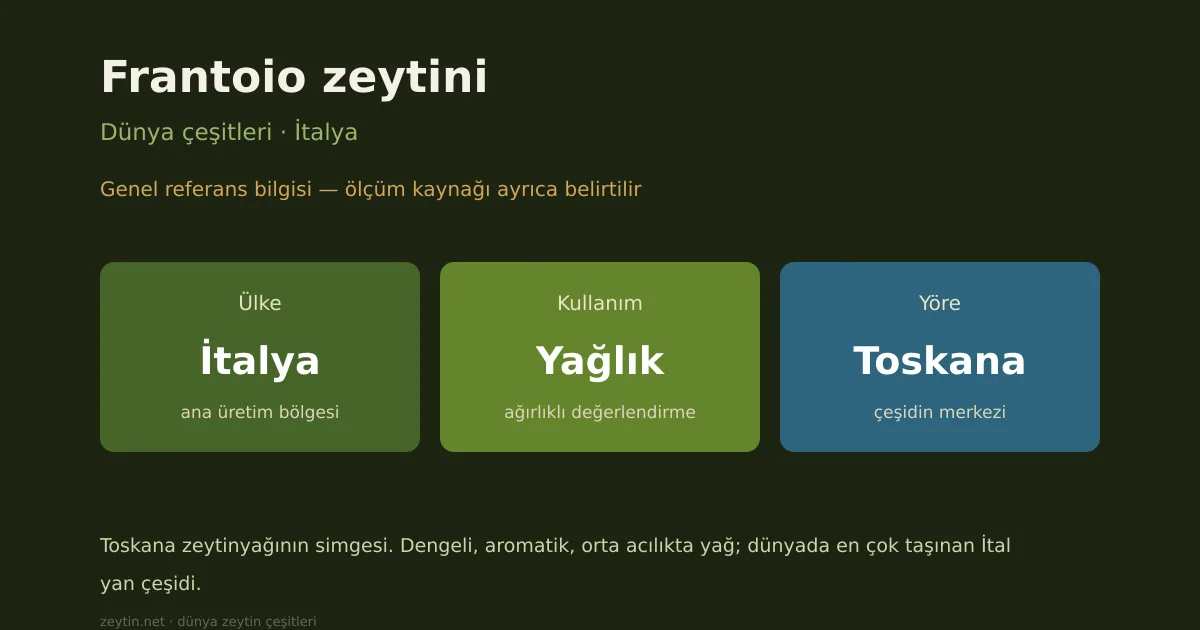
Frantoio olive: Italy's oil variety
The emblem of Tuscan olive oil. A balanced, aromatic, moderately bitter oil, and the most widely exported Italian variety.
Article
Frantoio olive: Italy's oil variety
The emblem of Tuscan olive oil. A balanced, aromatic, moderately bitter oil, and the most widely exported Italian variety.
 Article
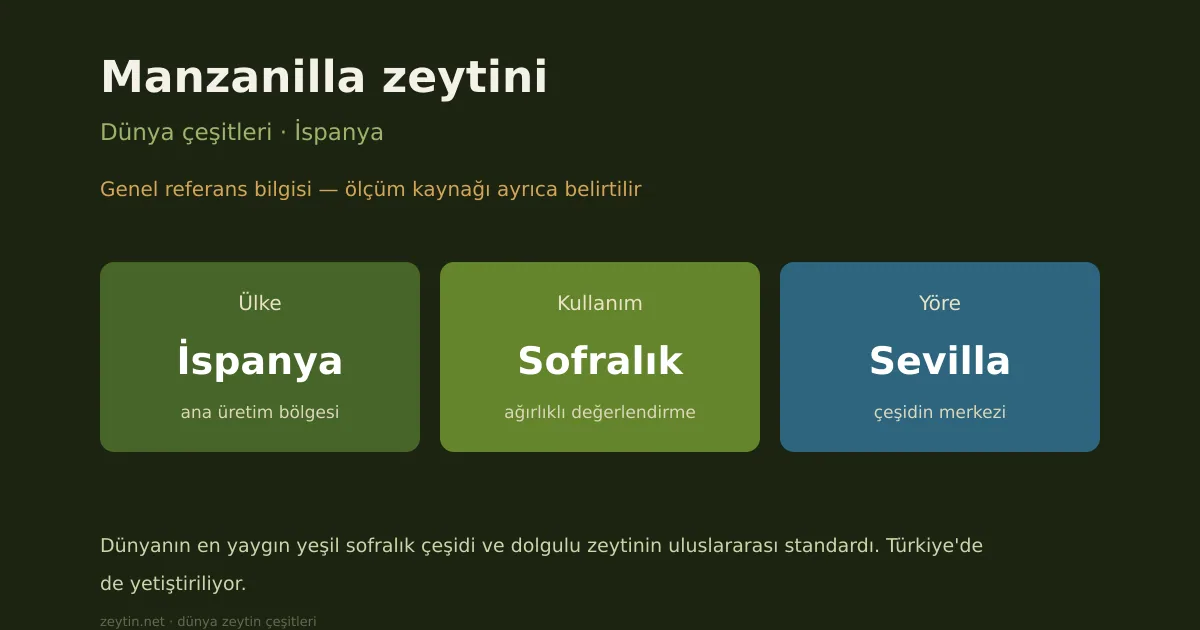
Manzanilla olive: Spain's table variety
The world's most widely planted green table variety and the international standard for stuffed olives. It is grown in Türkiye too.
Article
Manzanilla olive: Spain's table variety
The world's most widely planted green table variety and the international standard for stuffed olives. It is grown in Türkiye too.
 Article
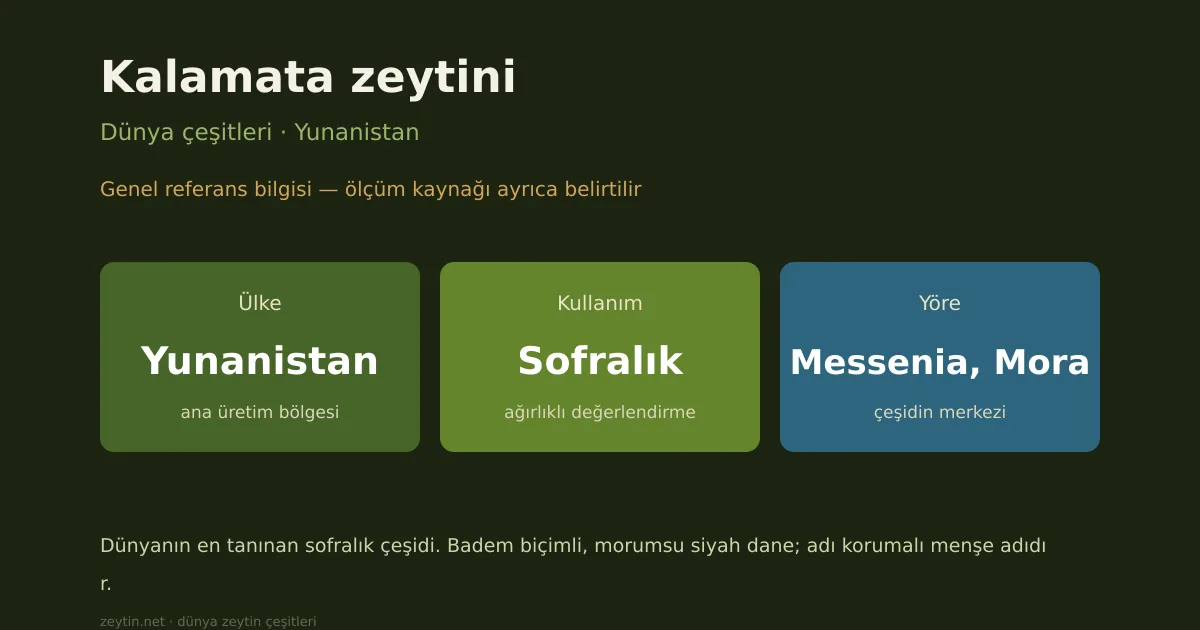
Kalamata olive: Greece's table variety
The world's best-known table olive. Almond-shaped, purplish-black fruit, and a name that is a protected designation of origin.
Article
Kalamata olive: Greece's table variety
The world's best-known table olive. Almond-shaped, purplish-black fruit, and a name that is a protected designation of origin.
 Article
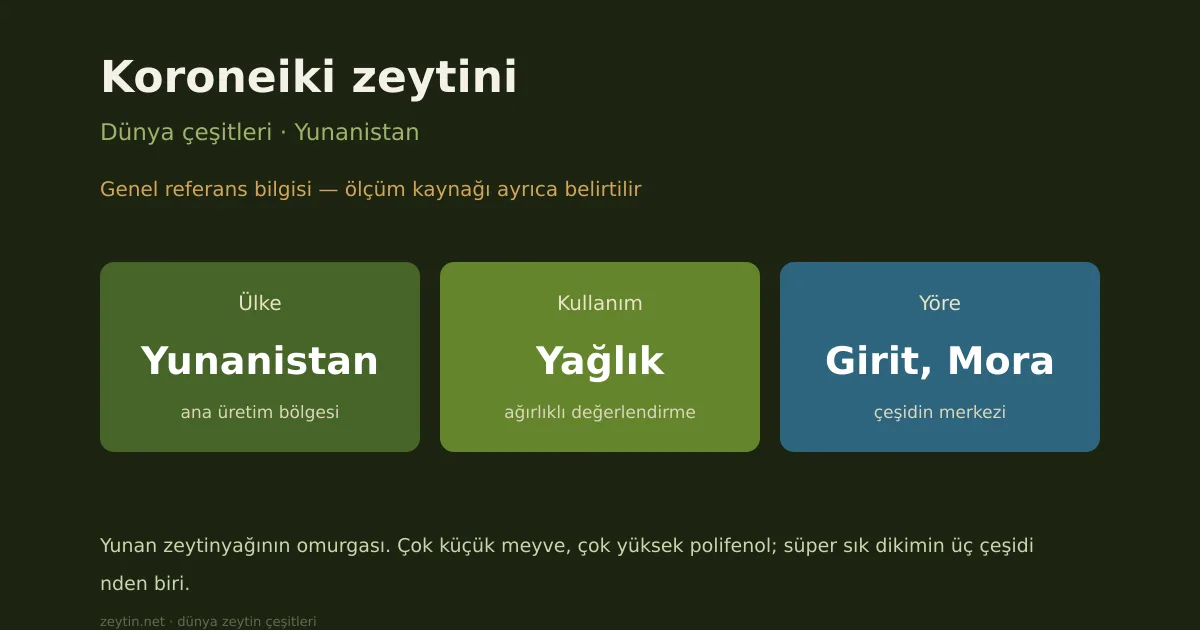
Koroneiki olive: Greece's oil variety
The backbone of Greek olive oil. Very small fruit, very high polyphenol content, and one of the three super-high-density varieties.
Article
Koroneiki olive: Greece's oil variety
The backbone of Greek olive oil. Very small fruit, very high polyphenol content, and one of the three super-high-density varieties.
 Article
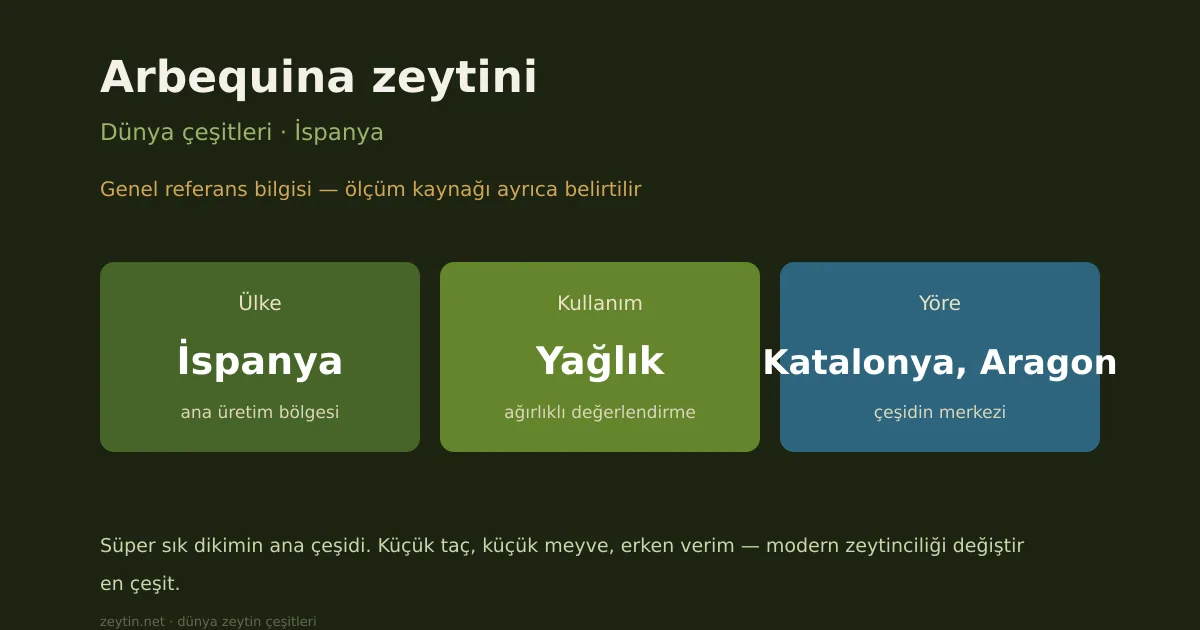
Arbequina olive: Spain's oil variety
The mainstay of super-high-density planting. Small canopy, small fruit, early bearing — the variety that changed modern olive growing.
Article
Arbequina olive: Spain's oil variety
The mainstay of super-high-density planting. Small canopy, small fruit, early bearing — the variety that changed modern olive growing.
 Article
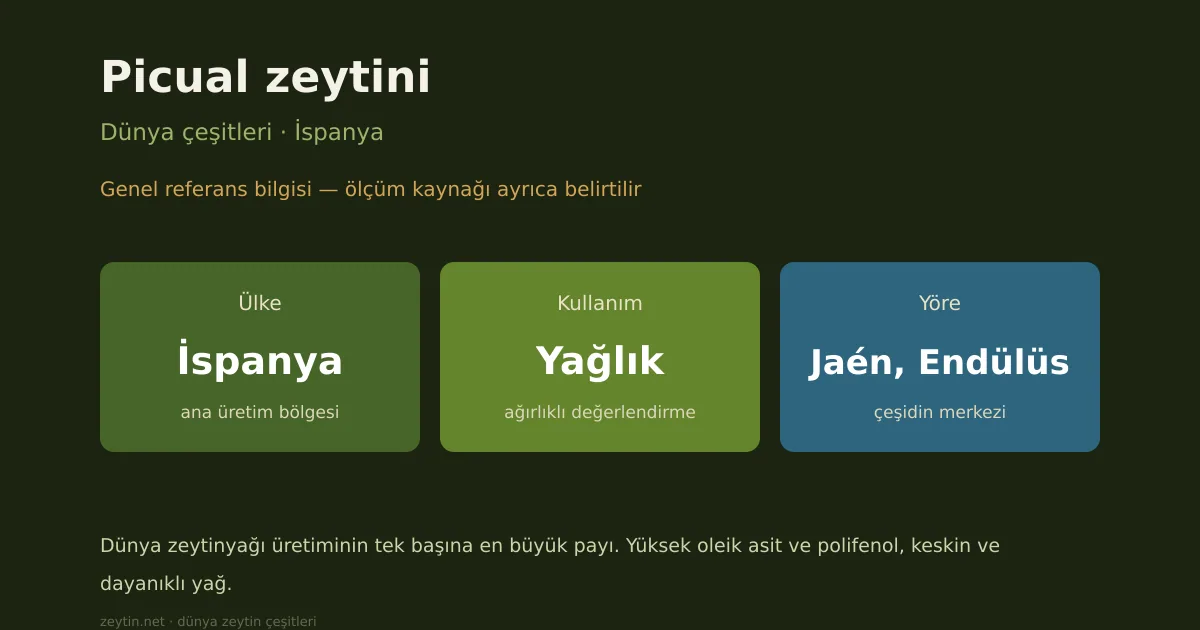
Picual olive: Spain's oil variety
The single largest share of world olive oil production. High oleic acid and polyphenols, a pungent and stable oil.
Article
Picual olive: Spain's oil variety
The single largest share of world olive oil production. High oleic acid and polyphenols, a pungent and stable oil.
 Article
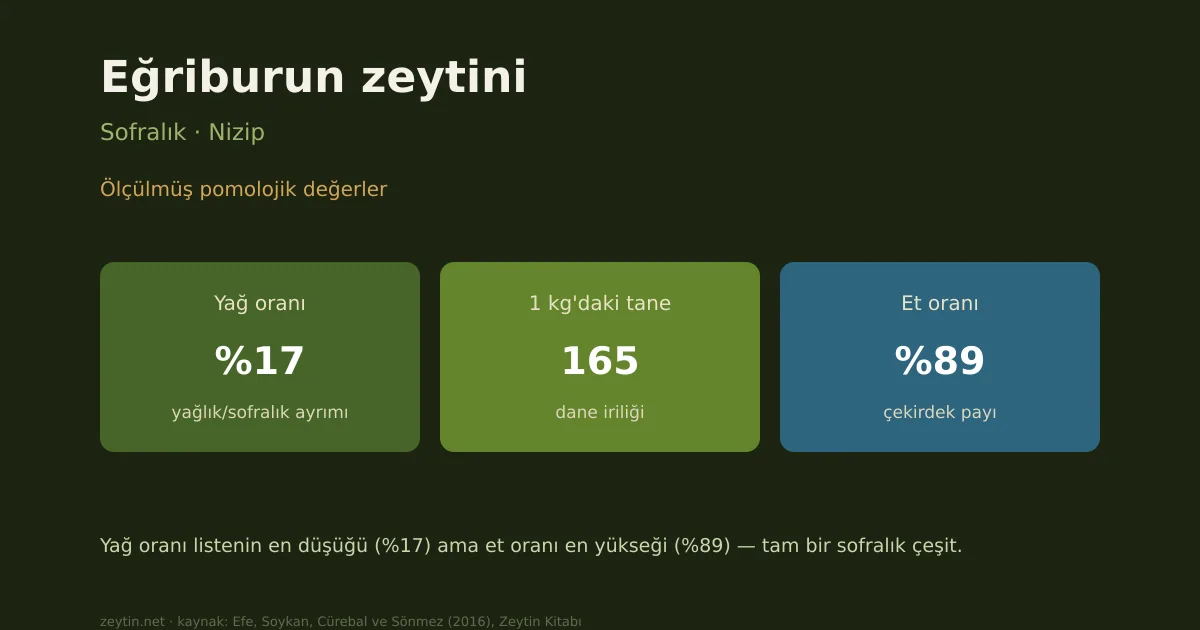
Eğriburun olive: characteristics, oil content and growing areas
The lowest oil content on the list (17%) but the highest flesh ratio (89%) — a pure table variety.
Article
Eğriburun olive: characteristics, oil content and growing areas
The lowest oil content on the list (17%) but the highest flesh ratio (89%) — a pure table variety.
 Article
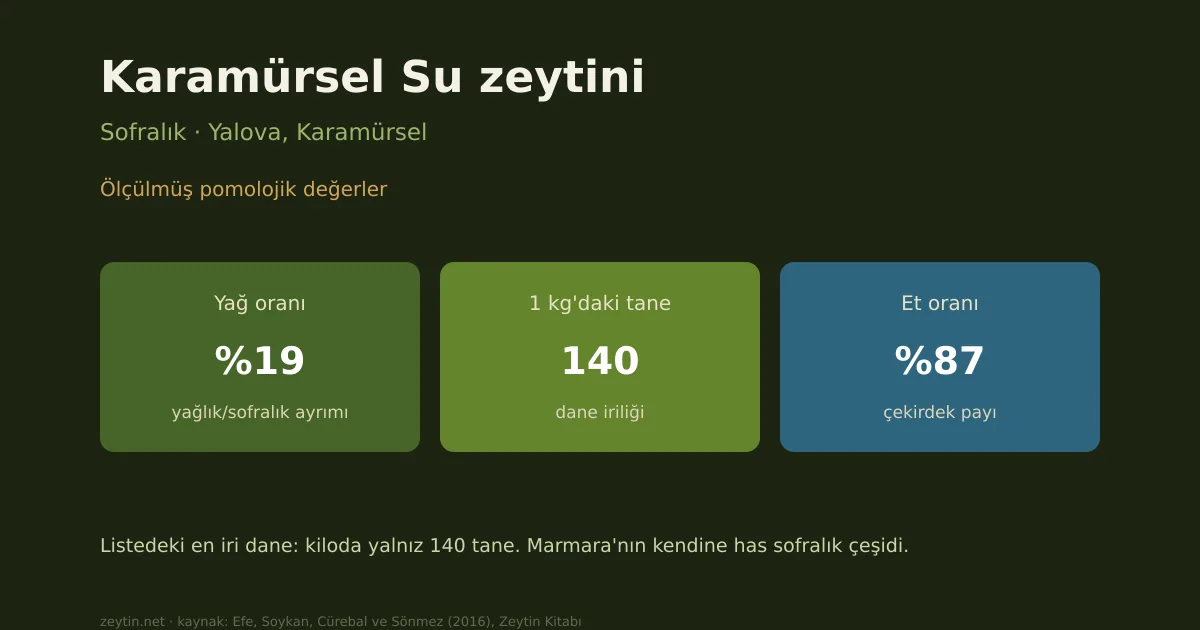
Karamürsel Su olive: characteristics, oil content and growing areas
The largest fruit on the list: only 140 per kilo. Marmara's own distinctive table variety.
Article
Karamürsel Su olive: characteristics, oil content and growing areas
The largest fruit on the list: only 140 per kilo. Marmara's own distinctive table variety.
 Article
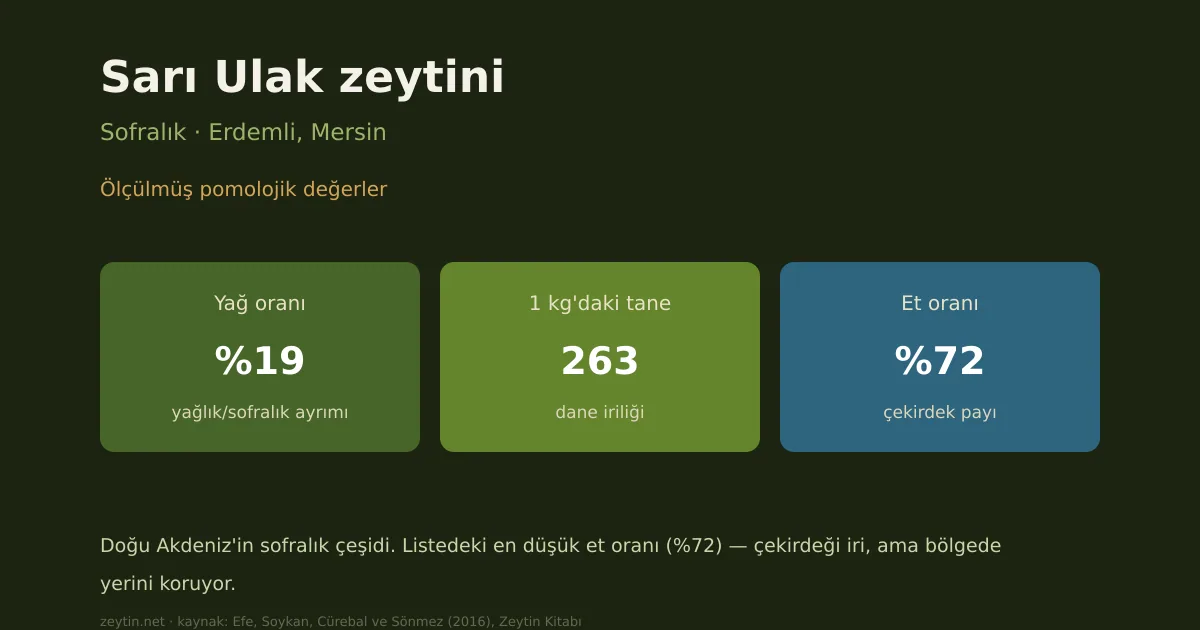
Sarı Ulak olive: characteristics, oil content and growing areas
The eastern Mediterranean's table variety. The lowest flesh ratio on the list (72%) — a large stone, yet it holds its ground.
Article
Sarı Ulak olive: characteristics, oil content and growing areas
The eastern Mediterranean's table variety. The lowest flesh ratio on the list (72%) — a large stone, yet it holds its ground.
 Article
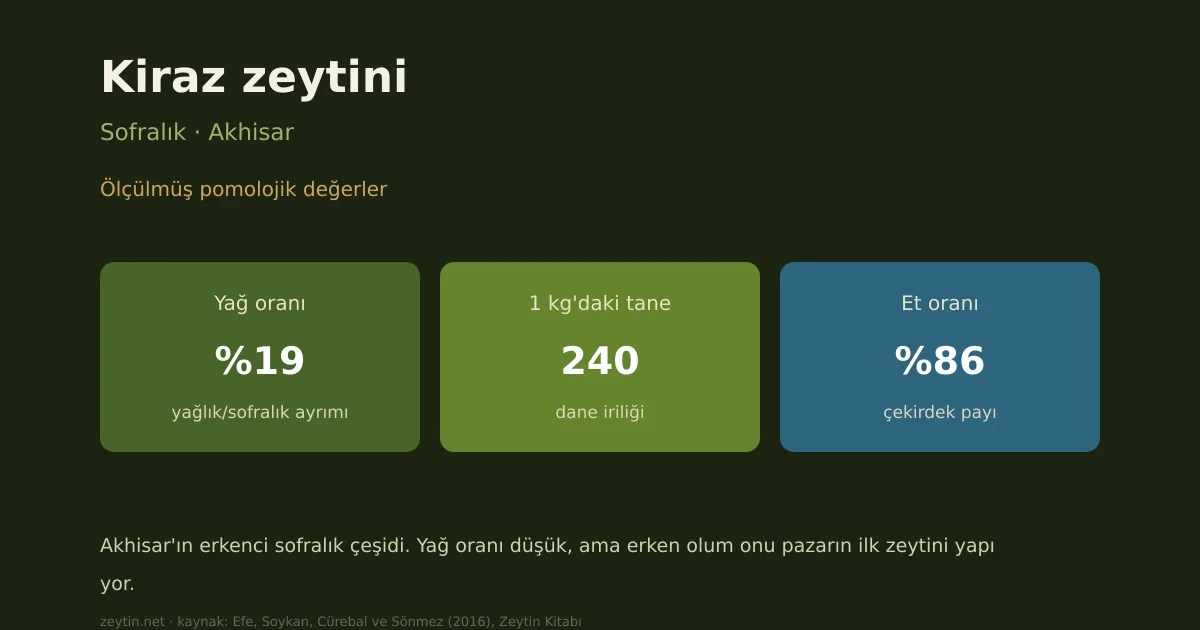
Kiraz olive: characteristics, oil content and growing areas
Akhisar's early table variety. Low in oil, but early maturity makes it the season's first olive to market.
Article
Kiraz olive: characteristics, oil content and growing areas
Akhisar's early table variety. Low in oil, but early maturity makes it the season's first olive to market.
 Article
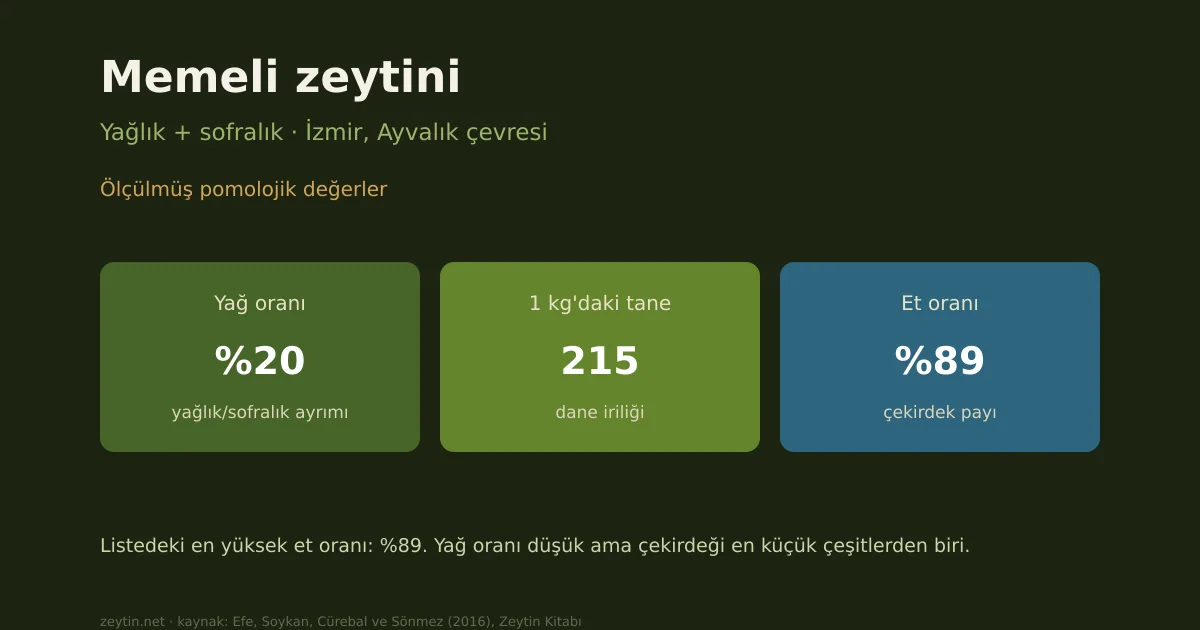
Memeli olive: characteristics, oil content and growing areas
The highest flesh ratio on the list at 89%. Low in oil, but with one of the smallest stones.
Article
Memeli olive: characteristics, oil content and growing areas
The highest flesh ratio on the list at 89%. Low in oil, but with one of the smallest stones.
 Article
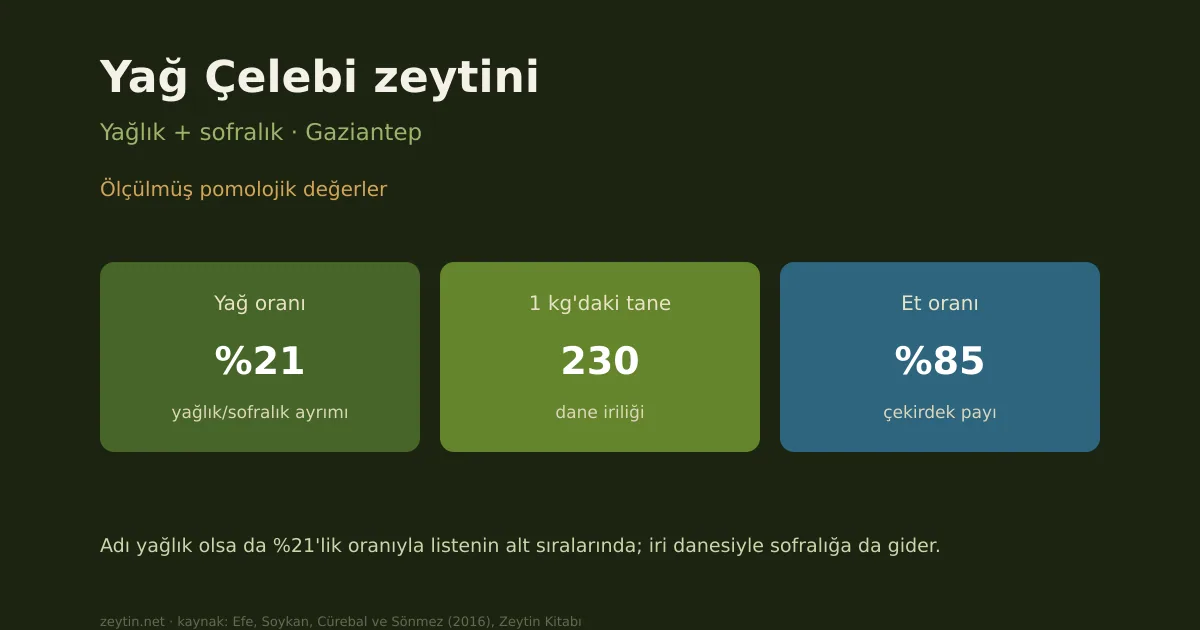
Yağ Çelebi olive: characteristics, oil content and growing areas
Despite the name, its 21% oil puts it low on the list; its large fruit also serves the table.
Article
Yağ Çelebi olive: characteristics, oil content and growing areas
Despite the name, its 21% oil puts it low on the list; its large fruit also serves the table.
 Article
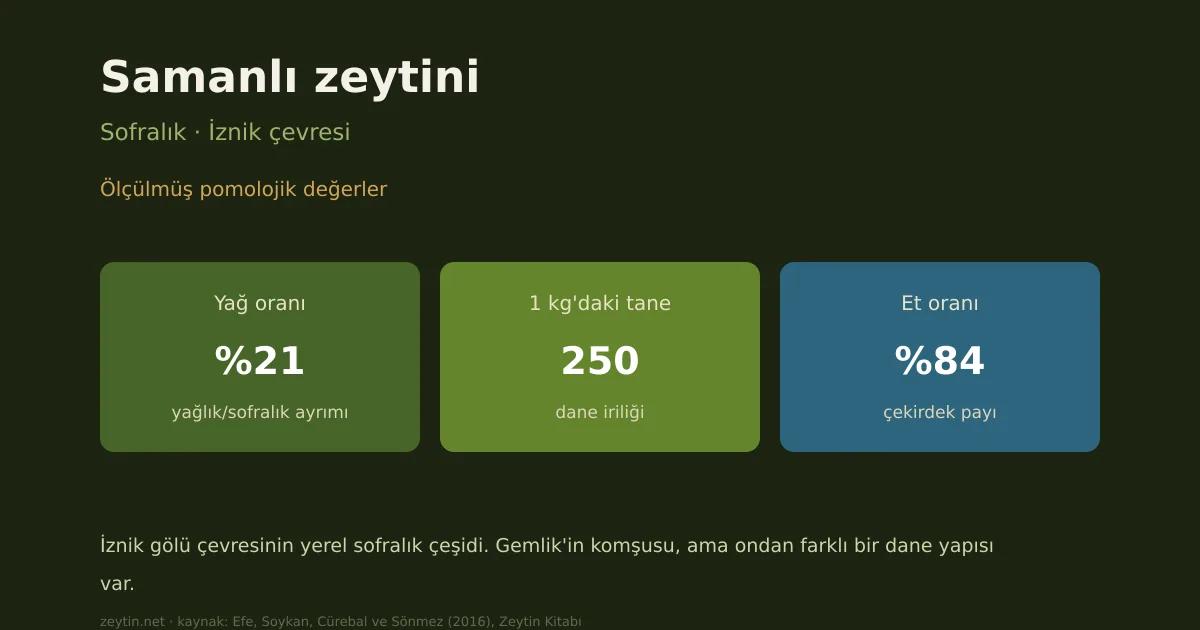
Samanlı olive: characteristics, oil content and growing areas
The local table variety around Lake İznik — Gemlik's neighbour, with a different fruit structure.
Article
Samanlı olive: characteristics, oil content and growing areas
The local table variety around Lake İznik — Gemlik's neighbour, with a different fruit structure.
 Article
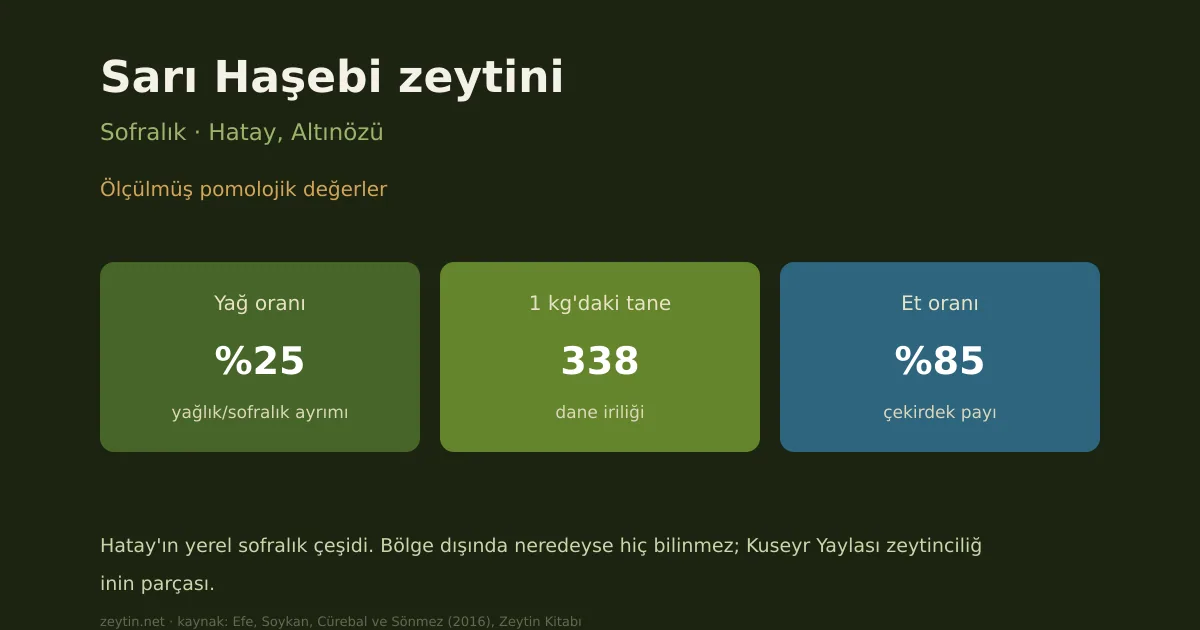
Sarı Haşebi olive: characteristics, oil content and growing areas
Hatay's local table variety, virtually unknown outside the region and part of Kuseyr Plateau olive growing.
Article
Sarı Haşebi olive: characteristics, oil content and growing areas
Hatay's local table variety, virtually unknown outside the region and part of Kuseyr Plateau olive growing.
 Article
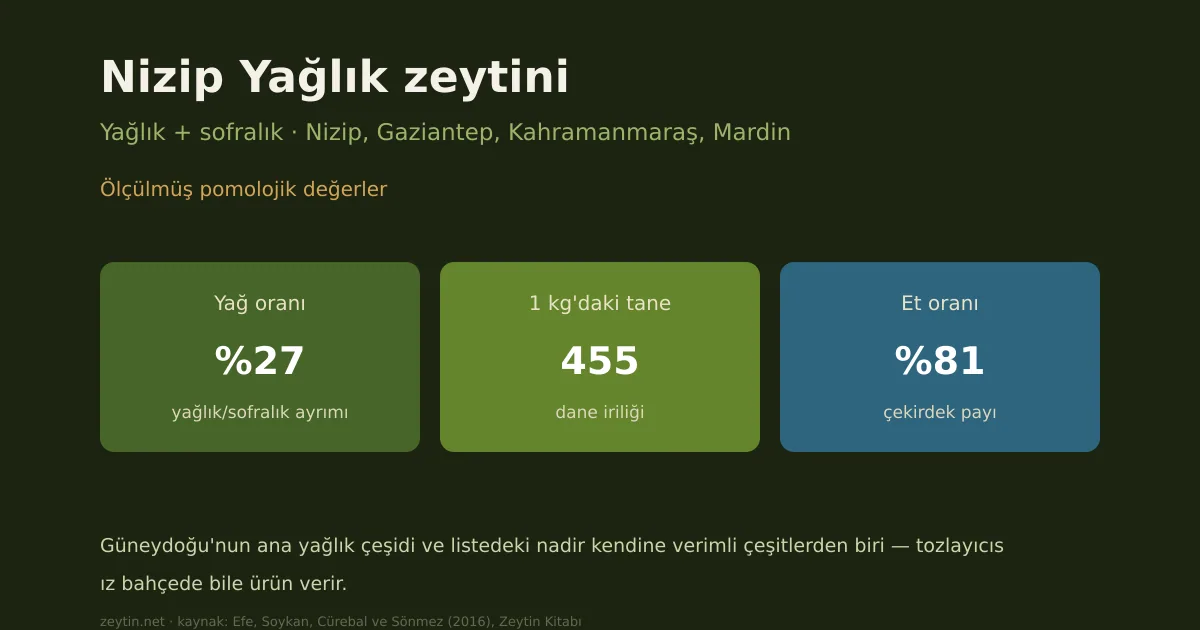
Nizip Yağlık olive: characteristics, oil content and growing areas
The southeast's main oil variety and one of the rare self-fertile cultivars on the list — it crops even without a pollinator.
Article
Nizip Yağlık olive: characteristics, oil content and growing areas
The southeast's main oil variety and one of the rare self-fertile cultivars on the list — it crops even without a pollinator.
 Article
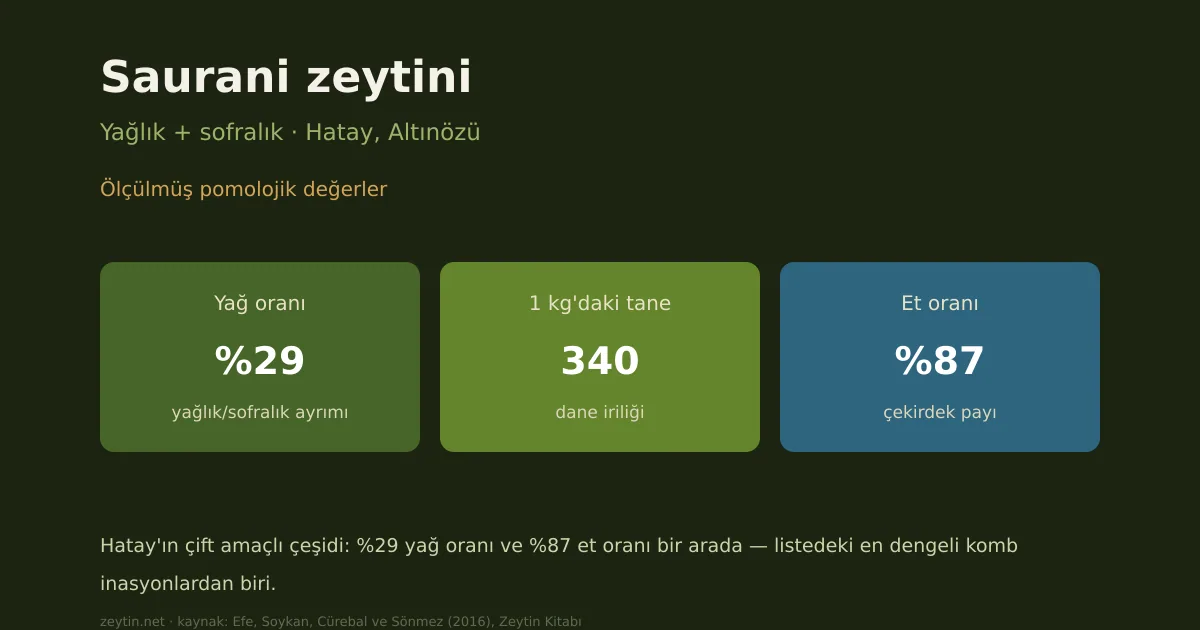
Saurani olive: characteristics, oil content and growing areas
Hatay's dual-purpose variety: 29% oil with 87% flesh — one of the most balanced combinations on the list.
Article
Saurani olive: characteristics, oil content and growing areas
Hatay's dual-purpose variety: 29% oil with 87% flesh — one of the most balanced combinations on the list.
 Article
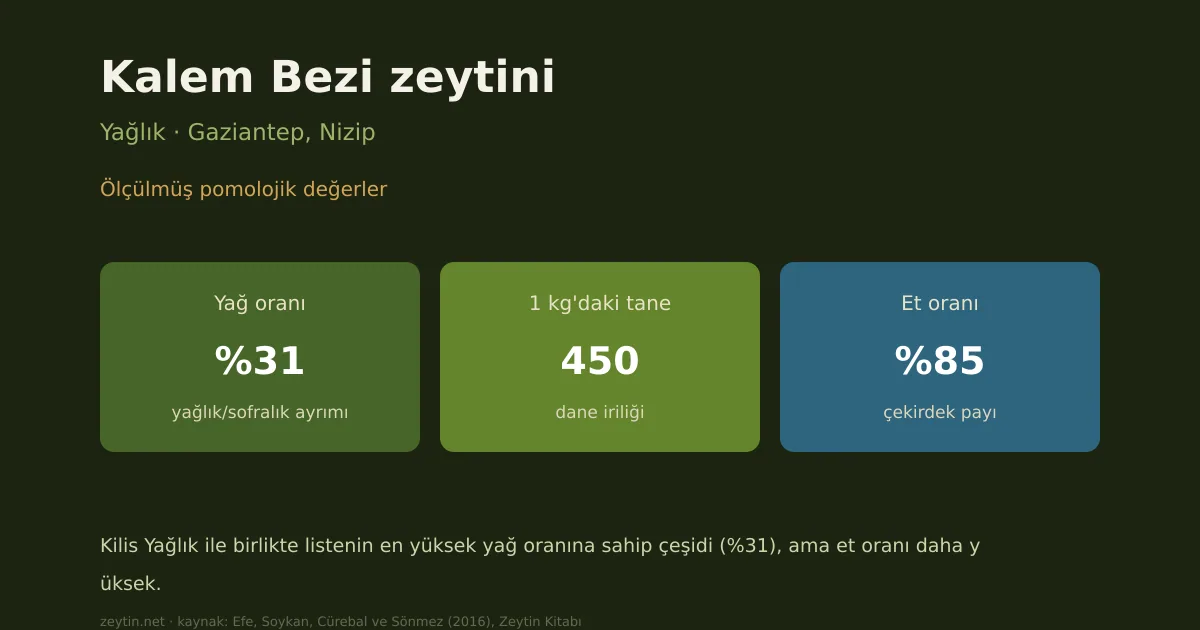
Kalem Bezi olive: characteristics, oil content and growing areas
Tied with Kilis Yağlık for the highest oil content on the list (31%), but with a better flesh ratio.
Article
Kalem Bezi olive: characteristics, oil content and growing areas
Tied with Kilis Yağlık for the highest oil content on the list (31%), but with a better flesh ratio.
 Article
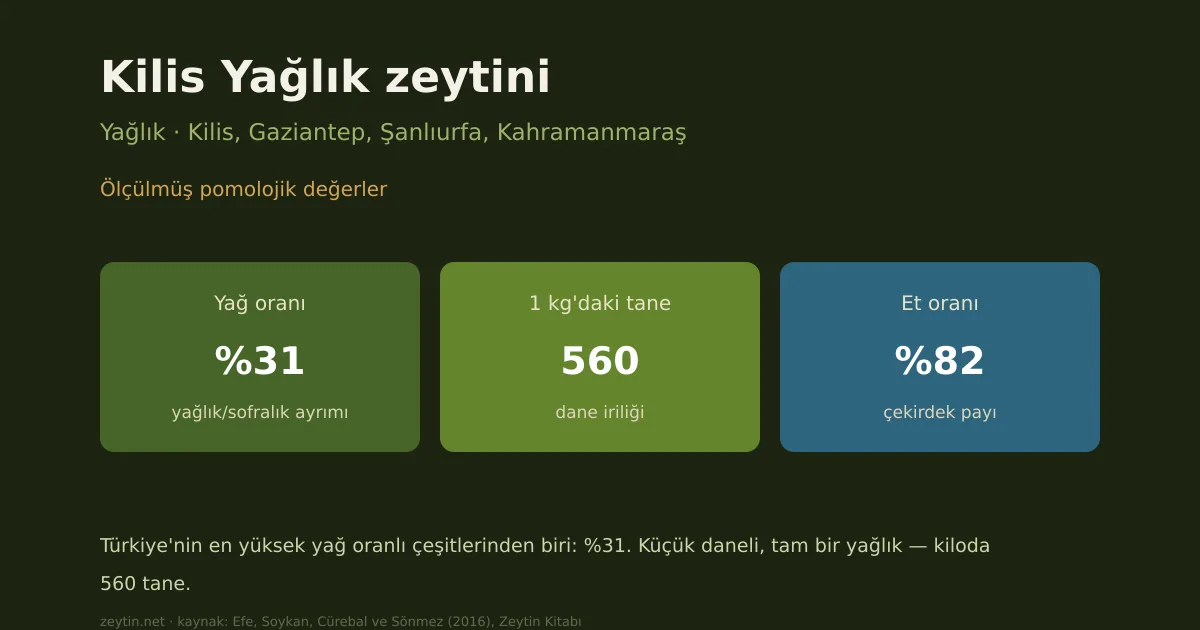
Kilis Yağlık olive: characteristics, oil content and growing areas
One of Türkiye's highest oil-yielding varieties at 31%. Small-fruited and purely for oil — 560 fruits per kilo.
Article
Kilis Yağlık olive: characteristics, oil content and growing areas
One of Türkiye's highest oil-yielding varieties at 31%. Small-fruited and purely for oil — 560 fruits per kilo.
 Article
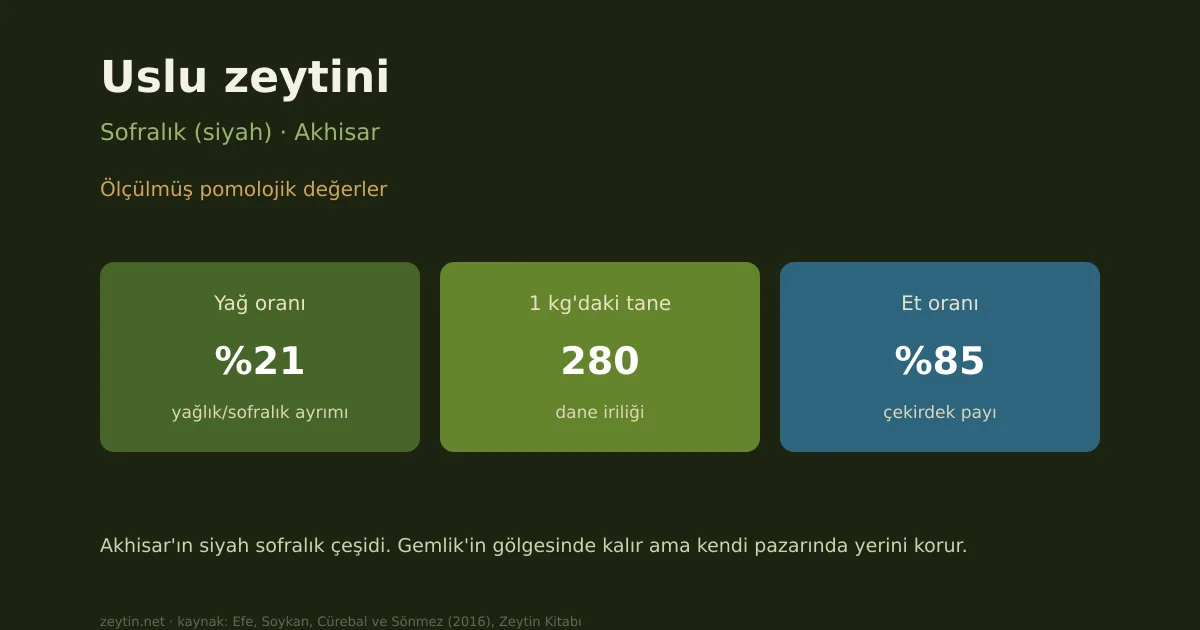
Uslu olive: characteristics, oil content and growing areas
Akhisar's black table variety. Overshadowed by Gemlik, yet holding its own market.
Article
Uslu olive: characteristics, oil content and growing areas
Akhisar's black table variety. Overshadowed by Gemlik, yet holding its own market.
 Article
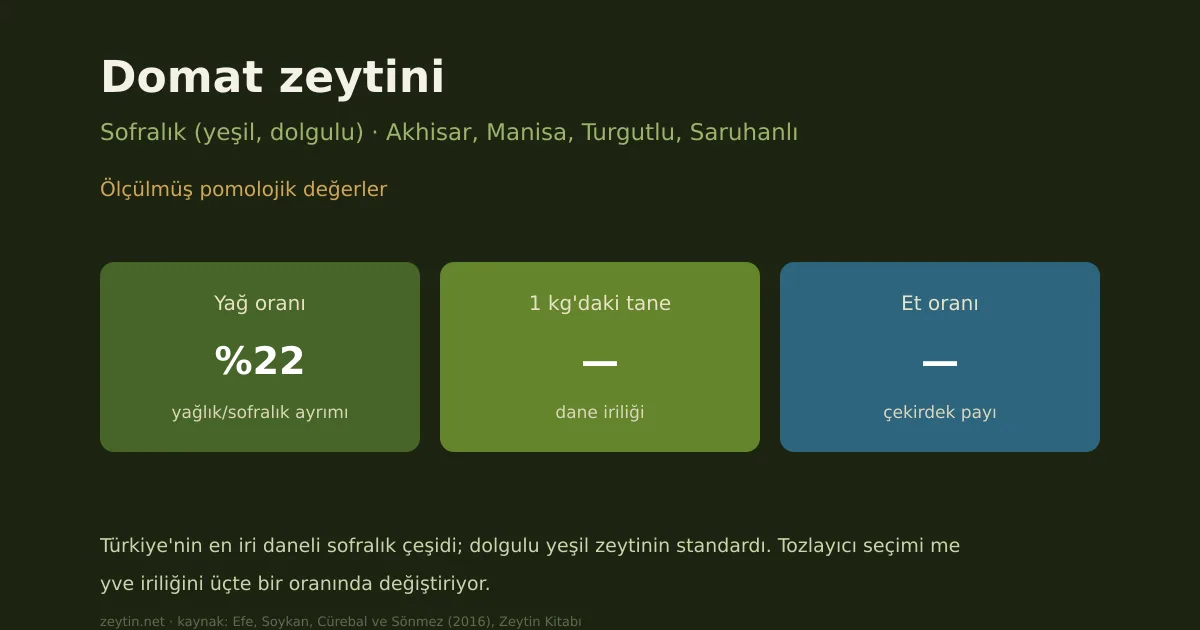
The Domat olive: the cultivar behind stuffed olives, in numbers
Domat, Turkey's largest table cultivar: 7.96 g fruit, 89% flesh, a 552-hour chilling requirement. Why stuffed olives are always made from it, the disagreement over oil content, and why it is never planted alone.
Article
The Domat olive: the cultivar behind stuffed olives, in numbers
Domat, Turkey's largest table cultivar: 7.96 g fruit, 89% flesh, a 552-hour chilling requirement. Why stuffed olives are always made from it, the disagreement over oil content, and why it is never planted alone.
 Article
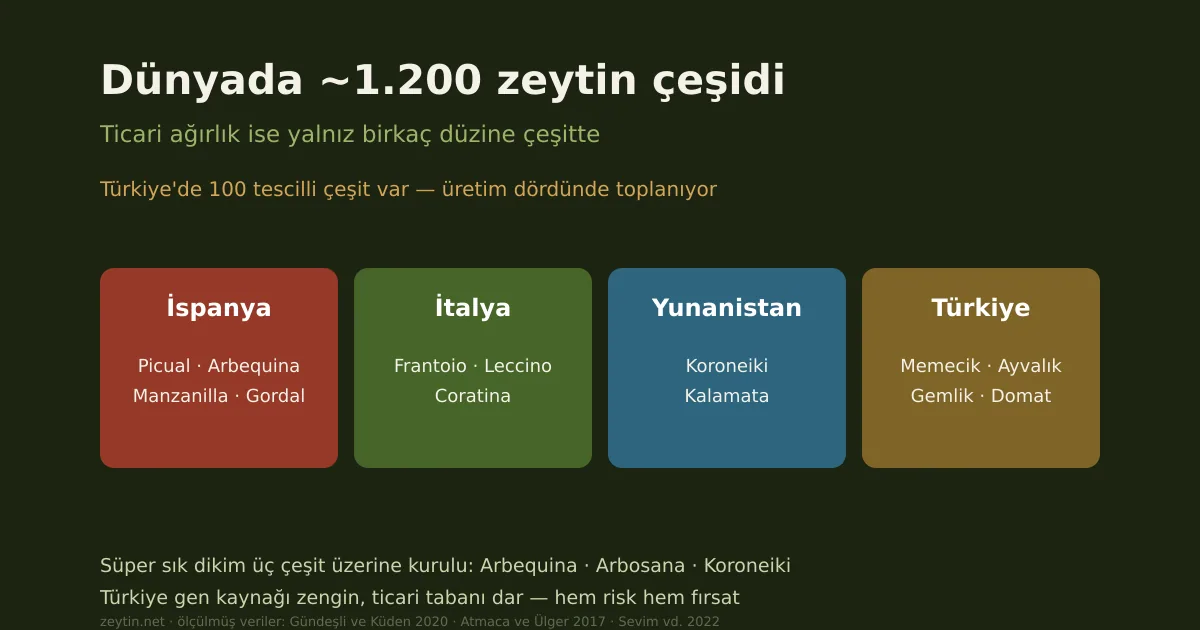
World olive varieties: from Picual to Kalamata
About 1,200 cultivars exist; commercial weight sits in a few dozen. Picual, Arbequina, Koroneiki, Kalamata, Frantoio — compared with Türkiye.
Article
World olive varieties: from Picual to Kalamata
About 1,200 cultivars exist; commercial weight sits in a few dozen. Picual, Arbequina, Koroneiki, Kalamata, Frantoio — compared with Türkiye.
 Article
Chilling requirement in olives: which variety grows where?
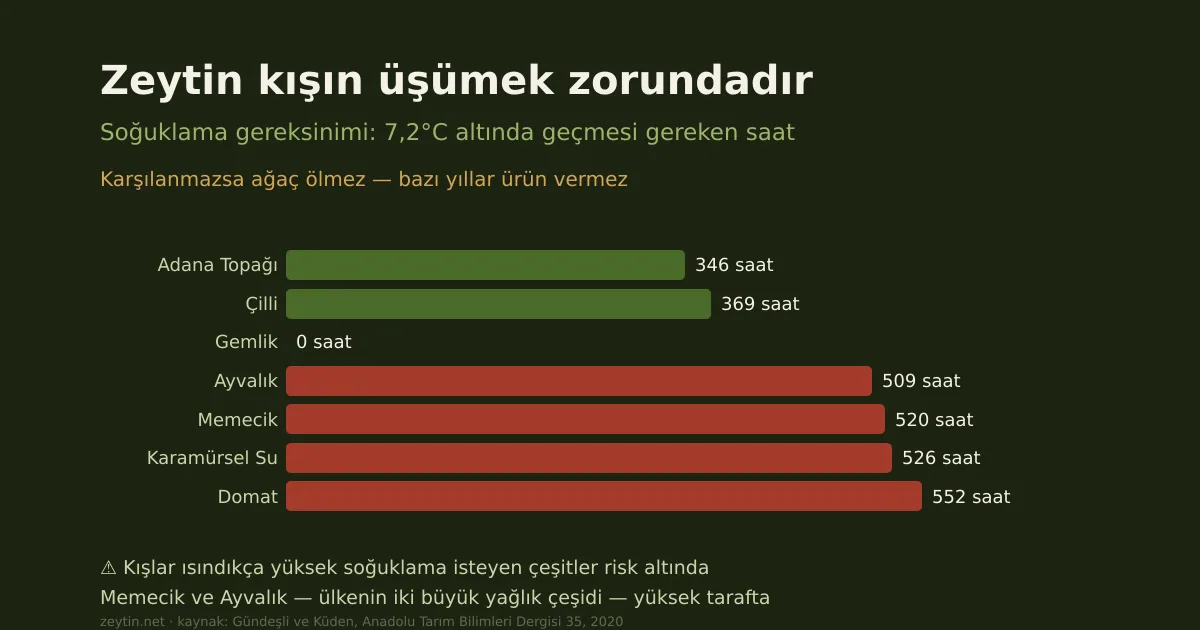
The olive must spend time below 7.2°C in winter. Adana Topağı needs 346 hours, Domat 552. Unmet, some years bring no crop.
Article
Chilling requirement in olives: which variety grows where?
The olive must spend time below 7.2°C in winter. Adana Topağı needs 346 hours, Domat 552. Unmet, some years bring no crop.
 Article
The Ayvalık (Edremit) olive: one variety, two names
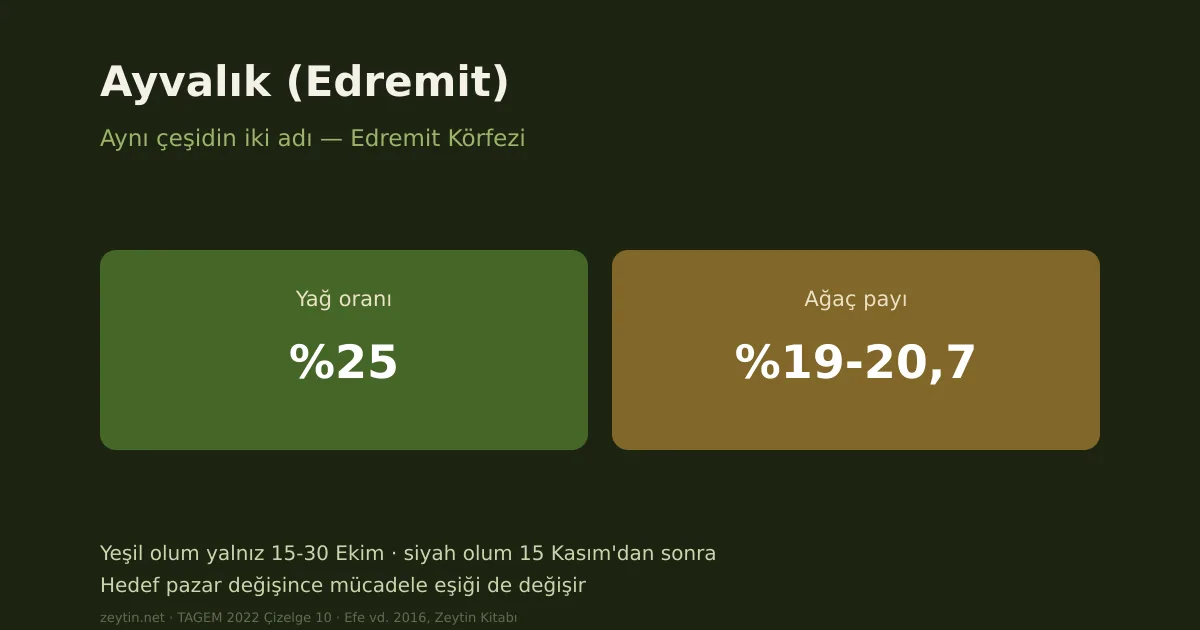
19-20.66% of the tree stock, second after Memecik. 25% oil. Green maturity only between 15 and 30 October; black maturity after 15 November, among the latest.
Article
The Ayvalık (Edremit) olive: one variety, two names
19-20.66% of the tree stock, second after Memecik. 25% oil. Green maturity only between 15 and 30 October; black maturity after 15 November, among the latest.
 Article
The Memecik olive: Türkiye's oil variety
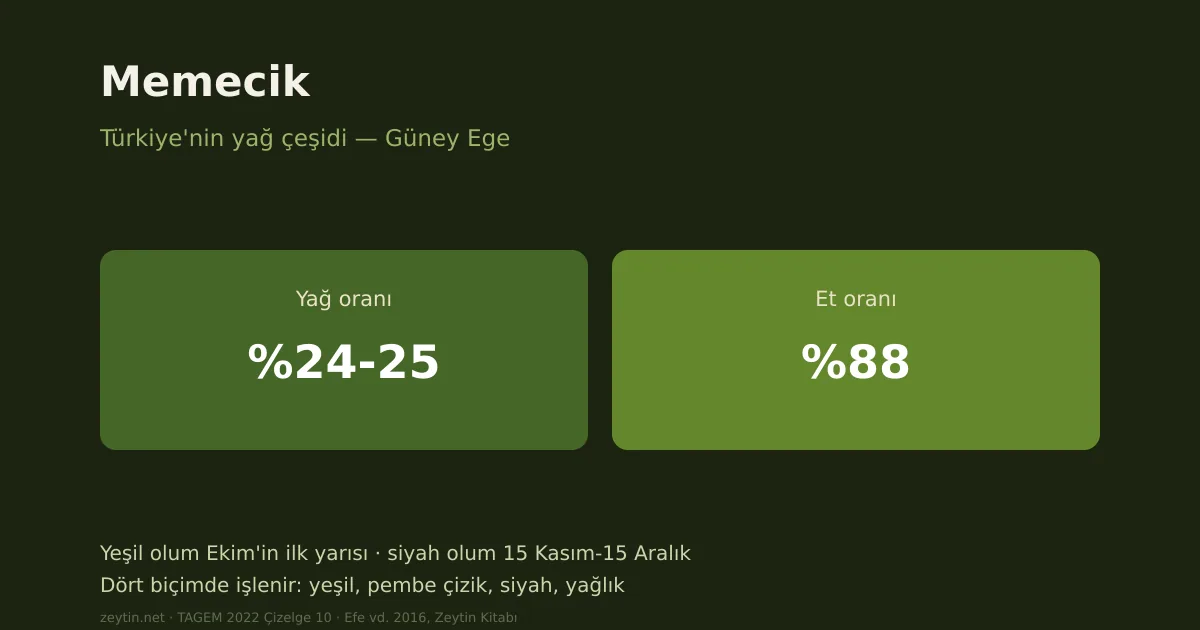
Between 19% and 45% of the tree stock. 24-25% oil, 88% flesh. Green maturity in early October, two months after Gemlik.
Article
The Memecik olive: Türkiye's oil variety
Between 19% and 45% of the tree stock. 24-25% oil, 88% flesh. Green maturity in early October, two months after Gemlik.
 Article
Olive growing in Marmara: the home of the table olive
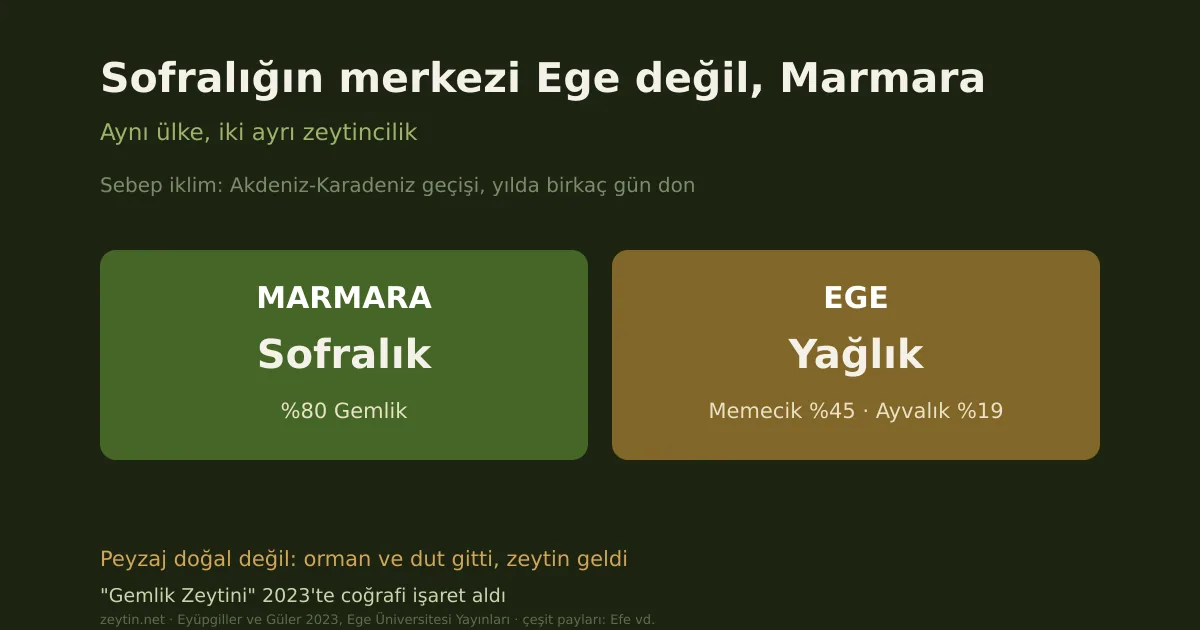
The table olive's home is not the Aegean but Marmara: 80% of the region's crop is Gemlik. The reason is climate.
Article
Olive growing in Marmara: the home of the table olive
The table olive's home is not the Aegean but Marmara: 80% of the region's crop is Gemlik. The reason is climate.
 Article
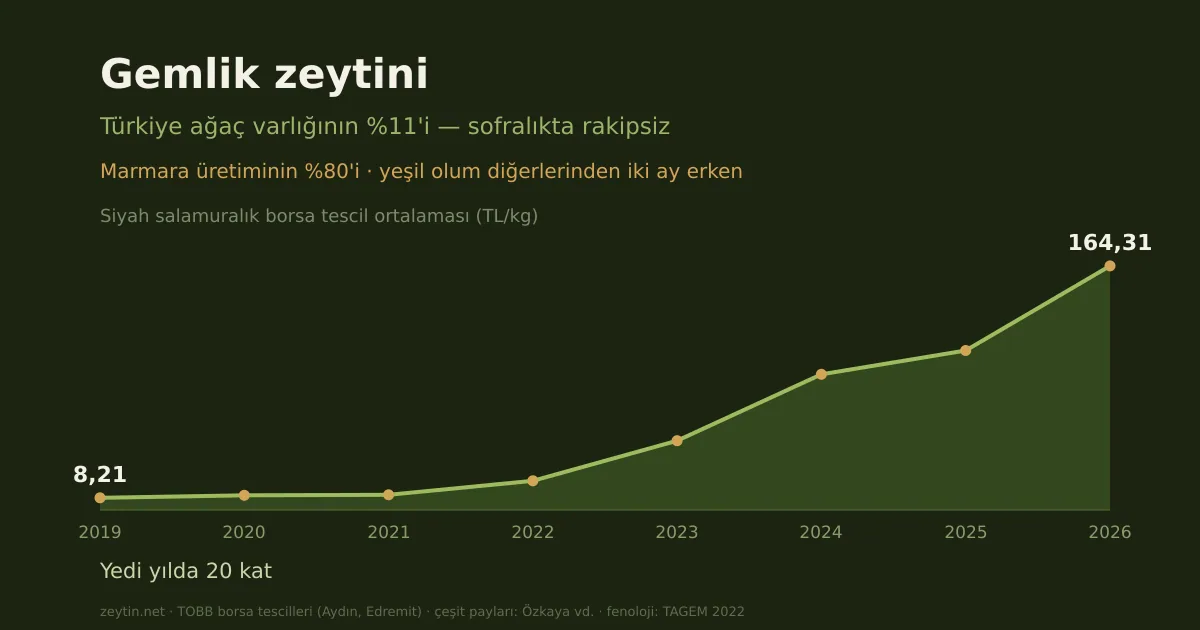
The Gemlik olive: small fruit, six times the flesh
Turkey s only olive cultivar with a geographical indication: 3.7 g fruit, a 6.4 flesh-to-pit ratio, 29-30% oil. Self-fertility measurements, chilling requirement, and why it is still picked by hand.
Article
The Gemlik olive: small fruit, six times the flesh
Turkey s only olive cultivar with a geographical indication: 3.7 g fruit, a 6.4 flesh-to-pit ratio, 29-30% oil. Self-fertility measurements, chilling requirement, and why it is still picked by hand.
 Article
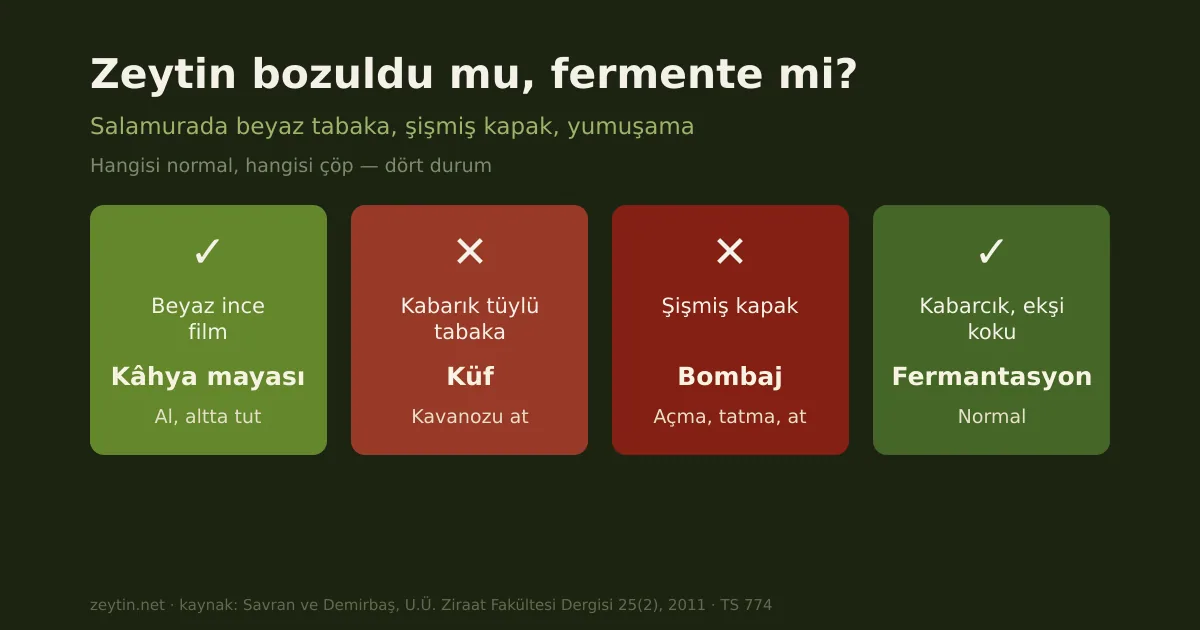
Are my olives spoiled? Mould, bulging lids and softening
A white film on brine is not always mould. But a bulging lid is not debatable: discard it unopened. How kahm yeast differs from mould.
Article
Are my olives spoiled? Mould, bulging lids and softening
A white film on brine is not always mould. But a bulging lid is not debatable: discard it unopened. How kahm yeast differs from mould.
 Article
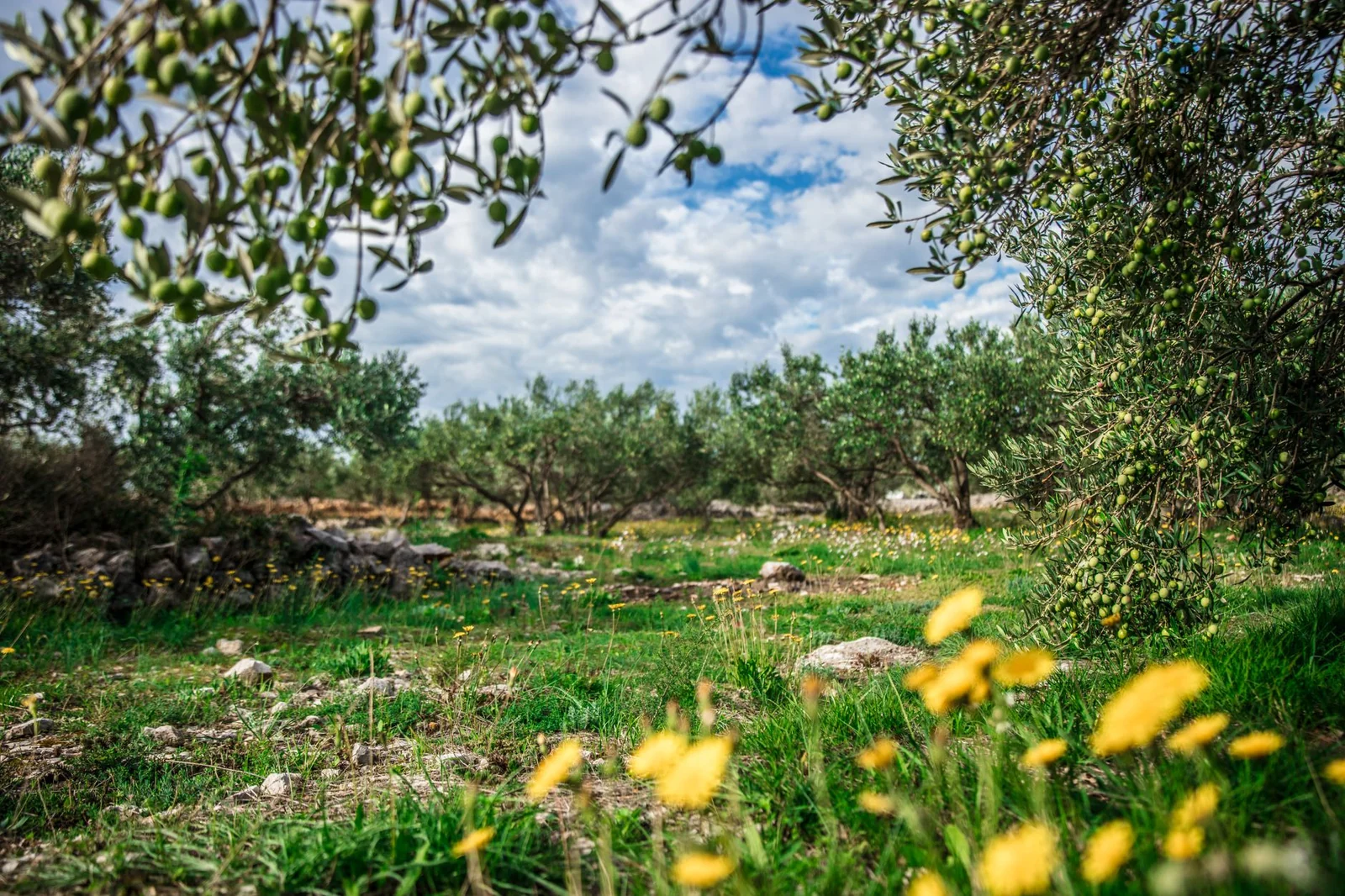
Where do olives grow in Türkiye, and where don't they?
What limits the olive is frost, not a provincial border. Where it grows in Türkiye, with cold thresholds and altitude limits.
Article
Where do olives grow in Türkiye, and where don't they?
What limits the olive is frost, not a provincial border. Where it grows in Türkiye, with cold thresholds and altitude limits.
 Article
Table Olive Varieties
From Gemlik to Kalamata, Manzanilla to Castelvetrano: the world's best-known table olives and what each is good for.
Article
Table Olive Varieties
From Gemlik to Kalamata, Manzanilla to Castelvetrano: the world's best-known table olives and what each is good for.
 Article
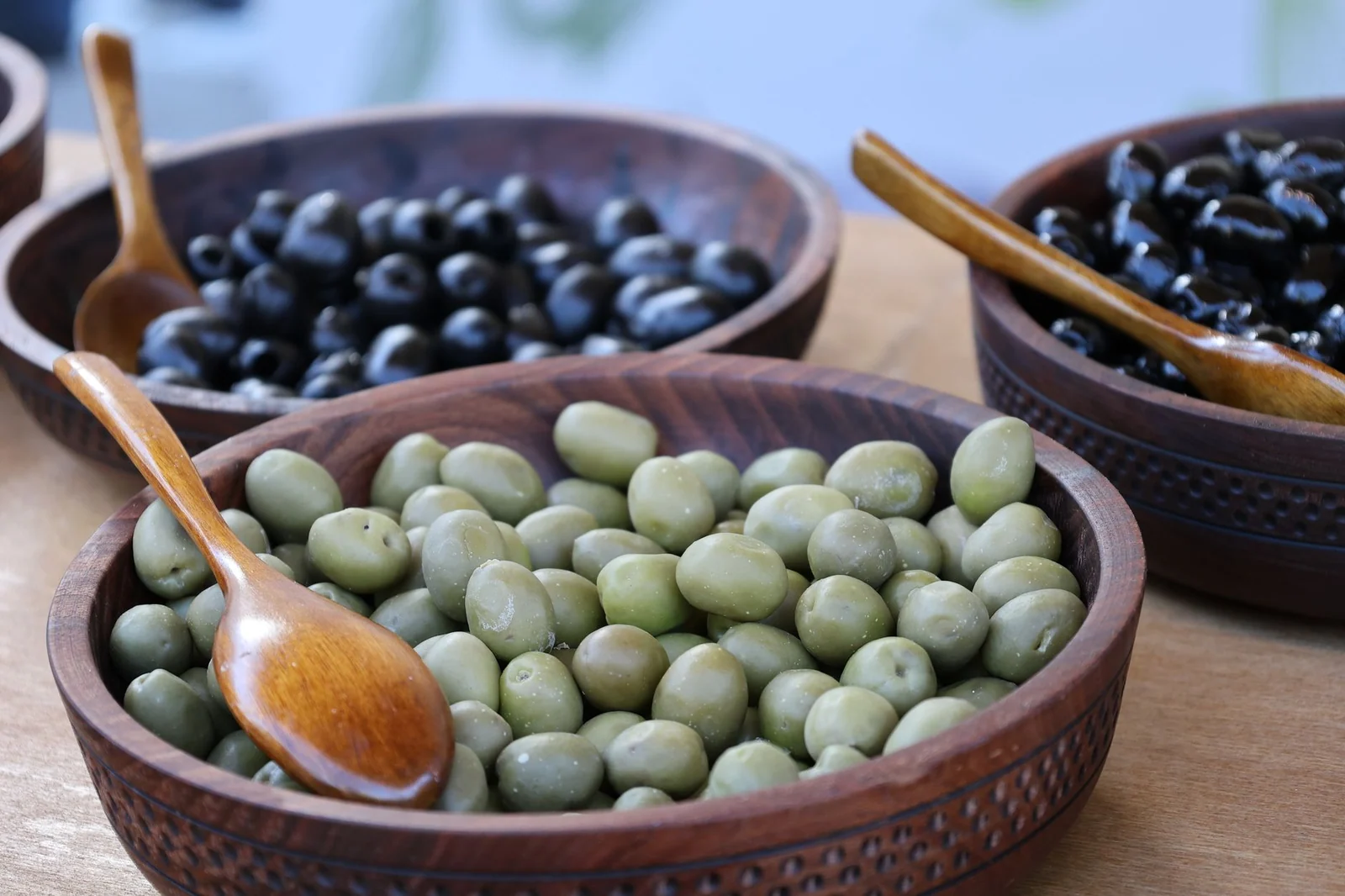
The Difference Between Black and Green Olives
Not two different trees but the same fruit at two different moments. So why do they differ in taste, texture and nutrition?
Article
The Difference Between Black and Green Olives
Not two different trees but the same fruit at two different moments. So why do they differ in taste, texture and nutrition?
 Article
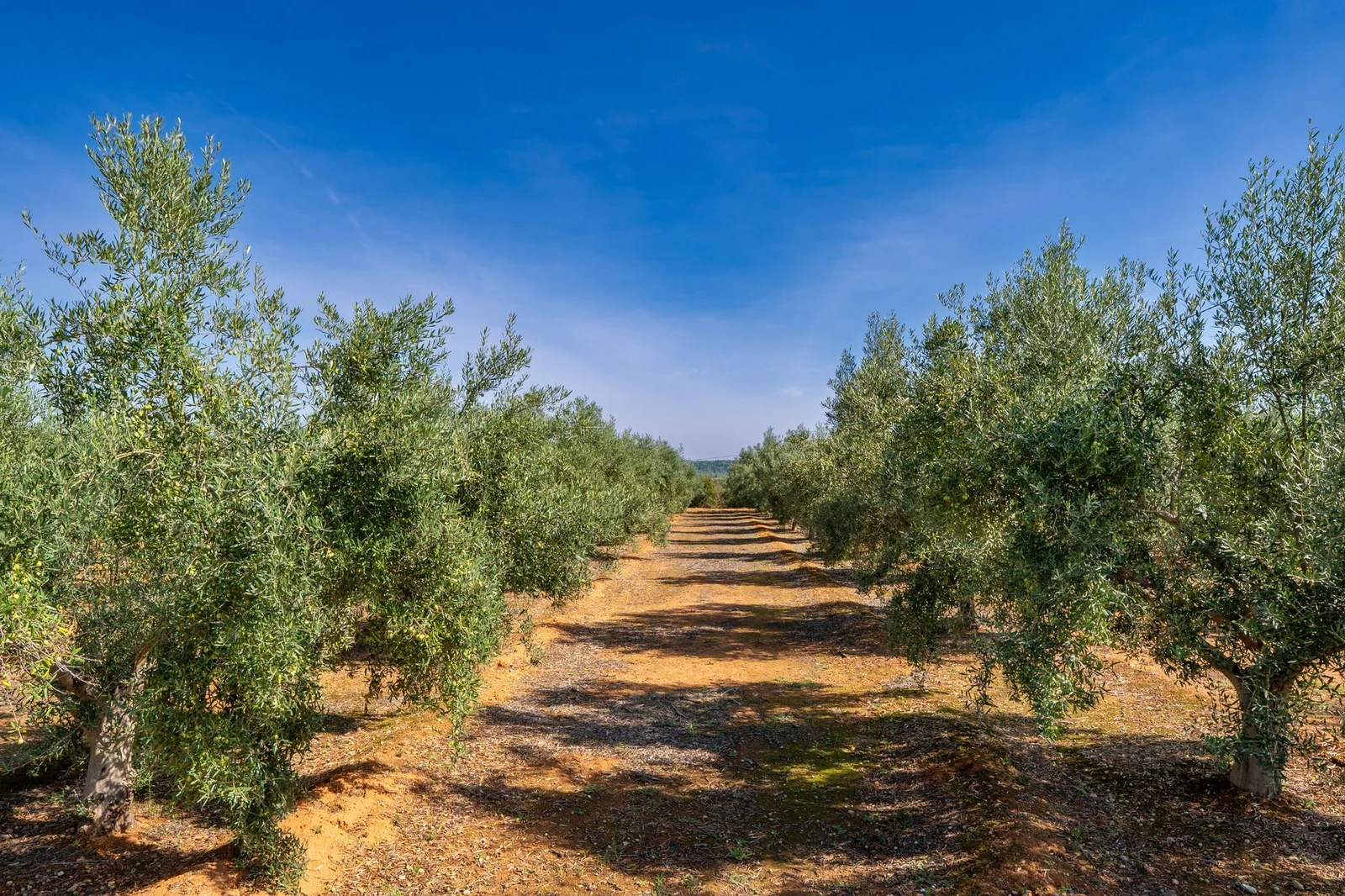
The Olive Harvest: When and How
Early harvest or late? The timing of picking directly determines the oil's acidity, polyphenols and yield.
Article
The Olive Harvest: When and How
Early harvest or late? The timing of picking directly determines the oil's acidity, polyphenols and yield.
 Article
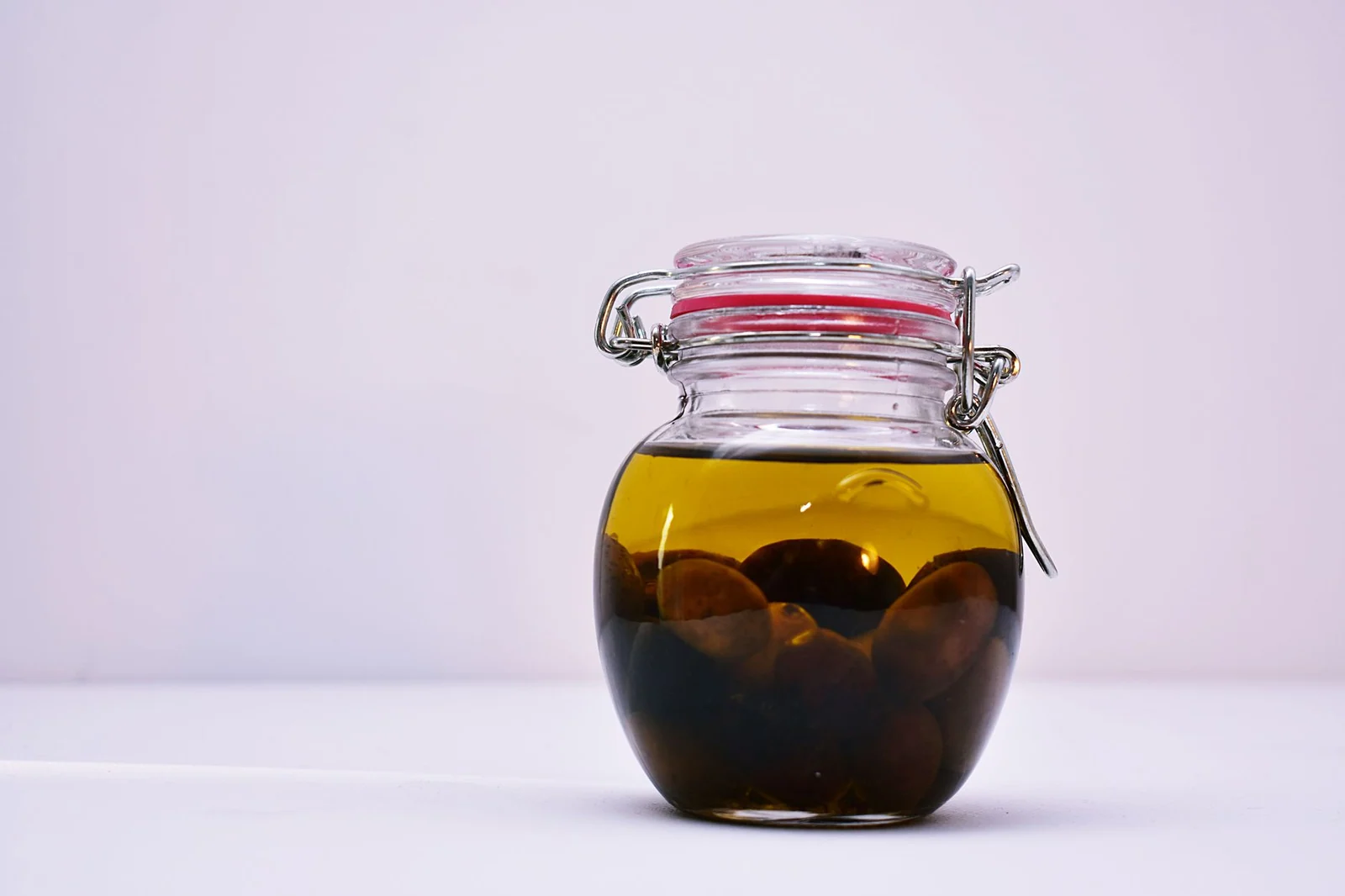
How Are Olives Cured?
An olive straight from the tree is inedible — it is bitter. In water, in salt, in lye or scored: the methods that remove the bitterness, and how long each takes.
Article
How Are Olives Cured?
An olive straight from the tree is inedible — it is bitter. In water, in salt, in lye or scored: the methods that remove the bitterness, and how long each takes.
 Article
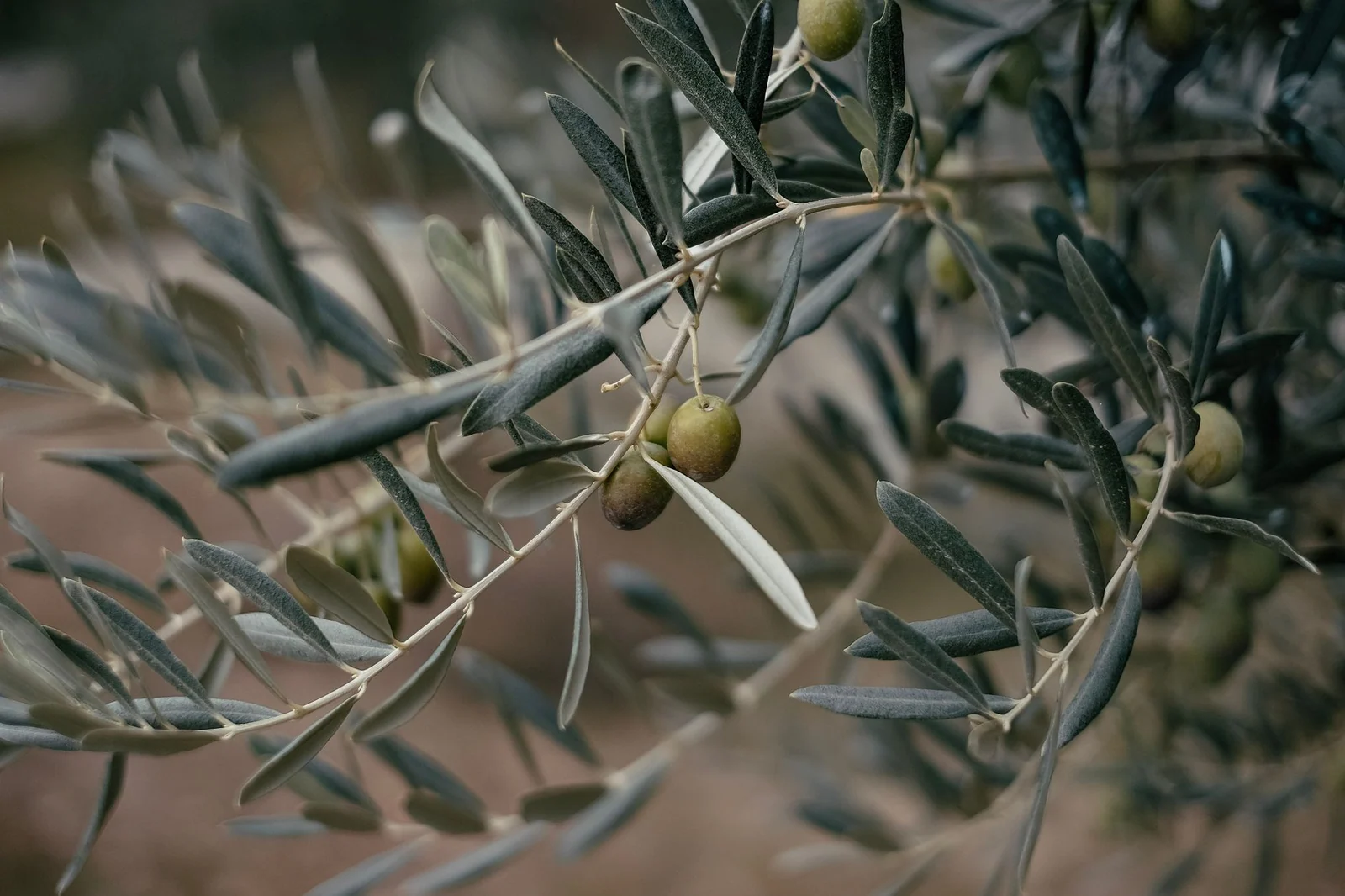
Olive varieties: seventeen Turkish varieties in numbers
Gemlik, Ayvalık, Memecik, Domat and the rest: Türkiye's olive varieties with oil content, fruit size, flesh ratio, region and ripening calendar.
Article
Olive varieties: seventeen Turkish varieties in numbers
Gemlik, Ayvalık, Memecik, Domat and the rest: Türkiye's olive varieties with oil content, fruit size, flesh ratio, region and ripening calendar.
 Article
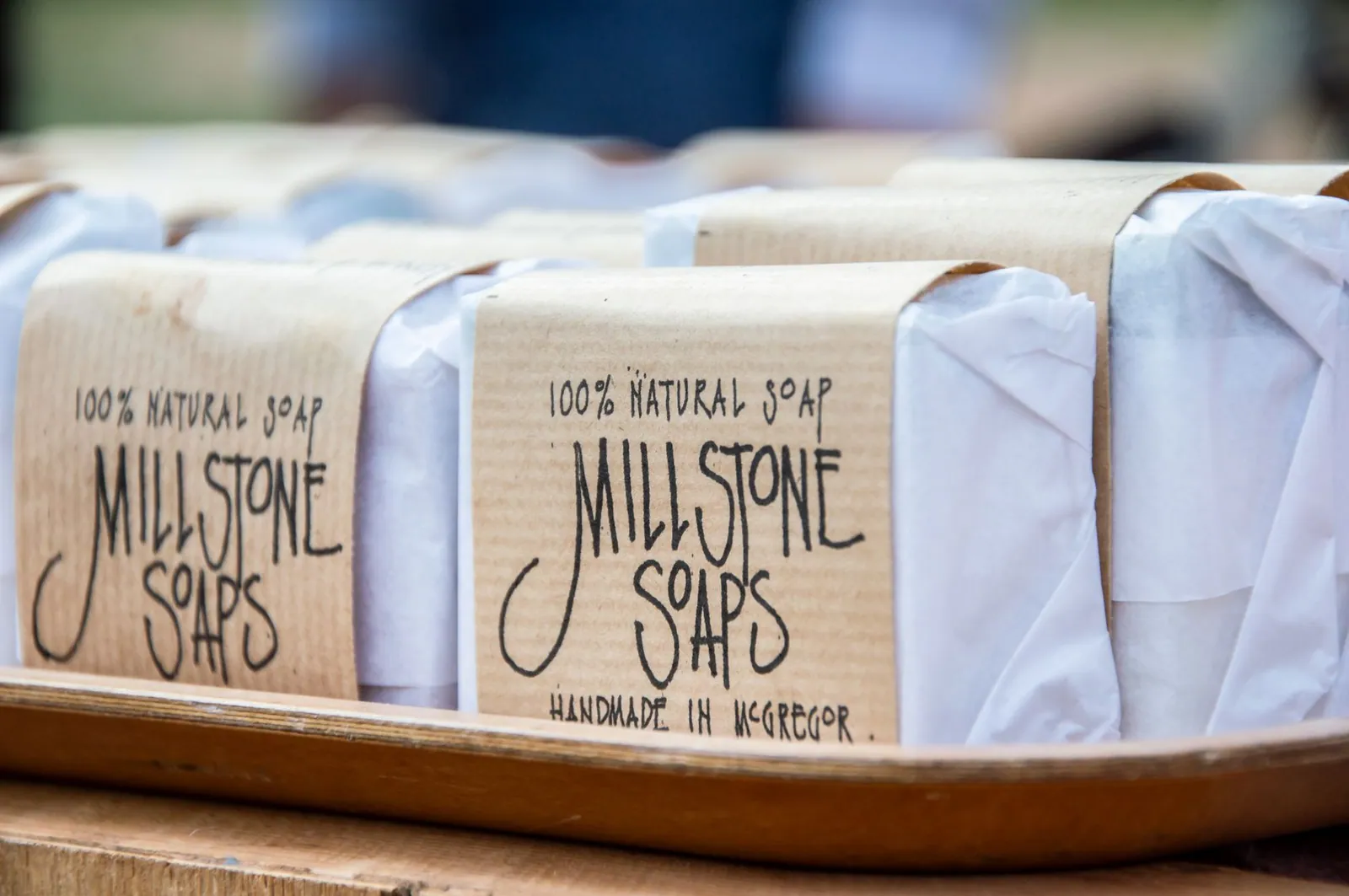
Products from Olive
Table olives, oil, pomace, leaf and soap: what is made from each part of the tree, and what each is good for.
Article
Products from Olive
Table olives, oil, pomace, leaf and soap: what is made from each part of the tree, and what each is good for.
 Article
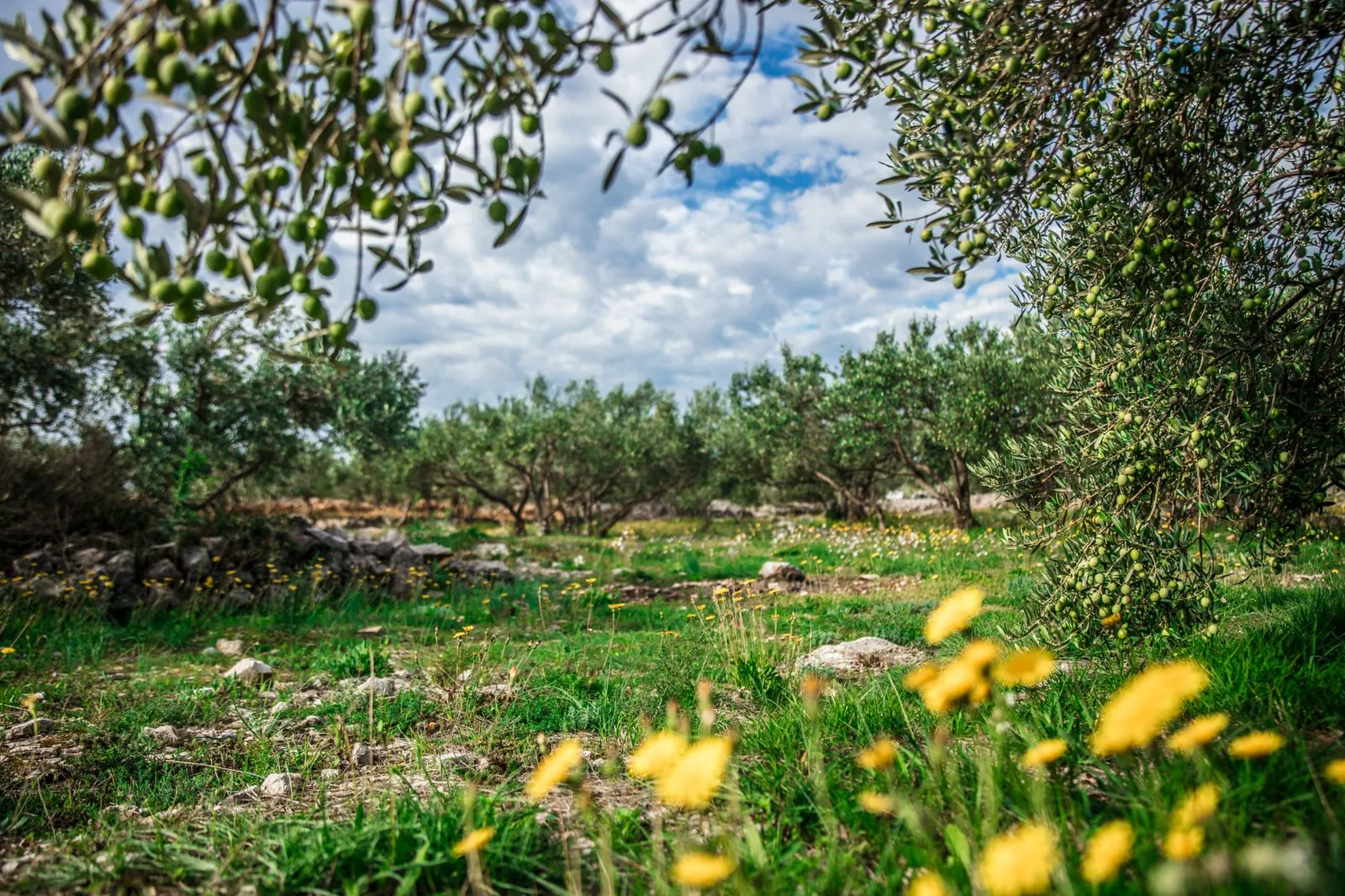
The Olive Tree
Olea europaea: botany, lifespan, root and leaf structure, monumental trees. The identity of the Mediterranean's emblematic tree and how it lives.
Article
The Olive Tree
Olea europaea: botany, lifespan, root and leaf structure, monumental trees. The identity of the Mediterranean's emblematic tree and how it lives.