Kalamata olive: Greece's table variety
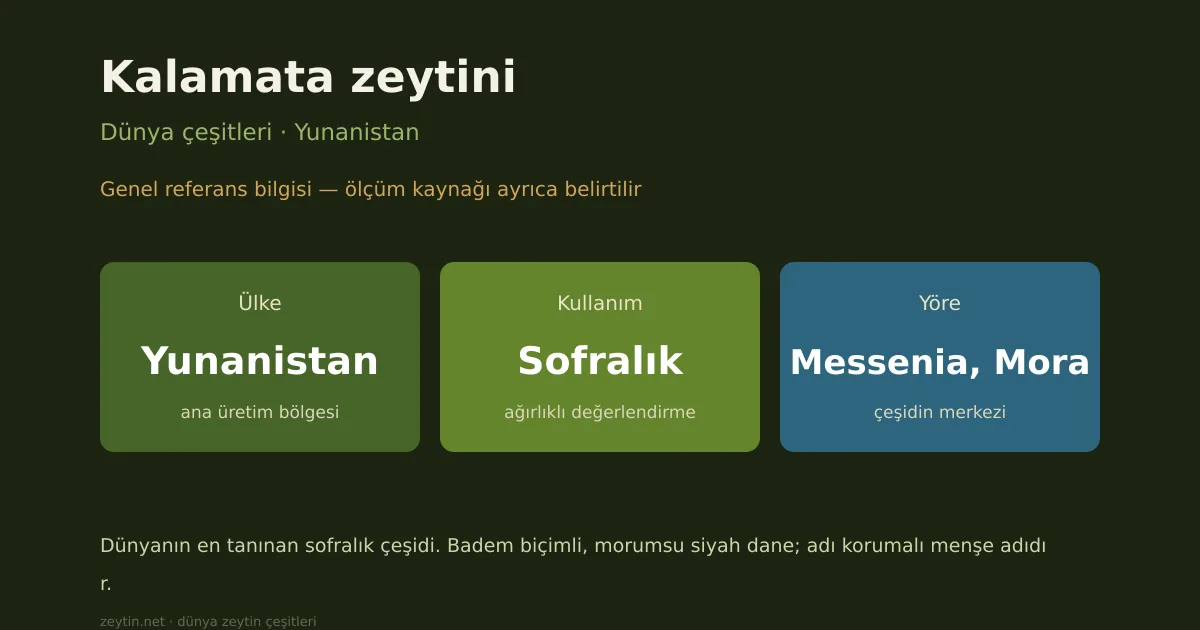
The world's best-known table olive. Almond-shaped, purplish-black fruit, and a name that is a protected designation of origin.
If any table olive variety is known worldwide like a brand, it is Kalamata: almond-shaped, purplish-black, large-fruited, and named after the Messenia region of Greece.
A protected name
"Kalamata" is not merely a variety name but a protected designation of origin. To be sold under that name in Greece the fruit must come from a defined area; the same variety grown elsewhere is usually sold as "Kalamon".
This is the international counterpart of Türkiye's geographical indication system. On how that works here: Geographical indications: what do 25 registrations achieve?
Why does it taste different?
Kalamata's distinctive taste comes as much from processing as from the variety. In the traditional method the fruit is debittered not with lye but in natural brine, then usually held in a liquid containing red wine vinegar and olive oil.
The method takes longer than the lye processing used for green table olives, but it preserves the fruit's own aroma. It follows the same logic as Türkiye's natural brining tradition: how olives are brined.
Compared with Türkiye
Kalamata's closest Turkish relative is Gemlik: both are black table olives, and both rest on a natural brining tradition.
The essential differences are shape and size. Gemlik is near-round and medium-large; Kalamata is elongated, almond-shaped and larger. There is also a market difference: Kalamata became a global brand, while Gemlik stayed largely within the domestic market.
Kalamata in numbers
| Use | Dual purpose — chiefly Greek-style black table olives |
| Fruit weight | 4.53 g |
| Fruit shape | Very elongated, strongly asymmetric |
| Flesh-to-stone ratio | 8.45 |
| Pitting | Freestone — flesh separates cleanly |
| Oil yield | Medium, but rich in polyphenols and of excellent quality |
| Ripening | Late — harvested at full colour change |
| Productivity | High but alternating |
| Cold | Moderately hardy |
| Tolerant to | Salinity; relatively resistant to olive knot, Verticillium and olive fly |
| Susceptible to | Leaf spot (moderately), excessively hot climates |
Source: International Olive Council (IOC), World Catalogue of Olive Varieties. It accounts for roughly 24% of Greece's table olive acreage, concentrated in Aetoloakarnania, Lakonia, Messinia, Arkadia and Ilia, and expanding into Thessaly, Macedonia, Epirus, Samos and Crete.
Two lines explain the table-olive standing: a high flesh-to-stone ratio and a freestone pit. The second is decisive in this trade — a variety whose flesh clings to the stone separates cleanly neither by hand nor by machine.
There is a limit as well: it is sensitive to excessive heat. In a warming climate that trait will push the variety uphill and northward. The mirror image of this problem in Türkiye is the chilling requirement: chilling requirement in olives.
Related pages
Where it stands among measured varieties
et/çekirdek oranı 8,45'ten türetildi — kaynak: IOC Dünya Zeytin Çeşitleri Kataloğu — Avustralya denemesi 19
Vossen, UC Cooperative Extension — IOC World Catalogue (Barranco vd.)
IOC Dünya Zeytin Çeşitleri Kataloğu — Avustralya denemesi 1998-2004 (Tablo 4)
IOC Dünya Zeytin Çeşitleri Kataloğu — Avustralya denemesi 1998-2004 (Tablo 4)
Values are those published on each variety's own page; the comparison covers only varieties with a measured figure, so it is a comparison of what is known — not of every Turkish variety. See the full ranking and how it is built →
One rating per visitor; you can change yours at any time. Ratings are real reader votes — no seeded or default scores.
Related
 Article
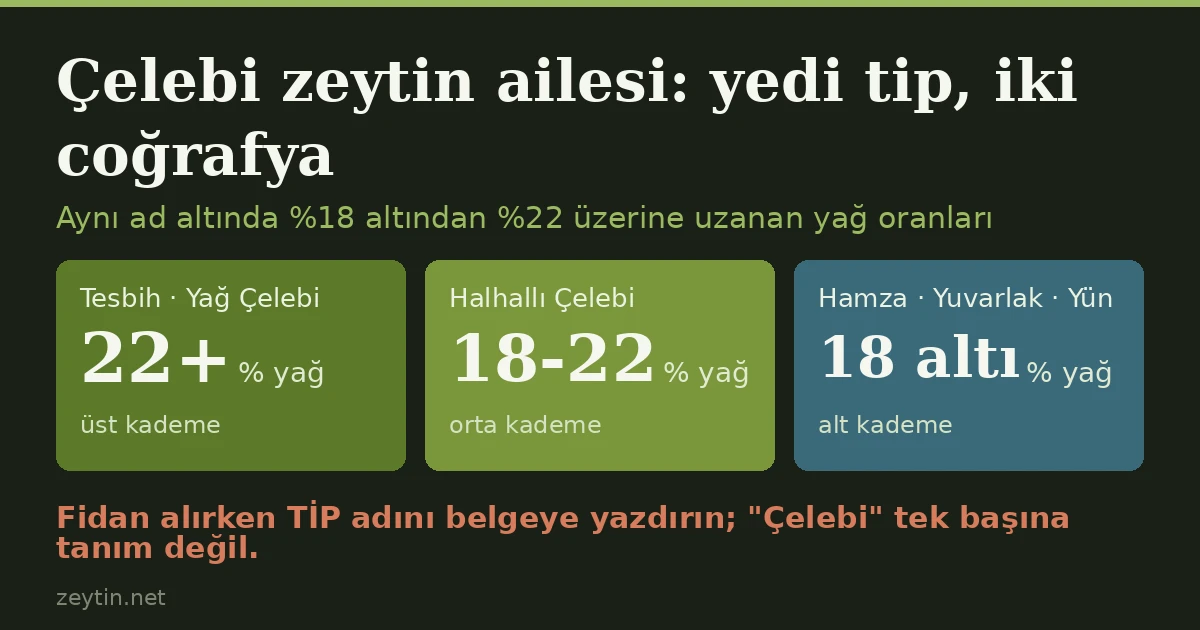
The Çelebi olive family: seven types, two separate geographies
Çelebi is not one variety but a family name. Tesbih Çelebi yields above 22 percent oil while Hamza, Yuvarlak and Yün Çelebi stay under 18. Measured values for seven types.
Article
The Çelebi olive family: seven types, two separate geographies
Çelebi is not one variety but a family name. Tesbih Çelebi yields above 22 percent oil while Hamza, Yuvarlak and Yün Çelebi stay under 18. Measured values for seven types.
 Article
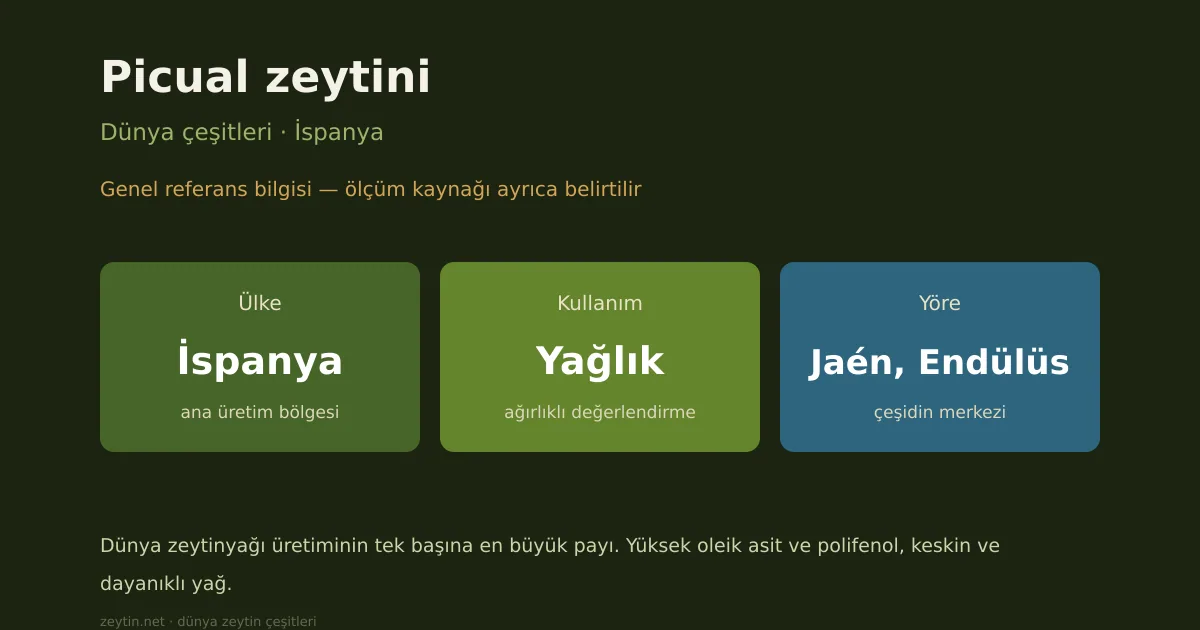
Picual olive: Spain's oil variety
The single largest share of world olive oil production. High oleic acid and polyphenols, a pungent and stable oil.
Article
Picual olive: Spain's oil variety
The single largest share of world olive oil production. High oleic acid and polyphenols, a pungent and stable oil.
 Article
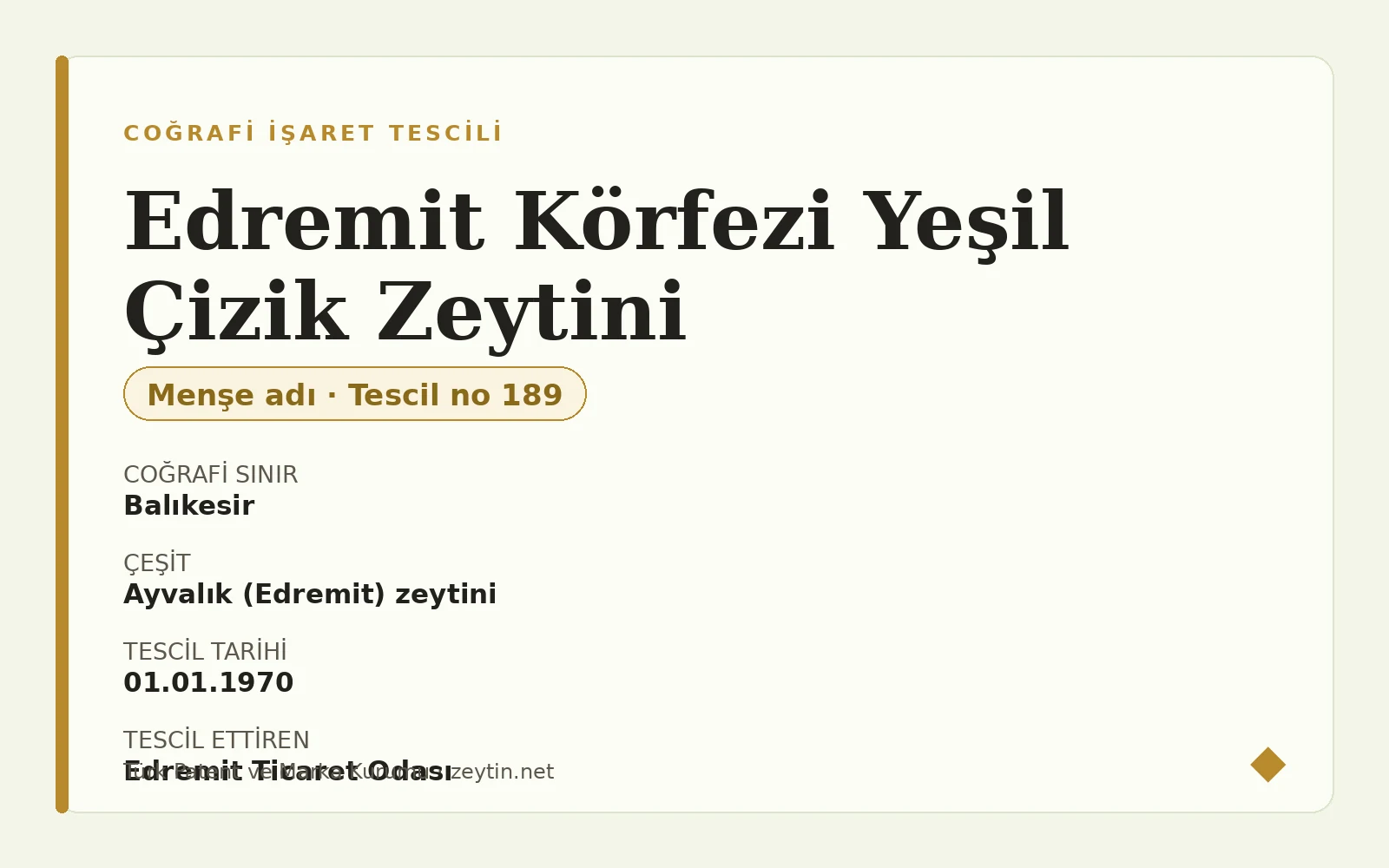
Edremit Gulf Green Scored Olive: a registration that defines altitude and slope
Registered in 2014. The certificate draws the boundary topographically as well as administratively: 50-250 m altitude, 5-6% slope. Debittering is entirely natural.
Article
Edremit Gulf Green Scored Olive: a registration that defines altitude and slope
Registered in 2014. The certificate draws the boundary topographically as well as administratively: 50-250 m altitude, 5-6% slope. Debittering is entirely natural.
 Article
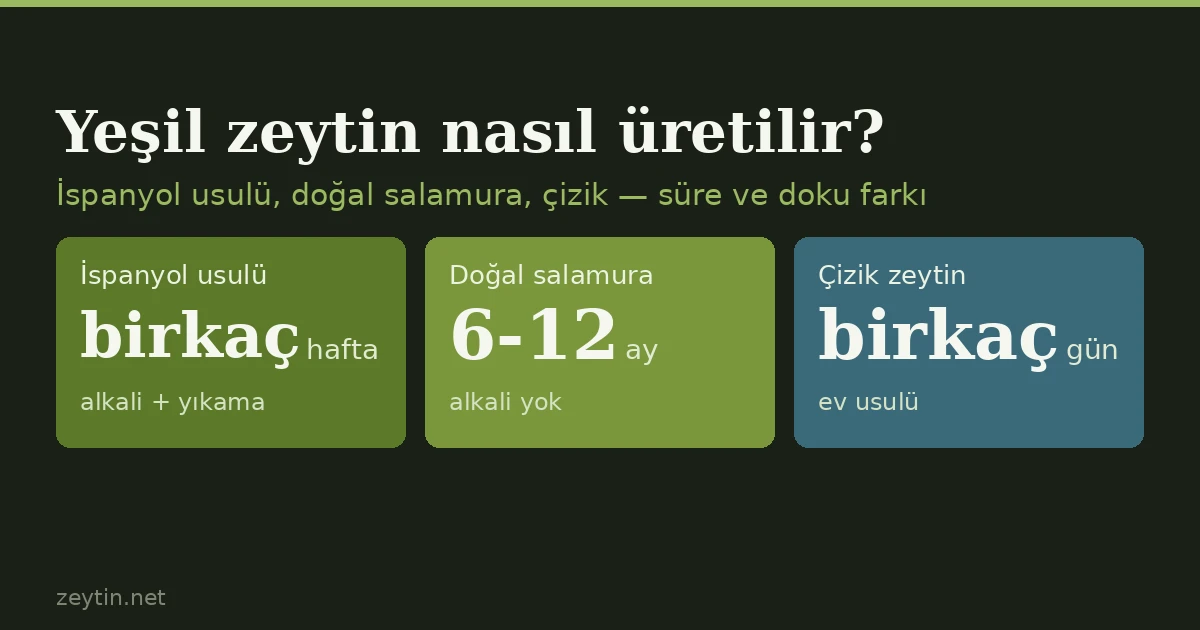
How are green table olives made? Three methods, three results
Green olives cannot be eaten off the tree; the bitterness must be removed. The difference between Spanish-style, natural brine and scored methods sets time, texture and taste.
Article
How are green table olives made? Three methods, three results
Green olives cannot be eaten off the tree; the bitterness must be removed. The difference between Spanish-style, natural brine and scored methods sets time, texture and taste.