Rooting olive cuttings: 30 of 133 wild olives made it
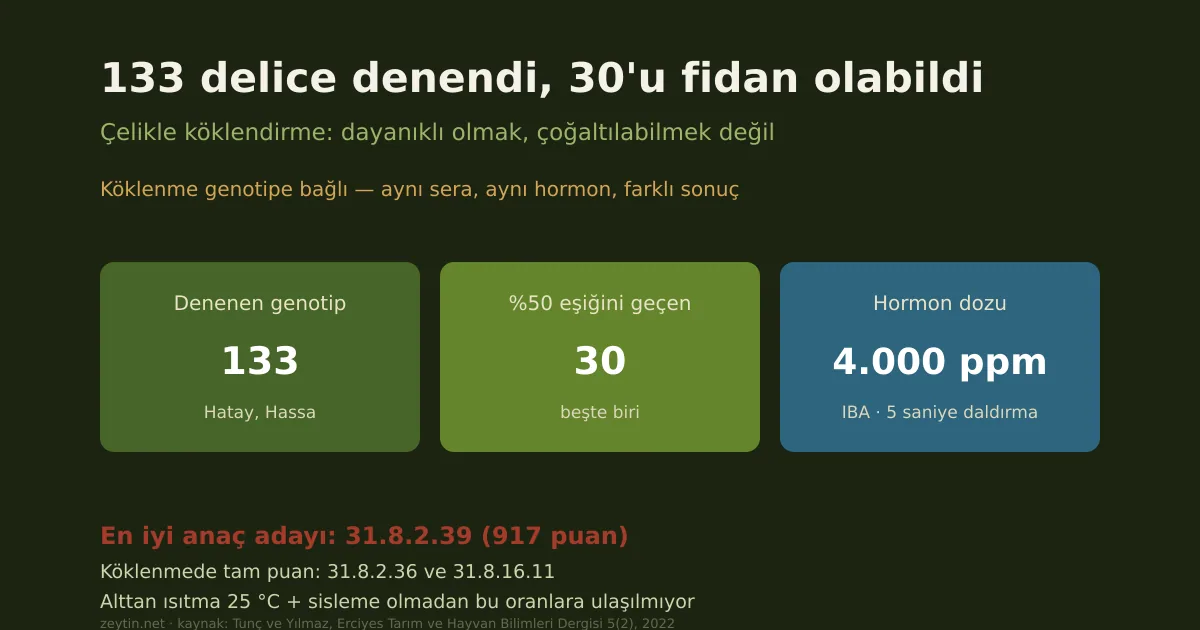
In Hassa, Hatay, 133 wild olive genotypes were rooted from cuttings and only 30 cleared the 50% threshold. Rooting depends on the genotype, not the technique.
Buying an olive sapling is easy; asking which rootstock it sits on never occurs to anyone. Yet a tree's tolerance of drought, salt and disease comes largely from the roots — that is, from the rootstock.
In Türkiye olive saplings are mostly produced from cuttings: a piece taken from a mother tree and rooted. Does every cutting root? No — and that is the real bottleneck in nursery work.
Why does the wild olive matter?
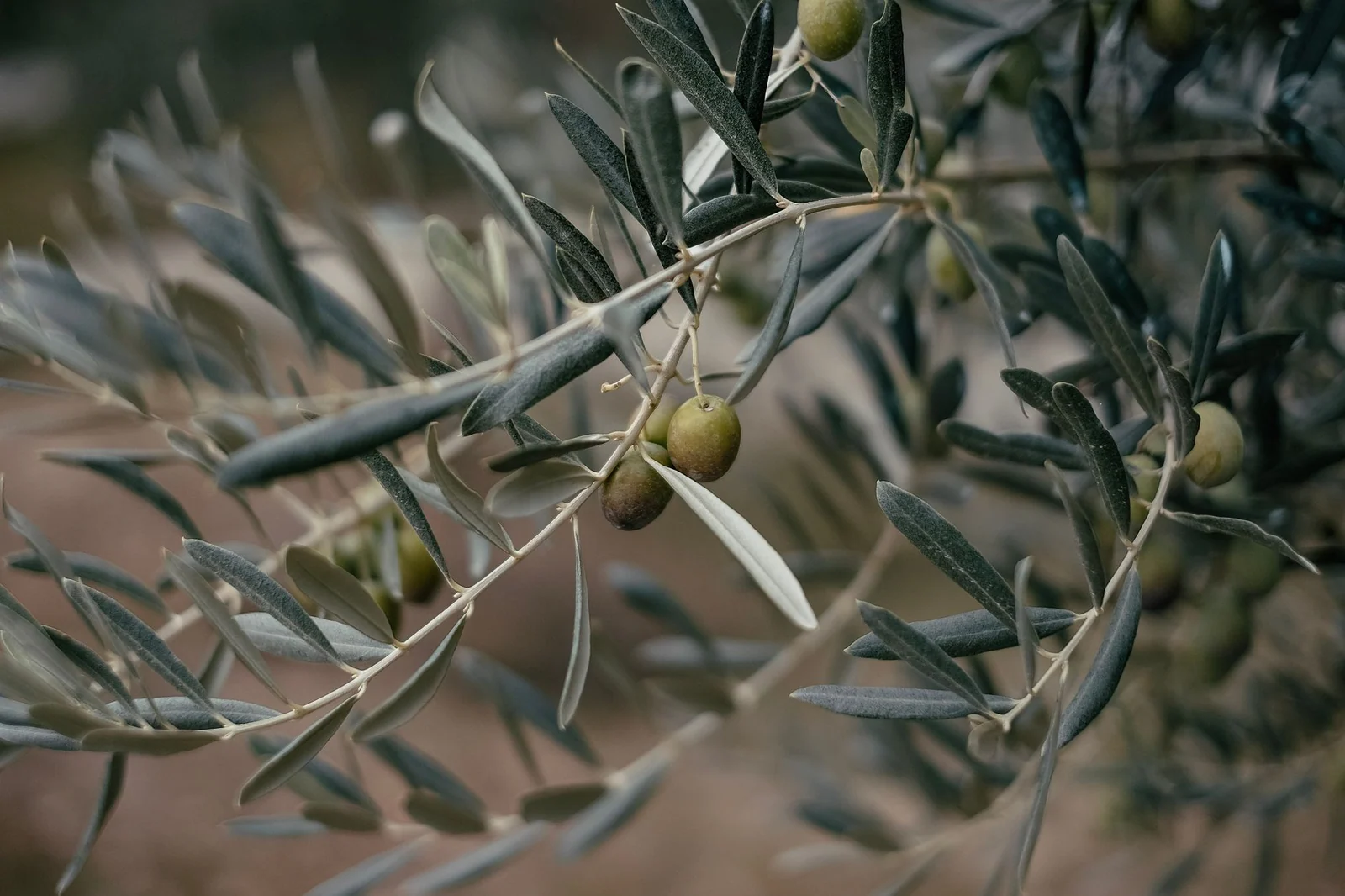
The delice is the wild form of the olive (Olea europaea subsp. oleaster): ungrafted trees grown on their own. The Hassa district of Hatay holds hundreds of thousands of them.
These are not ordinary wild trees. They have stood on that soil for centuries without irrigation or care — a gene pool shaped by natural selection for drought and local conditions. The clonal rootstock candidates modern olive growing is looking for are here.
The problem: a wild tree being hardy does not mean saplings can be produced from it. If the cutting will not root, the genotype is unusable in practice.
How was the trial set up?
At the Hassa Station of the Hatay Olive Research Institute, between November 2020 and March 2022.
| Genotypes selected | 133 wild olives |
| Cutting length | 25 cm average |
| Hormone | IBA (indole butyric acid), 4,000 ppm |
| Dip | basal 3 cm, 5 seconds |
| Rooting medium | perlite |
| Bottom heat | 25 °C |
| Greenhouse | semi-automatic, with fogging |
| Duration | 90 days |
After ninety days the cuttings were lifted and three things measured: rooting rate, root number and root length.
Those three criteria were combined into a single ranking by the Weighted-Rankit method — the standard approach for clonal rootstock selection in fruit growing.
The result: 30 out of 133
That figure is the striking one. Only 30 of the 133 genotypes reached a rooting rate of 50% or more. Four wild olives out of five, however hardy, are not suited to propagation by cuttings.
The five highest-scoring rootstock candidates:
| Rank | Genotype | Score |
|---|---|---|
| 1 | 31.8.2.39 | 917 |
| 2 | 31.8.16.11 | 860 |
| 3 | 31.8.2.36 | 798 |
| 4 | 31.8.2.34 | 797 |
| 5 | 31.8.16.16 | 772 |
On rooting rate alone, full marks (100) went to 31.8.2.36 and 31.8.16.11, with 31.8.2.34 on 90.
Note that 31.8.2.39, ranked first overall, is not first on rooting rate. Its total is lifted by root number and root length. Rooting is not the only criterion for a rootstock: a sapling with many long roots establishes better in the field.
Are these rates good?
Against the literature, yes:
| Study | Material | Rooting |
|---|---|---|
| Uğur et al. (2013) | Wild olive genotypes | 8.33% – 55.55% |
| Shakir et al. (2004) | Cultivated olive (O. europaea) | 36.29% |
| Shakir et al. (2004) | Wild olive (O. cuspidata) | 38.64% |
| Awan et al. (2012) | Wild olive | 18% – 65% |
The Hassa genotypes outperformed the other studies on both root number and root length.
What does it mean for the grower?
Several practical points:
- Rooting depends on the genotype, not on technique. In the same greenhouse, with the same hormone and medium, one genotype roots at 100% while another does not root at all. If your cuttings fail, you are not always the one at fault.
- Hormone alone is not enough. 4,000 ppm IBA is a strong dose, and still four-fifths of the genotypes failed to clear the threshold.
- Bottom heat and fogging are essential. Without a 25 °C root zone and humid air these rates are unreachable. That is why rooting cuttings outdoors in the shade ends in disappointment.
- Local wild olives are a resource. The delice at the edge of your grove is a genotype adapted to that soil. Even if you are not a nurseryman, think twice before cutting it down.
Why is rootstock on the agenda?
In fruit growing, rootstock is discussed more every year: it governs tree size, time to bearing, tolerance of drought and salt, and resistance to some soil-borne diseases.
In olives the work is only beginning. Most saplings in Türkiye today are grown on their own roots from cuttings; standardised clonal rootstocks are not widespread. The Hassa study is aimed at exactly that gap.
The spread of modern systems such as super-high-density planting makes the need larger — small-canopied, early-bearing orchards need suitable rootstocks. See planting density: how many trees per decare? and Arbequina.
In short
Of 133 wild olive genotypes selected at Hassa in Hatay, only 30 proved suitable for propagation by cuttings. The best rootstock candidate was 31.8.2.39; full marks on rooting went to 31.8.2.36 and 31.8.16.11.
The lesson: a hardy olive tree is not necessarily a tree you can propagate. The olive's gene pool is deep, but the usable part of it is narrow.
One rating per visitor; you can change yours at any time. Ratings are real reader votes — no seeded or default scores.
Related
 Article
Zoncuk olive
Zoncuk is a recorded variety of south-eastern Anatolia. No measured pomological data published.
Article
Zoncuk olive
Zoncuk is a recorded variety of south-eastern Anatolia. No measured pomological data published.
 Article
Olive varieties: seventeen Turkish varieties in numbers
Gemlik, Ayvalık, Memecik, Domat and the rest: Türkiye's olive varieties with oil content, fruit size, flesh ratio, region and ripening calendar.
Article
Olive varieties: seventeen Turkish varieties in numbers
Gemlik, Ayvalık, Memecik, Domat and the rest: Türkiye's olive varieties with oil content, fruit size, flesh ratio, region and ripening calendar.
 Article
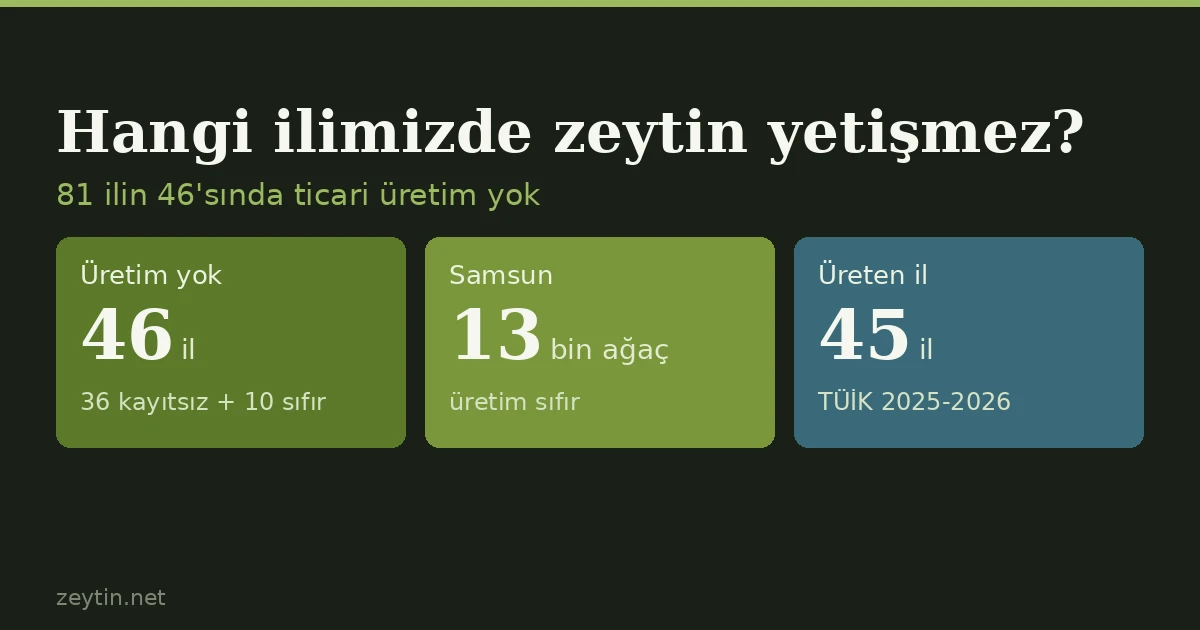
Which provinces in Turkey grow no olives?
Forty-six of Turkey's 81 provinces have no commercial olive production: 36 absent from the statistics, ten reporting zero. Samsun has 13,000 trees and no crop.
Article
Which provinces in Turkey grow no olives?
Forty-six of Turkey's 81 provinces have no commercial olive production: 36 absent from the statistics, ten reporting zero. Samsun has 13,000 trees and no crop.
 Article
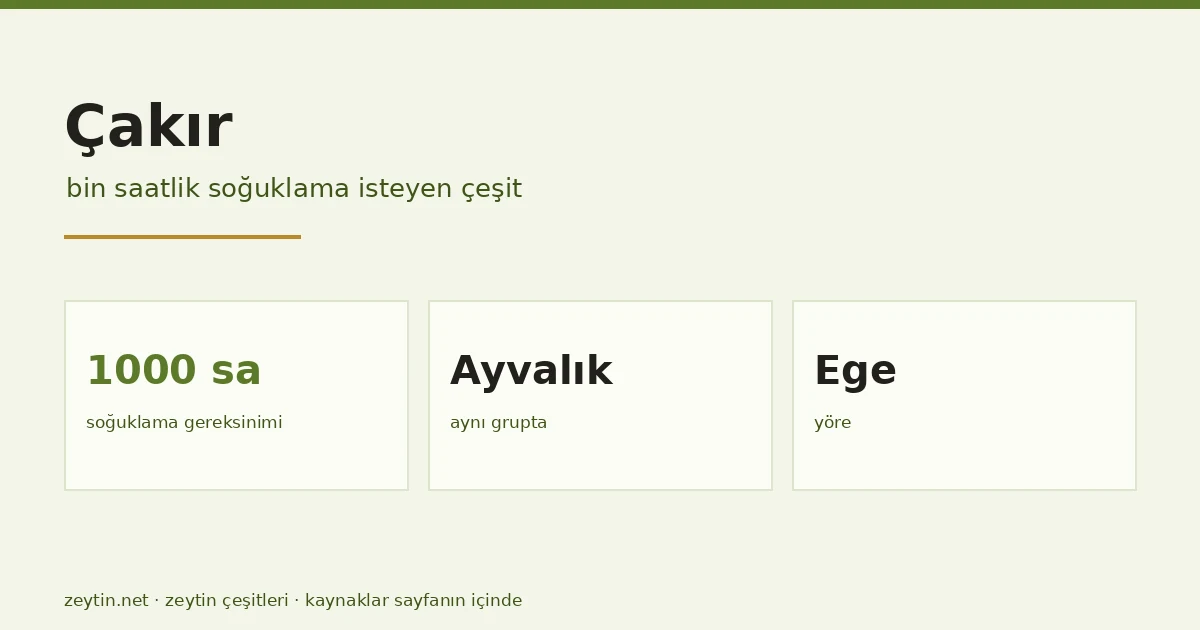
The Çakır olive: a cultivar that asks for a thousand hours of cold
Reported alongside Ayvalık and Domat with a 1000-hour chilling requirement — the group most at risk as winters warm.
Article
The Çakır olive: a cultivar that asks for a thousand hours of cold
Reported alongside Ayvalık and Domat with a 1000-hour chilling requirement — the group most at risk as winters warm.