Mission olive: United States's table and oil variety
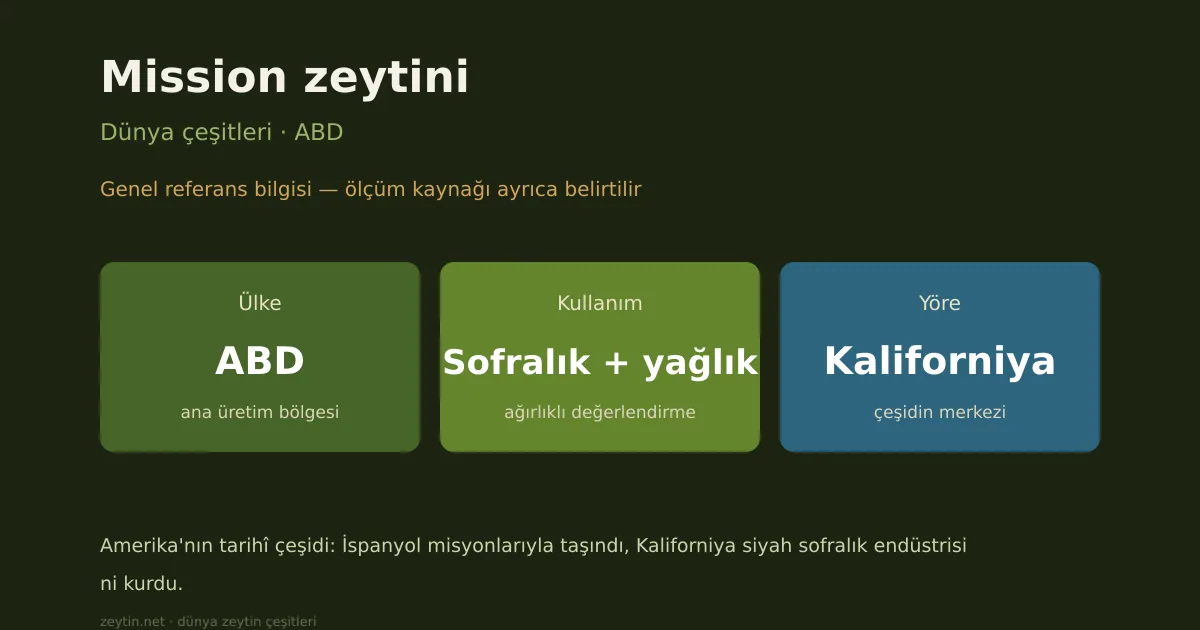
America's historic variety: carried by the Spanish missions, it built California's black table olive industry.
The beginning of olive growing in the Americas is tied to one variety: Mission. It takes its name from the Spanish missions — carried to California by way of Mexico in the 18th century.
The California black olive
Mission became the basis of an American industry: the California-style black olive. That method differs from Mediterranean natural brining:
- The fruit is picked at green maturity.
- It is aerated while held in an alkaline solution, and darkens by oxidation.
- The colour is fixed with ferrous gluconate (E579).
- Then it is canned.
So the smooth, matte-black, soft olive in the can is not naturally black — it was picked green and darkened. For the comparison with natural brining: how olives are cured.
Why Mission?
The variety itself is not remarkable; it was chosen for hardiness. Mission adapts to cold, drought and varied soils better than Mediterranean cultivars — the first thing you want in a plant taken to a new continent.
Today it is also pressed for oil in California, giving a moderate, balanced oil.
Compared with Türkiye
Mission's story is the mirror image of Gemlik's: each established a region's black table olive identity. The difference is method — Gemlik darkens on its own in natural brine, Mission is darkened chemically.
The taste difference follows from that: natural brining preserves the fruit's own aroma, while the California style yields a product that is uniform but neutral. On judging what you have bought: has the olive gone off?
Mission in numbers
| Fruit weight | ~4.1 g |
| Oil content | 21.8% |
| Flesh-to-pit ratio | 6.5:1 — the lowest of any commercial cultivar in California |
| Cold resistance | The greatest of any commercial cultivar in California |
| Table harvest | Late October - November |
| Oil harvest | Mid-December - February |
| Origin | Late 18th century, California — Spanish missions along El Camino Real |
California commercial cultivar measurements. Mission is the only American variety listed in the International Olive Council's World Catalogue of Olive Varieties.
The table turns the sentence above — that the variety itself is nothing exceptional — into figures. A flesh-to-pit ratio of 6.5:1 makes it the least suited to table use among California's commercial cultivars; on the same measure Hojiblanca stands at 8:1.
The California black olive industry was built on it all the same, and the reason is in the table: its cold resistance exceeds that of every other commercial cultivar in the state. On a new continent survival comes first and quality second.
On the oil side the figure is far from poor: 21.8%, the same territory as Coratina's 20-23%. That is why California increasingly steers Mission towards oil.
Related pages
Where it stands among measured varieties
et/çekirdek oranı 6,5'ten türetildi — kaynak: Kaliforniya ticari çeşitleri arasında en düşük (IOC Tablo 4
çeşit sayfası
çeşit sayfası
IOC Dünya Kataloğu — Avustralya denemesi 1998-2004 — bu çeşidin ölçüm takımı bu çalışmadan (2 kaynak arasından)
Values are those published on each variety's own page; the comparison covers only varieties with a measured figure, so it is a comparison of what is known — not of every Turkish variety. See the full ranking and how it is built →
One rating per visitor; you can change yours at any time. Ratings are real reader votes — no seeded or default scores.
Related
 Article
Products from Olive
Table olives, oil, pomace, leaf and soap: what is made from each part of the tree, and what each is good for.
Article
Products from Olive
Table olives, oil, pomace, leaf and soap: what is made from each part of the tree, and what each is good for.
 Article
Büyükbelen Tekir Olive: a table olive born from grafting two cultivars
Registered in 2024. The Eşek (Ödemiş) cultivar is grafted onto Uslu seedling rootstock. The flesh does not soften after processing, giving a long shelf life.
Article
Büyükbelen Tekir Olive: a table olive born from grafting two cultivars
Registered in 2024. The Eşek (Ödemiş) cultivar is grafted onto Uslu seedling rootstock. The flesh does not soften after processing, giving a long shelf life.
 Article
Yağ Çelebi olive: characteristics, oil content and growing areas
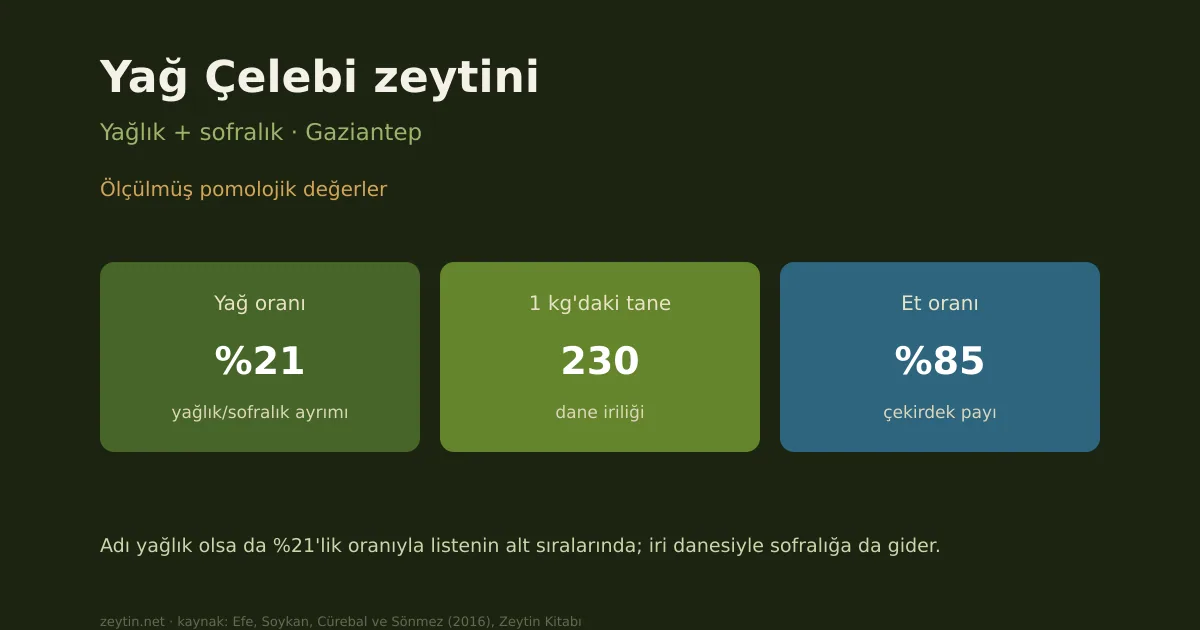
Despite the name, its 21% oil puts it low on the list; its large fruit also serves the table.
Article
Yağ Çelebi olive: characteristics, oil content and growing areas
Despite the name, its 21% oil puts it low on the list; its large fruit also serves the table.
 Article
Olive Oil Soap: How It Is Made, Its Types and How to Choose
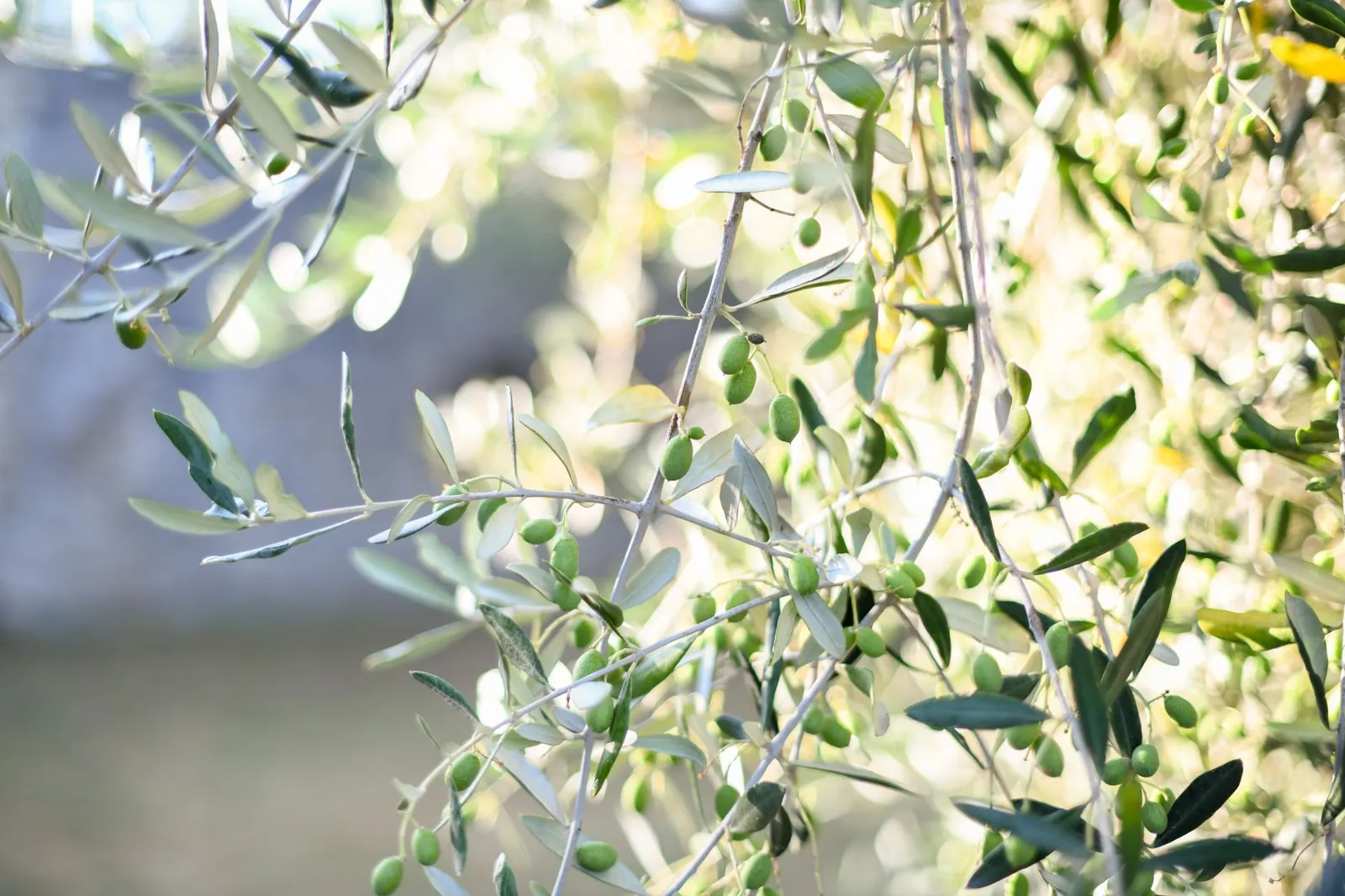
How saponification works, why curing takes months, and how to recognise genuine olive oil soap.
Article
Olive Oil Soap: How It Is Made, Its Types and How to Choose
How saponification works, why curing takes months, and how to recognise genuine olive oil soap.