How Are Olives Cured?
An olive straight from the tree is inedible — it is bitter. In water, in salt, in lye or scored: the methods that remove the bitterness, and how long each takes.
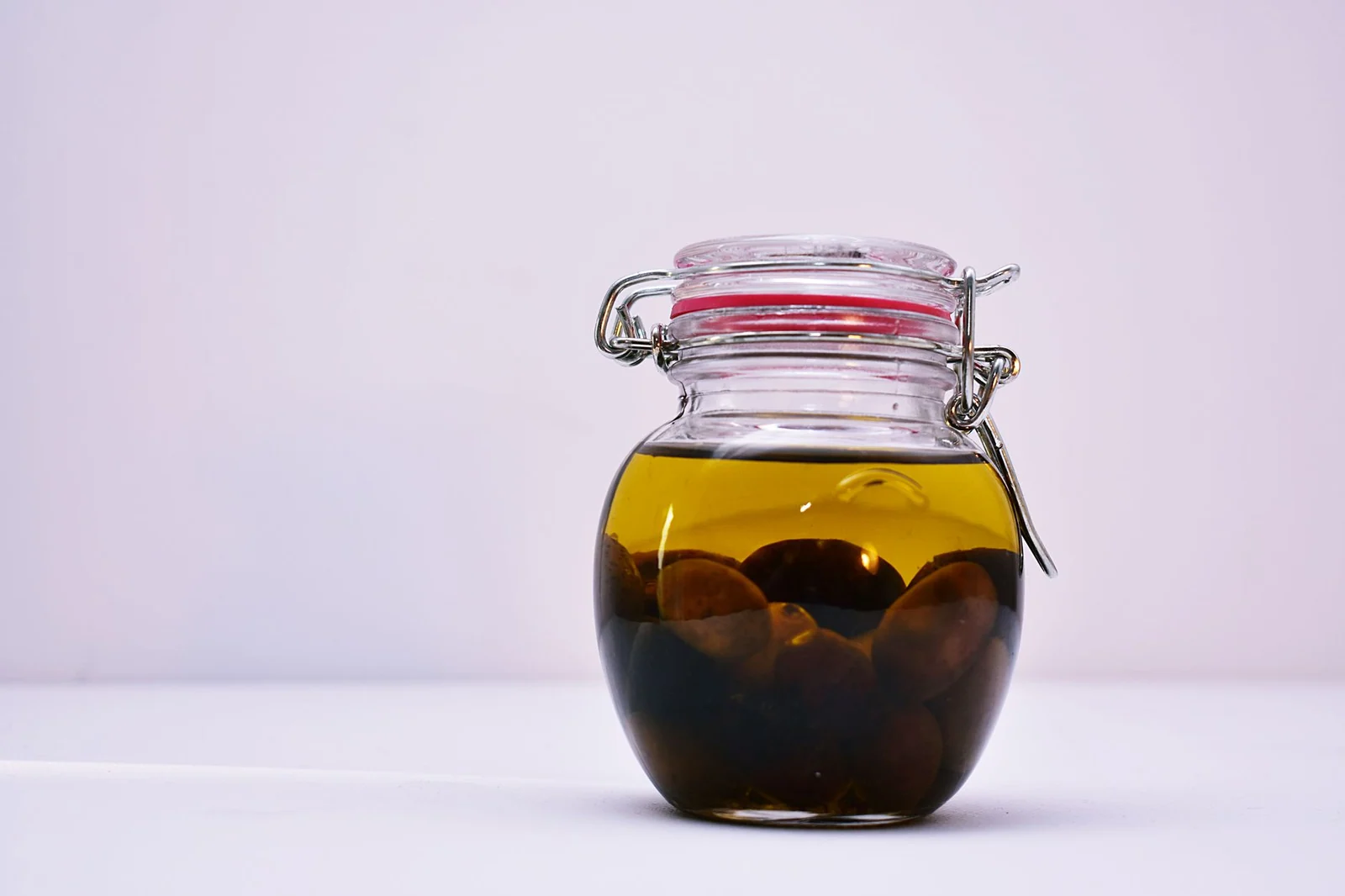
If you have ever bitten into an olive fresh from the tree, you know what we mean: it is not something you can eat. The reason is a compound called oleuropein, which gives the fruit a sharp, lingering bitterness. Before an olive can reach the table, that bitterness has to be removed — the whole process is known as curing.
Why so bitter?
Oleuropein is a polyphenol and the tree's own defence, keeping insects and fungi at bay. It is water-soluble, and that is what makes curing possible: left long enough in water or brine, the olive gradually gives up its oleuropein.
Water curing (the common home method)
The olives are covered with water in a wide container and the water is changed daily. Green olives take 20-30 days, black ones 10-15, depending on variety and ripeness. At the end you taste them; once the bitterness has fallen to an acceptable level, the olives are moved into brine (80-100 g of rock salt per litre) and stored in jars.
To speed things up the olives are scored or cracked — hence "cracked olives". The larger surface lets the oleuropein out faster, though the fruit stays softer.
Dry salt curing
Ripe black olives are layered with rock salt in perforated baskets or cloth. The salt draws the moisture out of the fruit, and the bitterness leaves with it. It takes four to eight weeks. The result is a wrinkled, intensely flavoured olive with pronounced salt — the sele olives of the Gemlik region are made this way.
Lye and ash methods
In industrial production the bitterness is removed within hours using a dilute sodium hydroxide (lye) solution, followed by a long wash. It is fast, but it reduces both the aroma and the polyphenol content. In Anatolia the same job used to be done with water strained through wood ash.
Most green "Spanish style" olives are produced this way and then left to a lactic fermentation.
Greek style natural fermentation
The olives go straight into brine and stay there for months. The oleuropein both leaches into the water and is broken down by naturally occurring lactic acid bacteria. It is the slowest method (6-12 months) and the richest in flavour; Kalamata olives are prepared like this.
If you are curing at home
- The olives must stay under the liquid at all times; any fruit that floats will mould. Weigh them down with a plate or a clean stone.
- A finger of olive oil poured on top of the jar seals off contact with the air.
- Use non-iodised salt; iodine disrupts the fermentation.
- The bitterness never disappears entirely in a table olive, and it should not — a faint bitterness is the mark of a good one.
The variety shapes the result: which are suited to curing and which to oil is covered in olive varieties.
One rating per visitor; you can change yours at any time. Ratings are real reader votes — no seeded or default scores.
Related
 Article
How do you reduce the salt in olives?
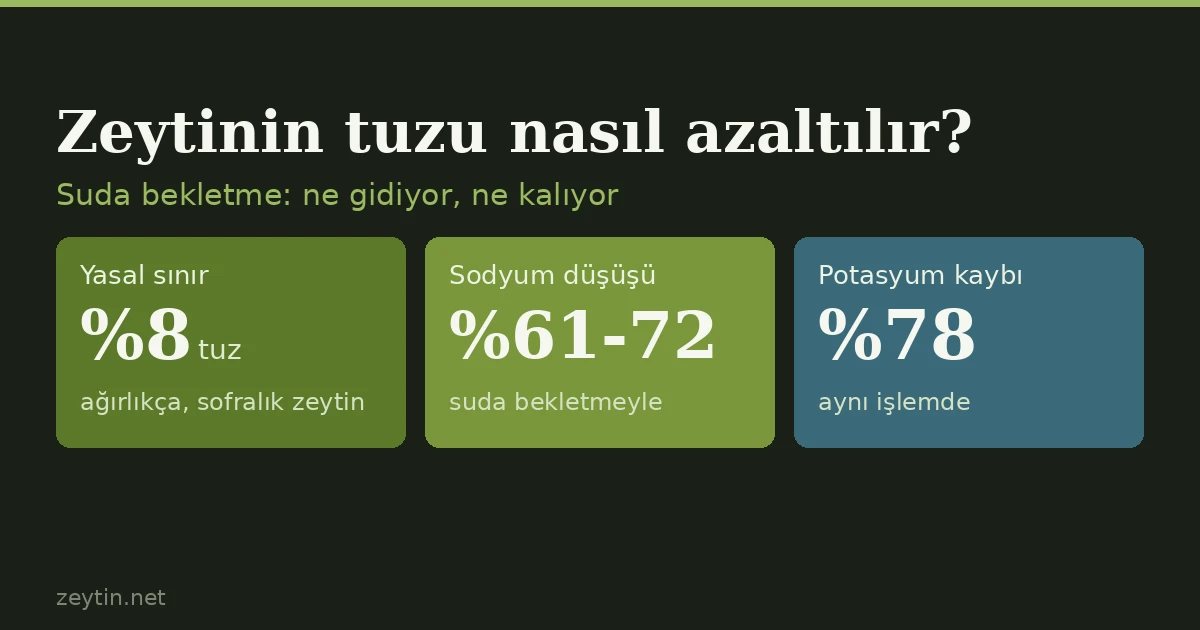
Draining the brine does not remove the salt — it has worked its way into the flesh. A Spanish study measured that soaking in water cuts sodium by 61-72%, but the same process also carries away up to 78% of the potassium and softens the fruit. The legal salt ceiling for table olives is 8% by weight, and the "low salt" claim requires no more than 4 grams per 100. Which method works how well, and what does each one give up?
Article
How do you reduce the salt in olives?
Draining the brine does not remove the salt — it has worked its way into the flesh. A Spanish study measured that soaking in water cuts sodium by 61-72%, but the same process also carries away up to 78% of the potassium and softens the fruit. The legal salt ceiling for table olives is 8% by weight, and the "low salt" claim requires no more than 4 grams per 100. Which method works how well, and what does each one give up?
 Article
Milas Oil-Cured Olive: the one table-olive registration with measurements
Five of the six registrations are olive oils. This is the one table olive, and its certificate gives fruit dimensions, flesh-to-stone ratio and flesh firmness in figures.
Article
Milas Oil-Cured Olive: the one table-olive registration with measurements
Five of the six registrations are olive oils. This is the one table olive, and its certificate gives fruit dimensions, flesh-to-stone ratio and flesh firmness in figures.
 Article
Uslu olive: characteristics, oil content and growing areas
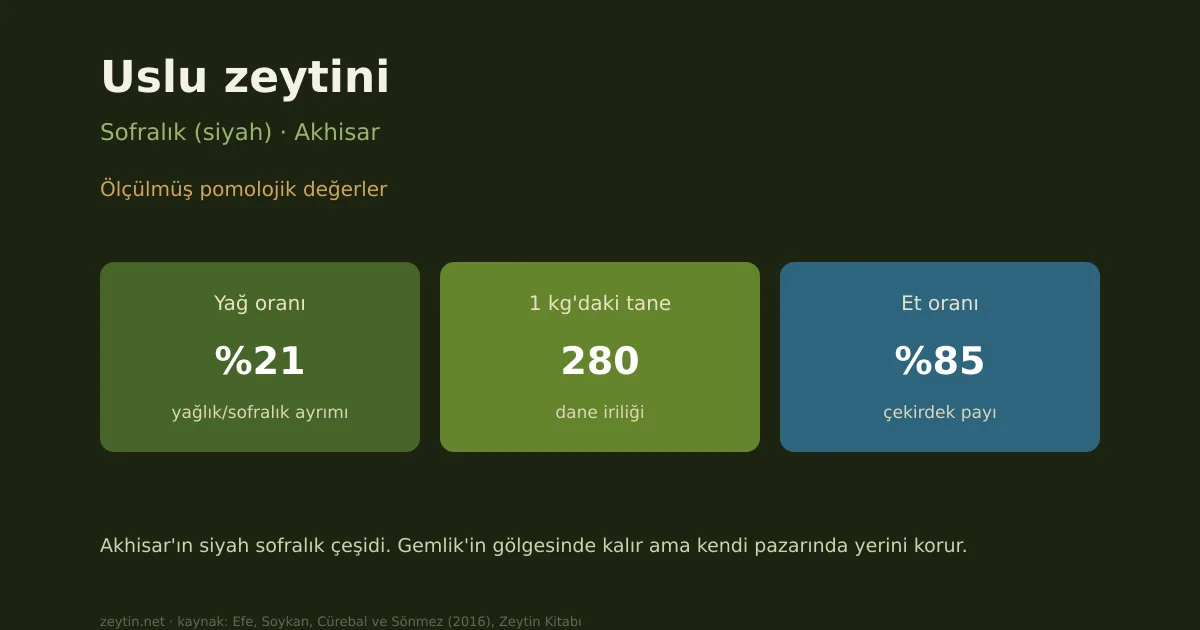
Akhisar's black table variety. Overshadowed by Gemlik, yet holding its own market.
Article
Uslu olive: characteristics, oil content and growing areas
Akhisar's black table variety. Overshadowed by Gemlik, yet holding its own market.
 Article
The Domat olive: the cultivar behind stuffed olives, in numbers
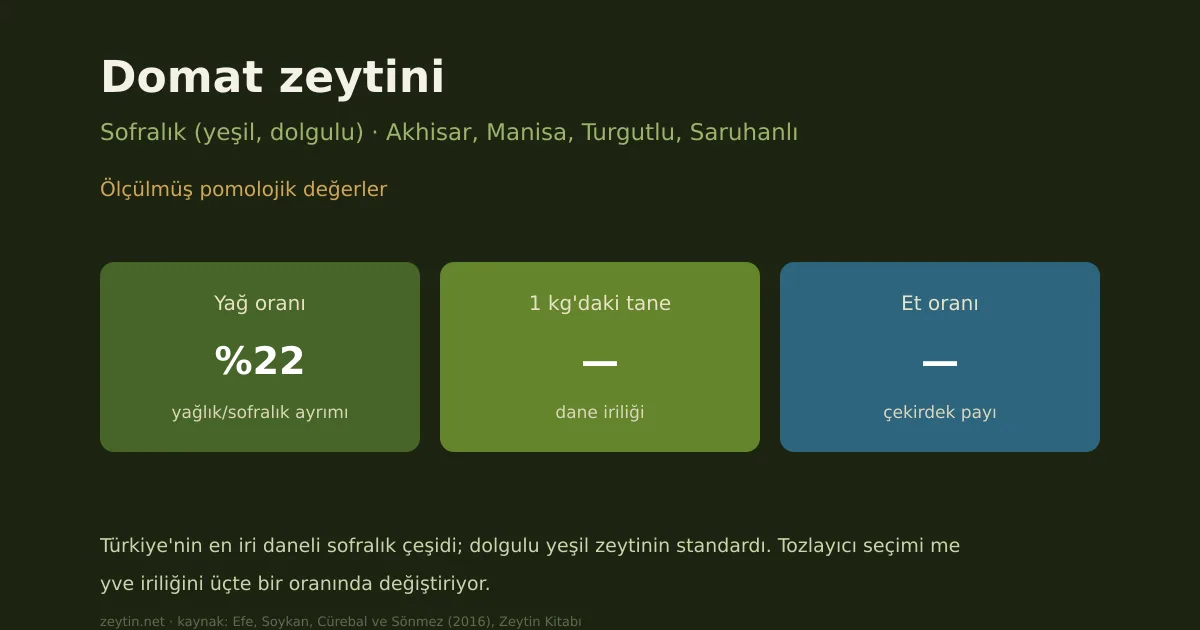
Domat, Turkey's largest table cultivar: 7.96 g fruit, 89% flesh, a 552-hour chilling requirement. Why stuffed olives are always made from it, the disagreement over oil content, and why it is never planted alone.
Article
The Domat olive: the cultivar behind stuffed olives, in numbers
Domat, Turkey's largest table cultivar: 7.96 g fruit, 89% flesh, a 552-hour chilling requirement. Why stuffed olives are always made from it, the disagreement over oil content, and why it is never planted alone.