Olive · Olive Oil · Mediterranean
Olive, Olive Oil and Mediterranean Cuisine
Olive varieties, olive oil guide, harvest, storage and recipes from the Mediterranean kitchen.
Producer prices: European Commission Agri-food Data Portal (weekly). Exchange rates: European Central Bank (daily). Each figure carries its own date.
 Article
Olive Oil Prices: Week 35 of 2026
Turkish exchange prices, European producer prices and exchange rates side by side: extra virgin at 300 TL/kg in Edremit, Spain's national average €3.52/kg.
Article
Olive Oil Prices: Week 35 of 2026
Turkish exchange prices, European producer prices and exchange rates side by side: extra virgin at 300 TL/kg in Edremit, Spain's national average €3.52/kg.
 Article
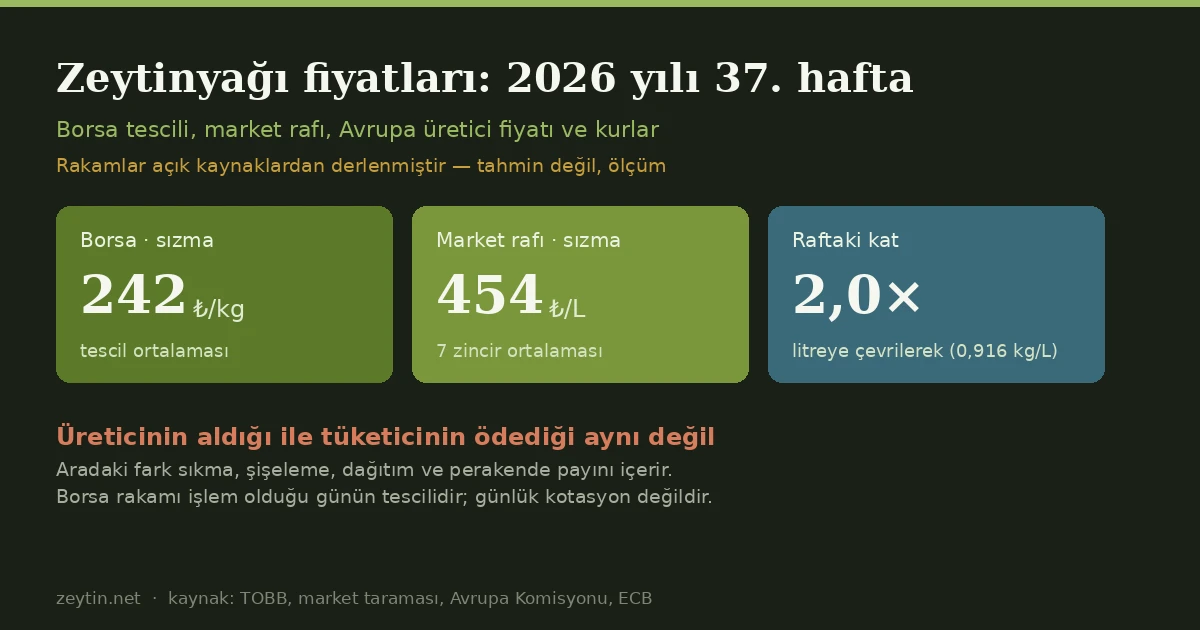
Olive Oil Prices: Week 37 of 2026
Week 37 of 2026: Turkish exchange prices, European producer prices and exchange rates side by side.
Article
Olive Oil Prices: Week 37 of 2026
Week 37 of 2026: Turkish exchange prices, European producer prices and exchange rates side by side.
 Article
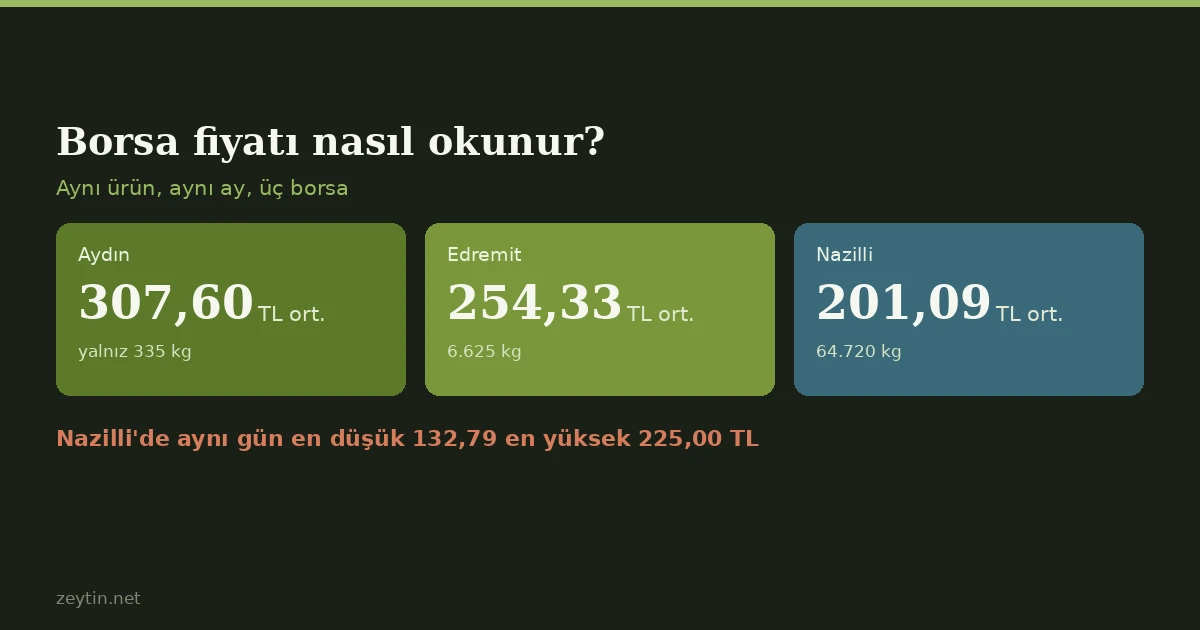
How to read olive oil exchange prices
Three exchanges, three averages for the same product: 201, 254 and 308 lira. In Nazilli, trades from 132.79 to 225.00 in a single day. What an exchange price measures, and why date and volume matter more than the average.
Article
How to read olive oil exchange prices
Three exchanges, three averages for the same product: 201, 254 and 308 lira. In Nazilli, trades from 132.79 to 225.00 in a single day. What an exchange price measures, and why date and volume matter more than the average.
 Article
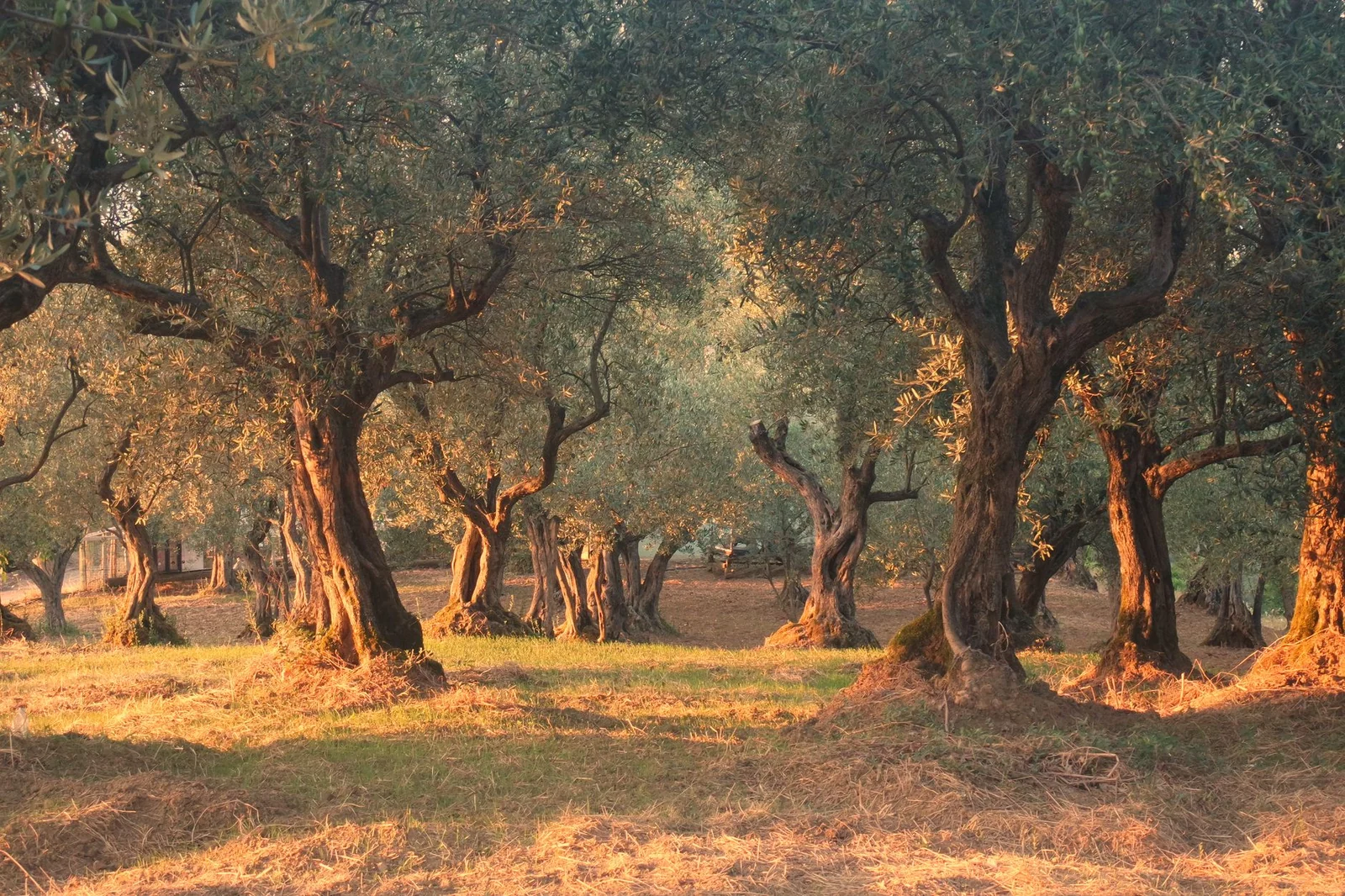
The Olive: Tree, History, Production and Future
The botany, history and uses of the olive tree; current production figures worldwide and in Turkey, provinces, varieties and the sector's future — with tables.
Article
The Olive: Tree, History, Production and Future
The botany, history and uses of the olive tree; current production figures worldwide and in Turkey, provinces, varieties and the sector's future — with tables.
 Article
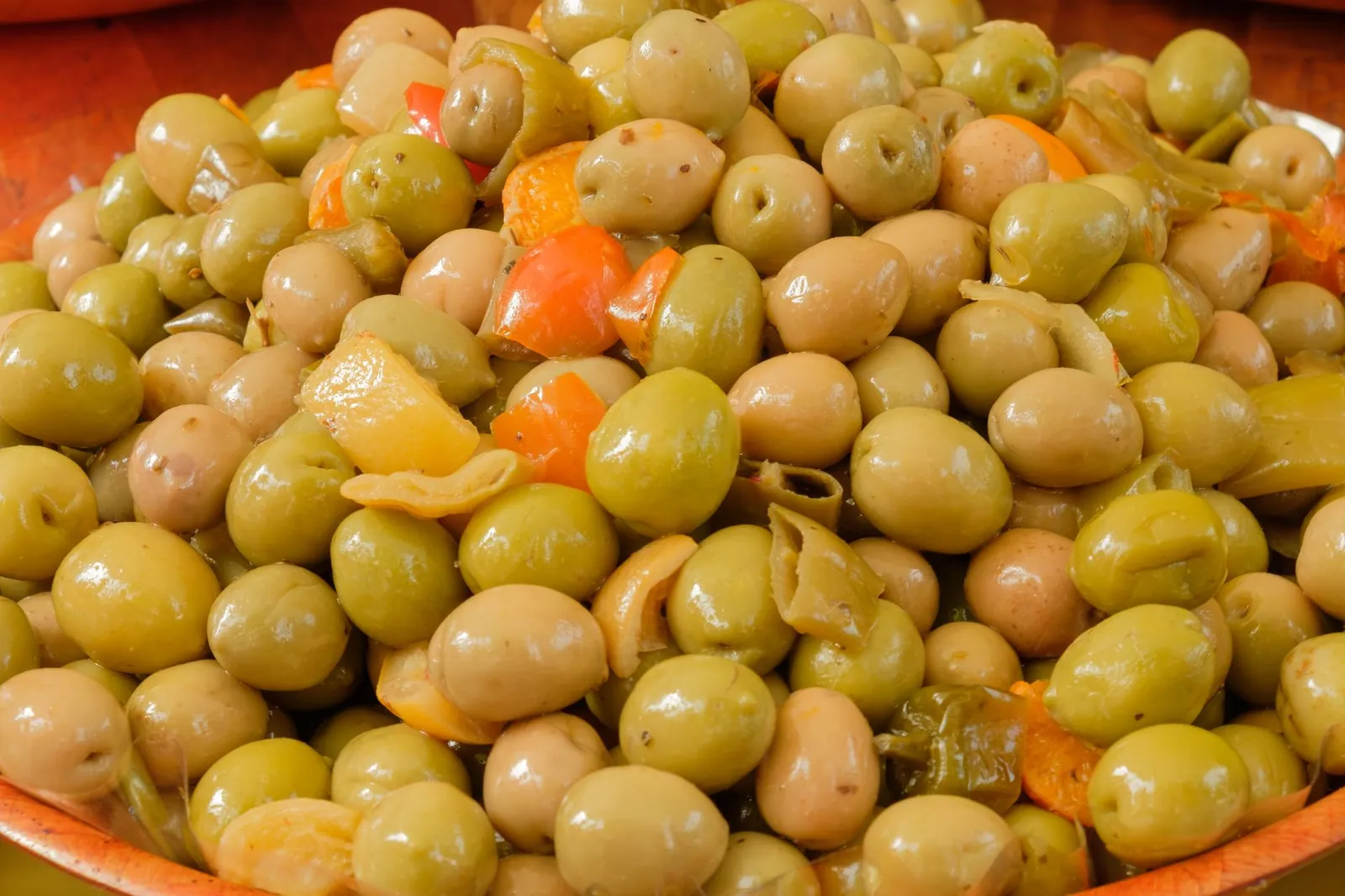
The Olive Sector in Turkey: Structure, Exports and Challenges
Production, exports, business structure and price: the Turkish olive sector in figures, and where the chain breaks.
Article
The Olive Sector in Turkey: Structure, Exports and Challenges
Production, exports, business structure and price: the Turkish olive sector in figures, and where the chain breaks.
 Article
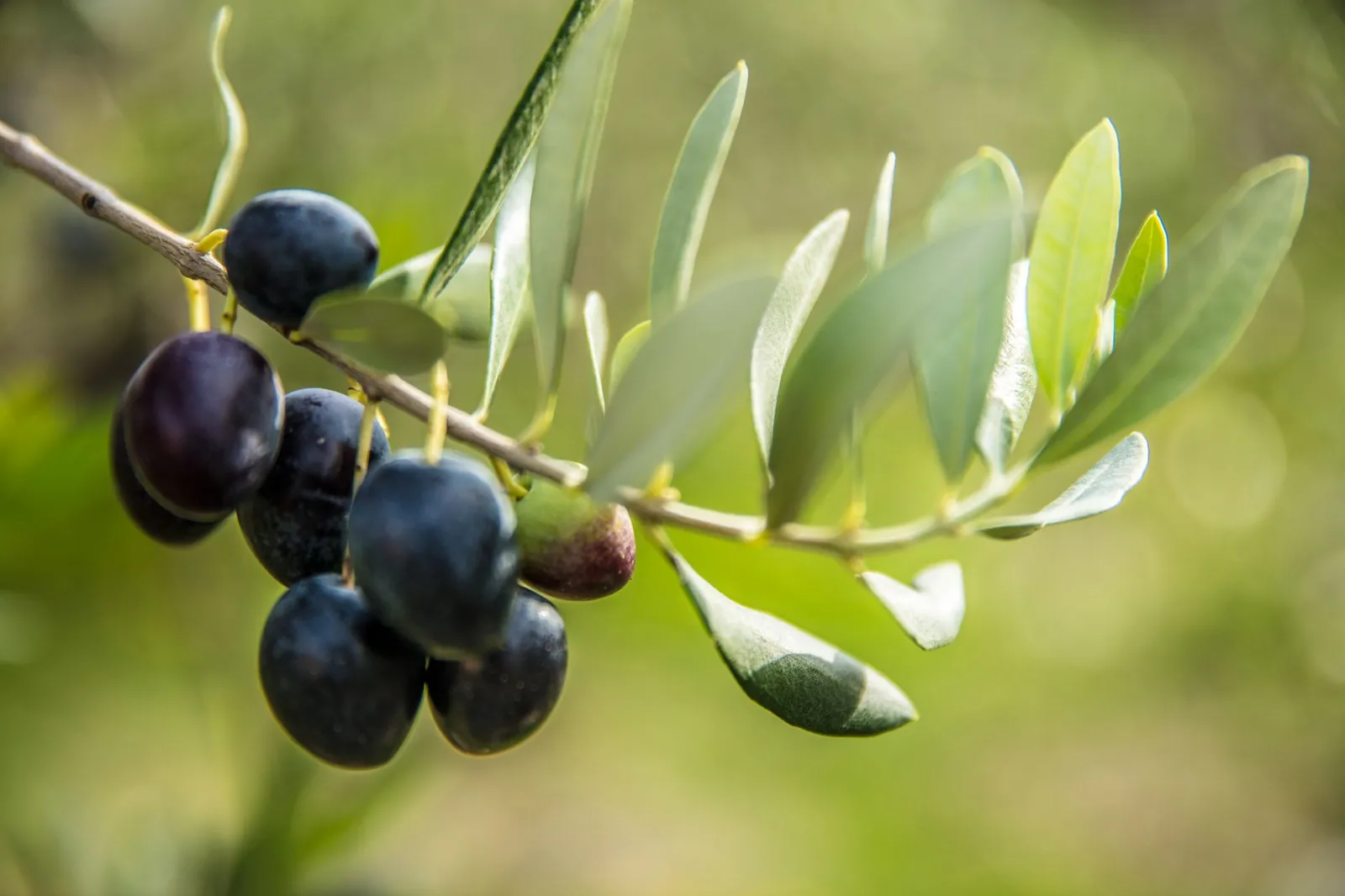
Geographical Indication Olives and Olive Oils of Turkey
Türkiye's registered olive and olive oil geographical indications: which product, which locality, under what conditions — and what registration means.
Article
Geographical Indication Olives and Olive Oils of Turkey
Türkiye's registered olive and olive oil geographical indications: which product, which locality, under what conditions — and what registration means.
 Article
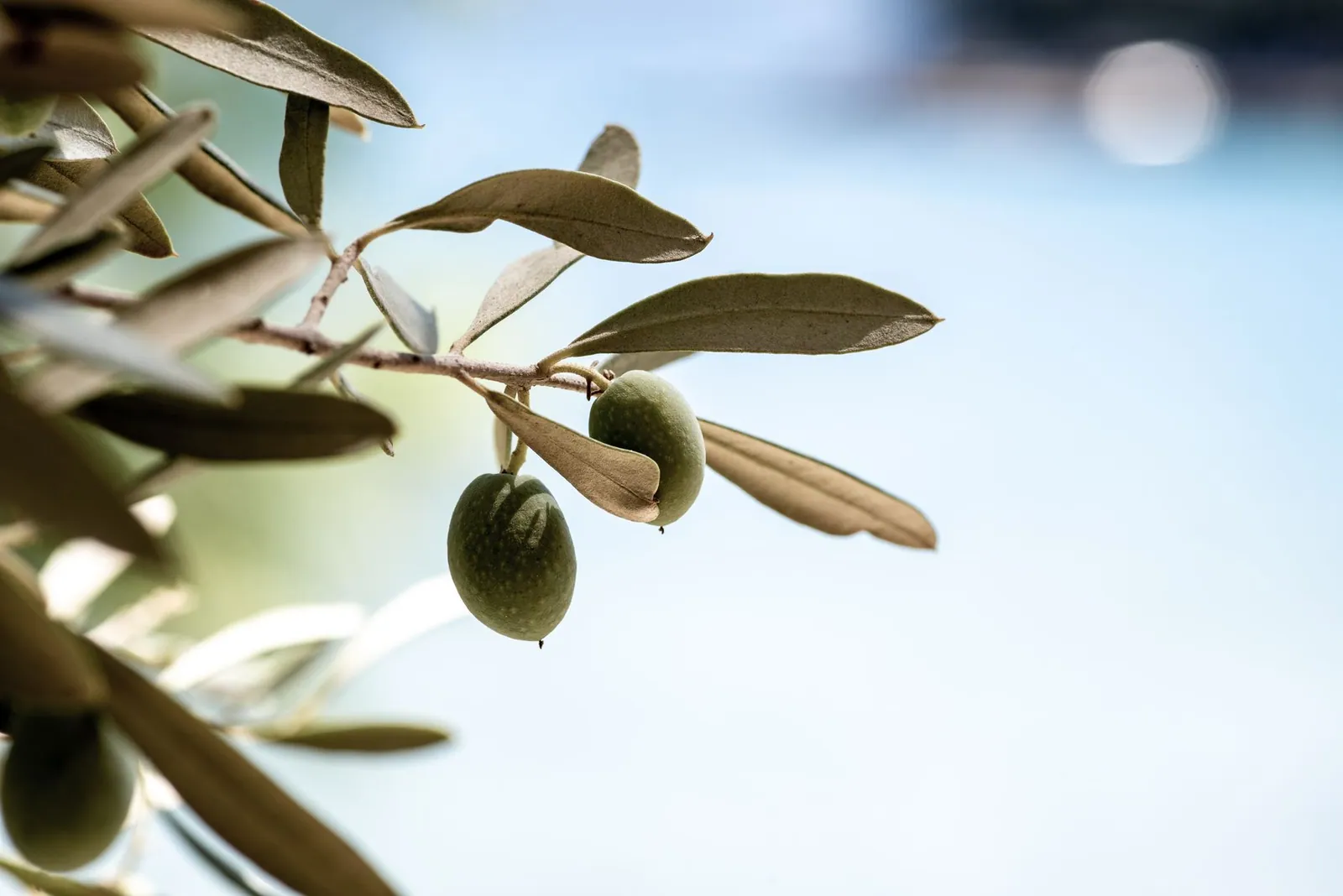
Olive Oil Fraud and Adulteration: How It Is Done and How It Is Caught
Seed oil blending, refined oil sold as extra virgin, soft deodorisation… The economics of fraud, the laboratory methods, and the home tests that do not work.
Article
Olive Oil Fraud and Adulteration: How It Is Done and How It Is Caught
Seed oil blending, refined oil sold as extra virgin, soft deodorisation… The economics of fraud, the laboratory methods, and the home tests that do not work.
 Article
How to Read an Olive Oil Label
Grade, harvest year, acidity, origin and bottling place: which statements on a label are binding and which are just marketing — with a quick checklist.
Article
How to Read an Olive Oil Label
Grade, harvest year, acidity, origin and bottling place: which statements on a label are binding and which are just marketing — with a quick checklist.
 Article
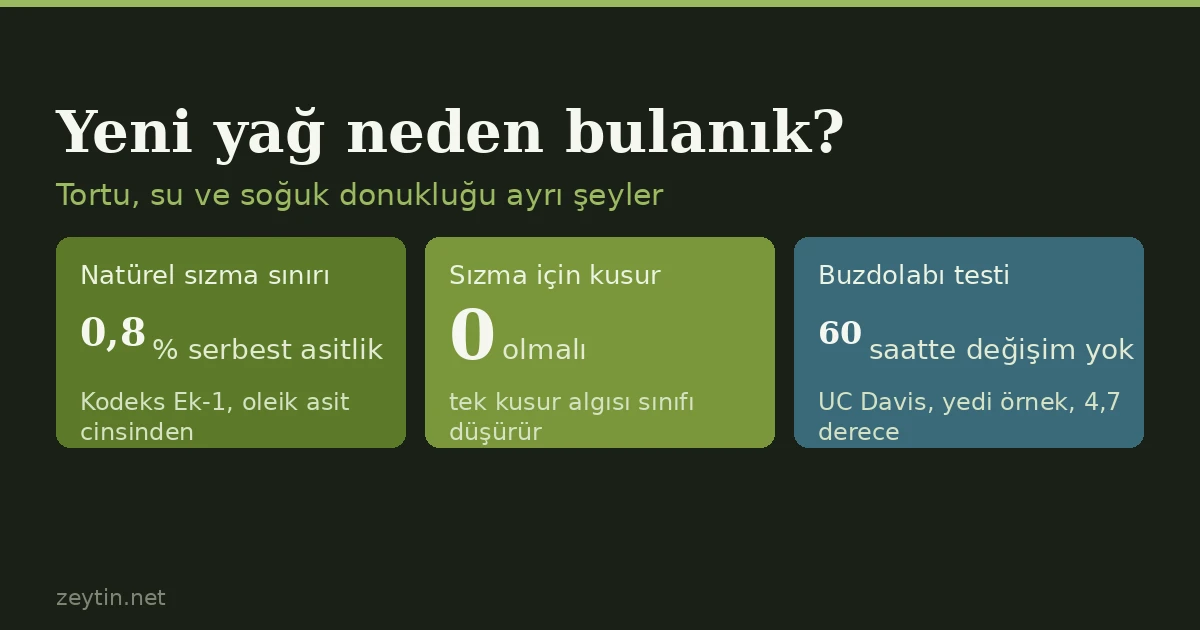
Why is freshly pressed olive oil cloudy, and should you wait for it to settle?
Oil straight from the mill is cloudy for a simple reason: droplets of water and fragments of fruit stay suspended in it. Cloudiness on its own is neither a mark of quality nor a defect. What matters is how long the sediment stays in contact with the oil, because that is where the actual defect is born.
Article
Why is freshly pressed olive oil cloudy, and should you wait for it to settle?
Oil straight from the mill is cloudy for a simple reason: droplets of water and fragments of fruit stay suspended in it. Cloudiness on its own is neither a mark of quality nor a defect. What matters is how long the sediment stays in contact with the oil, because that is where the actual defect is born.
 Article
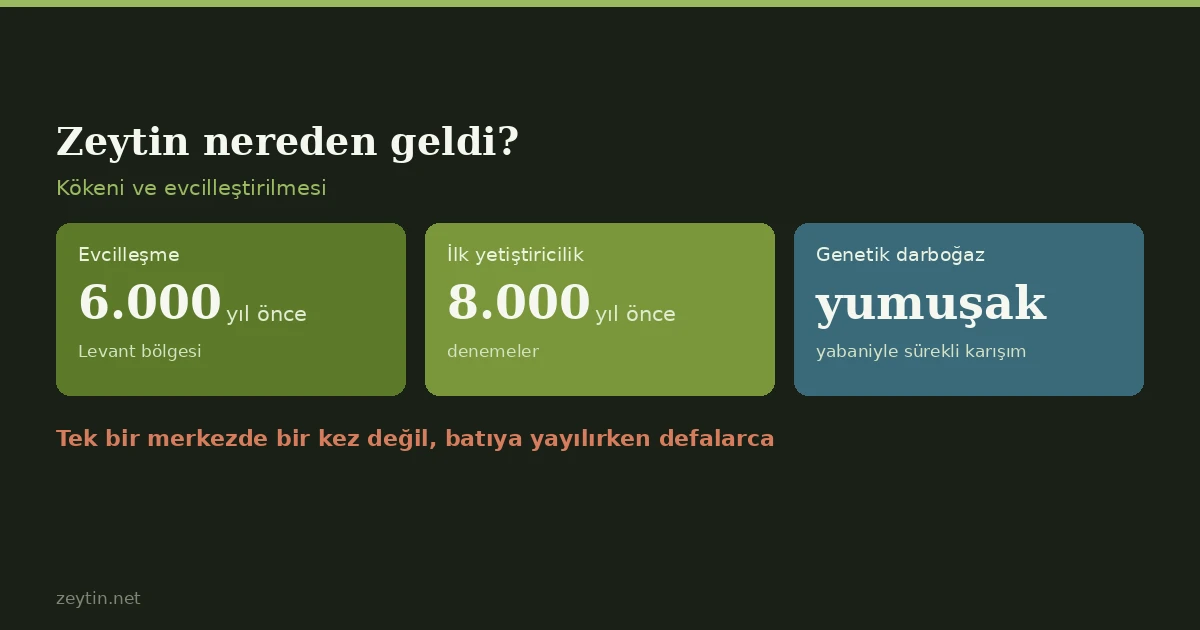
Where did olives come from? Origin and domestication
The olive was domesticated about 6,000 years ago in the Levant — but not at a single centre. Genetic work shows the cultivated olive kept mixing with the wild oleaster throughout its spread.
Article
Where did olives come from? Origin and domestication
The olive was domesticated about 6,000 years ago in the Levant — but not at a single centre. Genetic work shows the cultivated olive kept mixing with the wild oleaster throughout its spread.
 Article
Gemlik-Orhangazi Olive Festival, 10-13 September: what the registration says about the name
Gemlik and Orhangazi are holding their olive festivals together for the first time, on 10-13 September 2026. Dropping “Gemlik Olive” from the name drew criticism. The registered area under record no 76 covers four districts: Gemlik, İznik, Orhangazi and Mudanya.
Article
Gemlik-Orhangazi Olive Festival, 10-13 September: what the registration says about the name
Gemlik and Orhangazi are holding their olive festivals together for the first time, on 10-13 September 2026. Dropping “Gemlik Olive” from the name drew criticism. The registered area under record no 76 covers four districts: Gemlik, İznik, Orhangazi and Mudanya.
 Article
The oil was a medicine: two thousand years of olive oil in medicine and folk practice
For most of its history olive oil was not food but lamp fuel, soap, ointment and medicine. Rome's four grades are the ancestor of today's label — and much of what survives in folk medicine is two thousand years old.
Article
The oil was a medicine: two thousand years of olive oil in medicine and folk practice
For most of its history olive oil was not food but lamp fuel, soap, ointment and medicine. Rome's four grades are the ancestor of today's label — and much of what survives in folk medicine is two thousand years old.
 Recipe
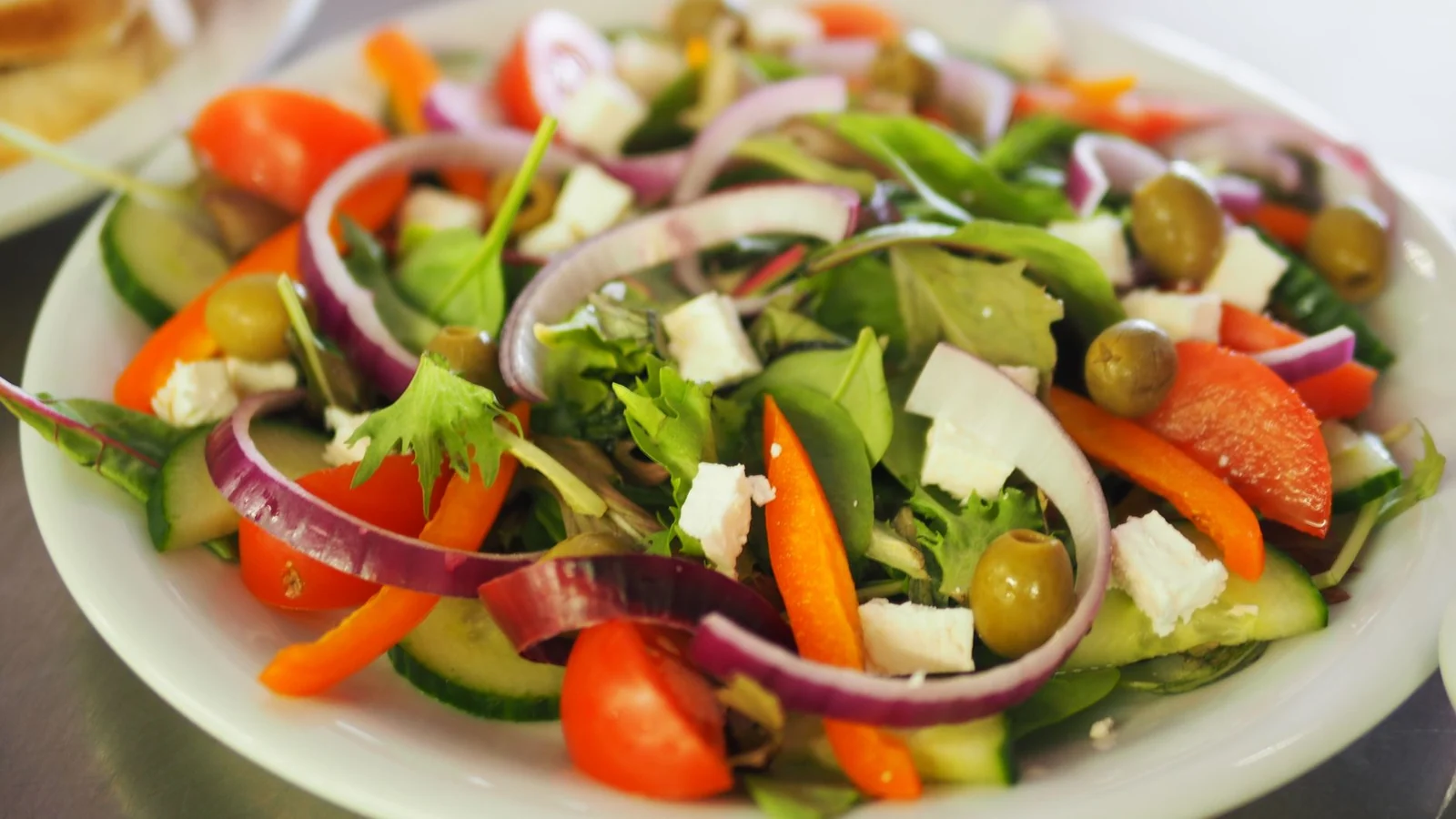
Chard in Olive Oil
Spinach's lesser-known relative: the stems and the leaves cook separately, and that separation defines the recipe.
Recipe
Chard in Olive Oil
Spinach's lesser-known relative: the stems and the leaves cook separately, and that separation defines the recipe.
 Recipe
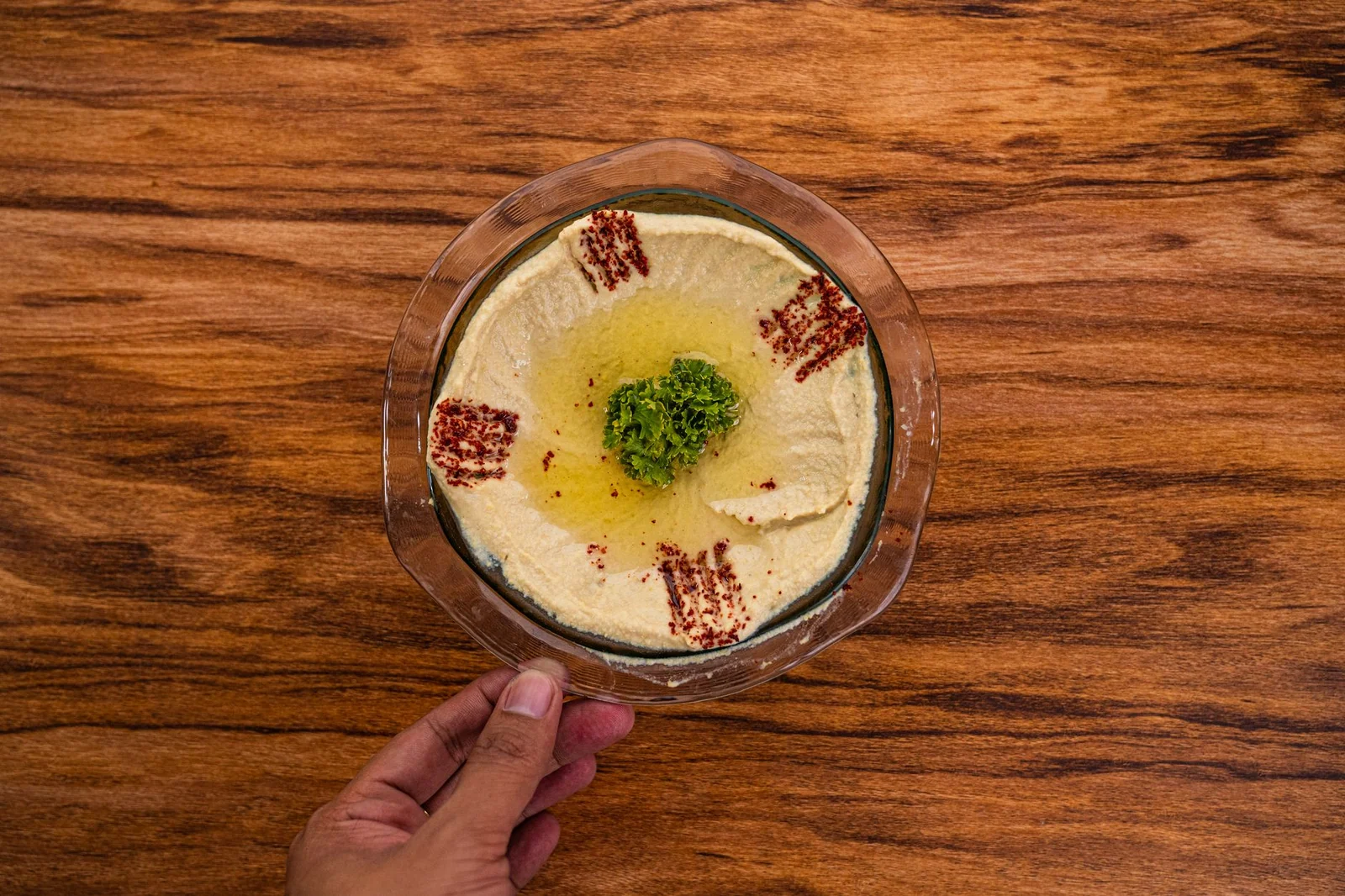
Chickpeas in Olive Oil
The Mediterranean's meatless protein pairing in one pot: chickpeas and olive oil, with tomato and lemon, served cold.
Recipe
Chickpeas in Olive Oil
The Mediterranean's meatless protein pairing in one pot: chickpeas and olive oil, with tomato and lemon, served cold.
 Recipe
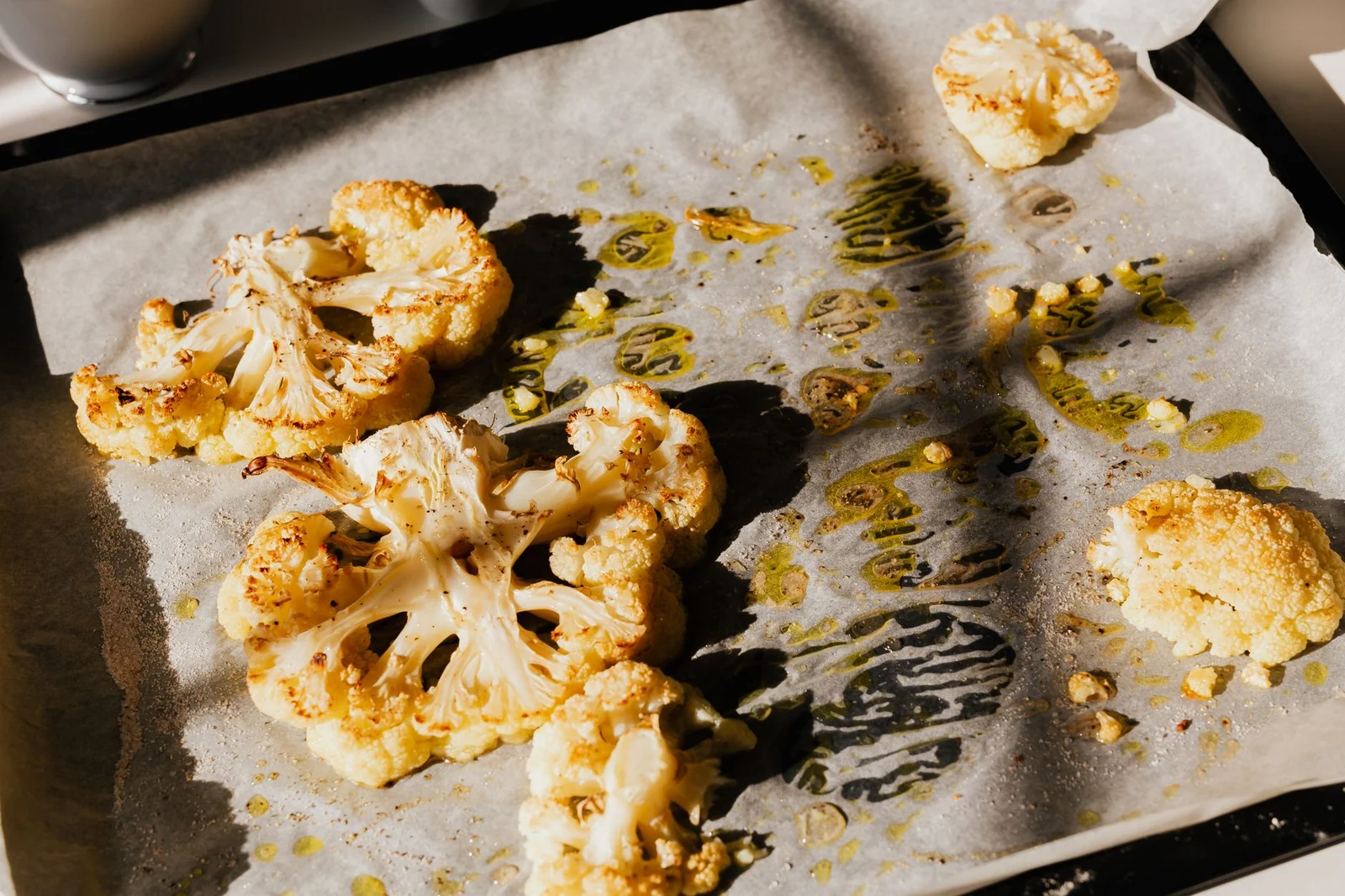
Cauliflower in Olive Oil
Winter's cheapest vegetable meets olive oil: lemon keeps it white, and short cooking keeps the sulphur at bay.
Recipe
Cauliflower in Olive Oil
Winter's cheapest vegetable meets olive oil: lemon keeps it white, and short cooking keeps the sulphur at bay.
 Article
When can babies have olive oil?
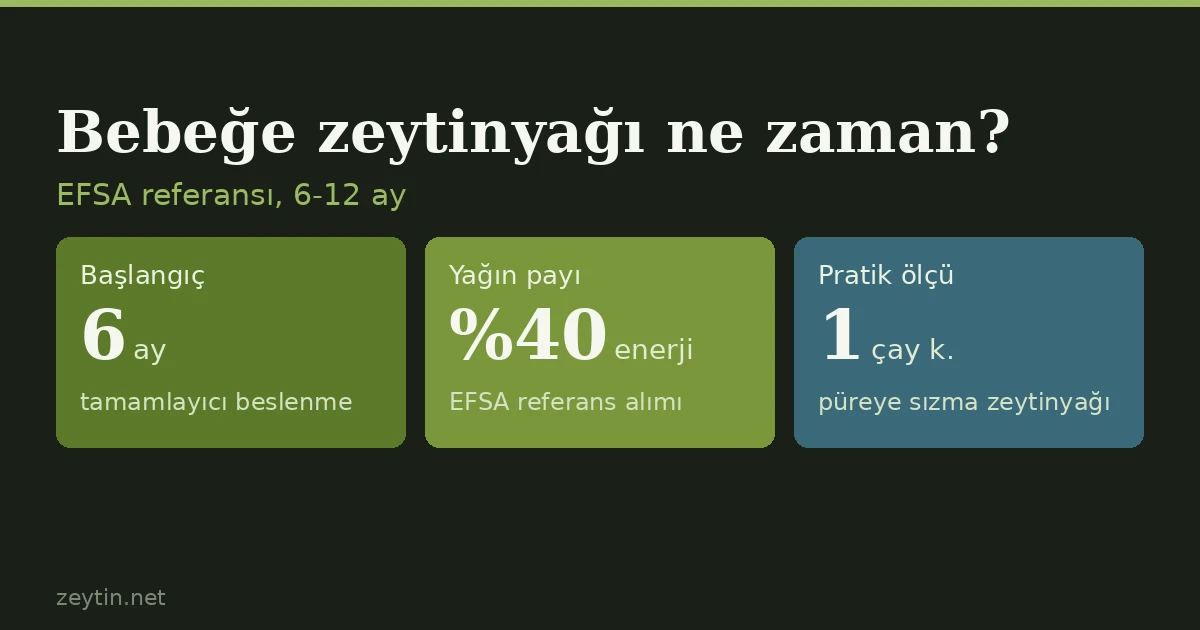
Complementary feeding starts at the end of the sixth month, and olive oil has a place at that table — because a substantial share of an infant's energy has to come from fat. EFSA's reference intake for 6-12 months is 40% of energy. But two separate questions get mixed up: adding oil to a purée is not the same as giving olive oil for constipation, and a table olive is not olive oil as far as a baby is concerned.
Article
When can babies have olive oil?
Complementary feeding starts at the end of the sixth month, and olive oil has a place at that table — because a substantial share of an infant's energy has to come from fat. EFSA's reference intake for 6-12 months is 40% of energy. But two separate questions get mixed up: adding oil to a purée is not the same as giving olive oil for constipation, and a table olive is not olive oil as far as a baby is concerned.
 Article
Can people with diabetes eat olives and olive oil?
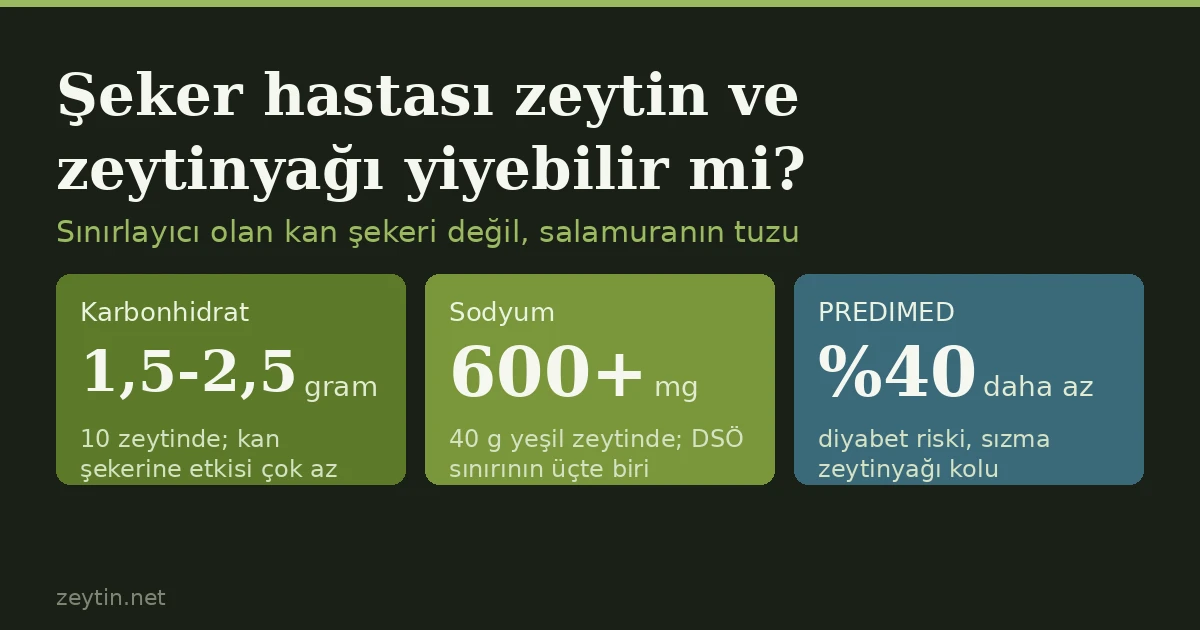
It looks like one question but contains two: table olives and olive oil. Neither is off limits in type 2 diabetes; olives carry too little carbohydrate to measure a glycaemic index for, and oil carries none. The real limiting factor is not blood sugar but the salt in the brine.
Article
Can people with diabetes eat olives and olive oil?
It looks like one question but contains two: table olives and olive oil. Neither is off limits in type 2 diabetes; olives carry too little carbohydrate to measure a glycaemic index for, and oil carries none. The real limiting factor is not blood sugar but the salt in the brine.
 Article
Does olive oil raise cholesterol? Cholesterol content, LDL and the "clears arteries" claim
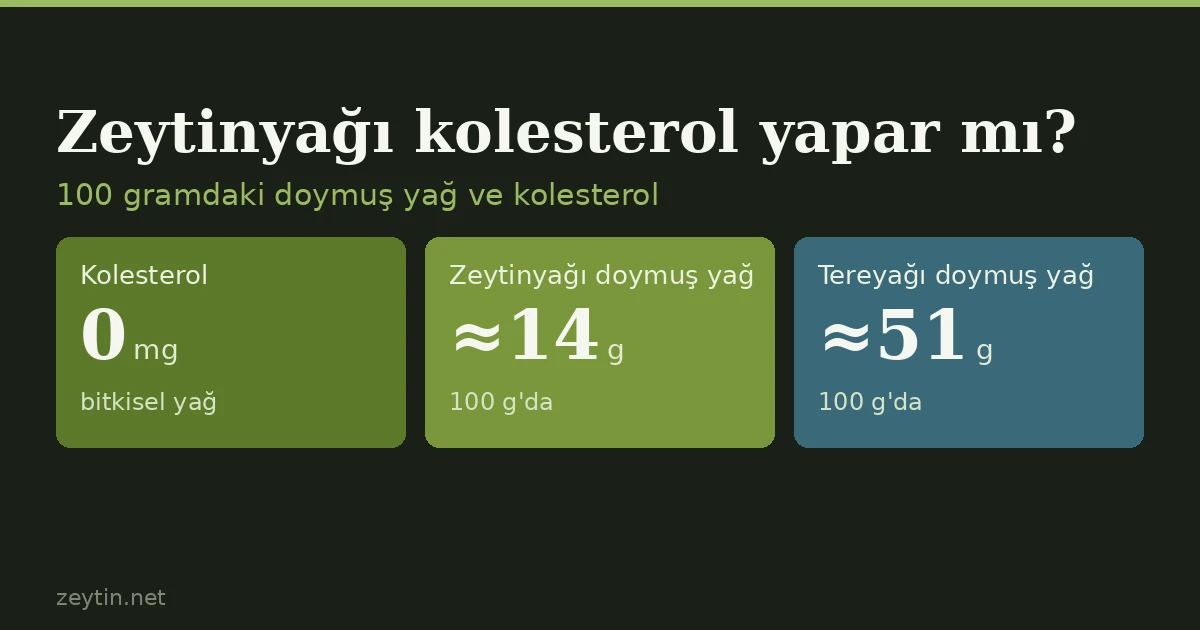
Olive oil contains no cholesterol, and when it replaces saturated fat it helps maintain normal blood cholesterol levels. But every spoonful added to a diet also brings calories, and there is no evidence that olive oil clears arteries. A saturated fat table and the authorised health claims.
Article
Does olive oil raise cholesterol? Cholesterol content, LDL and the "clears arteries" claim
Olive oil contains no cholesterol, and when it replaces saturated fat it helps maintain normal blood cholesterol levels. But every spoonful added to a diet also brings calories, and there is no evidence that olive oil clears arteries. A saturated fat table and the authorised health claims.
 Article
The olive pest calendar and intervention thresholds
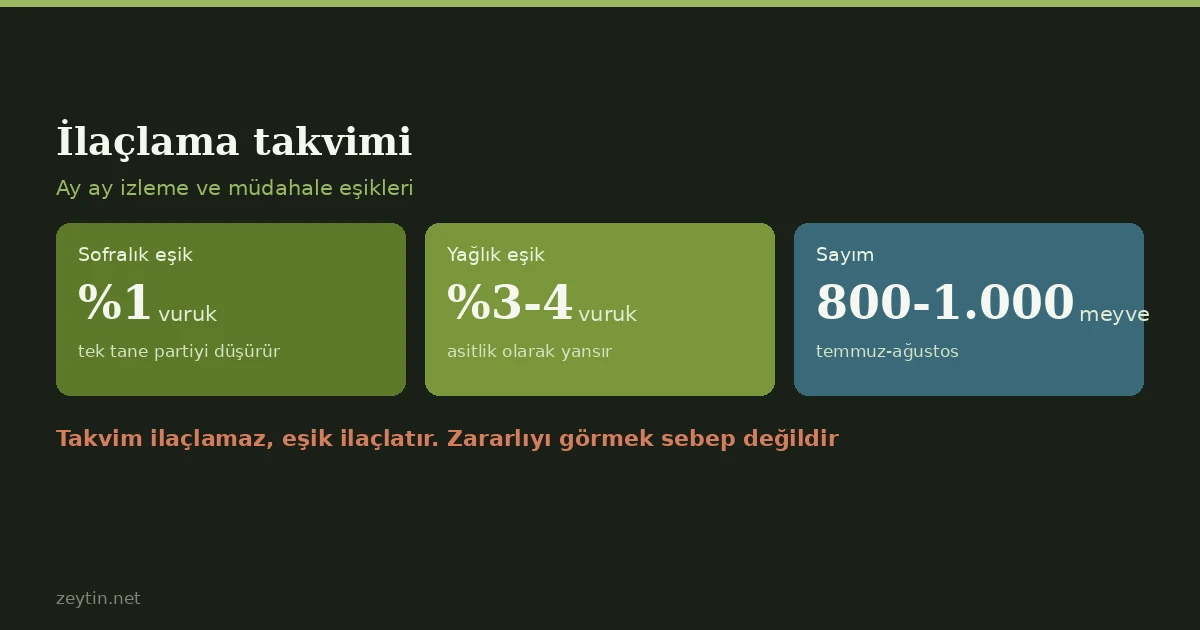
Month by month: which pest is at which stage, and when to count. Fly infestation thresholds, black scale shoot counts, and the three regional programmes for peacock spot.
Article
The olive pest calendar and intervention thresholds
Month by month: which pest is at which stage, and when to count. Fly infestation thresholds, black scale shoot counts, and the three regional programmes for peacock spot.
 Article
Herbicide-free weed management in olive groves: from cover crops to autonomous robots
Managing weeds rather than eliminating them: cover crops, mulch, grazing, flame weeding and AI-assisted precision farming — five tools and a practical order for combining them.
Article
Herbicide-free weed management in olive groves: from cover crops to autonomous robots
Managing weeds rather than eliminating them: cover crops, mulch, grazing, flame weeding and AI-assisted precision farming — five tools and a practical order for combining them.
 Article
Weeds in the olive grove: bare soil is not the goal
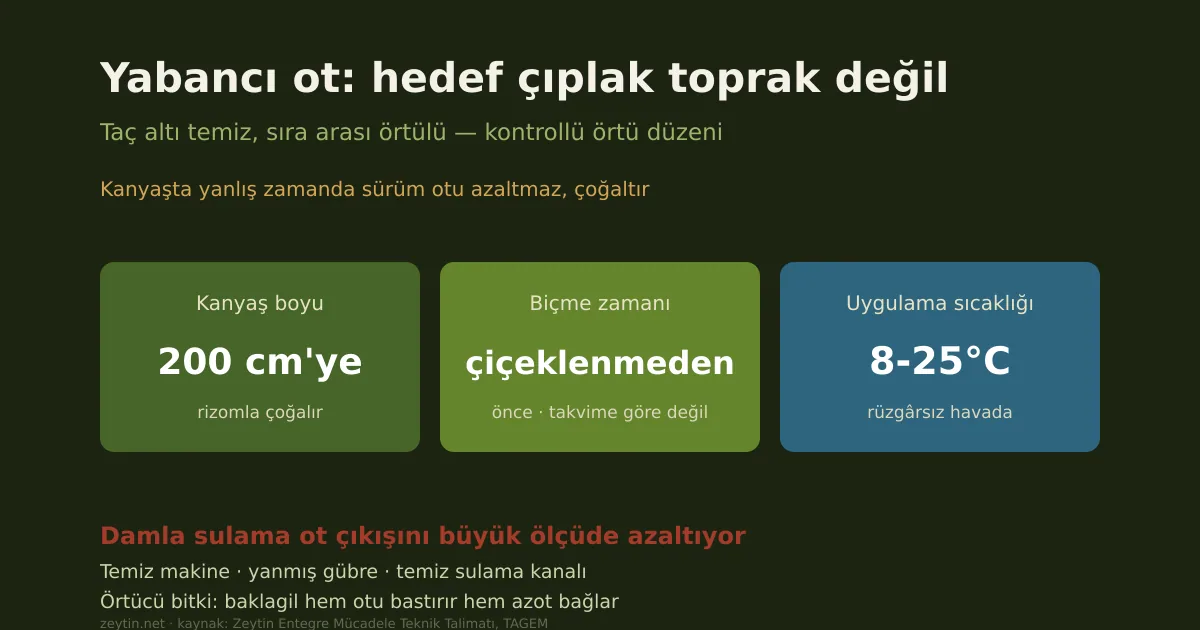
Johnson grass, Bermuda grass and fat hen. With perennials, ill-timed tillage spreads them while mowing stops the seed. Clean under the canopy, covered between rows.
Article
Weeds in the olive grove: bare soil is not the goal
Johnson grass, Bermuda grass and fat hen. With perennials, ill-timed tillage spreads them while mowing stops the seed. Clean under the canopy, covered between rows.
 Article
Should harvested olives be carried in crates or in sacks?
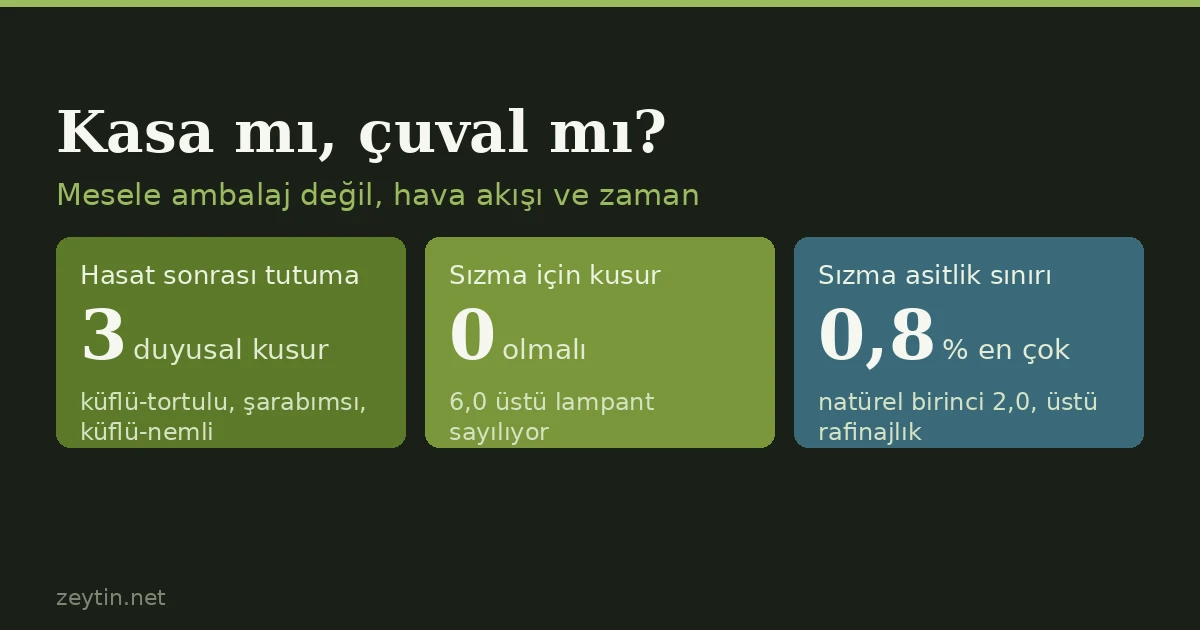
The cheapest decision of the harvest season is also one of the decisions that sets the grade of the oil. Three separate defects in the International Olive Council's vocabulary are defined directly by how the fruit was held after picking — and all three describe what a sack does.
Article
Should harvested olives be carried in crates or in sacks?
The cheapest decision of the harvest season is also one of the decisions that sets the grade of the oil. Three separate defects in the International Olive Council's vocabulary are defined directly by how the fruit was held after picking — and all three describe what a sack does.
 Article
How many kilos of olives does one tree yield?
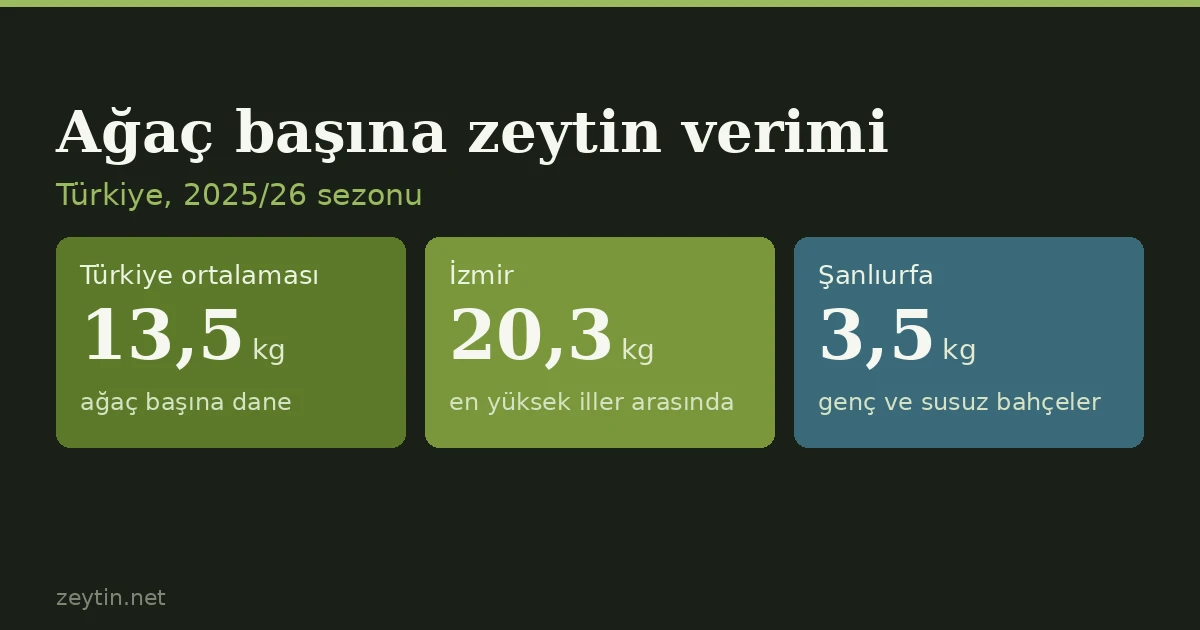
Türkiye averaged 13.5 kilos per tree in the 2025/26 season. But the average describes nobody's grove: 20.3 kilos in İzmir, 3.5 kilos in Şanlıurfa. The same grove does not repeat its own number either — across six major provinces, per-tree yield went from 22.6 kilos one season to 8 kilos the next. Here is what the figure actually depends on, and how to place your own tree against it.
Article
How many kilos of olives does one tree yield?
Türkiye averaged 13.5 kilos per tree in the 2025/26 season. But the average describes nobody's grove: 20.3 kilos in İzmir, 3.5 kilos in Şanlıurfa. The same grove does not repeat its own number either — across six major provinces, per-tree yield went from 22.6 kilos one season to 8 kilos the next. Here is what the figure actually depends on, and how to place your own tree against it.
 Article
What does crop insurance cover for olives, and what does it cost?
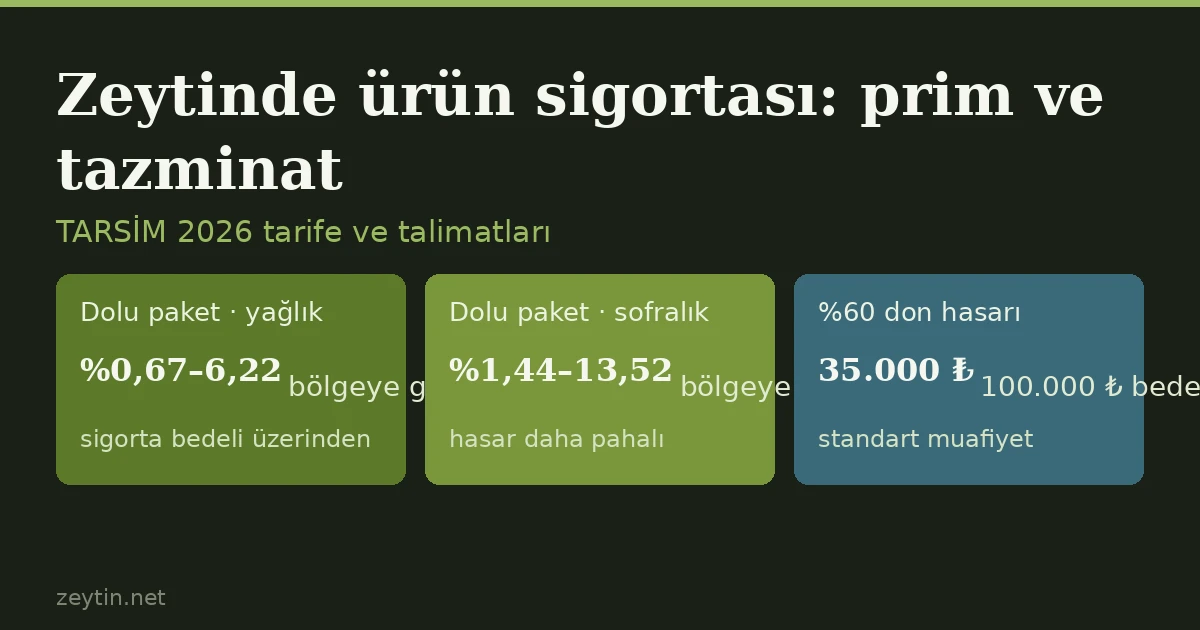
Olives can be insured twice: for the crop and for the tree. Under TARSİM's 2026 tariff the hail package runs from 0.67% to 6.22% for oil olives and 1.44% to 13.52% for table olives, while frost cover sits on its own tariff and is optional. What a claim pays is set by the deductible and coinsurance: 60% frost damage on the standard option pays 35% of the sum insured.
Article
What does crop insurance cover for olives, and what does it cost?
Olives can be insured twice: for the crop and for the tree. Under TARSİM's 2026 tariff the hail package runs from 0.67% to 6.22% for oil olives and 1.44% to 13.52% for table olives, while frost cover sits on its own tariff and is optional. What a claim pays is set by the deductible and coinsurance: 60% frost damage on the standard option pays 35% of the sum insured.
 Article
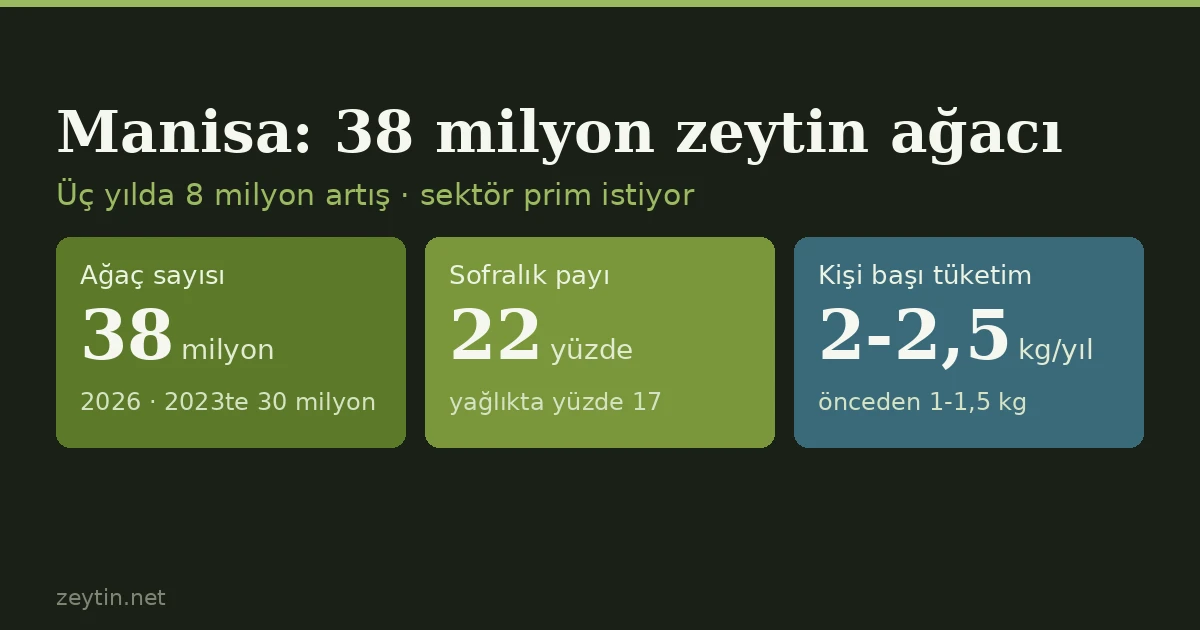
Manisa's olive trees reach 38 million: 8 million added in three years, sector asks for premium support
Manisa's olive tree count rose from 30 million in 2023 to 38 million in 2026. Data shared at a sector meeting hosted by the Manisa Commodity Exchange shows the province alone accounts for 17 percent of Turkey's oil-olive output and 22 percent of its table-olive output. The meeting also reported that annual per-capita olive oil consumption in Turkey has climbed from 1-1.5 kg to 2-2.5 kg. Exchange chairman Sadık Özkasap called for higher state support and premium incentives against the lower processing costs of Spain, Tunisia and Morocco.
Article
Manisa's olive trees reach 38 million: 8 million added in three years, sector asks for premium support
Manisa's olive tree count rose from 30 million in 2023 to 38 million in 2026. Data shared at a sector meeting hosted by the Manisa Commodity Exchange shows the province alone accounts for 17 percent of Turkey's oil-olive output and 22 percent of its table-olive output. The meeting also reported that annual per-capita olive oil consumption in Turkey has climbed from 1-1.5 kg to 2-2.5 kg. Exchange chairman Sadık Özkasap called for higher state support and premium incentives against the lower processing costs of Spain, Tunisia and Morocco.
 Article
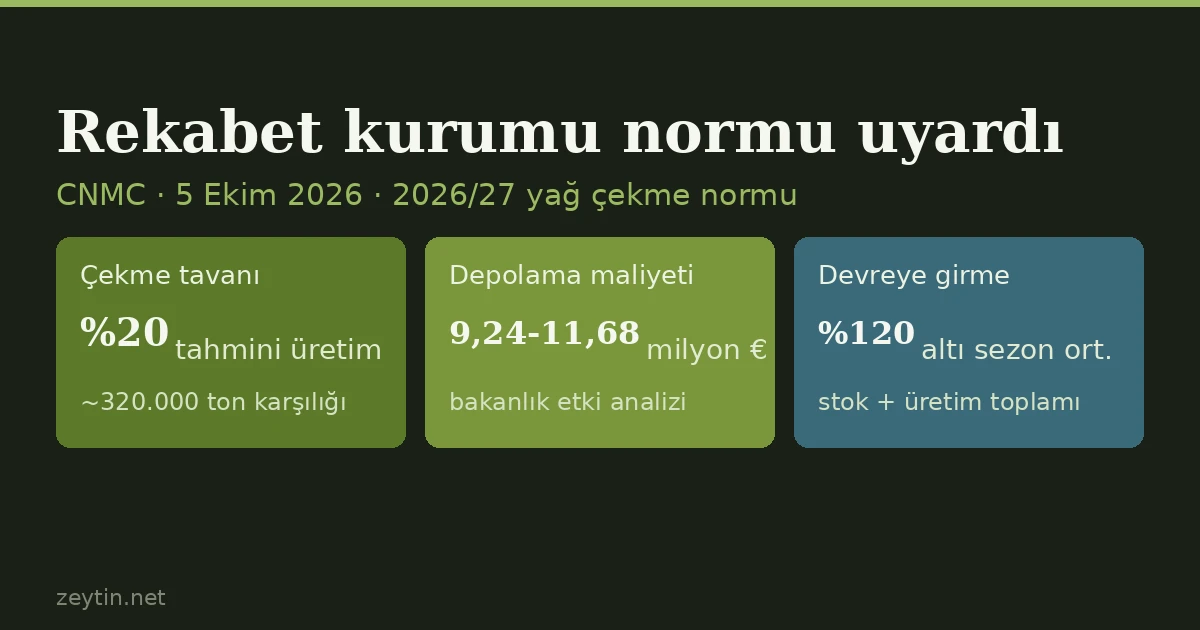
Spain's competition authority opposes the withdrawal rule: "very negative for competition and consumers"
On 5 October the CNMC published its report on the draft rule that would withdraw part of Spain's olive oil from the market in the event of oversupply in 2026/27. The authority says the measure would raise prices and narrow quality and variety. The ministry's own impact assessment puts storage costs at €9.24-11.68 million. The withdrawal cap is 20 percent of estimated production — up to 320,000 tons.
Article
Spain's competition authority opposes the withdrawal rule: "very negative for competition and consumers"
On 5 October the CNMC published its report on the draft rule that would withdraw part of Spain's olive oil from the market in the event of oversupply in 2026/27. The authority says the measure would raise prices and narrow quality and variety. The ministry's own impact assessment puts storage costs at €9.24-11.68 million. The withdrawal cap is 20 percent of estimated production — up to 320,000 tons.
 Article
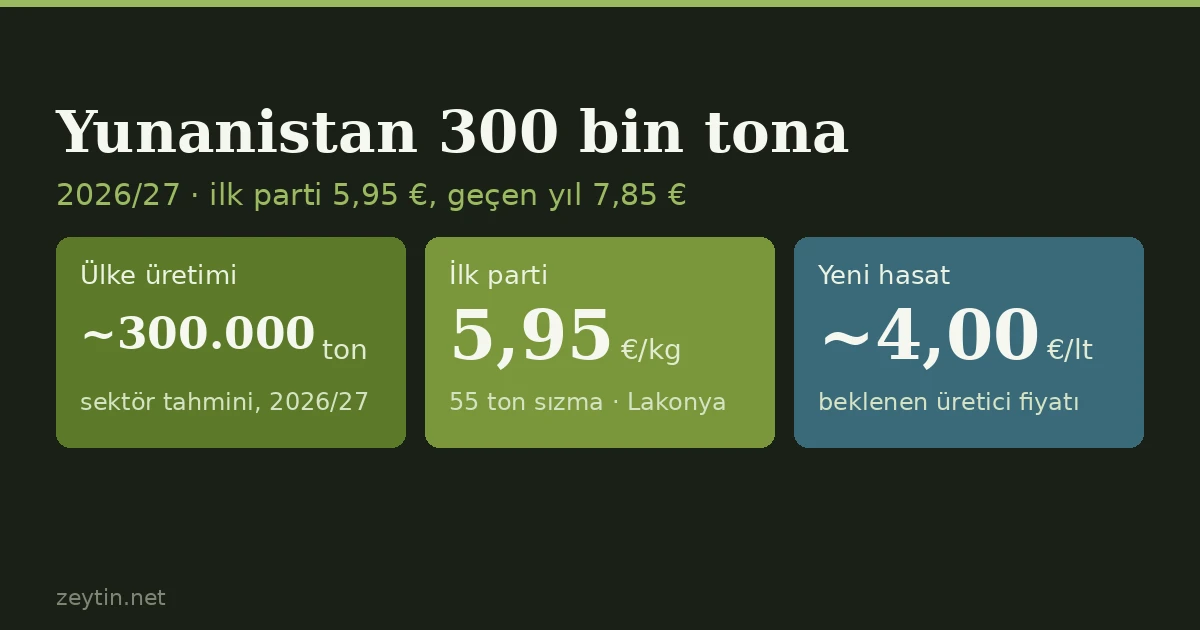
Greece heads for 300,000 tons: first lot sold at €5.95 after last year's €7.85
Greece expects its largest olive oil harvest since 2022/23 in 2026/27, with industry estimates near 300,000 tons. The season's first lot — 55 tons of extra virgin in Laconia — changed hands at €5.95 per kilo, down from €7.85 a year earlier. Carryover oil sells near €3.40 and new-crop producer prices are expected around €4. A simultaneous rebound across the three largest producers pushes down the world price Turkish exporters will meet.
Article
Greece heads for 300,000 tons: first lot sold at €5.95 after last year's €7.85
Greece expects its largest olive oil harvest since 2022/23 in 2026/27, with industry estimates near 300,000 tons. The season's first lot — 55 tons of extra virgin in Laconia — changed hands at €5.95 per kilo, down from €7.85 a year earlier. Carryover oil sells near €3.40 and new-crop producer prices are expected around €4. A simultaneous rebound across the three largest producers pushes down the world price Turkish exporters will meet.
We use cookies to remember your language choice and, with your consent, to show ads. Until you choose, no advertising code is loaded. Cookie policy · Privacy