Should an olive grove be tilled, or left with ground cover?
For olive groves there is no single right choice between tilling, keeping the soil bare with herbicide, or protecting it with vegetation; slope and rainfall decide. In a grove monitored for 15 years in Spain, annual soil loss was 9.82 tonnes per hectare under conventional tillage, 13.88 under bare herbicide-treated soil and 2.06 under cover crops. The article explains the measurement, the risks and the decision criteria.
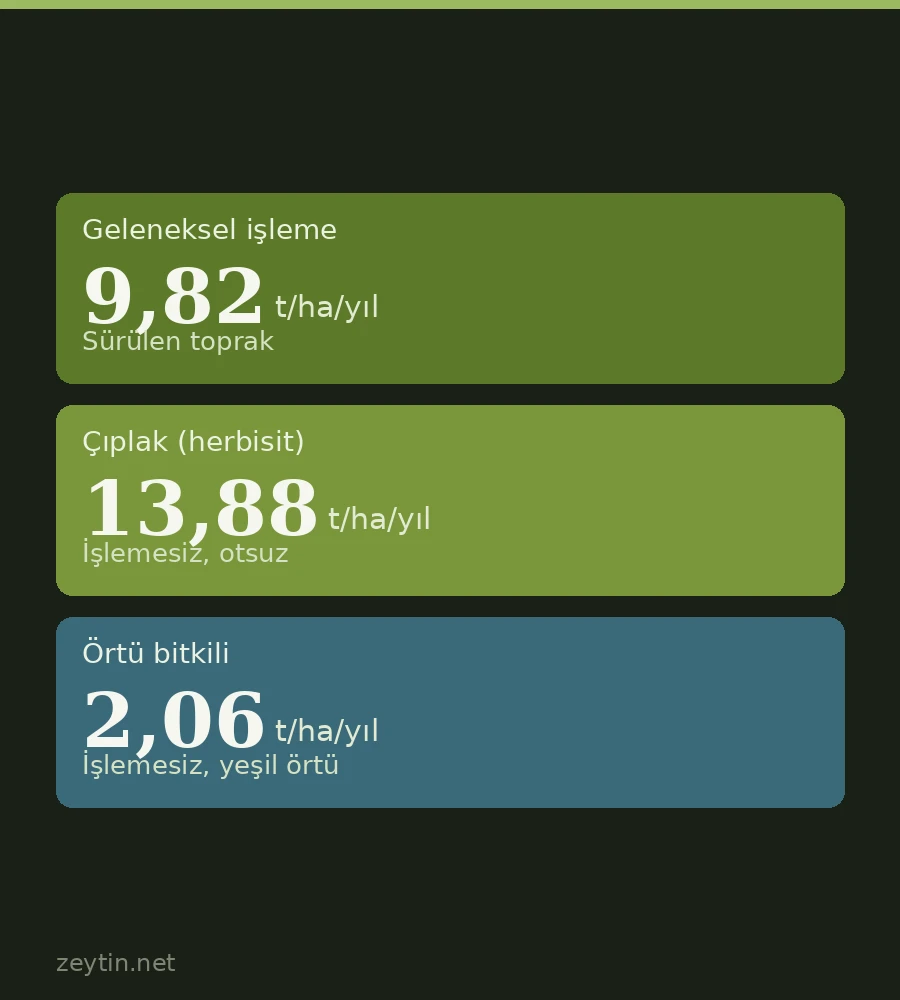
For soil in an olive grove there are three routes: tilling the soil, keeping it bare with herbicide, or keeping weeds and cover crops and mowing them. There is no single right answer. The right choice depends on the slope of the grove, the rainfall pattern and whether it is irrigated. Where a solid measurement exists, though, the picture is fairly clear: on sloping ground with rain, bare soil is expensive.
Three approaches
- Conventional tillage: ploughing, cultivating or hoeing the soil; the weeds are destroyed in the process.
- No tillage, bare soil: the soil is not turned over, weeds are killed with herbicide and the surface stays bare.
- No tillage, covered soil: the soil is not turned over, and a natural or sown plant cover is kept between the trees and mown at a set time.
What the 15-year measurement showed
In a grove in southern Spain under semi-arid Mediterranean conditions (researchers of the University of Córdoba), the effect of these methods on the soil was followed for 15 years. The study was published in the April 2021 issue of Agronomy and looked at soil physical properties, the capacity of water to infiltrate the soil, the rate of erosion and soil productivity.
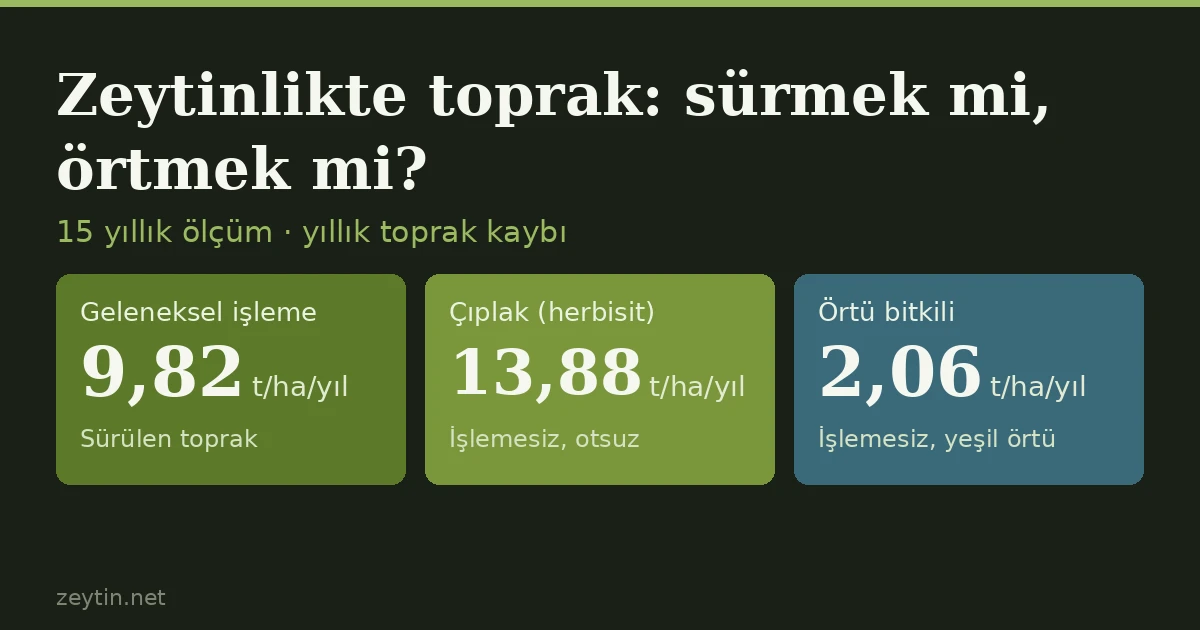
| Practice | Soil loss | Versus conventional tillage |
|---|---|---|
| Conventional tillage | 9.82 | — |
| No tillage, bare (herbicide) | 13.88 | 41% more |
| No tillage, with cover crop | 2.06 | 79% less |
Figures from the study (Agronomy 2021, volume 11, issue 4, article 812). The percentages in the last column are zeytin.net's calculation.
What is surprising at first sight is that not tilling but leaving the soil bare with herbicide lost more soil than tilling. The reason: once the weeds are destroyed, nothing protects the surface and the rain strikes bare soil directly. In the third method the green cover both breaks the impact of the raindrop and slows the run-off of water over the surface; soil loss falls to a fifth of that under conventional tillage.
Two limits should be kept in mind when reading these figures. First, the measurement was made in a particular grove under semi-arid Spanish conditions; it does not apply one-to-one to every grove in Türkiye. Second, the result is about soil loss; what happens to yield or income is a separate question and not one this study alone can answer.
The price of cover: water
Cover has a price, and it is water. Weeds and cover crops between the trees use soil water; in dry or unirrigated groves this can mean competing with the tree for water in early summer. In general farm practice the cover is therefore mown or dried in spring and its residue left on the ground. The timing of mowing varies with region and year, and your local district agriculture directorate's advice should be the basis for your grove; we cannot give a date from here.
We cover the water side in our irrigation article: with drip irrigation only the row is wetted, so weeds also grow only there.
Winter tillage is a separate matter
The winter tillage described in our post-harvest care article should not be confused with this question: the aim there is a shallow working that helps the soil absorb rain and kills the pupae of the olive fruit fly overwintering in the soil. As that article also notes, the working should not be deep and should not damage the tree's surface roots, and on sloping ground keeping the plant cover may be the better choice. The olive calendar likewise lists weed control and soil work in spring.
Four questions for the decision
1. Is the grove on a slope? The steeper it is, the greater the risk of bare soil; where erosion is heavy, cover comes to the fore.
2. How does the rain fall? In regions where most of the rain comes in a few downpours the soil surface should not be left open.
3. Is the grove irrigated? In an irrigated grove the water use of a cover crop is less of a problem; in dry farming, mowing in early summer and managing the competition matter more.
4. Are the tree's roots near the surface? Deep, frequent tillage wounds the surface roots.
Summary
- Tilling, leaving bare and protecting with cover are three different routes; they do not affect the soil the same way.
- In the 15-year measurement in Spain annual soil loss was 9.82, 13.88 and 2.06 tonnes per hectare respectively: leaving the soil bare was worst and covered soil was best.
- The price of cover is water; in a dry grove the mowing time matters.
- The right decision for your grove is made together with the local agriculture directorate, which knows the slope and the rainfall.
One rating per visitor; you can change yours at any time. Ratings are real reader votes — no seeded or default scores.
Related
 Article
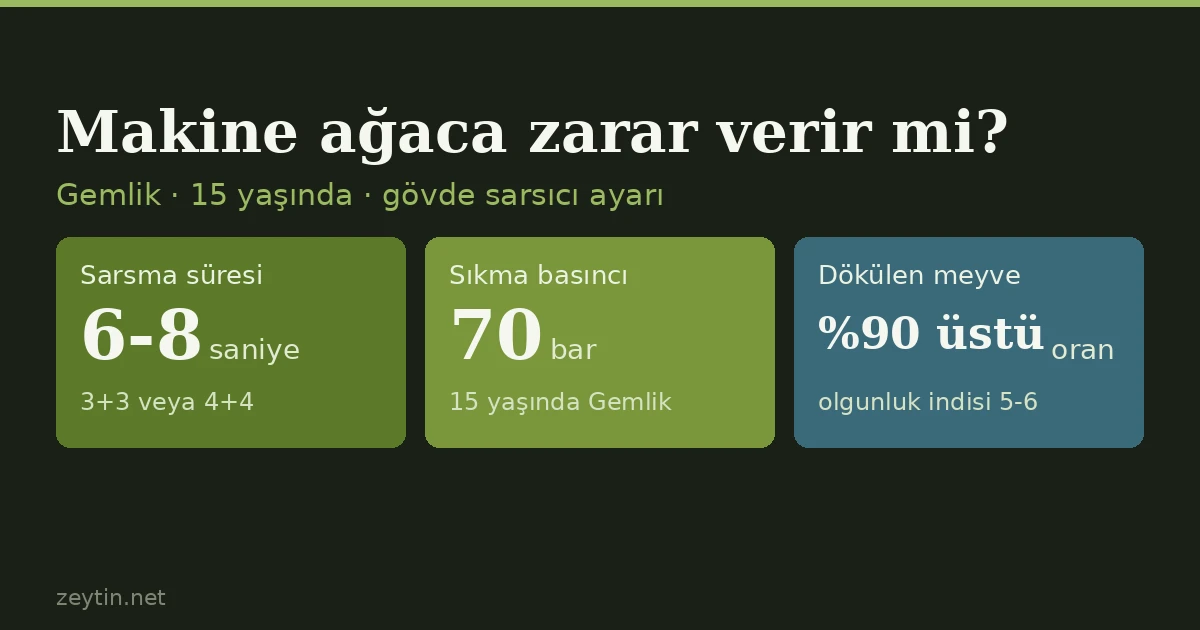
Does a harvesting machine damage the olive tree?
Trunk shakers, branch shakers and hand picking: the damage comes not from the machine itself but from its settings and duration. The figures the Turkish agriculture ministry's research institute gives for the Gemlik variety — 70 bar clamping pressure, 20 Hz, a 6-8 second shake — and what falls off the tree once that window is exceeded. Why grove spacing, slope limits and operator training are technical requirements.
 Article
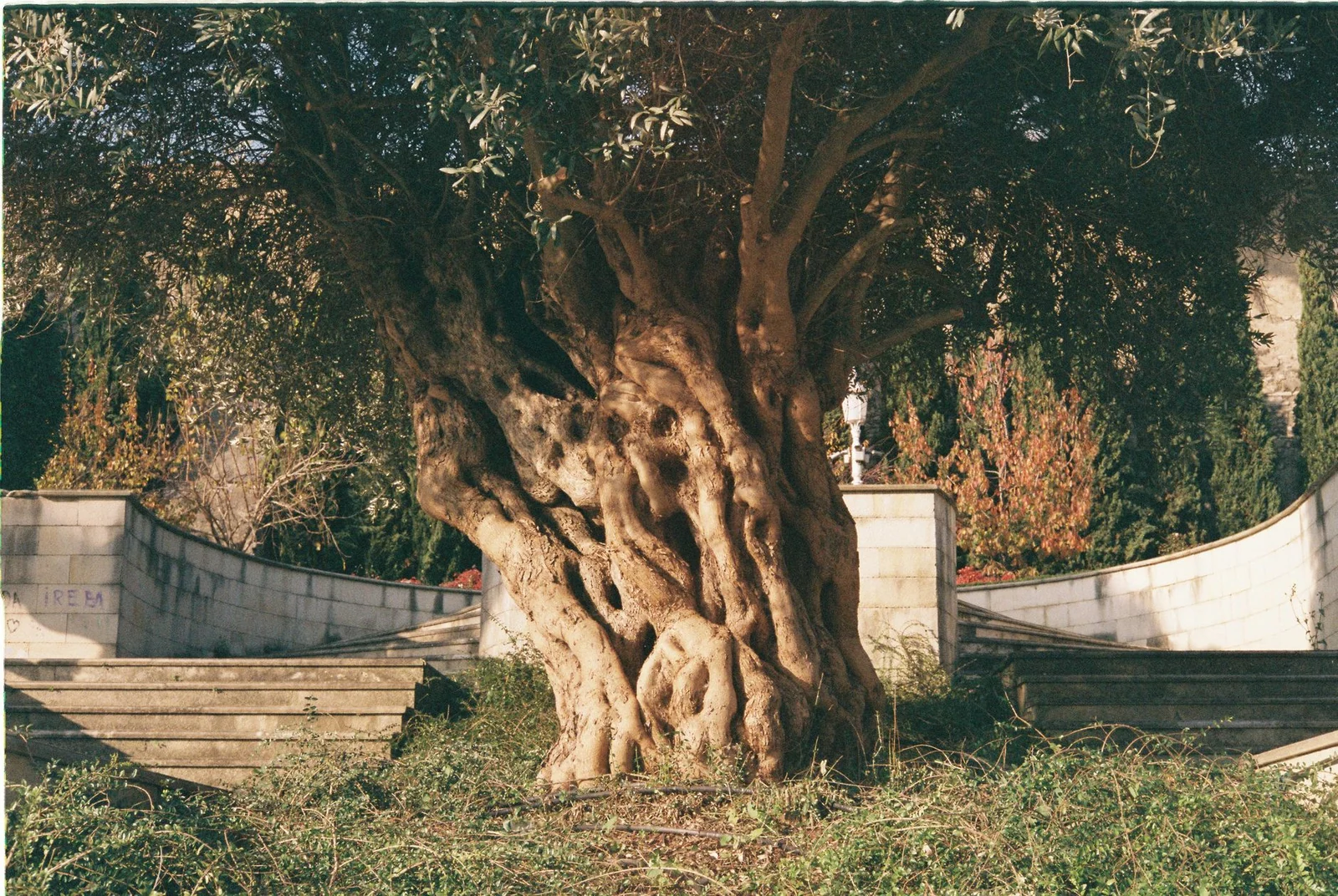
Grafting Olives: Changing Cultivar and Improving Wild Trees
When grafting is needed, taking scion wood, bud and cleft methods, topworking and aftercare.
 Article
Organic olive growing: what a four-year trial found
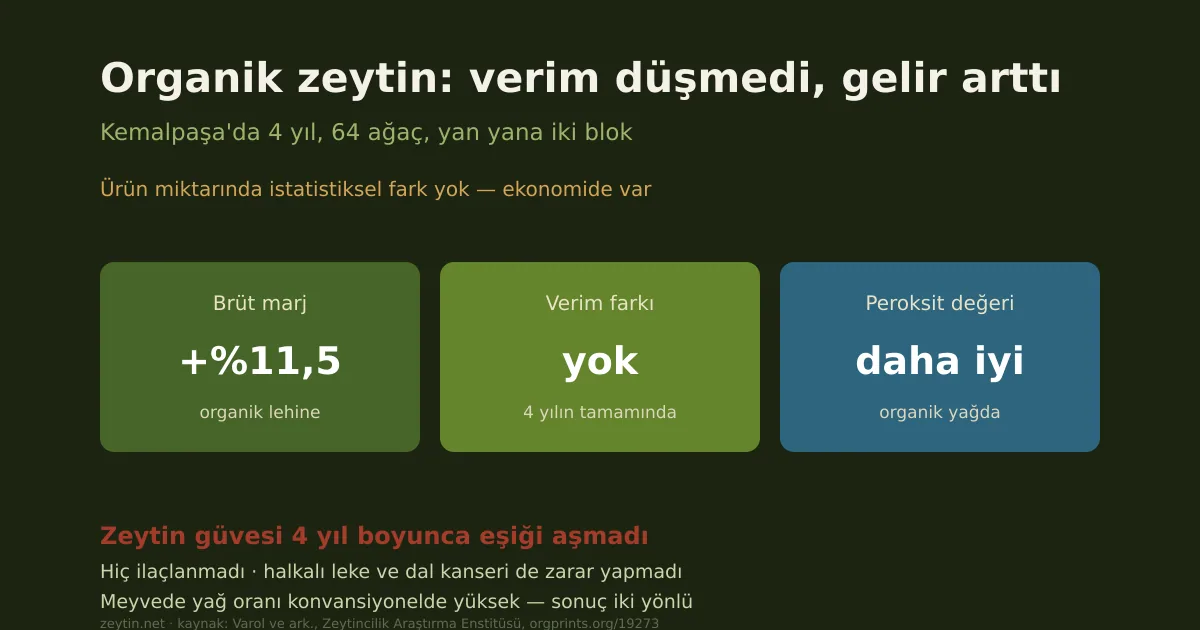
A four-year organic vs conventional trial at Kemalpaşa: no yield difference, 11.5% higher gross margin for organic, lower peroxide value, but higher fruit oil content under conventional management.
 Article
What happens if hail hits an olive tree? Flower and fruit drop, olive knot through wounds, and what to do afterwards
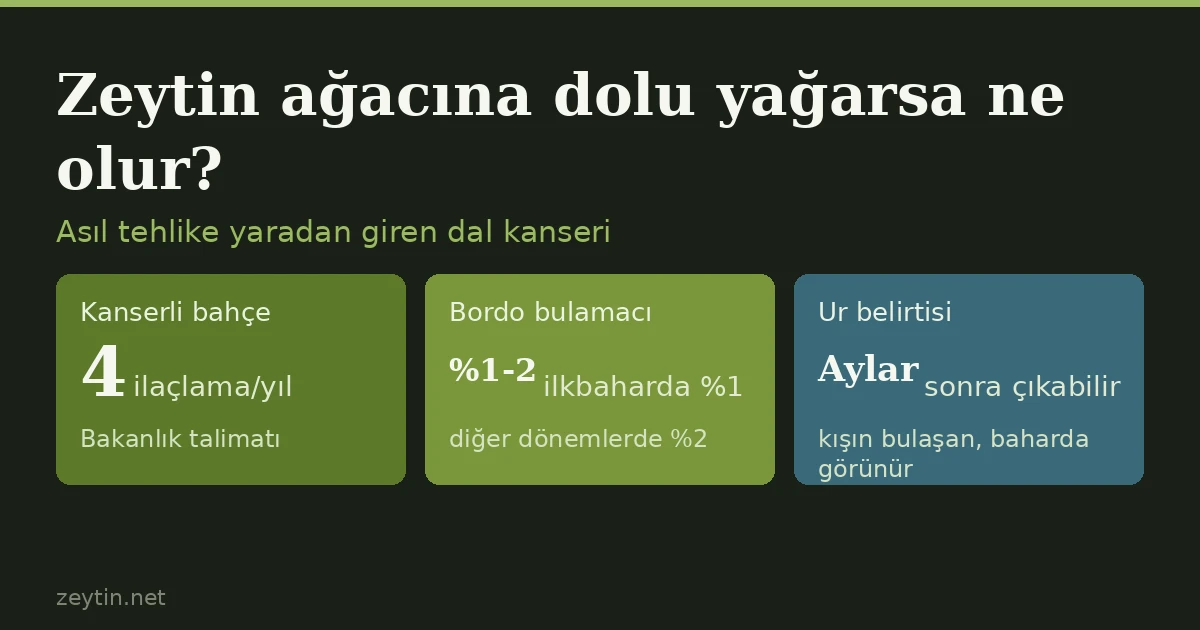
Hail causes flower and fruit drop and leaf and branch wounds in olives; the longer-term danger is olive knot bacteria entering through those wounds, with galls possibly appearing months later. The article rests on the ministry instruction, research-institute publications and University of California sources, and states plainly that no reliable figure exists for how soon after hail to spray.