Menemen Municipality's olive oil mill leaves service fees unchanged: capacity above 40 tonnes a day, busy season expected to run to mid-February
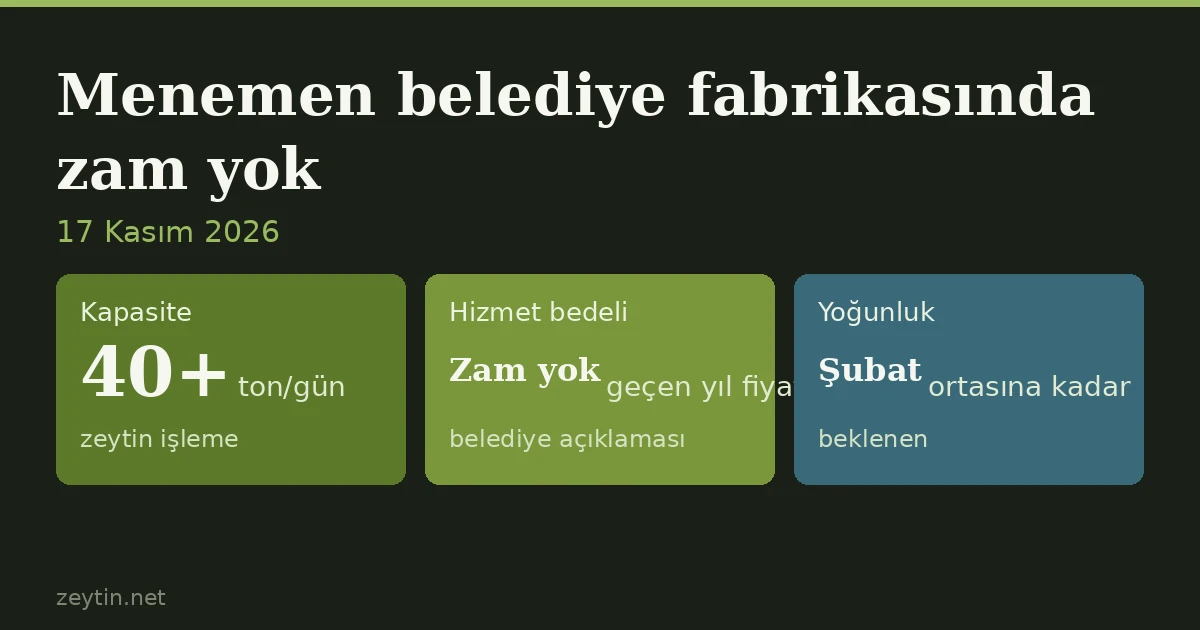
In Menemen, İzmir, the municipality's olive oil mill in Emiralem is serving growers from Menemen, other İzmir districts and Manisa. According to Mayor Aydın Pehlivan, service fees were not raised and last year's prices were kept. The report does not give the fee in lira; daily capacity is above 40 tonnes.

In Menemen, İzmir, the Menemen Municipality Olive Oil Mill is serving growers at last year's prices again in the new harvest. According to reports dated 17 November 2026, Mayor Aydın Pehlivan instructed that the plant's service fees not be raised. The mill in Emiralem can process more than 40 tonnes of olives a day, and grower interest is expected to last until mid-February.
What the report says
| Item | As stated in the report |
|---|---|
| Location | Emiralem, Menemen (İzmir) |
| Daily processing capacity | More than 40 tonnes of olives |
| Growers coming | Menemen villages, other İzmir districts, Manisa |
| Service fee | No increase, last year's price kept |
| Duration of the busy period | Expected until mid-February |
| Reasons for choosing it (as worded in the report) | Reasonable price, hygienic production environment, service quality |
What is the price in lira?
The report does not answer this: it does not say how many lira the service fee is per kilogram or per tonne, or whether it is taken in cash or as a share of the oil. So we have "last year's price was kept" but not the price itself. For that reason we relay Menemen only as a policy, without a numerical comparison with other districts. In our article on Aydın pressing fees we reported that fees vary from district to district, with Bozdoğan asking 3.50-5 lira per kilogram; where Menemen's fee falls in that range, we do not know. How a pressing fee is calculated is explained in the pressing fee guide.
History of the plant
The report also tells the history of the mill. The Emiralem plant had been seized over debts and put up for sale by enforcement proceedings before Pehlivan took office. After standing closed for two years, it was brought back into municipal hands through the mayor's initiative and, in the report's words, put back into service "with an investment of 3 million TL at the figures of the time"; it has served growers for four years. This is the report's account; the report contains no document or independent source on the enforcement process or the investment amount.
What did the mayor say?
Aydın Pehlivan said they are serving growers at last year's prices and invited all olive growers to the mill. He said the plant was opened so that growers could have their olives pressed safely and obtain good-quality olive oil; he added that support for agriculture would continue to grow and was not limited to olives but covered many crops, from strawberries to wheat.
Why does this matter?
This season growers' biggest complaints are low buying prices and high costs. The reports show growers in Gemlik talking about 25-30 lira for oil olives and Marmarabirlik about 40 lira for oil olives. Keeping the pressing fee unchanged while buying prices fall holds one of the grower's cost items at last year's level; how much relief that gives cannot be calculated because the fee itself is not known.
What the report does not say
- The amount of the service fee in lira and how it is collected (cash or share of oil).
- The quantity of olives processed so far this season or the state of the queue at the mill.
- Fees at private mills in Menemen and how the municipal mill compares with them.
- Any measured data on grower satisfaction; the statement in the report is a general assessment.
What to watch
If the municipality or the plant announces the fee or the quantity processed during the season, Menemen's policy can be compared in numbers. Until then the only conclusion is this: Menemen Municipality's mill says it has not raised its pressing service fee this year.
One rating per visitor; you can change yours at any time. Ratings are real reader votes — no seeded or default scores.
Related
 Article
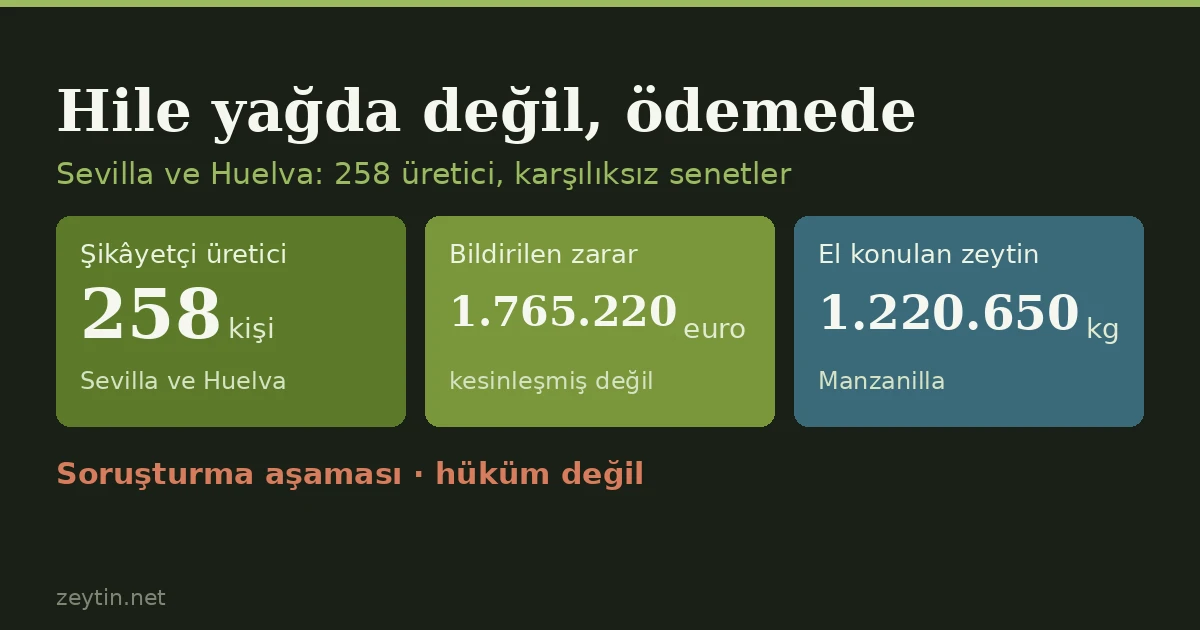
258 growers, €1.77 million: in Spain the fraud was not in the oil, it was in the payment
Spain's Guardia Civil has detained a table olive trader accused of defrauding 258 growers in Seville and Huelva of €1,765,220. The olives were real and the sales were real; the money never reached the producers. Investigators seized 1,220,650 kilos of Manzanilla olives.
 Article
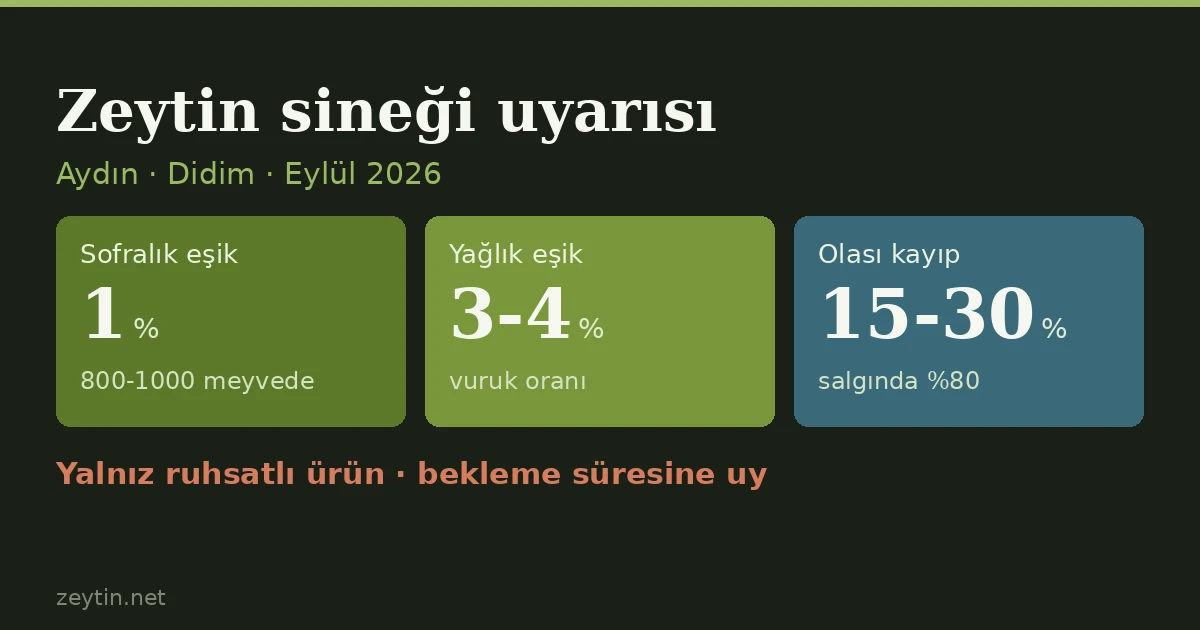
Olive fruit fly warning before harvest in Aydın: check groves, spray only above the threshold
The Didim District Directorate of Agriculture and Forestry, together with the Aydın Provincial Directorate, has warned growers about the olive fruit fly ahead of the harvest. Growers were asked to check groves regularly, monitor pest density and, if needed, act only with products licensed for olives and at the right time. Fly pressure rising in autumn cuts both yield and oil quality.
 Article
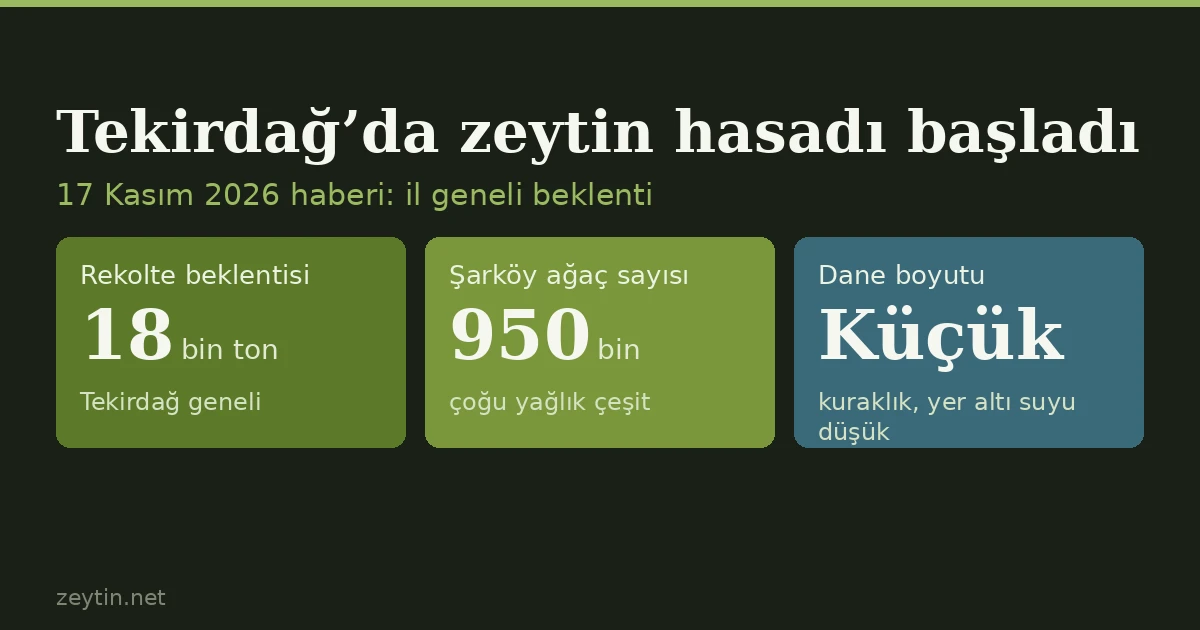
Olive harvest begins in Tekirdağ: about 18,000 tonnes expected, fruit small in Şarköy but fruit set good
About 18,000 tonnes of olives are expected across Tekirdağ as the harvest begins. The report says Şarköy has about 950,000 trees, fruit set is good and disease and pests are rare, but drought and falling groundwater left the fruit small. The oil-table split, oil yield and price are not in the report.
 Article
EIA process ended for the Selçuk Çamlık olive oil plant meant to grow from 20 to 160 tonnes a day: the reason is an incomplete permit, not a negative decision
The İzmir Governorate's Provincial Directorate of Environment, Urbanisation and Climate Change ended the ÇED process for a project to raise the daily pressing capacity of an olive oil plant in Çamlık, Selçuk, from 20 to 160 tonnes, in a letter dated 7 November 2026. Reason: the permit at the Provincial Directorate of Agriculture and Forestry could not be completed.