Hatay Metropolitan Municipality inspects olive oil mills: no adulteration found, a mill with hygiene shortcomings given 3 days' notice
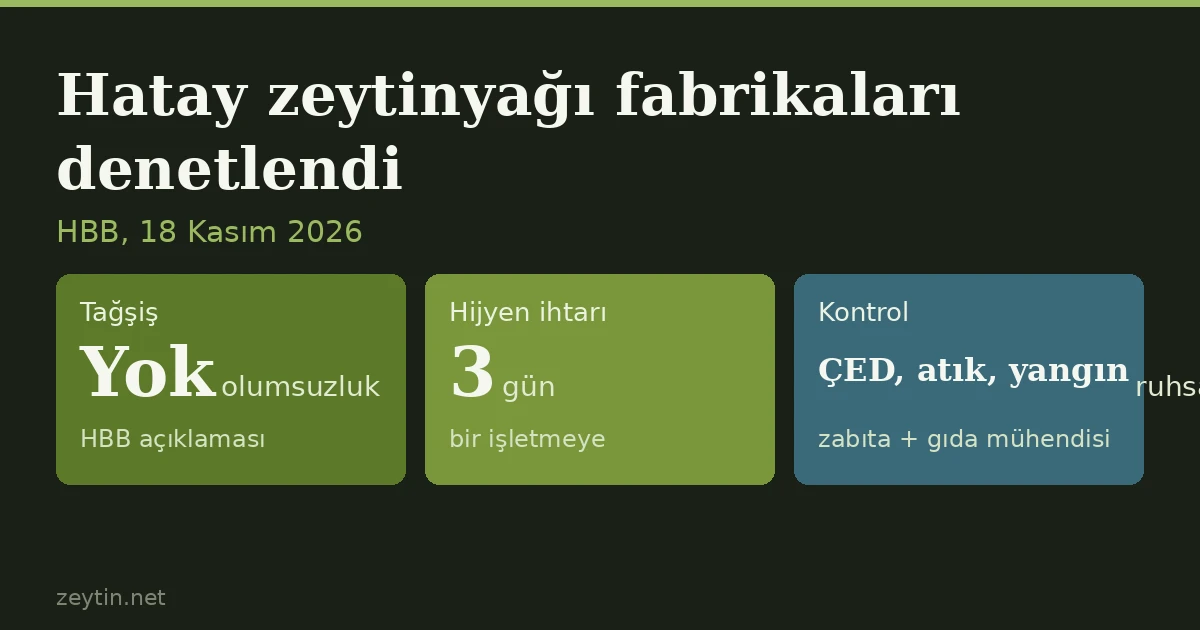
Hatay Metropolitan Municipality's enforcement teams and food engineers checked olive oil mills for licences, EIA reports, waste ponds, fire extinguishers and adulteration as the harvest got under way. No adulteration was found; one business that failed hygiene rules was given 3 days' notice. The number of mills inspected was not announced.
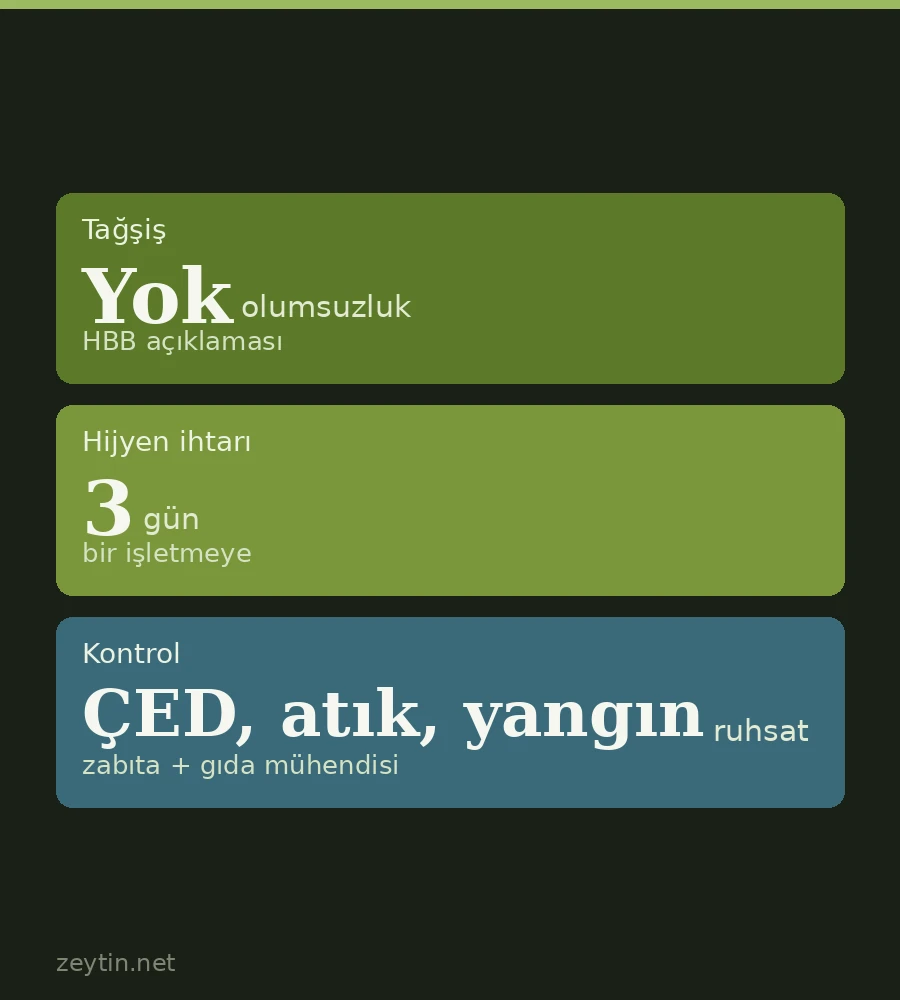
Hatay Metropolitan Municipality (HBB) stepped up its inspections of olive oil mills across the province as the harvest got under way. According to a report dated 18 November 2026, enforcement teams and food engineers checked the mills' licences, waste management and fire safety; no adulteration was found in the products. One business found to be breaking hygiene rules was given 3 days' notice to clean up and make the necessary adjustments.
What was checked?
| Checked | As stated in the report |
|---|---|
| Business opening and operating licence | Examined |
| Environmental Impact Assessment (EIA) report | Checked |
| Condition of waste ponds | Checked |
| Fire extinguishers | Checked for suitability |
| Hygiene conditions | Shortcomings found in some mills |
| Adulteration | Nothing adverse found (HBB statement) |
The report gives the aims of the inspections as protecting public health, improving production conditions and preventing environmental pollution.
Hygiene shortcomings: how many businesses, how many days?
The report is not fully consistent. The headline says "some businesses were given time"; the text says that one business where conditions did not meet hygiene rules was given a 3-day notice to carry out the necessary cleaning and adjustments. It adds that the other businesses where shortcomings were found were given the necessary warnings and that the relevant legal procedures were applied; what those procedures were, and whether any fine was issued, is not in the report. We go by the detail in the text: the notice period is 3 days, and the number of businesses given time is unclear.
The wastewater warning
HBB teams reminded the businesses that releasing the brown liquid left after olive oil production, known as karasu (olive mill wastewater), straight onto the soil or into water sources can cause environmental pollution. Officials stressed that waste must be disposed of under conditions that do not harm the environment. We have explained what the wastewater is and where it cannot be discharged in where does olive mill wastewater go and olive mill wastewater and pomace.
What does "nothing adverse found" on adulteration mean?
The report does not say how the adulteration check was carried out: whether samples were taken, whether laboratory analysis was done or how many products were examined. We therefore relay "nothing adverse found" as HBB's statement; we do not know how many mills or samples it covers. How adulteration is detected is explained in olive oil fraud and adulteration.
Alongside inspections elsewhere
Different provinces have put different inspections in the foreground as the season opens. This comparison is our own compilation; the reports do not refer to one another:
- In Çanakkale, the provincial agriculture directorate's food-control teams looked at production processes, hygiene, raw-material acceptance and legal compliance: Çanakkale inspection.
- In Mut, Mersin, scales and sieves at buying centres were inspected: Mut inspection.
- In Köşk, 4,000 litres of suspected adulterated oil were caught on 13 November 2026: Köşk seizure.
What sets the Hatay inspection apart is that it covers administrative compliance such as licences and EIA reports, waste and fire safety, hygiene and adulteration in a single round.
What the report does not say
- How many mills were inspected and how many mills Hatay has in total.
- The name or district of the businesses with hygiene shortcomings.
- Whether any administrative fine was issued.
- The method of the adulteration check and the number of samples.
- Whether the business was re-inspected when the 3-day period ended.
What to watch
If it is announced whether the business was re-checked after the notice period and how many mills were inspected over the season, this report will turn into numbers. Until then what we have is the scope of the inspection and one 3-day notice.
One rating per visitor; you can change yours at any time. Ratings are real reader votes — no seeded or default scores.
Related
 Article
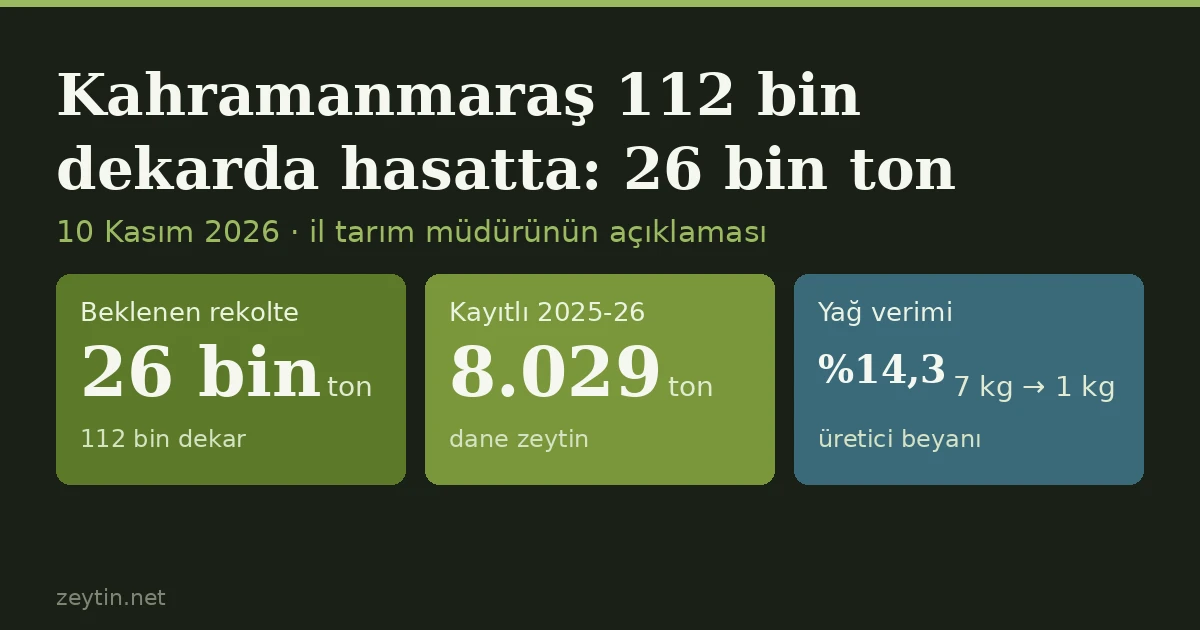
Kahramanmaraş harvests olives on 112,000 decares and expects 26,000 tonnes, with an oil yield of 1 in 7
Kahramanmaraş's provincial agriculture director Ramazan Bilir said olives are being harvested on 112,000 decares this season and about 26,000 tonnes are expected. That is about 3.2 times our 2025-2026 record, while the oil yield a producer quoted, about 14.3 percent, is below the recorded 20 percent.
 Article
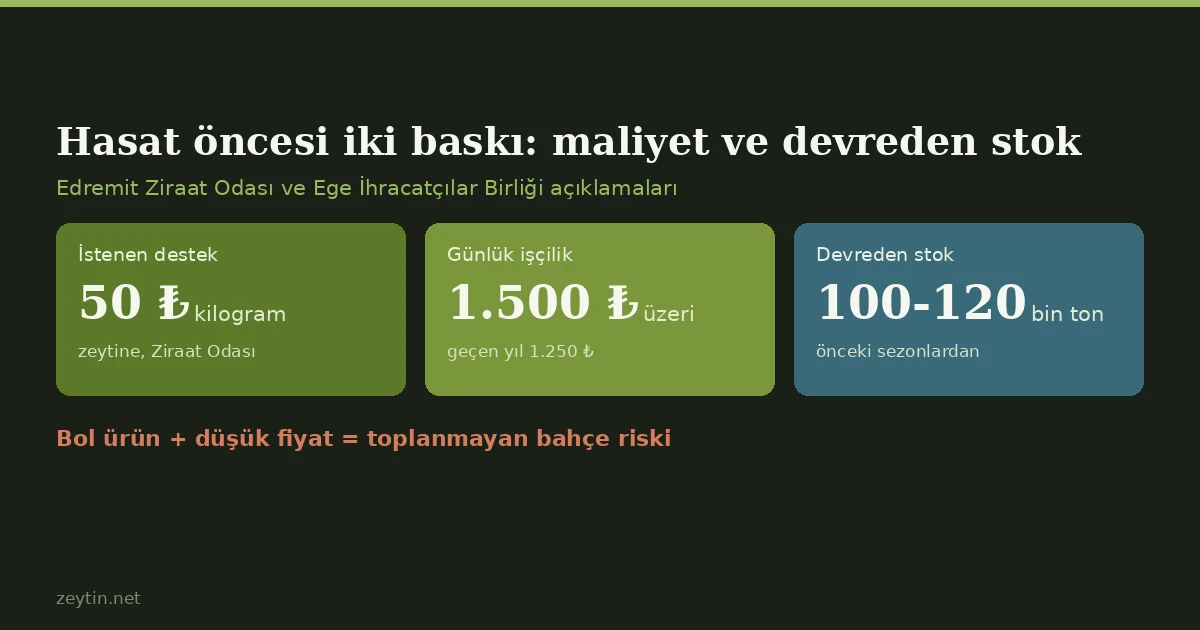
Two pressures before the harvest: costs and 100,000 tonnes carried over
The chamber of agriculture wants 50 lira per kilo; daily labour has passed 1,500 lira. Exporters report 100,000-120,000 tonnes carried over from previous seasons.
 Article
Akhisar's crop tripled and Domat olives fell from 100 to 40-45 lira: 40-60 lira at the producer, 450-500 lira on the shelf
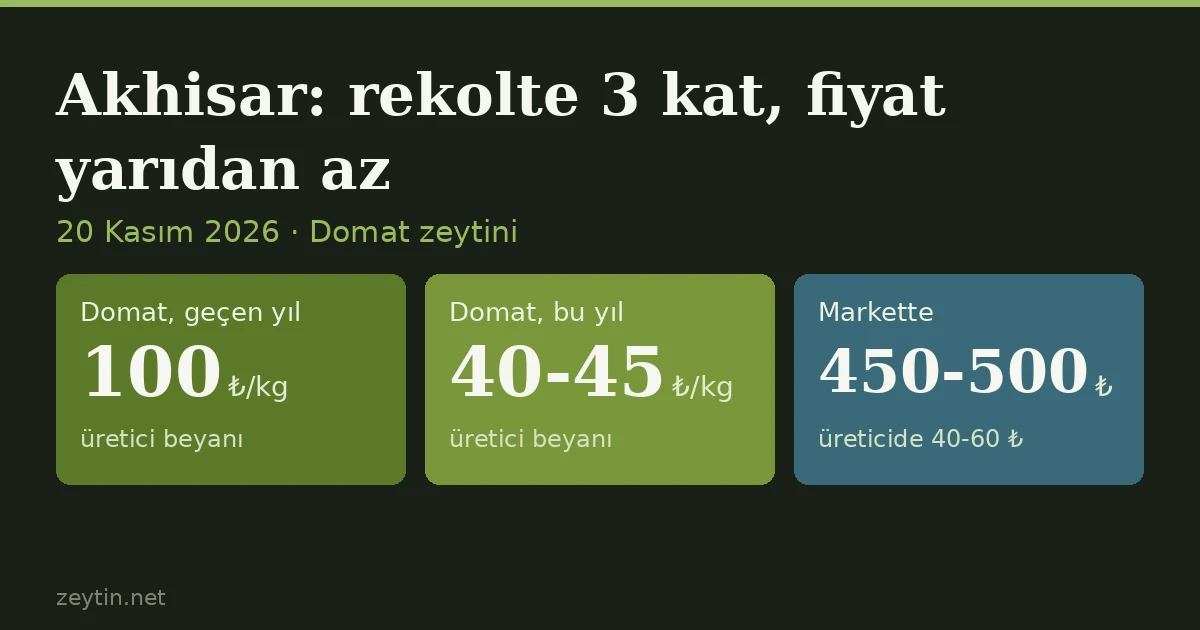
According to a 20 November 2026 report, the olive crop in Akhisar has tripled on last year; a producer says Domat olives fell from 100 to 40-45 lira per kilogram. Olives at 40-60 lira at the producer reach 450-500 lira on shelves; a sector representative expects no rise in olive oil prices soon.
 Article
The 2026/27 season opens: first harvests in Ayvalık, Gemlik and Bozcaada
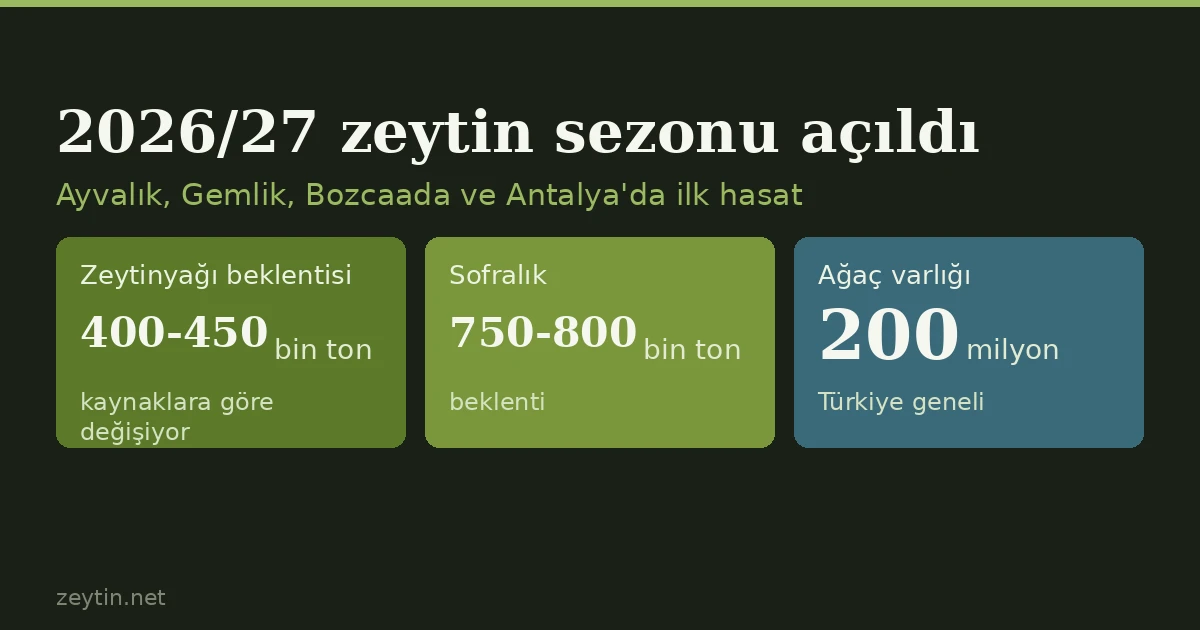
The new olive season opened with three events on 11-13 September. In Ayvalık, an on-year forecast of 400,000-450,000 tonnes of olive oil was voiced; in Gemlik the first olives were picked during the festival; and on Bozcaada the island's first olive oil was pressed with a portable system.