How Cold-Pressed Olive Oil Is Made
From tree to bottle: washing, crushing, malaxation and separation. Why the temperature must stay below 27°C.
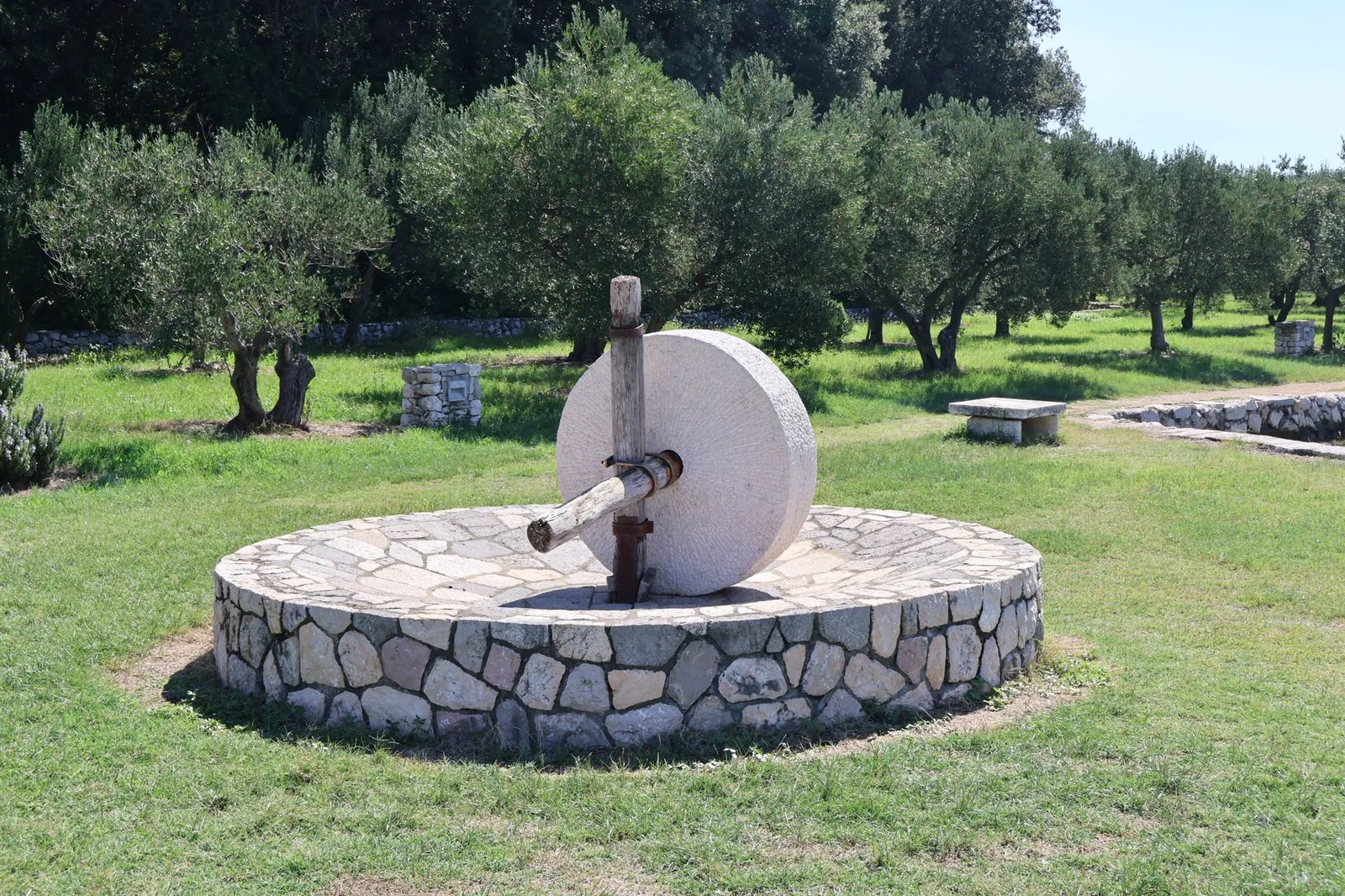
"Cold-pressed" is not a marketing phrase but a defined method: while the olives are processed, the paste never exceeds 27°C. The limit is not arbitrary — above it, aroma and polyphenols drop sharply.
1. Harvest and transport
It starts on the tree. Olives should be picked from the branch, not gathered off the ground. Fallen fruit is bruised, touches soil and begins to ferment. Harvested olives travel in ventilated crates; olives packed into sacks crush under their own weight and heat up.
The gap between harvest and pressing is critical. Ideally the fruit is processed within 24 hours; waiting raises free acidity.
2. Leaf removal and washing
At the mill, leaves are blown out first. Too many leaves give the oil a bitter, grassy note. The olives are then washed in cold water to remove soil, stones and dust.
3. Crushing
Olives are crushed whole, stone included, into a paste. Two methods:
- Stone mill: traditional, slow, generates less heat
- Hammer crusher: common in modern plants, fast
The pit is crushed too; its natural antioxidants pass into the oil.
4. Malaxation
This is the heart of the process. The paste is stirred slowly in temperature-controlled troughs so that scattered microscopic oil droplets merge into larger ones.
Two variables decide the outcome:
- Temperature: must stay below 27°C. Higher temperatures raise yield but cost aroma and polyphenols — that is "hot pressing".
- Time: typically 30-45 minutes. The longer it runs, the more oxygen contact, and oxidation begins.
5. Separation
The oil is drawn from the paste in one of two ways:
- Continuous system (decanter): separated by density in a horizontal centrifuge. The modern standard.
- Press (classic system): paste is spread on mats, stacked and squeezed. Slow and hard to keep clean.
The liquid that emerges is oil plus vegetation water; a vertical centrifuge separates those too.
6. Settling and storage
Fresh oil is cloudy with fine particles. It rests for a few weeks in stainless steel tanks so sediment can settle. Tanks are filled to the brim or blanketed with nitrogen — the aim is to cut off contact with oxygen.
Filtered or unfiltered?
Unfiltered oil looks more "natural", but the water and sediment it carries speed up spoilage. For long storage, filtered is safer. For quick consumption, unfiltered carries more aroma.
What is the yield?
On average, 100 kilos of olives give 15-20 litres of oil. The ratio varies with variety, ripeness and climate. In an early harvest it can fall to 12%; in a late one it can reach 25%.
Low yield does not mean low quality — quite the opposite: early-harvest oils are both scarcer and more valuable.
What happens to vegetation water and pomace?
Pressing leaves two by-products:
- Vegetation water: the olive's own liquid. Acidic and heavy in phenols; discharging it straight onto soil is environmentally harmful. Modern plants treat it or hold it in evaporation ponds.
- Pomace: crushed stone fragments and pulp. Dried and solvent-treated it yields pomace oil; the remainder is burned as fuel.
How these by-products are handled is the single biggest factor in olive oil's environmental footprint.
Two-phase and three-phase systems
Modern mills separate in one of two ways:
- Three-phase: oil, vegetation water and pomace come out separately. Water must be added, which raises both water use and effluent volume, and phenols migrate into the water.
- Two-phase: separates into oil and moist pomace only. No water is added, phenol loss is lower, environmental load is smaller. This is the preferred method today.
Oil from a two-phase system generally carries a higher polyphenol content.
Small producers and boutique oils
Growers who harvest their own groves and press at small mills have multiplied in recent years. Their advantage is traceability: you know the grove, the date and the variety.
What to watch for in boutique production:
- Is the gap between harvest and pressing short?
- Is the mill cleaned between batches? (Residue from a previous batch spoils the new oil)
- Is storage in stainless steel, or in plastic drums?
Small scale alone guarantees nothing; process discipline is what counts.
One rating per visitor; you can change yours at any time. Ratings are real reader votes — no seeded or default scores.
Related
 Article
Kilis Olive Oil: a cultivar reaching 33% oil
Registered in 2020. The Kilis Yağlık cultivar runs about 33% oil, far above the Turkish average. Small round fruit, thin skin, small stone.
Article
Kilis Olive Oil: a cultivar reaching 33% oil
Registered in 2020. The Kilis Yağlık cultivar runs about 33% oil, far above the Turkish average. Small round fruit, thin skin, small stone.
 Article
Akhisar Domat Olive Oil: stricter limits than its twin
Registered in 2017. Set against the Uslu oil registered the same day the difference is clear: peroxide ≤17 and acidity ≤0.65, both narrower.
Article
Akhisar Domat Olive Oil: stricter limits than its twin
Registered in 2017. Set against the Uslu oil registered the same day the difference is clear: peroxide ≤17 and acidity ≤0.65, both narrower.
 Article
Aydın Memecik Olive Oil: bitterness and pungency written into the definition
Registered in 2020. Total phenols > 100 mg/kg, peroxide ≤ 18, defect median 0. Intense fruit aroma with pronounced bitterness and pungency.
Article
Aydın Memecik Olive Oil: bitterness and pungency written into the definition
Registered in 2020. Total phenols > 100 mg/kg, peroxide ≤ 18, defect median 0. Intense fruit aroma with pronounced bitterness and pungency.
 Article
Olive Oil Prices: Week 39 of 2026
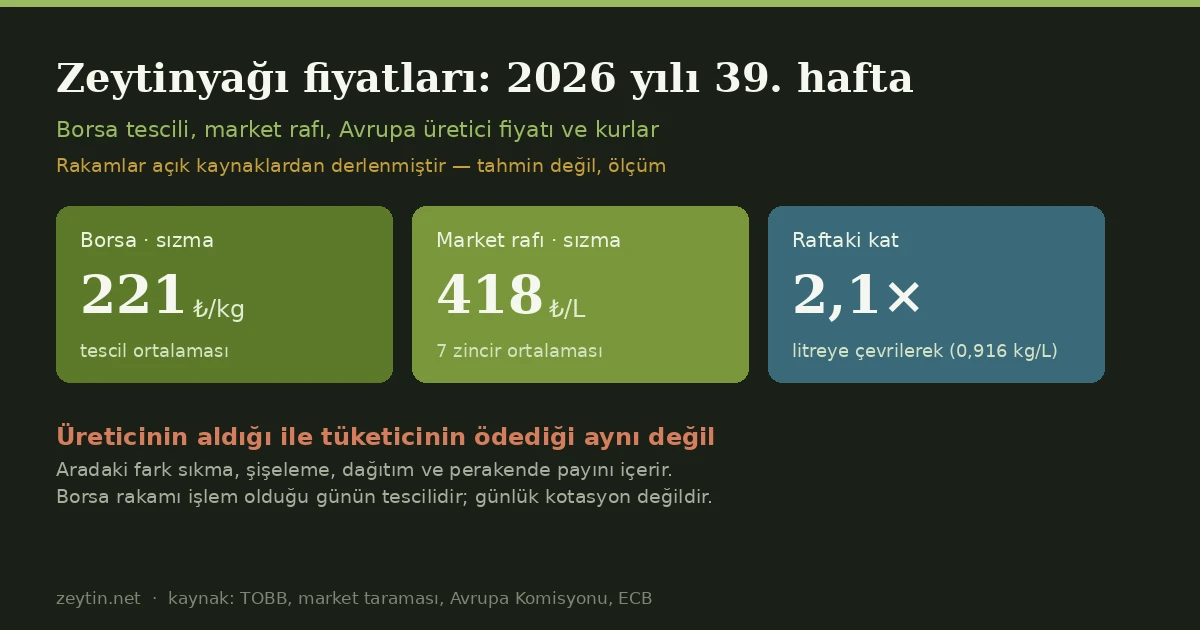
Week 39 of 2026: Turkish exchange prices, European producer prices and exchange rates side by side.
Article
Olive Oil Prices: Week 39 of 2026
Week 39 of 2026: Turkish exchange prices, European producer prices and exchange rates side by side.