Is it illegal to cut down an olive tree? Permits, the three-kilometre rule and the per-tree fine
Under Law 3573, cutting or uprooting a tree in an olive grove area requires a ministry permit — and even with one, a tree cannot be felled without established necessity. Unauthorised felling carries a per-tree administrative fine, and the 60 lira in the text is applied after annual revaluation. The three-kilometre rule, the 10% development ceiling and the Council of State's 2024 ruling complete the picture.
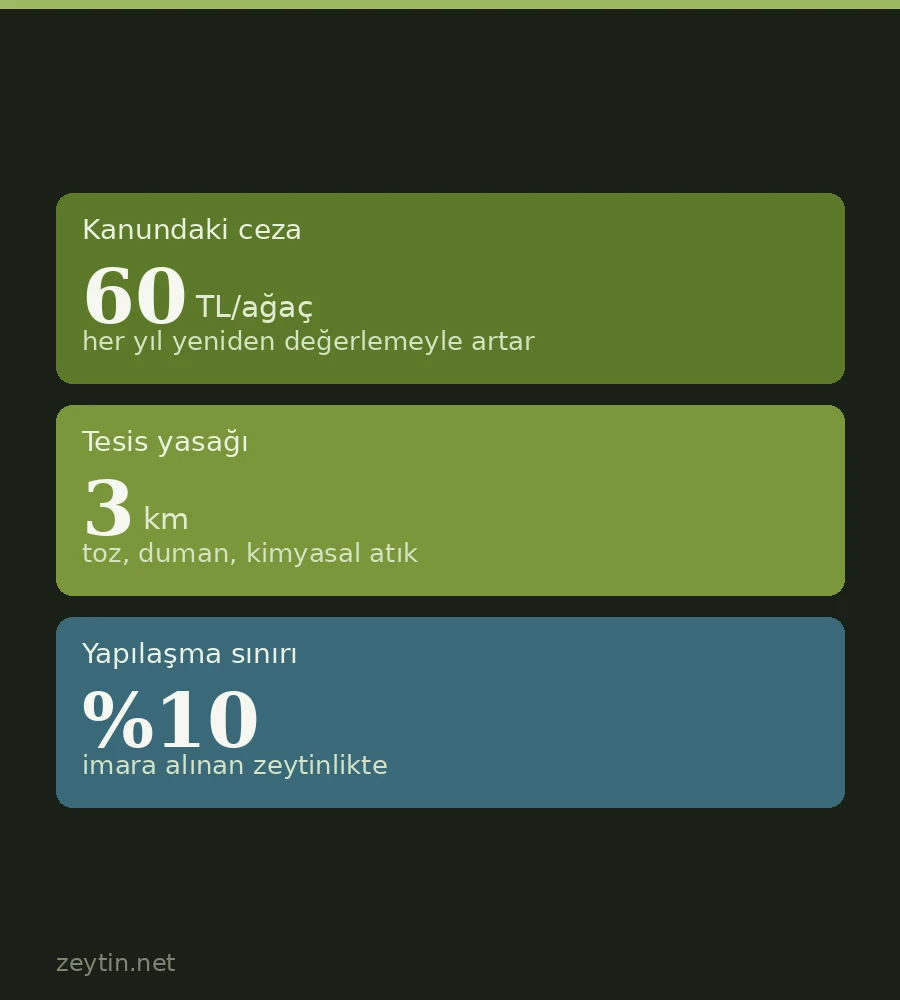
The short answer: calling it simply "banned" is wrong, but it is not free either. Cutting or uprooting an olive tree inside a designated olive grove area requires a permit from the Ministry of Agriculture and Forestry based on a technical justification, and anyone who cuts or uproots without one faces an administrative fine per tree. The text that governs this is Law No. 3573 on the Improvement of Olive Growing and the Grafting of Wild Olives, dated 1939.
The law was adopted on 26 January 1939 and published in the Official Gazette on 7 February 1939. The version applied today has passed through amendments in 1995 and 2008; the provisions that actually protect the tree took their present shape in those two rounds.
What the law says
Two sentences are decisive. The first is in the second paragraph of Article 20:
t; Olive growing areas may not be reduced.
The second follows immediately:
t; The uprooting of olive trees in these areas is subject to a permit from the Ministry, based on technical justification. In issuing this permit, the favourable opinion of the Ministry's research institutes and of the local chamber of agriculture, where one exists, shall be obtained. Even in that case, an olive tree for which absolute necessity is not established may not be cut or uprooted.
The structure of those sentences matters. Removal is not banned as a rule; it is made conditional on a permit. But the permit is not left to a single signature: the opinion of a research institute and of the local chamber of agriculture is required. And even where a permit exists, a tree for which "absolute necessity" is not shown may still not be cut. The permit is therefore not a document that automatically legitimises felling; the justification is examined separately.
The ministry names written into the law date from the 1995 text. Today the authority rests with the Ministry of Agriculture and Forestry.
The fine: sixty lira per tree — and why that figure misleads
The last sentence of the same paragraph is explicit:
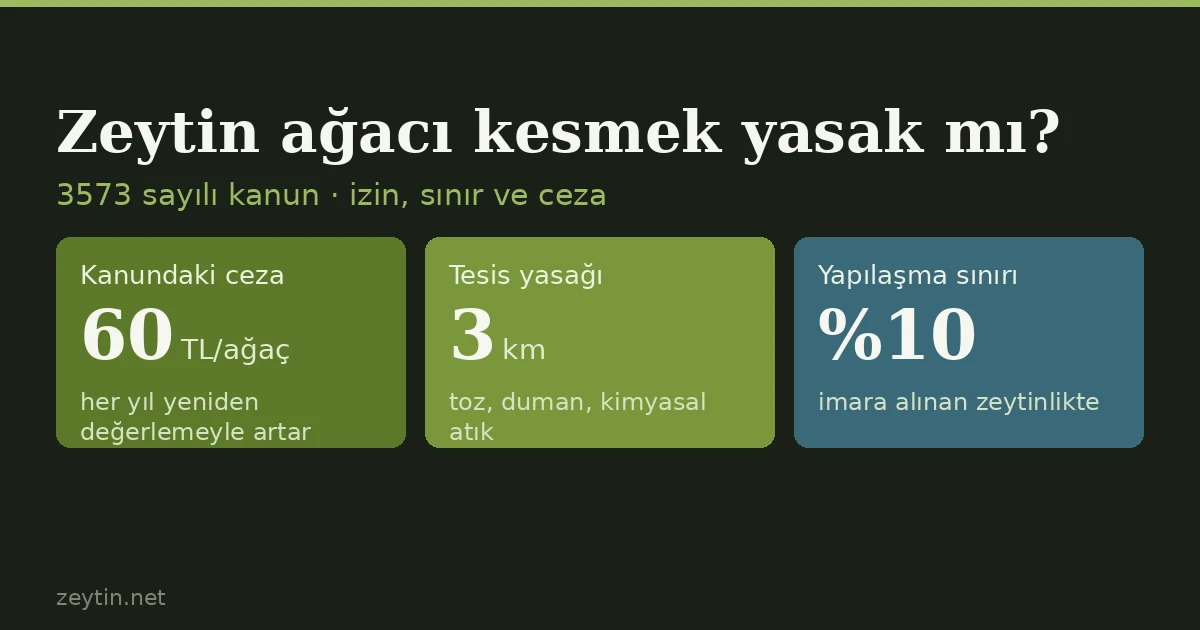
t; Those who cut or uproot without permission shall be given an administrative fine of sixty Turkish lira per tree.
That figure entered the text in 2008 and has not changed since. The amount actually applied, however, is not sixty lira. Article 17(7) of Law No. 5326 on Misdemeanours provides:
t; Administrative fines shall be applied, with effect from the beginning of each calendar year, increased by the revaluation rate determined and announced for that year.
So while the number printed in the law stays fixed, the fine actually imposed rises every year by the revaluation rate. With the increases accumulated since 2008, the amount applied today is far above the figure in the text. The current amount cannot be read off the statute; it has to be confirmed with the provincial or district directorate of agriculture and forestry.
The power to impose the fine is also set out in the law. Article 21 states that the local civil administrative authority — the district governor or the provincial governor — decides on administrative fines under this law.
The "tree on my own land" question
This is the most common question. The law is written around the area, not around ownership. What matters is not whose title deed the tree sits on but whether the land counts as an olive grove area. Determining that is the job of the agricultural administration, which is why asking the provincial or district directorate before acting costs less than meeting a fine afterwards.
A second confusion in practice is between pruning and felling. The law does not regulate pruning; on the contrary, Article 16 encourages the spread of pruning tools among growers. We have set out how and when pruning is done in a separate article. Cutting the trunk or lifting the tree out by its roots is an entirely different operation.
There is also a third route: moving the tree rather than felling it. The olive tolerates this and the practice is widespread — but it is worth remembering that a transplanted tree stays unproductive for somewhere between two and five years.
The three-kilometre rule
The most debated provision in the law is the first paragraph of Article 20:
t; Within olive grove areas and at a distance of at least 3 kilometres from such areas, no facility leaving chemical waste or emitting dust and smoke that would impede the vegetative and generative development of olive groves — olive oil mills excepted — may be built or operated.
Here the prohibition is not on cutting the tree but on what may be built around it. The test is interesting too: impeding "vegetative and generative development". That protects not only the tree's growth but its flowering and fruit set. Dust and smoke do not fell an olive tree; they coat the leaves, disrupt pollination and cut the crop. The law drew that distinction back in 1995.
Olive oil mills are kept outside the ban, but their construction, along with that of small-scale agricultural industry facilities, is itself made subject to ministry permission.
Development: the ten per cent ceiling
Where olive grove areas inside municipal boundaries are brought within development plans, total construction including infrastructure and social facilities may not exceed 10% of the grove area. Development plans finalised before the law's publication remain valid.
The mining dispute and the Council of State ruling
The limits of these rules were settled in court recently. A paragraph added to the Mining Regulation on 1 March 2022 allowed mining activity inside olive grove areas where it served electricity needs, on the operator's undertaking to rehabilitate the site afterwards.
The Eighth Chamber of the Council of State annulled that paragraph by its decision of 2 May 2024 (case 2023/5528, decision 2024/2493). The reasoning was not technical but hierarchical: a prohibition established by statute cannot be removed by regulation without a separate amendment to the statute. The ruling confirmed that the protective provision in Law 3573 cannot be bypassed by secondary legislation.
Two little-known provisions
The livestock ban. Article 14 prohibits bringing any kind of animal into olive groves and building sheep or goat pens within at least one kilometre of olive areas, outside settlements. Animals used for ploughing and haulage are permitted provided they are muzzled. Breaching this provision carries, on the complaint of the injured party, up to three months' imprisonment or a judicial fine — the only custodial sanction in the law.
A fine for neglect. Under Article 17, a grower who fails to maintain the grove in line with the rules set may be fined ten Turkish lira per tree. In practice the provision is almost never applied, but it reveals the law's logic: a grove is treated not merely as its owner's property but as an asset to be preserved.
Why the law reads this way
The problem in 1939 was different from today's: grafting abandoned wild olive stands and bringing them into production. The opening articles deal with exactly that — identifying wild olive stands under state control, distributing them in parcels of at least 25 decares, and transferring the title after five years of use for the intended purpose. Property distributed this way may not be divided in any way, inheritance included.
The provisions protecting the tree came later, in 1995 and 2008. The law was first written to multiply olive groves and later updated to avoid losing them. Looking at where olives grow in Türkiye shows why that second concern came to dominate: production sits in a narrow belt, and that belt is also where population, tourism and industry concentrate.
In short
- Cutting or uprooting a tree in an olive grove area requires a ministry permit, with the opinion of a research institute and the chamber of agriculture.
- Even with a permit, a tree cannot be cut where absolute necessity is not established.
- Unauthorised felling carries an administrative fine per tree; the 60 lira in the text is applied after annual revaluation increases.
- The local civil administrative authority decides on the fine.
- No facility emitting dust, smoke or chemical waste may be built within three kilometres of olive grove areas.
- Holding the title deed does not change the rule: the test is the character of the area, not ownership.
One rating per visitor; you can change yours at any time. Ratings are real reader votes — no seeded or default scores.
Related
 Article
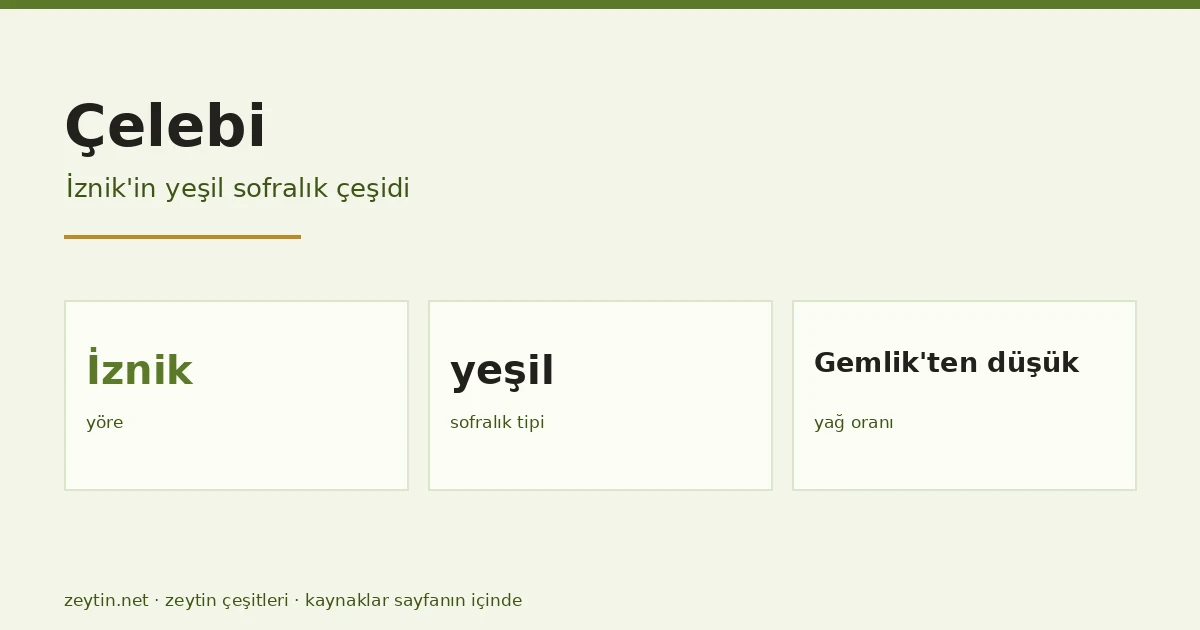
The Çelebi olive: the green table cultivar of İznik
Grown around İznik in Bursa, Çelebi is a green table cultivar. Its oil content is lower than Gemlik's — which is no drawback for a table olive.
 Article
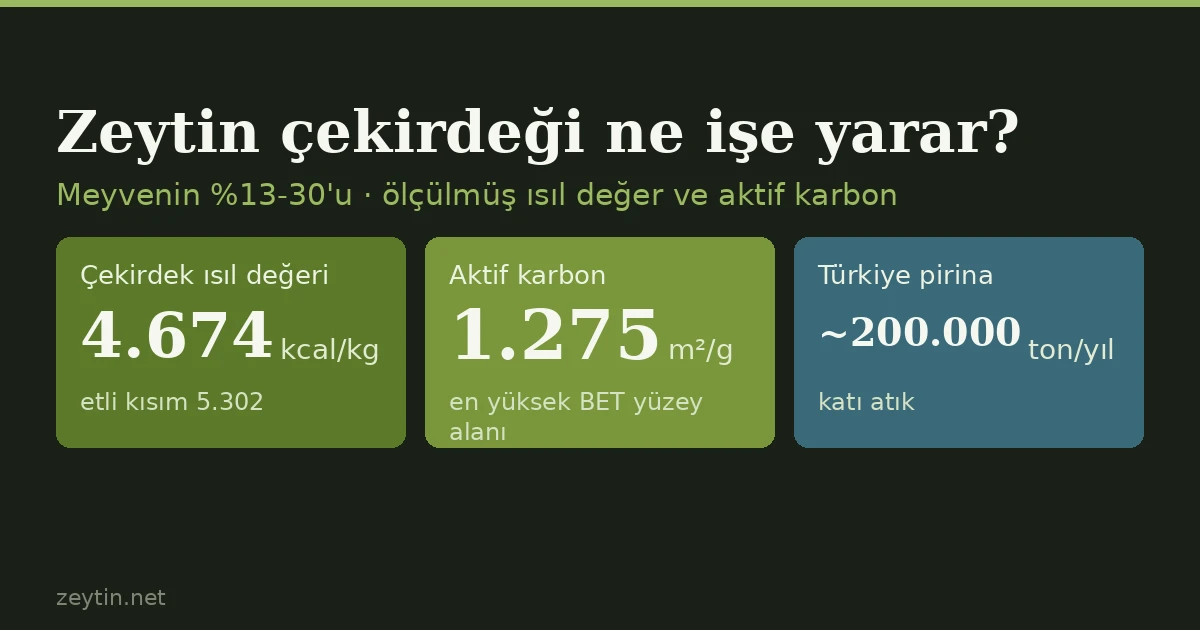
What is an olive pit good for?
The pit makes up 13-30 percent of the fruit and its measured calorific value is 4,674 kcal/kg. But the laboratory result upsets intuition: the largest contribution to pomace energy comes from the flesh, not the pit. In activated carbon it yields 1,275 m²/g of surface area; in the nursery it is a seed that germinates poorly and demands grafting. Turkey produces roughly 200,000 tons of pomace a year.
 Article
Milas Çekişke Olive: the season's first table olive, picked in September
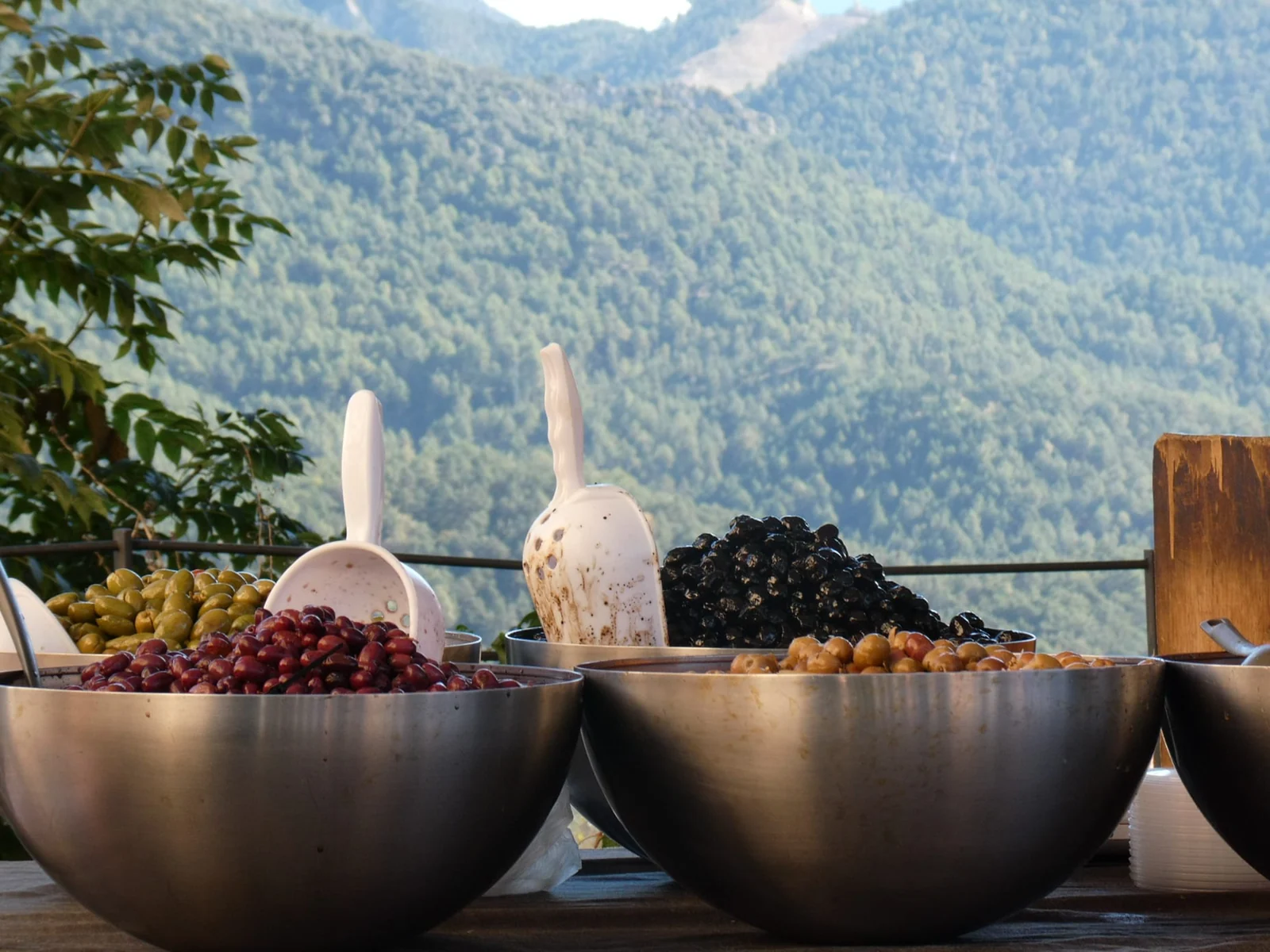
Protected as a geographical indication since 2021. The cultivar is Memecik, but the difference is timing: picked in September, green and by hand. The stage at which oil content is still low is exactly right for the table.
 Article
Coratina olive: Italy's oil variety
Among the highest-polyphenol varieties in the world. Distinctly bitter and pungent — the oil that gives blends their backbone.