Milas Çekişke Olive: the season's first table olive, picked in September
Protected as a geographical indication since 2021. The cultivar is Memecik, but the difference is timing: picked in September, green and by hand. The stage at which oil content is still low is exactly right for the table.
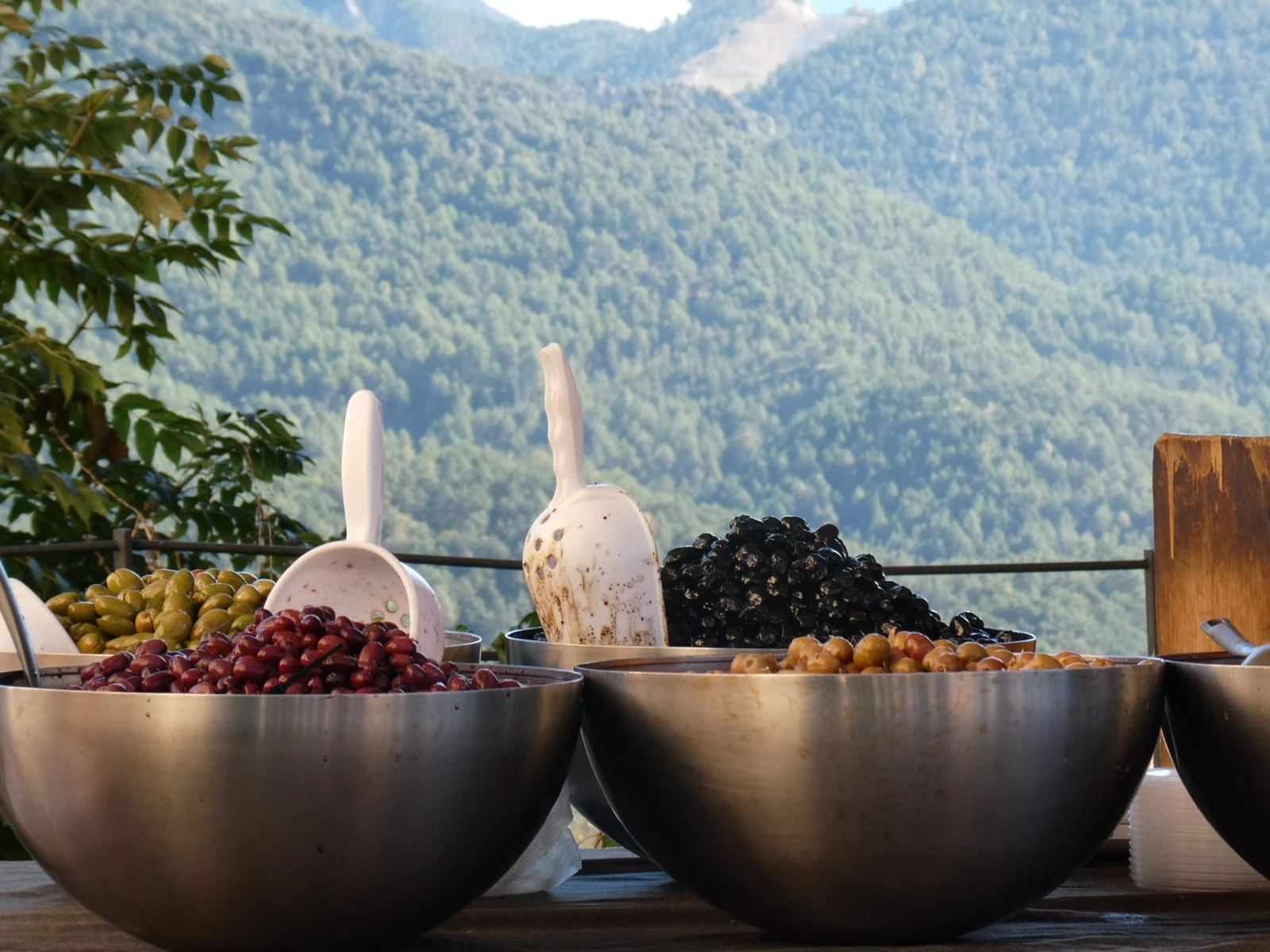
The season's first table olive usually arrives at the end of October. Milas Çekişke Zeytini is picked in September — before the fruit ripens, while still green, and by hand.
The record
| Type | Geographical indication |
| Protected from | 20.08.2021 |
| Registered by | Milas Chamber of Commerce and Industry |
| Area | Milas district, Muğla |
| Cultivar | Memecik |
| Harvest | September · green stage · by hand |
The type matters: this is a geographical indication, not a designation of origin. At least one stage of production must take place in Milas; not all of them need to. It can be compared with the same district's Milas Zeytinyağı and Milas Yağlı Zeytini registrations.
Why September?
What sets Çekişke apart is not the cultivar but the timing. The cultivar is Memecik — Muğla's dominant variety and also the basis of Güney Ege Zeytinyağları. The difference lies in the ripeness at which the fruit is taken.
Fruit picked in September is still green and firm. At that stage:
- phenol content is at its highest — so bitterness is pronounced,
- oil content is still low — unsuitable for pressing,
- the flesh is firm — it does not break down in brine.
A period unsuited to the cultivar's oil use is therefore exactly right for the table. The same tree's fruit goes to two different products two months apart.
The hand-harvest requirement follows from this: green, firm fruit is damaged by mechanical harvest, and bruised fruit develops defects in brine. We covered harvest timing and the ripeness index separately.
Being the season's first
The point emphasised in both the record and local accounts is commercial: Çekişke is the season's first table product. It is described as having been eaten locally, especially at breakfast, for centuries.
Being first matters economically too. New-season fruit does not compete with the previous season's stock; an early product sets its own price. For a smallholder, something sellable in September means cash flow until the main harvest begins in November.
Memecik's third face
With Milas Çekişke, the Memecik cultivar underpins three separate registrations:
| Registration | Product | Scope |
|---|---|---|
| Güney Ege Zeytinyağları | olive oil | 3 provinces, 33 districts |
| Milas Zeytinyağı | olive oil | Milas |
| Milas Çekişke Zeytini | table olives | Milas |
One cultivar, three registrations, two product categories. A good illustration that a geographical indication is granted not to a cultivar but to a place and a method: the same Memecik becomes the subject of a different registration depending on when and how it is picked.
The cultivar behind it, measured
The registration is granted to a place, but the cultivar the definition rests on has measurable values:
| Property | Value |
|---|---|
| 1 kg’daki tane sayısı | 185 |
| Et oranı | %85 |
| Yağ oranı | %27 |
| Ana kullanım | yağlık |
| Meyve boyu | 29 mm |
| Meyve eni | 20 mm |
| Türkiye ağaç varlığındaki payı | %1,5 |
| Yöre | Ege |
Its place in Muğla's olive production
| Item | Value |
|---|---|
| Fruit production | 174,376 t |
| — for oil | 162,632 t |
| — for the table | 11,744 t |
| Olive oil production | 32,142 t |
| Trees | 14,844 thousand |
| Yield per tree | 11.7 kg |
93% of the province's fruit goes to oil — so this table-olive registration defines a niche outside the main flow.
The registration record, completed
When this page was first written the certificate text was not published on the portal and we could give only part of the record. The remaining details from the registration:
| Registration no | 1109 |
| Registration date | 17.05.2022 |
| Product group | Processed and unprocessed fruit, vegetables and mushrooms |
| Registered by | Milas Chamber of Commerce and Industry |
Protection runs from 20.08.2021 while registration completed on 17 May 2022 — a nine-month gap that is ordinary in geographical indication procedure.
How is the bitterness removed?
What distinguishes the product is not the cultivar but the process. Only three materials are used: water, rock salt and citric acid.
The sequence:
1. Green Memecik olives are picked before full ripeness.
2. The fruit is crushed carefully without breaking the stones or damaging the flesh; the stones are then removed.
3. The olives go into food-grade containers, covered with water and closed.
4. After about a week the water is poured off and replaced.
5. That change is repeated roughly every two days, 7-8 times in all.
The method is not named, but its description is plain: this is debittering by water (leaching). Unlike the lye method it uses no chemicals; the oleuropein carrying the bitterness passes into the water and is removed. The cost is time — where a lye treatment takes hours, this runs beyond two weeks.
The condition in step two is technical as well: crushing without breaking the stone. A broken stone releases bitter compounds into the flesh and spoils the texture, which is why the registration calls the process one that "requires skill".
Citric acid is the acidifier at the end. We see the same logic in the Milas Ekşili registration, where lemon masks astringency instead of removing phenols. Two Milas registrations apply the same local acidifying tradition to two different products.
The European Union process
Reşit Özer, president of the Milas Chamber of Commerce and Industry, summarised the district's EU registration path in a statement in February 2026:
| Product | Stage |
|---|---|
| Milas Zeytinyağı | EU Commission registration · 23 December 2020 |
| Milas Yağlı Zeytini | Turkish registration · 2023 |
| Milas Çekişke Zeytini | EU application 2023 · preliminary approval · published for opposition |
According to Özer, Milas Zeytinyağı was in 2020 the first and only olive oil from Türkiye to hold an EU geographical indication, and after that registration the number of mills and brands in the district rose, with new facilities built. EU registration for Çekişke was expected to complete on 19 April; at that point Türkiye had 44 EU-registered products, and Çekişke was expected to become the 45th or 46th.
⚠ That expectation rests on a statement dated February 2026. Whether the registration was completed cannot be verified from the data we hold; it should be confirmed against the EU register when this page is next updated.
One rating per visitor; you can change yours at any time. Ratings are real reader votes — no seeded or default scores.
Related
 Article
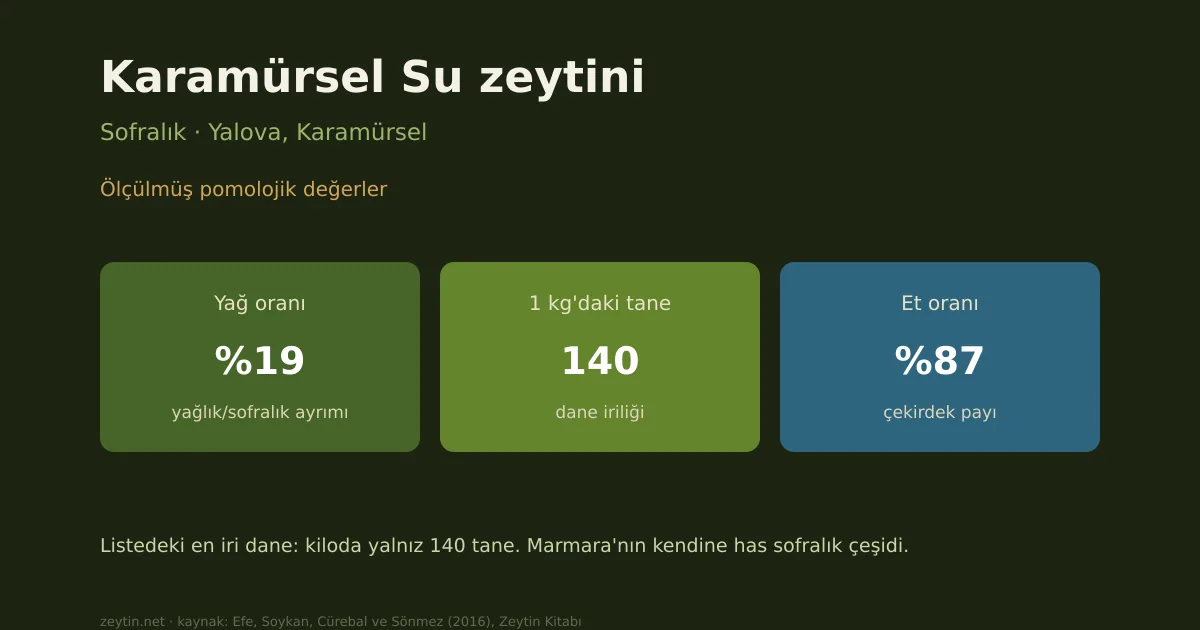
Karamürsel Su olive: characteristics, oil content and growing areas
The largest fruit on the list: only 140 per kilo. Marmara's own distinctive table variety.
Article
Karamürsel Su olive: characteristics, oil content and growing areas
The largest fruit on the list: only 140 per kilo. Marmara's own distinctive table variety.
 Article
The Çelebi olive: the green table cultivar of İznik
Grown around İznik in Bursa, Çelebi is a green table cultivar. Its oil content is lower than Gemlik's — which is no drawback for a table olive.
Article
The Çelebi olive: the green table cultivar of İznik
Grown around İznik in Bursa, Çelebi is a green table cultivar. Its oil content is lower than Gemlik's — which is no drawback for a table olive.
 Article
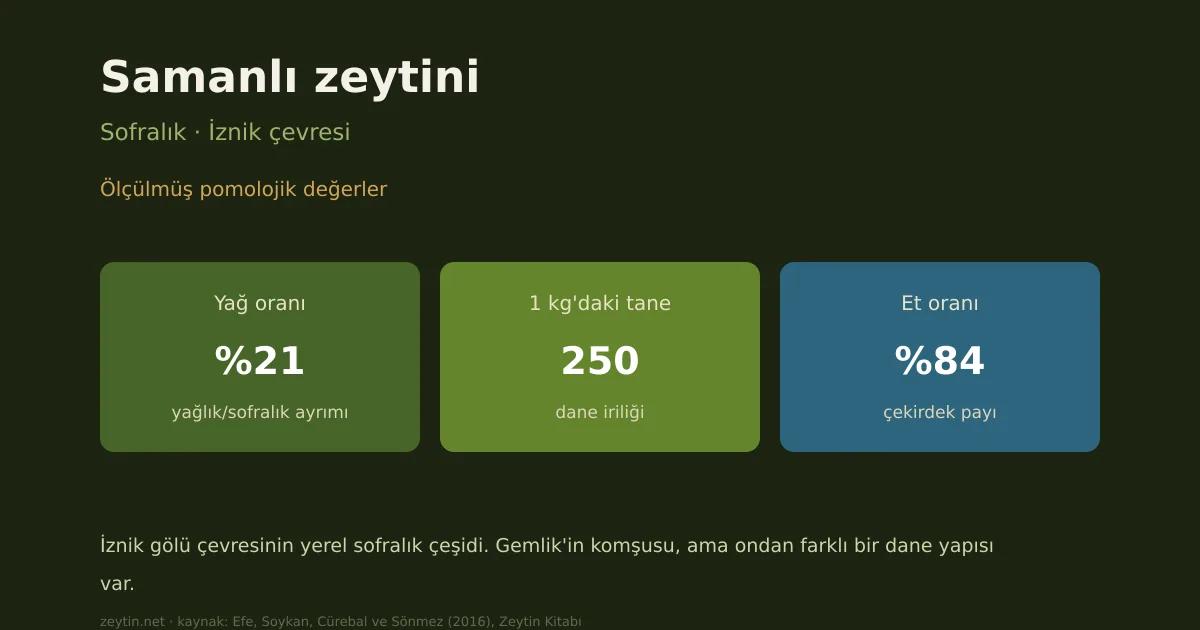
Samanlı olive: characteristics, oil content and growing areas
The local table variety around Lake İznik — Gemlik's neighbour, with a different fruit structure.
Article
Samanlı olive: characteristics, oil content and growing areas
The local table variety around Lake İznik — Gemlik's neighbour, with a different fruit structure.
 Article
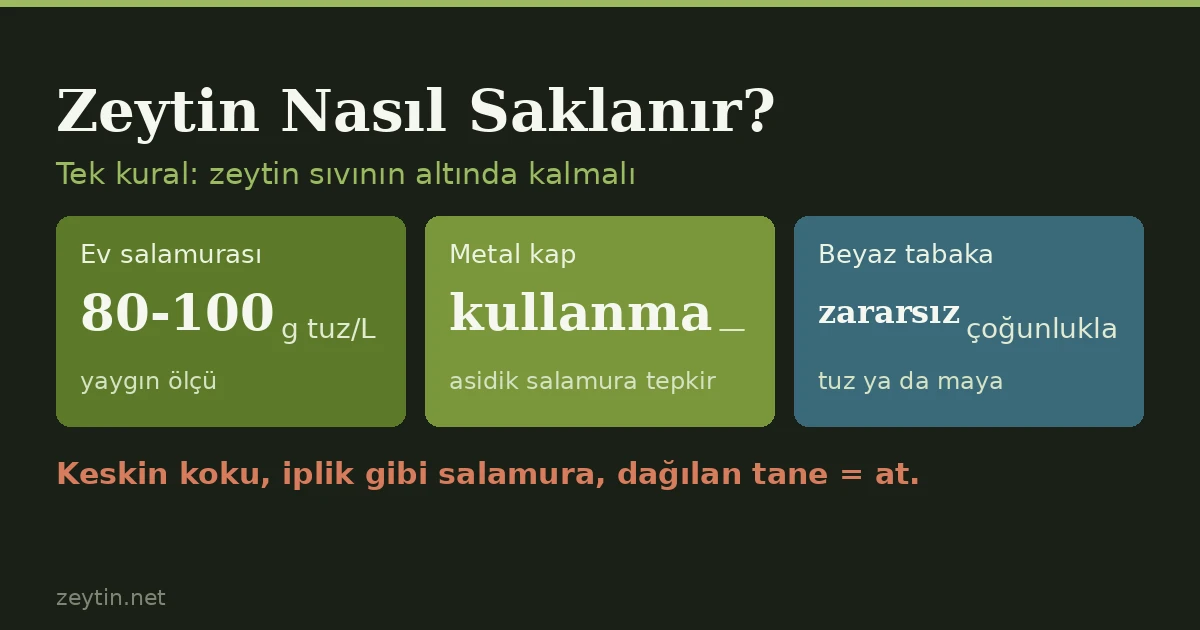
How to Store Olives: From an Opened Jar to a Winter Batch
How long does an opened jar last, what to do when the brine runs low, how to keep dry-cured olives? Why mould forms and what the white film actually is.
Article
How to Store Olives: From an Opened Jar to a Winter Batch
How long does an opened jar last, what to do when the brine runs low, how to keep dry-cured olives? Why mould forms and what the white film actually is.