The olive in scripture and folk belief: verses, hadiths and myths
The olive in scripture and folk narrative: what the sources actually say, and what is only tradition. Where there is no source, we say so.
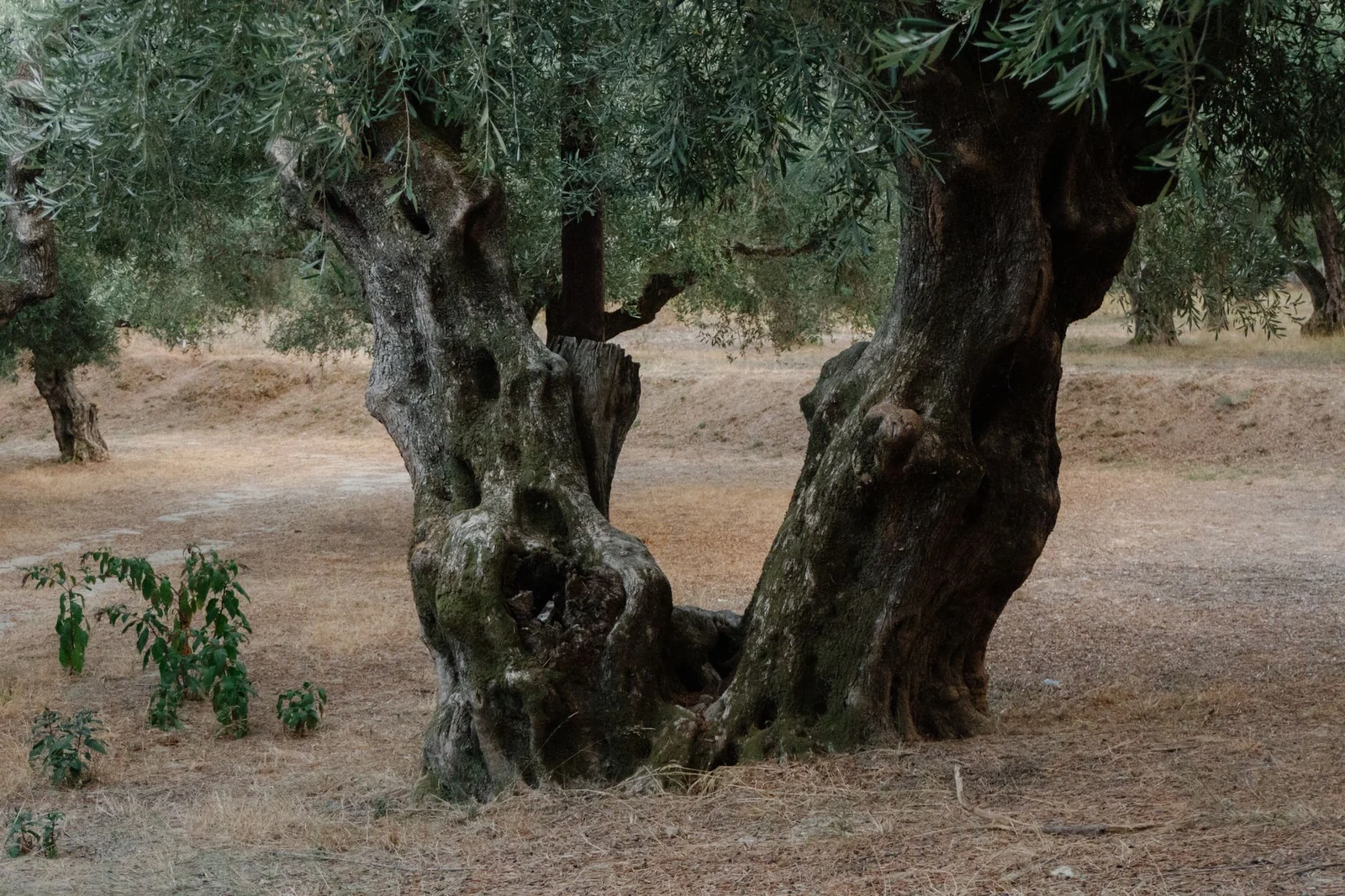
The olive is one of the most asked-about trees, and a large share of those questions concern faith: why it appears in the Qur'an, which hadiths mention it, where it stands in the Torah and the Bible, and whether the practices circulating among people have any source at all.
This article takes the questions one by one. The principle we follow is simple: where a verse or a hadith exists, we give it with its source; where one does not, we say so plainly. Confusing the two respects neither faith nor knowledge.
Which fruit did God swear by?
The fruits sworn by directly in the Qur'an are the fig and the olive. Sūrat al-Tīn opens with that oath:
t; "By the fig and the olive, and Mount Sinai, and this secure city — We have certainly created man in the best of stature."
t; — Sūrat al-Tīn, 1-4
The sura takes its name from it: al-tīn means fig.
Two of the four things sworn by are plants and two are places. Commentators do not treat that arrangement as accidental; the passage as a whole is read as a prelude to the perfection of man's creation.
Why did God swear by the olive?
There is no single settled answer; several readings sit side by side in the exegetical tradition. The reading foregrounded in the Turkish Directorate of Religious Affairs' commentary is geographical.
On that reading, fig and olive stand figuratively for the lands where these trees grow in abundance — the eastern Mediterranean, the region of Palestine and Syria. Read together with "Mount Sinai" and "this secure city" (Mecca), all four oaths point to the geographies where revelation descended: the regions of Jesus, of Moses and of Muhammad.
Another reading treats the fig and the olive as blessings, in terms of their nourishment and their many uses. A third group of commentators points to the durability and long life of both trees.
None of these cancels the others. What is certain is that the verse contains no instruction to consume, no quantity and no remedy. The oath is less about the fruit itself than about what it points to.
Where does the olive appear in the Qur'an?
The olive is named in several places. The principal ones:
| Sura and verse | Context |
|---|---|
| al-Tīn, 1 | The oath by the fig and the olive |
| al-Nūr, 35 | The Light Verse: a lamp lit from "a blessed olive tree" |
| al-An'ām, 99 | Olives and pomegranates among what rain brings forth |
| al-An'ām, 141 | Gardens, date palms, crops, "similar and dissimilar" olives and pomegranates |
| al-Naḥl, 11 | Crops, olives, date palms and grapes brought forth by rain |
| 'Abasa, 29 | Olives and date palms among what is grown for man |
| al-Mu'minūn, 20 | A tree growing on Sinai, "yielding oil and relish for eaters" |
In most of these the olive appears not on its own but within a list of blessings: one among the things rain brings forth. The emphasis is not on any special superiority of the olive but on the order of creation.
The verse that stands apart is al-Nūr 35 — among the most cited verses in Islamic art and mystical literature. There the olive tree is called "a blessed tree, neither of the east nor of the west", and its oil is described as so pure it would almost glow untouched by fire. That image has been read as a symbol for centuries.
The olive and olive oil in hadith
The best-known narration about olive oil is this:
t; "Eat olive oil and anoint yourselves with it, for it comes from a blessed tree."
The narration appears in al-Tirmidhī (Aṭ'ima 43), Ibn Māja (Aṭ'ima 43) and al-Dārimī (Aṭ'ima 20). Eating and applying to the skin are mentioned together; the dual use of olive oil as food and as a cosmetic is a practice thousands of years old in the region.
Some later compilations add phrases such as "it cures seventy ailments". These additions are found not in the principal hadith collections but in later compendia, and they do not carry the same weight in hadith methodology. Most accounts that present olive oil as a medicine rest on these additions.
How many olives did the Prophet eat in the morning?
The question is searched often, and the honest answer is this: no such number appears in the sound hadith collections.
The narration recommending that olive oil be eaten and applied is given above. But there is no accepted narration stating a specific number of olives eaten in the morning. Figures like "seven" that circulate online are modern accounts repeated without a source.
The absence of a number does not diminish the olive's place at the table. It only means an account that does not exist should not be passed on as though it did.
What is the "seven olives and one fig miracle"?
It is a practice that spread on social media in recent years: eating seven olives and one dried fig on an empty stomach in the morning. The account is usually grounded in Sūrat al-Tīn, and effects from cell renewal to immunity are claimed for it.
The matter has to be separated into two.
The religious side: it is true that the fig and the olive are sworn by in Sūrat al-Tīn. But the verse contains no number, no time of day and no instruction to consume. The "seven olives and one fig" formula has no counterpart in the Qur'an or in the reliable hadith collections. It is a practice constructed later from the verse — a contemporary health trend, not a religious injunction.
The nutritional side: seven olives and one dried fig come to roughly 55-60 calories, 3 grams of fat, 2-3 grams of fibre and around 200 mg of sodium. That is a genuinely good snack; fibre and monounsaturated fat together are filling. But there is no approved basis for claims of "speeding up metabolism" or "renewing cells".
In short: harmless, even a pleasant habit. Neither a miracle nor a sunna.
Why are olives and figs planted side by side?
This question has both a religious answer and a purely agricultural one, and they do not exclude each other.
The religious side: their being named together in Sūrat al-Tīn has led people to think of the two trees together. Many growers in Anatolia who plant figs alongside olives describe it as a tradition of blessing.
The agricultural side: both are trees of the Mediterranean climate. They want similar temperature, sun and soil; both tolerate drought and dislike excess water. Growing in the same orchard is natural — they are planted together because they like the same conditions.
No proven interaction between fig and olive is known in either direction. They stand side by side out of compatibility, not partnership.
Which tree do jinn like most?
The question comes up often in search engines, and the honest answer is short: no such information exists in the Qur'an or in the reliable hadith collections.
No tree — not the olive, not the fig, not any other — is characterised in religious sources as "the tree jinn like". Such expressions belong to folk narratives, local beliefs and, in recent years, internet content.
The beliefs that gather around old and large trees in Anatolia and in many other cultures are anthropologically interesting and worth studying. But presenting them as religious knowledge is wrong. Reporting a folk narrative as a folk narrative is not disrespect; it is giving it its proper place.
The olive in the Torah
In the Jewish scriptures the olive is not merely a plant but the material of holiness. The principal places it appears:
| Book and chapter | Context |
|---|---|
| Genesis 8:11 | The dove returns with a freshly plucked olive leaf after the flood — the sign that the waters had receded |
| Exodus 27:20 | The command for "pure oil of pressed olives" to keep the lamp burning continually |
| Exodus 30:22-25 | The composition of the holy anointing oil: spices and olive oil |
| Leviticus 24:2 | The same instruction on the purity of the lamp oil, repeated |
| Deuteronomy 8:8 | The olive among the seven species of the promised land — wheat, barley, grapes, figs, pomegranates, olives, honey |
| Psalms 52:8 | "I am like a green olive tree in the house of God" — an image of permanence |
| Zechariah 4:3 | The vision of two olive trees beside the lampstand |
The recurring theme here is light. The lamps of the tabernacle and later of the Temple in Jerusalem burn olive oil; Hanukkah turns on precisely that oil. The oil poured on the heads of anointed kings is olive oil too.
The olive leaf in the flood narrative is the origin of the peace symbol still in use today. The two olive branches on the United Nations flag continue a three-thousand-year-old association.
The olive in the Bible
In the New Testament the olive sits inside both the geography and the ritual.
| Book and chapter | Context |
|---|---|
| Matthew 21:1 · 26:30 | The Mount of Olives — the entry into Jerusalem and the last night |
| Matthew 26:36 | The garden of Gethsemane; the name is Aramaic Gat Shemanim, "oil press" |
| Luke 10:34 | The Good Samaritan pours oil and wine on the wounds — oil as medicine |
| Mark 6:13 · James 5:14 | Anointing the sick with oil; the origin of the rite still practised |
| Matthew 25:1-13 | The parable of the ten virgins: setting aside oil for the lamps |
| Romans 11:17-24 | The image of a wild olive branch grafted onto the cultivated olive |
Two details stand out.
Gethsemane is an olive grove. The place where one of Christianity's heaviest scenes unfolds takes its name from the oil press that stood there. The night of agony happens, quite literally, in an olive garden.
The word "Messiah" is about oil. Hebrew mashiach and Greek christos both mean "anointed". The root of the title at the centre of Christianity is the olive oil poured on a head. It is rare for a product to enter a religion's naming so deeply.
What the three scriptures share
The olive appears in the texts of all three Abrahamic faiths, and that is no accident: all three were born in the country where the olive grows.
The shared themes run close together:
- Light. The Temple lamp, the lamp of the Light Verse, the Hanukkah candles — the fuel is olive oil in each.
- Consecration. Anointing is done with olive oil in both Judaism and Christianity.
- Blessing. The olive is counted among the gifts of the land given; it appears in the Qur'an's lists of blessings too.
- Healing. The Good Samaritan's oil; the hadith's "eat it and anoint yourselves with it".
- Peace and continuity. The branch brought after the flood; the blessed tree "neither of the east nor of the west".
The differences matter too. In the Qur'an the olive is named in an oath and called blessed, but is not described as a ritual material. In the Torah and the Bible it is directly a substance of rite: it lights the lamp, consecrates the king, anoints the sick.
The same tree, named for three different offices in three texts — and valued in all of them.
Summary
- The fruits sworn by in the Qur'an are the fig and the olive (al-Tīn, 1).
- The oath is read in commentary chiefly as pointing to the geographies of revelation.
- The olive appears in other verses too; the best known is al-Nūr 35.
- Eating olive oil and anointing with it is narrated in al-Tirmidhī, Ibn Māja and al-Dārimī.
- No sound narration gives a number of olives eaten in the morning.
- "Seven olives and one fig" is a modern trend inspired by a verse, not a religious injunction.
- "The tree jinn like" has no counterpart in religious sources; it is folk narrative.
- In the Torah olive oil lights the Temple lamp and consecrates kings (Exodus 27:20, 30:22-25).
- In the Bible Gethsemane means "oil press", and the root of "Messiah" means "anointed".
- The olive as a symbol of peace is a shared Mediterranean inheritance, not the property of one faith.
Related reading: The olive in religions · Why the olive branch means peace · The history of the olive
One rating per visitor; you can change yours at any time. Ratings are real reader votes — no seeded or default scores.
Related
 Article
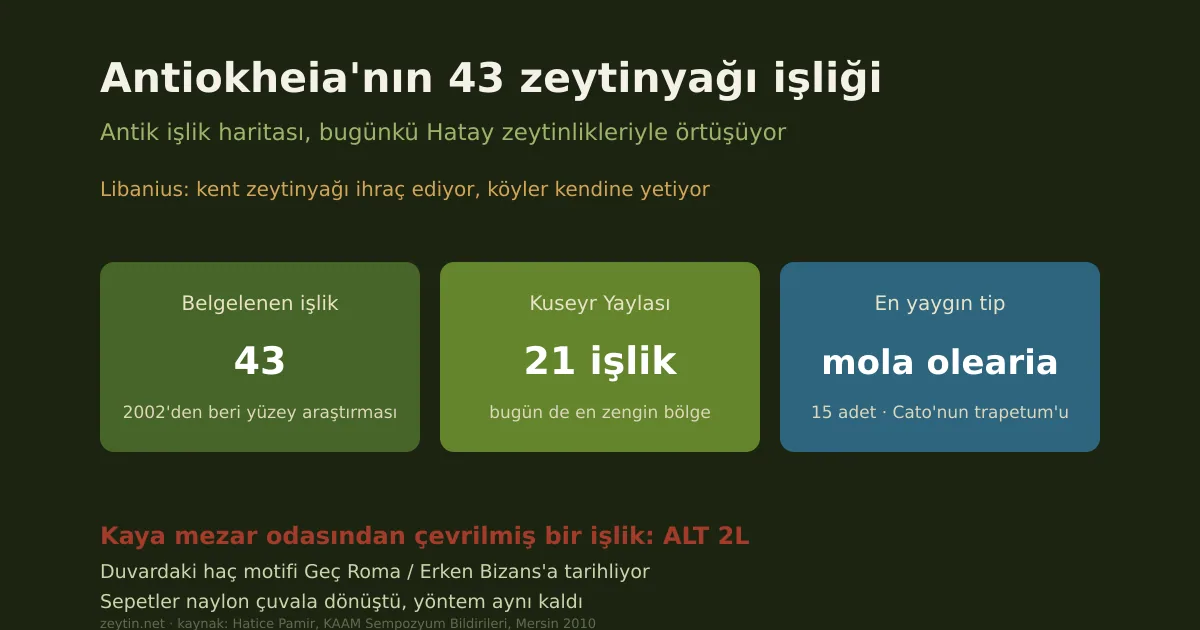
The 43 olive oil workshops of Antiokheia: two thousand years of continuity in Hatay
Forty-three ancient workshops documented across Antakya, Altınözü, Yayladağı and Samandağ map onto today's groves. Twenty-one sit on the Kuseyr Plateau — still Hatay's richest olive district.
Article
The 43 olive oil workshops of Antiokheia: two thousand years of continuity in Hatay
Forty-three ancient workshops documented across Antakya, Altınözü, Yayladağı and Samandağ map onto today's groves. Twenty-one sit on the Kuseyr Plateau — still Hatay's richest olive district.
 Article
History of the Olive Tree
From remains dated to 6000 BC to modern plantations: the olive tree's journey alongside humanity, and one of farming's longest stories.
Article
History of the Olive Tree
From remains dated to 6000 BC to modern plantations: the olive tree's journey alongside humanity, and one of farming's longest stories.
 Article
Gemlik-Orhangazi Olive Festival, 10-13 September: what the registration says about the name
Gemlik and Orhangazi are holding their olive festivals together for the first time, on 10-13 September 2026. Dropping “Gemlik Olive” from the name drew criticism. The registered area under record no 76 covers four districts: Gemlik, İznik, Orhangazi and Mudanya.
Article
Gemlik-Orhangazi Olive Festival, 10-13 September: what the registration says about the name
Gemlik and Orhangazi are holding their olive festivals together for the first time, on 10-13 September 2026. Dropping “Gemlik Olive” from the name drew criticism. The registered area under record no 76 covers four districts: Gemlik, İznik, Orhangazi and Mudanya.
 Article
The Olive Oil Trade in the Ancient World
Amphorae, sea routes and a Roman hill made of broken jars: olive oil was one of the Mediterranean's first large-scale commodities.
Article
The Olive Oil Trade in the Ancient World
Amphorae, sea routes and a Roman hill made of broken jars: olive oil was one of the Mediterranean's first large-scale commodities.