🐛 Plant Protection
Olive Pests and Diseases
Olive pests and olive tree diseases: fruit fly, moth, black scale, peacock spot, olive knot. Identification, thresholds and integrated management.
The biggest crop losses in olives come not from disease but from a pest seen too late. The articles in this section follow the integrated pest management instruction of Türkiye's Ministry of Agriculture and Forestry.
 Article
The olive pest calendar and intervention thresholds
Month by month: which pest is at which stage, and when to count. Fly infestation thresholds, black scale shoot counts, and the three regional programmes for peacock spot.
Article
The olive pest calendar and intervention thresholds
Month by month: which pest is at which stage, and when to count. Fly infestation thresholds, black scale shoot counts, and the three regional programmes for peacock spot.
 Article
Herbicide-free weed management in olive groves: from cover crops to autonomous robots
Managing weeds rather than eliminating them: cover crops, mulch, grazing, flame weeding and AI-assisted precision farming — five tools and a practical order for combining them.
Article
Herbicide-free weed management in olive groves: from cover crops to autonomous robots
Managing weeds rather than eliminating them: cover crops, mulch, grazing, flame weeding and AI-assisted precision farming — five tools and a practical order for combining them.
 Article
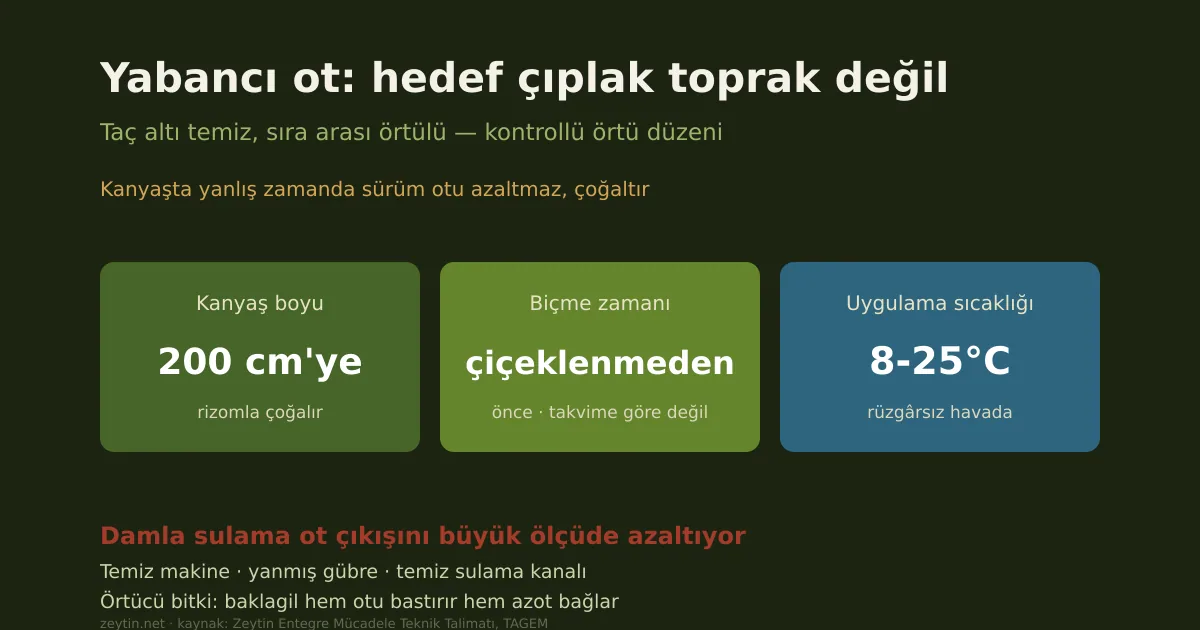
Weeds in the olive grove: bare soil is not the goal
Johnson grass, Bermuda grass and fat hen. With perennials, ill-timed tillage spreads them while mowing stops the seed. Clean under the canopy, covered between rows.
Article
Weeds in the olive grove: bare soil is not the goal
Johnson grass, Bermuda grass and fat hen. With perennials, ill-timed tillage spreads them while mowing stops the seed. Clean under the canopy, covered between rows.
 Article
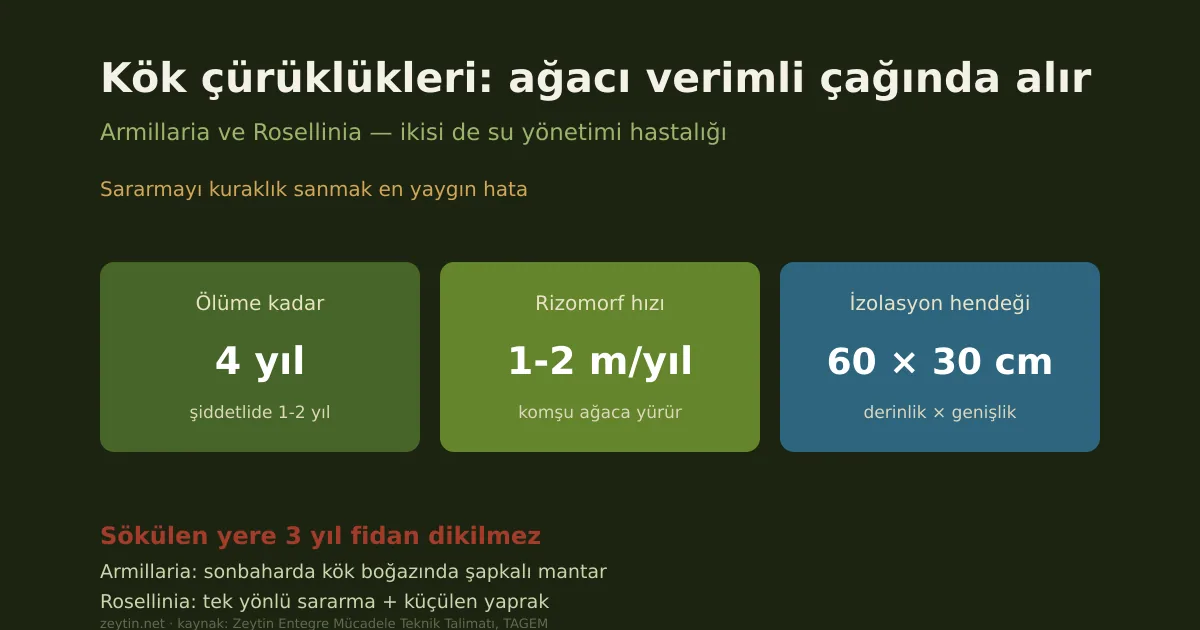
Olive root rots: Armillaria and Rosellinia
Mistaking the yellowing for drought is the common error. Two soil-borne fungi kill the tree in its prime; there is no chemical cure — the work is water management and isolation.
Article
Olive root rots: Armillaria and Rosellinia
Mistaking the yellowing for drought is the common error. Two soil-borne fungi kill the tree in its prime; there is no chemical cure — the work is water management and isolation.
 Article
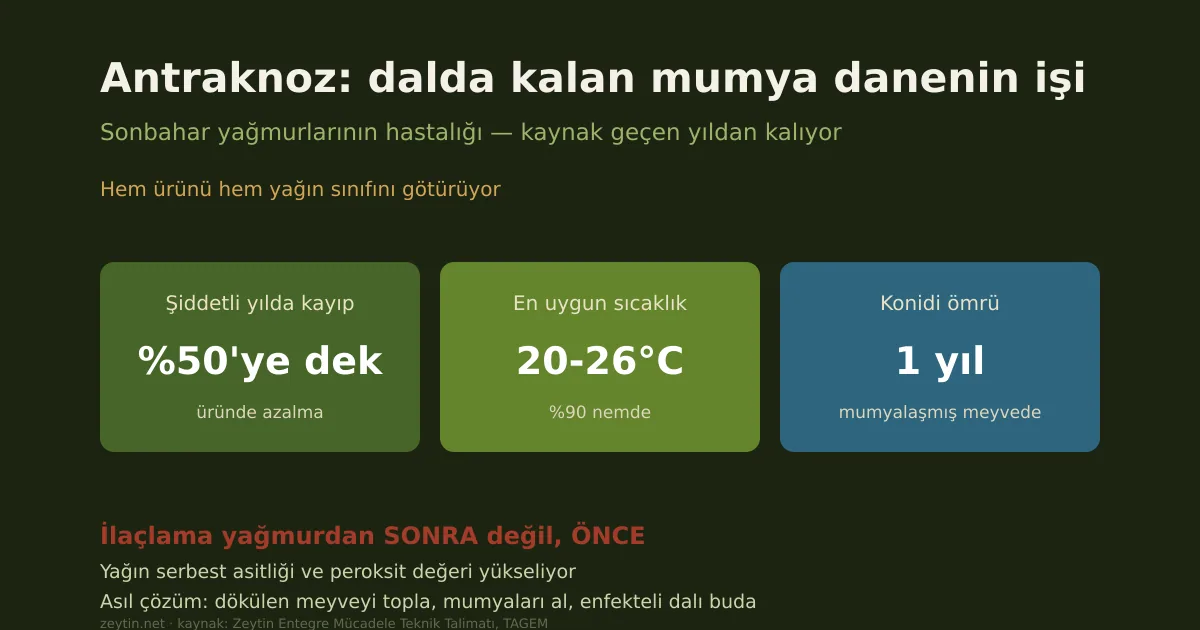
Olive anthracnose: the disease of the mummified fruit left on the branch
Up to 50% crop loss in bad years. The source is last year's mummified fruit still on the branch, and the spray goes on before the autumn rains, not after.
Article
Olive anthracnose: the disease of the mummified fruit left on the branch
Up to 50% crop loss in bad years. The source is last year's mummified fruit still on the branch, and the spray goes on before the autumn rains, not after.
 Article
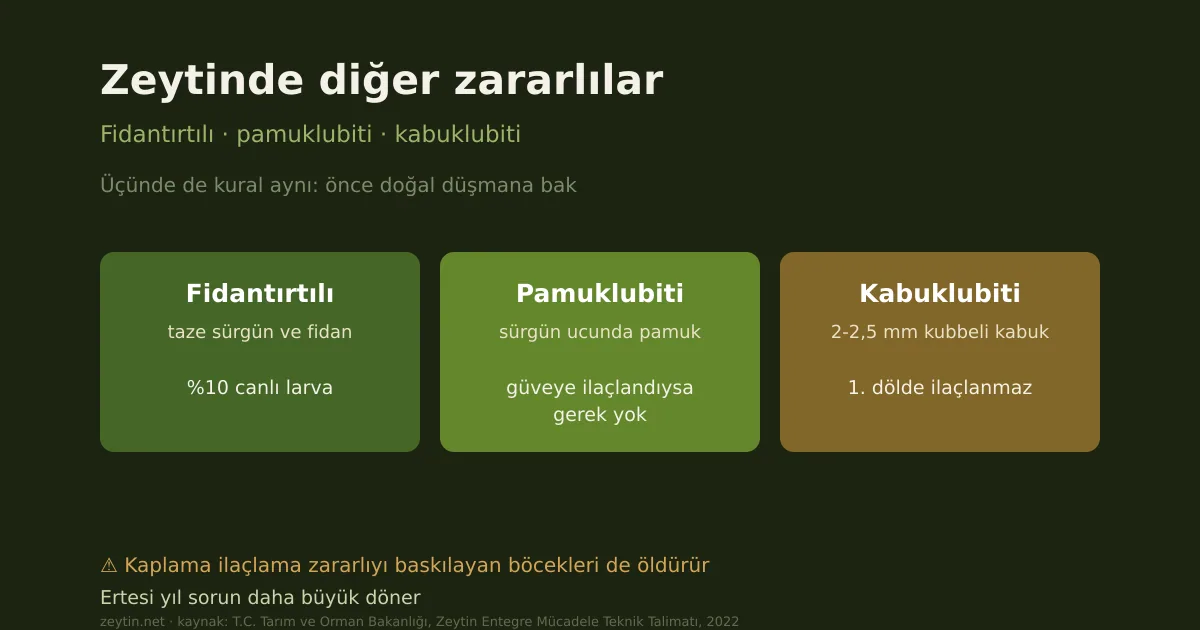
Other olive pests: jasmine moth, psyllid and olive scale
Three olive pests overshadowed by the fruit fly: the jasmine moth on tender shoots, the cottony psyllid, and olive scale.
Article
Other olive pests: jasmine moth, psyllid and olive scale
Three olive pests overshadowed by the fruit fly: the jasmine moth on tender shoots, the cottony psyllid, and olive scale.
 Article
Olive black scale and sooty mould: the H on its back
The olive pest behind sooty mould: a scale with an H on its back. Losses of 60-70%; if parasitism tops 50%, do not spray.
Article
Olive black scale and sooty mould: the H on its back
The olive pest behind sooty mould: a scale with an H on its back. Losses of 60-70%; if parasitism tops 50%, do not spray.
 Article
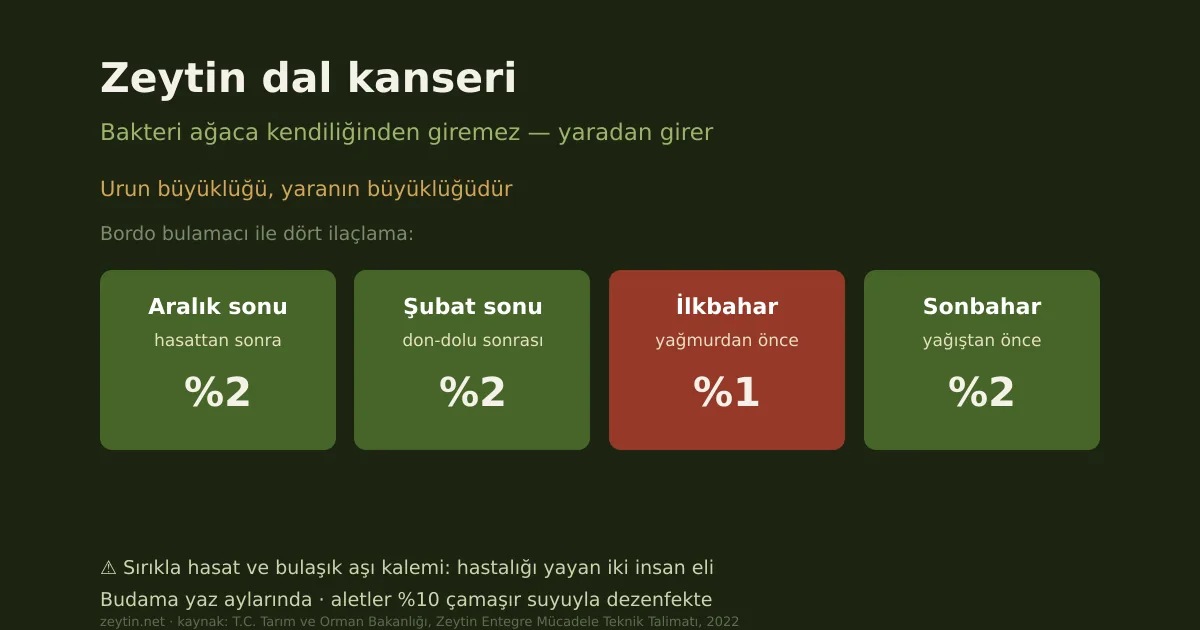
Olive knot: galls, warts and a bacterium that enters through wounds
The bacterial canker among olive tree diseases that enters through wounds: galls and warts. Pole harvest and pruning errors spread it.
Article
Olive knot: galls, warts and a bacterium that enters through wounds
The bacterial canker among olive tree diseases that enters through wounds: galls and warts. Pole harvest and pruning errors spread it.
 Article
Verticillium wilt: the disease that kills the tree and has no cure
The olive tree disease that kills: it survives over 10 years in the soil, blocks the vessels, and has no effective chemical control.
Article
Verticillium wilt: the disease that kills the tree and has no cure
The olive tree disease that kills: it survives over 10 years in the soil, blocks the vessels, and has no effective chemical control.
 Article
The olive moth: three generations, three kinds of damage
The olive pest with three generations: it winters in the leaf, eats the flowers, enters the fruit. One larva can take 30-40 buds.
Article
The olive moth: three generations, three kinds of damage
The olive pest with three generations: it winters in the leaf, eats the flowers, enters the fruit. One larva can take 30-40 buds.
 Article
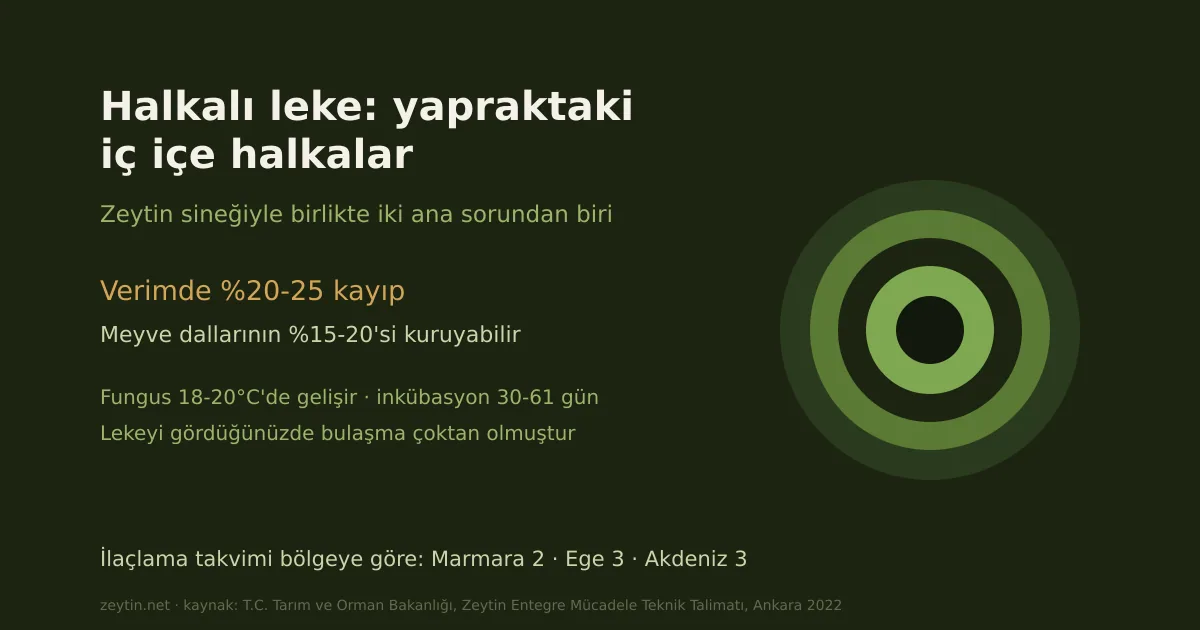
Olive peacock spot: symptoms and a region-by-region spray calendar
The commonest of olive tree diseases: concentric rings on the leaf, shedding, a shrubby tree. Yield falls 20-25%; spray timing varies by region.
Article
Olive peacock spot: symptoms and a region-by-region spray calendar
The commonest of olive tree diseases: concentric rings on the leaf, shedding, a shrubby tree. Yield falls 20-25%; spray timing varies by region.
 Article
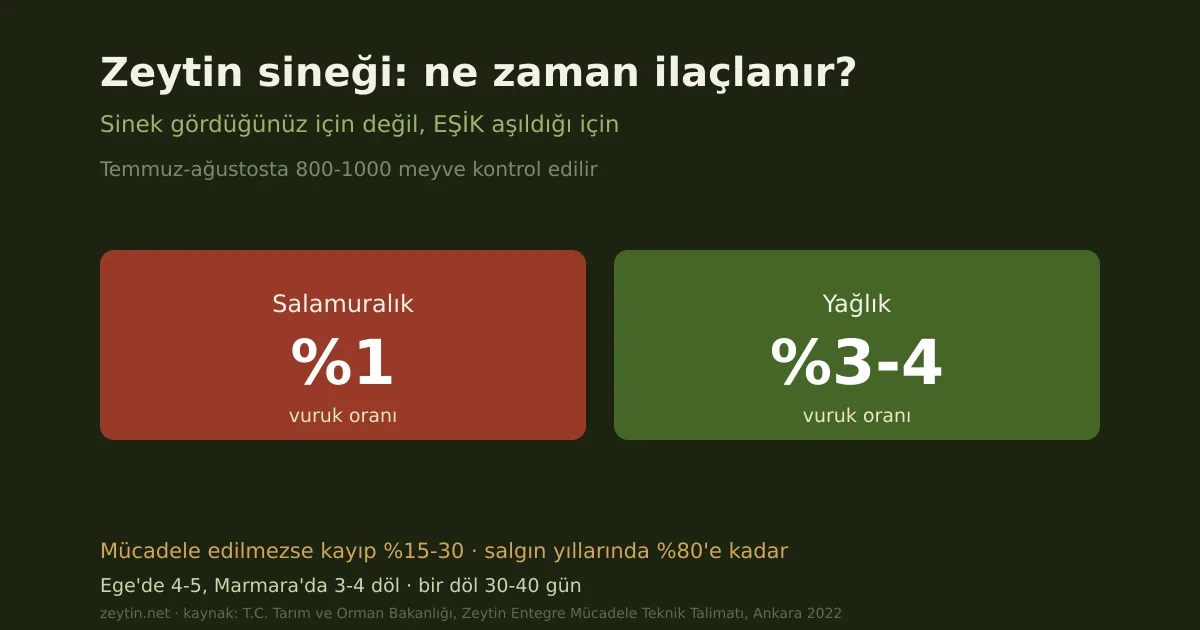
The olive fruit fly: sting thresholds, traps and a control calendar
The olive pest that costs most: losses of 15-30% if left alone. Sting threshold 1% for table varieties, 3-4% for oil.
Article
The olive fruit fly: sting thresholds, traps and a control calendar
The olive pest that costs most: losses of 15-30% if left alone. Sting threshold 1% for table varieties, 3-4% for oil.