How to Store Olive Oil
Light, heat, air and time — the four enemies of olive oil. Why the bottle next to your stove is in the worst possible place.
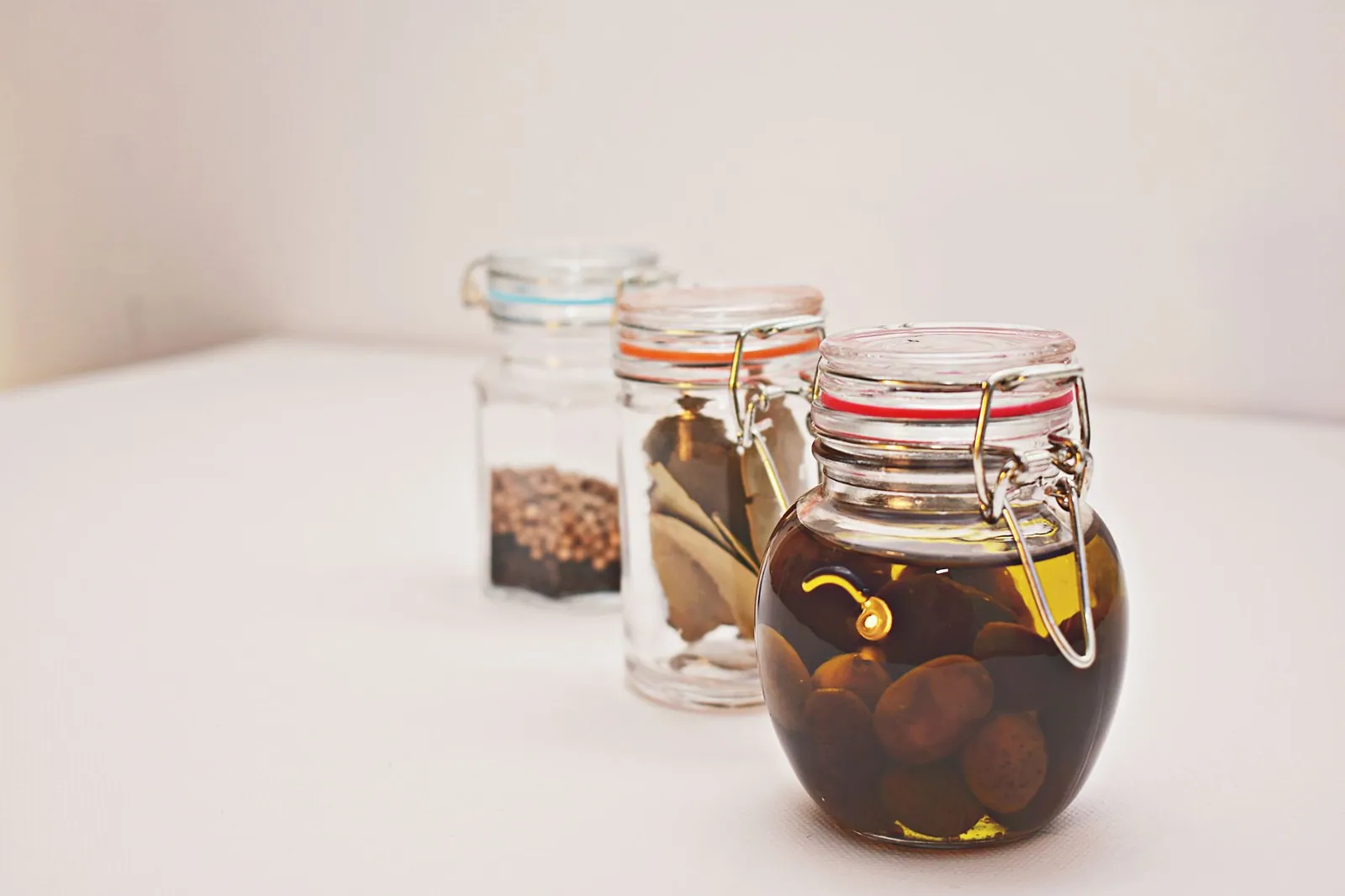
Olive oil is a living product; it starts to degrade the moment the bottle is opened. Stored badly, a fine oil can become an ordinary one within months.
The four enemies
Light. Direct sunlight — even kitchen lighting — accelerates oxidation through the chlorophyll in the oil. Oil sold in clear bottles has already suffered during its time on the shelf.
Heat. Every 10°C rise roughly doubles the rate of degradation. The ideal range is 14-18°C.
Air (oxygen). Every time the bottle is opened, oxygen enters. In a half-empty bottle, the air above the oil speeds up spoilage.
Time. Olive oil does not improve with age. The first 12-18 months after harvest are its best.
Storing it properly
- Container: dark glass or tin. Plastic is unsuitable for long storage.
- Place: a closed, cool, dark cupboard. Beside the stove is the worst spot — the hottest and brightest corner of the kitchen.
- Cap: close it tightly after every use.
- If you buy a large tin: keep it somewhere cool and decant into a small dark bottle for daily use, so the large container is not opened constantly.
Should it go in the fridge?
It can, but it need not. In cold, oil turns cloudy and white granules form; this is not spoilage but the natural waxes solidifying. It returns to normal at room temperature. A cool pantry is enough.
How long does it keep?
- Unopened, well stored: up to 18 months from harvest
- Once opened: best used within 2-3 months
How do you know it has gone off?
Smell is the first warning: if the fresh grassy aroma has been replaced by old paint, putty or stale walnuts, the oil is rancid. If pungency and fruitiness are gone, leaving a flat greasy taste, there is no recovering it.
Rancid oil is not toxic, but it ruins flavour and has lost its valuable compounds. Better to discard it than to use it even for frying.
Which container?
- Tin: blocks light completely, best for long storage. Once opened air gets in, so decant large tins into small bottles.
- Dark glass (green, brown): blocks most light and holds no odour. Ideal for daily use.
- Clear glass: looks attractive but offers no protection. If you buy it, keep it in a dark cupboard.
- Plastic: fine for short-term use; over time substances can migrate from the plastic, and its oxygen permeability is high.
- Ceramic/earthenware: decorative, but unless glazed it absorbs oil, which then goes rancid inside the wall.
The right spot in the kitchen
The three worst places for olive oil: next to the stove, on top of the fridge, on a windowsill. All are hot or bright.
The right place is inside a cupboard, ideally behind a door away from the stove. If you have a pantry, keep the large tin there and a daily bottle in the cupboard.
Is oil that solidifies in winter spoiled?
No. Around 5-10°C, white granules and cloudiness appear; these are natural waxes and saturated fatty acids solidifying. At room temperature the oil returns to its former clarity, having lost nothing.
This behaviour is in fact a hint of authenticity — a fully refined oil reacts later and differently to cold. It is not a reliable test, however, and proves nothing on its own.
Buying loose oil
The main risk with oil bought by the drum from a market or producer is storage: you cannot know when it was pressed, in what it has been sitting, or whether it has seen light.
If you do buy loose oil:
- Always check the smell (no paint, mould or sourness)
- Ask when it was pressed
- Decant into dark glass or tin as soon as you get home
- Buy only what you can use quickly
How fast should it be finished?
A person consumes 20-30 ml of olive oil a day on average. For a family of four, a 5-litre tin lasts about two months — which is the ideal window.
In a household that uses little, a 5-litre tin means the oil stays open for six months. In that case a smaller container is the better choice even at a higher price per litre: oil that spoils before it is finished costs more than expensive oil.
One rating per visitor; you can change yours at any time. Ratings are real reader votes — no seeded or default scores.
Related
 Article
Erdek Kapıdağ Olive Oil: an oil whose grade changes in dry years
Registered in 2024. The certificate admits something rare: in dry periods the oil can fall from extra virgin to virgin grade.
Article
Erdek Kapıdağ Olive Oil: an oil whose grade changes in dry years
Registered in 2024. The certificate admits something rare: in dry periods the oil can fall from extra virgin to virgin grade.
 Article
Burhaniye Olive Oil: two thousand years attested by the Adramytteion excavations
Registered in 2021. The certificate grounds two thousand years of olive growing in the excavation of an ancient city, and sets separate sensory thresholds for early and ripe harvest.
Article
Burhaniye Olive Oil: two thousand years attested by the Adramytteion excavations
Registered in 2021. The certificate grounds two thousand years of olive growing in the excavation of an ancient city, and sets separate sensory thresholds for early and ripe harvest.
 Article
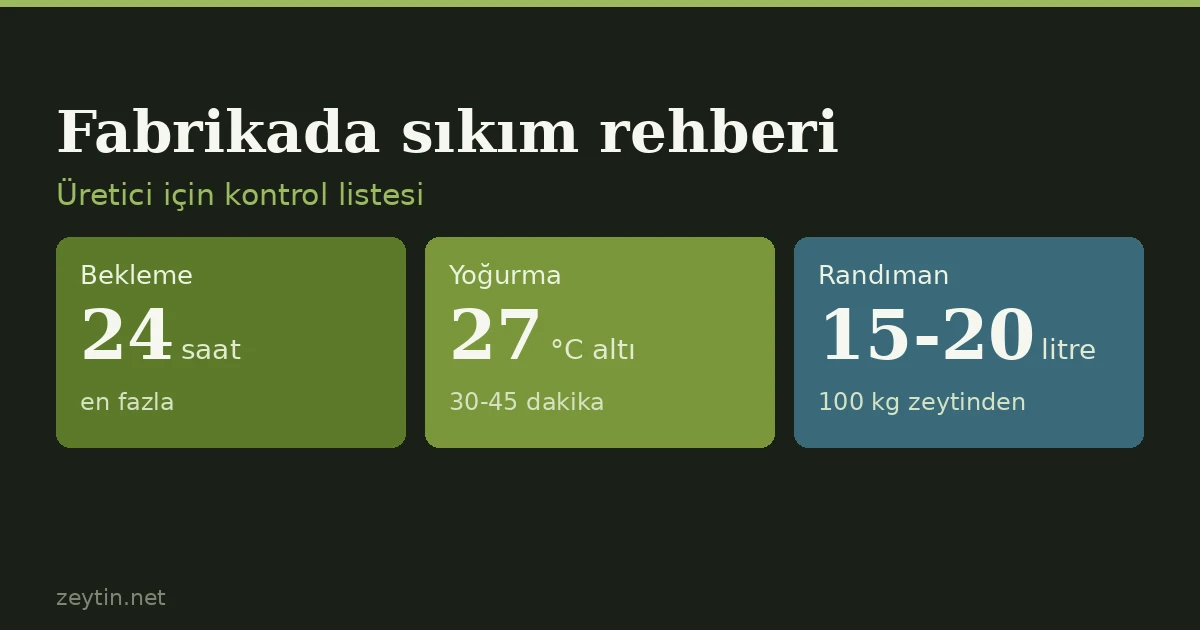
What to check when having your olives pressed at a mill: a grower's checklist
The same olives can give a very different oil when pressed at a different mill under different conditions. From what to do before bringing olives in to two-phase versus three-phase systems, kneading temperature, yield, milling fees and the questions to ask when collecting the oil, here is what a grower having olives pressed needs to know.
Article
What to check when having your olives pressed at a mill: a grower's checklist
The same olives can give a very different oil when pressed at a different mill under different conditions. From what to do before bringing olives in to two-phase versus three-phase systems, kneading temperature, yield, milling fees and the questions to ask when collecting the oil, here is what a grower having olives pressed needs to know.
 Article
Ceyhan Olive Oil: harvest defined as “no green fruit left on the tree”
Registered in 2022. The certificate defines harvest not by calendar but by the state of the tree: when no green fruit remains and oil content peaks.
Article
Ceyhan Olive Oil: harvest defined as “no green fruit left on the tree”
Registered in 2022. The certificate defines harvest not by calendar but by the state of the tree: when no green fruit remains and oil content peaks.