Eğriburun olive: characteristics, oil content and growing areas
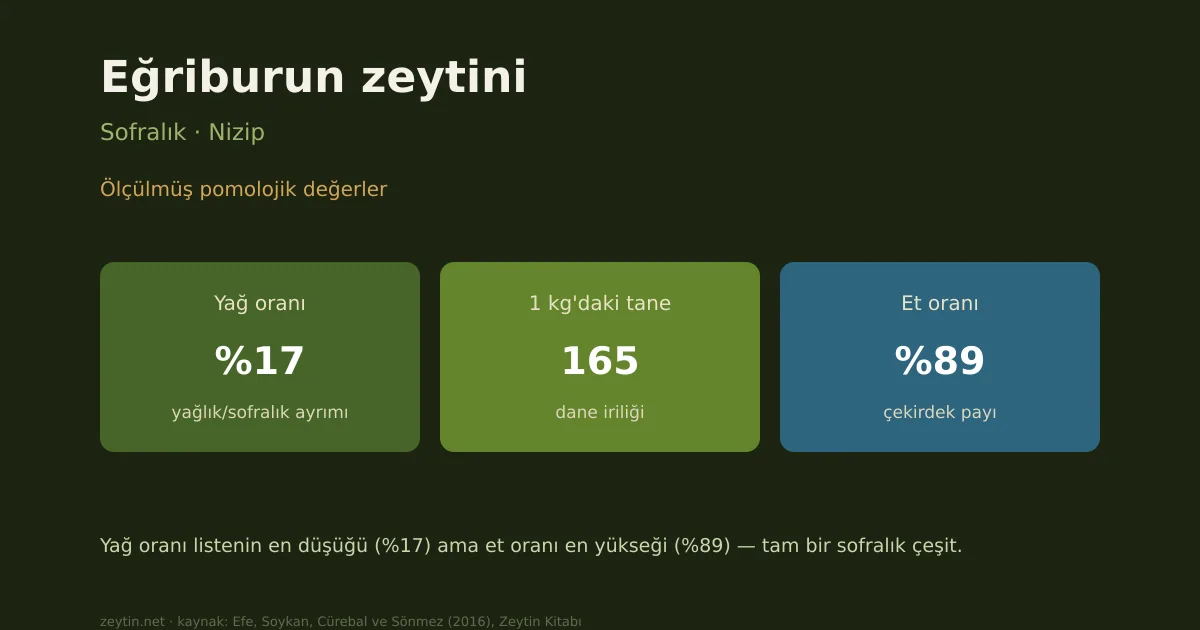
The lowest oil content on the list (17%) but the highest flesh ratio (89%) — a pure table variety.
Eğriburun holds both ends of the list at once: the lowest oil content (17%) and the highest flesh ratio (89%). It grows around Nizip and is purely a table olive.
Eğriburun in numbers
| Oil content | above 22% |
| Fruits per kilo | 390 |
| Flesh ratio | 86% |
| Use | Table |
| Main areas | Nizip |
Source: Efe, Soykan, Cürebal and Sönmez (2016), Zeytin Kitabı. Fields the source leaves blank are shown as "—"; nothing has been estimated.
Two Eğriburuns
The inventory records two separate types under the same name, and they go to different uses:
| Type | Oil | Flesh | Area | Use |
|---|---|---|---|---|
| Eğriburun (Nizip) | 22%+ | 86% | Gaziantep | table |
| Eğriburun (Tatayn) | 22%+ | 88% | Şanlıurfa | oil + table |
Although they fall in the same oil class, their flesh ratios differ: the Tatayn type is higher at 88% and is used for both purposes. When buying trees, ask which type.
This is a common problem in Turkish cultivar naming: Halhalı appears in three forms, and Memeli is called “Kırma” in some districts.
Two cultivars from Nizip
Nizip is a district known for its olive growing, and it has given its name to two separate cultivars: Eğriburun (Nizip) and Nizip Yağlık.
The second accounts for 2% of Türkiye's olive trees and proved self-fertile in trials in the GAP region, setting 17.52% of fruit on self-pollination. That is a property which removes the need for a pollinator in the planting plan.
The same measurements have not been published for Eğriburun; no verified data on the cultivar's pollination behaviour was found.
The cultivar landscape of the south-east
South-eastern Anatolia is Türkiye's second centre of gravity in olive growing after the Aegean. The cultivars grown there: Eğriburun, Halhalı, Kalem Bezi, Kan Çelebi, Nizip Yağlık, Kilis Yağlık and Yağ Çelebi.
Published pomological measurements are limited for most of these. The region also holds many unnamed local genotypes, as studies in Mardin and Şırnak show.
Where it stands among measured cultivars
Its position on each axis is shown live in the comparison strip on this page, against every cultivar with a published figure. For the full ranking — and how that ranking is built — see olive variety rankings.
In short
Eğriburun is the exception that stayed a table olive within the southeast's oil-dominated variety mix. In the same region Kilis Yağlık gives 31%, Kalem Bezi 31% and Nizip Yağlık 27%, while Eğriburun stops at 17% — yet it beats them all on flesh.
It shows there is no "good" or "bad" variety: the same number is an advantage or a drawback depending on what you are growing for.
Where it stands among measured varieties
çeşit sayfası
çeşit sayfası
Zeytin Kitabı — Efe, Soykan, Cürebal, Sönmez (2016) s.37-80
Zeytin Kitabı — Efe, Soykan, Cürebal, Sönmez (2016) s.37-80
Zeytin Kitabı — Efe, Soykan, Cürebal, Sönmez (2016) s.37-80
Values are those published on each variety's own page; the comparison covers only varieties with a measured figure, so it is a comparison of what is known — not of every Turkish variety. See the full ranking and how it is built →
One rating per visitor; you can change yours at any time. Ratings are real reader votes — no seeded or default scores.
Related
 Article
The Çilli olive: large fruit, low chilling requirement
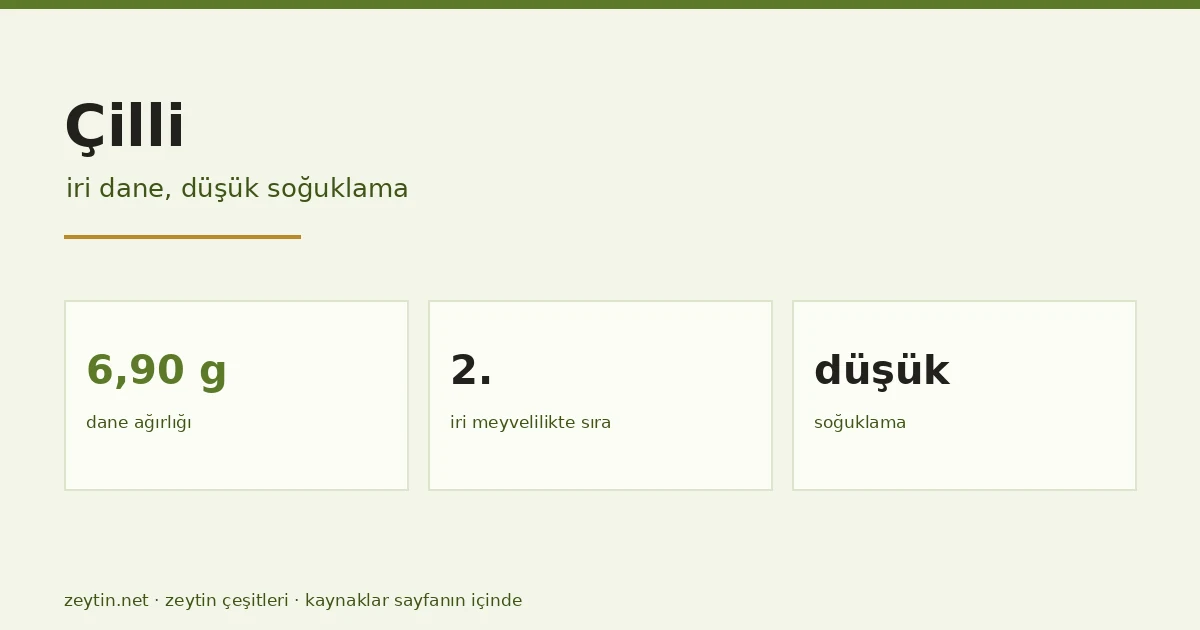
At 6.90 g it ranks among the large-fruited cultivars, and sits in the low chilling-requirement group — second only to Adana Topağı.
Article
The Çilli olive: large fruit, low chilling requirement
At 6.90 g it ranks among the large-fruited cultivars, and sits in the low chilling-requirement group — second only to Adana Topağı.
 Article
Yağ Çelebi olive: characteristics, oil content and growing areas
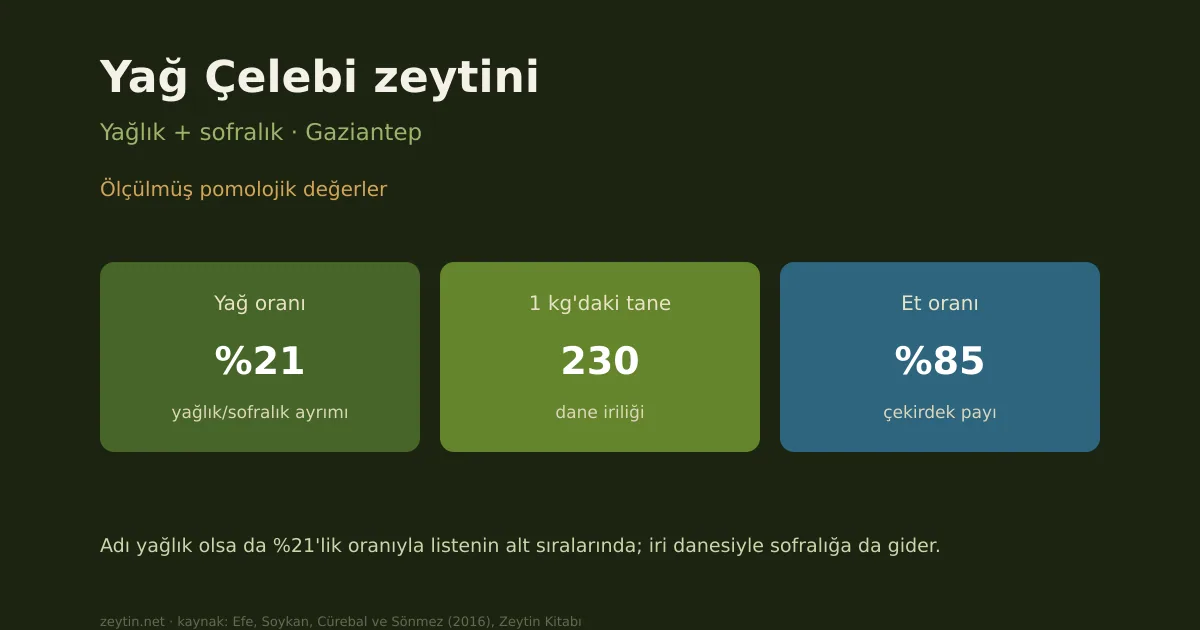
Despite the name, its 21% oil puts it low on the list; its large fruit also serves the table.
Article
Yağ Çelebi olive: characteristics, oil content and growing areas
Despite the name, its 21% oil puts it low on the list; its large fruit also serves the table.
 Article
Hojiblanca olive: Spain's oil and table variety
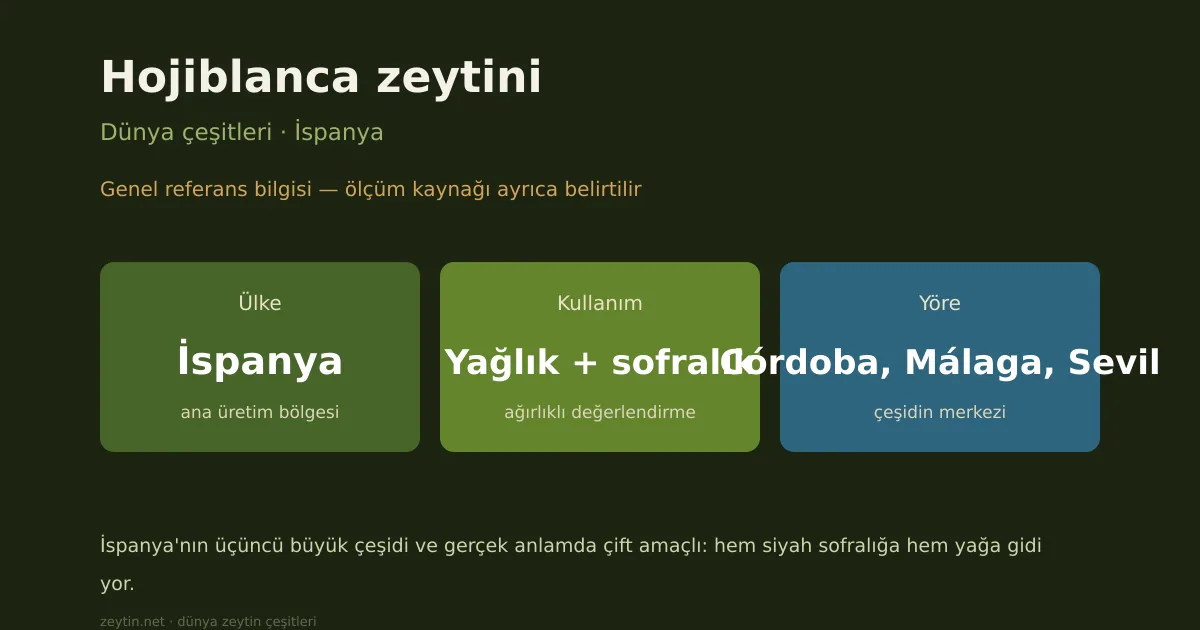
Spain's third-largest variety and genuinely dual-purpose: it goes to black table olives and to oil alike.
Article
Hojiblanca olive: Spain's oil and table variety
Spain's third-largest variety and genuinely dual-purpose: it goes to black table olives and to oil alike.
 Article
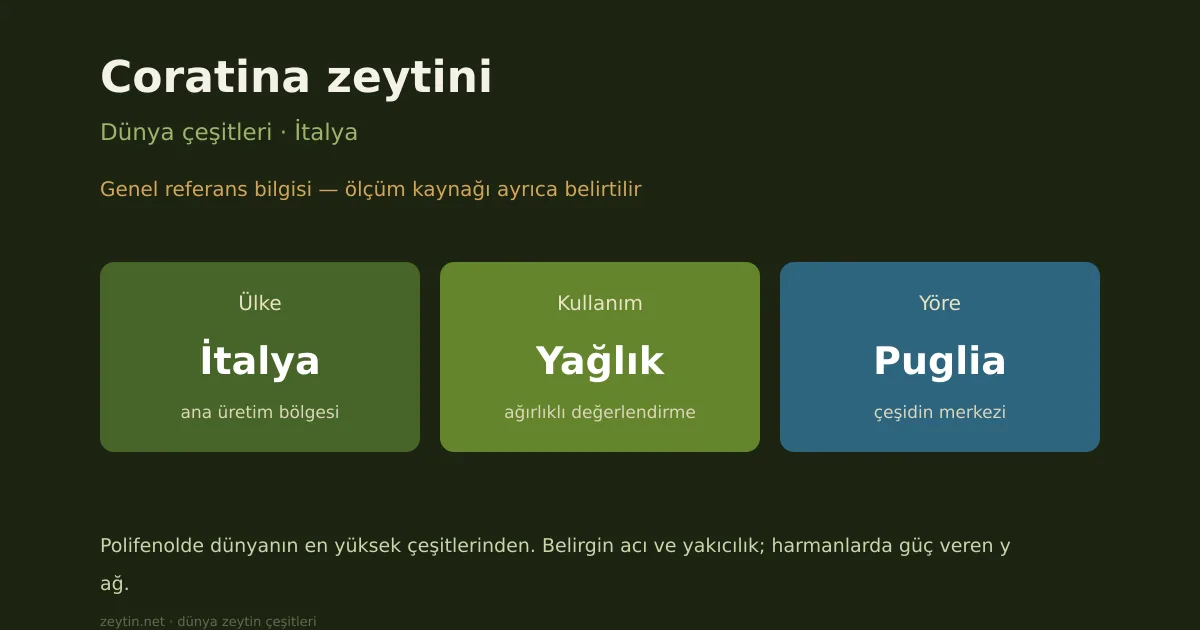
Coratina olive: Italy's oil variety
Among the highest-polyphenol varieties in the world. Distinctly bitter and pungent — the oil that gives blends their backbone.
Article
Coratina olive: Italy's oil variety
Among the highest-polyphenol varieties in the world. Distinctly bitter and pungent — the oil that gives blends their backbone.