Aydın Yamalak Sarısı Olive: a table fruit reaching 11 grams
Registered in 2021. At 6-11 g the fruit is among Turkey's largest table olives. It is propagated by grafting onto wild rootstock and harvested in late September.
In table olives, size is value. Aydın Yamalak Sarısı fruit weighs 6-11 grams — close to the upper limit among table cultivars grown in Türkiye.
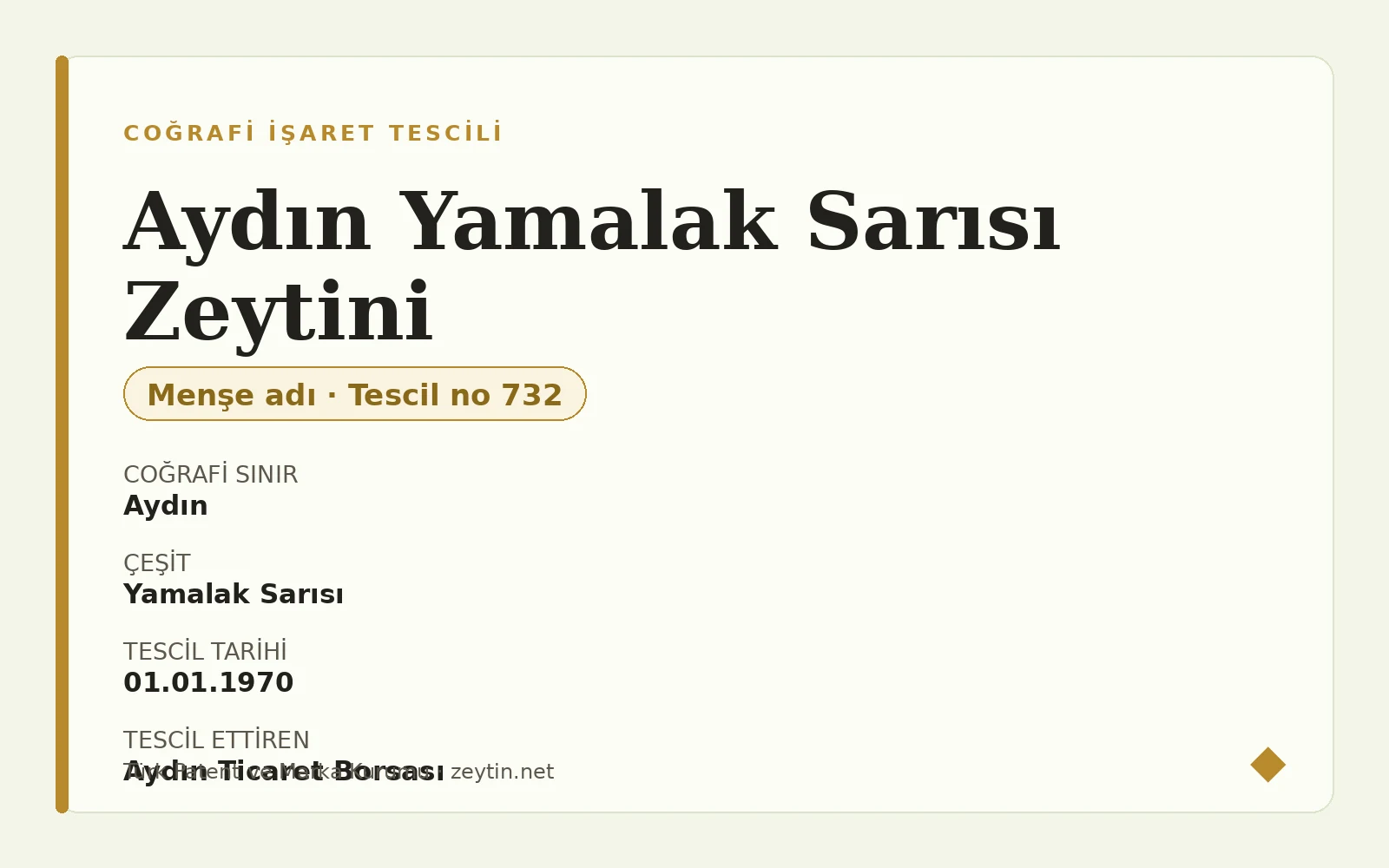
The record
| Registration no | 732 |
| Registration date | 21.04.2021 |
| Application | C2018/138 · 26.06.2018 |
| Type | Designation of origin |
| Registered by | Aydın Commodity Exchange |
| Area | The province of Aydın |
| Cultivar | Yamalak Sarısı |
The cultivar originates in the town of Yamalak in Aydın's Kuyucak district, from which it takes its name.
Measured characteristics
| Criterion | Value |
|---|---|
| Fruit weight | 6 – 11 g |
| Stone weight | 1 – 1.5 g |
| Stone class | very large stoned |
| Flesh-to-stone | 80 – 90% |
| Yield per tree | 40 – 60 kg |
| Salt (NaCl), minimum | 5% |
| pH, maximum | 4.3 |
One detail stands out: the stone is large too (1-1.5 g, in the “very large stoned” class), yet the flesh ratio still runs 80-90%. The fruit is big enough that even a large stone does not pull the ratio down.
And the decisive property for table use: the stone separates easily from the flesh — at both green and black maturity.
Earliness
The certificate attributes the cultivar's earliness to the area's climate, rainfall, humidity and altitude:
| Stage | Timing |
|---|---|
| Inflorescences emerge | mid-March |
| Flower buds burst | early May |
| Green maturity | last week of September – first week of October |
For a green table olive, late September is an early harvest; most cultivars reach it around mid-October. We covered this calendar generally in the life cycle of an olive tree.
Propagation
In Aydın, Yamalak Sarısı trees are propagated by grafting, using wild olive (delice) as the rootstock.
This is a widespread method across the Aegean and Mediterranean: the desired cultivar is grafted onto wild trees that grew naturally, giving it a root system already established and adapted to local conditions. We described the technique in grafting olives.
In short
Aydın Yamalak Sarısı Olive is a green table olive distinguished by size: a 6-11 gram fruit, a stone that separates easily, and a harvest at the end of September. Being a designation of origin, both growing and processing must remain within the province of Aydın.
The cultivar behind it, measured
The registration is granted to a place, but the cultivar the definition rests on has measurable values:
| Property | Value |
|---|---|
| Meyve ağırlığı | 8,27 g |
| Et oranı | %87,3 |
| Yağ oranı | %17,4 |
| Ana kullanım | sofralık |
| Bilimsel çalışma | var |
| Meyve şekli indeksi | 1,31 |
| Sofralık sıralamasındaki yeri | ilk dokuz |
| Yöre | Aydın |
| Çekirdek ağırlığı | 1,2 g |
At 17.4% the oil content sits mid-range; yield alone is not the argument here, aroma is.
Its place in Aydın's olive production
| Item | Value |
|---|---|
| Fruit production | 478,484 t |
| — for oil | 380,008 t |
| — for the table | 98,476 t |
| Olive oil production | 57,577 t |
| Trees | 22,772 thousand |
| Yield per tree | 21.0 kg |
79% of the province's fruit goes to oil — so this table-olive registration defines a niche outside the main flow.
How large is 6-11 grams?
The figure is abstract on its own. Set beside other cultivars in our measurement data, it takes on meaning:
| Cultivar | Average fruit weight |
|---|---|
| Yamalak Sarısı | 6 – 11 g |
| Ayvalık (Edremit) | 4.98 g |
| Memecik | 4.78 g |
| Gemlik | 3.7 g |
Even Yamalak Sarısı's lower bound exceeds Ayvalık; its upper bound is about three times Gemlik. Because price in table olives largely follows fruit size, this is a direct economic difference.
The 40-60 kg per tree is notable too. Across Türkiye, yield per tree sits in the 20-30 kg band in most provinces; our provincial production and yield table allows the comparison on the map. Large fruit combined with high yield is not a common pairing among cultivars.
What does an easily separated stone make possible?
The phrase "the stone separates easily from the flesh" is not a flavour property but a production line property.
Large fruit whose stone comes away easily suits pitted and stuffed olive production. A stuffed olive carries more value added than plain brine and forms a separate export line. If the stone has to be forced, the flesh tears and the stuffing will not hold.
The exact counter-example sits on the same list: the Büyükbelen Tekir registration states plainly that its stone does not separate easily, and offers the product whole — cracked or scored.
| Yamalak Sarısı | Büyükbelen Tekir | |
|---|---|---|
| Stone separation | easy | difficult |
| Presentation | can be pitted | whole · cracked · scored |
| Flesh-to-stone ratio | 80 – 90% | 80 – 90% |
The last row matters: the flesh ratios are identical. The two cultivars are equivalent in flesh, yet the behaviour of the stone sends them down different processing lines. This example shows well why geographical indication documents go into pomological detail — the measurement determines where the product goes.
Comparative values are taken from zeytin.net cultivar measurements and the relevant registration certificates.
One rating per visitor; you can change yours at any time. Ratings are real reader votes — no seeded or default scores.
Related
 Article
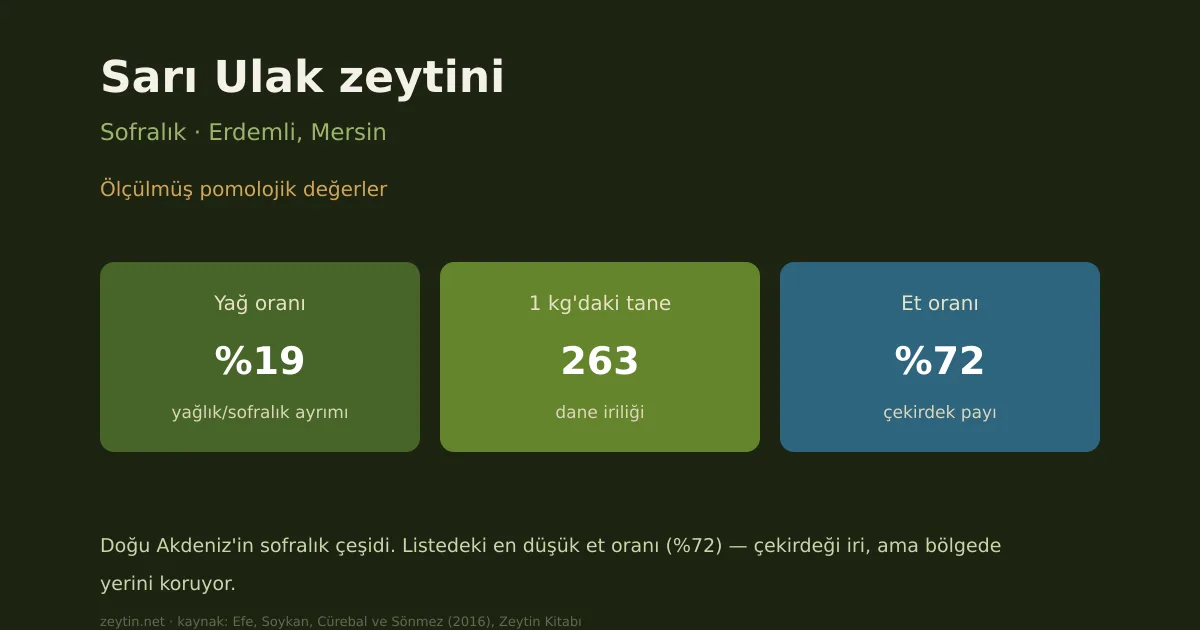
Sarı Ulak olive: characteristics, oil content and growing areas
The eastern Mediterranean's table variety. The lowest flesh ratio on the list (72%) — a large stone, yet it holds its ground.
 Article
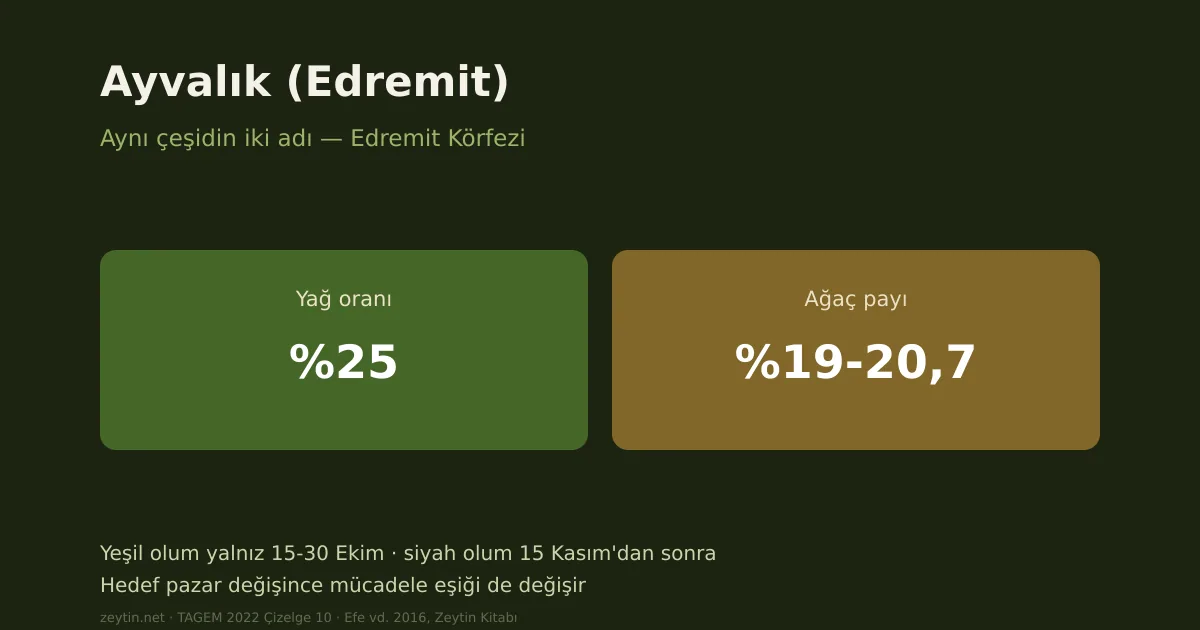
The Ayvalık (Edremit) olive: one variety, two names
19-20.66% of the tree stock, second after Memecik. 25% oil. Green maturity only between 15 and 30 October; black maturity after 15 November, among the latest.
 Article
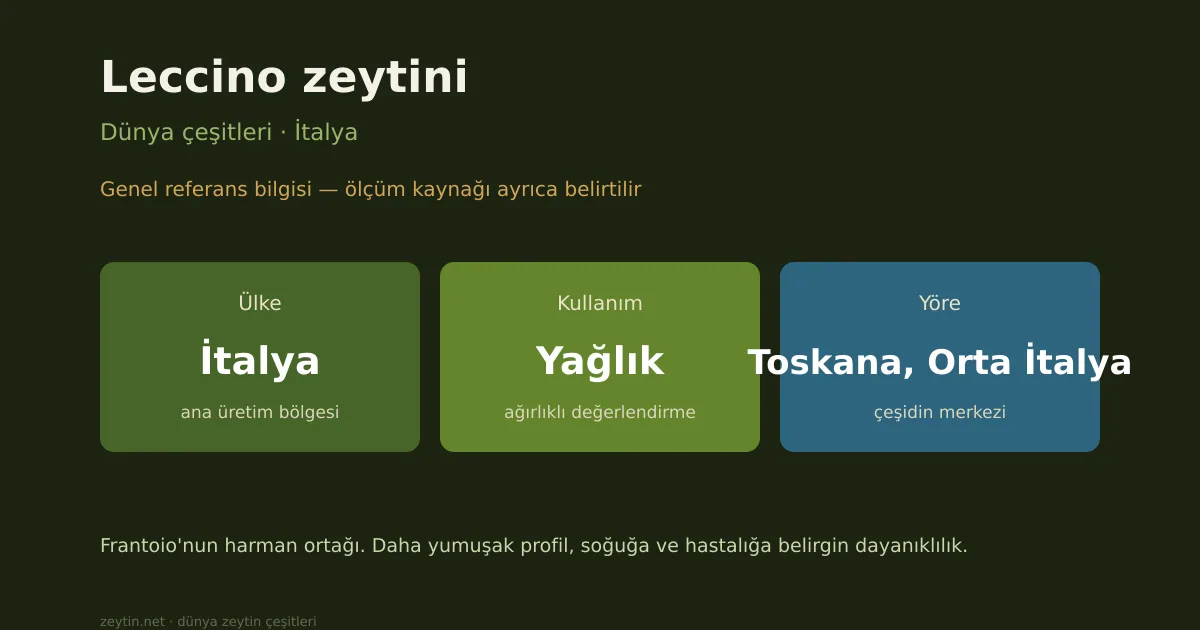
Leccino olive: Italy's oil variety
Frantoio's blending partner. A softer profile with notable cold and disease tolerance.
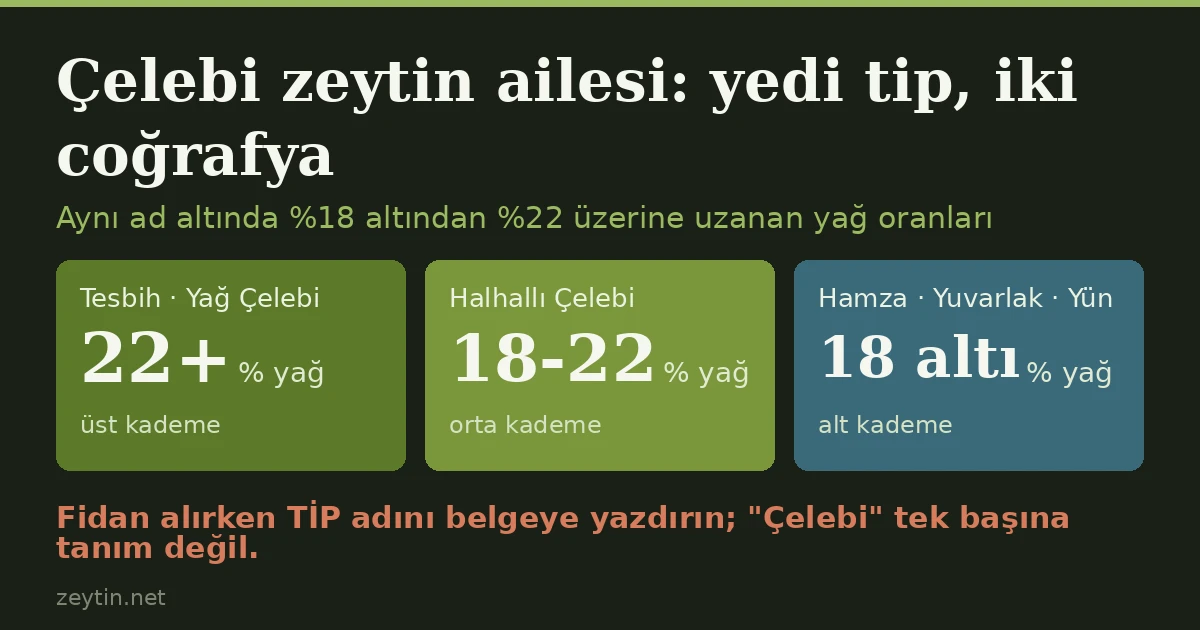 Article
The Çelebi olive family: seven types, two separate geographies
Çelebi is not one variety but a family name. Tesbih Çelebi yields above 22 percent oil while Hamza, Yuvarlak and Yün Çelebi stay under 18. Measured values for seven types.