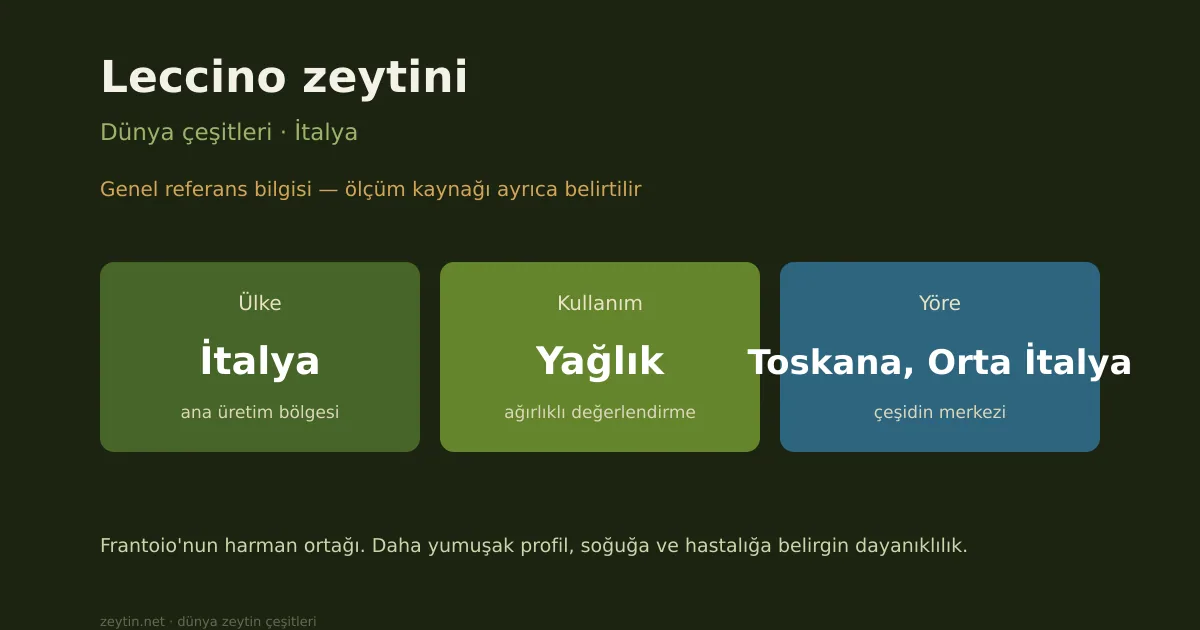
Leccino olive: Italy's oil variety
Frantoio's blending partner. A softer profile with notable cold and disease tolerance.
Leccino is rarely described on its own; it is described alongside Frantoio. In Tuscan groves the two are planted together and their oils are blended.
Why together?
Each covers the other's shortcomings:
| Frantoio | Leccino | |
|---|---|---|
| Taste | Clearly bitter, aromatic | Soft, balanced |
| Cold tolerance | Moderate | High |
| Disease tolerance | Moderate | High |
| Ripening | Late | Early and even |
Leccino's early and simultaneous ripening is a practical advantage: the crop can be taken in a single pass, cutting labour.
Why does cold tolerance matter?
The olive tree suffers damage below −12 °C, and winters can be hard in inland and northern Italy. Leccino's ability to stand those conditions carried it north of Tuscany and into higher ground.
The same issue applies in Türkiye — what decides where a variety can grow is not only warmth but whether winter gets cold enough, and not too cold. In detail: chilling requirement in olives and climate change and the olive.
The character of the oil
Soft, low in bitterness, almondy. Pressed alone it can read as plain; in a blend it tempers the sharpness of Frantoio and Coratina.
Compared with Türkiye
For its soft profile and early, even ripening, Leccino resembles Gemlik — though Gemlik is mainly a table olive and Leccino mainly an oil variety. Its role as a blending partner parallels Memeli serving as a pollinator for Memecik.
Why it never spread worldwide
Leccino is a good variety, yet it never crossed continents the way Spanish Arbequina did. The reason is not taste but a mismatch with the planting system.
In Spain, six Italian varieties (Cipressino, Coratina, Frantoio, FS-17, Leccino, Urano) were tested for suitability to super-high-density planting against Spanish Arbequina and Arbosana. Trees were set 4x1.5 m apart, 166.7 trees per decare.
The result: the controls, Arbequina and Arbosana, showed growth and yield suited to dense planting, while among the Italian varieties only Cipressino and Urano were judged promising. For the rest — Leccino among them — no assurance was given.
Source: Camposeo et al. (2008), cited in Atmaca and Ülger, Zeytin Bilimi.
Leccino's strengths — cold and disease tolerance, even ripening — show themselves in a traditional, widely spaced grove. Modern olive growing wants the tree to stay small and upright; if that is not in the variety, it cannot be added later.
Related pages
Where it stands among measured varieties
et/çekirdek oranı 6,18'ten türetildi — kaynak: IOC Dünya Zeytin Çeşitleri Kataloğu — Avustralya denemesi 19
Vossen, UC Cooperative Extension — IOC World Catalogue (Barranco vd.)
IOC Dünya Zeytin Çeşitleri Kataloğu — Avustralya denemesi 1998-2004 (Tablo 4)
IOC Dünya Zeytin Çeşitleri Kataloğu — Avustralya denemesi 1998-2004 (Tablo 4)
Values are those published on each variety's own page; the comparison covers only varieties with a measured figure, so it is a comparison of what is known — not of every Turkish variety. See the full ranking and how it is built →
One rating per visitor; you can change yours at any time. Ratings are real reader votes — no seeded or default scores.
Related
 Article
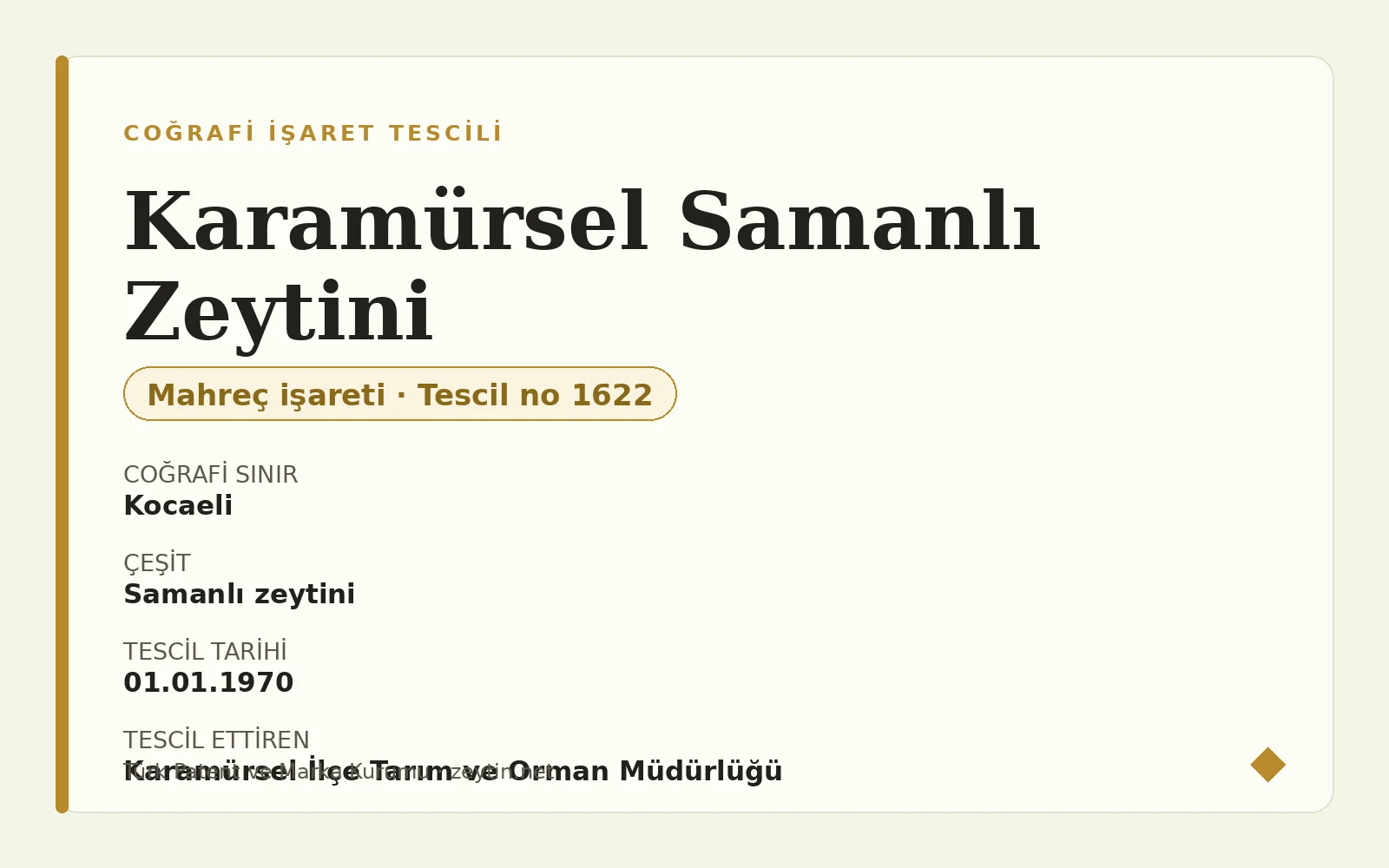
Karamürsel Samanlı Olive: low bitterness earns it the name “sweet olive”
Registered in 2024. Its oleuropein content of 6-8% is low, so it debitters quickly and is locally called the sweet olive. Its skin is 0.2-0.4 mm.
Article
Karamürsel Samanlı Olive: low bitterness earns it the name “sweet olive”
Registered in 2024. Its oleuropein content of 6-8% is low, so it debitters quickly and is locally called the sweet olive. Its skin is 0.2-0.4 mm.
 Article
Patos olive
Patos is a recorded variety of the Black Sea. Described in the source.
Article
Patos olive
Patos is a recorded variety of the Black Sea. Described in the source.
 Article
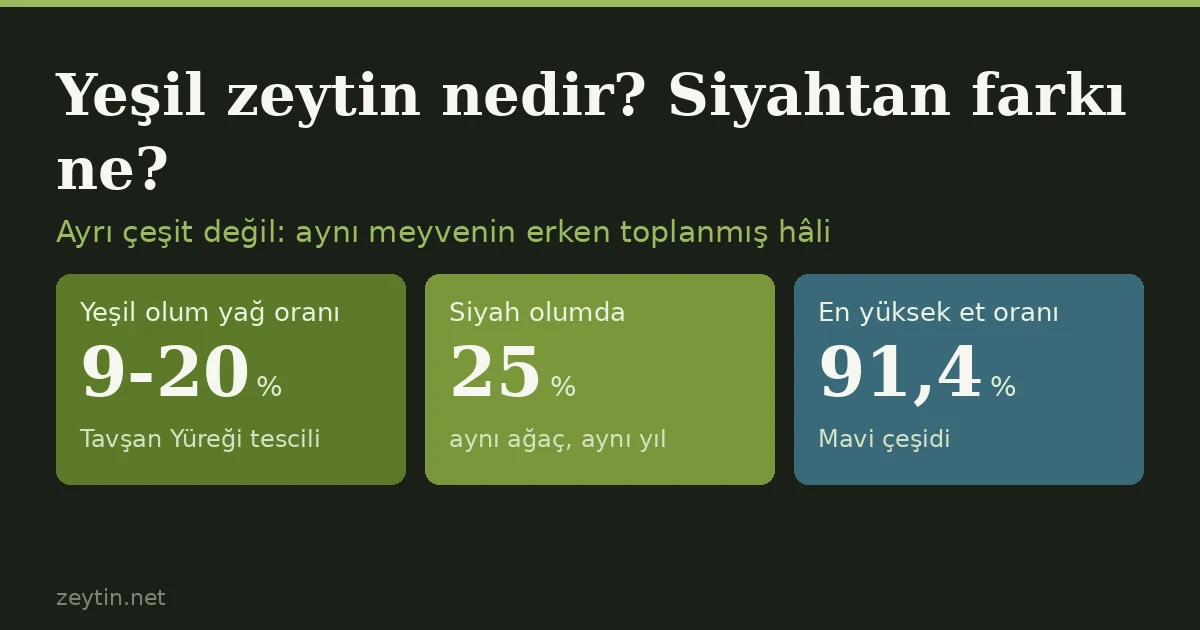
What are green olives, and how do they differ from black?
Green olives are not a separate variety but the same fruit picked early. What sets the colour, why pick green, and where the difference from black begins.
Article
What are green olives, and how do they differ from black?
Green olives are not a separate variety but the same fruit picked early. What sets the colour, why pick green, and where the difference from black begins.
 Article
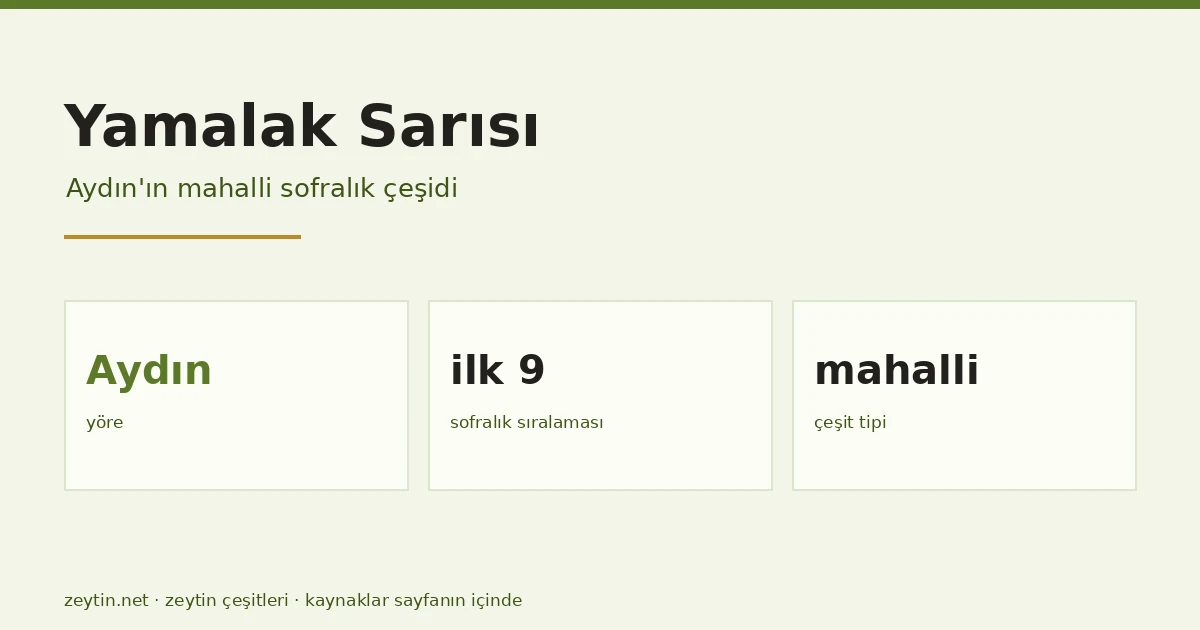
Yamalak Sarısı: the local table cultivar of Aydın
A local cultivar of Aydın counted among Turkey's most important table olives, and the subject of a phenotypic characterisation study.
Article
Yamalak Sarısı: the local table cultivar of Aydın
A local cultivar of Aydın counted among Turkey's most important table olives, and the subject of a phenotypic characterisation study.