Two pressures before the harvest: costs and 100,000 tonnes carried over
The chamber of agriculture wants 50 lira per kilo; daily labour has passed 1,500 lira. Exporters report 100,000-120,000 tonnes carried over from previous seasons.
As Turkey enters a new harvest season, two pressures are being raised together: production costs and carried-over stock.
"If costs are high the olives stay on the branch"
Ali Yılmaz Diker, head of the Edremit Chamber of Agriculture, says diesel and fertiliser support is not enough to keep growers going. Asking for 50 lira per kilogram, he expects costs to reach at least 300 lira this year.
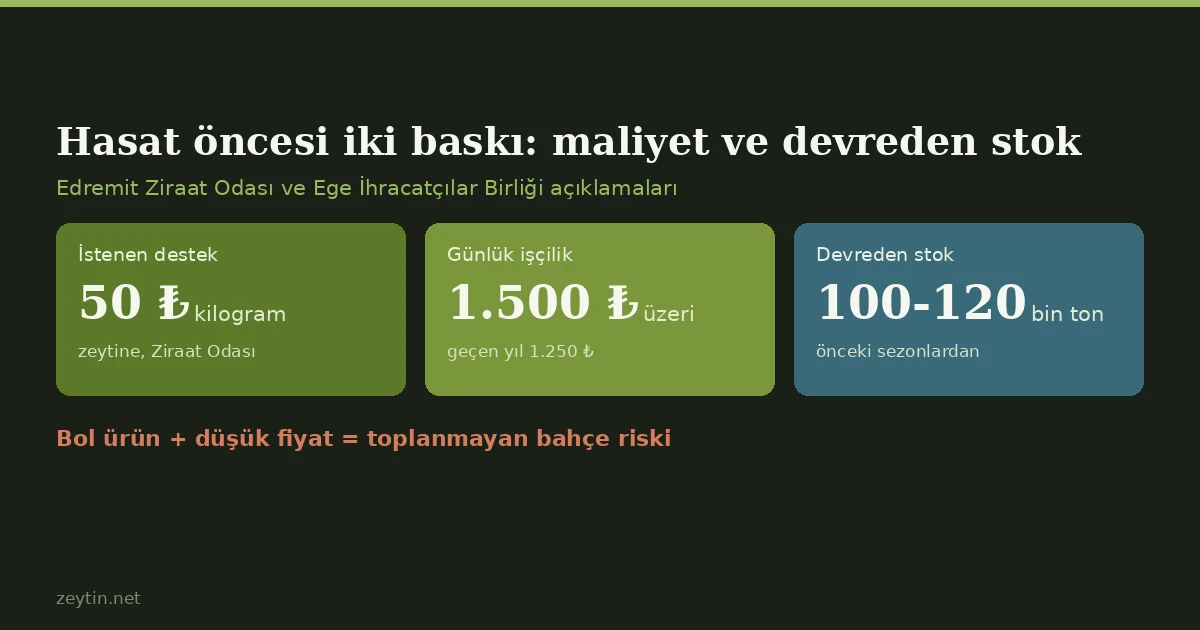
Labour alone is striking: a daily wage of 1,250 lira last year has passed 1,500 lira. Diker says growers struggle to pass that increase on, while consumers have lost purchasing power.
⚠ This is not the same as the Edremit Chamber of Commerce's call for 50 lira per litre: one asks per kilogram of olives, the other per litre of oil.
Carry-over: 100,000-120,000 tonnes
Emre Uygun, chairman of the Aegean Olive and Olive Oil Exporters' Association, reports 100,000 to 120,000 tonnes remaining from previous seasons. Higher yields may bring some cost relief, but he says the real issue is the market: "If a market is going to be lost, we expect a support mechanism."
Carried-over stock amplifies the new crop's effect on price: it is not only this year's oil reaching the market but last year's remainder. With supply arriving from two sources, downward pressure doubles.
The two together
High costs deter growers from harvesting; carried-over stock suppresses the price. When both fall in the same season, the result can be abundant fruit, a low price and groves left unpicked.
We examined the cost items one by one in what does a kilo of olives cost to produce.
One rating per visitor; you can change yours at any time. Ratings are real reader votes — no seeded or default scores.
Related
 Article
The International Olive Council grows: Iraq joins, Brazil and South Africa apply
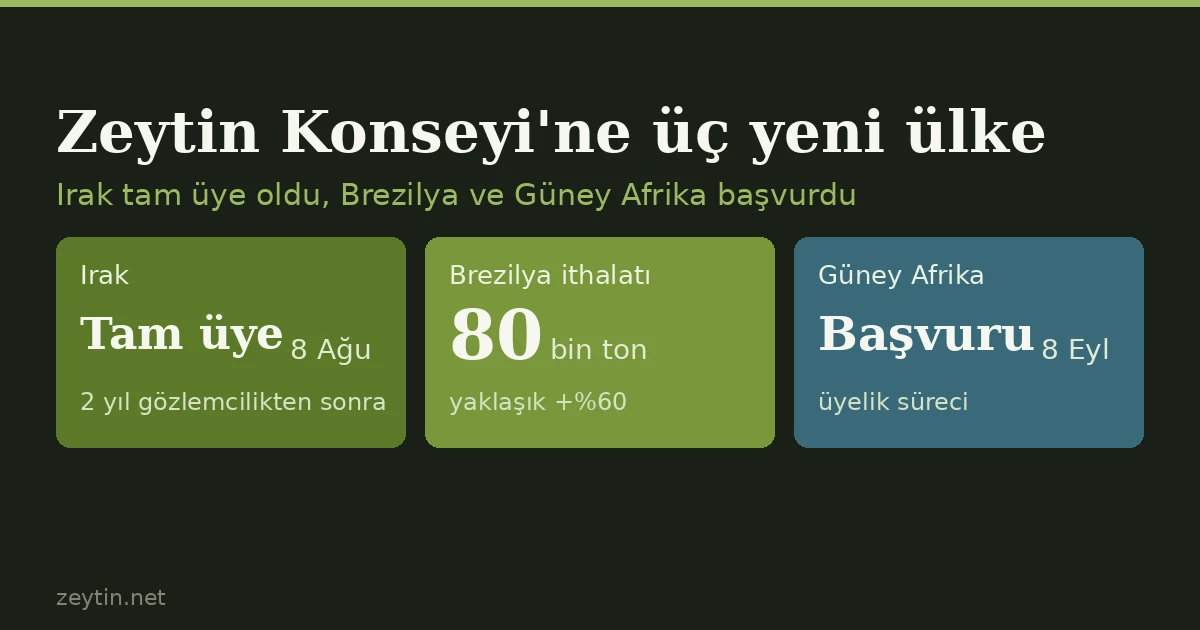
The International Olive Council (IOC) saw three developments in a month: Iraq became a full member on 8 August, South Africa submitted its membership request on 8 September and Brazil on 9 September. The expansion reflects olive oil's shift towards production and consumption areas beyond the Mediterranean.
 Article
Six jailed for taking produce without paying: the grower's most fragile moment is the start of harvest
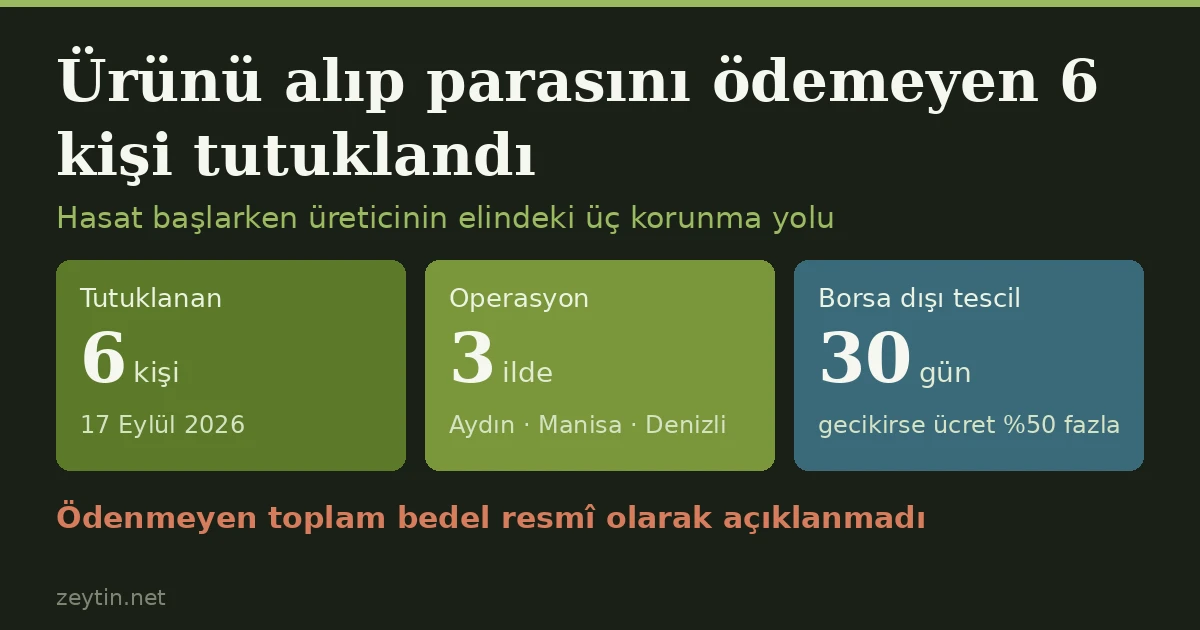
In Bozdoğan, Aydın, six people who bought olive oil, nuts and livestock from growers and failed to pay were caught in a simultaneous operation across three provinces on 15 September and jailed on 17 September. The method is a familiar one: the first purchase is paid in full, and once trust is established the large purchase is not. In the week harvest begins, growers have three concrete protections.
 Article
A 2,000-year-old olive grove endowment in Antalya: 600 trees, “never to be cut or sold”
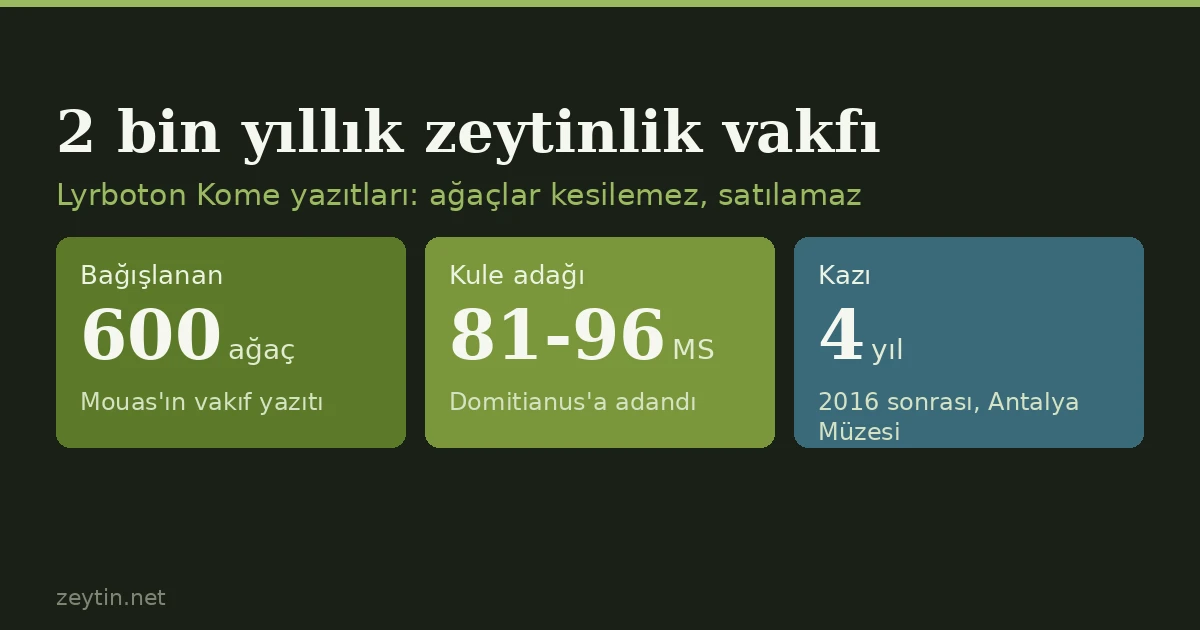
The excavation results from Lyrboton Kome in Antalya have been presented. Inscriptions record a family endowing its farm and 600 olive trees in perpetuity, with an explicit clause: these trees can never be cut, sold or put to another use.
 Article
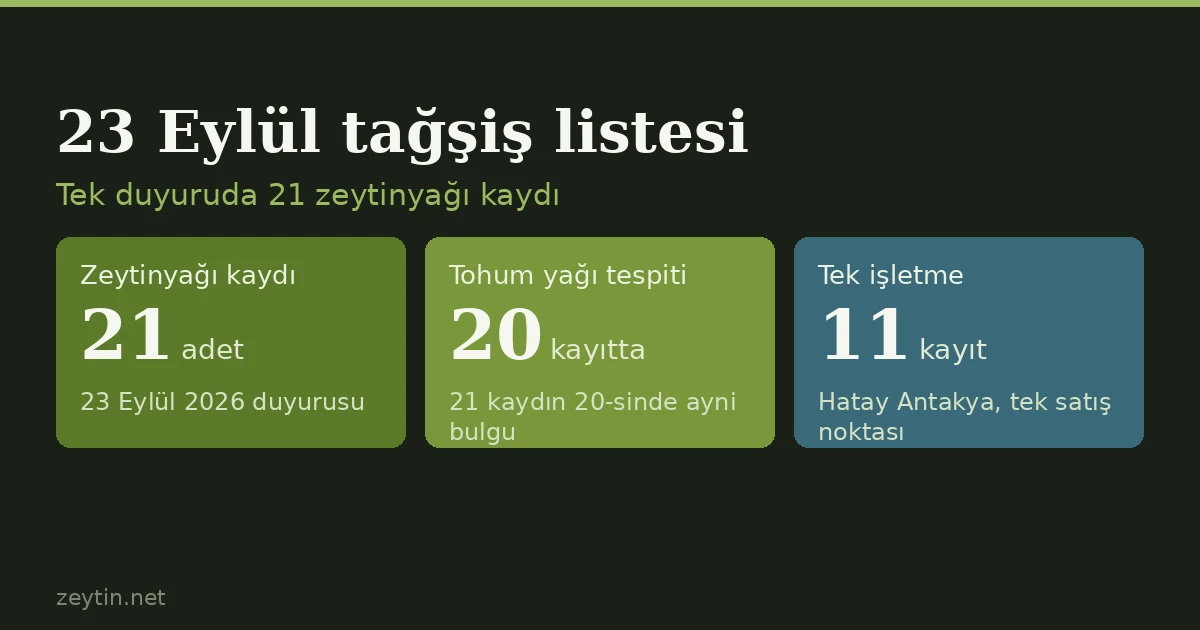
Turkey's 23 September fraud list: 21 olive oils, 11 from a single seller
Twenty-one olive oil entries joined Turkey's public food-fraud register on 23 September 2026 — two-thirds of what the other eleven announcements since April produced combined. In twenty of them the finding is identical: seed oil adulteration.