The 12.5% US tariff: the competitor is exempt, the Turkish exporter is not
Mustafa Kürlek notes the 12.5% additional US tariff on Turkish olive products is not applied to competitors such as Tunisia, and calls for DFİF and Eximbank measures.
Mustafa Kürlek, chairman of Köklü Zeytincilik, says the 12.5% additional tariff the United States applies to Turkish olive and olive oil products is not applied to competitors such as Tunisia, leaving Turkish exporters at a disadvantage.
Why the gap matters
Paying 12.5% more while selling to the same buyer, on the same shelf, is a direct price disadvantage. One figure makes the comparison concrete: Tunisia exported 368,000 tonnes of olive oil in the first nine months of 2025/26, a significant share of it to North America.
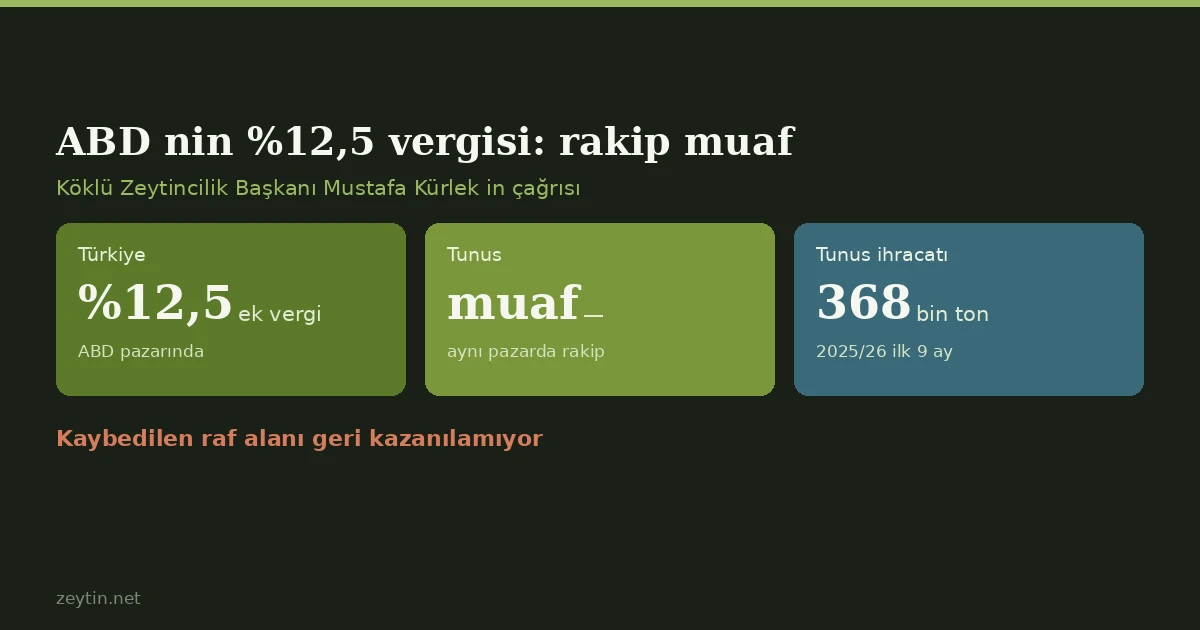
Kürlek's emphasis is on the permanence of the market: "We must not allow a temporary rise in costs to turn into the permanent loss of a US market won through years of effort." Shelf space once lost, he says, is hard to win back.
The measures sought
Kürlek lists three:
- DFİF: reactivating the Support and Price Stabilisation Fund through a WTO-compatible model, with temporary support equal to the tariff gap until diplomacy produces a result.
- Credit terms: spreading existing Eximbank and rediscount debts over longer terms in return for production and export commitments.
- VAT refunds: accelerating refunds to ease companies' cash flow.
Background
The call comes during a run of concordat filings in the sector; we covered the most recent case in Akhisar separately. We examined the effect of tariff gaps on exporter margins in profitability in olive oil exports.
One rating per visitor; you can change yours at any time. Ratings are real reader votes — no seeded or default scores.
Related
 Article
Algeria expects a record 150,000 tonnes: the Mediterranean supply map is shifting
Algeria's 2025/26 olive oil output is expected to exceed 150,000 tonnes — up 76% on the previous season and a third consecutive rise. With domestic consumption near 81,000 tonnes, an exportable surplus appears. In a season when Turkish exports fell 62% by value, that means new competition in the bulk market.
 Article
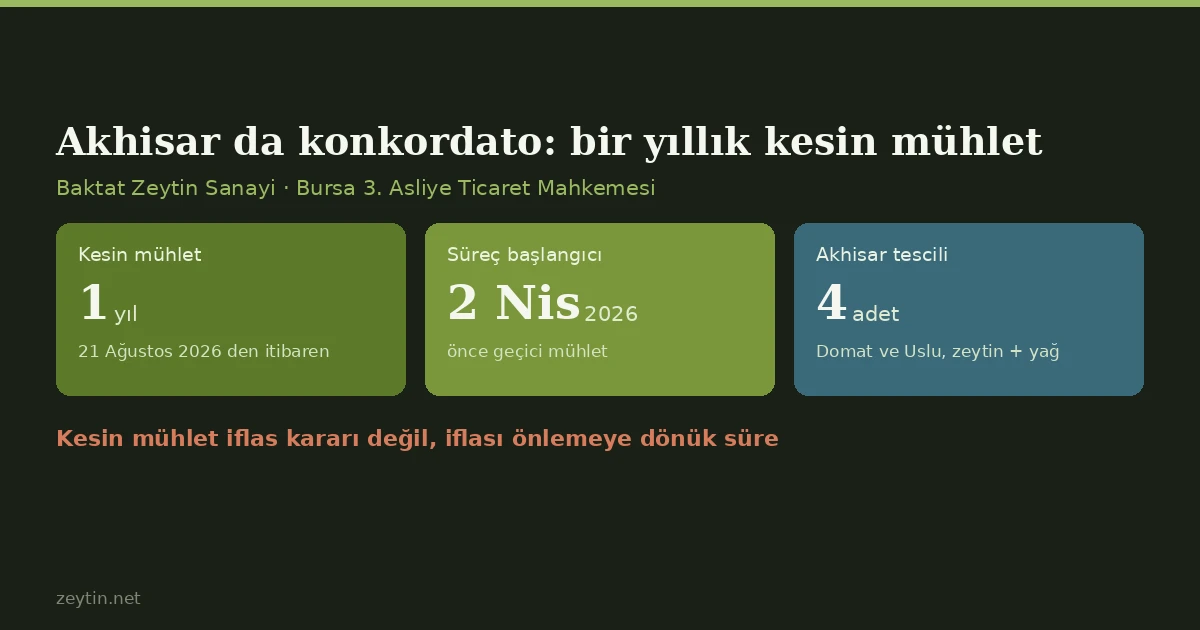
Concordat in Akhisar: a one-year moratorium for Baktat Zeytin
A Turkish commercial court has granted a one-year definitive moratorium to Baktat Zeytin, a table-olive processor in Akhisar. We set out what the ruling means and why it matters for the sector.
 Article
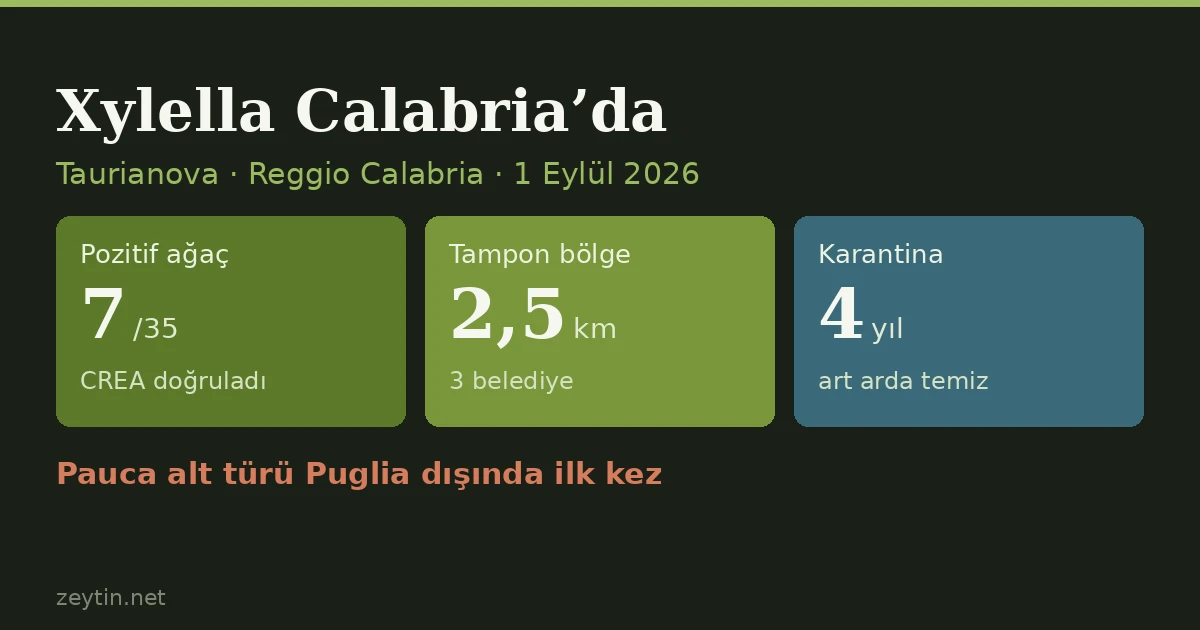
Xylella has left Puglia: seven olive trees test positive in Calabria
The pauca subspecies of Xylella fastidiosa, which dries out olive trees, had been confined to Puglia since 2013. In Taurianova, Calabria, 7 of 35 samples tested positive; the region issued a quarantine decree on 1 September with a 2.5 km buffer zone.
 Article
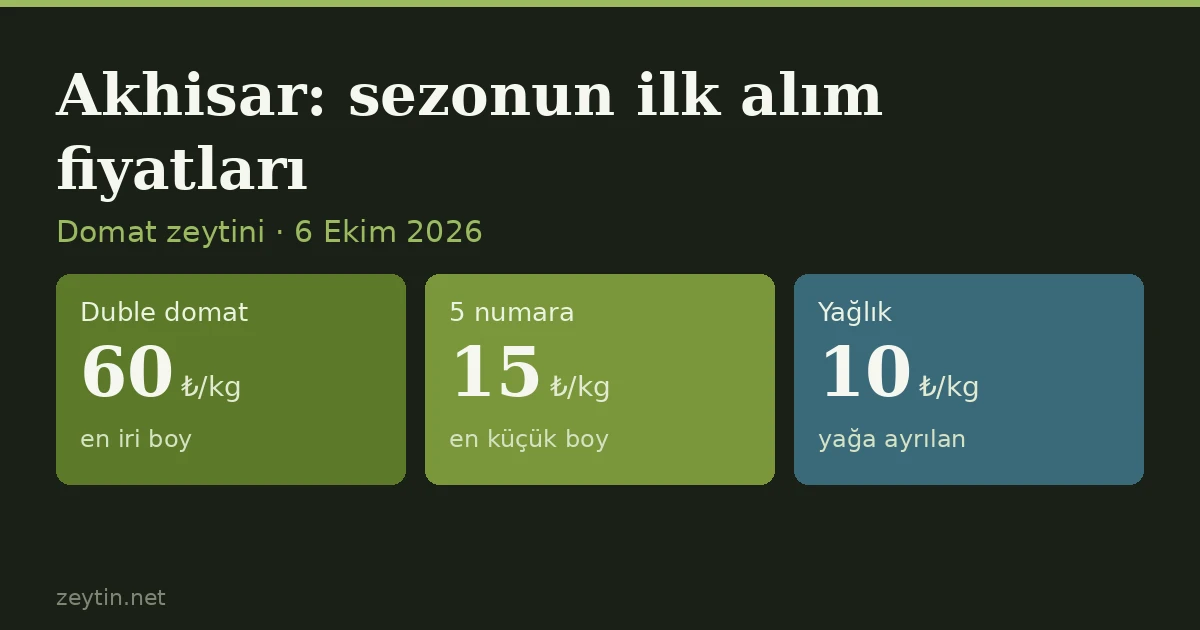
Opening prices in Akhisar: 60 lira for double Domat, 10 lira for milling olives
The season's first purchase prices for Domat olives have formed in Akhisar: 15 to 60 lira a kilo by size, and 10 lira for fruit sold for milling. The local chamber of agriculture says prices are below last year's and has called for a joint table. Farm input costs rose 27.6% over the same period.