Chard in Olive Oil
Spinach's lesser-known relative: the stems and the leaves cook separately, and that separation defines the recipe.
- Time
- 35 minutes
- Serves
- Serves 4
- Level
- Easy
- Cuisine
- Turkish
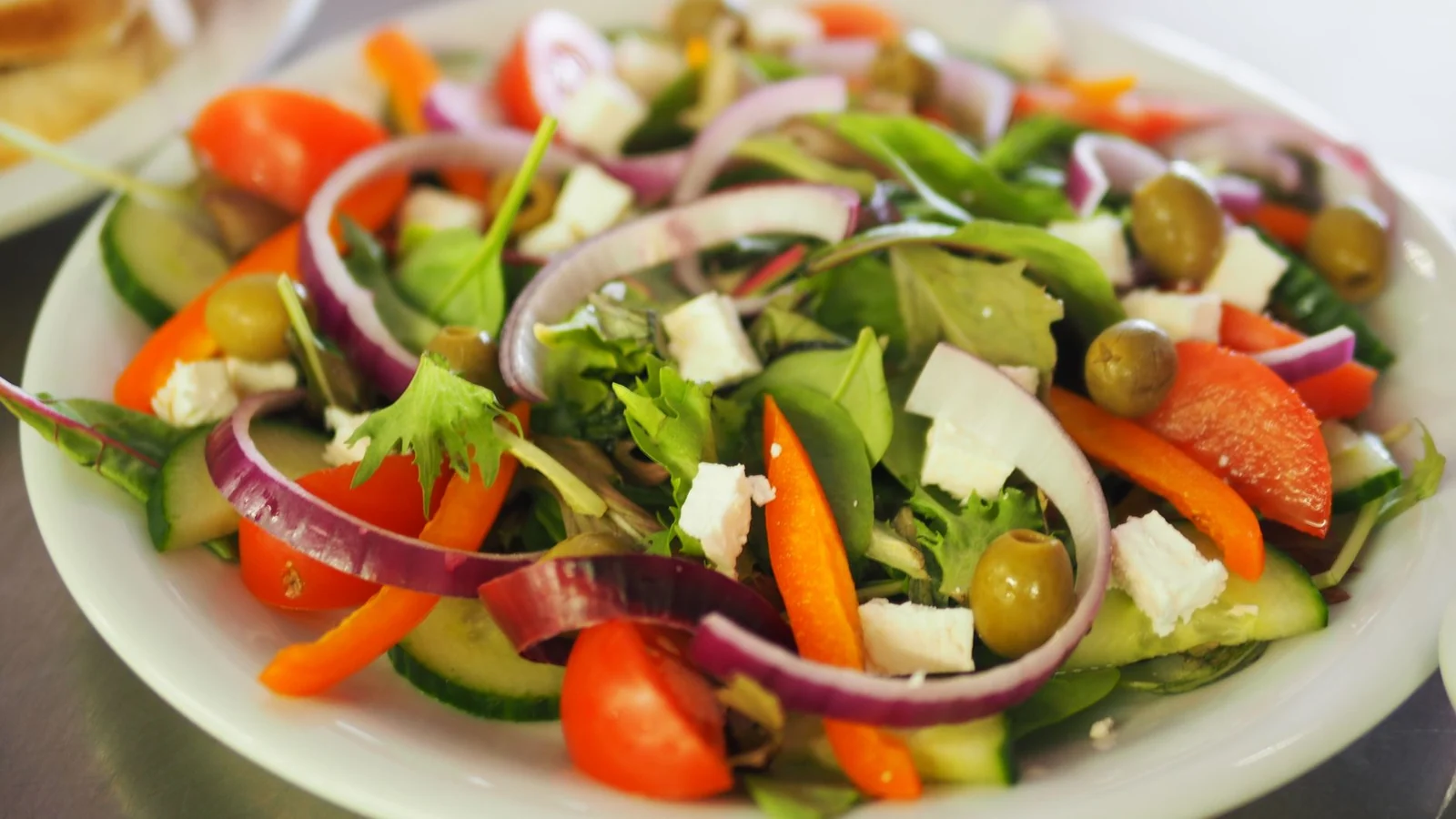
Chard and spinach are often confused, but in the kitchen they are two different vegetables. Chard's stems are eaten — thick, fleshy and white or red; spinach's are thin and usually discarded. That single difference sets the technique of the recipe: stems and leaves do not go into the pan together, because the stems take roughly twice as long to soften.
The second difference is less known: chard is lower in oxalates than spinach. In spinach in olive oil we noted that the pairing with yoghurt has a nutritional rationale; with chard that rationale is weaker, and the yoghurt here is purely a matter of taste.
Its season is long — available from spring to autumn — which makes it one of the most flexible members of the zeytinyağlı calendar.
Directions
- Separate the stems from the leaves; cut the stems into two-centimetre pieces and chop the leaves roughly.
- Wash both, separately, in plenty of water and drain.
- Heat the olive oil in a pan and soften the onion.
- Add the rice and turn for two minutes, then add the grated tomato and cook until the liquid has gone.
- Add the STEMS first and cook for five minutes — they take longer to soften than the leaves.
- Add the leaves and cook uncovered for four to five minutes, until the volume drops.
- Add the salt and hot water, cover, and cook over low heat for fifteen minutes.
- Take off the heat and pour over the lemon juice.
- Serve warm with garlic yoghurt, or cold with lemon.
Tips & storage
Don't skip separating stems from leaves. Thrown in together, either the stems stay raw or the leaves collapse. That five-minute gap is the recipe.
Don't discard the stems. Some recipes use only the leaves, yet the stem is the tastiest part of chard and gives the dish its character.
Red-stemmed chard bleeds. Varieties with pink or purple stems tint the dish slightly as they cook. Not a problem, but a surprise if unexpected.
Lid off at first. While the leaves release their liquid, a closed lid steams them and turns them grey.
Lemon at the end. Acid added during cooking toughens the leaves.
Yoghurt onto a warm dish. Poured over a hot one it splits; if you are eating it cold, use lemon instead.
Storage. Two days in the fridge; because it contains rice, do not stretch it.
One rating per visitor; you can change yours at any time. Ratings are real reader votes — no seeded or default scores.
Related
 Recipe
Bloody Mary with Olives
Tomato juice, spices and vodka, garnished with olives, celery and lemon.
Recipe
Bloody Mary with Olives
Tomato juice, spices and vodka, garnished with olives, celery and lemon.
 Recipe
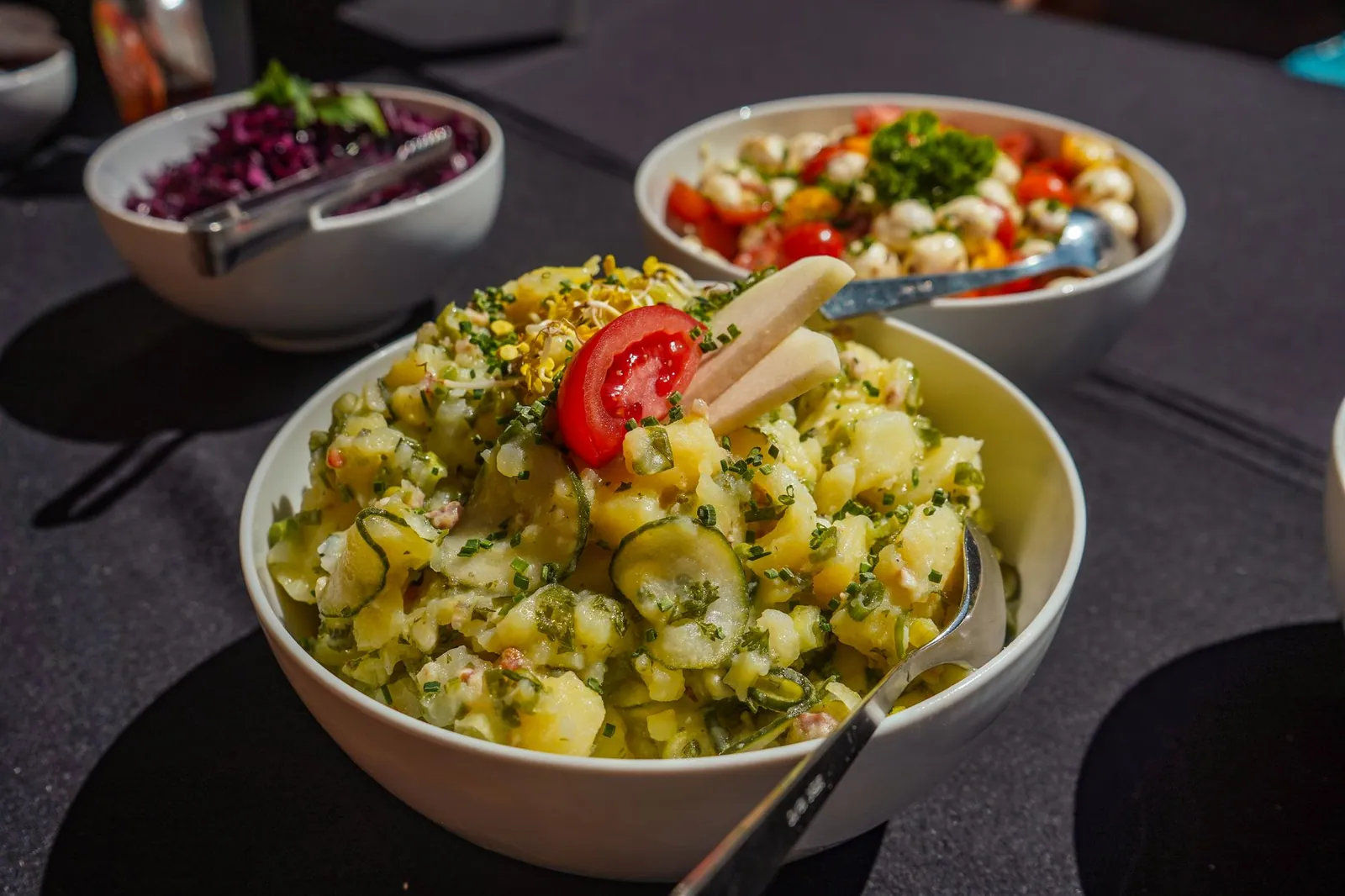
Potato Salad with Olives
A light potato salad without mayonnaise, dressed with olive oil and lemon; green olives and capers bring the salt.
Recipe
Potato Salad with Olives
A light potato salad without mayonnaise, dressed with olive oil and lemon; green olives and capers bring the salt.
 Recipe
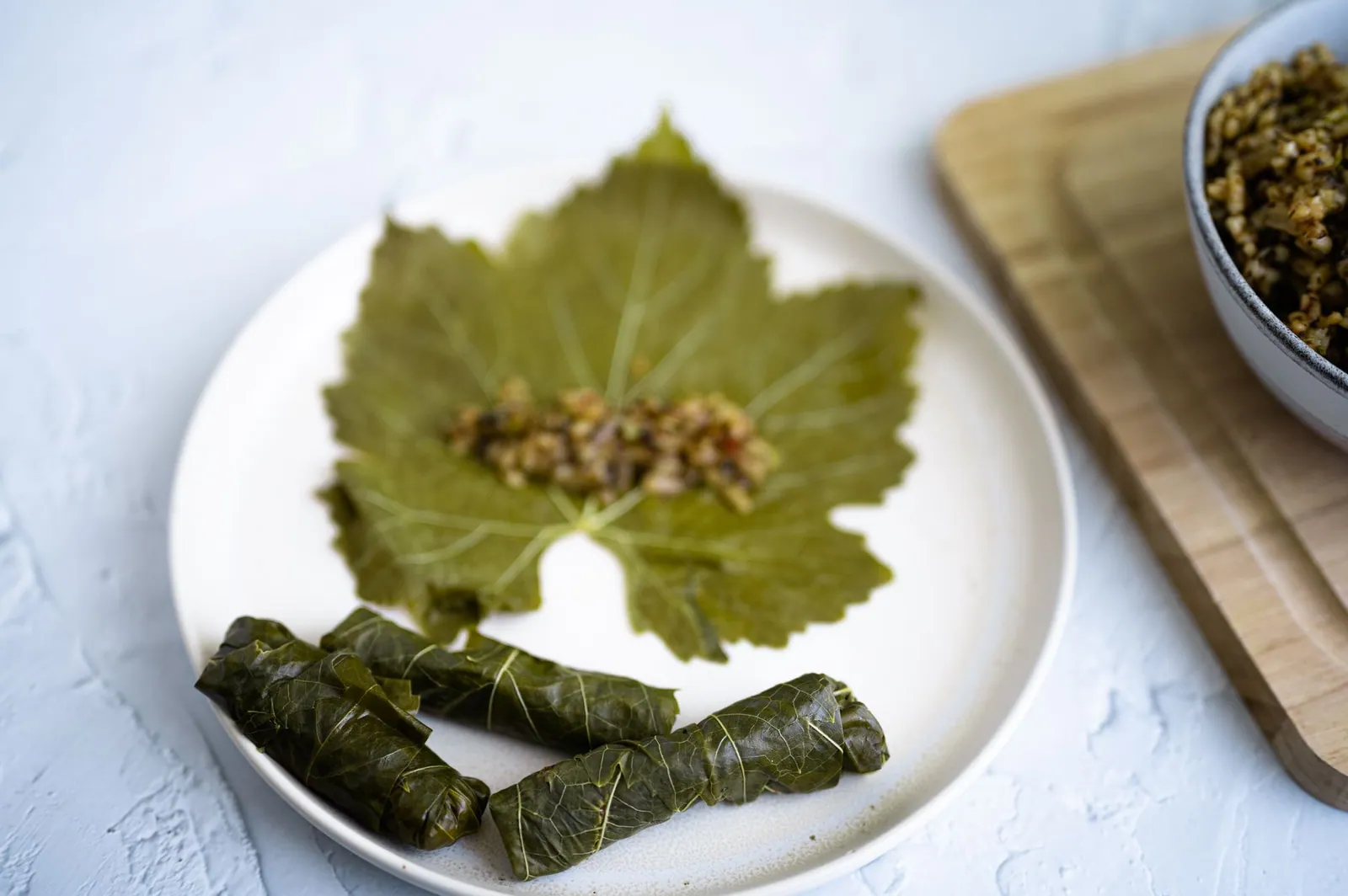
Stuffed Vine Leaves in Olive Oil
The head of the olive-oil dishes: rice filling rolled in vine leaves, cooked slowly with lemon and olive oil. Served cold.
Recipe
Stuffed Vine Leaves in Olive Oil
The head of the olive-oil dishes: rice filling rolled in vine leaves, cooked slowly with lemon and olive oil. Served cold.
 Recipe
Wild Fennel in Olive Oil
The aniseed-scented green of the Aegean coast: cooked slowly with rice, its aroma opening further as it cools.
Recipe
Wild Fennel in Olive Oil
The aniseed-scented green of the Aegean coast: cooked slowly with rice, its aroma opening further as it cools.