Edremit Gulf Green Scored Olive: a registration that defines altitude and slope
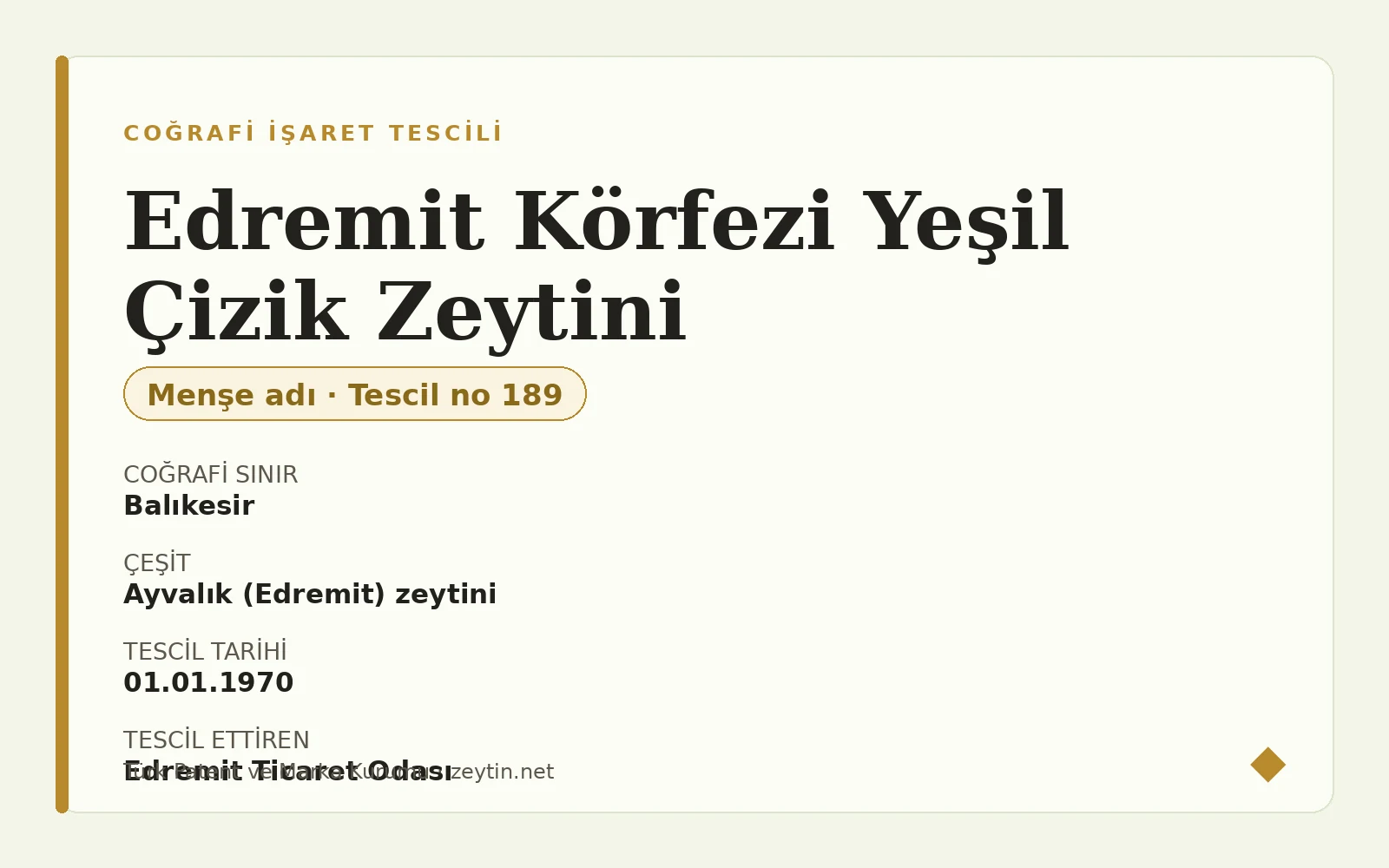
Registered in 2014. The certificate draws the boundary topographically as well as administratively: 50-250 m altitude, 5-6% slope. Debittering is entirely natural.
Boundaries in geographical indications are usually drawn with district names. This registration goes a step further: it also states at what altitude and on what slope the olives must grow.
The record
| Registration no | 189 |
| Official notice | 31.12.2014 · Official Gazette 29222 |
| Type | Designation of origin |
| Registered by | Edremit Chamber of Commerce |
| Area | The Gulf of Edremit · altitude 50-250 m · slope 5-6% |
| Cultivar | Ayvalık (Edremit) |
Writing altitude and slope into the definition narrows which groves can qualify.
Natural debittering
The certificate's second distinguishing provision concerns processing: the product is made using entirely natural debittering agents, by a preparation and processing method of its own.
The common way to remove bitterness from green table olives is caustic. The “scored” method splits the fruit and washes the bitterness out with water — slower, and without chemicals. We compared the methods in types of table olive.
Stone measurements
The certificate measures the stone in detail:
| Criterion | Value |
|---|---|
| Weight of 100 stones | 43.77 – 63.77 g |
| Volume of 100 stones | 43 – 63 cm³ |
| Stone length | 11.76 – 13.76 mm |
| Stone width | 6.15 – 8.15 mm |
| Stone length/width | 1.68 – 1.88 |
| Stone share of fruit | 14.00 – 15.48% |
A stone share of 14-15.48% means a flesh ratio of 84.5-86% — the band a green table olive wants.
Tree and pollination
Under good husbandry the tree grows vigorously and forms a large tree; branching is sparse and foliage light. Branches are narrow-angled and grow upright — the certificate notes this makes the tree suited to mechanical harvesting.
Flowering falls between 16 May and 9 June. The cultivar is self-fertile, though Gemlik, Memecik and Erkence may serve as pollinators. Alternate bearing is moderate.
In short
Edremit Gulf Green Scored Olive is a green table olive whose boundary is narrowed by altitude and slope, and whose bitterness is removed naturally. It is one of four registrations built on the Ayvalık cultivar — the others being Ayvalık Olive Oil, North Aegean and Burhaniye.
The area as the document defines it
The short line in the record does not give the registration's full boundary. The document's own definition reads:
t; Edremit Körfezi, Kazdağı ve Madra Dağının Ege Denizine bakan yamaçlarında, Bababurnu'ndan başlayıp Madra Çayına kadar olan kısımdır. Bölge; Ayvacık ilçesine ait Adatepe, Ahmetçe, Babakale, Balabanlı,
The cultivar behind it, measured
The registration is granted to a place, but the cultivar the definition rests on has measurable values:
| Property | Value |
|---|---|
| Meyve ağırlığı | 4,98 g |
| Et oranı | %85 |
| Yağ oranı | %23-26 |
| Hasat | Ekim-Kasım |
| Kendine verimlilik | yok |
| Periyodisite | az |
| Soğuğa dayanım | yüksek |
| Kullanım | yağlık · çizik · siyah sofralık |
| Meyve boyu | 23,09 mm |
| Meyve eni | 18,85 mm |
| Meyve iriliği | orta-iri |
At 23-26% the oil content sits mid-range; yield alone is not the argument here, aroma is. The cultivar is not self-fertile — a pollinator is required in the grove. The planting the registration describes is therefore never single-cultivar in practice. Alternate bearing is low: the year-to-year swing in yield is smaller than is usual in olives.
Its place in Balıkesir's olive production
| Item | Value |
|---|---|
| Fruit production | 314,189 t |
| — for oil | 268,283 t |
| — for the table | 45,905 t |
| Olive oil production | 47,618 t |
| Trees | 11,345 thousand |
| Yield per tree | 27.7 kg |
85% of the province's fruit goes to oil — so this table-olive registration defines a niche outside the main flow.
Why do altitude and slope appear in the definition?
The registration's boundary is drawn not by district name but by altitude (50-250 m) and slope (5-6%). The reason for that unusual narrowing becomes visible in field measurements on the same cultivar.
Gündoğdu and Nergis (2020) compared the Ayvalık cultivar across two regions: 9 sites in the Edremit Gulf and 9 villages in Bayramiç — 18 sampling points in all, harvested at three ripeness stages (green, veraison, black).
The result has two parts:
- No statistically significant difference was found between the regions in maturity index or oil quality parameters. Classical quality measures do not separate the two regions' produce.
- Significant differences were found in volatile compounds — among the aldehyde, alcohol and ester groups.
The study attributes the difference to position: the Edremit Gulf lies on the southern slope of Mount Ida, facing the Aegean and milder, while Bayramiç sits on the northern side, in the path of cooler winds.
Returning to the registration: the same cultivar, even under the same name, yields a measurably different product according to location. The altitude and slope conditions are an attempt to fix the circumstances that produce that difference. The 50-250 metre band describes the belt the sea reaches; the 5-6% slope describes ground that neither holds water nor is exposed to erosion.
The same logic appears differently in the Bayramiç Zeytinyağı registration: there the boundary is not narrowed, and instead the percentages of aroma compounds are written into the definition. Two registrations solve one problem by two routes — one describing the geography, the other the result.
⚠ Note: the study concerns oil samples, while this page is about table olives prepared by scoring. It is cited here because it shows how the cultivar behaves in this geography, not as a direct measurement of the table product.
Further sources
- Gündoğdu, M.A. & Nergis, O. (2020). Comparison of chemical properties and volatile compounds of olive oils from Edremit Gulf and Bayramiç Mount Ida regions. Lapseki Meslek Yüksekokulu Uygulamalı Araştırmalar Dergisi, 1(2), 101-117.
One rating per visitor; you can change yours at any time. Ratings are real reader votes — no seeded or default scores.
Related
 Article
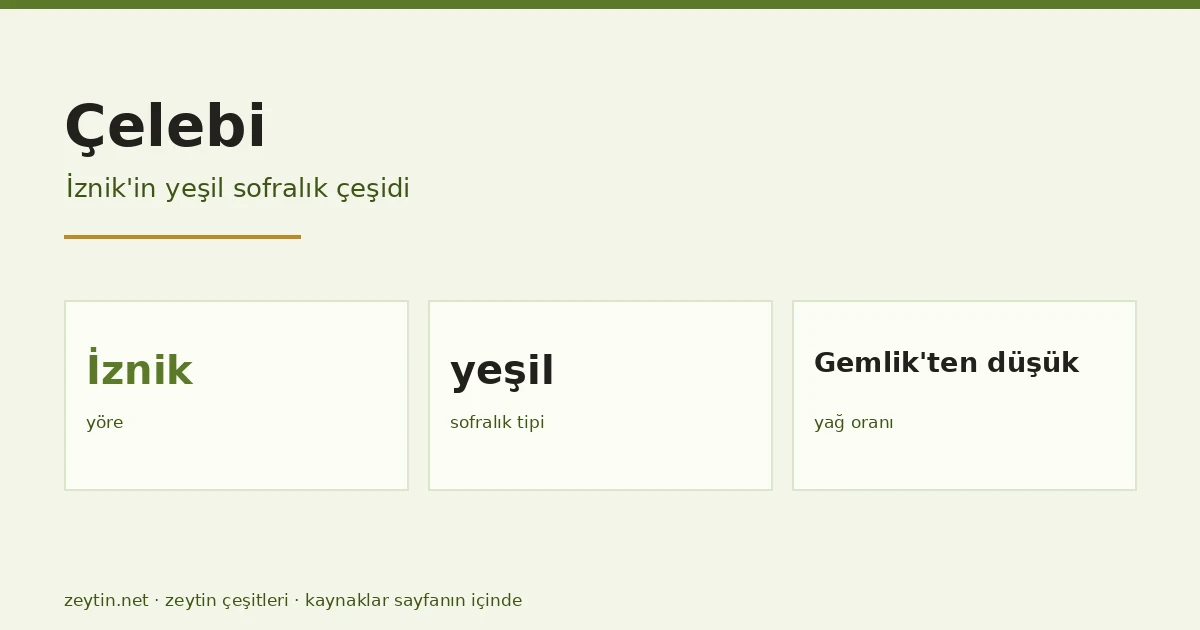
The Çelebi olive: the green table cultivar of İznik
Grown around İznik in Bursa, Çelebi is a green table cultivar. Its oil content is lower than Gemlik's — which is no drawback for a table olive.
 Article
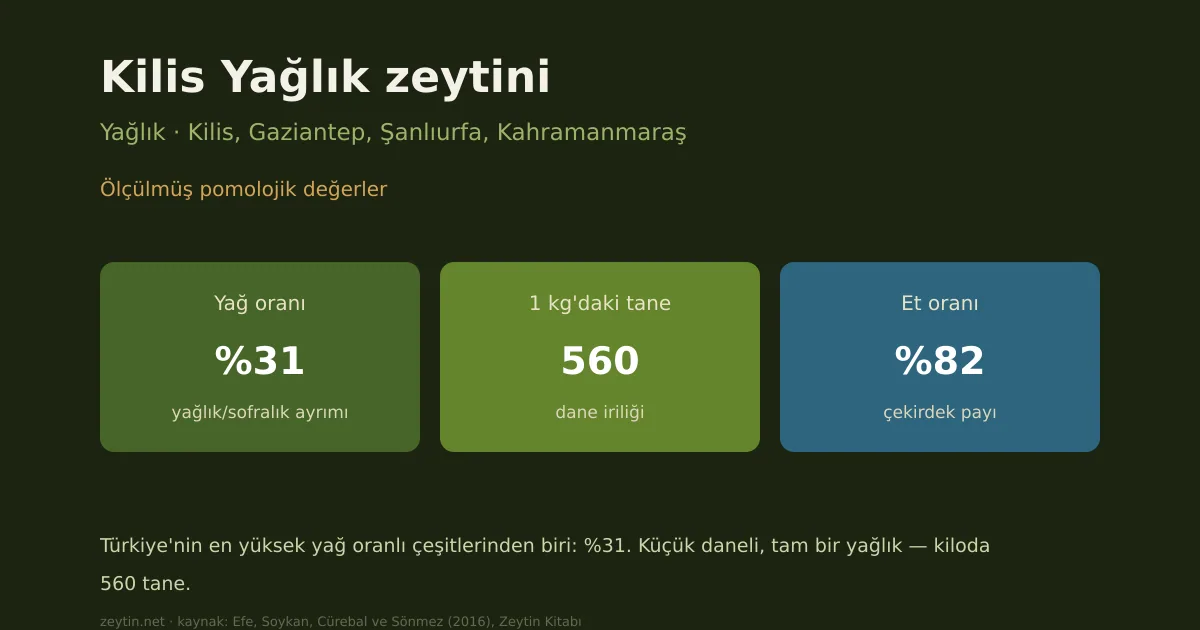
Kilis Yağlık olive: characteristics, oil content and growing areas
One of Türkiye's highest oil-yielding varieties at 31%. Small-fruited and purely for oil — 560 fruits per kilo.
 Article
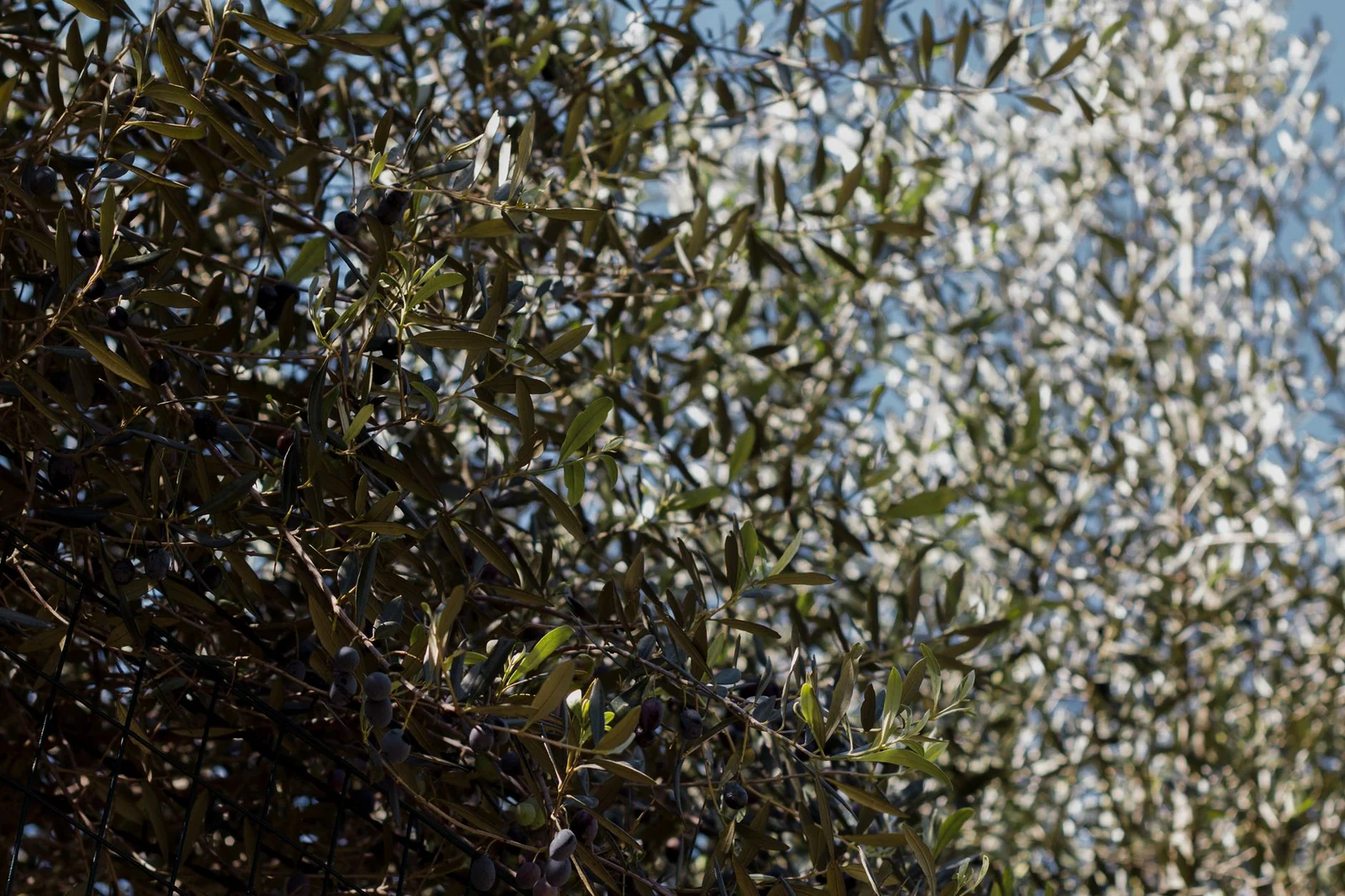
The Olive Calendar: The Olive Year Month by Month
When to prune, when it flowers, which olives are picked when — the year of the tree and the grower, month by month.
 Article
Butko olive
Butko is a recorded variety of the Black Sea. No measured pomological data published.