Olive wood: why spoons and not beams?
At 0.86 g/cm³ air-dried it is denser than walnut, yet its modulus of elasticity of 4,444 N/mm² is less than half walnut's. It resists crushing but not bending.
Olive wood is turned into spoons, bowls, knife handles and ornaments — but never into beams, posts or roof timbers. That is not tradition; there is a measurable reason.
When the physical and mechanical properties of olive wood are tested in a laboratory, a surprising picture emerges: heavy but weak.
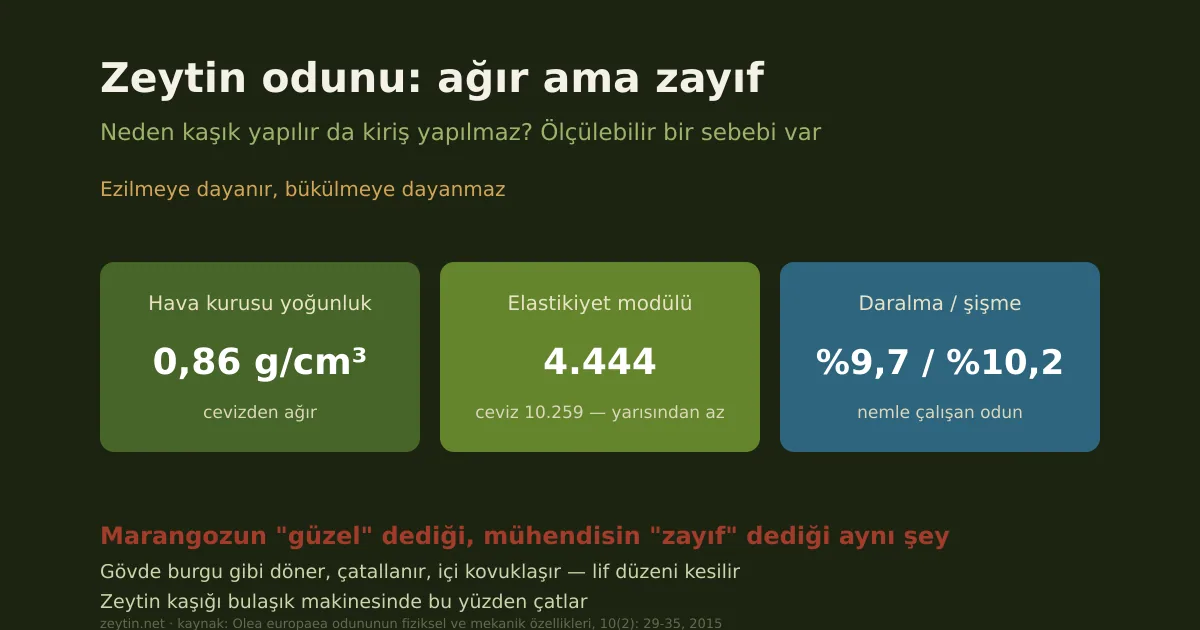
The measured values
| Air-dried density | 0.86 g/cm³ |
| Oven-dried density | 0.76 g/cm³ |
| Volumetric shrinkage | 9.7% |
| Volumetric swelling | 10.2% |
| Compression strength | 53.17 N/mm² |
| Modulus of rupture (bending) | 64.39 N/mm² |
| Modulus of elasticity | 4,444 N/mm² |
| Impact bending strength | 0.30 kgm/cm² |
Bending strength ranged from 49.00 to 84 N/mm², averaging 64.39.
Comparison: heavy is not the same as strong
The meaningful part is setting those numbers beside other woods:
| Wood | Oven-dried density | Compression | Bending (MOR) | Elasticity (MOE) |
|---|---|---|---|---|
| Olive | 0.76 | 53.17 | 64.39 | 4,444 |
| Walnut | 0.61 | 55.69 | 121.00 | 10,259.70 |
| Chestnut | 0.46 | 56.96 | 70.10 | 6,768.60 |
Density in g/cm³, strengths in N/mm². The source table includes further species, but some of their names were lost in text extraction, so only those that could be identified with certainty are reproduced here.
What the table says:
- Olive is the heaviest. At 0.76 oven-dried it is 25% denser than walnut and 65% denser than chestnut.
- Yet it is lowest in elasticity. At 4,444 N/mm² it is less than half of walnut and about two-thirds of chestnut.
- It also trails in bending: 64.39 against walnut's 121 — roughly half.
- In compression the three are close: 53.17, and all within a narrow band.
What does that mean?
Put simply: olive wood resists crushing but not bending.
The modulus of elasticity indicates how much a material deflects under load. A low modulus means more deflection at the same load and earlier permanent deformation — exactly what you do not want in a beam.
So olive wood is:
- Suited to: spoons, bowls, plates, knife handles, ornaments, small furniture parts, prayer beads — short pieces that carry no bending load.
- Unsuited to: beams, load-bearing posts, long shelves, roof members.
Why is it like this?
The reason lies in how the tree grows. The olive does not form a straight trunk: it twists, forks, and its heartwood decays into cavities. In a tree pruned for centuries, the grain is interrupted again and again.
The result is a dense wood with irregular grain. Density gives the weight; irregular grain lowers the bending strength.
That same irregularity is what makes olive wood beautiful: mottled figure, dark streaks, intricate pattern. What the woodworker calls "beautiful" and the engineer calls "weak" come from the same property.
On how that structure forms, see Edremit's monumental olives — all four old trees surveyed had measured trunk cavities.
Shrinkage and swelling: a wood that moves
Volumetric shrinkage is 9.7%, swelling 10.2%. Olive wood grows by about a tenth of its volume as it takes up moisture, and shrinks by as much as it dries.
The practical consequence: kitchenware made from olive wood moves with humidity. That is why an olive spoon cracks in a dishwasher — the machine applies heat and moisture together, and the wood swells then dries fast.
Wash by hand, dry it, and feed it occasionally with a food-safe oil.
Where does the wood come from?
Olive wood is not a forest product but a grove by-product: trees removed at replanting and thick pruning wood. Its supply is set by the renewal calendar, not by production.
By far the larger share of pruning residue is thin wood, and that carries energy value — six million tonnes a year: the energy burned at the field edge.
In short
Olive wood is heavy (0.86 g/cm³ air-dried), strong in compression and weak in bending (modulus of elasticity 4,444 N/mm², less than half of walnut's). It is therefore a wood for small objects, not for structure.
What makes it valuable and what makes it weak are the same thing: the olive's irregular growth. The beauty of the grain and the sagging of the beam share one cause.
One rating per visitor; you can change yours at any time. Ratings are real reader votes — no seeded or default scores.
Related
 Article
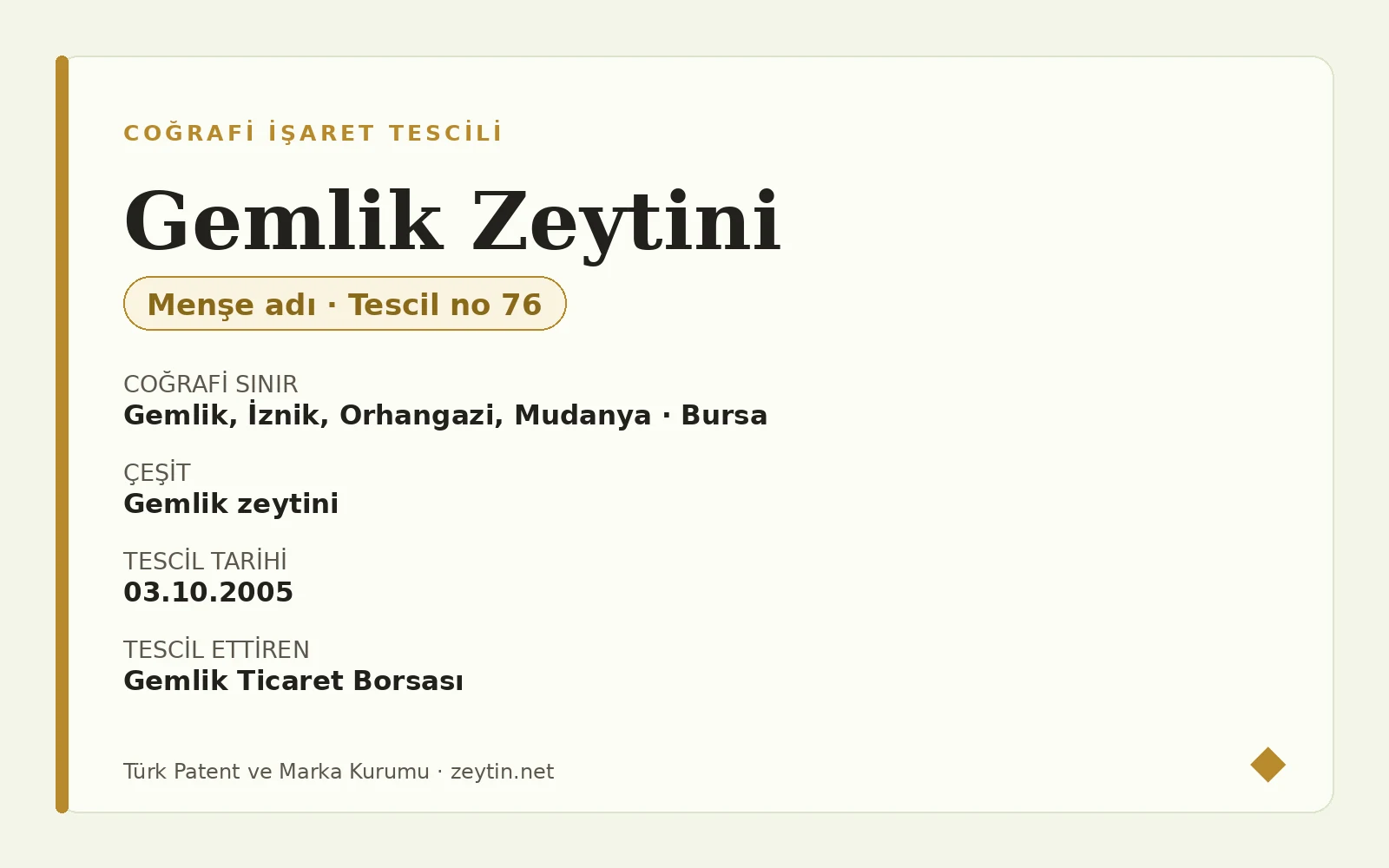
The Gemlik Olive designation of origin: what the certificate says
Turkey's first registered olive (2005, no 76). The certificate defines four districts, three cultivars, four curing methods and seven size grades — all of them binding.
Article
The Gemlik Olive designation of origin: what the certificate says
Turkey's first registered olive (2005, no 76). The certificate defines four districts, three cultivars, four curing methods and seven size grades — all of them binding.
 Article
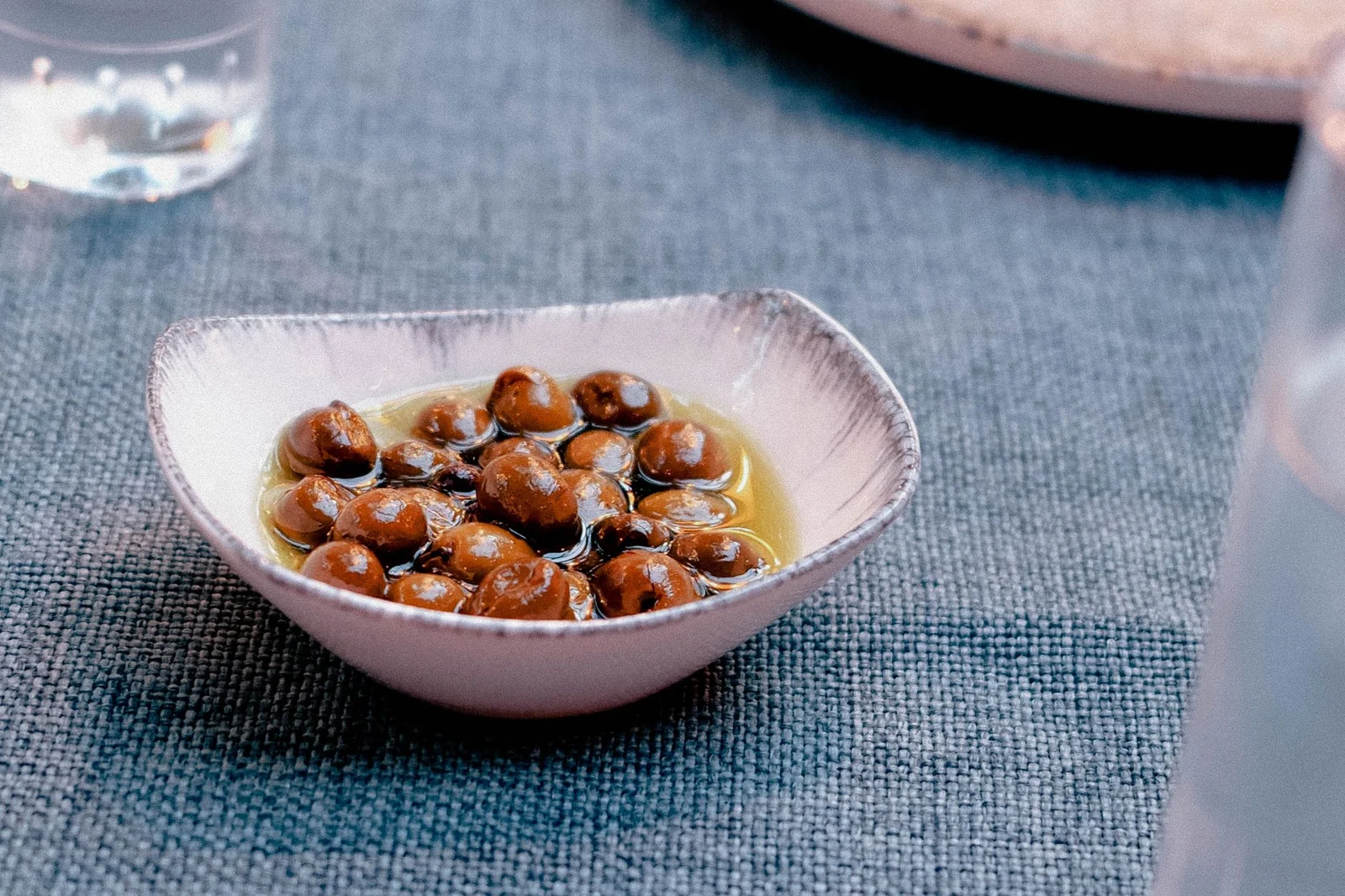
Which table olive variety is best?
The leading varieties for black and green table olives, measured fruit weights, and how curing affects quality.
Article
Which table olive variety is best?
The leading varieties for black and green table olives, measured fruit weights, and how curing affects quality.
 Article
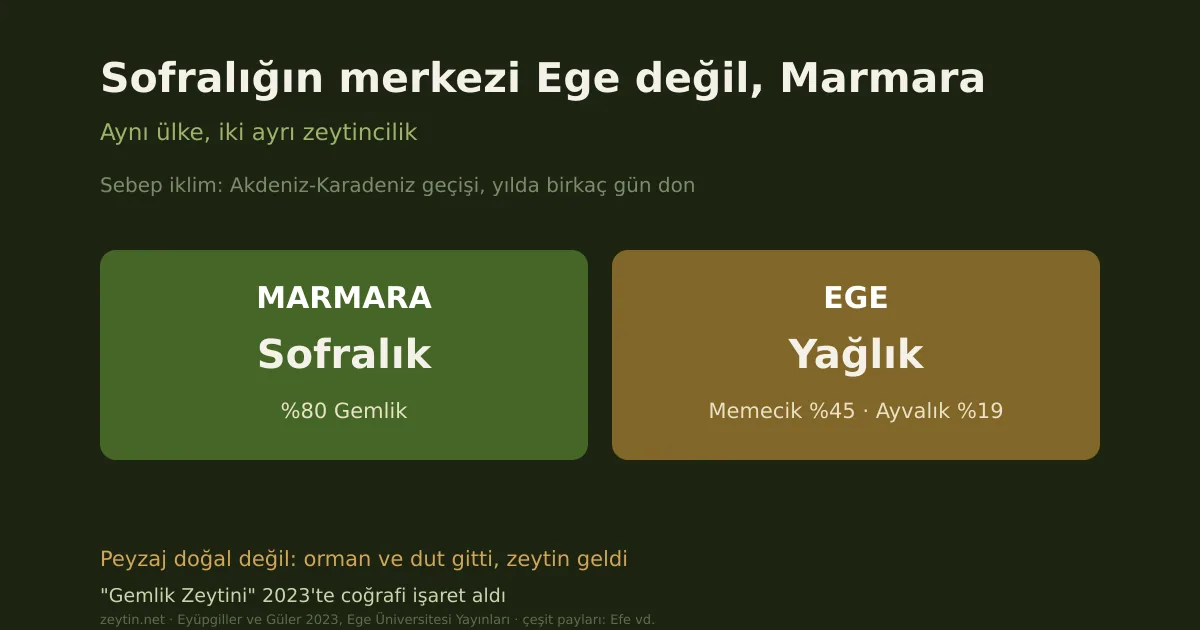
Olive growing in Marmara: the home of the table olive
The table olive's home is not the Aegean but Marmara: 80% of the region's crop is Gemlik. The reason is climate.
Article
Olive growing in Marmara: the home of the table olive
The table olive's home is not the Aegean but Marmara: 80% of the region's crop is Gemlik. The reason is climate.
 Article
Sat olive
Sat is a recorded variety of the Black Sea. No measured pomological data published.
Article
Sat olive
Sat is a recorded variety of the Black Sea. No measured pomological data published.