Zoncuk olive
Zoncuk is a recorded variety of south-eastern Anatolia. No measured pomological data published.
Zoncuk is one of the recorded olive varieties of south-eastern Anatolia.
Characteristics
Large-fruited, used as a table olive.

Where it grows
Zoncuk is recorded in south-eastern Anatolia. The provinces where olive production concentrates in this region: Gaziantep, Kilis, Şanlıurfa, Adıyaman, Mardin.
Regional conditions, varietal spread and output: olive growing in south-eastern Anatolia
Measured values
Among the eight local cultivars measured in Derik, Zoncuk has the smallest fruit.
| Property | Value |
|---|---|
| Fruit weight | 1.52 g |
| Fruit length × width | 16.26 × 12.12 mm |
| Fruit shape index | 1.34 |
| Stone weight | 0.50 g |
| Flesh ratio | 67.1% |
At 1.52 g it falls in the "light" class; Mavi, at 7.10 g, is almost five times heavier.
Small fruit raises the stone's share: the flesh ratio of 67.1% is the lowest of the eight. A third of the fruit is stone — which limits its value as a table olive without ruling out its use for oil.
Other varieties of the region
Belluti · Eğriburun · Hursuki · Kalem Bezi · Kan Çelebi · Kilis Yağlık
Locally
Zoncuk is also known locally as Zonciki and is one of the traditional varieties of the Derik district of Mardin. Derik is the homeland of Halhalı, and olives there are still largely grown by traditional methods.
In neighbouring Şırnak, the measured Kumçatı, Kızılsu and Cizre genotypes showed that the unnamed varieties of this basin can compete with Ayvalık and Gemlik.
More: olive growing in Mardin
Source
- Sakar, E. et al. (2023) — Phenological, morphological and physicochemical characteristics of some local olive varieties grown in Mardin (Derik), International Journal of Agriculture, Environment and Food Sciences 7(2), pp. 448-457
- Efe, R., Soykan, A., Cürebal, İ. & Sönmez, S. (2016) — Characteristics and Geographical Distribution of Olive Varieties Grown in Turkey, Zeytin Kitabı, pp. 37-80
- Olive map of Turkey
Where it stands among measured varieties
çeşit sayfası
çeşit sayfası
çeşit sayfası
çeşit sayfası
Values are those published on each variety's own page; the comparison covers only varieties with a measured figure, so it is a comparison of what is known — not of every Turkish variety. See the full ranking and how it is built →
One rating per visitor; you can change yours at any time. Ratings are real reader votes — no seeded or default scores.
Related
 Article
Olive and Olive Oil Glossary
Oleuropein, lampante, pomace, malaxation, designation of origin… Short, verifiable definitions of olive and olive oil terms.
Article
Olive and Olive Oil Glossary
Oleuropein, lampante, pomace, malaxation, designation of origin… Short, verifiable definitions of olive and olive oil terms.
 Article
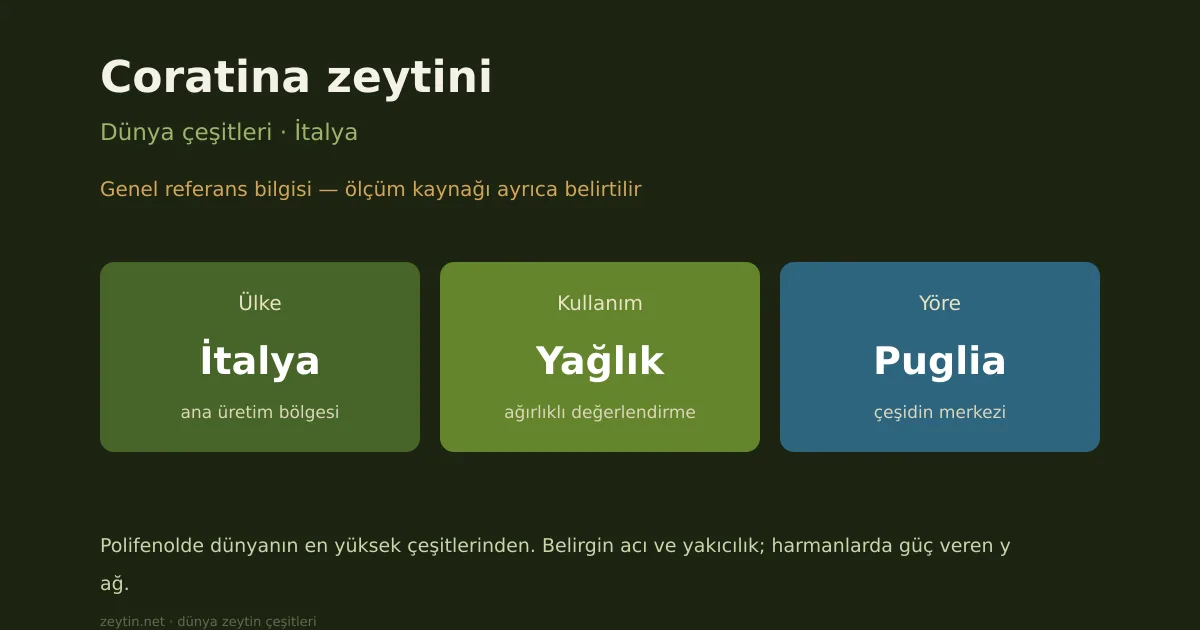
Coratina olive: Italy's oil variety
Among the highest-polyphenol varieties in the world. Distinctly bitter and pungent — the oil that gives blends their backbone.
Article
Coratina olive: Italy's oil variety
Among the highest-polyphenol varieties in the world. Distinctly bitter and pungent — the oil that gives blends their backbone.
 Article
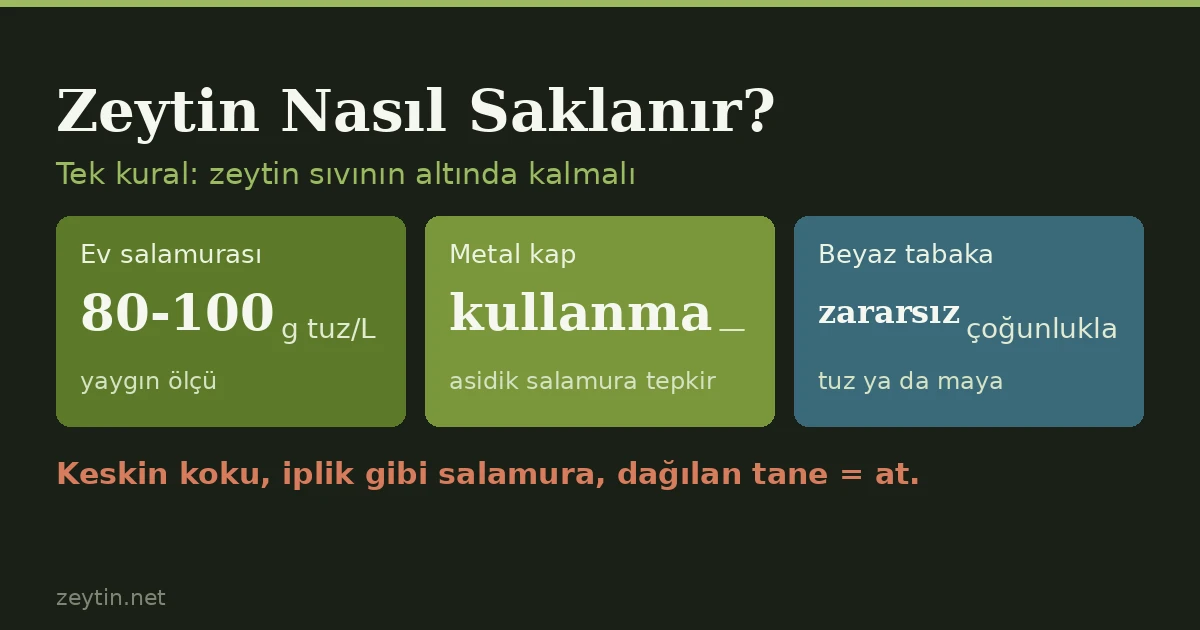
How to Store Olives: From an Opened Jar to a Winter Batch
How long does an opened jar last, what to do when the brine runs low, how to keep dry-cured olives? Why mould forms and what the white film actually is.
Article
How to Store Olives: From an Opened Jar to a Winter Batch
How long does an opened jar last, what to do when the brine runs low, how to keep dry-cured olives? Why mould forms and what the white film actually is.
 Article
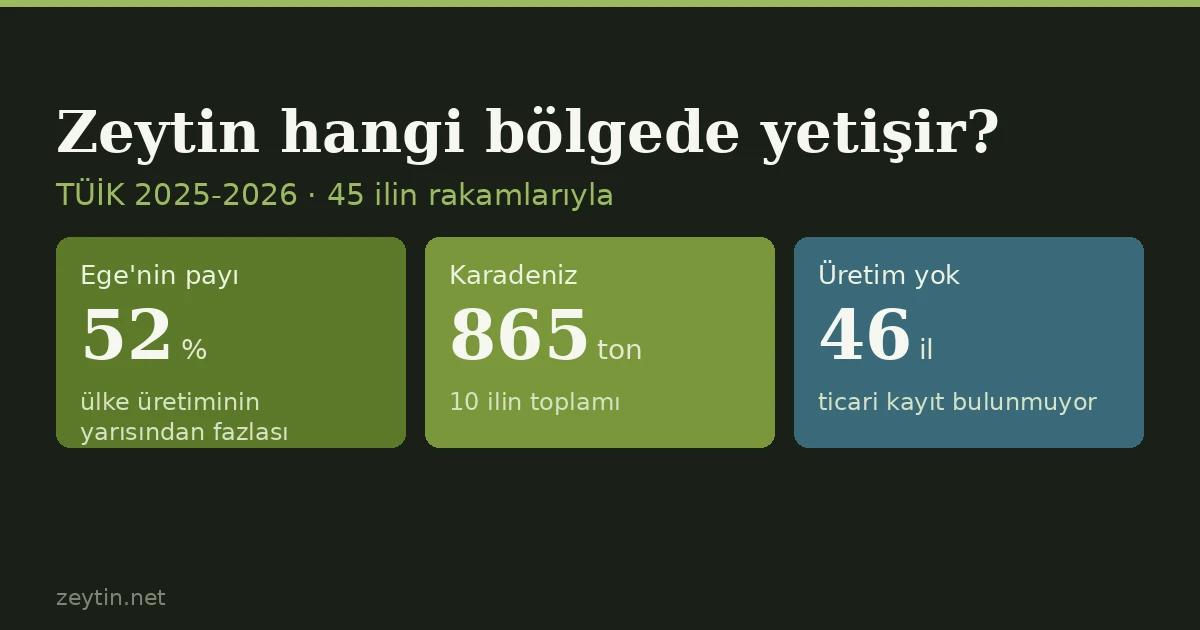
Where do olives grow in Turkey? The picture in 45 provinces
The Aegean alone produces half the national crop; ten Black Sea provinces together manage 865 tonnes. In 46 provinces there is no commercial production at all.
Article
Where do olives grow in Turkey? The picture in 45 provinces
The Aegean alone produces half the national crop; ten Black Sea provinces together manage 865 tonnes. In 46 provinces there is no commercial production at all.