Melkebazi olive
Melkebazi is a recorded variety of south-eastern Anatolia. No measured pomological data published.
Melkebazi is one of the recorded olive varieties of south-eastern Anatolia.
Characteristics
Large-fruited, used as a table olive.

Where it grows
Melkebazi is recorded in south-eastern Anatolia. The provinces where olive production concentrates in this region: Gaziantep, Kilis, Şanlıurfa, Adıyaman, Mardin.
Regional conditions, varietal spread and output: olive growing in south-eastern Anatolia
Measured values
Among the eight local cultivars of Derik, Melkabazi ranks second in oil content at 26.0% — behind only Derik Halhalı at 30.0%.
| Property | Value |
|---|---|
| Oil content | 26.0% |
| Fruit weight | 4.30 g |
| Fruit length × width | 29.74 × 15.17 mm |
| Fruit shape index | 1.96 |
| Stone weight | 0.70 g |
| Flesh ratio | 83.7% |
The fruit is "large" at 4.30 g with a flesh ratio of 83.7% — seven points above Belluti despite near-identical size, because its stone is lighter (0.70 g against 1.05 g).
With a fruit shape index of 1.96 it is the most elongated of the eight, and its stone follows at 23.36 mm. On the strength of that oil content and texture, the researchers recommend Melkabazi be grown as an oil variety.
Other varieties of the region
Belluti · Eğriburun · Hursuki · Kalem Bezi · Kan Çelebi · Kilis Yağlık
Locally
Melkebazi (locally Melkabazi) is among the varieties grown by traditional methods in the Derik district of Mardin. Across Halhalı's range — Mardin, Hatay, Gaziantep and Kahramanmaraş — there are roughly 2 million trees; Melkebazi sits on the table-olive side of that basin.
More: olive growing in Mardin
Where it stands among measured varieties
çeşit sayfası
çeşit sayfası
çeşit sayfası
çeşit sayfası
Values are those published on each variety's own page; the comparison covers only varieties with a measured figure, so it is a comparison of what is known — not of every Turkish variety. See the full ranking and how it is built →
One rating per visitor; you can change yours at any time. Ratings are real reader votes — no seeded or default scores.
Related
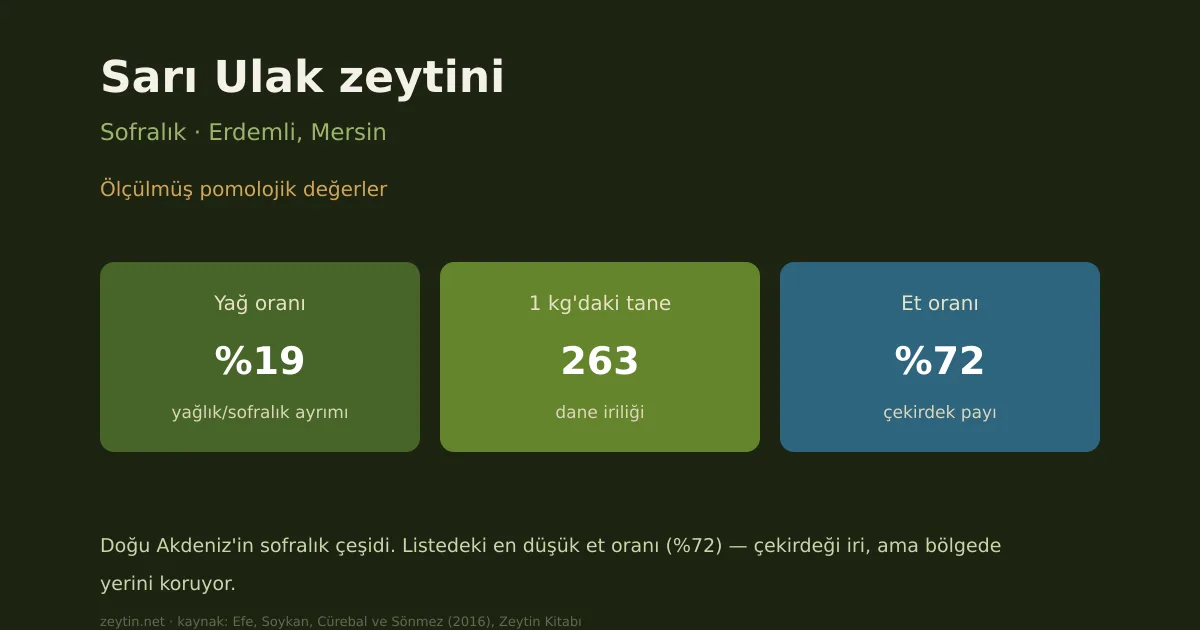 Article
Sarı Ulak olive: characteristics, oil content and growing areas
The eastern Mediterranean's table variety. The lowest flesh ratio on the list (72%) — a large stone, yet it holds its ground.
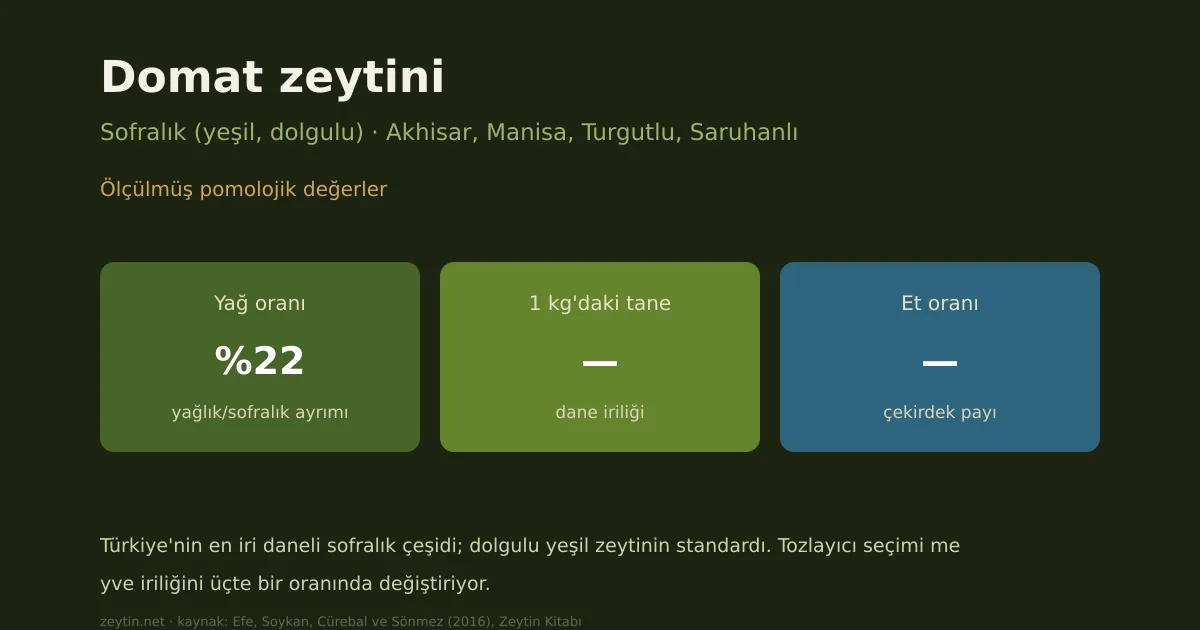 Article
The Domat olive: the cultivar behind stuffed olives, in numbers
Domat, Turkey's largest table cultivar: 7.96 g fruit, 89% flesh, a 552-hour chilling requirement. Why stuffed olives are always made from it, the disagreement over oil content, and why it is never planted alone.
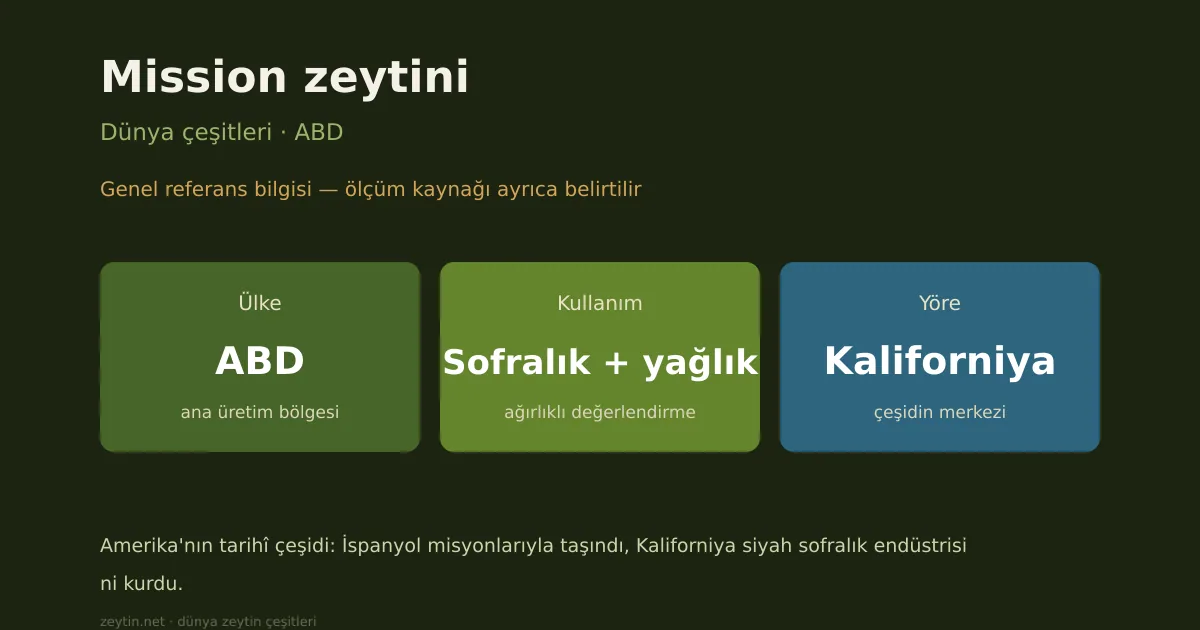 Article
Mission olive: United States's table and oil variety
America's historic variety: carried by the Spanish missions, it built California's black table olive industry.
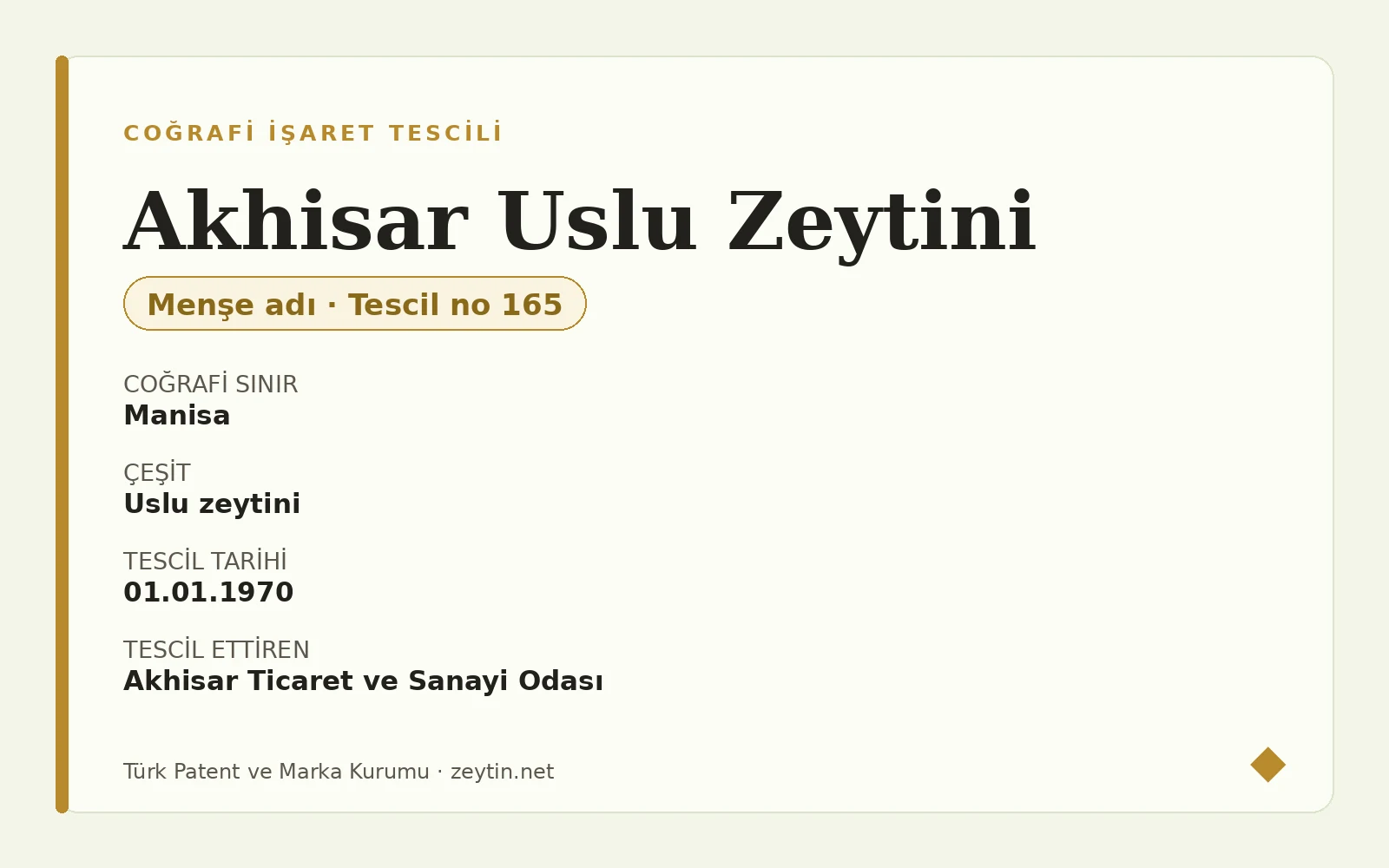 Article
Akhisar Uslu Olive: the measured specification of a black table olive
Registered in 2010 as a designation of origin. The certificate defines the Uslu cultivar in figures — and corrects a published error: the flesh ratio is 85.17%.