İzmir Sofralık olive
İzmir Sofralık is a recorded variety of the Aegean. Described in the source.
İzmir Sofralık is one of the recorded olive varieties of the Aegean.
Characteristics
A markedly large-fruited variety originating in İzmir. The fruit has a nipple at its tip. Yield is low and periodicity is severe; it is used as a green table olive.

Where it grows
İzmir Sofralık is recorded in the Aegean. The provinces where olive production concentrates in this region: Manisa, İzmir, Aydın, Muğla, Denizli.
Regional conditions, varietal spread and output: olive growing in the Aegean
Record status
The variety is described in the source, but no detailed pomological series (fruit weight, flesh-to-stone ratio, oil content) has been published.
Other varieties of the region
Domat · Edremit (Ayvalık) · Erkence · Kiraz · Memecik · Memeli
Locally
İzmir Sofralık takes its name from its origin. Its range is not confined to the Aegean: it is also recorded in Marmara provinces such as Yalova and Tekirdağ.
Yalova illustrates the variety's character well — in the 2024-25 season the province's entire crop went to table use, with none sent for pressing.
Where it stands among measured varieties
Canözer Ö. (1991), Standart Zeytin Çeşitleri Kataloğu, T.C. Tarım ve Köyişleri Bakanlığı, Seri:16
Values are those published on each variety's own page; the comparison covers only varieties with a measured figure, so it is a comparison of what is known — not of every Turkish variety. See the full ranking and how it is built →
One rating per visitor; you can change yours at any time. Ratings are real reader votes — no seeded or default scores.
Related
 Article
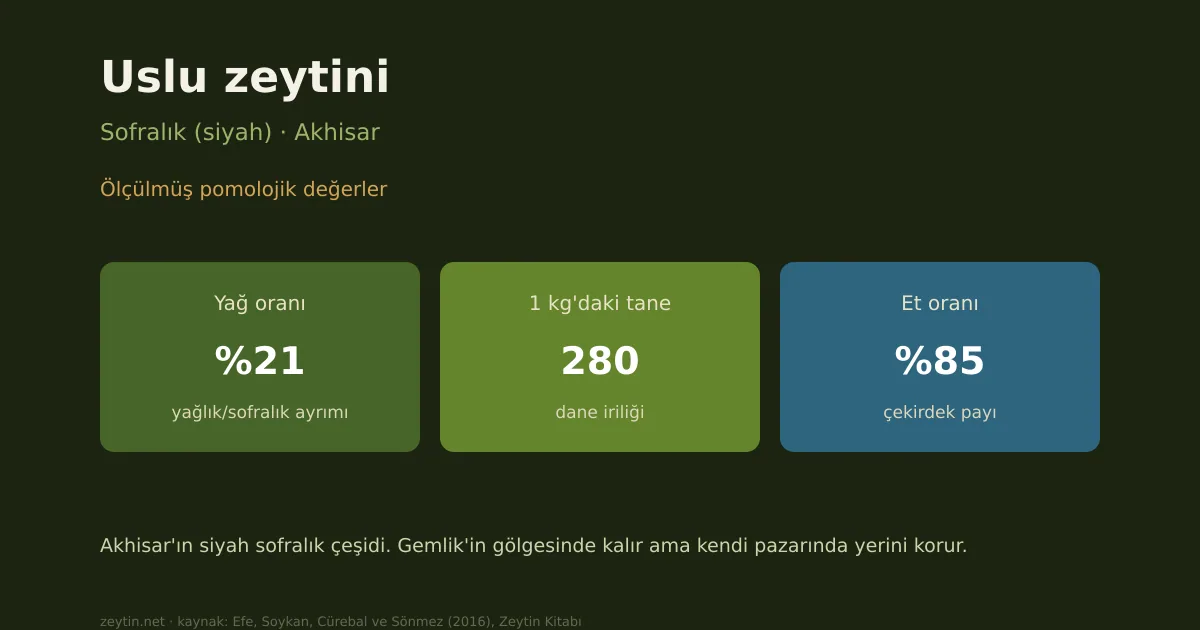
Uslu olive: characteristics, oil content and growing areas
Akhisar's black table variety. Overshadowed by Gemlik, yet holding its own market.
 Article
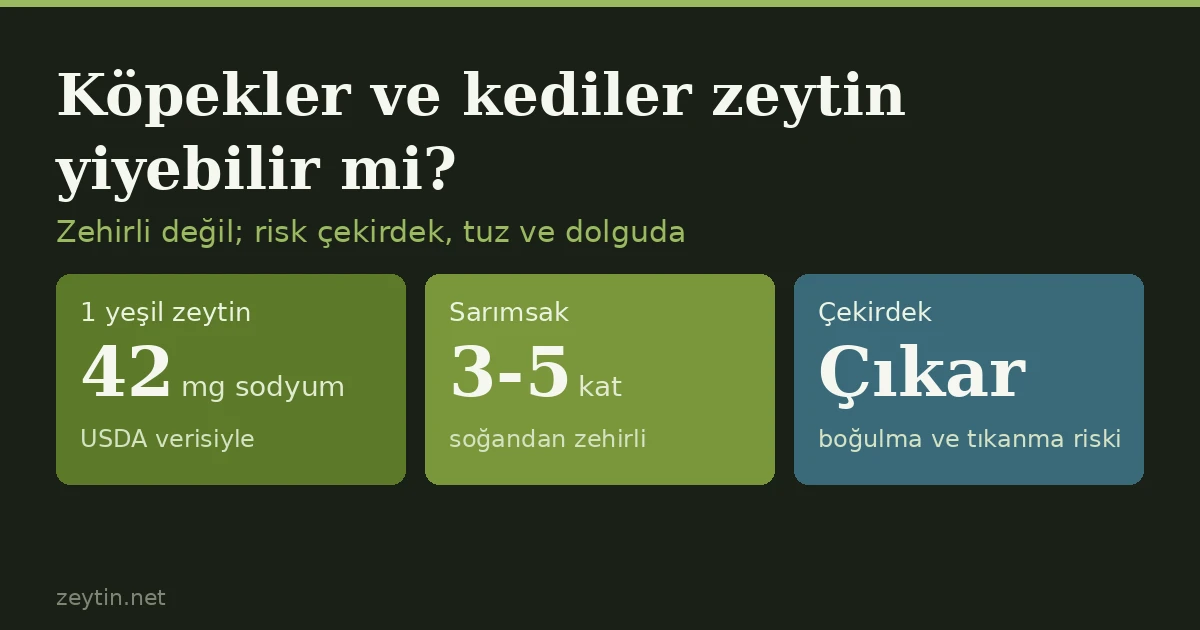
Can dogs and cats eat olives? Pits, salt and garlic fillings
Olives are not considered toxic to dogs or cats: they are not on the ASPCA list and the AKC says they are not toxic. The risks lie in the pit (choking, intestinal blockage), the salt, garlic and marinated fillings and olive oil (pancreatitis). How much is too much, whether cats really love olives, and when to see a vet.
 Article
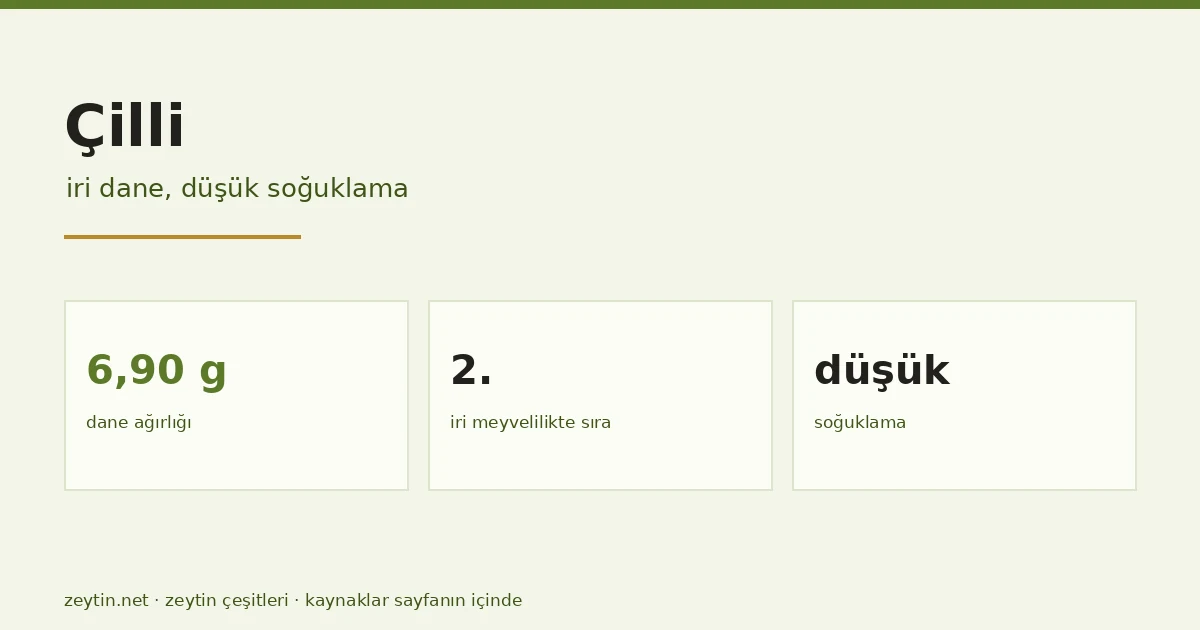
The Çilli olive: large fruit, low chilling requirement
At 6.90 g it ranks among the large-fruited cultivars, and sits in the low chilling-requirement group — second only to Adana Topağı.
 Article
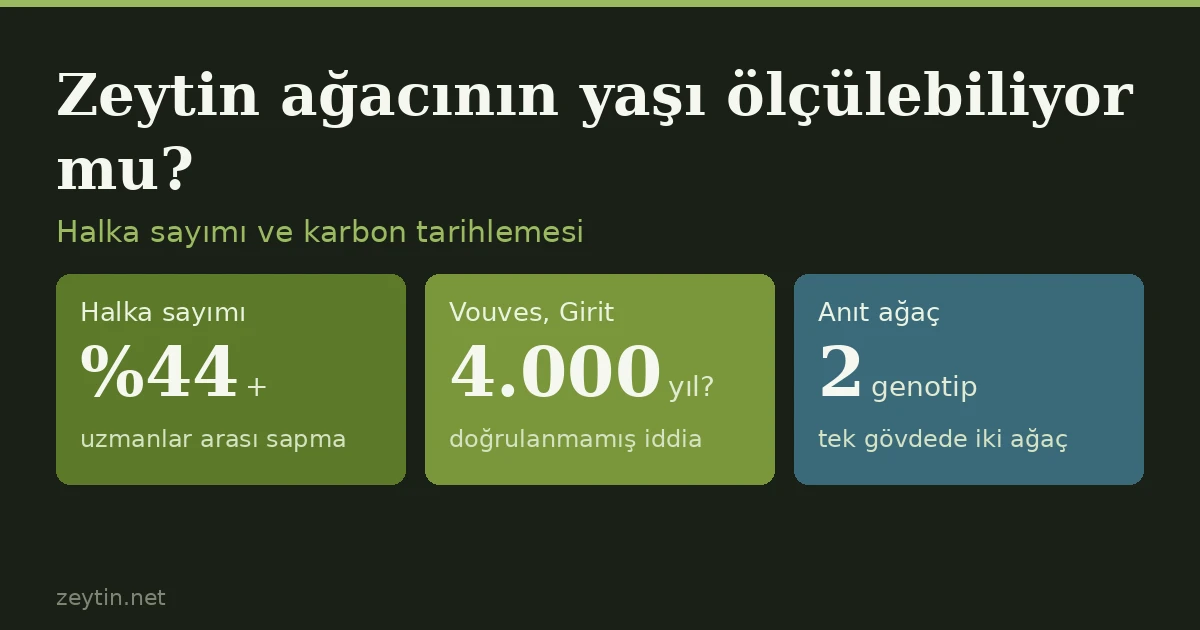
How long does an olive tree live?
There are plenty of "thousand-year-old olive" signs and almost no measurements. Counting annual rings does not work on olive: when ten experts in five laboratories were given the same samples, their ring counts differed by more than 44%. Radiocarbon dating carries its own trap. So does the tree have a real age limit — and what does it mean that Crete's famous monumental olive turns out to consist of two different genotypes?