Büyük Topak Ulak olive
Büyük Topak Ulak is a recorded variety of the Mediterranean. Described in the source.
Büyük Topak Ulak is one of the recorded olive varieties of the Mediterranean.
Characteristics
Grown in Tarsus, Seyhan, İskenderun, Anamur, Erdemli and Sütçüler (Isparta). Originating in Tarsus, it is called Topak Aşı in some localities.

Where it grows
Büyük Topak Ulak is recorded in the Mediterranean. The provinces where olive production concentrates in this region: Mersin, Hatay, Osmaniye, Adana, Antalya, Kahramanmaraş.
Regional conditions, varietal spread and output: olive growing in the Mediterranean
Measured values
The only published figure for Büyük Topak Ulak is its oil content, and two independent sources agree: one gives 20.2%, the other "around 20%".
That places it among the moderately oily varieties of the Mediterranean region. For comparison, Sarı Ulak stands at 19%.
The sources describe the fruit as large with a stone that is small relative to the fruit, and the flesh as soft. That description suggests a high flesh ratio — but no measured flesh ratio has been published, so we give no figure.
⚠ No published measurement exists for fruit weight, flesh-to-stone ratio or chilling requirement. These have not been estimated.
Other varieties of the region
Sarı Haşebi · Sarı Ulak · Saurani
Locally
Büyük Topak Ulak originates in Tarsus; it is also grown in Seyhan, İskenderun, Anamur, Erdemli and the Sütçüler district of Isparta. In some localities it is known as Topak Aşı.
Its range follows the Mediterranean coastal line. Its presence in Isparta is notable: the province entered olive growing late, through a ministry-backed sapling programme concentrated in the Sütçüler district.
More: olive growing in Mersin · olive growing in Isparta
Source
- Efe, R., Soykan, A., Cürebal, İ. & Sönmez, S. (2016) — Characteristics and Geographical Distribution of Olive Varieties Grown in Turkey, Zeytin Kitabı, pp. 37-80
- Olive map of Turkey
Where it stands among measured varieties
Values are those published on each variety's own page; the comparison covers only varieties with a measured figure, so it is a comparison of what is known — not of every Turkish variety. See the full ranking and how it is built →
One rating per visitor; you can change yours at any time. Ratings are real reader votes — no seeded or default scores.
Related
 Article
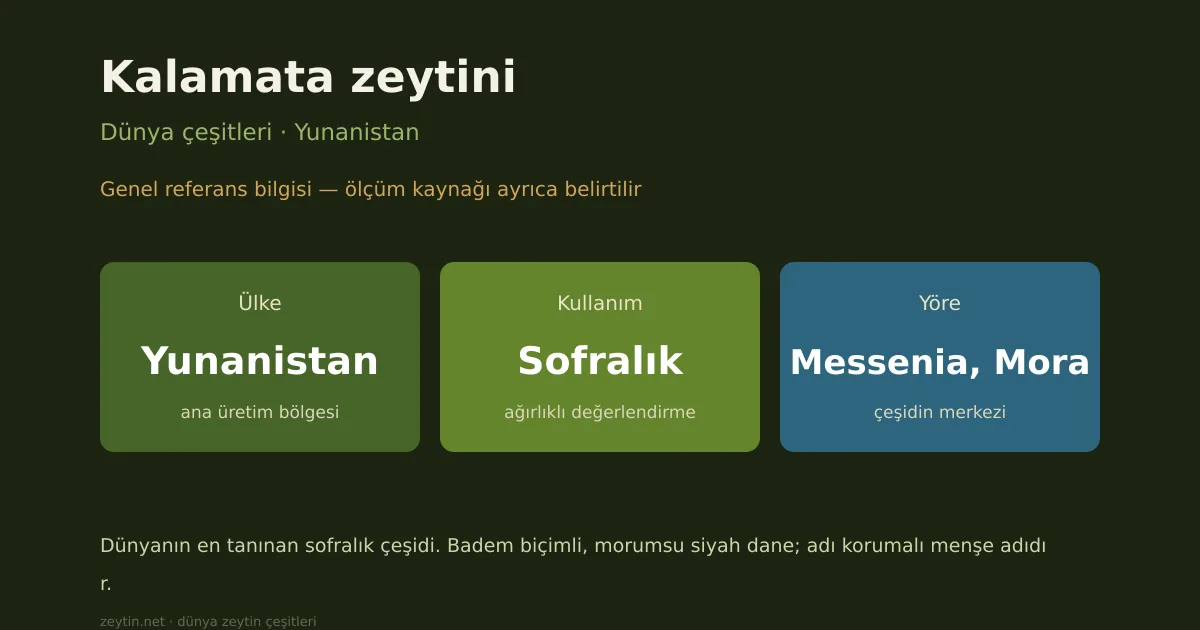
Kalamata olive: Greece's table variety
The world's best-known table olive. Almond-shaped, purplish-black fruit, and a name that is a protected designation of origin.
Article
Kalamata olive: Greece's table variety
The world's best-known table olive. Almond-shaped, purplish-black fruit, and a name that is a protected designation of origin.
 Article
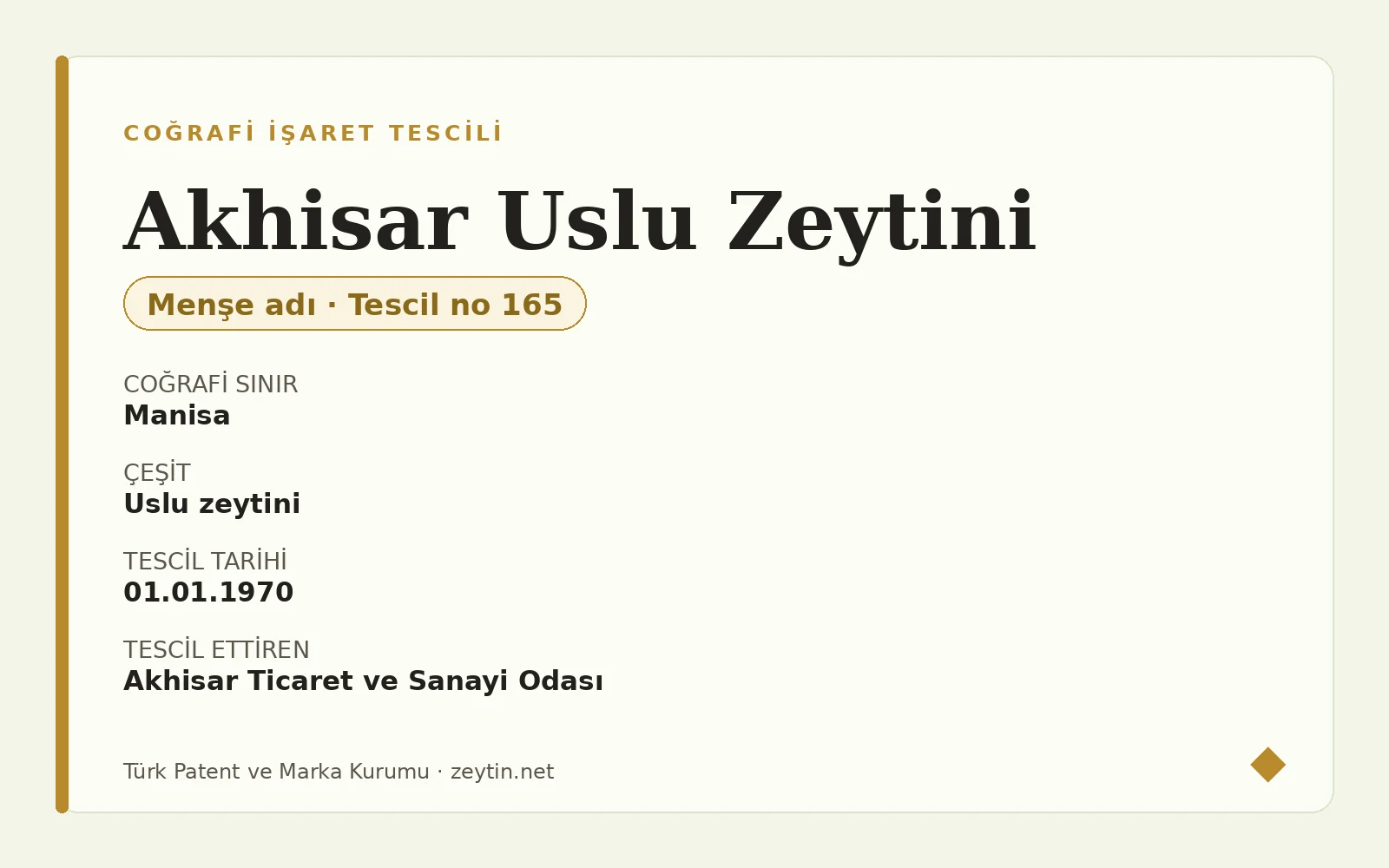
Akhisar Uslu Olive: the measured specification of a black table olive
Registered in 2010 as a designation of origin. The certificate defines the Uslu cultivar in figures — and corrects a published error: the flesh ratio is 85.17%.
Article
Akhisar Uslu Olive: the measured specification of a black table olive
Registered in 2010 as a designation of origin. The certificate defines the Uslu cultivar in figures — and corrects a published error: the flesh ratio is 85.17%.
 Article
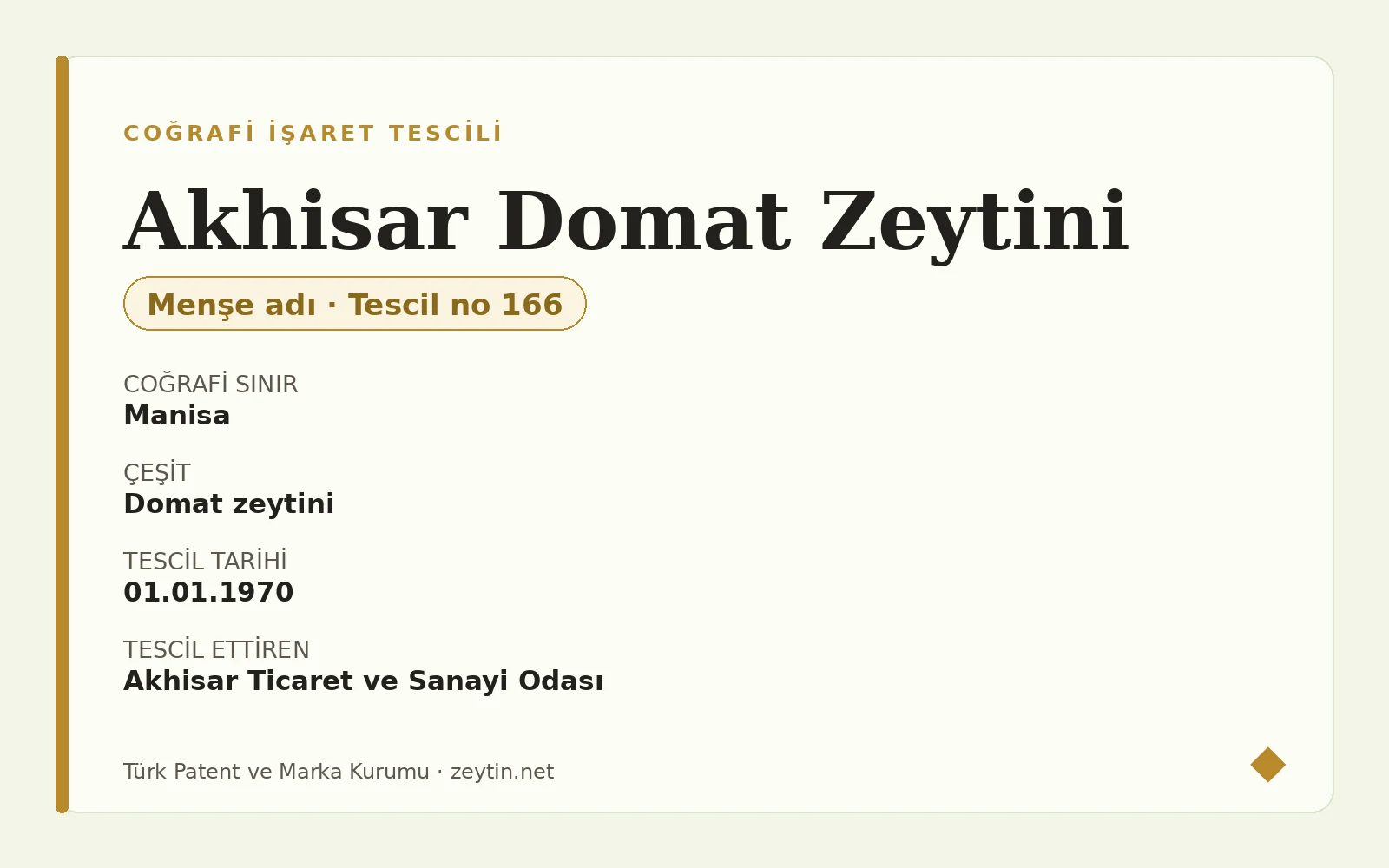
Akhisar Domat Olive: the specification behind stuffed olives
Registered in 2010. The certificate sets calibre separately for each product form — 170-290 for stuffed, 110-260 for cocktail. One cultivar, different sizes.
Article
Akhisar Domat Olive: the specification behind stuffed olives
Registered in 2010. The certificate sets calibre separately for each product form — 170-290 for stuffed, 110-260 for cocktail. One cultivar, different sizes.
 Article
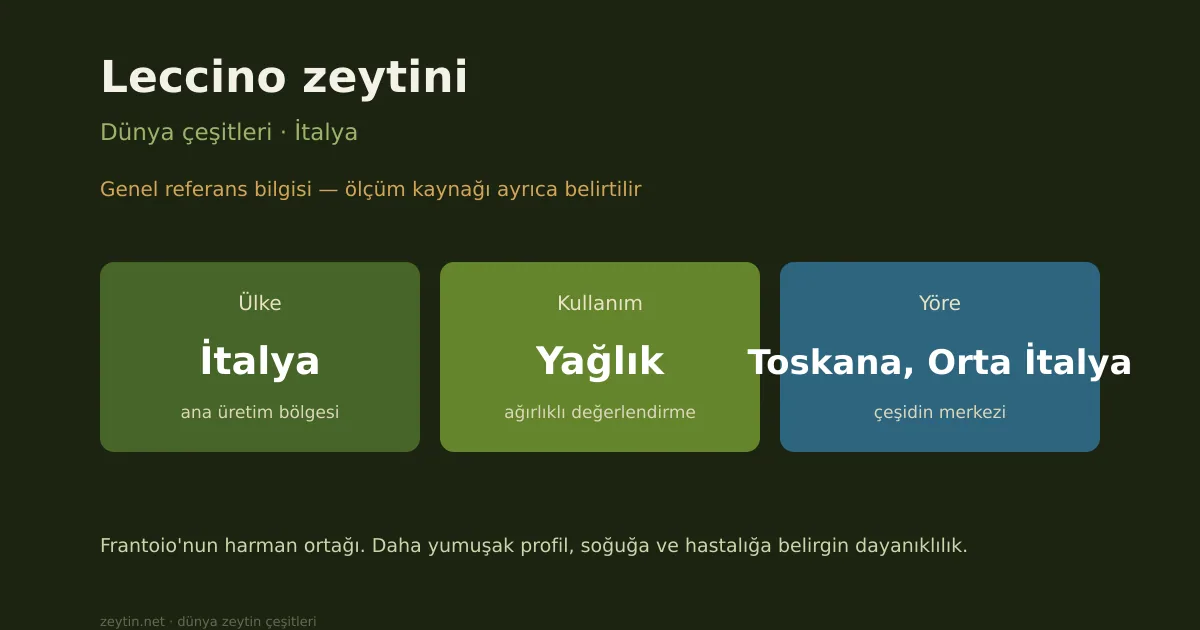
Leccino olive: Italy's oil variety
Frantoio's blending partner. A softer profile with notable cold and disease tolerance.
Article
Leccino olive: Italy's oil variety
Frantoio's blending partner. A softer profile with notable cold and disease tolerance.