Chilling requirement in olives: which variety grows where?
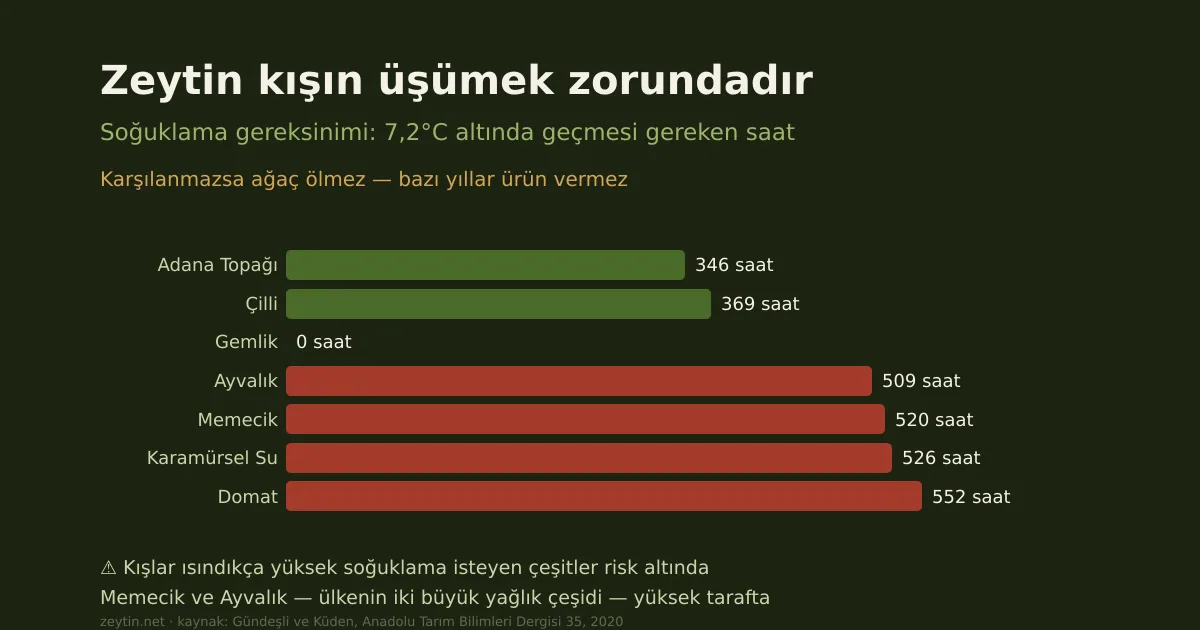
The olive must spend time below 7.2°C in winter. Adana Topağı needs 346 hours, Domat 552. Unmet, some years bring no crop.
The olive likes warmth — true. But there is a less familiar fact: the olive must also be cold for a certain time in winter. Without enough chilling, its buds do not break properly, flowering is disrupted and yield falls.
This is the chilling requirement, and it varies by variety. What decides where a variety will grow is therefore not only the summer heat but how cold the winter runs.
Why this matters now is plain: winters are warming.
What is chilling, and how is it measured?
The tree enters dormancy in autumn. To come out of it, it must spend a certain time at low temperature. That time is measured two ways:
- Standard method: total hours spent below +7.2°C (45°F)
- Chill units (CU): the Richardson model, which weights each temperature band differently and is more sensitive
Both measure the same thing on different scales. The table below gives both.
How much cold does each variety need?
Measurements on nine Turkish varieties and one foreign clone at the olive gene resource orchard of Çukurova University, over the 2016-2017 season:
| Variety | Chill units | Hours |
|---|---|---|
| Adana Topağı | 234 | 346 |
| Çilli | 247 | 369 |
| Mavi | 260 | 394 |
| Gemlik | 272 | 410 |
| Arbequina IRTA-18 | 289 | 459 |
| Ayvalık | 308 | 509 |
| Memecik | 316 | 520 |
| Manzanilla | 319 | 520 |
| Karamürsel Su | 319 | 526 |
| Domat | 333 | 552 |
Source: Gündeşli and Küden (2020), Çukurova University olive gene resource orchard, 2016-2017.
The gap between lowest and highest is 206 hours — about nine days. It sounds small, but it is exactly the difference that decides whether a variety will settle in a district.
Why it matters: the Adana case
The same study measured Adana's chilling accumulation that season:
| Method | Value |
|---|---|
| Chill units | 367 CU |
| Standard | 624 hours |
At 624 hours that is above every variety in the table — so in that season no variety in Adana would have suffered a chilling deficit. The study's own reading is more cautious:
t; Adana Topağı, Çilli, Mavi, Gemlik and Arbequina IRTA-18 appear suitable for cultivation in Adana without a chilling deficiency problem.
For Ayvalık there is a direct warning:
t; The chilling requirement of the Ayvalık variety was found to be 509 hours. This indicates that in some years the cause of poor yield in Adana may be a failure to meet the chilling requirement.
In short: take a northern variety south and the tree survives, but in some years it will not crop — and the reason goes unrecognised, because nobody thinks to ask whether the winter was cold enough.
⚠ The study adds an honest caveat: chilling may not be the only cause. Alternate bearing, pollination biology, nutrition, climate and drought all play a part.
Flowering shifts later
For varieties with a high chilling requirement there is a further consequence:
t; Like Ayvalık, the higher-chilling varieties Memecik, Manzanilla, Karamürsel Su and Domat have their flowering shifted into February.
Where chilling is not completed the tree wakes late and the phenological calendar slides. Set against the normal phenological stages of the varieties, that is a serious deviation.
The climate change connection
Read alongside warming winters, this table changes meaning. As winters warm, the number of hours below 7.2°C falls. Then:
- Low-chilling varieties (Adana Topağı 346 hours, Çilli 369) are safer
- High-chilling varieties (Domat 552, Karamürsel Su 526, Memecik 520) are at risk
And note: Türkiye's commonest oil variety, Memecik, needs 520 hours, and the second, Ayvalık, 509. The two varieties carrying the backbone of the country's olive oil production sit on the high-chilling side of the list.
Choosing a variety for a new grove is therefore not only a question of yield and oil content. The study's own recommendation runs the same way: top-working unsuitable orchards onto varieties appropriate to the region, or choosing accordingly when planting anew.
A side finding: fruit dimensions
The same study also made pomological measurements. The extremes:
| Largest | Smallest | |
|---|---|---|
| Fruit weight | Karamürsel Su 9.44 g | Arbequina IRTA-18 1.09 g |
| Fruit length | Karamürsel Su 34.83 mm | Arbequina IRTA-18 13.10 mm |
| Fruit width | Karamürsel Su 21.83 mm | Arbequina IRTA-18 11.43 mm |
| Flesh ratio | Mavi 0.87 | Arbequina IRTA-18 0.76 |
| Fruit shape | Karamürsel Su 1.60 (long) | Arbequina IRTA-18 1.15 (round) |
⚠ There was a small inconsistency in the source: its summary gives Domat's fruit weight as 9.96 g while naming Karamürsel Su (9.44 g) as the largest fruit. The study's pomology table gives 7.96 g, and the table's own flesh (6.59 g) and pit (1.36 g) weights add up to that figure. The table value is used here.
Arbequina IRTA-18 is smallest on every measure: 1.09 grams, 13 mm long. That is no accident — Arbequina was selected for super-intensive planting systems, with a small canopy and small fruit. It is known for high oil content and excellent oil quality, but it is not a table olive.
At the other extreme is Karamürsel Su: 9.44 grams, long-shaped, fleshy. One of Marmara's table varieties.
Acidity and sugar content
Another set of measurements from the same trial matters for table processing:
| Variety | pH | Fruit acidity | Brix (%) |
|---|---|---|---|
| Çilli | 4.67 | 2.59 | 14.0 |
| Arbequina IRTA-18 | 4.88 | 3.53 | 13.4 |
| Memecik | 4.83 | 2.26 | 10.8 |
| Ayvalık | 5.01 | 2.89 | 11.2 |
| Domat | 5.01 | 3.08 | 11.1 |
| Gemlik | 5.03 | 2.97 | 11.2 |
| Adana Topağı | 5.07 | 1.93 | 10.8 |
| Mavi | 5.09 | 1.67 | 10.9 |
| Karamürsel Su | 5.13 | 1.92 | 11.2 |
| Manzanilla | 5.14 | 3.26 | 10.6 |
Brix measures soluble solids — in practice, sugar content. Since sugar is what the lactic acid
bacteria feed on in table olive processing, it directly shapes how fermentation proceeds.
Çilli (14.0%) and Arbequina IRTA-18 (13.4%) lead comfortably; the rest cluster between
10.6% and 11.2%.
Summary
- The olive must spend a set time below 7.2°C in winter; this is the chilling requirement.
- The measured range runs from Adana Topağı at 346 hours to Domat at 552.
- Türkiye's two big oil varieties sit high: Memecik 520, Ayvalık 509 hours.
- Where chilling is unmet the tree does not die but fails to crop in some years, and flowering shifts into February.
- Adana's 2016-17 winter measured 624 hours; even so a risk note was recorded for Ayvalık.
- As winters warm, high-chilling varieties are at risk.
- The remedy: top-working onto region-appropriate varieties, or choosing correctly when planting.
- Arbequina IRTA-18 had the smallest fruit measured (1.09 g) — bred for super-intensive systems.
Source
t; Gündeşli, K.T. and Küden, A.B. (2020). Determination of chilling requirements and fruit quality characteristics of some domestic and foreign olive cultivars. Anadolu Journal of Agricultural Sciences, 35: 285-291. doi:10.7161/omuanajas.655591
Related reading: Olive varieties · The Memecik olive · The Ayvalık (Edremit) olive · Twenty trees per decare, or 250?
One rating per visitor; you can change yours at any time. Ratings are real reader votes — no seeded or default scores.
Related
 Article
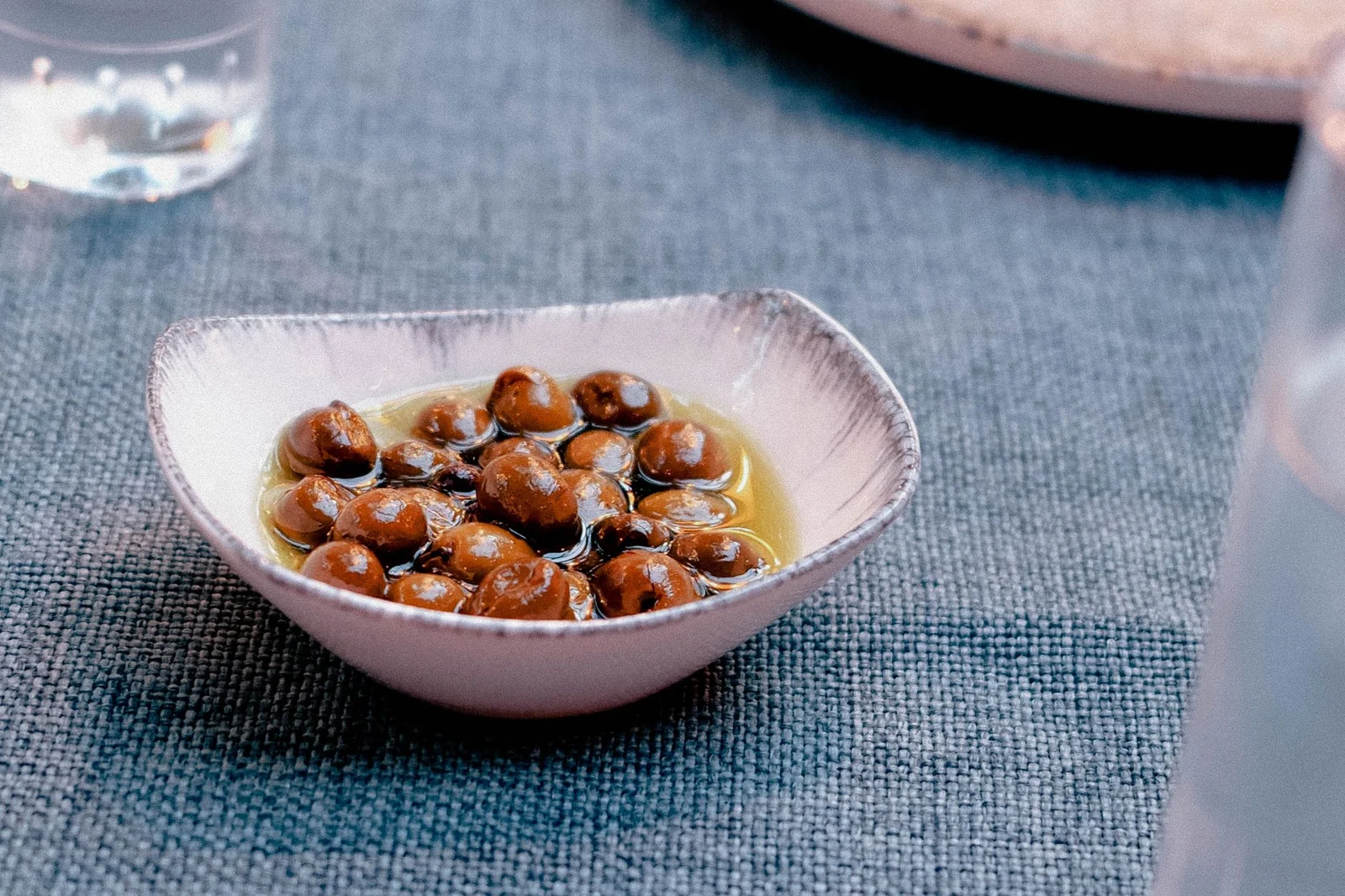
Which table olive variety is best?
The leading varieties for black and green table olives, measured fruit weights, and how curing affects quality.
Article
Which table olive variety is best?
The leading varieties for black and green table olives, measured fruit weights, and how curing affects quality.
 Article
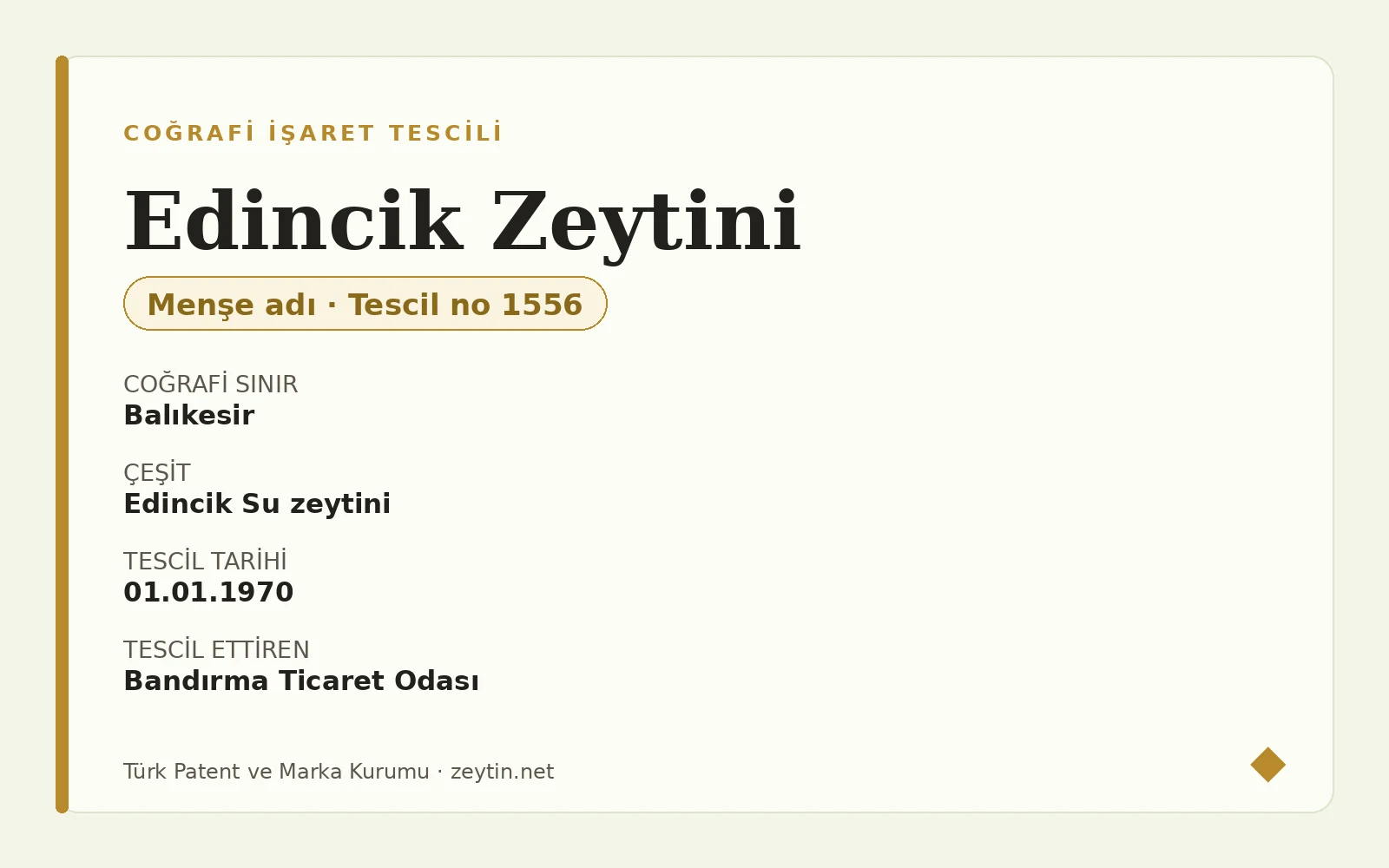
Edincik Olive: high water content makes it a table olive
Registered in 2024. The certificate gives one reason why the cultivar goes to the table: high water content. Its volatiles include 1.5-25% ethyl acetate.
Article
Edincik Olive: high water content makes it a table olive
Registered in 2024. The certificate gives one reason why the cultivar goes to the table: high water content. Its volatiles include 1.5-25% ethyl acetate.
 Article
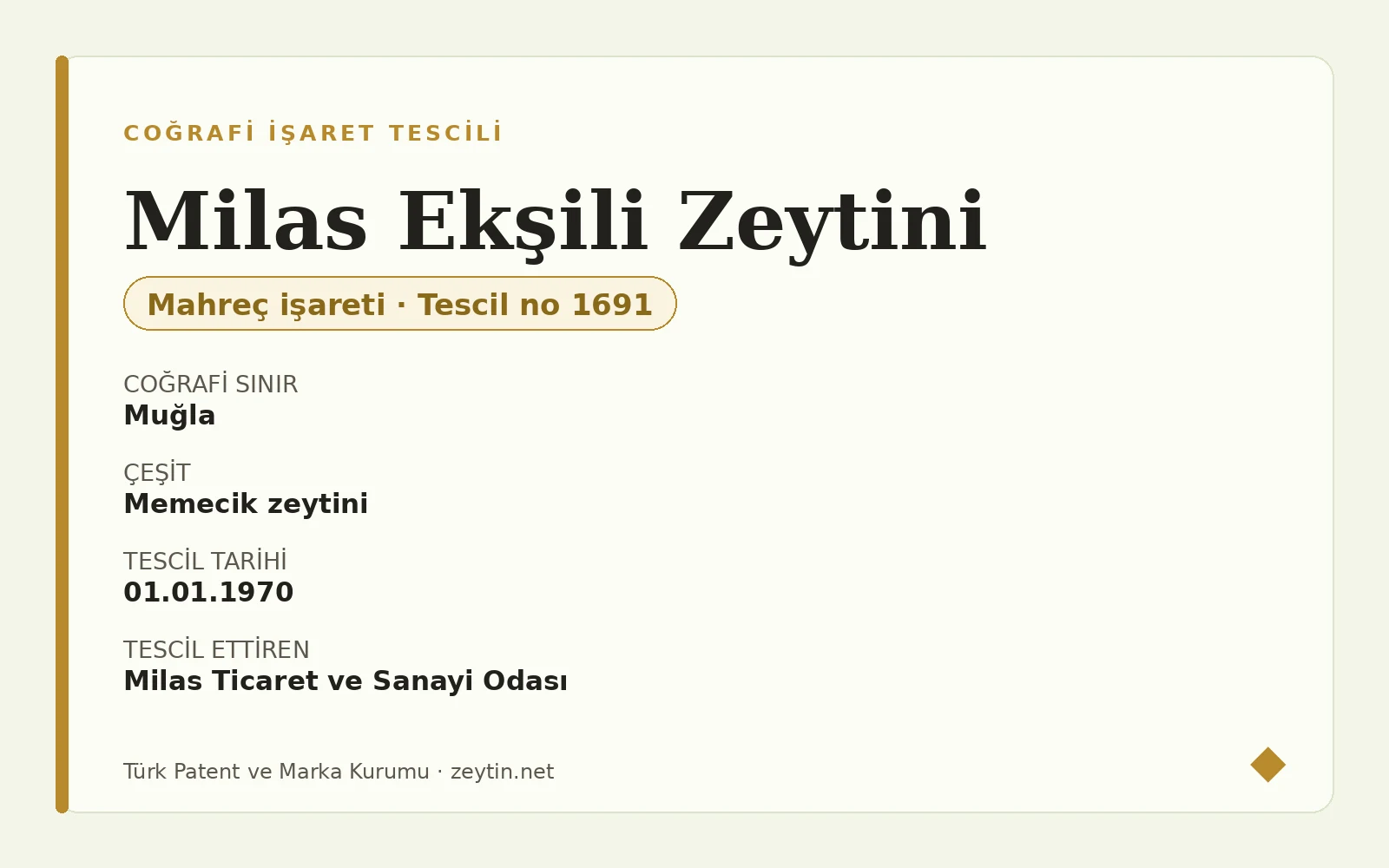
Milas Ekşili Olive: a table olive lightened with lemon
Registered in 2024. The aroma of lemon and olive oil is pronounced, and the astringency of other table olives is absent. Total phenols at least 135.38 mg/100 g.
Article
Milas Ekşili Olive: a table olive lightened with lemon
Registered in 2024. The aroma of lemon and olive oil is pronounced, and the astringency of other table olives is absent. Total phenols at least 135.38 mg/100 g.
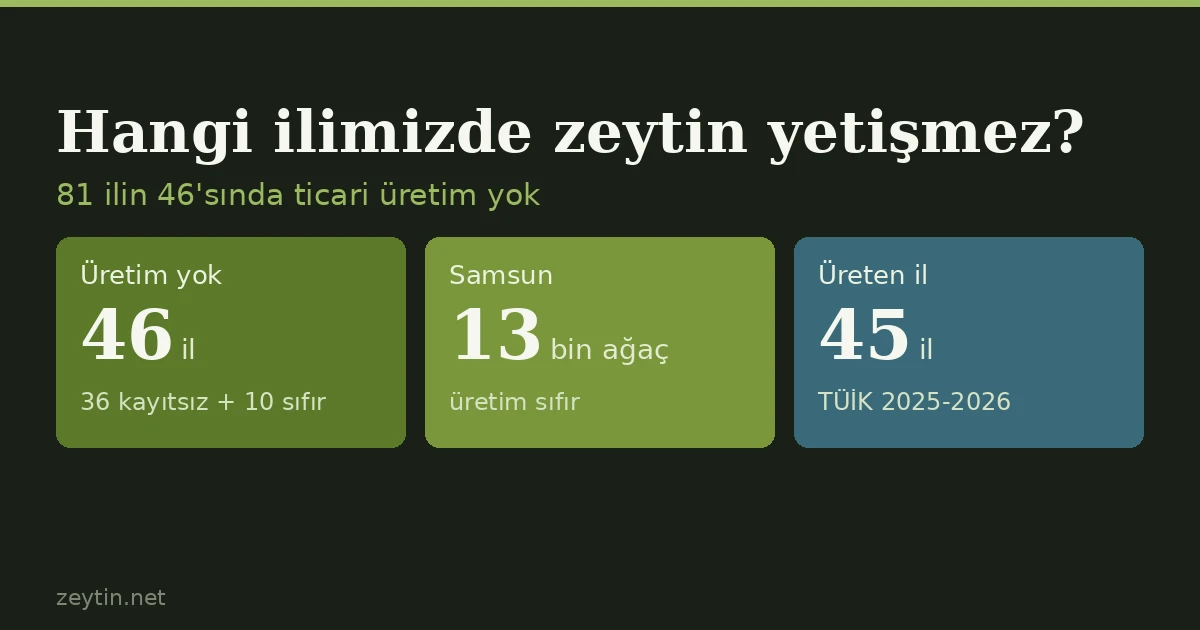 Article
Which provinces in Turkey grow no olives?
Forty-six of Turkey's 81 provinces have no commercial olive production: 36 absent from the statistics, ten reporting zero. Samsun has 13,000 trees and no crop.
Article
Which provinces in Turkey grow no olives?
Forty-six of Turkey's 81 provinces have no commercial olive production: 36 absent from the statistics, ten reporting zero. Samsun has 13,000 trees and no crop.