Manzanilla olive: Spain's table variety
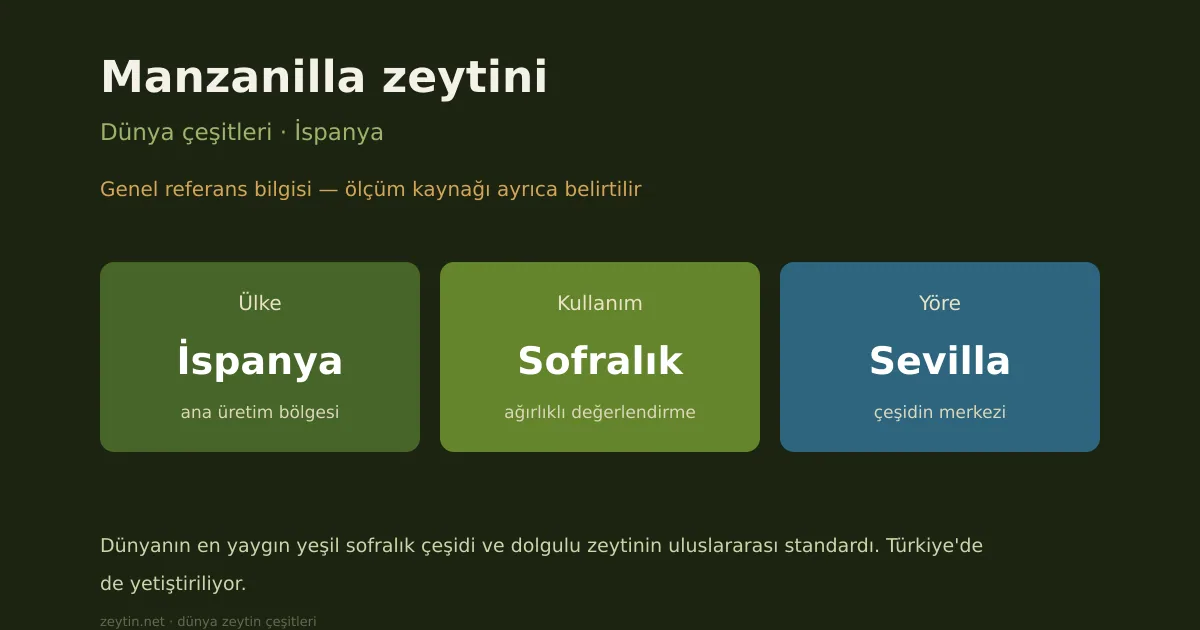
The world's most widely planted green table variety and the international standard for stuffed olives. It is grown in Türkiye too.
The green, pitted olive stuffed with pepper in a jar is the same variety everywhere in the world: Manzanilla. The name is Spanish for "little apple", after its round shape.
Why did it become the table standard?
Manzanilla's advantage lies not in one trait but in a combination:
- The fruit is large enough and evenly round — ideal for pitting machinery.
- The flesh is firm and the skin tough, so it survives processing and transport.
- It responds well to lye processing; the bitterness clears cleanly.
- The flesh-to-stone ratio is high.
The result is the international standard for stuffed olives. In Türkiye the same role is filled by Domat.
It grows in Türkiye too
Manzanilla is among the foreign varieties most widely grown in Türkiye, and it has been measured academically. In Çukurova University's trial, its chilling requirement was:
| Fruit weight | 3.90 g |
| Fruit length | 23.40 mm |
| Fruit width | 17.06 mm |
| Fruit shape index | 1.37 (oval) |
| Flesh weight | 3.30 g |
| Flesh ratio | 85% |
| Pit weight | 0.60 g |
| Flesh-to-pit ratio | 5.50 |
| Chilling requirement | 319 CU (520 hours) |
Source: Gündeşli and Küden (2020), Çukurova University olive germplasm orchard. On chilling, Manzanilla sits near the top of the trial — only Domat (333 CU) and Karamürsel Su (319 CU) matched or exceeded it — meaning it needs a colder winter. On what chilling is and why it determines where a variety can grow: chilling requirement in olives.
Genetic proximity
A genetic study carried out in Türkiye found Manzanilla shares more than 60% similarity with Domat, Gemlik, Kilis Yağlık and Nizip Yağlık. The "foreign" variety turns out to sit genetically close to Türkiye's main variety pool.
It is a reminder that the olive spread from a single gene pool across the Mediterranean basin — the borders were drawn later.
The table advantage, in numbers
Manzanilla being the "table standard" is not a matter of taste; it is the size of its pit. Set beside the Turkish varieties measured in the same trial, the difference becomes visible:
| Variety | Fruit (g) | Pit (g) | Flesh ratio |
|---|---|---|---|
| Manzanilla | 3.90 | 0.60 | 85% |
| Gemlik | 4.13 | 0.90 | 78% |
| Ayvalık | 3.77 | 0.83 | 78% |
| Domat | 7.96 | 1.36 | 83% |
Source: Gündeşli and Küden (2020). Manzanilla carries less pit in a smaller fruit than Gemlik: 0.60 g against 0.90 g. In a pitted, stuffed olive what is sold is flesh — which is why the stuffing line was built on this variety.
Domat's flesh ratio is high too (83%), but its fruit is twice the size; the two compete in different calibre classes.
Related pages
Where it stands among measured varieties
çeşit sayfası
Vossen, UC Cooperative Extension — IOC World Catalogue (Barranco vd.)
çeşit sayfası
çeşit sayfası
çeşit sayfası
Values are those published on each variety's own page; the comparison covers only varieties with a measured figure, so it is a comparison of what is known — not of every Turkish variety. See the full ranking and how it is built →
One rating per visitor; you can change yours at any time. Ratings are real reader votes — no seeded or default scores.
Related
 Article
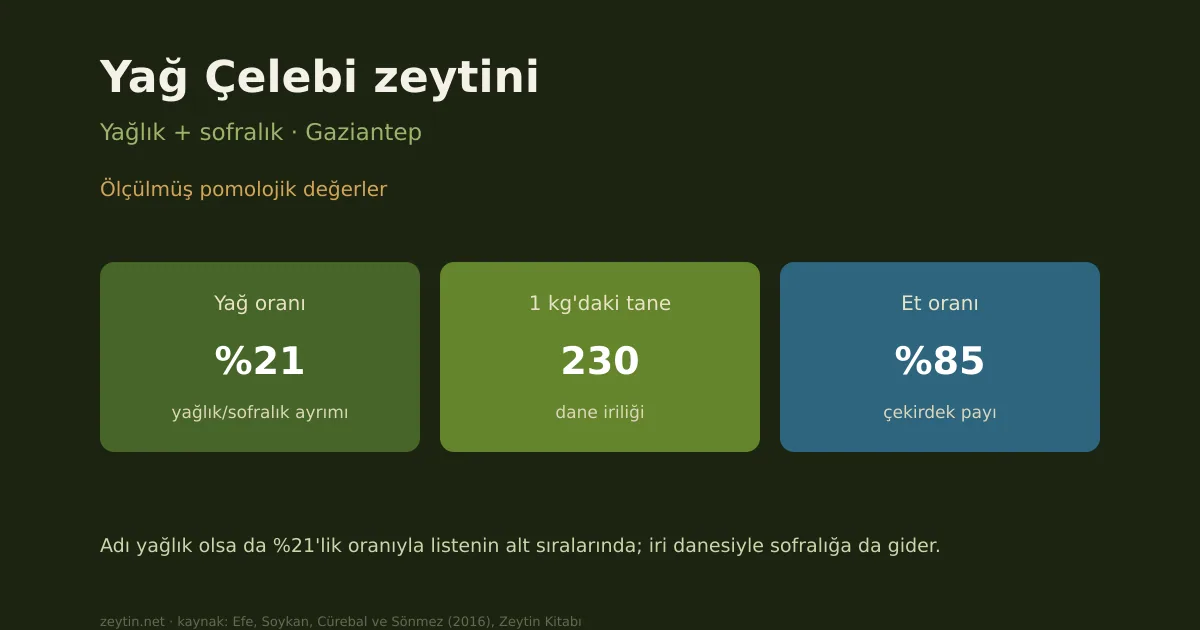
Yağ Çelebi olive: characteristics, oil content and growing areas
Despite the name, its 21% oil puts it low on the list; its large fruit also serves the table.
Article
Yağ Çelebi olive: characteristics, oil content and growing areas
Despite the name, its 21% oil puts it low on the list; its large fruit also serves the table.
 Article
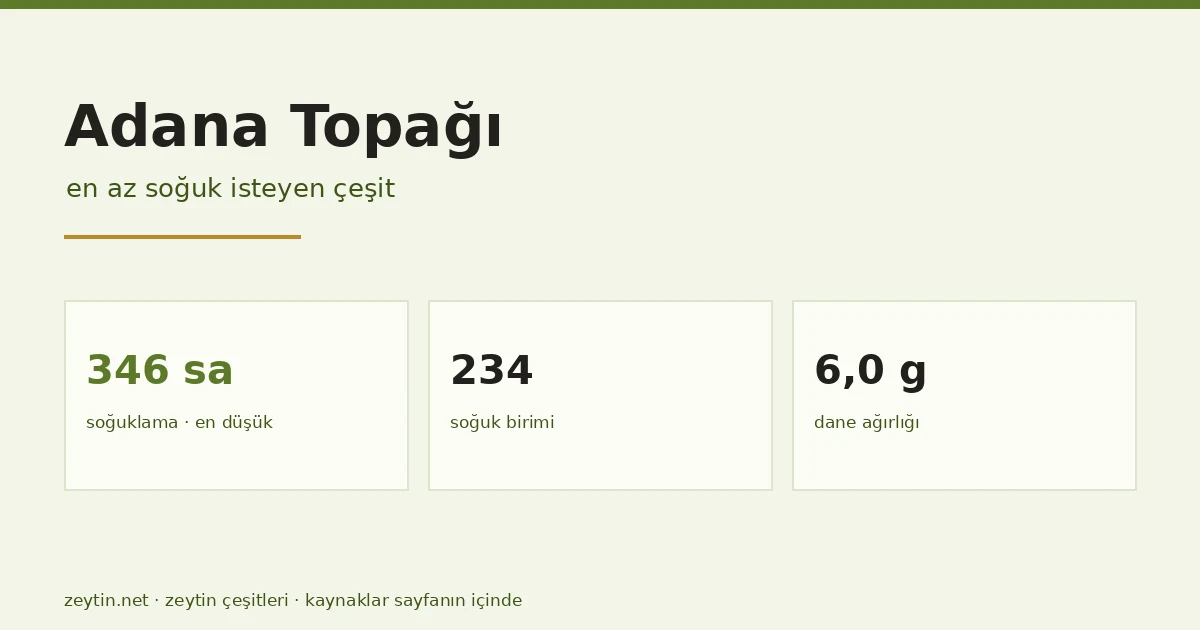
Adana Topağı: the olive cultivar that needs the least cold
The lowest chilling requirement among cultivars tested: 346 hours, 234 chill units. Why that matters as winters warm, and its 6-gram fruit.
Article
Adana Topağı: the olive cultivar that needs the least cold
The lowest chilling requirement among cultivars tested: 346 hours, 234 chill units. Why that matters as winters warm, and its 6-gram fruit.
 Article
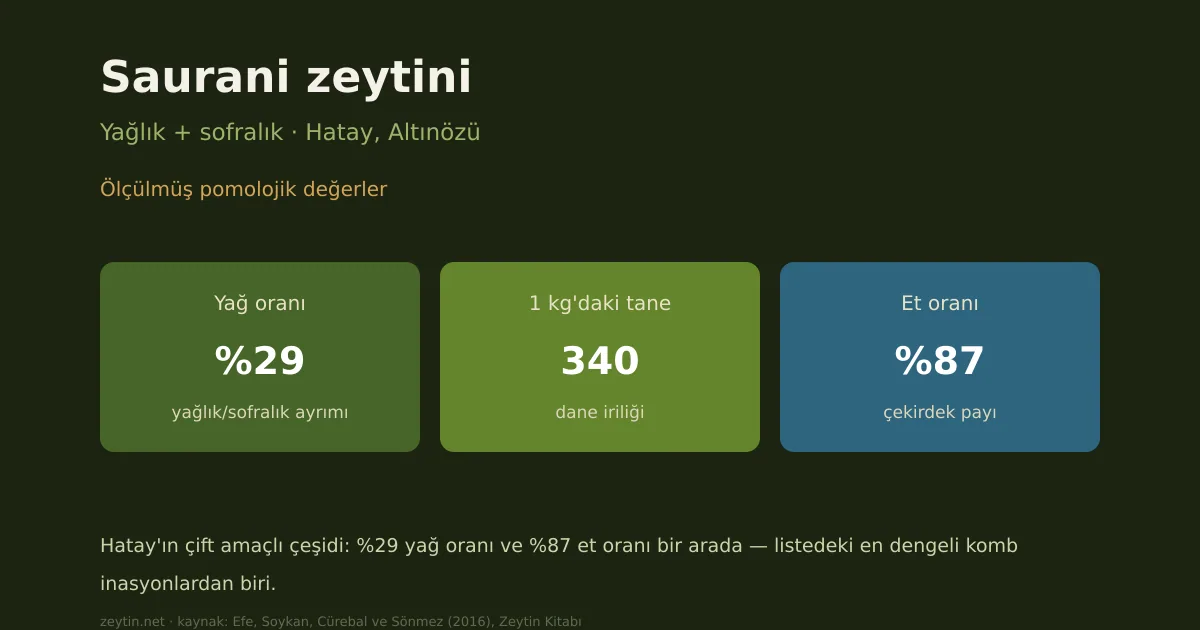
Saurani olive: characteristics, oil content and growing areas
Hatay's dual-purpose variety: 29% oil with 87% flesh — one of the most balanced combinations on the list.
Article
Saurani olive: characteristics, oil content and growing areas
Hatay's dual-purpose variety: 29% oil with 87% flesh — one of the most balanced combinations on the list.
 Article
The Memecik olive: Türkiye's oil variety
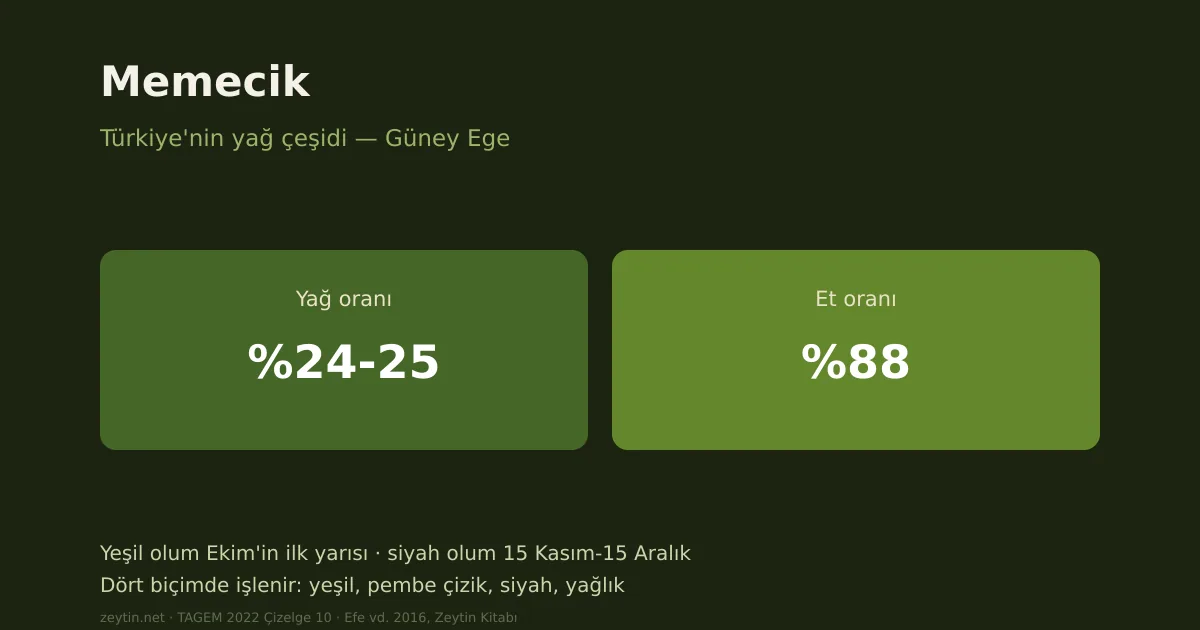
Between 19% and 45% of the tree stock. 24-25% oil, 88% flesh. Green maturity in early October, two months after Gemlik.
Article
The Memecik olive: Türkiye's oil variety
Between 19% and 45% of the tree stock. 24-25% oil, 88% flesh. Green maturity in early October, two months after Gemlik.