Gaziantep Green Olive Pastry: a registration that turns a recipe into a rule
The only prepared dish among olive geographical indications. The document binds the half-moon shape, the 14-15 cm diameter, the filling gram by gram, the sheep breed, and inspection twice a year. The olives used are oil-type, not table.
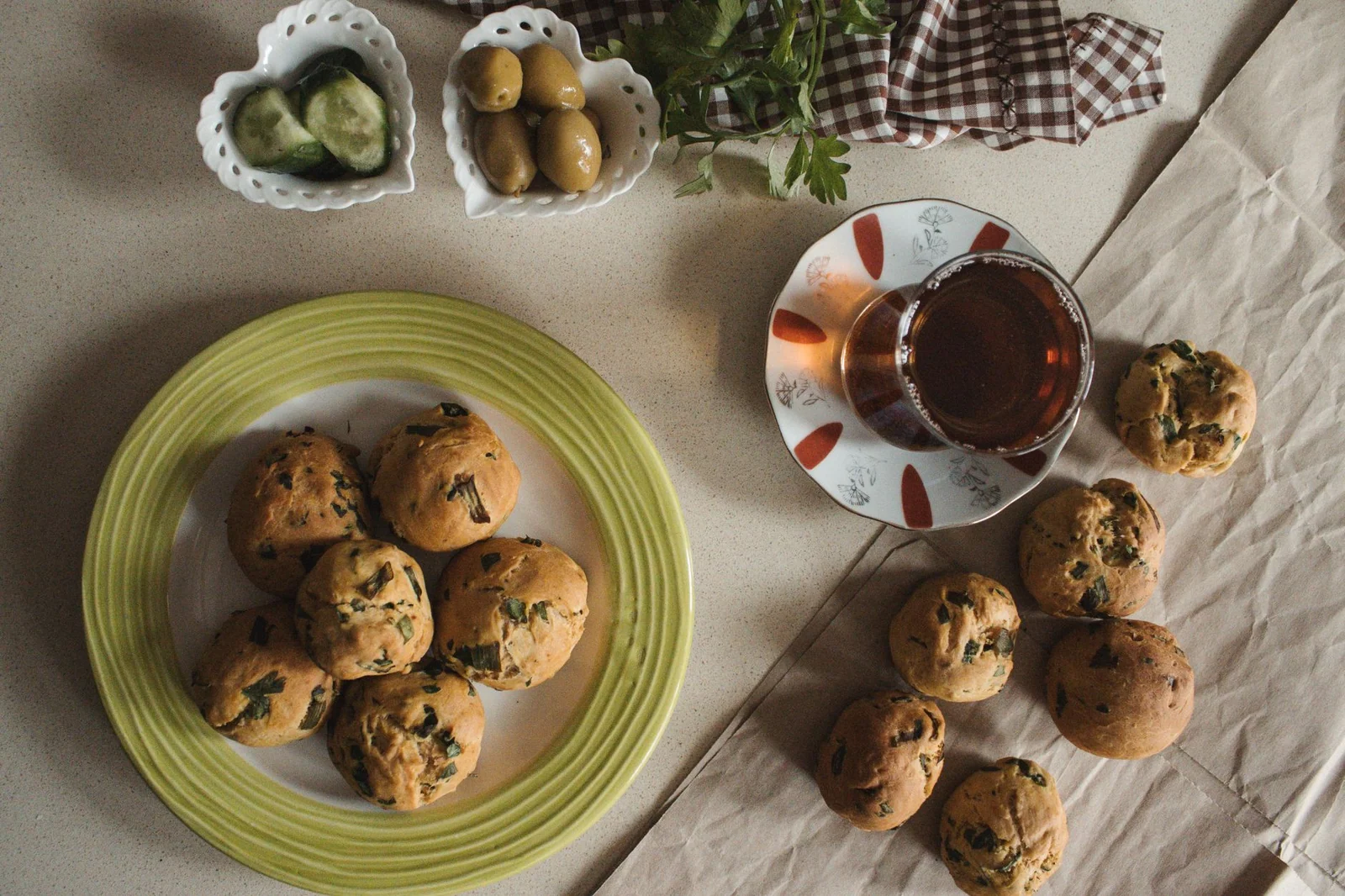
Olive-related geographical indications are almost entirely about olives and olive oil. Gaziantep Yeşil Zeytin Böreği — a green olive pastry — is the only prepared dish among them, and its registration turns a recipe into binding provision.
The record
| Type | Geographical indication |
| Area | Gaziantep province |
| Product group | Bakery and pastry products |
| Shape | Half-moon, 14-15 cm across |
| Olive source | Oil-type green olives grown in central Gaziantep, Nizip and Kilis |
The document describes a pastry made in Gaziantep "for more than a century".
An oil olive, used at the table
Here is the notable detail: the pastry uses oil-type olives, not table varieties. Oil cultivars have smaller fruit and higher phenol content; in brine they leave a pronounced bitterness. The registration treats that bitterness not as a defect but as the pastry's character — "giving the pastry its appealing flavour" is the document's own phrase.
That is an uncommon choice in geographical indications: the product carries the main cultivar's own taste, not a by-product's.
The ingredient list in the document
By making proportions binding, the registration turns the recipe into a rule. For the filling:
| Ingredient | Quantity |
|---|---|
| Green olives (pitted, in brine) | 425 g |
| Lamb mince (low fat) | 250 g |
| Onion | 1 large |
| Spring onion | 5 stalks |
| Parsley | 2 bunches |
| Walnut (chopped) | 75 g |
| Clarified butter (sheep or goat milk) | 50 g |
| Red pepper flakes | 20 g |
| Black pepper | 5 g |
| Salt | 6 g (if needed) |
That filling yields about 22 pastries, roughly 50 grams of filling each. The document allows the weights to vary provided the proportions hold — what binds is the composition, not the amount.
Even the sheep breed is specified
The document states which animal the mince must come from: the local hallik sheep or the Karaman sheep. The reasoning is technical — that meat is said to cook more easily and taste better.
The clarified butter must come from sheep or goat milk and comply with the Turkish Food Codex. The registration thus ties not only the olives but every component to a geography and a standard.
If the olives are too salty, they may be soaked and the brine changed several times — in practice so the producer can adjust to the saltiness of the brine.
Inspection: twice a year
The inspection body draws one representative each from five institutions: under the coordination of the Gaziantep Chamber of Commerce, the Fine Arts Faculty of Gaziantep University, the Gaziantep Gastronomy and Tourism Association (GASTURDER), the Gaziantep chamber of restaurateurs and pastry makers, and the Gaziantep Provincial Directorate of Agriculture and Forestry.
Inspection takes place twice a year, and within 15 days of any complaint. That is double the "at least once a year" found in most olive registrations — a sign that the risk of adulteration is judged higher in a prepared dish.
What is inspected is defined too: whether the correct ingredients were used, whether the cooking method matches the document, whether anything outside the list appears in the product, and the pastry's appearance.
Its place in Gaziantep's olive production
| Item | Value |
|---|---|
| Fruit production | 112,240 t |
| — for oil | 110,921 t |
| — for the table | 1,319 t |
| Olive oil production | 20,457 t |
| Trees | 9,234 thousand |
| Yield per tree | 12.2 kg |
99% of the province's fruit goes to oil — so this table-olive registration defines a niche outside the main flow.
The dough has its own recipe
The registration binds not only the filling but the dough:
| Ingredient | Quantity |
|---|---|
| Flour | 50 kg |
| Water | 35 litres |
| Salt | 35 – 40 g |
| Fresh yeast | 500 g |
Kneading takes 10 minutes, then the dough rests under a damp cloth. The document ties the resting time to the weather: 40 minutes in winter (25-30 °C), shorter in hot weather (35 °C and above). A registration that varies proving time with ambient temperature is one written from a baker's practice.
The rested dough is formed into 150-gram balls, each divided into three equal pieces and opened by hand into rounds of about 15 cm.
Bulamaç: an intermediate mixture with sugar and ice
The document's most technical provision sits here. A fluid mixture called "bulamaç" is spread by hand over the opened dough:
t; 500 g fresh yeast + 1 litre water + 150 g sugar
And the critical condition: the bulamaç must be kept cold. The reason is written into the document — so that the yeast in it does not activate in the oven's heat and turn the mixture sour. Pieces of ice are added as needed.
Sugar is fuel for the yeast, ice is the brake: the mixture must not ferment before it reaches the oven, and must rise quickly once inside.
Fingertips are then pressed into the coated dough, first in one direction and then across it. The document explains what the marks do: as it bakes, the fingerprints rise and swell, increasing the dough's baking surface. Sparser marks make larger risen areas but reduce that surface — so close, small fingerprints are preferred.
The oven: even the fuel is specified
Geographical indications rarely prescribe the heat source. This one does:
- ⛔ No electricity or liquid fuel may be used.
- The pastries are baked over a wood fire.
- The preferred fuel is oak — and the reason is stated: oak burns slowly and without smoke, so the oven temperature stays homogeneous throughout baking.
- Pine may be used where unavoidable.
- The wood burns on one side of the oven, the product bakes on the other.
- Oven temperature averages 250 °C, baking takes 10-15 minutes.
The document also gives the reason for fast baking: the flame's physical effect speeds the bake and prevents drying out. In a pastry with a moist, olive-based filling, drying is the main risk; a short spell at 250 degrees is the choice that closes it.
Shape and serving
Filling goes on half of the 15 cm round, the other half folds over it, and the edge is sealed by pressing with the fingertips. In baking the half-moon shrinks slightly and lengthens, ending at 14-15 cm across.
Serving is defined too: at room temperature, whole or in large slices. The document adds the reason — because the olives and other filling can fall out when sliced, the pastry is usually served cut in two, or whole.
One rating per visitor; you can change yours at any time. Ratings are real reader votes — no seeded or default scores.
Related
 Article
Saurani olive: characteristics, oil content and growing areas
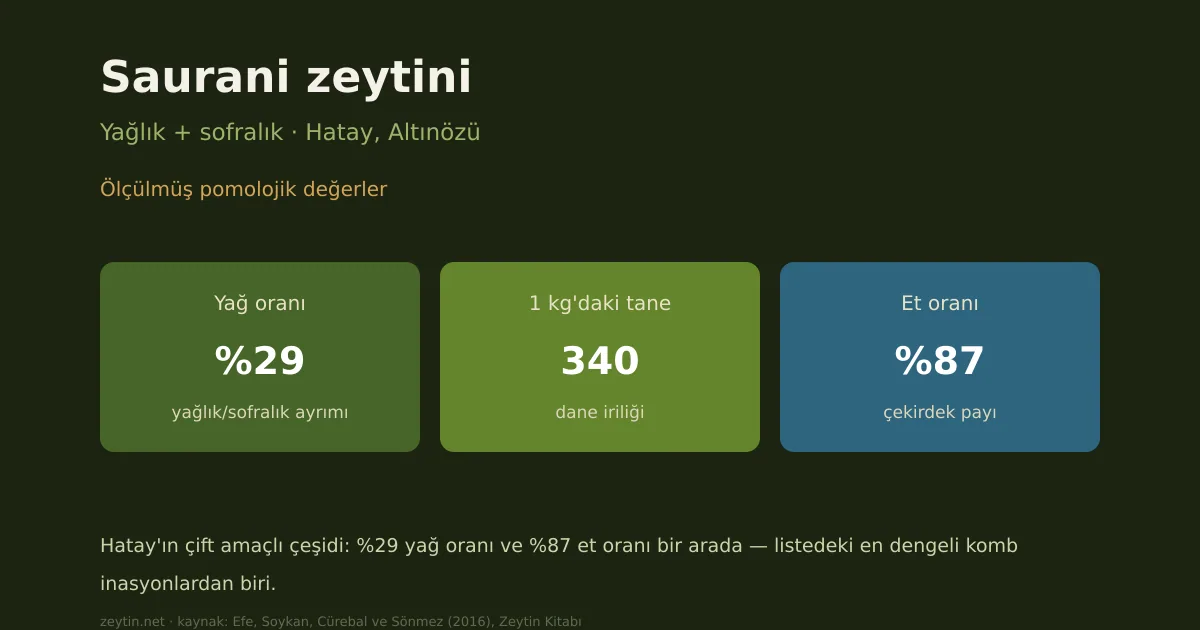
Hatay's dual-purpose variety: 29% oil with 87% flesh — one of the most balanced combinations on the list.
Article
Saurani olive: characteristics, oil content and growing areas
Hatay's dual-purpose variety: 29% oil with 87% flesh — one of the most balanced combinations on the list.
 Article
The Erkence olive: the cultivar that sweetens on the tree
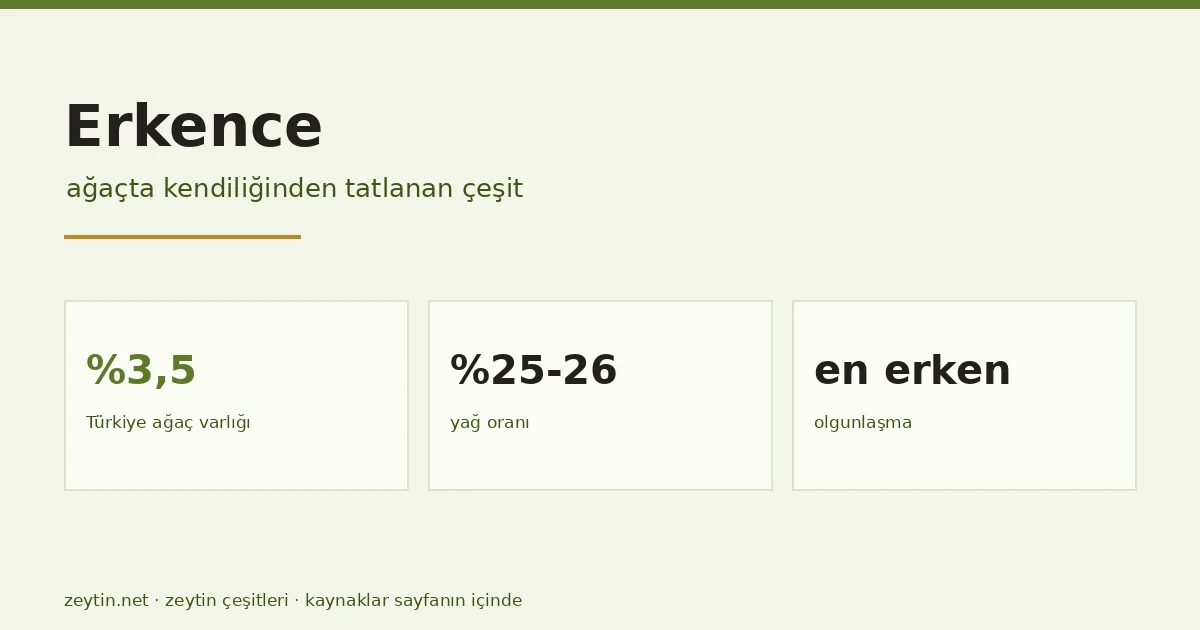
Erkence accounts for 3.5% of Turkey's olive trees. It is the Aegean's earliest-ripening cultivar and has a property with few equivalents anywhere: the fruit loses its bitterness on the tree, without brine.
Article
The Erkence olive: the cultivar that sweetens on the tree
Erkence accounts for 3.5% of Turkey's olive trees. It is the Aegean's earliest-ripening cultivar and has a property with few equivalents anywhere: the fruit loses its bitterness on the tree, without brine.
 Article
Mavi olive
Mavi is a recorded variety of south-eastern Anatolia. No measured pomological data published.
Article
Mavi olive
Mavi is a recorded variety of south-eastern Anatolia. No measured pomological data published.
 Article
Melkebazi olive
Melkebazi is a recorded variety of south-eastern Anatolia. No measured pomological data published.
Article
Melkebazi olive
Melkebazi is a recorded variety of south-eastern Anatolia. No measured pomological data published.