The Erkence olive: the cultivar that sweetens on the tree
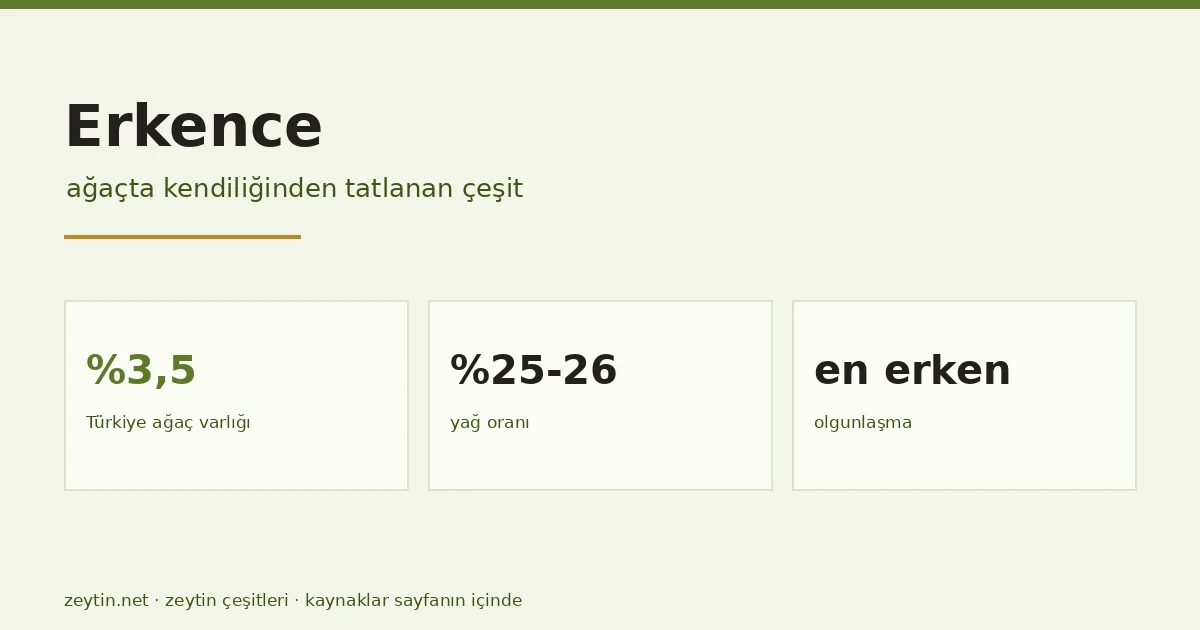
Erkence accounts for 3.5% of Turkey's olive trees. It is the Aegean's earliest-ripening cultivar and has a property with few equivalents anywhere: the fruit loses its bitterness on the tree, without brine.
An olive picked from the tree cannot be eaten. A compound called oleuropein gives the fruit an unbearable bitterness, and removing it takes brining, cracking, scoring or a lye treatment. Everywhere in Turkey, the olive reaches the table only after one of these.
Erkence is the exception. Under the right conditions this variety loses its bitterness while still on the tree and becomes edible as it is. The process is called "hurmalaşma"; the product is known as hurma zeytin — the date olive.
Erkence in numbers
| Property | Value | Note |
|---|---|---|
| Share of Turkey's tree stock | 3.5% | fourth most widespread variety |
| Oil content | 25–26% | medium-sized, fleshy fruit |
| Ripening | earliest | the earliest-ripening variety of the Aegean |
| Skin · stone | thin · small | light brownish colour |
| Region | İzmir · Karaburun · Urla | the process occurs only in certain districts |
| Salt content (hurma) | zero | because it never enters brine |
How the tree-ripening works
Long treated as a "climate miracle", the mechanism has been established by research — and it turns out to be microbiological.
Natural microorganisms carried on the wind — particularly Pseudomonas species — settle on the skin of the fruit. As the fruit ripens on the tree these microorganisms start a spontaneous fermentation, and the oleuropein responsible for the bitterness breaks down. In other words, the step carried out in a processing plant for table olives happens here in the open air, on the branch.
That has two practical consequences:
- No salt. Because it never goes into brine, hurma zeytin contains zero salt. For someone on salt restriction — where nearly every table olive option is ruled out — this is the one that remains.
- Tied to the locality. The same Erkence sapling planted elsewhere may not produce the effect; it depends on the variety and the local microbiota working together. This is why the product is known as Karaburun hurma olive — by its place, not its variety.
The genome of the date olive has also been mapped, so the genetic side of the phenomenon is now on record too.
The earliest harvest
Being the Aegean's earliest-ripening variety brings its own advantages: the fruit reaches the mill before the rest, it carries a price advantage as the season's first produce, and it is less exposed to the late period when the olive fly peaks.
Its place in the country
At 3.5% Erkence is Turkey's fourth most widespread variety — after Memecik (45%), Ayvalık (19%) and Gemlik (11%).
It also appears among the most important table-olive varieties: Gemlik, Ayvalık, Domat, Memecik, Erkence, Uslu, Eşek Zeytini, Yamalak Sarısı and Edincik Su.
Erkence is additionally counted among the pollinator varieties used for Ayvalık — so in grove planning it serves a purpose beyond its own crop.
Turkey's full variety distribution: olive varieties.
Why it is so little known
Erkence ranks fourth in tree stock and yet the consumer has never heard the name. The reason is how narrow the conditions for the date olive are: the tree-ripening doesn't happen every year, in every grove, on every fruit. Without the right humidity, temperature and microorganisms coming together, the fruit stays bitter like any other olive and goes to brine.
So the date olive is not manufactured but gathered. That is what makes it scarce and expensive.
Where it stands among measured varieties
Zeytin Kitabı — Efe, Soykan, Cürebal, Sönmez (2016), Kitabevi Yay. s.37-80
çeşit sayfası
Zeytin Kitabı — Efe, Soykan, Cürebal, Sönmez (2016), Kitabevi Yay. s.37-80
Zeytin Kitabı — Efe, Soykan, Cürebal, Sönmez (2016), Kitabevi Yay. s.37-80
Zeytin Kitabı — Efe, Soykan, Cürebal, Sönmez (2016), Kitabevi Yay. s.37-80
Values are those published on each variety's own page; the comparison covers only varieties with a measured figure, so it is a comparison of what is known — not of every Turkish variety. See the full ranking and how it is built →
One rating per visitor; you can change yours at any time. Ratings are real reader votes — no seeded or default scores.
Related
 Article
Where do olives grow in Turkey? The picture in 45 provinces
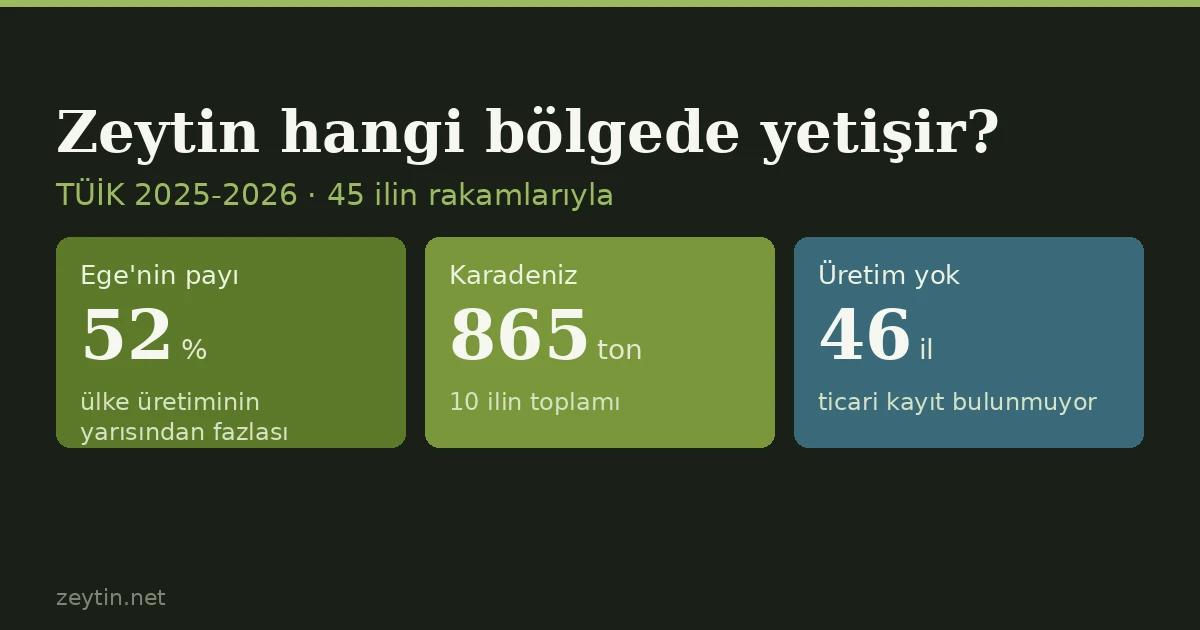
The Aegean alone produces half the national crop; ten Black Sea provinces together manage 865 tonnes. In 46 provinces there is no commercial production at all.
Article
Where do olives grow in Turkey? The picture in 45 provinces
The Aegean alone produces half the national crop; ten Black Sea provinces together manage 865 tonnes. In 46 provinces there is no commercial production at all.
 Article
Yağ Çelebi olive: characteristics, oil content and growing areas
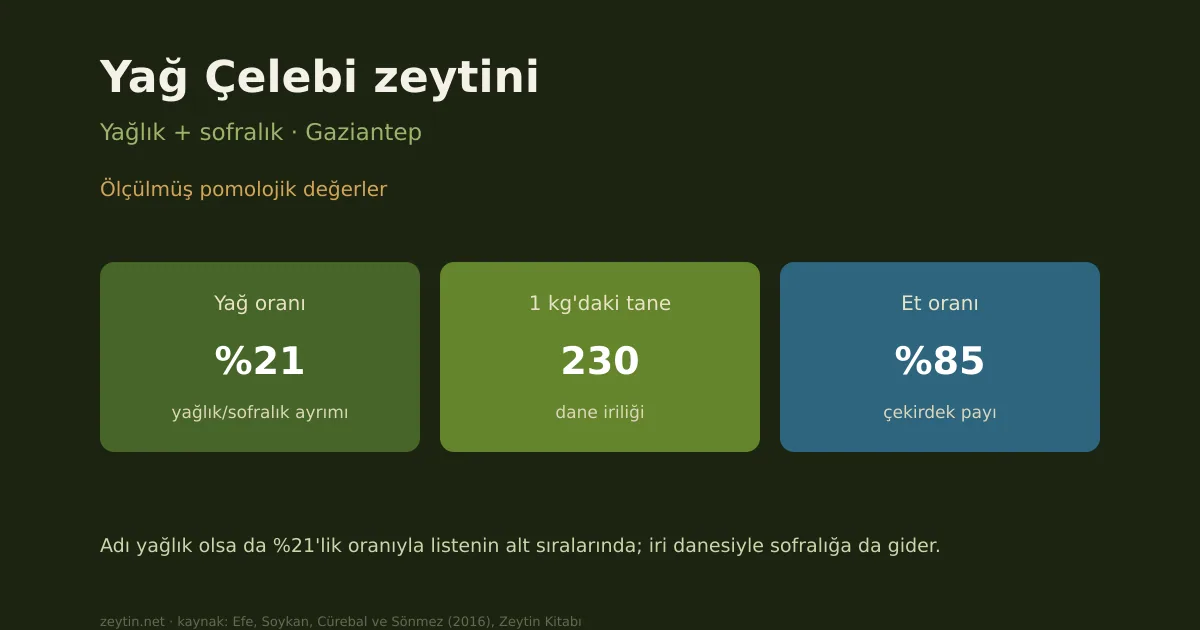
Despite the name, its 21% oil puts it low on the list; its large fruit also serves the table.
Article
Yağ Çelebi olive: characteristics, oil content and growing areas
Despite the name, its 21% oil puts it low on the list; its large fruit also serves the table.
 Article
Büyük Topak Ulak olive
Büyük Topak Ulak is a recorded variety of the Mediterranean. Described in the source.
Article
Büyük Topak Ulak olive
Büyük Topak Ulak is a recorded variety of the Mediterranean. Described in the source.
 Article
Table Olives: Types, Curing and How to Choose
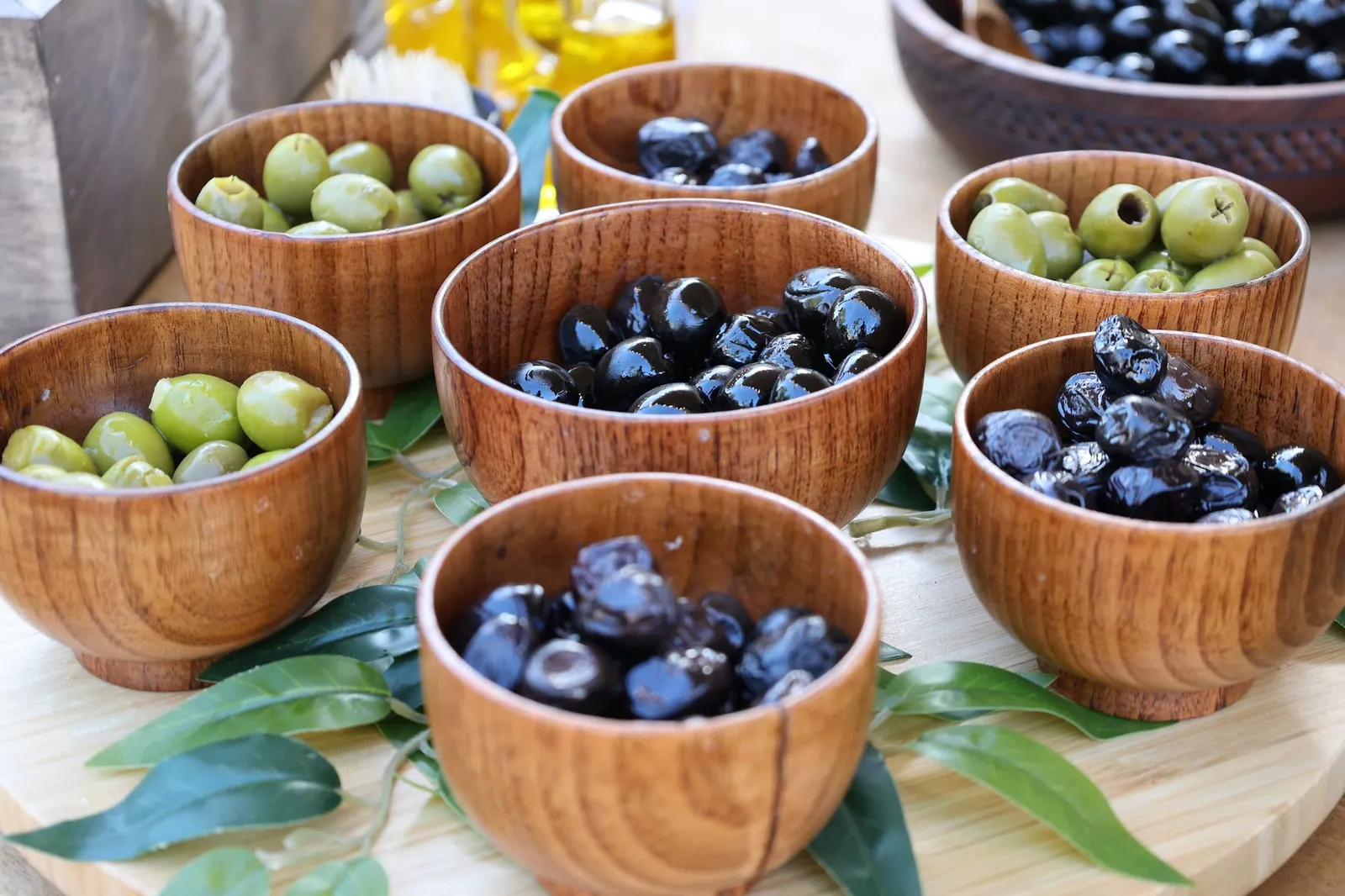
From green to black, cracked to dry-cured: how table olives are made, chosen and kept.
Article
Table Olives: Types, Curing and How to Choose
From green to black, cracked to dry-cured: how table olives are made, chosen and kept.