Mavi olive
Mavi is a recorded variety of south-eastern Anatolia. No measured pomological data published.
Mavi is one of the recorded olive varieties of south-eastern Anatolia.
Characteristics
Used for both oil and the table. The fruit is large.

Where it grows
Mavi is recorded in south-eastern Anatolia. The provinces where olive production concentrates in this region: Gaziantep, Kilis, Şanlıurfa, Adıyaman, Mardin.
Regional conditions, varietal spread and output: olive growing in south-eastern Anatolia
Measured values
Eight local cultivars grown in the Derik district of Mardin were measured across 2016-2017. Mavi is both the largest-fruited and the highest in flesh ratio of the eight.
| Property | Value |
|---|---|
| Fruit weight | 7.10 g |
| Fruit length × width | 28.07 × 21.30 mm |
| Fruit shape index | 1.31 |
| Stone weight | 0.61 g |
| Flesh ratio | 91.4% |
At 7.10 g the fruit falls in the "very large" class; Zoncuk in the same study weighs 1.52 g, a fifth of it.
The striking figure is the flesh ratio: 91.4%. The stone accounts for less than a tenth of the fruit's weight — the highest of the eight measured, and what makes Mavi a table variety.
Other varieties of the region
Belluti · Eğriburun · Hursuki · Kalem Bezi · Kan Çelebi · Kilis Yağlık
Locally
Mavi is one of the traditional varieties of the Derik district of Mardin. Its name reflects local usage rather than colour; it grows alongside Zonciki, Güleki, Kejik, Belluti, Mazı, Gürseki and Melkabazi in the district that is the homeland of Halhalı.
Derik Halhalı olive oil has won awards in England and Japan; the district's varietal pool is the background to that success.
More: olive growing in Mardin
Source
- Sakar, E. et al. (2023) — Phenological, morphological and physicochemical characteristics of some local olive varieties grown in Mardin (Derik), International Journal of Agriculture, Environment and Food Sciences 7(2), pp. 448-457
- Efe, R., Soykan, A., Cürebal, İ. & Sönmez, S. (2016) — Characteristics and Geographical Distribution of Olive Varieties Grown in Turkey, Zeytin Kitabı, pp. 37-80
- Olive map of Turkey
Where it stands among measured varieties
çeşit sayfası
çeşit sayfası
çeşit sayfası
çeşit sayfası
Values are those published on each variety's own page; the comparison covers only varieties with a measured figure, so it is a comparison of what is known — not of every Turkish variety. See the full ranking and how it is built →
One rating per visitor; you can change yours at any time. Ratings are real reader votes — no seeded or default scores.
Related
 Article
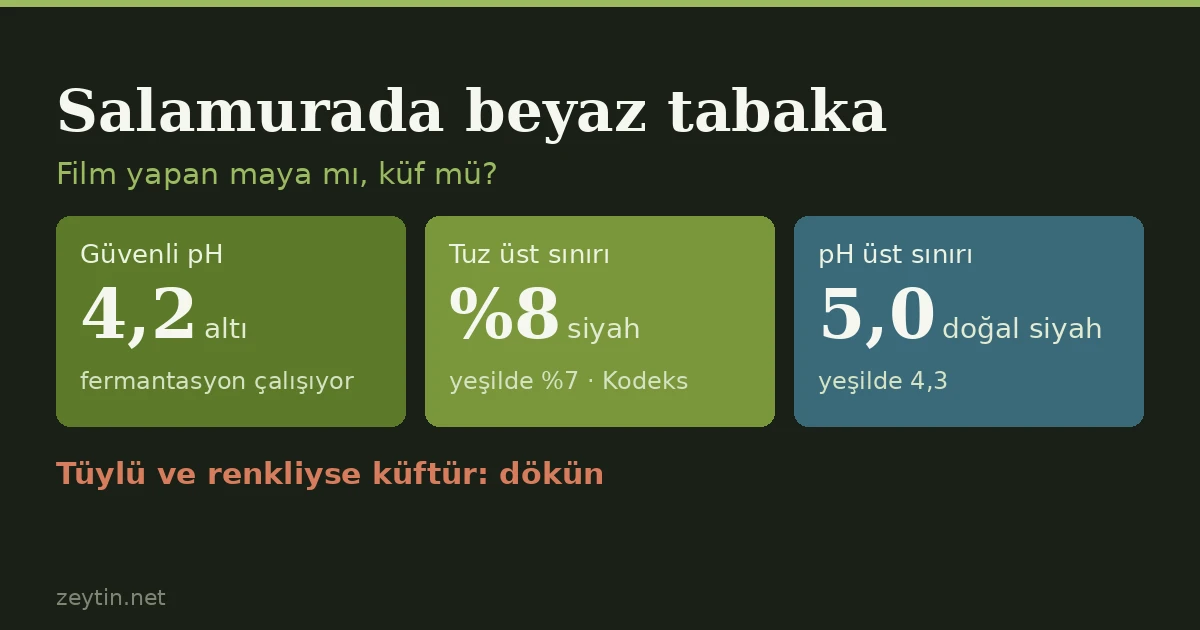
That white film on your olive brine: mould or yeast?
The white layer that forms on home-brined olives is usually not mould but a film-forming yeast — though that does not make it harmless. There are visible criteria for telling them apart. Together with the pH and salt ceilings the Turkish Food Codex sets for brine, here is what can be saved and what has to be thrown out.
Article
That white film on your olive brine: mould or yeast?
The white layer that forms on home-brined olives is usually not mould but a film-forming yeast — though that does not make it harmless. There are visible criteria for telling them apart. Together with the pH and salt ceilings the Turkish Food Codex sets for brine, here is what can be saved and what has to be thrown out.
 Article
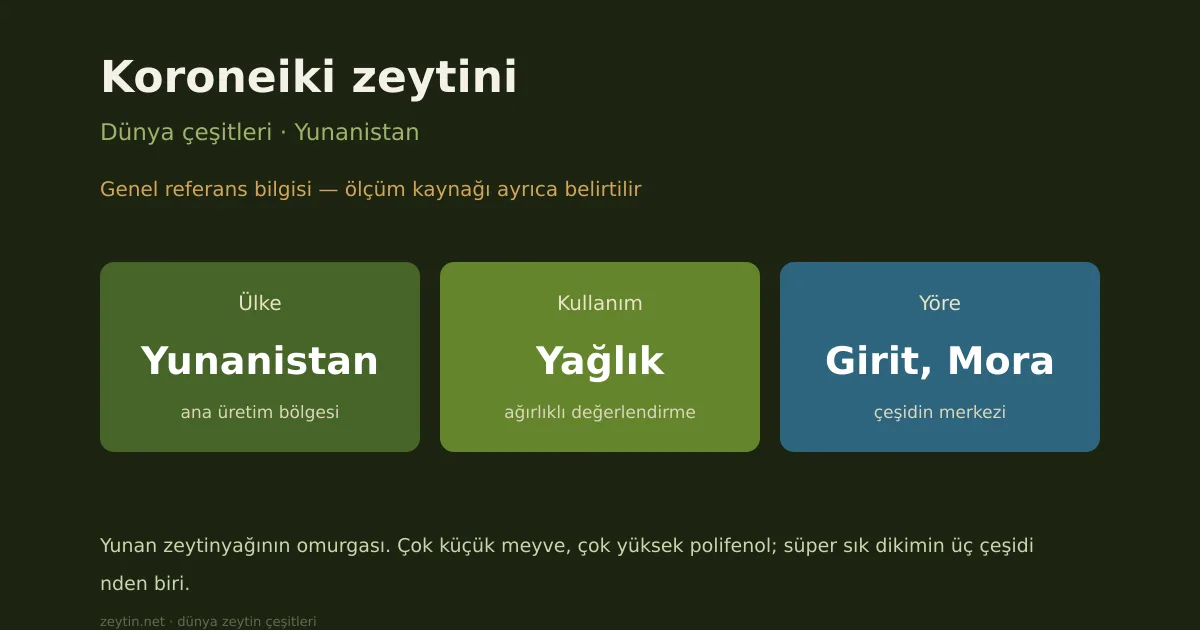
Koroneiki olive: Greece's oil variety
The backbone of Greek olive oil. Very small fruit, very high polyphenol content, and one of the three super-high-density varieties.
Article
Koroneiki olive: Greece's oil variety
The backbone of Greek olive oil. Very small fruit, very high polyphenol content, and one of the three super-high-density varieties.
 Article
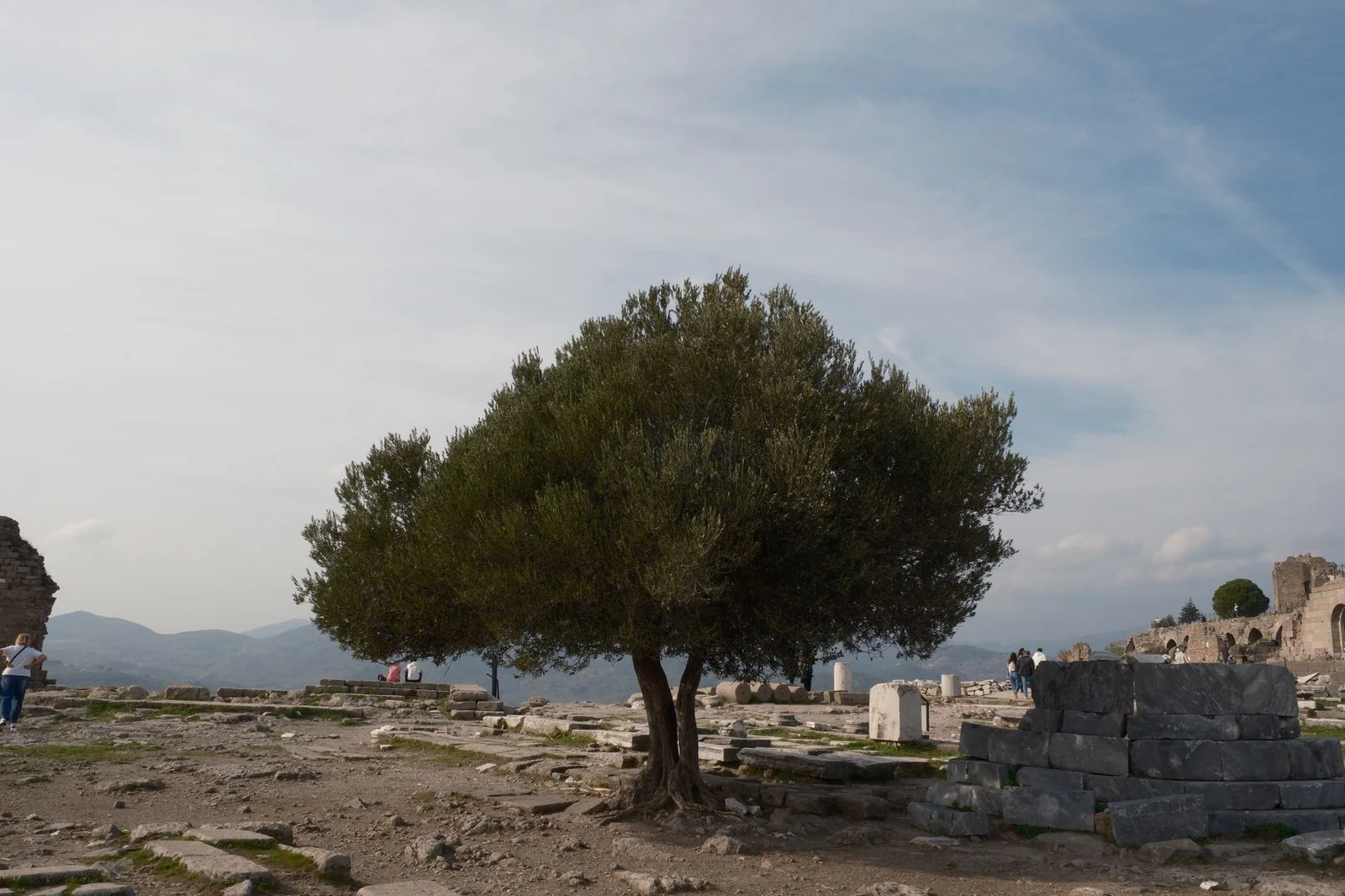
The Olive: Tree, History, Production and Future
The botany, history and uses of the olive tree; current production figures worldwide and in Turkey, provinces, varieties and the sector's future — with tables.
Article
The Olive: Tree, History, Production and Future
The botany, history and uses of the olive tree; current production figures worldwide and in Turkey, provinces, varieties and the sector's future — with tables.
 Article
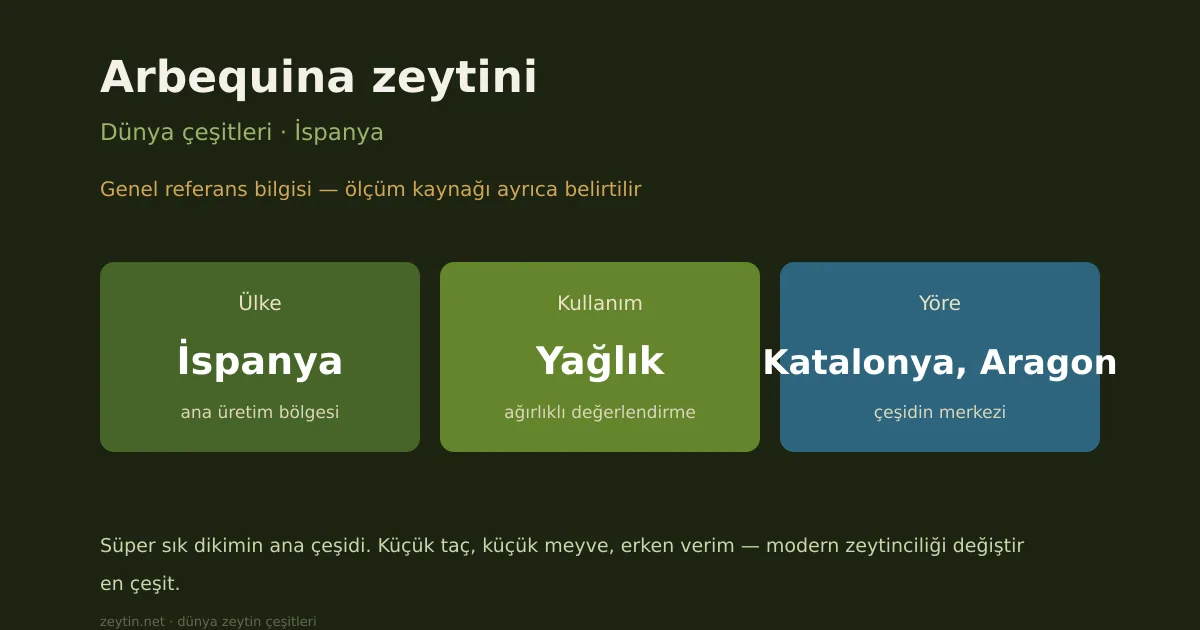
Arbequina olive: Spain's oil variety
The mainstay of super-high-density planting. Small canopy, small fruit, early bearing — the variety that changed modern olive growing.
Article
Arbequina olive: Spain's oil variety
The mainstay of super-high-density planting. Small canopy, small fruit, early bearing — the variety that changed modern olive growing.