How to make olive oil at home: crushing, kneading, separating and realistic expectations
Pressing oil from a few kilos of olives at home is possible: the olives are crushed with their stones, the paste is kneaded, pressed and left until the oil separates from the water. But yield stays well below a mill's and quality is hard to protect. The steps, the equipment and the limits.
Anyone with a few olive trees in the garden eventually asks the same question: can I turn these olives into oil at home, without taking them to a mill? The answer is yes, provided expectations are set correctly. Home-made oil is an experience; it does not replicate a mill's yield or quality control. This article explains how the job is done and where it reaches its limits.
We covered the mill process in detail in how cold-pressed olive oil is made. What you do at home is a small, manual copy of the same stages.
First, expectations
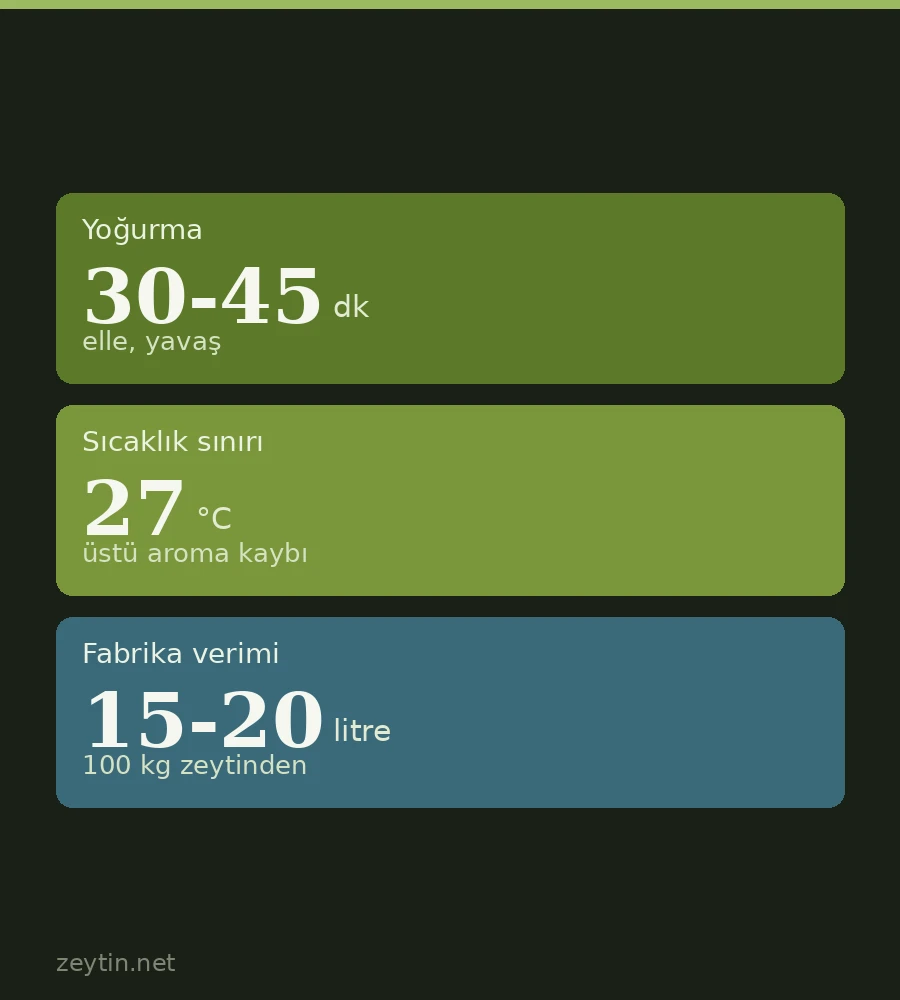
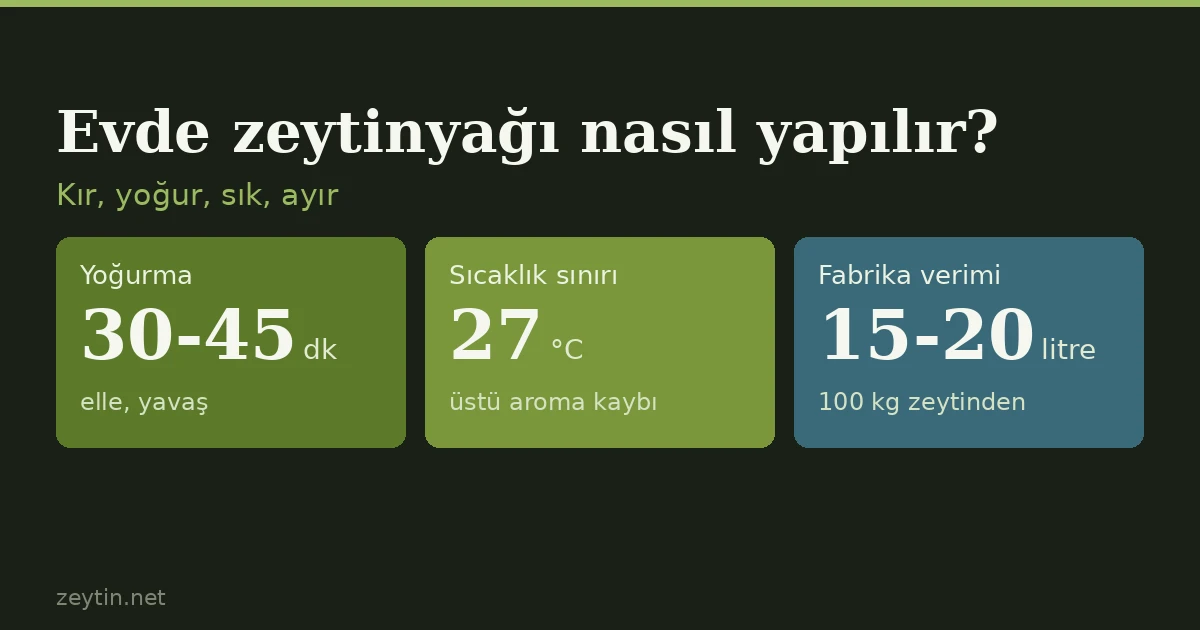
- Yield is low. At a mill, 100 kilos of olives give on average 15-20 litres of oil. At home, a significant share of the oil stays in the paste and the water. You recover only part of the oil the same olives would give at a mill; the amount varies widely with variety, ripeness and pressing force.
- Quality is delicate. Protecting quality requires fresh olives, low temperatures and quick separation of oil from water. At home, all three are hard to control.
- No grade. Only laboratory analysis and sensory assessment can tell whether home-made oil is "extra virgin".
Equipment
- Olives: freshly picked from the tree, sound, not fallen
- For crushing: a stone mortar or a sturdy meat grinder
- For kneading: a wide stainless steel or glass bowl and a wooden spoon
- For pressing: a clean, tightly woven cloth bag or cheesecloth
- For separating: a tall, narrow glass jar; if available, a separating funnel with a tap of the kind used in laboratories
- For storage: a dark glass bottle
1. Prepare the olives
Olives should be processed on the day they are picked. While they wait, enzymes in the fruit keep working, free fatty acids rise and the oil loses quality. Remove fallen, bruised or fly-damaged fruit. Clear away leaves and twigs, rinse the olives in cold water and drain.
2. Crush them with their stones
Olives are crushed together with their stones. The stone fragments open small channels in the paste that help the oil separate. Working in small batches in a stone mortar is the most traditional method. A meat grinder is faster. A kitchen blender struggles with the stones, can damage its blades and heats the paste quickly; if you use one, run it in short bursts.
The goal is a thick, creamy paste with visible stone fragments.
3. Knead the paste
The home equivalent of a mill's malaxer is patient stirring. Put the paste in a wide bowl and stir it slowly, without mashing, for 30-45 minutes. During this time small oil droplets merge and a sheen begins to appear on the surface.
Temperature matters. In a mild kitchen the paste stays warm enough on its own; do not try to heat it. Above 27 °C, aroma and polyphenols are lost. If the paste is very thick and dry, adding a few spoonfuls of lukewarm water helps separation.
4. Press
Fill the cloth bag with the kneaded paste and close it tightly. Press the bag over a clean bowl by hand, or between two boards with a weight. The liquid that runs out is not oil but a mixture of oil and fruit water. That dark water is called vegetation water.
The pulp left in the bag still holds oil. Mixing it once more with lukewarm water and pressing again gives a little more, but oil from a second pressing is of lower quality.
5. Separate the oil from the water
Pour the liquid into a tall, narrow glass jar and leave it undisturbed. Oil is lighter than water, so it rises. Within a few hours a clear layer of oil forms.
- Lift the oil carefully with a spoon or pipette.
- With a separating funnel, drain the water from the tap and the oil stays in the funnel.
- Do not mix the cloudy zone between the oil and the water into the clean oil.
Do not leave oil and vegetation water together for long. Vegetation water tends to ferment and passes defective flavours into the oil.
6. Settle and store
The oil you separate will be cloudy for the first few days. Let it settle for a few weeks in a dark glass bottle somewhere cool and dark, then separate it from the sediment at the bottom. The details are in how to store freshly pressed olive oil. Because home-made oil is unfiltered, it should be used within a few months.
What to do with vegetation water and pulp
Vegetation water is the most problematic by-product of olive oil production: it carries a heavy load of polyphenols and organic matter and can harm plants. Do not pour even small amounts onto soil, especially around plants. We covered the problem of vegetation water and pomace at mill scale separately. The pulp can be added to a compost heap in small amounts.
A better route: a small mill
For someone with a few hundred kilos of olives, pressing at home is not practical. Many olive regions have mills and boutique pressing facilities that accept small lots; some have a minimum quantity. Taking the olives on the day they are picked, and asking the mill about its kneading temperature, gives higher yield and quality than any home method.
Reading notes
The times and quantities here are general guidance; variety, ripeness and kitchen temperature all change the result.
One rating per visitor; you can change yours at any time. Ratings are real reader votes — no seeded or default scores.
Related
 Article
Bayramiç Olive Oil: aroma compounds defined as percentages
Registered in 2022. The certificate defines aroma by compound rather than adjective: hexanal 36.15%, E-2-hexenal 26.14%. Iodine value 80-93.
Article
Bayramiç Olive Oil: aroma compounds defined as percentages
Registered in 2022. The certificate defines aroma by compound rather than adjective: hexanal 36.15%, E-2-hexenal 26.14%. Iodine value 80-93.
 Article
Güney Ege Olive Oils: a designation of origin across three provinces
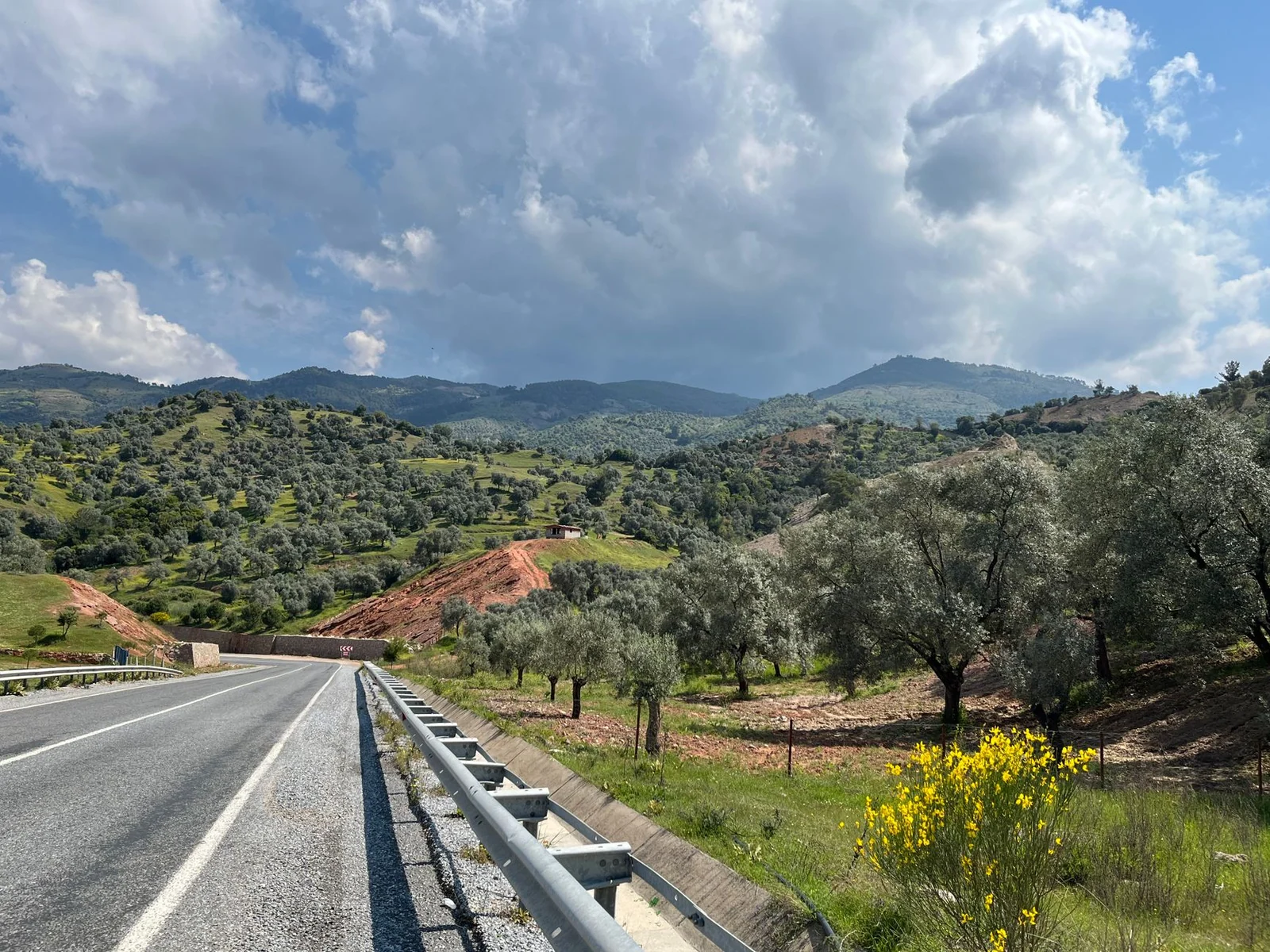
Registration no 79, published in the Official Gazette in 2004, covers more than thirty-three districts across İzmir, Aydın and Muğla. The reasoning is not administrative but varietal: the region holds almost all of Türkiye's Memecik trees.
Article
Güney Ege Olive Oils: a designation of origin across three provinces
Registration no 79, published in the Official Gazette in 2004, covers more than thirty-three districts across İzmir, Aydın and Muğla. The reasoning is not administrative but varietal: the region holds almost all of Türkiye's Memecik trees.
 Article
The Ayvalık Olive Oil designation of origin: the chemical profile in the certificate
Registered in 2007. The certificate carries tables of fatty acids, sterols and phenolics — the ranges within which an oil counts as Ayvalık Olive Oil are set out in figures.
Article
The Ayvalık Olive Oil designation of origin: the chemical profile in the certificate
Registered in 2007. The certificate carries tables of fatty acids, sterols and phenolics — the ranges within which an oil counts as Ayvalık Olive Oil are set out in figures.
 Article
How to Read an Olive Oil Label
Grade, harvest year, acidity, origin and bottling place: which statements on a label are binding and which are just marketing — with a quick checklist.
Article
How to Read an Olive Oil Label
Grade, harvest year, acidity, origin and bottling place: which statements on a label are binding and which are just marketing — with a quick checklist.