Edremit Olive Oil: thirteen separate fruity perceptions listed
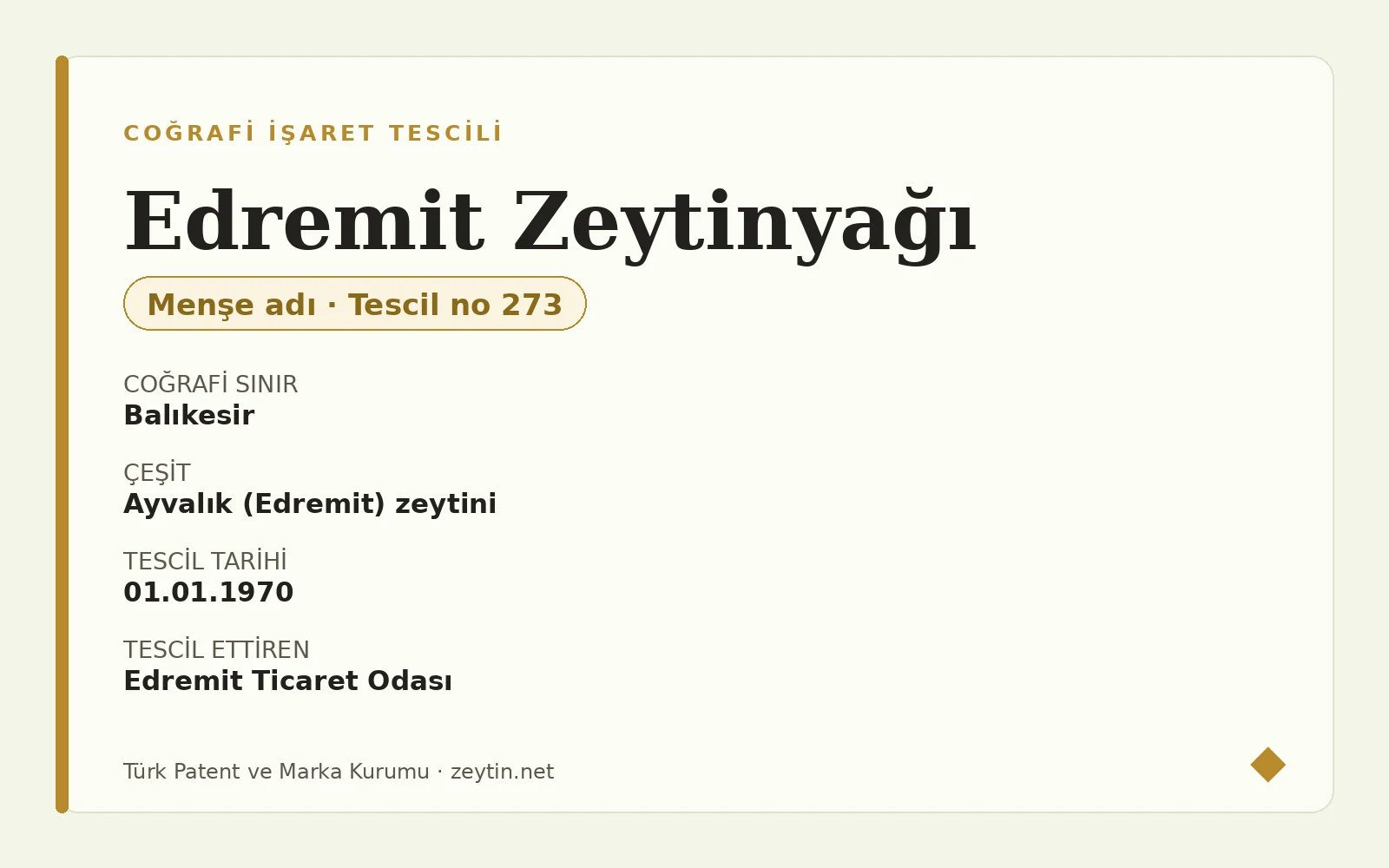
Registered in 2017. The certificate lists thirteen fruity perceptions, from green almond to banana skin. At least one must be present at low or medium intensity.
Sensory descriptions are usually dispatched in three or four words. The certificate for Edremit Olive Oil lists thirteen separate perceptions and requires at least one to be present.
The record
| Registration no | 273 |
| Registration date | 13.12.2017 |
| Application | C2017/048 · 22.05.2017 |
| Amendment notice | 16.08.2021 · Bulletin 107 |
| Type | Designation of origin |
| Registered by | Edremit Chamber of Commerce |
| Area | The Edremit district of Balıkesir and its surroundings |
| Cultivar | Ayvalık (Edremit) |
Thirteen perceptions
According to the certificate at least one, or several, of the following fruity attributes — perceived through the nose and retronasally — must be present in any given sample:
t; green almond · golden apple · vanilla · flowers · banana skin · grass · green · green fruity · hazelnut · fresh walnut · ripe fruity · soft fruity · artichoke · tomato
Intensity must be low (<3.0) or medium (<5.0-5.5).
The presence of unusual descriptors such as banana skin and fresh walnut is notable — sensory panel vocabulary is standardised, and these two were chosen to capture the finer notes of the Ayvalık cultivar.
Kinaesthetic properties
The certificate opens a separate heading for flow. How the oil moves in the mouth is part of the definition — oils of the Ayvalık cultivar are generally described as “lightly flowing”, the same phrase used in the North Aegean Olive Oils certificate.
Five registrations, one cultivar
Edremit Olive Oil is one of several registrations built on the Ayvalık cultivar:
| Registration | No | Locality |
|---|---|---|
| Ayvalık Olive Oil | 88 | Ayvalık |
| Edremit Gulf Green Scored | 189 | Gulf of Edremit |
| Edremit Olive Oil | 273 | Edremit |
| North Aegean Olive Oils | 392 | ten localities |
| Burhaniye Olive Oil | 518 | Burhaniye · Gömeç |
Five registrations, one cultivar — the clearest demonstration that a geographical indication is granted to a place.
The production rules the document binds
The registration does not only protect a name; it binds how the oil is made, line by line. The main conditions:
| Rule | Condition in the document |
|---|---|
| Harvest window | From mid-October to the end of February |
| Harvest method | From the tree, without damaging the fruit; no contact with soil |
| Windfall olives | Not permitted — fruit fallen to the ground or left to spoil |
| Transport | Food-grade, ventilated, preferably plastic crates |
| Time to pressing | 10 hours at most |
| Washing water | Potable, changed daily according to throughput |
The most binding item on that list is the 10 hours. Free fatty acidity rises while harvested fruit waits; a ten-hour limit is the most practical way to hold acidity down. The document prescribes not an outcome but the operation that produces it — which is the norm in geographical indications.
The "no contact with soil" rule is not merely hygiene: fruit picked off the ground is the main source of mould and fermentation defects, and those defects show up directly on a tasting panel.
Sensory thresholds defined numerically
The document also ties tasting results to numbers:
| Attribute | Intensity limit |
|---|---|
| Bitterness | < 4.0 |
| Pungency | < 4.0 (medium) |
| Sweetness | < 3.0 (low) |
| Fruitiness | < 3.0 low, or < 5.0-5.5 medium |
The striking point: these are upper limits. Edremit Zeytinyağı is not defined on a "the more bitter the better" logic; on the contrary, bitterness and pungency are required not to exceed a given level. The character of the Ayvalık cultivar is sought in balance rather than intensity.
The document's phrase "like water" comes from the same place: the oil's light flow in the mouth is written in as the cultivar's single most distinguishing criterion. Placing a kinaesthetic property at the centre of a definition is rare among Turkish registrations.
Who carries out the inspection?
Inspection is the most overlooked side of a geographical indication. The document defines it too:
- The inspection body convenes under the coordination of the Edremit Chamber of Commerce.
- Members come one each from four institutions: the Chamber of Commerce, Balıkesir University's Edremit Vocational School, the Edremit District Directorate of Agriculture and Forestry, and the Edremit Commodity Exchange.
- It works with at least 3 people and inspects at least once a year; further inspections may follow a complaint.
- Results are reported under Industrial Property Law no. 6769 and submitted annually to the Turkish Patent and Trademark Office.
So "Edremit Zeytinyağı" is not a marketing choice but a commitment inspected at least once a year and reported to a central authority.
The area as the document defines it
The short line in the record does not give the registration's full boundary. The document's own definition reads:
t; Balıkesir ili Edremit ilçesini de içerisine alan; k uzeyde Kaz Dağları, batıda Çanakkale ili Ayvacık ilçesine bağlı Küçükkuyu Beldesi ile Edremit ilçesi sınırında bulunan ve Çanakkale -Balıkesir il sı
The cultivar behind it, measured
The registration is granted to a place, but the cultivar the definition rests on has measurable values:
| Property | Value |
|---|---|
| Meyve ağırlığı | 4,98 g |
| Et oranı | %85 |
| Yağ oranı | %23-26 |
| Hasat | Ekim-Kasım |
| Kendine verimlilik | yok |
| Periyodisite | az |
| Soğuğa dayanım | yüksek |
| Kullanım | yağlık · çizik · siyah sofralık |
| Meyve boyu | 23,09 mm |
| Meyve eni | 18,85 mm |
| Meyve iriliği | orta-iri |
At 23-26% the oil content sits mid-range; yield alone is not the argument here, aroma is. The cultivar is not self-fertile — a pollinator is required in the grove. The planting the registration describes is therefore never single-cultivar in practice. Alternate bearing is low: the year-to-year swing in yield is smaller than is usual in olives.
Its place in Balıkesir's olive production
| Item | Value |
|---|---|
| Fruit production | 314,189 t |
| — for oil | 268,283 t |
| — for the table | 45,905 t |
| Olive oil production | 47,618 t |
| Trees | 11,345 thousand |
| Yield per tree | 27.7 kg |
85% of the province's fruit goes to oil. An oil-based registration matches how the province actually produces.
One rating per visitor; you can change yours at any time. Ratings are real reader votes — no seeded or default scores.
Related
 Article
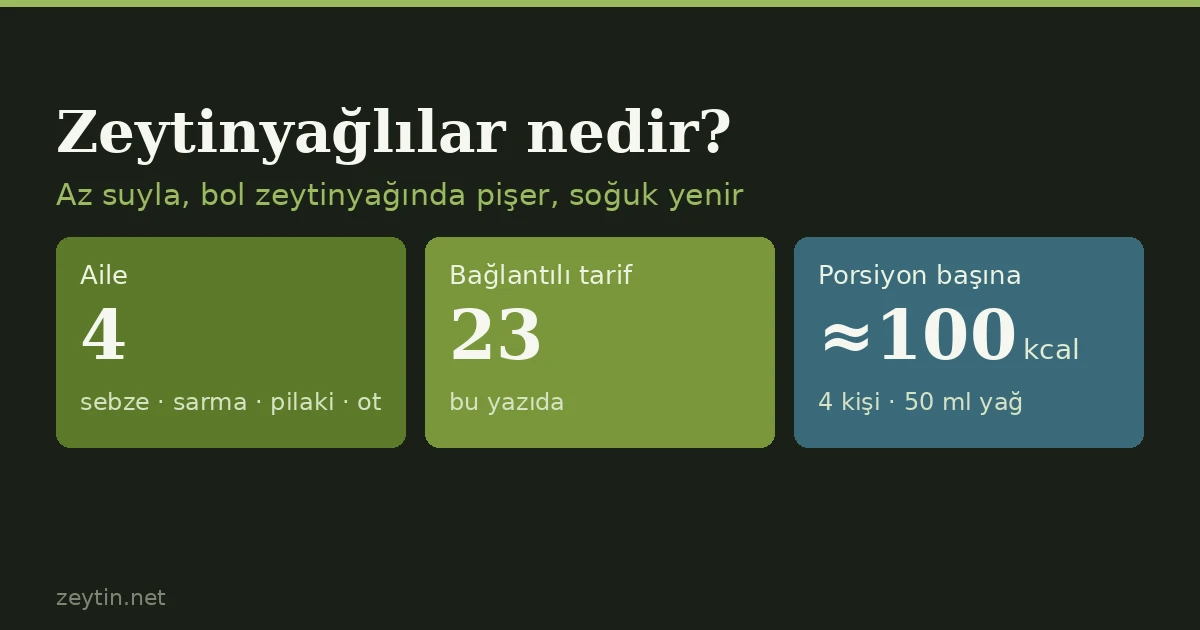
What are zeytinyağlılar? The logic of Turkish dishes cooked in olive oil
Zeytinyağlılar are Turkish dishes in which vegetables or pulses are cooked with little water in plenty of olive oil until they absorb their own juices, then eaten cold at room temperature. They contain no meat, can be made a day ahead and taste better the next day. Vegetable dishes, stuffed leaves and vegetables, pilaki beans and Aegean wild greens are the four main families.
 Article
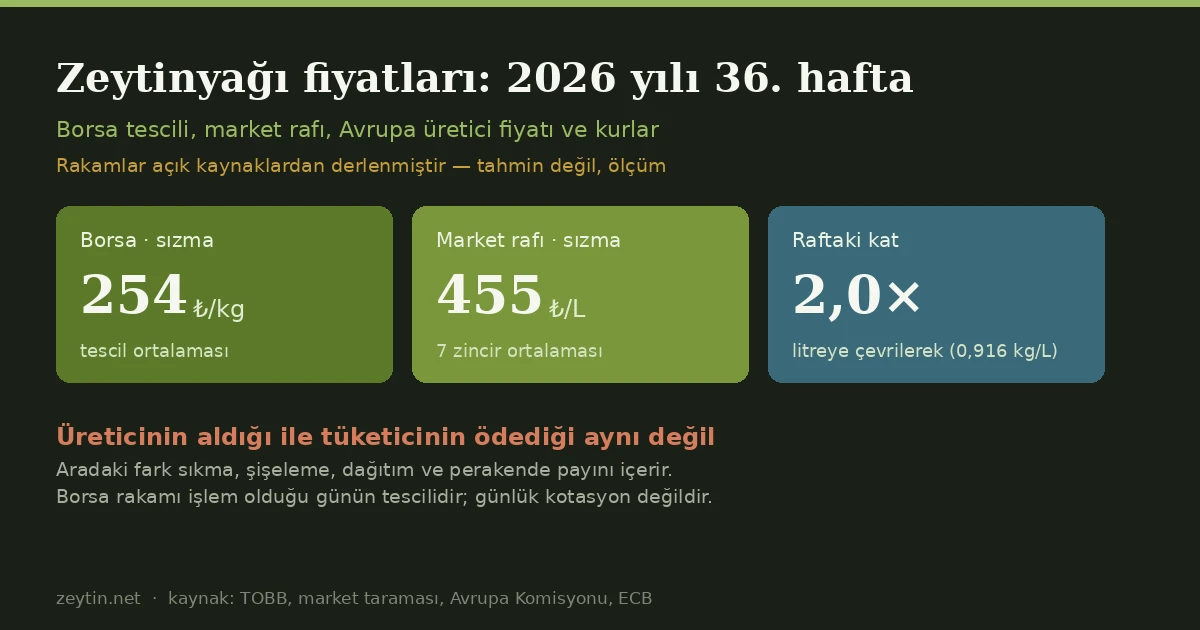
Olive Oil Prices: Week 36 of 2026
Week 36 of 2026: Turkish exchange prices, European producer prices and exchange rates side by side.
 Article
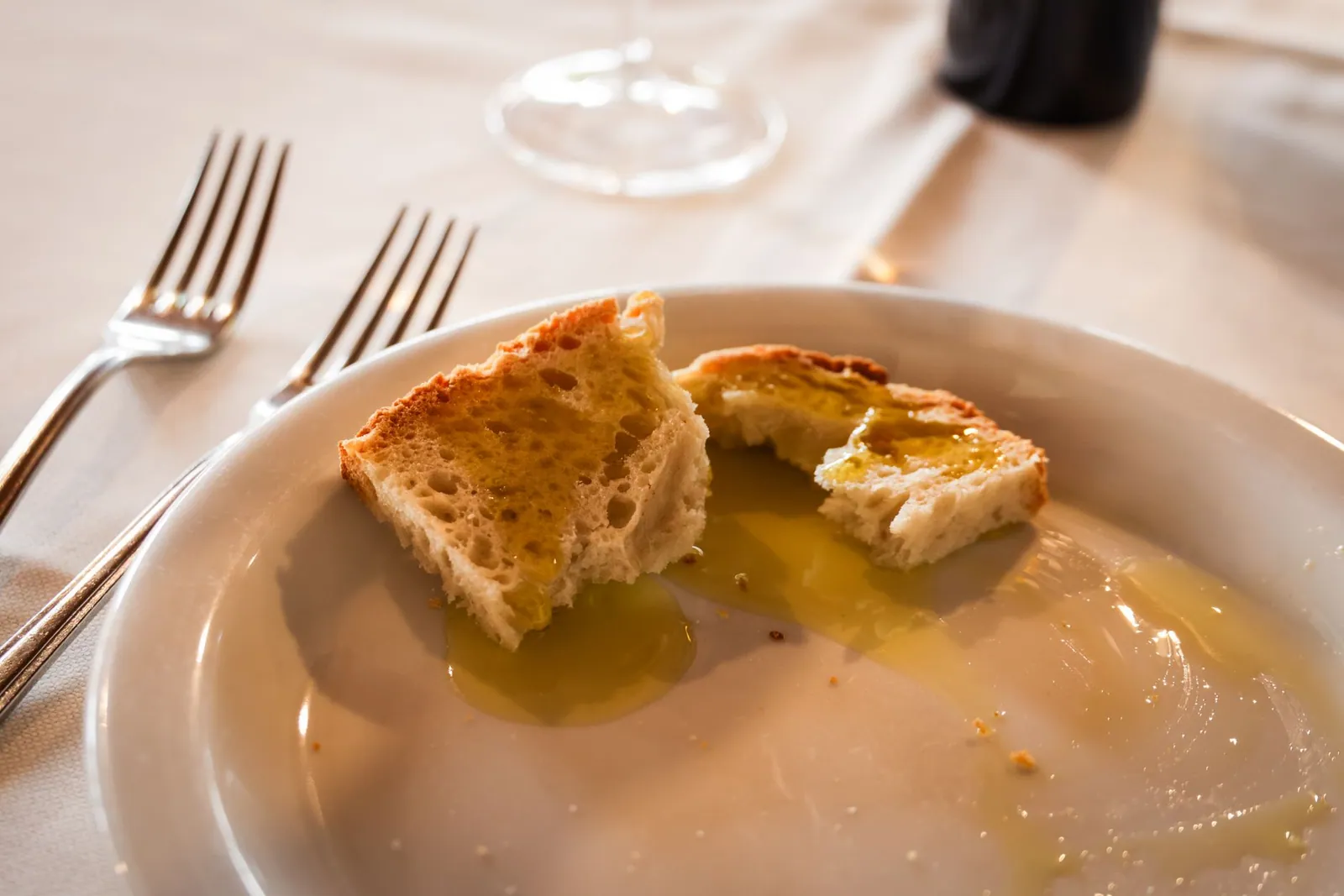
How to Tell Good Olive Oil
Bitterness is a mark of quality, not a defect. Colour tells you nothing. The three attributes tasting panels look for, and a simple test at home.
 Article
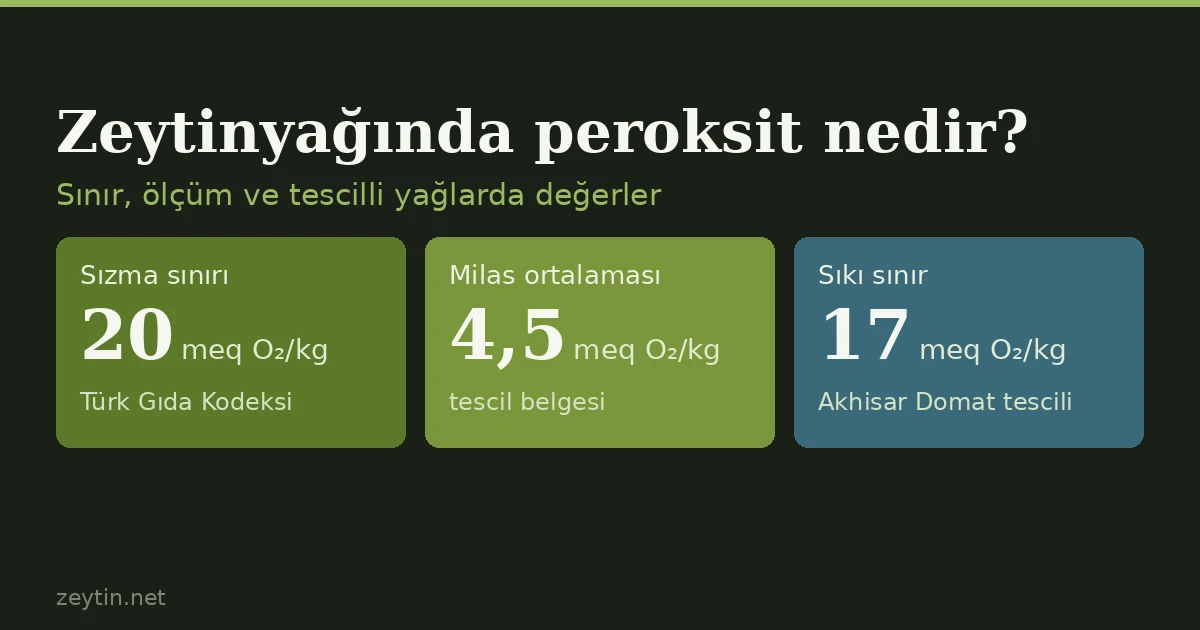
What is the peroxide value of olive oil? Is a high value harmful?
The peroxide value shows that oil has begun to oxidise; the limit for extra virgin is 20 meq/kg. Registered Turkish oils measure 4.5-9.3 on average.