Burhaniye Olive Oil: two thousand years attested by the Adramytteion excavations
Registered in 2021. The certificate grounds two thousand years of olive growing in the excavation of an ancient city, and sets separate sensory thresholds for early and ripe harvest.
In geographical indications the phrase “produced here for centuries” appears often and is rarely evidenced. Burhaniye Olive Oil's certificate rests on excavation finds: work at the ancient city of Adramytteion attests two thousand years of olive growing in the area.
The record
| Registration no | 518 |
| Registration date | 11.08.2020 |
| Protection from | 25.01.2019 |
| Type | Designation of origin |
| Registered by | Burhaniye Chamber of Commerce |
| Area | The Burhaniye and Gömeç districts of Balıkesir |
| Cultivar | Ayvalık (Edremit) |
The raw material
The Ayvalık cultivar averages 3.6 g per fruit; the fruit is medium-sized, rounded and close to cylindrical. Oil content runs 18-24%. The cultivar serves both for oil and for table use.

Two harvests, two thresholds
This is where the certificate is distinctive: it gives separate sensory values for early and ripe harvest.
| Sensory criterion | General | Early harvest |
|---|---|---|
| Fruitiness | ≥ 1.5 | ≥ 2.3 |
| Bitterness | ≥ 1.0 | ≥ 1.5 |
| Pungency | ≥ 1.5 | — |
In early-harvest oils fruitiness, bitterness and pungency are high and acidity low. Free acidity across the range runs 0.3-0.8.
The distinction matters: two different product profiles are protected under one registration — the sharp oil of an early harvest and the mellow oil of a ripe one. We discussed the choice in is early harvest expensive or valuable.
One cultivar, four registrations
The Ayvalık cultivar alone underpins four separate geographical indications: Ayvalık Olive Oil (88), North Aegean Olive Oils (392), Burhaniye (518) and Edremit Olive Oil (273). One cultivar registered separately in different localities is the clearest demonstration that a geographical indication attaches to a place, not to a cultivar.
In short
Burhaniye Olive Oil is extra virgin oil produced from the Ayvalık cultivar in Burhaniye and Gömeç. The certificate adds two things: archaeological grounding and sensory thresholds that split by harvest timing.
The area as the document defines it
The short line in the record does not give the registration's full boundary. The document's own definition reads:
t; Balıkesir ili Burhaniye ve Gömeç ilçelerinin doğuda Madra Dağı, batıda Ege Denizi, güneyde Mayatepe’den Kerem Köye uzanan yay ile kuzeyde Dutluca Köyünden Çoruk Köyüne kadar olan yay içinde kalan alan
What the registration requires, and what producers actually do
The document binds sensory thresholds but sets no limit on the time between harvest and pressing. In the field, operators fill that gap with rules of their own.
The Burhaniye municipality runs its own grove and set out its working figures in its 2023 harvest announcement:
| Item | Value |
|---|---|
| Municipal grove | 350 dönüm (35 ha) |
| Harvest crew | 60 people |
| Daily pick | ≈ 3,500 kg |
| Time to pressing | within 24 hours |
| System | continuous · cold extraction · early harvest |
| Basis | Good Agricultural Practices |
⚠ Those 24 hours are the municipality's own practice, not a requirement of the registration. But the comparison is instructive: the Edremit Zeytinyağı registration immediately to the north binds the same interval at 10 hours. The same cultivar, two neighbouring districts, one writing it into the document and the other leaving it to operating practice.
Why does the interval matter? While harvested fruit waits, enzyme activity and fermentation raise free fatty acidity. The Burhaniye document's free acidity range of 0.3-0.8 is a band that cannot be held without that discipline.
The daily 3,500 kg gives another measure: about 58 kg per person per day for a crew of 60. That is the realistic pace of hand and pole harvesting, and it is where the yield gap between harvest methods comes from.
Its place in Balıkesir's olive production
| Item | Value |
|---|---|
| Fruit production | 314,189 t |
| — for oil | 268,283 t |
| — for the table | 45,905 t |
| Olive oil production | 47,618 t |
| Trees | 11.3 million |
| Yield per tree | 27.7 kg |
85% of Balıkesir's fruit goes to oil. An oil-based registration for Burhaniye therefore matches the province's production structure exactly — the mirror image of Bursa's table-weighted profile.
At 27.7 kg per tree the yield is above the national average, indicating a mature olive-growing region in both tree stock and husbandry.
One rating per visitor; you can change yours at any time. Ratings are real reader votes — no seeded or default scores.
Related
 Article
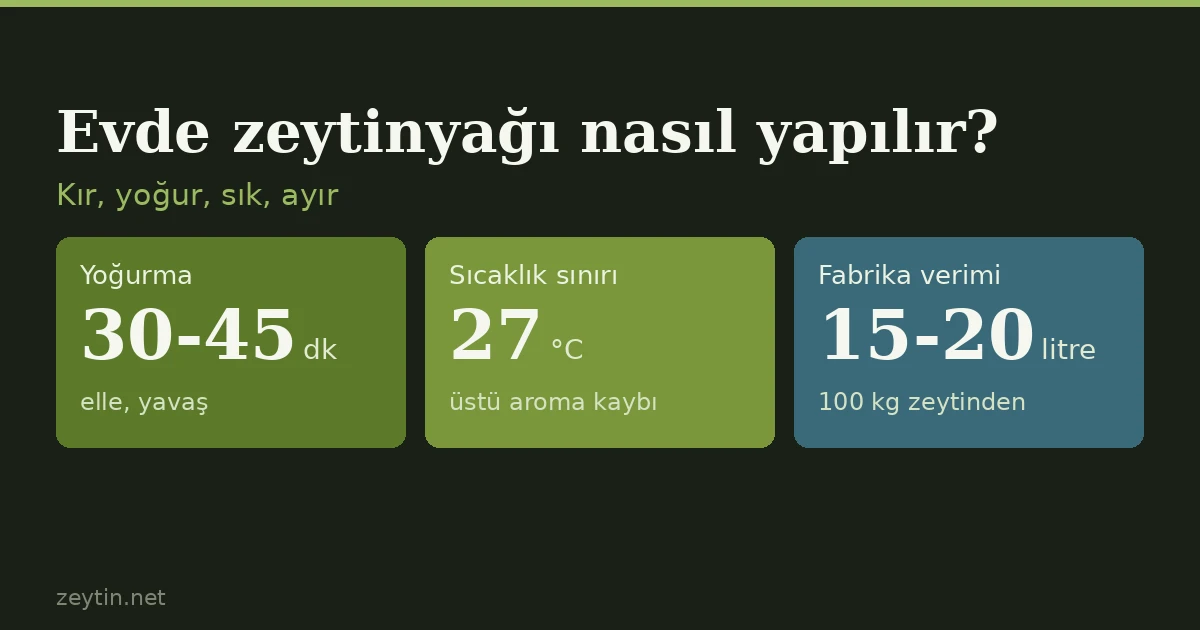
How to make olive oil at home: crushing, kneading, separating and realistic expectations
Pressing oil from a few kilos of olives at home is possible: the olives are crushed with their stones, the paste is kneaded, pressed and left until the oil separates from the water. But yield stays well below a mill's and quality is hard to protect. The steps, the equipment and the limits.
Article
How to make olive oil at home: crushing, kneading, separating and realistic expectations
Pressing oil from a few kilos of olives at home is possible: the olives are crushed with their stones, the paste is kneaded, pressed and left until the oil separates from the water. But yield stays well below a mill's and quality is hard to protect. The steps, the equipment and the limits.
 Article
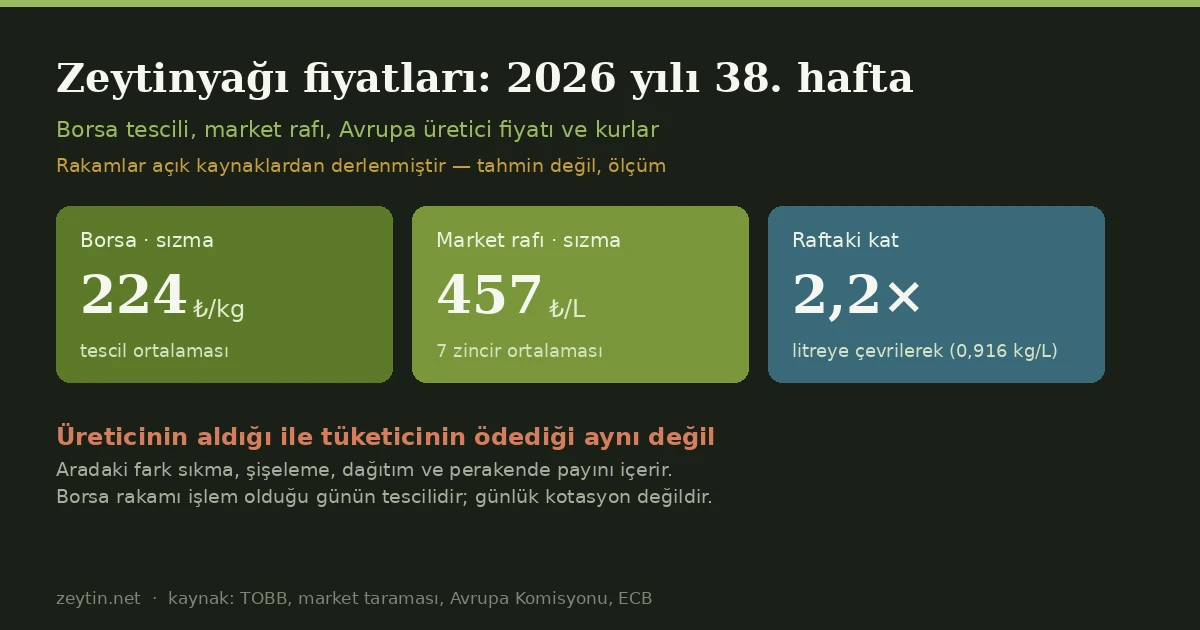
Olive Oil Prices: Week 38 of 2026
Week 38 of 2026: Turkish exchange prices, European producer prices and exchange rates side by side.
Article
Olive Oil Prices: Week 38 of 2026
Week 38 of 2026: Turkish exchange prices, European producer prices and exchange rates side by side.
 Article
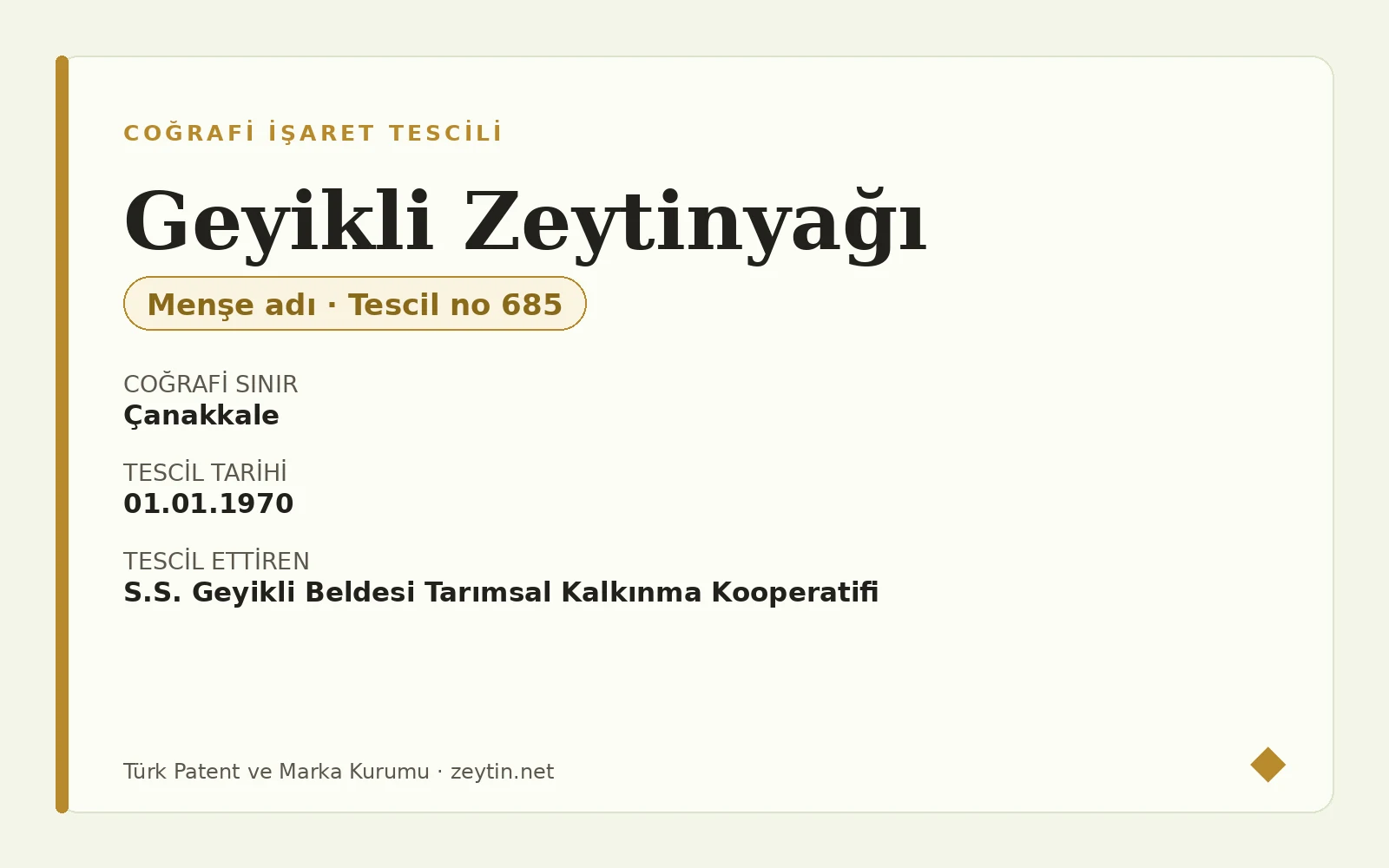
Geyikli Olive Oil: a registration that names its pollinators
Registered in 2020. From the Ayvalık cultivar; the certificate also records Gemlik and Hanım Parmağı as pollinators in the groves. Limits are set on 16 aroma compounds.
Article
Geyikli Olive Oil: a registration that names its pollinators
Registered in 2020. From the Ayvalık cultivar; the certificate also records Gemlik and Hanım Parmağı as pollinators in the groves. Limits are set on 16 aroma compounds.
 Article
What Does Acidity Mean in Olive Oil?
The 0.3% or 0.8% on the label has nothing to do with sour taste. Acidity tells you the condition of the fruit before pressing.
Article
What Does Acidity Mean in Olive Oil?
The 0.3% or 0.8% on the label has nothing to do with sour taste. Acidity tells you the condition of the fruit before pressing.