Table olive tasting panel training in Aydın
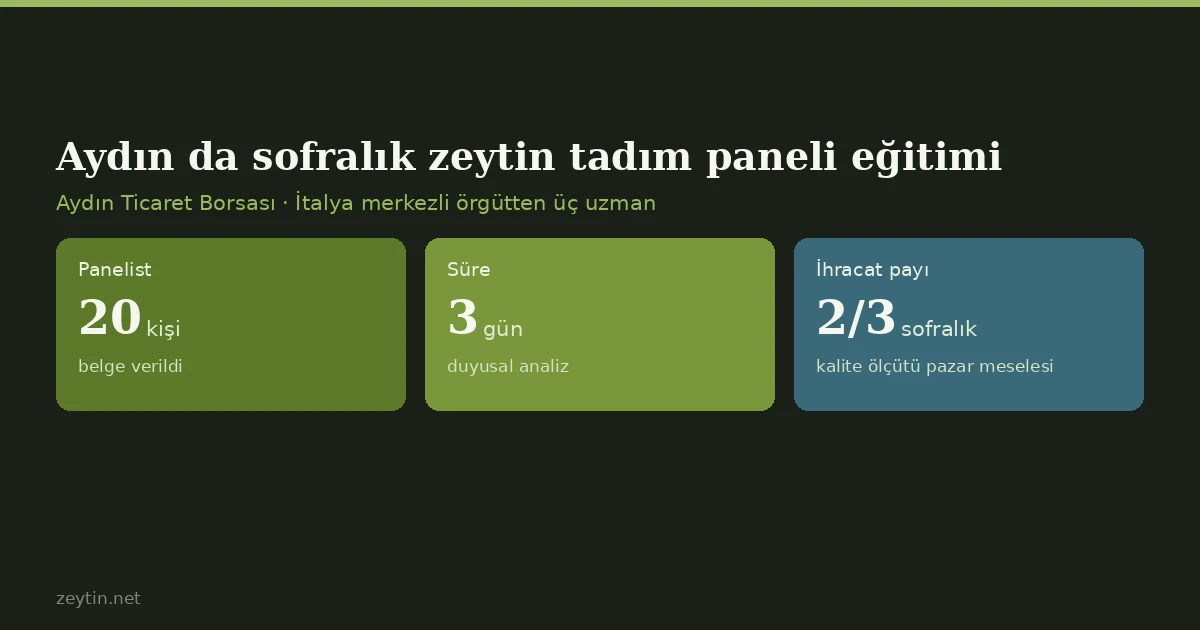
Aydın Commodity Exchange is extending its sensory analysis experience from olive oil to table olives, with 20 panellists trained over three days.
A three-day tasting panel training was held in Aydın to assess table olive quality criteria against international standards. Three experts from an Italy-based national olive oil tasters' organisation took part, and 20 panellists were trained.
What was covered
Four topics:
- the sensory characteristics and defects of table olives
- the effect of processing methods on quality
- identifying basic defects
- statistical evaluation of tasting results
Certificates were awarded to successful participants.
Why it matters
Sensory analysis is well established for olive oil: the definition of the extra virgin grade depends on a panel test alongside chemical criteria. For table olives that infrastructure is far weaker in Turkey.
The exchange's aim is to carry its olive oil panel experience across to the table olive side and build capacity in line with international standards.
The practical consequence shows up in exports: buyers expect a shared language for defect definition and grading. Given that two-thirds of our exports are table olives, establishing measurable quality criteria here is directly a market question.
We covered the variety of processing methods for table olives, and how defects arise, in table olives.
One rating per visitor; you can change yours at any time. Ratings are real reader votes — no seeded or default scores.
Related
 Article
The world's largest bottler is for sale: a €500 million race for Deoleo
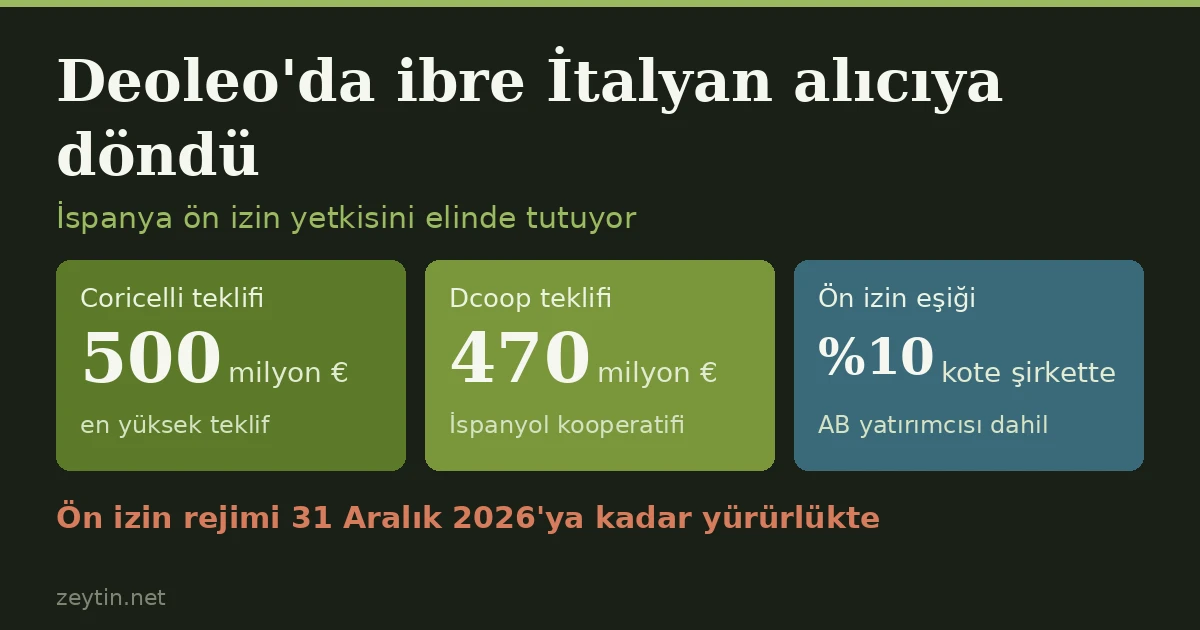
Deoleo, owner of Bertolli and Carbonell, holds 22% of global bottled olive oil sales. Italy's Coricelli leads at €500 million, Spain's Dcoop cooperative at €470 million. The Spanish government regards the company as nationally strategic. Because Deoleo is a major bulk buyer, the outcome matters to Turkish exporters too.
 Article
Spain steps back from vetoing Deoleo's sale: the door opens for Italy's Coricelli
Madrid's position on the sale of the world's largest olive oil bottler has shifted: in early September a Spanish buyer was preferred, and on 18 September Italy's Coricelli was reported to be seen as the best-positioned candidate. The government's lever is a foreign investment screening regime that covers EU investors too and runs to 31 December 2026. Because Deoleo is a major bulk buyer, the outcome matters to Turkish exporters.
 Article
"Not definitive until November": Andalusian growers push back on the crop estimate
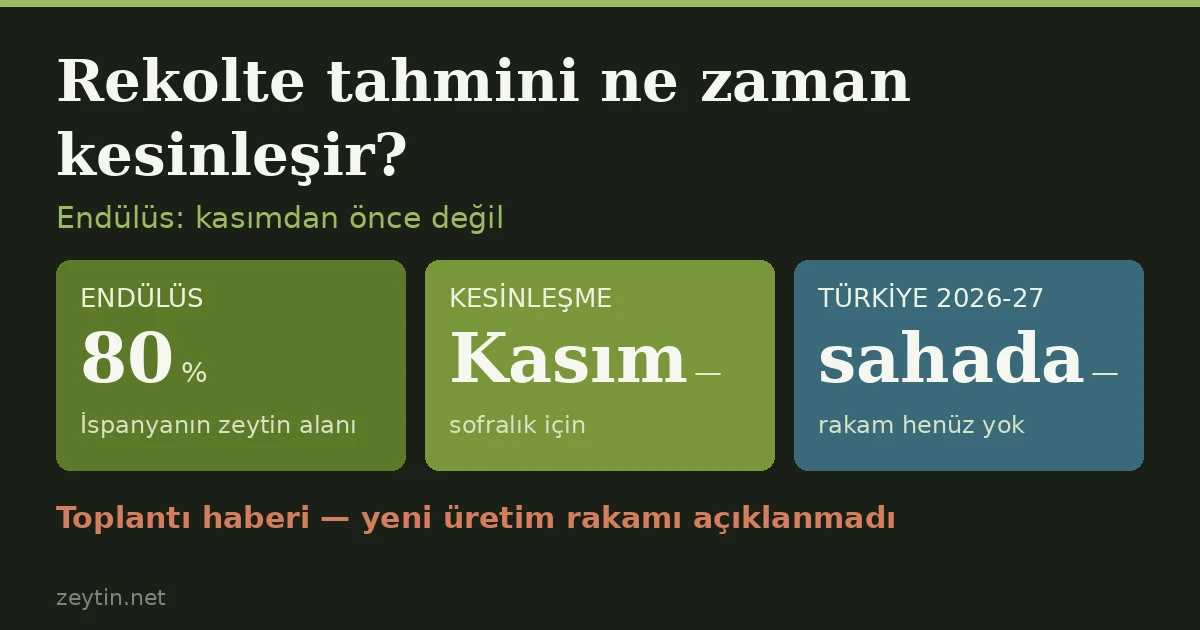
Andalusia's agriculture ministry called its first crop estimate "high production"; cooperatives and COAG in Seville objected: recent heat will affect the crop and the estimate is not definitive until November. Türkiye is making its 2026-27 estimate in the field the same week — the same caution applies here.
 Article
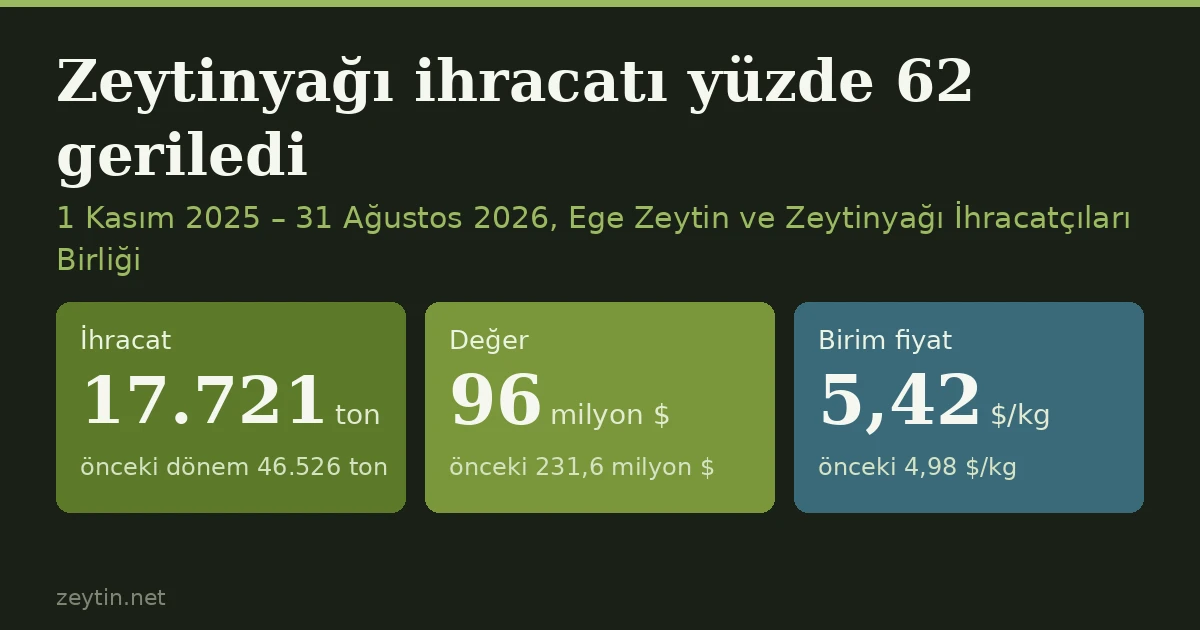
Olive oil exports still down 62% at the end of August: bulk loses 73%
According to the Aegean Olive and Olive Oil Exporters' Association, olive oil exports between 1 November 2025 and 31 August 2026 fell 62% in volume and 59% in value. Bulk sales lost 73%, the US market 70%. Table olives, by contrast, held their ground.