The world's largest bottler is for sale: a €500 million race for Deoleo
Deoleo, owner of Bertolli and Carbonell, holds 22% of global bottled olive oil sales. Italy's Coricelli leads at €500 million, Spain's Dcoop cooperative at €470 million. The Spanish government regards the company as nationally strategic. Because Deoleo is a major bulk buyer, the outcome matters to Turkish exporters too.
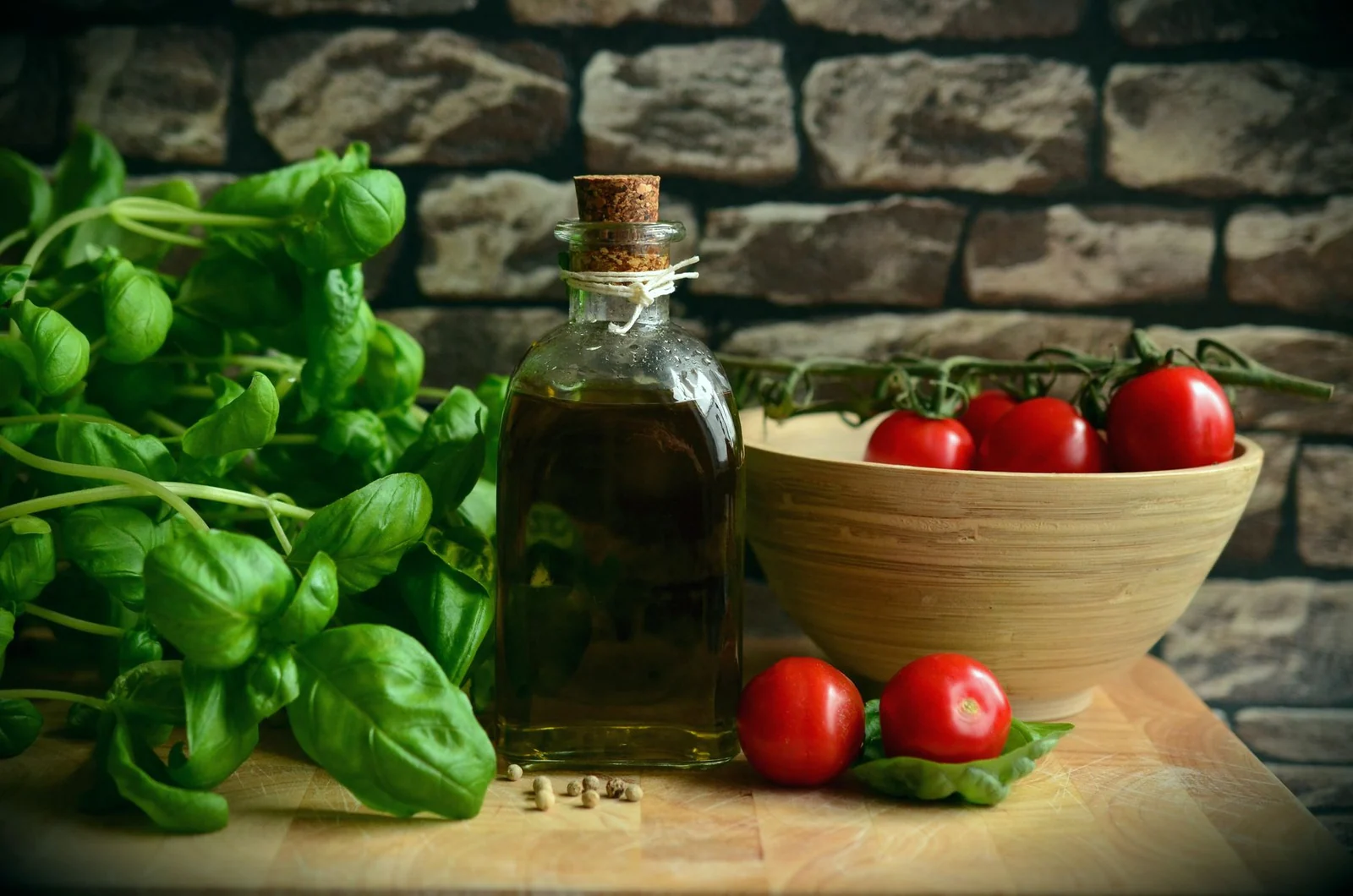
The world's largest olive oil bottler is about to change hands, and the list of bidders shows where the sector's control may settle.
Deoleo owns the Bertolli and Carbonell brands. A reported 22% of global bottled olive oil sales belong to this company — more than one in five bottles on the shelf.
The offers on the table
| Bidder | Country | Amount |
|---|---|---|
| Coricelli | Italy | €500 million |
| Dcoop | Spain (cooperative) | €470 million |
| Acesur | Spain | bid submitted |
Dcoop's earlier offer was €460 million; Coricelli moved ahead at €500 million. Beyond these, Bonifiche Ferraresi and Newlat Food (Italy), Lesieur/Avril (France) and Cobram Estate (Australia) have also been named in the process.
Although the figures put Coricelli in front, Dcoop is regarded as being in the stronger position on the Spanish side. The reason is not commercial.
Why it is a political matter
Spain is by far the world's leading olive oil producer. The government has signalled concern about a company it regards as nationally strategic passing into foreign control — particularly into the hands of a fund from Italy, its principal rival producer.
This is a sign that olive oil is now seen not merely as an agricultural product but as an industrial asset. Deoleo buys Spanish producers' oil and sells it worldwide; if ownership changes, sourcing preferences may change with it.
The process is expected to conclude as early as September.
For Türkiye: what changes with the buyer?
Deoleo is not a producer but a major bulk buyer. Much of what it bottles comes from the market rather than its own groves. That bears directly on Turkish exporters: Türkiye's exports run largely through bulk oil, and companies of this kind are among the largest buyers.
The possible effect of ownership on sourcing can be read as follows:
- If the Spanish cooperative (Dcoop) buys — Dcoop is itself a producers' cooperative. A grower body acquiring a bottler would be expected to process its own members' oil first. That could narrow outside bulk purchasing.
- If an Italian group buys — Italy has historically produced less than its consumption and exports require, and has bought bulk from abroad to bottle. Such ownership may be more inclined to keep outside sourcing open.
⚠ This is an inference; no bidder has announced a sourcing policy. But it is the question Turkish exporters should watch: if Europe's largest bottler narrows its bulk buying, one more door narrows for a sector whose exports have already fallen 62%.
The same week brought Andalusia's objection to North African imports. Together they describe one picture: Europe is rearranging whose oil gets bottled by whom.
What does 22% mean?
Deoleo's share is 22% of bottled olive oil sales — but that is not 22% of world production. The difference is the heart of the matter.
Most of the world's olive oil changes hands as bulk: the grower presses, a trader collects, a bottler buys and turns it into branded product. Value forms at that last step. The bottler is the narrowest but most profitable link in the chain.
Ownership of a bottler therefore matters less for the oil it makes than for whom it buys from.
| Link | Who | Margin |
|---|---|---|
| Growing | farmer · cooperative | low, year-dependent |
| Milling | the mill | a processing fee |
| Bulk trade | trader · union | thin, volume-based |
| Bottling + brand | firms like Deoleo | the highest |
Türkiye mostly sells at the third link of this chain. We calculated earlier that two-thirds of our export earnings come from table olives, while on the oil side we ship largely in bulk. Much of the value created by branded sale is therefore captured by someone else.
Where is the world price?
The sale process coincides with a flat period for prices. The world olive oil indicator stands at USD 6,185.22 per tonne (3 September 2026) and has not moved for a week.
For comparison, other vegetable oils the same day: sunflower 1,678, coconut 2,244, rapeseed 553 USD/t. Olive oil remains the most expensive category — and it is that premium which makes a bottler worth €500 million.
⚠ But the premium is also the thing most exposed to erosion when supply becomes abundant. That a buyer is willing to pay €500 million as prices begin to fall suggests a long-term bet on the brand: even if the oil's price falls, the brand's place on the shelf endures.
What should Turkish exporters watch?
Three things to follow once the outcome is announced:
1. Is the buyer a producer or an investor? A growers' cooperative may favour its own members' oil; for a financial investor, sourcing is a question of cost rather than allegiance.
2. Is an origin commitment given? If the sale process produces an undertaking such as "Spanish oil will be used", outside purchasing narrows.
3. Is the brand portfolio split? Bertolli and Carbonell address different markets; brands passing into separate hands would separate sourcing decisions too.
⚠ None of this has been announced. If the process concludes in September, the picture will be clear as new-season contracts are written — which makes the timing critical for Turkish exporters.
One rating per visitor; you can change yours at any time. Ratings are real reader votes — no seeded or default scores.
Related
 Article
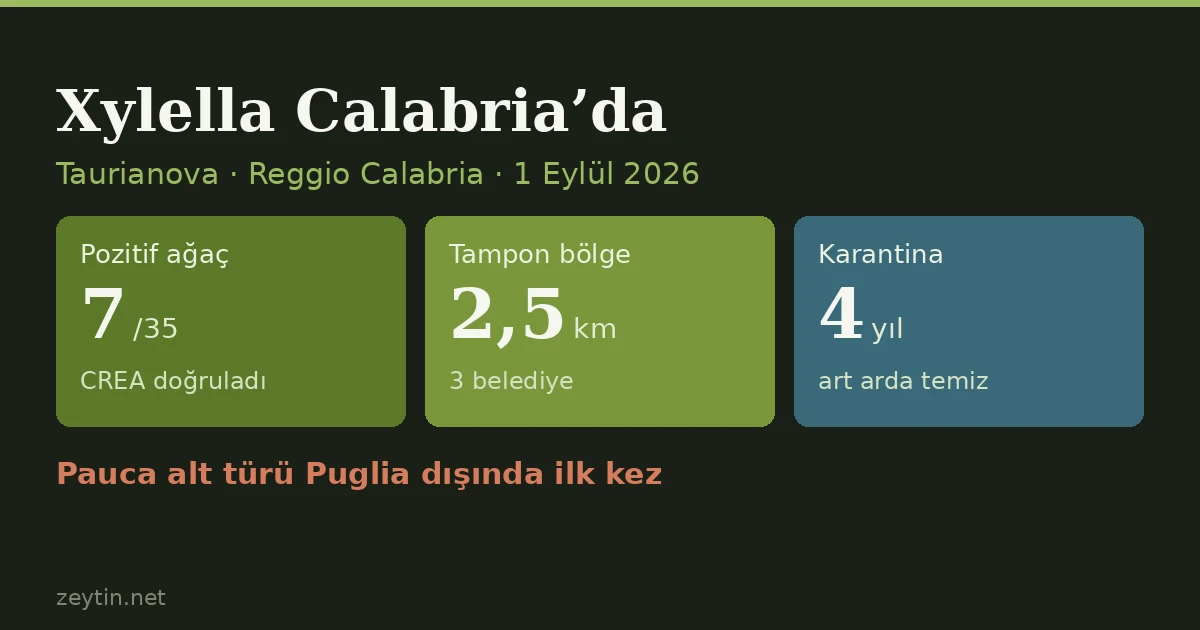
Xylella has left Puglia: seven olive trees test positive in Calabria
The pauca subspecies of Xylella fastidiosa, which dries out olive trees, had been confined to Puglia since 2013. In Taurianova, Calabria, 7 of 35 samples tested positive; the region issued a quarantine decree on 1 September with a 2.5 km buffer zone.
Article
Xylella has left Puglia: seven olive trees test positive in Calabria
The pauca subspecies of Xylella fastidiosa, which dries out olive trees, had been confined to Puglia since 2013. In Taurianova, Calabria, 7 of 35 samples tested positive; the region issued a quarantine decree on 1 September with a 2.5 km buffer zone.
 Article
Algeria expects a record 150,000 tonnes: the Mediterranean supply map is shifting
Algeria's 2025/26 olive oil output is expected to exceed 150,000 tonnes — up 76% on the previous season and a third consecutive rise. With domestic consumption near 81,000 tonnes, an exportable surplus appears. In a season when Turkish exports fell 62% by value, that means new competition in the bulk market.
Article
Algeria expects a record 150,000 tonnes: the Mediterranean supply map is shifting
Algeria's 2025/26 olive oil output is expected to exceed 150,000 tonnes — up 76% on the previous season and a third consecutive rise. With domestic consumption near 81,000 tonnes, an exportable surplus appears. In a season when Turkish exports fell 62% by value, that means new competition in the bulk market.
 Article
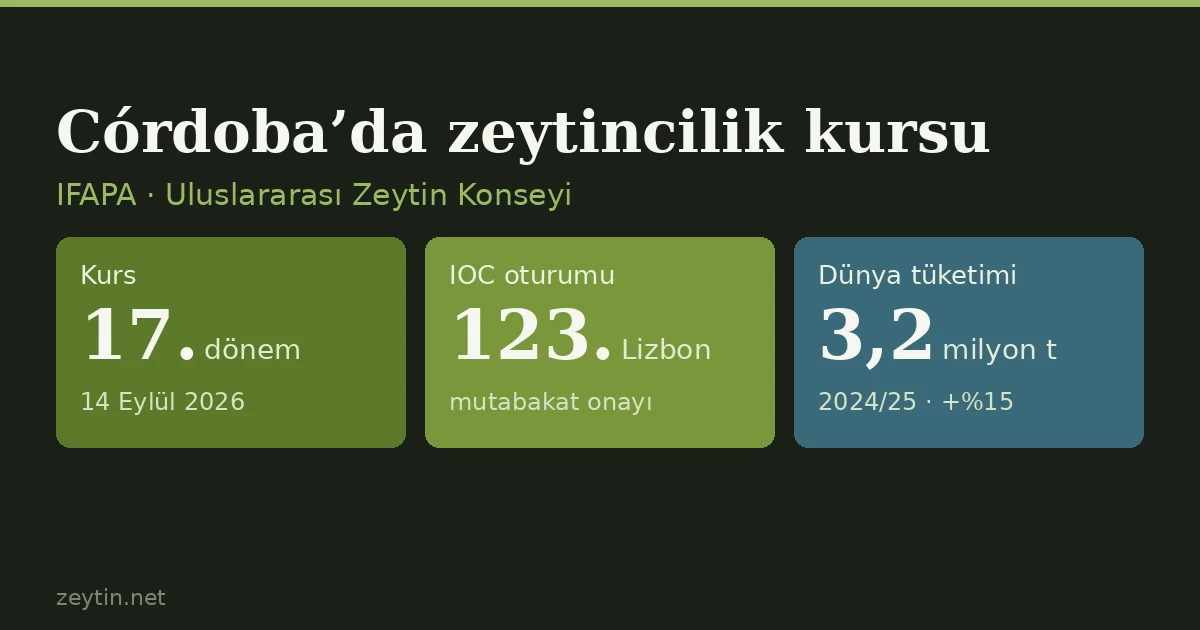
17th Advanced Course in Olive Growing opens in Córdoba as the IOC and IFAPA move towards genetic resources cooperation
Andalusia's Institute of Agricultural and Fisheries Research and Training (IFAPA) opened its 17th Advanced Specialisation Course in Olive Growing in Córdoba on 14 September, with the International Olive Council giving the opening lecture. The Council has approved signing a memorandum of understanding with IFAPA, which hosts one of the world's key olive germplasm collections.
Article
17th Advanced Course in Olive Growing opens in Córdoba as the IOC and IFAPA move towards genetic resources cooperation
Andalusia's Institute of Agricultural and Fisheries Research and Training (IFAPA) opened its 17th Advanced Specialisation Course in Olive Growing in Córdoba on 14 September, with the International Olive Council giving the opening lecture. The Council has approved signing a memorandum of understanding with IFAPA, which hosts one of the world's key olive germplasm collections.
 Article
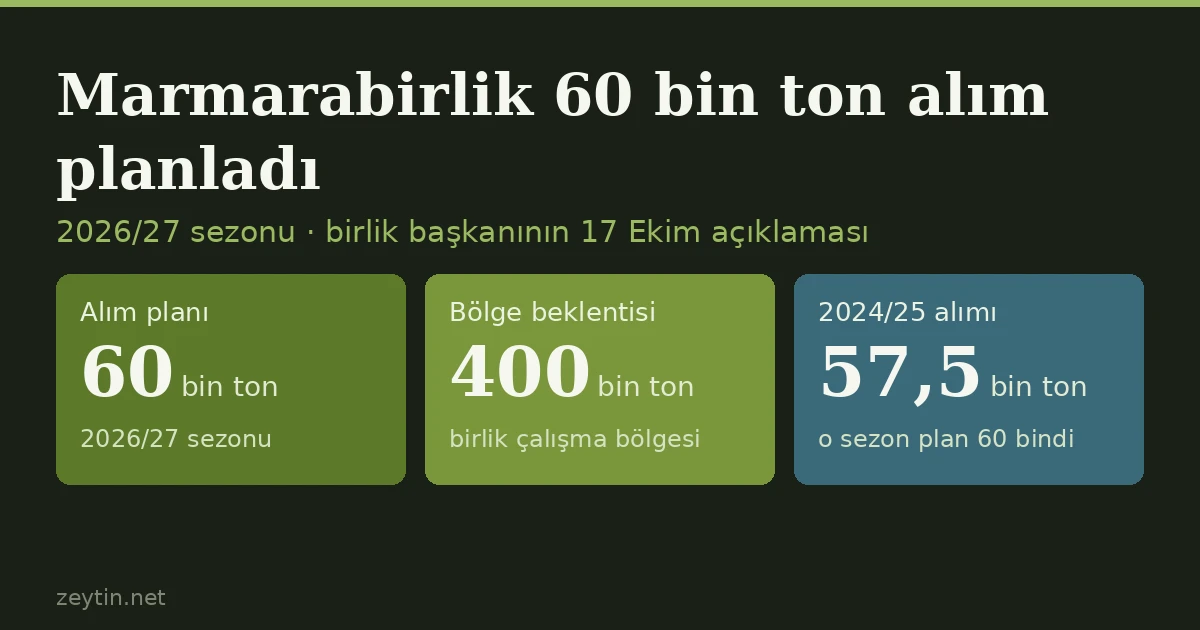
Marmarabirlik plans to buy 60,000 tonnes of olives: 15 per cent of the 400,000 tonnes expected in its region
According to a statement by chairman Ali Yıldız on 17 October, Marmarabirlik plans to buy about 60,000 tonnes of olives from growers this season, while its region expects 400,000 tonnes. The union set the same target in 2024/25 and closed that campaign at 57,500 tonnes. Crop declarations close on 23 October; the purchase price has not been announced.
Article
Marmarabirlik plans to buy 60,000 tonnes of olives: 15 per cent of the 400,000 tonnes expected in its region
According to a statement by chairman Ali Yıldız on 17 October, Marmarabirlik plans to buy about 60,000 tonnes of olives from growers this season, while its region expects 400,000 tonnes. The union set the same target in 2024/25 and closed that campaign at 57,500 tonnes. Crop declarations close on 23 October; the purchase price has not been announced.