In Söke, one day's wage costs ten kilos of olive oil
Over 1,000 tonnes of table olives are expected in Söke's Ağaçlı. Two figures given by the headman sum up the season: oil at 160 lira wholesale, a day's wage at 1,600.
Over 1,000 tonnes of table olives are expected this season in the Ağaçlı neighbourhood of Söke, Aydın. The headman, Serkan Tarakçı, says rain in March, April and May raised quality, the fruit is large, and no worm or similar disease has appeared.
Ağaçlı is counted among Söke's top three neighbourhoods for table olive production.
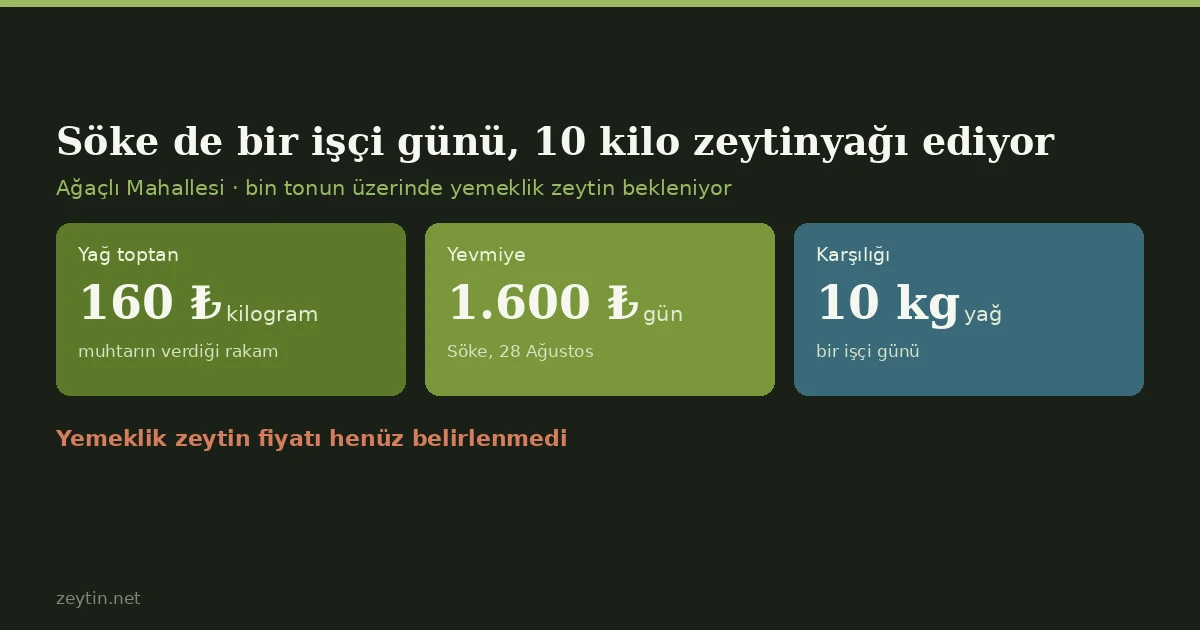
Two figures that sum up the season
Two numbers given by Tarakçı describe the harvest economy in a sentence:
| Item | Value |
|---|---|
| Wholesale olive oil purchase price | TRY 160/kg |
| Daily wage | TRY 1,600/day |
| Oil equivalent of one day's wage | 10 kg |
In his own words: "The grower will hand over ten kilos of olive oil a day as one worker's wage."
That ratio takes the cost debate out of the abstract. Whatever a worker can pick in a day must yield more than ten kilos of oil for the work to pay for itself. We ran that calculation item by item in what does a kilo of olives cost to produce.
Why being table-olive country helps
Tarakçı says olives not of table quality are sent to the mills for oil, and adds that because table olives come first here, they expect to close the season with fewer problems than neighbourhoods focused on oil.
The reason is the price gap: table olives fetch more per kilo than oil olives, because they go directly to the consumer and are judged by different quality criteria. We covered that distinction in table olives.
⚠ The table olive price has not yet been set. The headman's hope is to close the season without a loss.
Compared with other regions
The picture matches the figures in our report on costs and carry-over stock before the harvest: daily labour in Edremit has also passed 1,500 lira. Söke's 1,600 sits slightly above that trend.
We publish current registered exchange prices in our weekly bulletin.
Source
- Statements by Serkan Tarakçı: Aydın Hedef, 28 August 2026
One rating per visitor; you can change yours at any time. Ratings are real reader votes — no seeded or default scores.
Related
 Article
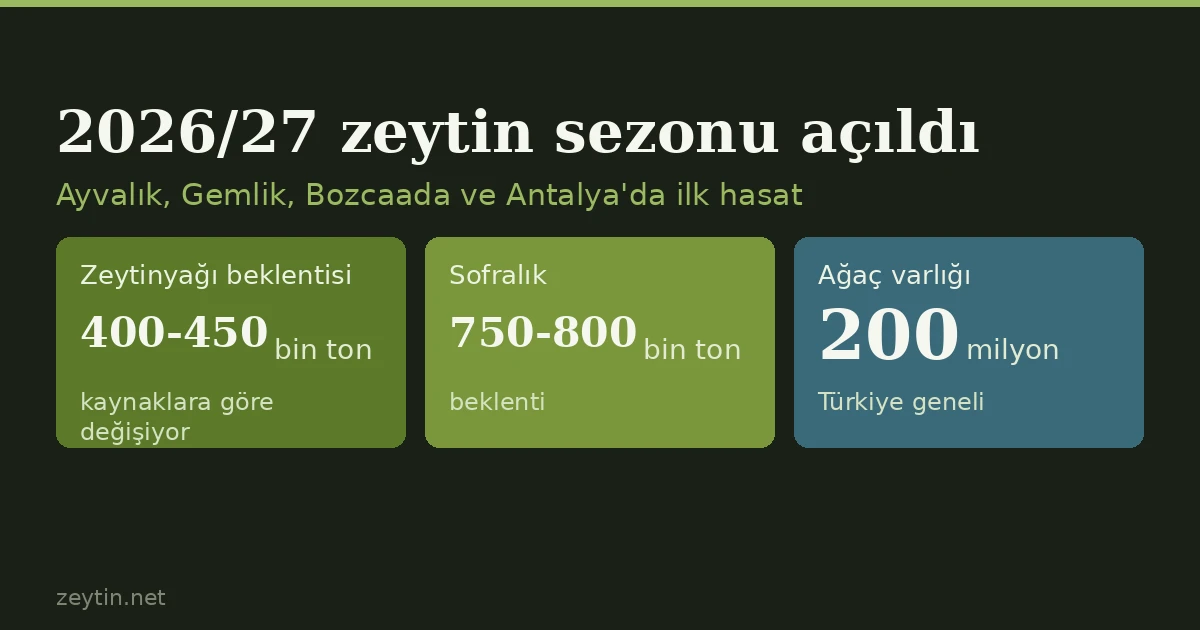
The 2026/27 season opens: first harvests in Ayvalık, Gemlik and Bozcaada
The new olive season opened with three events on 11-13 September. In Ayvalık, an on-year forecast of 400,000-450,000 tonnes of olive oil was voiced; in Gemlik the first olives were picked during the festival; and on Bozcaada the island's first olive oil was pressed with a portable system.
 Article
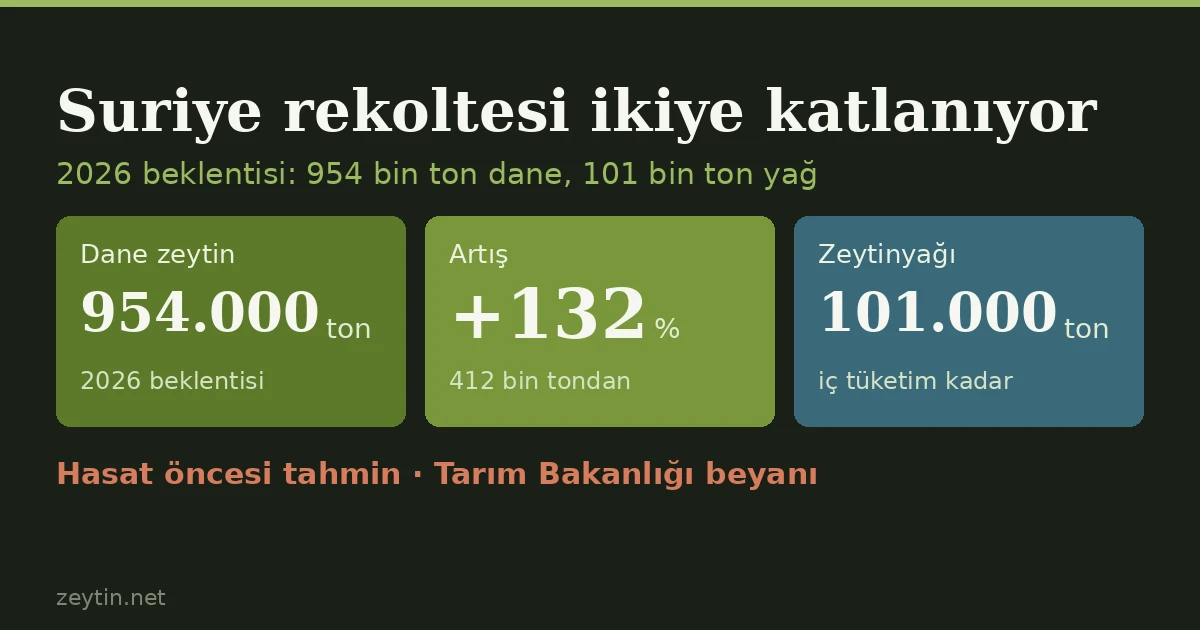
Syria's crop doubles to 954,000 tonnes — and the oil still only feeds itself
Syria's Ministry of Agriculture expects 954,000 tonnes of olives in 2026, up from 412,000 last season. The 101,000 tonnes of oil that implies barely covers domestic consumption — a doubled crop that still produces no export surplus.
 Article
Algeria expects a record 150,000 tonnes: the Mediterranean supply map is shifting
Algeria's 2025/26 olive oil output is expected to exceed 150,000 tonnes — up 76% on the previous season and a third consecutive rise. With domestic consumption near 81,000 tonnes, an exportable surplus appears. In a season when Turkish exports fell 62% by value, that means new competition in the bulk market.
 Article
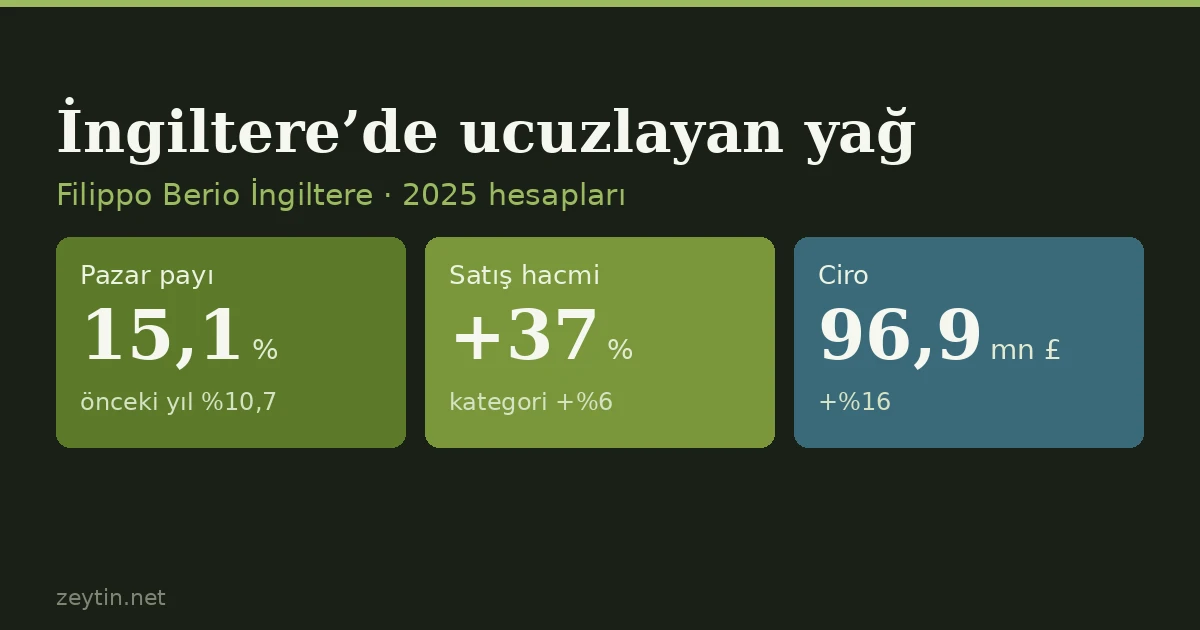
Olive oil got cheaper in the UK and Filippo Berio lifted its share to 15%
The 2025 accounts of Filippo Berio's UK company show how falling prices reached the shelf: volumes up 37%, revenue up 16%, market share from 10.7% to 15.1%. The category grew 6% and lower wholesale costs were passed on to shoppers.