A 282-member doctors' cooperative puts sensors in the olive grove
A cooperative founded by doctors in Adana is monitoring water and fertiliser with buried sensors across 100 of its 135 dönüm of bearing olive grove, funded with 2 million lira.
Ahmet Rıza Şahin, an infectious diseases specialist at Adana City Training and Research Hospital, founded the Physicians' Agricultural Cooperative with colleagues in 2023. Now 282 members strong, it grows olives, sesame, almonds, wheat, tomatoes and aubergines on 500 dönüm in the district of İmamoğlu.
What the project covers
A digital farming model is being applied on 100 of the 135 dönüm of bearing olive grove. It was prepared under the Socially Inclusive Green Transition (SoGreen) programme, coordinated by the Ministry of Industry and Technology with World Bank financing, and accepted by the Çukurova Development Agency.
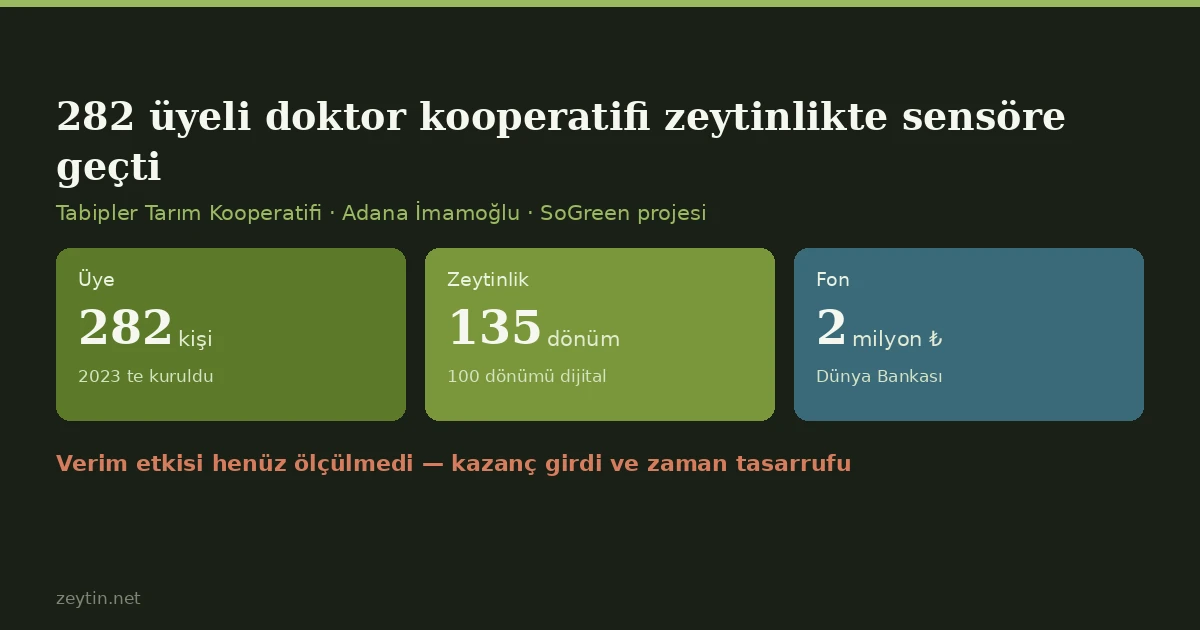
According to Şahin the fund is 2 million lira, covering three things:
- Buried soil sensors: the trees' water and fertiliser needs monitored remotely
- Rainwater harvesting: a collection pool built
- Biological compost: pruned olive branches fermented
Why it is worth noting
The reported gain is avoiding unnecessary irrigation and fertilisation — saving both input cost and time.
That touches a point rarely discussed in olive growing: the olive is drought-tolerant, so it is often assumed it need not be irrigated. But where yield is the aim, water and nutrient management determine the crop directly. Irrigating and fertilising without measurement usually means spending more than necessary.
The second point is scale. A cooperative of 282 members can share an investment no single grower could carry alone. Sensor infrastructure does not pay for itself on a five-dönüm plot; across a hundred it does.
⚠ The report gives no measured result on yield; the gains described are in inputs and time. The effect on the crop will only be visible in end-of-season figures.
One rating per visitor; you can change yours at any time. Ratings are real reader votes — no seeded or default scores.
Related
 Article
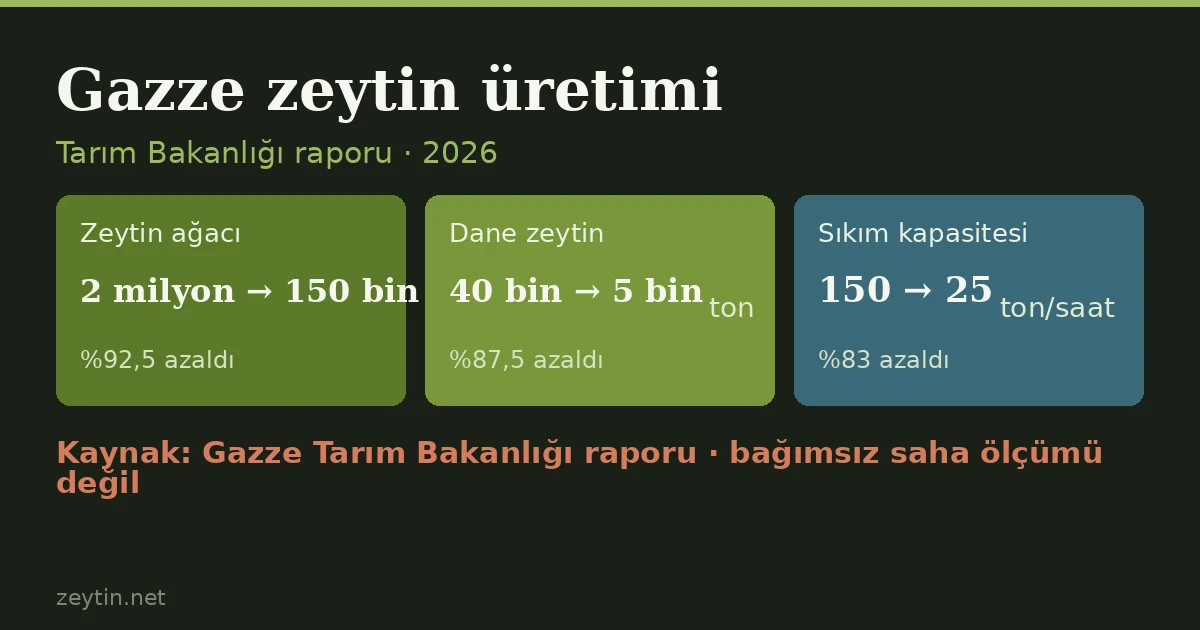
Gaza's olive report: 150,000 trees left of two million, production down 87.5%
According to a report from Gaza's Ministry of Agriculture, olive groves have shrunk from 50,000 dunums to 5,000 and the olive crop from 40,000 tonnes to 5,000. The loss is not confined to the grove: milling capacity has fallen from 150 tonnes an hour to 25, and the number of growers from 20,000 to 1,000.
 Article
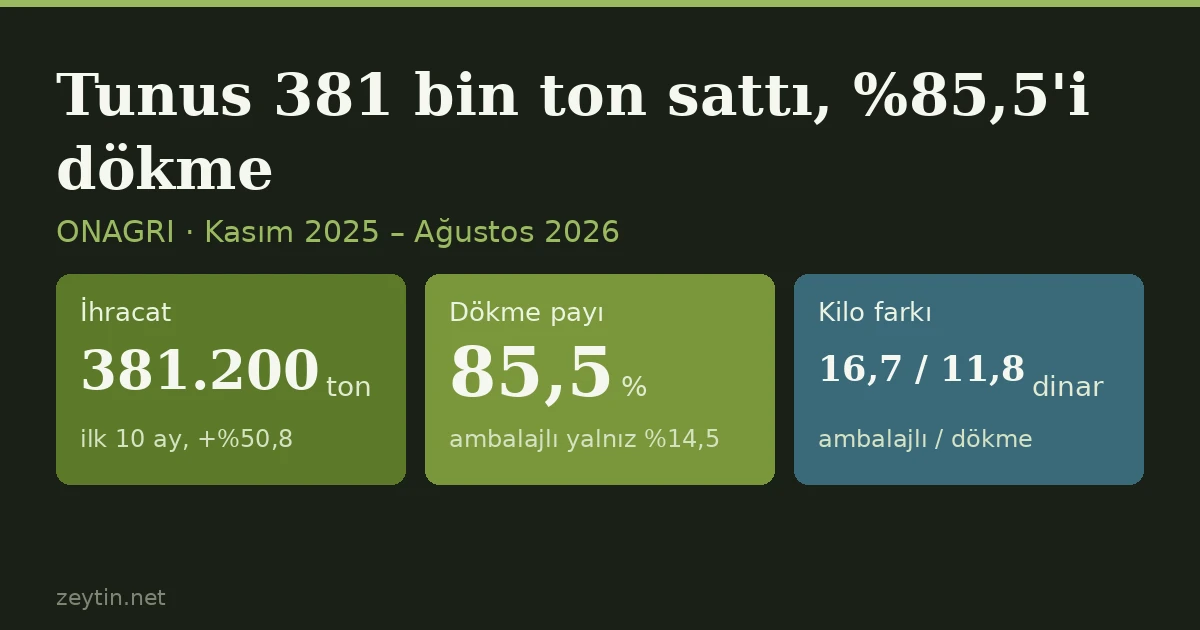
Tunisia sold 381,000 tonnes of olive oil in ten months: 85.5% in bulk, half of it to Spain and Italy
According to the National Observatory of Agriculture (ONAGRI), Tunisia exported 381,200 tonnes of olive oil in the first ten months of the 2025/26 season — volumes up 50.8% and receipts up 41.2% year on year. But 85.5% of it left the country in bulk, and more than half went to Spain and Italy. Packaged oil averaged 16.7 dinars per kilo against 11.8 for bulk. Production is set to fall 40% next season, which changes the bulk market Turkish exporters face.
 Article
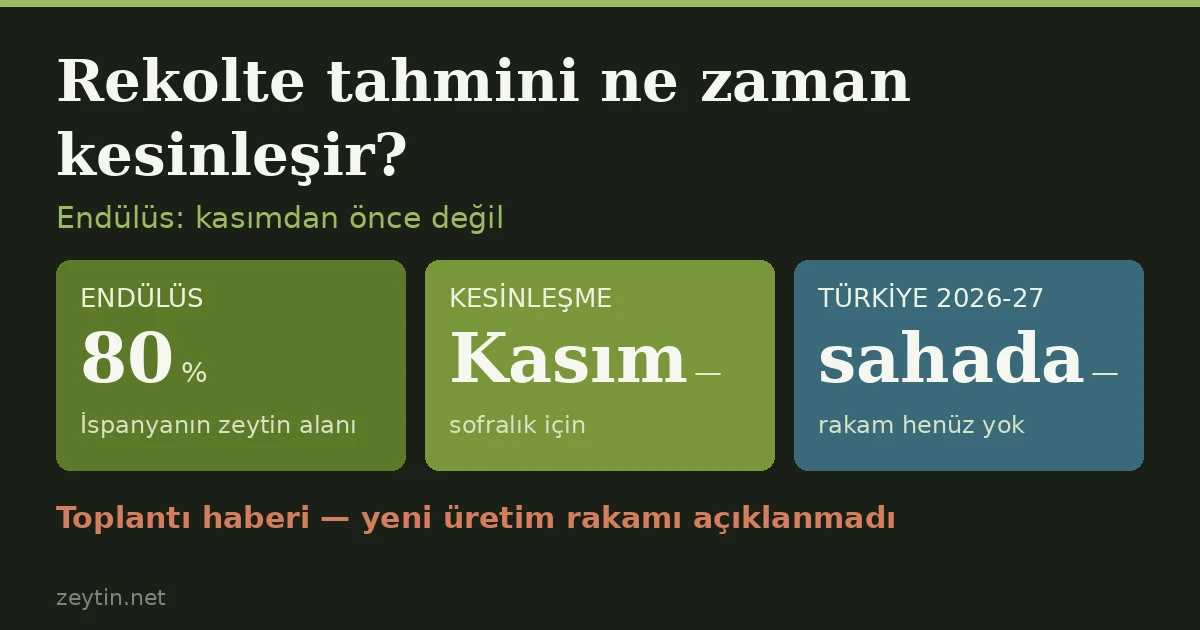
"Not definitive until November": Andalusian growers push back on the crop estimate
Andalusia's agriculture ministry called its first crop estimate "high production"; cooperatives and COAG in Seville objected: recent heat will affect the crop and the estimate is not definitive until November. Türkiye is making its 2026-27 estimate in the field the same week — the same caution applies here.
 Article
Italy from production giant to trade hub: it exports more olive oil than it produces
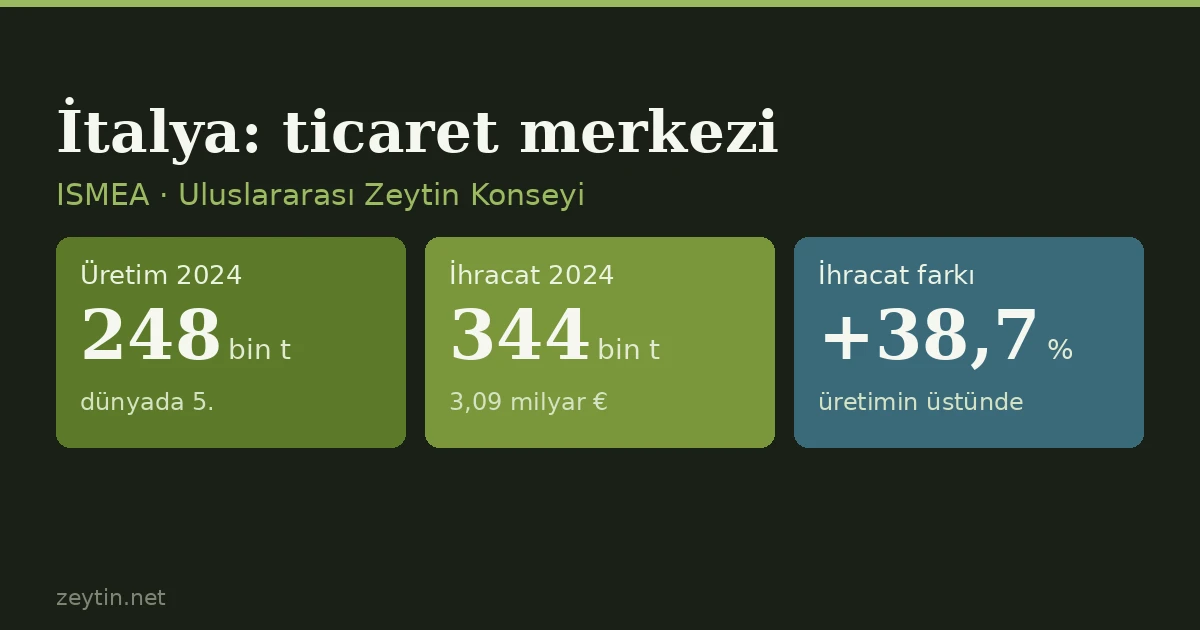
Italy produced 248,000 tonnes of olive oil in 2024 and slipped to fifth place worldwide, yet in the same year it exported 344,000 tonnes worth 3.09 billion euros. The country is now less a production giant than a trade hub that buys oil around the Mediterranean, blends it and sells it to the world.