Edremit Chamber: olive oil needs at least 50 lira per litre in support
Chamber President Ahmet Çetin says the wholesale price has fallen to 200 lira, below the cost of picking. The level needed to cover costs is 300 lira. Harvest is expected 15-20 days early.
Ahmet Çetin, President of the Edremit Chamber of Commerce, has called for direct cash support of at least 50 lira per litre for olive oil producers ahead of the new season. Çetin said the wholesale price of olive oil had fallen to around 200 lira, a level that does not even cover the cost of picking.
The figures
According to the position Çetin set out:
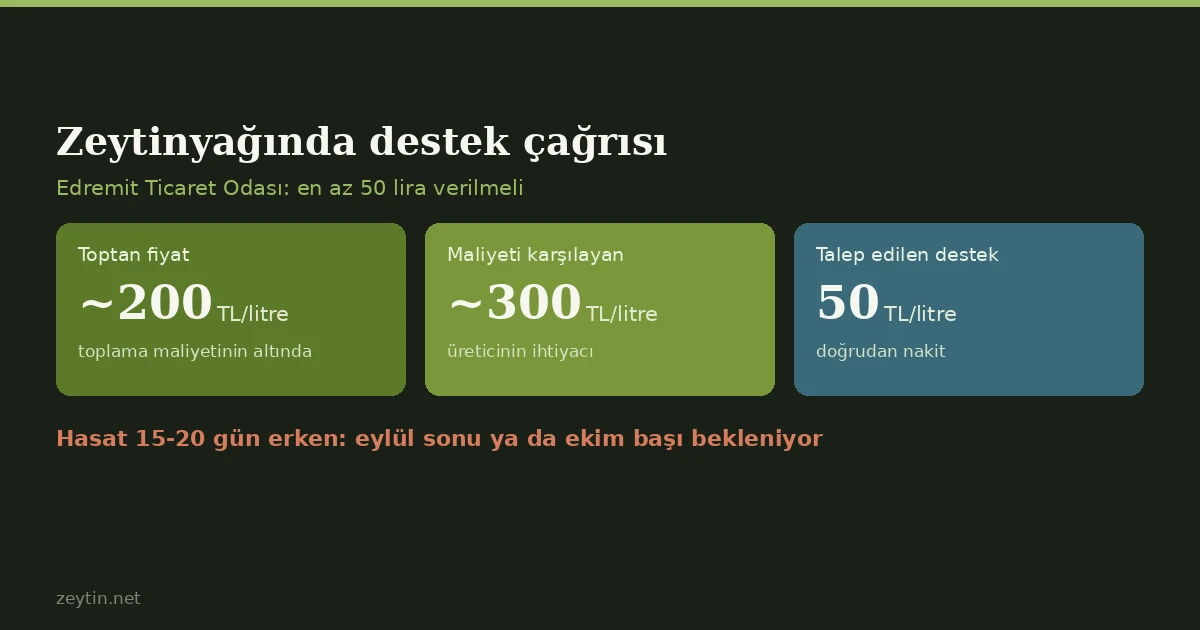
- Wholesale price: ~200 TL/litre
- Level needed to cover the producer's costs: ~300 TL/litre
- Support requested: at least 50 TL/litre, paid directly in cash
- International market reference: 3.5–4 euros/litre
The gap shows the same product priced below cost where it is produced and several times higher abroad.
Harvest expected 15–20 days early
Çetin said the 2026 harvest in the Gulf of Edremit is expected to begin 15–20 days earlier than last year, with the season likely opening in late September or early October. A high yield — an "on year" — is expected in the region for both olives and oil.
His warning follows from that. An abundant crop is not good news on its own: if the selling price fails to cover harvesting, labour and collection costs, high production works against the grower rather than for them. That is the arithmetic behind his caution that the crop could be left on the trees.
What the exchange records show
The August 2026 records we collect from Türkiye's commodity exchanges show where the 200-lira figure comes from:
| Exchange | Date | Average | Low | Volume |
|---|---|---|---|---|
| Nazilli | 19.08.2026 | 201.09 | 132.79 | 64,720 kg |
| Edremit | 25.08.2026 | 254.33 | 248.00 | 6,625 kg |
| Aydın | 18.08.2026 | 307.60 | 303.96 | 335 kg |
The 200 lira Çetin cites matches the highest-volume record exactly — the 64.7-tonne trade at Nazilli. The 307.60 average at Aydın, by contrast, rests on just 335 kilograms.
In other words, "olive oil is 300 lira" and "olive oil is 200 lira" were both true within the same month; what differs is the volume being talked about. In any price debate it is the volume, not the average, that needs reading: a single small trade does not represent the market. Current records are on our exchanges page.
Why it matters
This year's call is not a routine repetition of an old demand. It marks an abundant crop and low prices landing in the same season. In high-yield years price pressure increases, and the grower is left selling more oil for less. The expectation of an early harvest also shortens the time available for any decision.
One rating per visitor; you can change yours at any time. Ratings are real reader votes — no seeded or default scores.
Related
 Article
17th Advanced Course in Olive Growing opens in Córdoba as the IOC and IFAPA move towards genetic resources cooperation
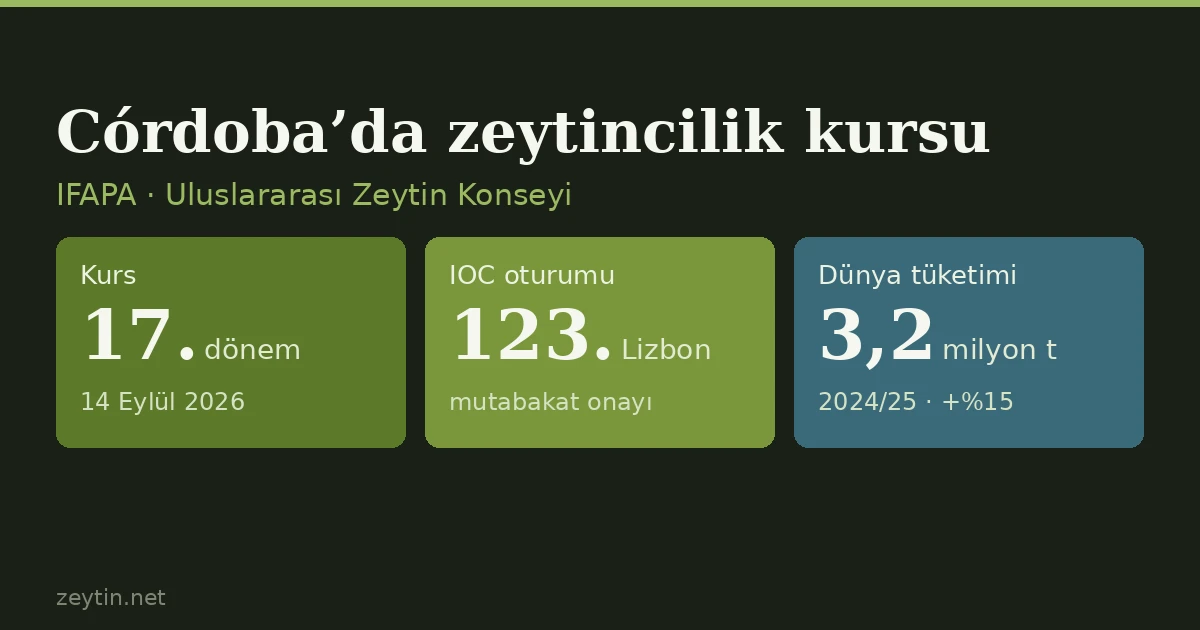
Andalusia's Institute of Agricultural and Fisheries Research and Training (IFAPA) opened its 17th Advanced Specialisation Course in Olive Growing in Córdoba on 14 September, with the International Olive Council giving the opening lecture. The Council has approved signing a memorandum of understanding with IFAPA, which hosts one of the world's key olive germplasm collections.
 Article
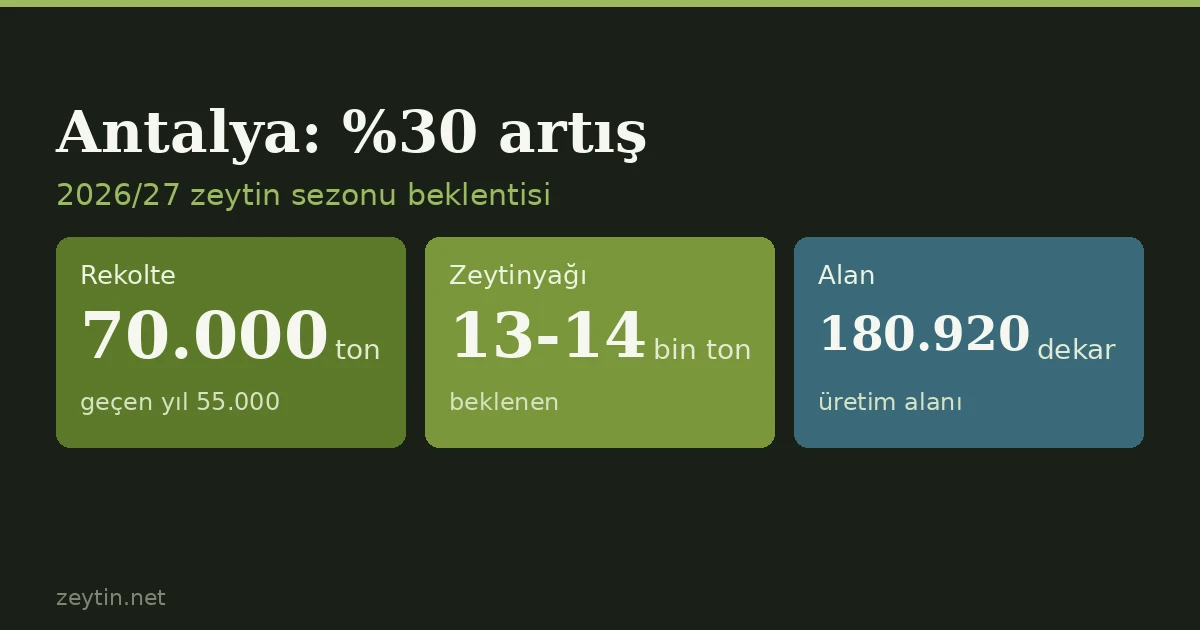
Antalya's crop is up 30%: of 70,000 tonnes of olives, 55,000-60,000 head for the mill
According to the Antalya Commodity Exchange, the province's olive crop is rising about 30% from some 55,000 tonnes last season to around 70,000 tonnes, with 13,000-14,000 tonnes of olive oil and 10,000-15,000 tonnes of brined fruit expected. Harvest opened on 15 September. There is movement on the registration front too: an EU application has been filed for the Tavşan Yüreği olive, and a geographical indication file is under way for the Beylik variety.
 Article
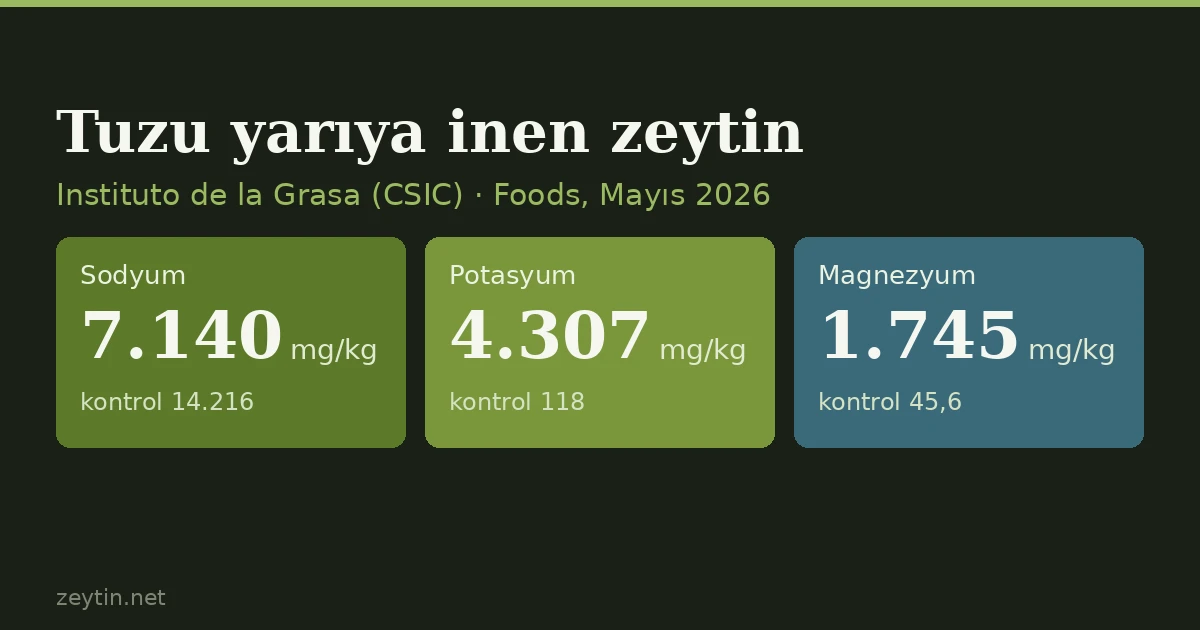
Table olives with half the salt: potassium, calcium and magnesium instead of sodium
Researchers at Spain's Instituto de la Grasa (CSIC) cut sodium in pimento-stuffed green Manzanilla olives from 14,216 mg to about 7,100 mg per kilogram. Potassium, calcium and magnesium salts added to the packing brine made the olives a source of these minerals.
 Article
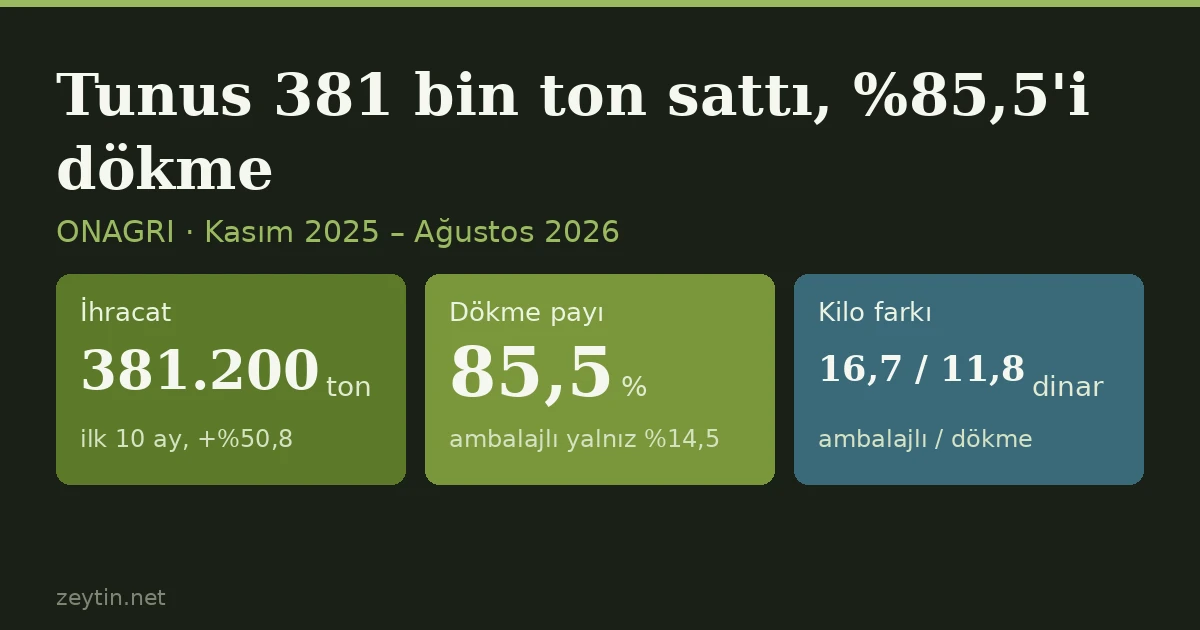
Tunisia sold 381,000 tonnes of olive oil in ten months: 85.5% in bulk, half of it to Spain and Italy
According to the National Observatory of Agriculture (ONAGRI), Tunisia exported 381,200 tonnes of olive oil in the first ten months of the 2025/26 season — volumes up 50.8% and receipts up 41.2% year on year. But 85.5% of it left the country in bulk, and more than half went to Spain and Italy. Packaged oil averaged 16.7 dinars per kilo against 11.8 for bulk. Production is set to fall 40% next season, which changes the bulk market Turkish exporters face.