Olive oil exports down 62% by value as a record harvest is expected
Olive and olive oil exports fell 34% to $260 million between 1 November 2025 and 31 May 2026. Table olives held at $172.5 million while olive oil dropped to $69 million. The target is a return to $1 billion.
Mehmet Emre Uygun, President of the Aegean Olive and Olive Oil Exporters Association, has said that one of the highest harvests in history is expected in the 2026-27 season, presenting an opportunity for the sector's exports. The figures from the season just ended, however, show the opportunity does not realise itself.
What happened last season
Olive and olive oil exports for 1 November 2025 – 31 May 2026:
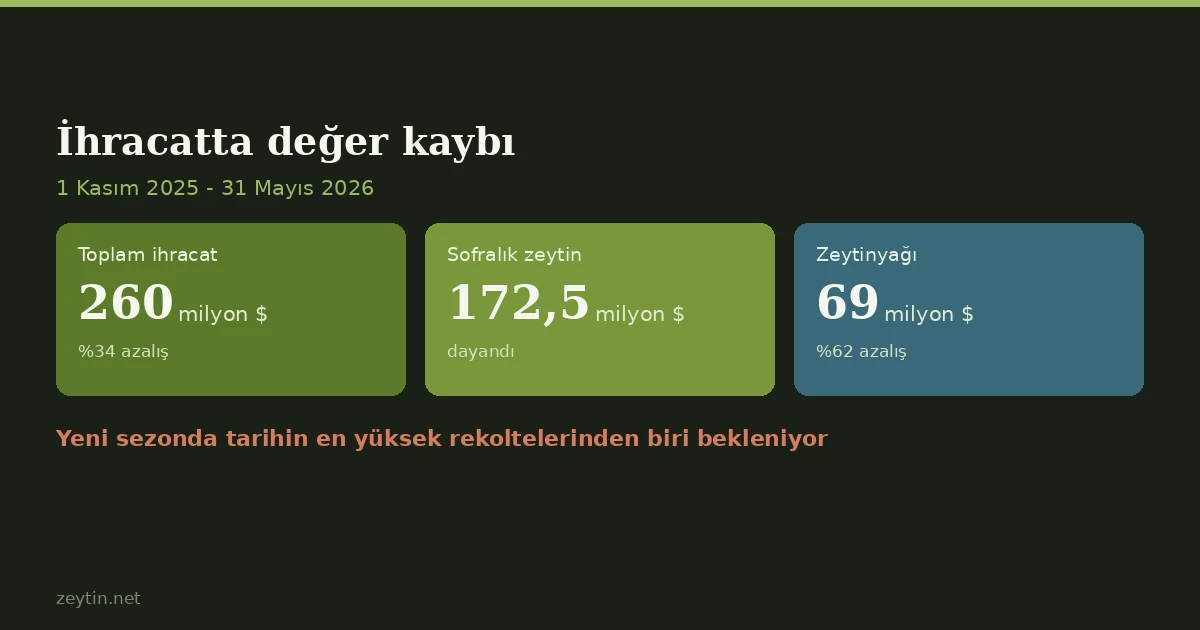
| Item | Value | Change |
|---|---|---|
| Total olives + olive oil | $260 million | down 34% |
| Table olives | $172.5 million | held up |
| Olive oil | $69 million | down 62% |
Uygun attributed the decline to falling global prices and administrative measures.
The real finding in the table is that the fall was not spread evenly across products. Table olives held their performance while olive oil lost close to two-thirds of its value. That Türkiye's export weight already sits on the table olive side was covered in two-thirds of our exports are table olives; this season the imbalance appears to have deepened.
The target: back to a billion dollars
The stated objective is to raise sector exports back to $1 billion and above. The method emphasised is not greater volume but converting production capacity into higher value-added, branded and packaged exports.
The distinction matters: bulk olive oil exports track the global price directly, and revenue evaporates when that price falls. Branded, packaged product is better insulated from price swings.
Two technical items
Digital tracking. Work is under way to establish a digital traceability system for olive oil.
The EU quota. Efforts continue to remove the 100-tonne quota the European Union applies to Türkiye — one of the structural barriers to selling Turkish olive oil into the EU market.
Why it matters
A high-yield expectation and low prices are meeting in the same season. An abundant crop only turns into revenue if unit prices hold; otherwise it means selling more oil for less. The support demands coming from growers domestically rest on the same arithmetic.
For the cost and carry-over stock position before the season opens see costs and carry-over stock before the harvest; for the picture on the competing side see Tunisia's olive oil exports.
Source
- Assessment of the 2026-27 season by Mehmet Emre Uygun, President of the Aegean Olive and Olive Oil Exporters Association: harvest expectation, export values and rates of change for 1 November 2025 – 31 May 2026, the $1 billion target, the digital tracking system and the EU quota.
One rating per visitor; you can change yours at any time. Ratings are real reader votes — no seeded or default scores.
Related
 Article
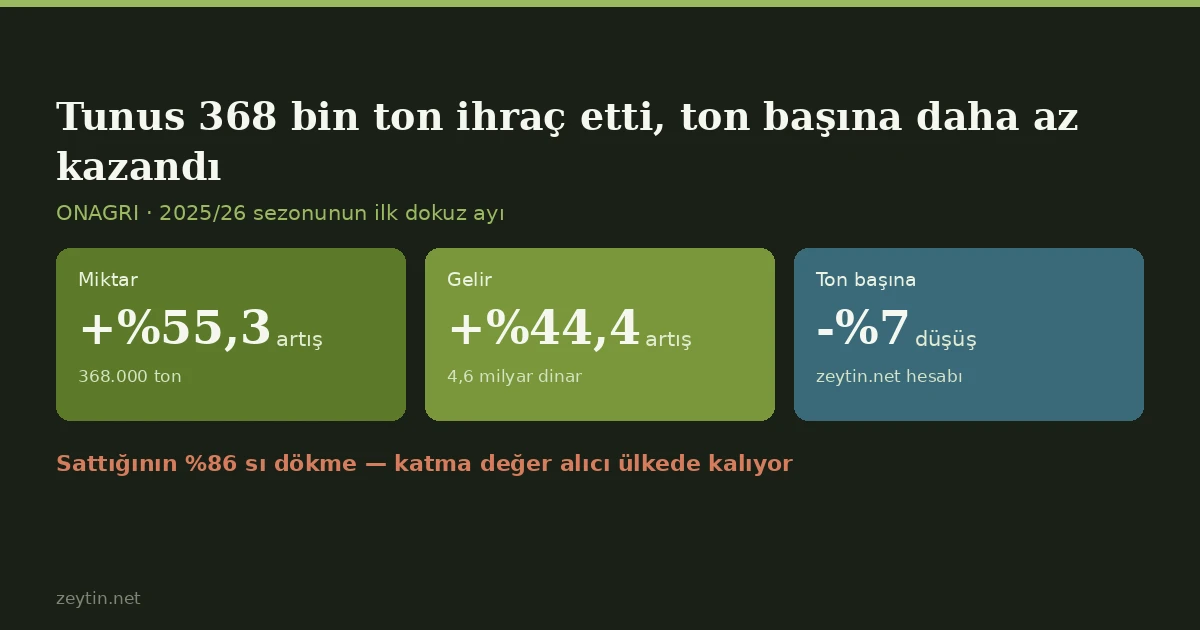
Tunisia exported 368,000 tonnes of olive oil — but earned less per tonne
Tunisia's agriculture observatory ONAGRI reports olive oil exports up 55.3% by volume and 44.4% by value in the first nine months of 2025/26. The gap between the two means about 7% less earned per tonne.
 Article
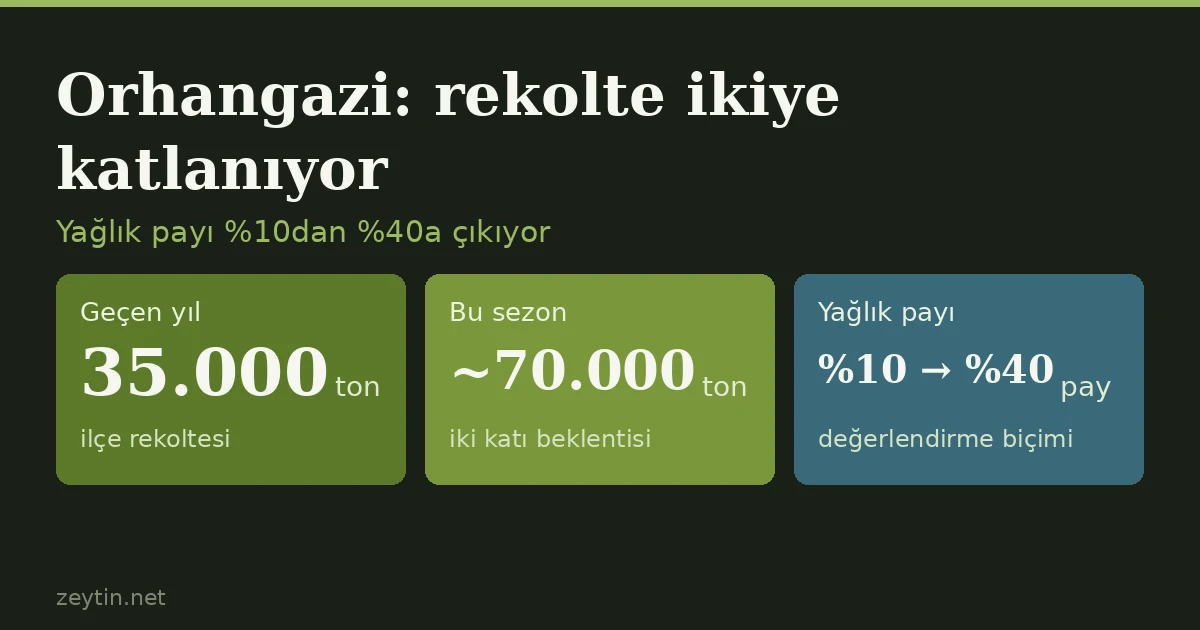
Orhangazi's crop is doubling: the oil olive share climbs from 10% to 40%
According to figures from the Orhangazi District Directorate of Agriculture and Forestry, last season's crop of roughly 35,000 tonnes could double this year. But in Türkiye's table olive heartland the real shift is in the split: the share pressed for oil is expected to rise from 10% to 40%. Mills are already in maintenance, and the grower's income now depends on fruit size.
 Article
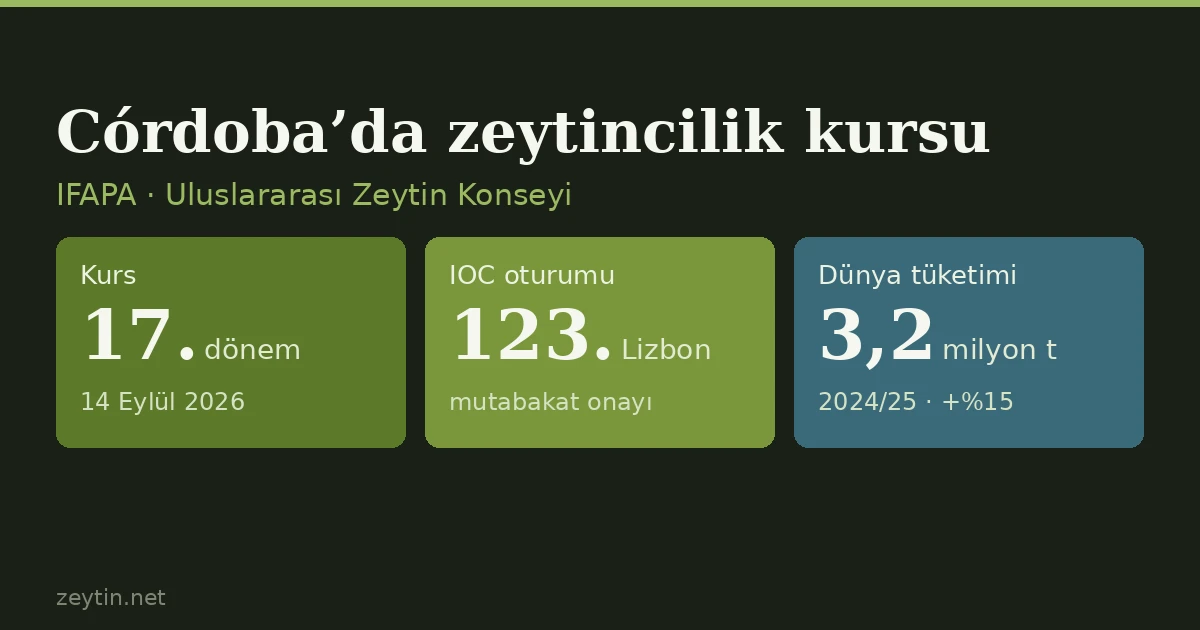
17th Advanced Course in Olive Growing opens in Córdoba as the IOC and IFAPA move towards genetic resources cooperation
Andalusia's Institute of Agricultural and Fisheries Research and Training (IFAPA) opened its 17th Advanced Specialisation Course in Olive Growing in Córdoba on 14 September, with the International Olive Council giving the opening lecture. The Council has approved signing a memorandum of understanding with IFAPA, which hosts one of the world's key olive germplasm collections.
 Article
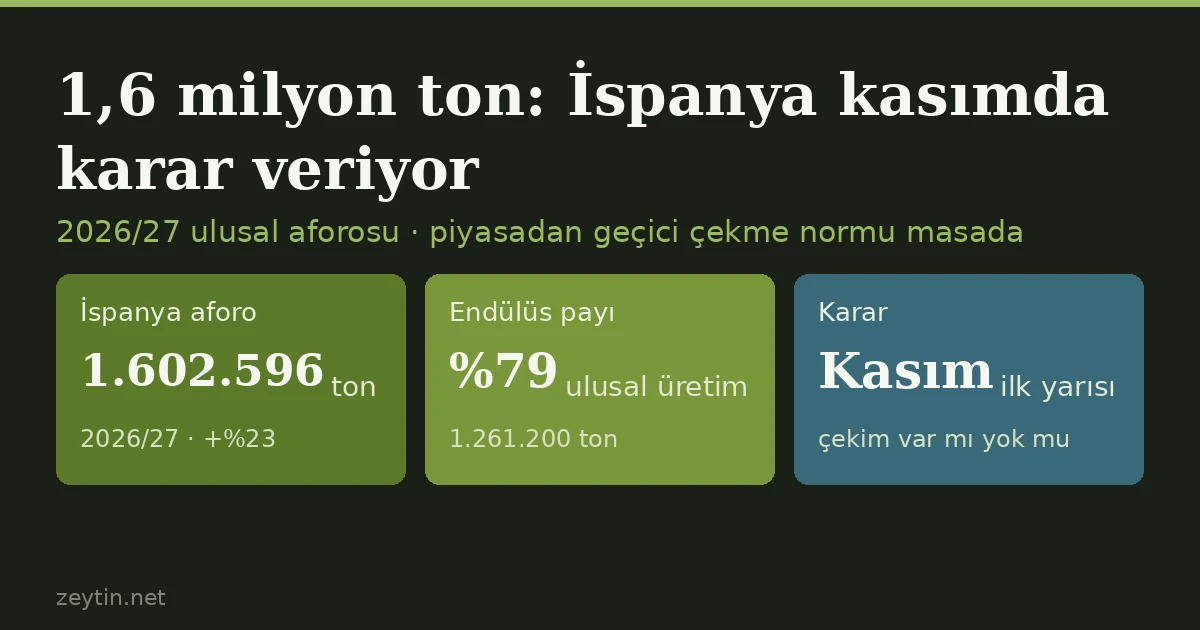
Spain decides in November: will part of a 1.6 million tonne crop be withdrawn from the market?
Spain's first national aforo for 2026/27 was presented in Jaén on 1 October: 1,602,596 tonnes of olive oil, 23% above last harvest. With carry-over stock, total availability approaches two million tonnes, and the Ministry of Agriculture will decide in the first half of November whether to activate a temporary withdrawal mechanism that has never been used. The ceiling on the world price Turkish exporters will face is being set here.