Algeria expects a record 150,000 tonnes: the Mediterranean supply map is shifting
Algeria's 2025/26 olive oil output is expected to exceed 150,000 tonnes — up 76% on the previous season and a third consecutive rise. With domestic consumption near 81,000 tonnes, an exportable surplus appears. In a season when Turkish exports fell 62% by value, that means new competition in the bulk market.
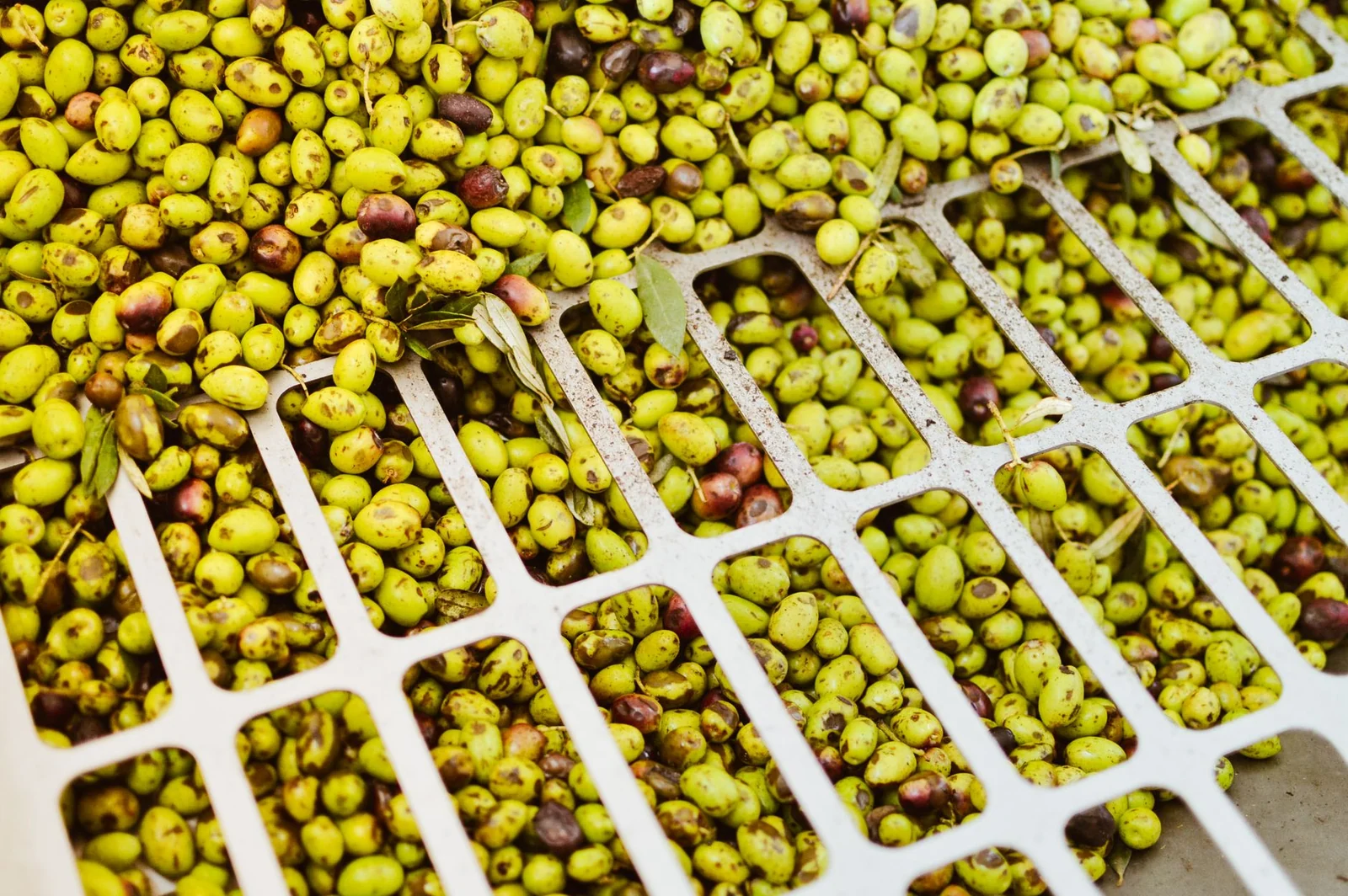
Algeria's National Interprofessional Council of the Olive Sector (CNIFO) expects the country's olive oil output to exceed 150,000 tonnes in the 2025/26 season. In the council president's words, that would be a historic record for the sector if confirmed.
The figure is not large on its own — Türkiye alone produces several times as much. What matters is the direction and the speed.
The numbers
| Item | Value |
|---|---|
| 2025/26 production forecast | 150,000+ t |
| Change on the previous season | +76% |
| Growth run | third consecutive year |
| Average domestic consumption (2020/21-2023/24) | ≈ 81,000 t/yr |
| Expected exportable surplus | ≈ 70,000 t |
That last line is the crux. Algeria long consumed nearly everything it produced; when output exceeds domestic demand by this margin, a surplus that can turn into exports appears.
Why now?
Algeria's production curve has swung sharply in recent years: only a few seasons ago the country was discussing its worst harvest in thirty years. Today's record expectation is the third consecutive annual increase from that trough.
The volatility comes from the olive's tendency to alternate bearing and from an orchard base that is largely unirrigated and rainfall-dependent. So 150,000 tonnes is not a plateau but the peak of a good year. Nothing guarantees the next season holds it.
Scale: how big is this number?
"Record" is the right word for Algeria, but the figure needs placing within the basin as a whole:
| Country | Indicator | Value |
|---|---|---|
| Türkiye | olive oil production | 475,002 t |
| Tunisia | exports (first 9 months, 2025/26) | 368,000 t |
| Algeria | production forecast | 150,000 t |
| Algeria | exportable surplus | ≈ 70,000 t |
Two ratios make the table readable:
- Türkiye's oil output is roughly 3.2 times Algeria's record expectation. Algeria alone is not Türkiye's competitor.
- Algeria's exportable surplus is about 19% of Tunisia's nine-month export volume.
The pressure comes not from one country but from the sum: Tunisia raised exports by 55.3%, Algeria its production by 76%. Volume added to the bulk market simultaneously matters more than either figure alone.
What the price side says
The world olive oil indicator stands at USD 6,185.22 per tonne (3 September 2026) and has been flat for a week. Either the supply increase has not yet fed through to price, or the market is waiting on the new season's crop.
For comparison, other vegetable oils the same day: sunflower USD 1,678/t, rapeseed USD 553/t, coconut oil USD 2,244/t. Olive oil remains the most expensive category — but that premium is also the one most exposed to erosion when supply becomes abundant.
Türkiye's vulnerability in this picture is its product mix. Nationally, 2,850,000 tonnes of fruit production is oil-destined against 750,002 tonnes for the table; the weight sits on the bulk oil side. When bulk prices fall, the exposed base is wide. We calculated separately that two-thirds of our export earnings come from table olives — production is oil-weighted, export revenue table-weighted. That gap is Türkiye's most critical variable under bulk price pressure.
What it means for Türkiye
Read alone, this is a small story; read alongside the rest of the Mediterranean basin, it is not.
- Tunisia exported 368,000 tonnes of olive oil in the same season — though we calculated how its revenue per tonne fell separately.
- Türkiye's olive and olive oil exports fell 62% by value; we covered the $260 million picture yesterday.
- On top of that sits the US 12.5% tariff, from which some competitors are exempt.
The picture: North African supply is rising while Turkish exports lose value. Algeria's surplus will most likely move first as bulk oil, into the bottling lines of Spain and Italy — the same bulk market in which Türkiye competes.
The record crop Türkiye expects this season therefore means an advantage in volume, not price. Several producers arriving at market with abundant crops at once pushes bulk prices down, not up.
Three stories the same week, pointing the same way
Algeria was not alone; it was a week of structural moves across the Mediterranean:
- Andalusia is weighing additional support for traditional olive groves. Sloping, older plantings that cannot convert to hedgerow are under cost pressure in Spain too.
- Eastern Adriatic producers are proposing a shared umbrella brand along the coast from Croatia to Montenegro: "Jewels of the Adriatic" — doing collectively the promotion no small producer can do alone.
- Spain completed its first large-scale installation of solar panels above a working olive grove — covered separately.
The common theme is one question: how is producer income protected in a low-price environment? Andalusia answers with support, the Adriatic with a shared brand, Spain with a second income from the same land.
Reading it cautiously
CNIFO's 150,000 tonnes is a forecast, not an end-of-season result. Mid-season estimates in olives are routinely revised down at harvest; rainfall, temperature and olive fly pressure during the harvest period move the number directly.
Nor does a production surplus automatically mean exports. Algeria's bulk export infrastructure, certification and brand position lag Tunisia's. How much of the surplus actually reaches foreign markets will only be visible at the end of the season.
One rating per visitor; you can change yours at any time. Ratings are real reader votes — no seeded or default scores.
Related
 Article
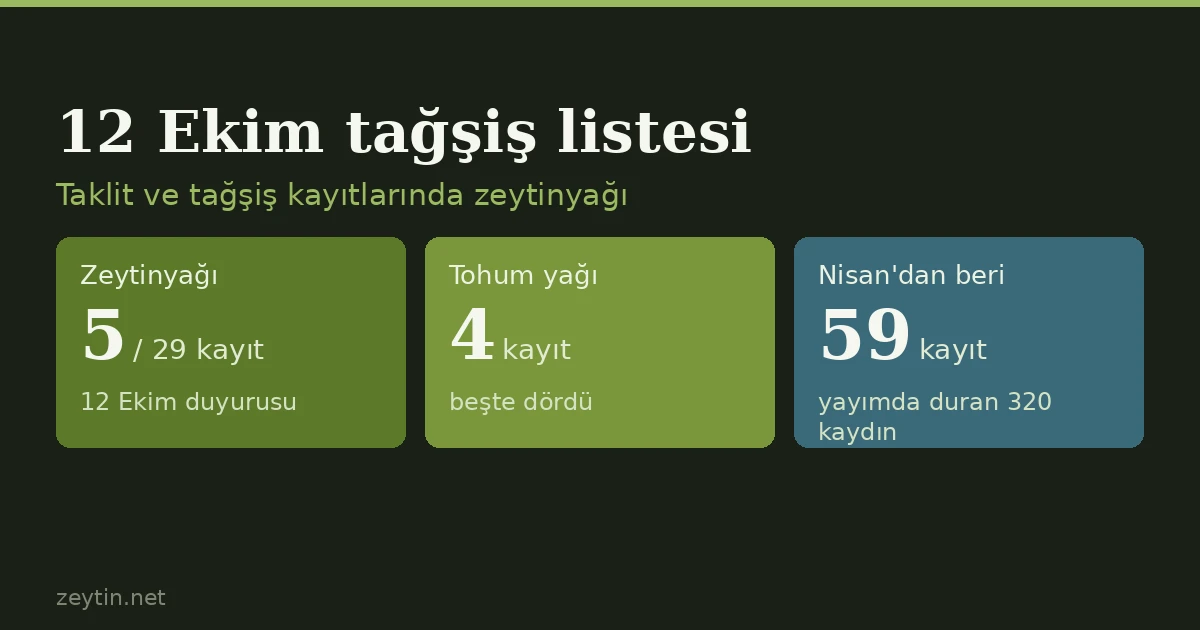
12 October adulteration list: five of 29 records are olive oil, four with seed oil
The ministry's 12 October 2026 notice added 29 records to Türkiye's counterfeit-and-adulteration list, five of them olive oil: four with seed oil blended in, one with lower-grade olive oil. Of the 320 records currently published, 59 are olive oil, and Manisa's count rose from one to three.
Article
12 October adulteration list: five of 29 records are olive oil, four with seed oil
The ministry's 12 October 2026 notice added 29 records to Türkiye's counterfeit-and-adulteration list, five of them olive oil: four with seed oil blended in, one with lower-grade olive oil. Of the 320 records currently published, 59 are olive oil, and Manisa's count rose from one to three.
 Article
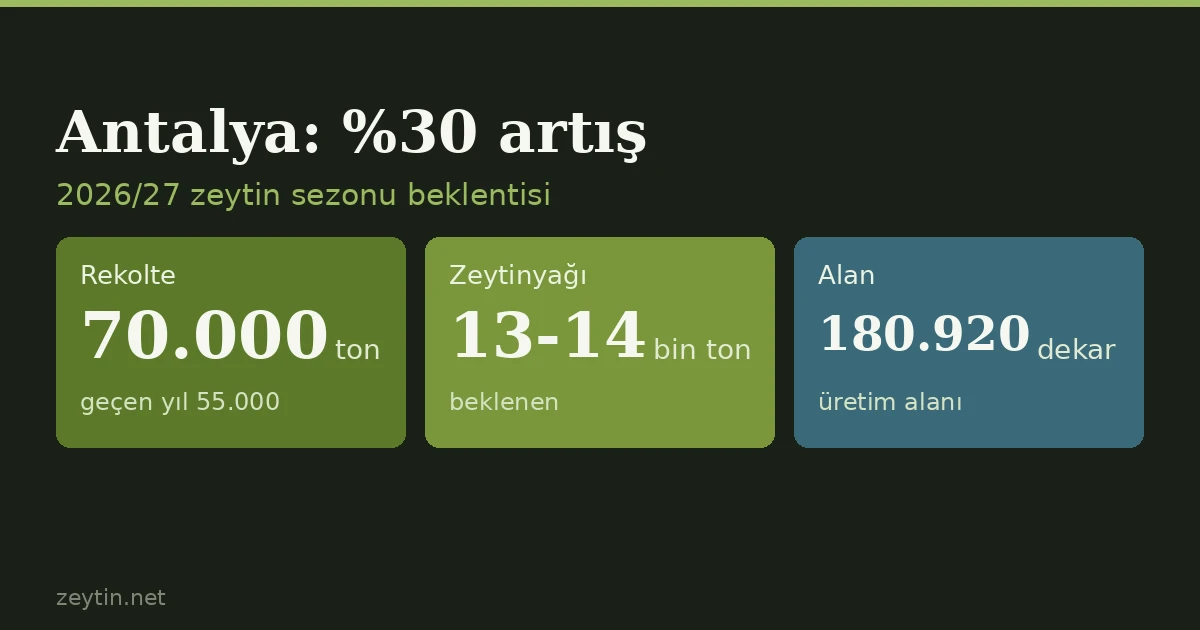
Antalya's crop is up 30%: of 70,000 tonnes of olives, 55,000-60,000 head for the mill
According to the Antalya Commodity Exchange, the province's olive crop is rising about 30% from some 55,000 tonnes last season to around 70,000 tonnes, with 13,000-14,000 tonnes of olive oil and 10,000-15,000 tonnes of brined fruit expected. Harvest opened on 15 September. There is movement on the registration front too: an EU application has been filed for the Tavşan Yüreği olive, and a geographical indication file is under way for the Beylik variety.
Article
Antalya's crop is up 30%: of 70,000 tonnes of olives, 55,000-60,000 head for the mill
According to the Antalya Commodity Exchange, the province's olive crop is rising about 30% from some 55,000 tonnes last season to around 70,000 tonnes, with 13,000-14,000 tonnes of olive oil and 10,000-15,000 tonnes of brined fruit expected. Harvest opened on 15 September. There is movement on the registration front too: an EU application has been filed for the Tavşan Yüreği olive, and a geographical indication file is under way for the Beylik variety.
 Article
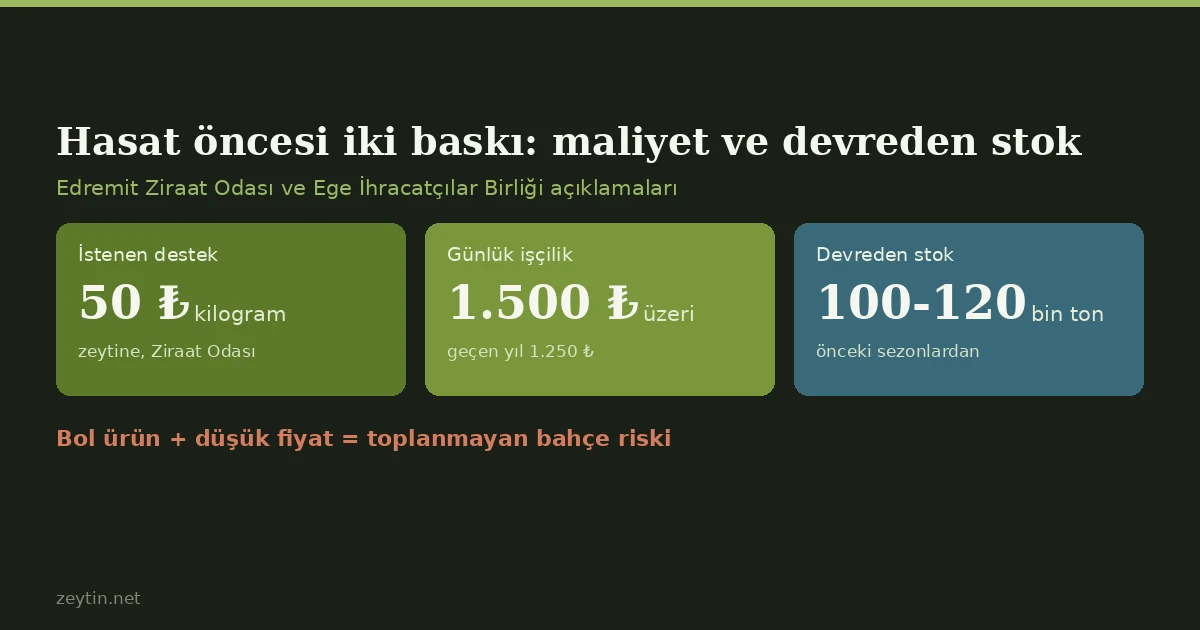
Two pressures before the harvest: costs and 100,000 tonnes carried over
The chamber of agriculture wants 50 lira per kilo; daily labour has passed 1,500 lira. Exporters report 100,000-120,000 tonnes carried over from previous seasons.
Article
Two pressures before the harvest: costs and 100,000 tonnes carried over
The chamber of agriculture wants 50 lira per kilo; daily labour has passed 1,500 lira. Exporters report 100,000-120,000 tonnes carried over from previous seasons.
 Article
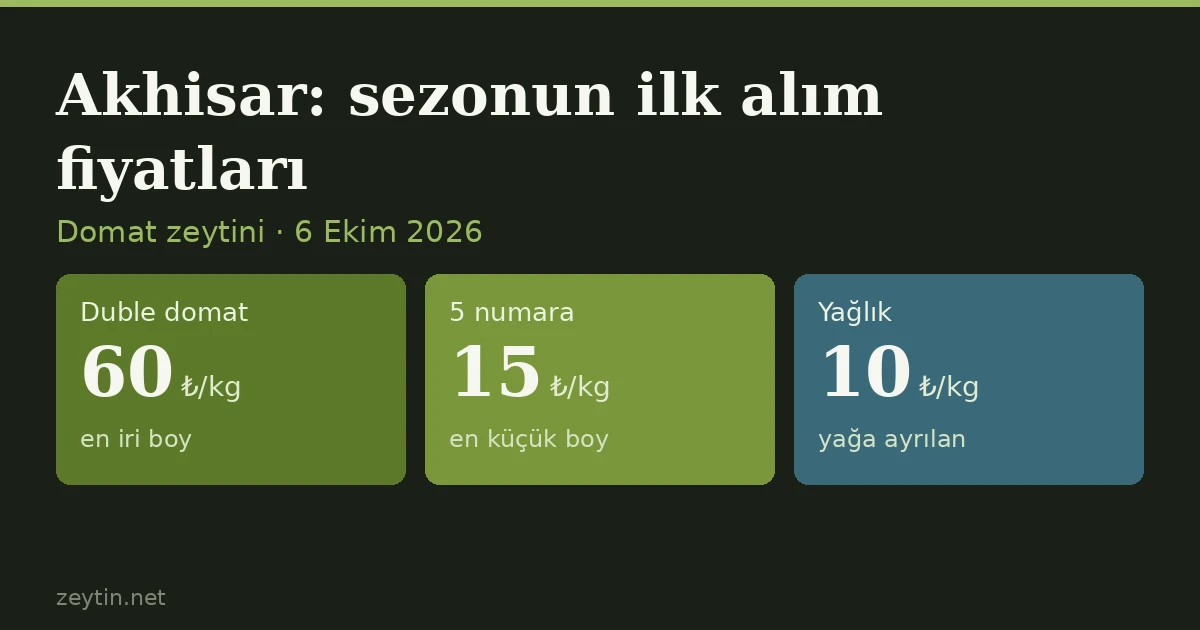
Opening prices in Akhisar: 60 lira for double Domat, 10 lira for milling olives
The season's first purchase prices for Domat olives have formed in Akhisar: 15 to 60 lira a kilo by size, and 10 lira for fruit sold for milling. The local chamber of agriculture says prices are below last year's and has called for a joint table. Farm input costs rose 27.6% over the same period.
Article
Opening prices in Akhisar: 60 lira for double Domat, 10 lira for milling olives
The season's first purchase prices for Domat olives have formed in Akhisar: 15 to 60 lira a kilo by size, and 10 lira for fruit sold for milling. The local chamber of agriculture says prices are below last year's and has called for a joint table. Farm input costs rose 27.6% over the same period.