Recall in Germany: MOSH/MOAH in pomace oil — not olive oil
Germany's official food safety portal has recalled a 4-litre pomace oil sold in Turkish shops. The product is not olive oil but olive pomace oil; we explain the difference and what MOSH/MOAH are.
According to a notice on Germany's official food safety portal, high levels of MOSH and MOAH were found in an oil sold in shops serving Turkish consumers, and the product has been recalled.
The recalled product
| Product | Trilya olive pomace oil |
|---|---|
| Packaging | 4-litre tin |
| Batch | LS162703 |
| Best before | 27 March 2027 |
| Distributor | Altay GmbH |
| Regions | Baden-Württemberg, North Rhine-Westphalia |
| Notice | 27 August 2026 |
The German authorities said a carcinogenic effect could not be excluded at the levels measured, and asked consumers not to use the product and to return it to the point of purchase.
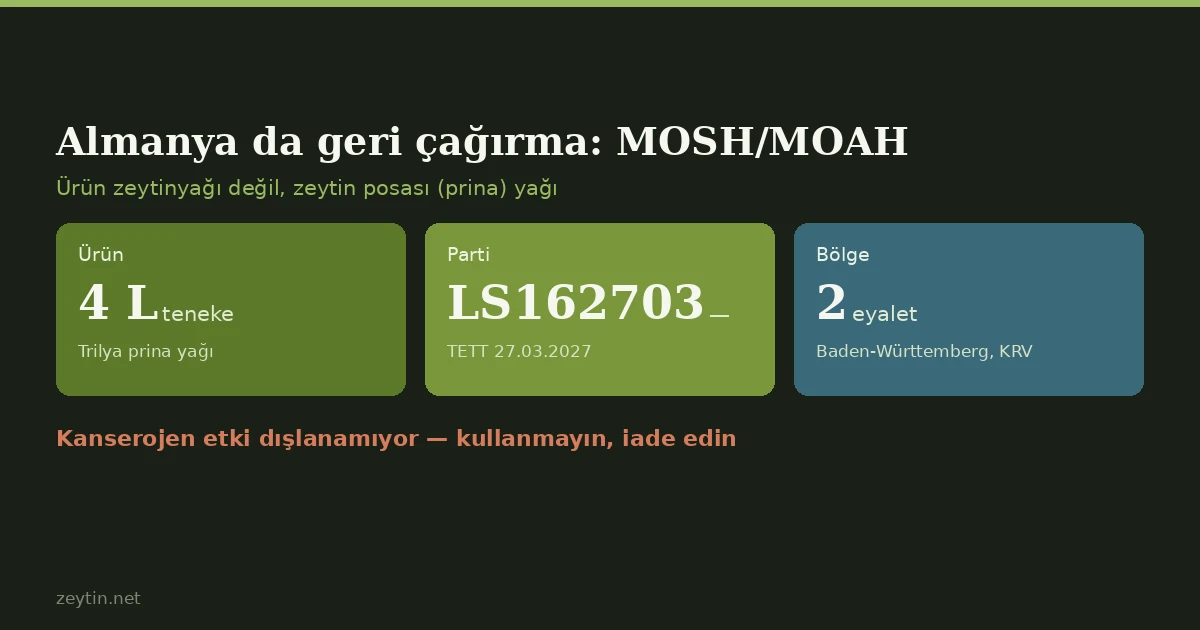
⚠ This product is not olive oil
Headlines often call it "olive oil", but the recalled product is olive pomace oil. The two are separate categories: olive oil is extracted mechanically from the fruit, while pomace oil is obtained from the residue left after pressing, using solvents, and is then refined.
We set out the distinction in how to read an olive oil label. If the label says "pomace", the product is not extra virgin olive oil.
What MOSH and MOAH are
Both are mineral oil hydrocarbons — groups of compounds of crude-oil origin.
- MOSH (saturated): can accumulate in the body, particularly in liver and lymph tissue.
- MOAH (aromatic): may contain compounds capable of damaging genetic material and causing cancer, so their presence in food is treated as a health risk.
Contamination can come from lubricants in production machinery, packaging materials, transport and storage, or the environment. The notice gave no detail on the source in this case.
⚠ MOSH/MOAH risk arises particularly in oils that pass through solvent extraction and refining — which is why this recall concerns a pomace oil.
One rating per visitor; you can change yours at any time. Ratings are real reader votes — no seeded or default scores.
Related
 Article
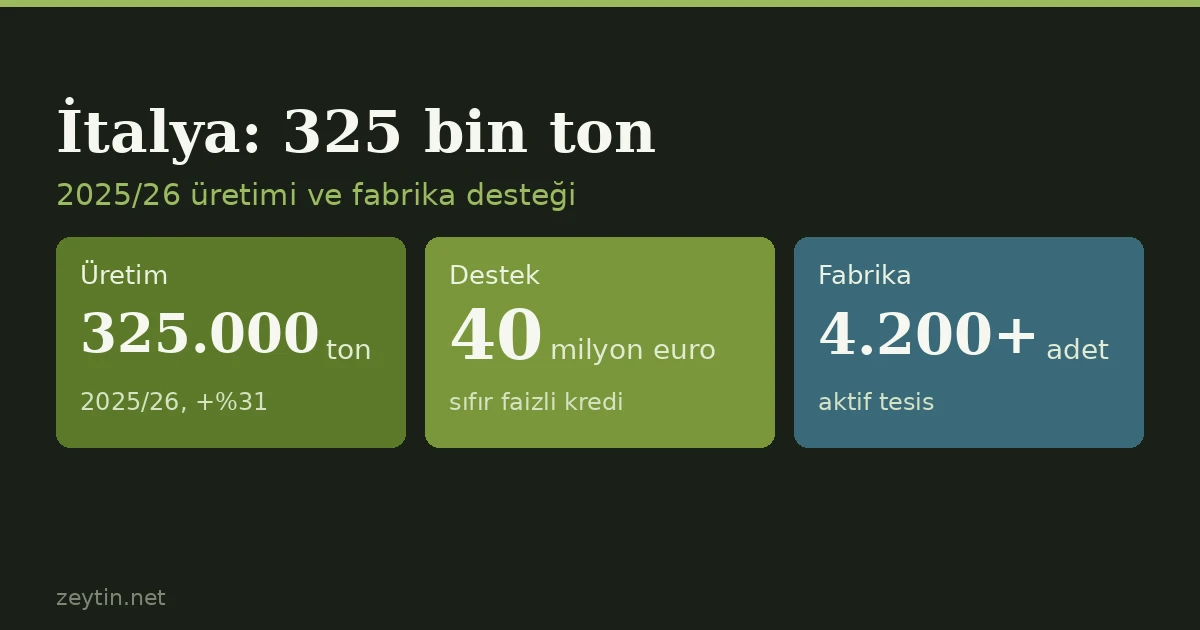
Italy is back at 325,000 tonnes yet is handing cash to its mills: a 40-million-euro zero-interest loan
Italy produced 325,000 tonnes of olive oil in the 2025/26 campaign, up 31%, according to Ismea's sector report. Yet even as output recovers, the state is pumping liquidity into mills: the 40-million-euro "Cambiale Frantoi Oleari" offers zero-interest loans of 3,500 to 50,000 euros. The five-year national olive plan aims to lift production by 25%.
 Article
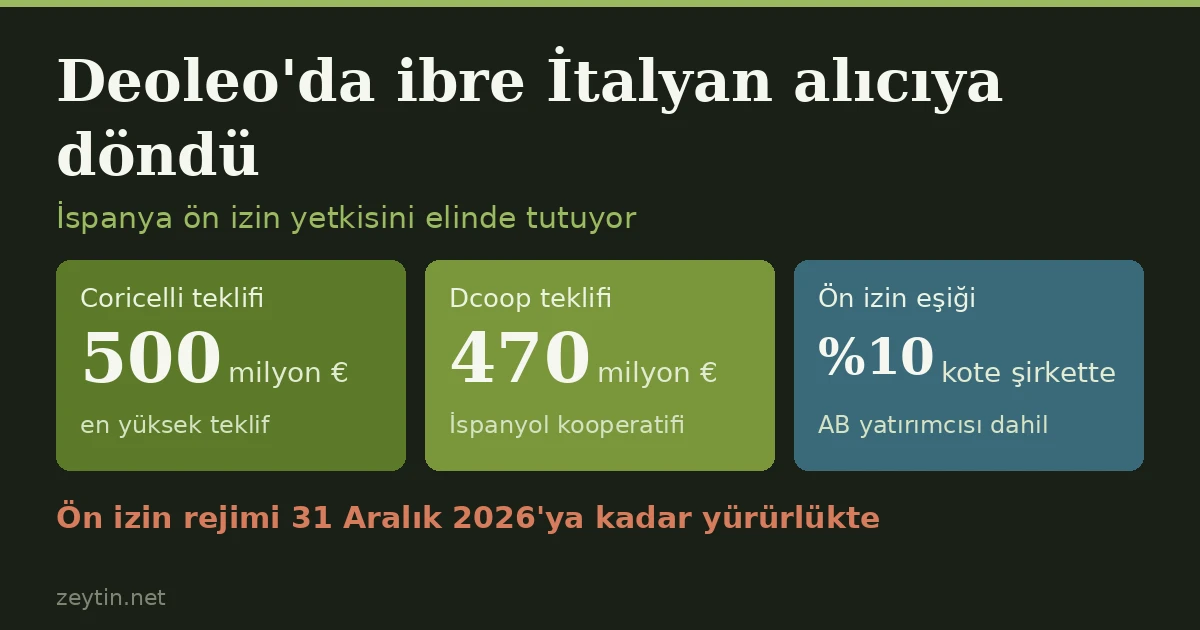
Spain steps back from vetoing Deoleo's sale: the door opens for Italy's Coricelli
Madrid's position on the sale of the world's largest olive oil bottler has shifted: in early September a Spanish buyer was preferred, and on 18 September Italy's Coricelli was reported to be seen as the best-positioned candidate. The government's lever is a foreign investment screening regime that covers EU investors too and runs to 31 December 2026. Because Deoleo is a major bulk buyer, the outcome matters to Turkish exporters.
 Article
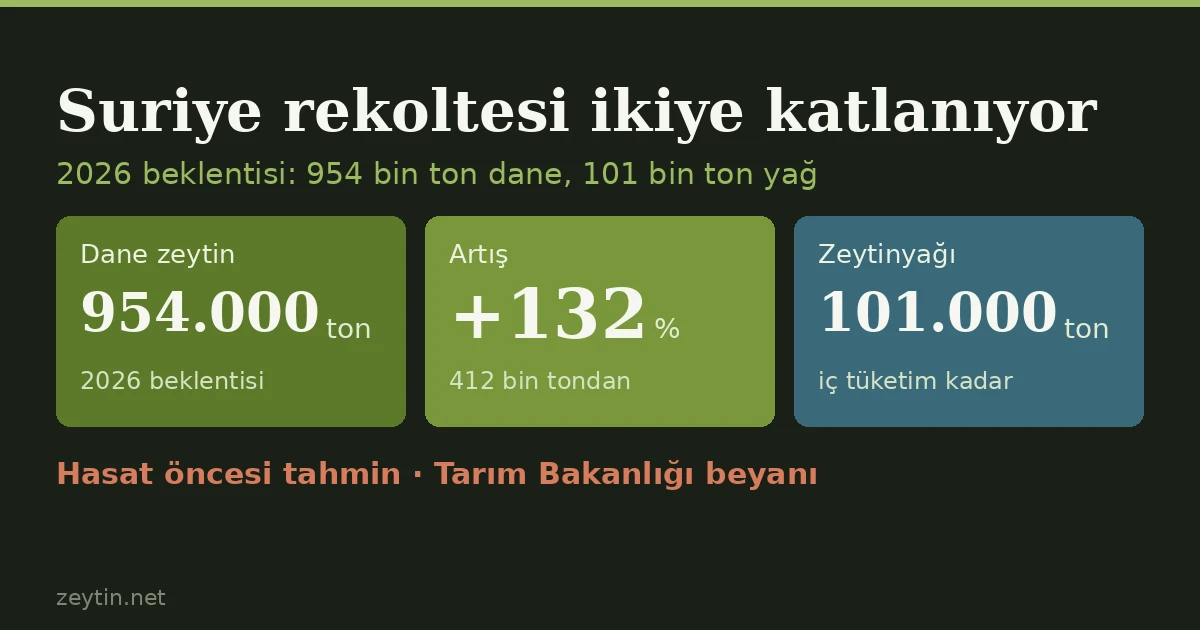
Syria's crop doubles to 954,000 tonnes — and the oil still only feeds itself
Syria's Ministry of Agriculture expects 954,000 tonnes of olives in 2026, up from 412,000 last season. The 101,000 tonnes of oil that implies barely covers domestic consumption — a doubled crop that still produces no export surplus.
 Article
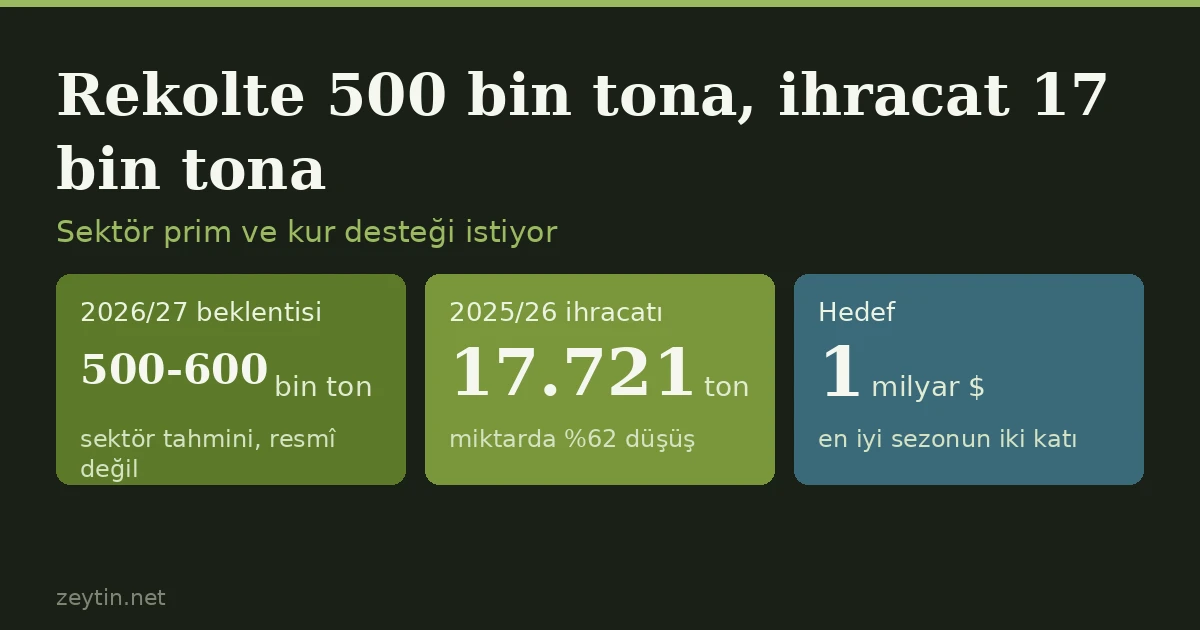
The crop is heading for 500,000 tonnes, exports fell to 17,000: the sector wants a premium and an exchange-rate mechanism
Industrialists and exporters meeting in Izmir put this season's olive oil crop at 500,000-600,000 tonnes. Last season Türkiye shipped 17,721 tonnes of olive oil: down 62% in volume and 59% in value. The crop is not the problem; selling the crop is.