EIA approval for a 200 t/day olive oil plant in Mudanya
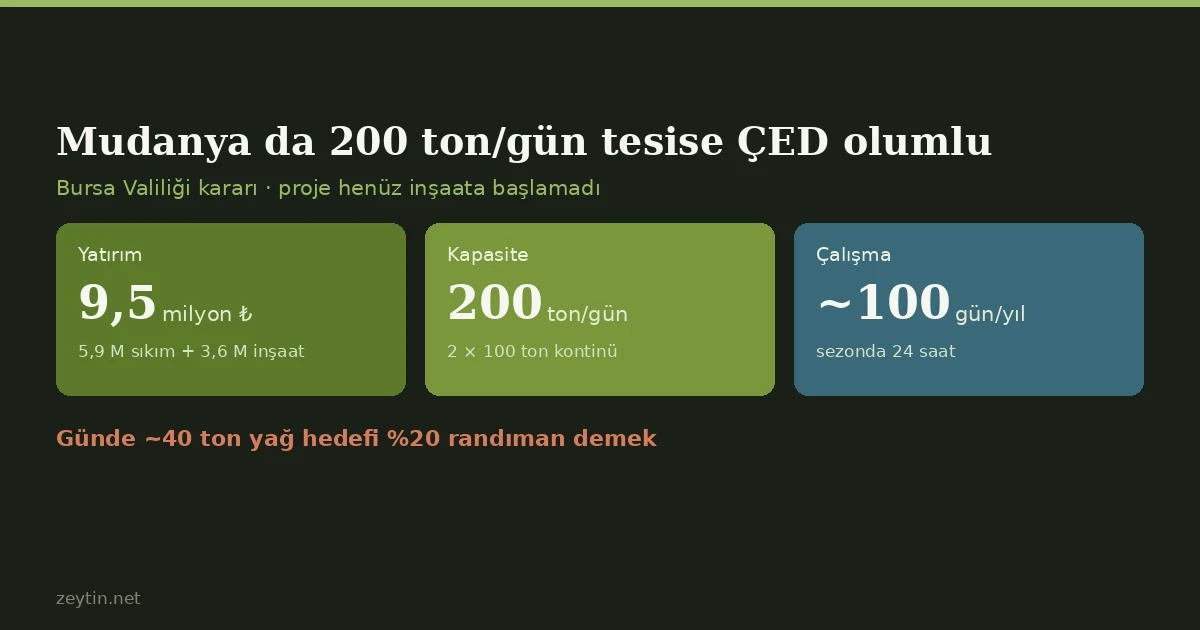
A 9.5 million lira olive oil plant planned in Mudanya, Bursa, has received a positive environmental impact decision: 200 tonnes of olives a day, around 100 operating days a season.
The governor's office in Bursa has issued a positive environmental impact decision for an olive oil plant planned in the Evciler district of Mudanya. The project is to be built by Cengizhan Kara.
The project in numbers
| Item | Value |
|---|---|
| Total investment | TRY 9,500,000 |
| — crushing units (2) | TRY 5,889,800 |
| — construction | TRY 3,610,200 |
| Site | 5,383.68 m² |
| Capacity | 2 × 100 t/day = 200 t/day |
| Expected oil | ~40 t/day |
| Operating period | ~100 days a season, 24 hours |
| Employment | 4 in operation, 5 during construction |
The plant will use two fully automatic continuous systems with a two-phase process.
What the numbers say
The file's target of roughly 40 tonnes of oil from 200 tonnes of olives a day implies a 20% yield. That is a realistic upper band for oil olives; yield varies by variety, ripeness and year, as our yield calculator sets out.
"About 100 days a season" is a reminder of olive processing's basic constraint: the plant runs for roughly a third of the year, and the return on investment is compressed into that window. We examined the cost structure of processing plants in from tree to shelf.
⚠ The decision does not mean the plant is built: according to the file, construction has not begun. A positive EIA decision marks the completion of the environmental assessment stage.
One rating per visitor; you can change yours at any time. Ratings are real reader votes — no seeded or default scores.
Related
 Article
Xylella has left Puglia: seven olive trees test positive in Calabria
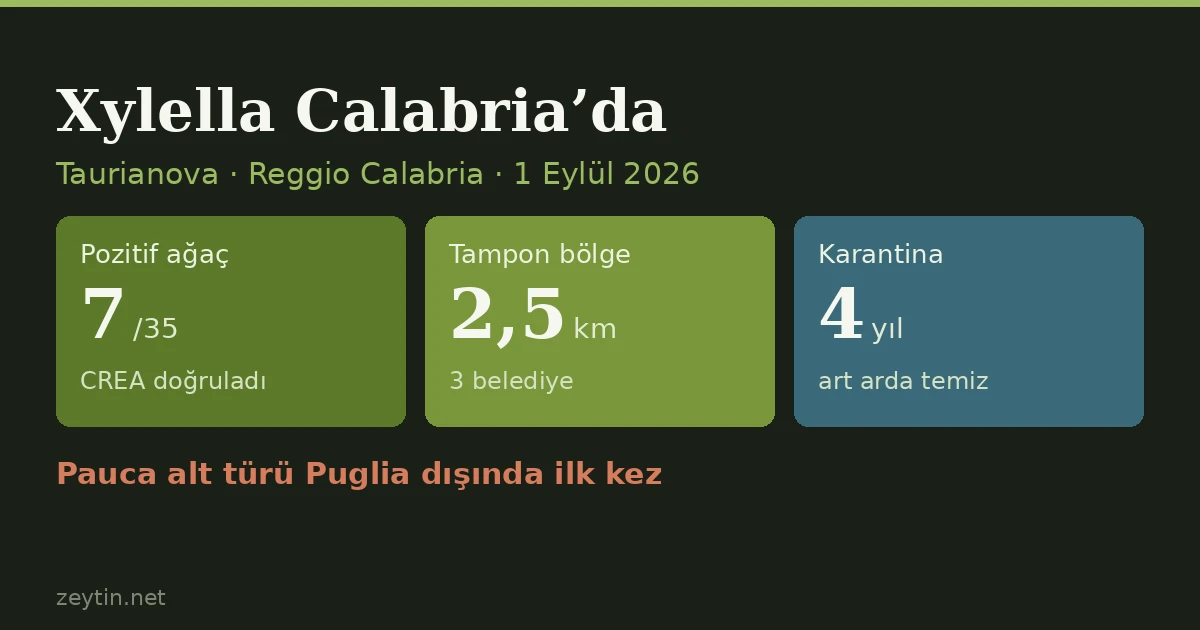
The pauca subspecies of Xylella fastidiosa, which dries out olive trees, had been confined to Puglia since 2013. In Taurianova, Calabria, 7 of 35 samples tested positive; the region issued a quarantine decree on 1 September with a 2.5 km buffer zone.
 Article
Black olive harvest paused for ten days in Akköy, Didim: a price ladder from 30 to 100 lira
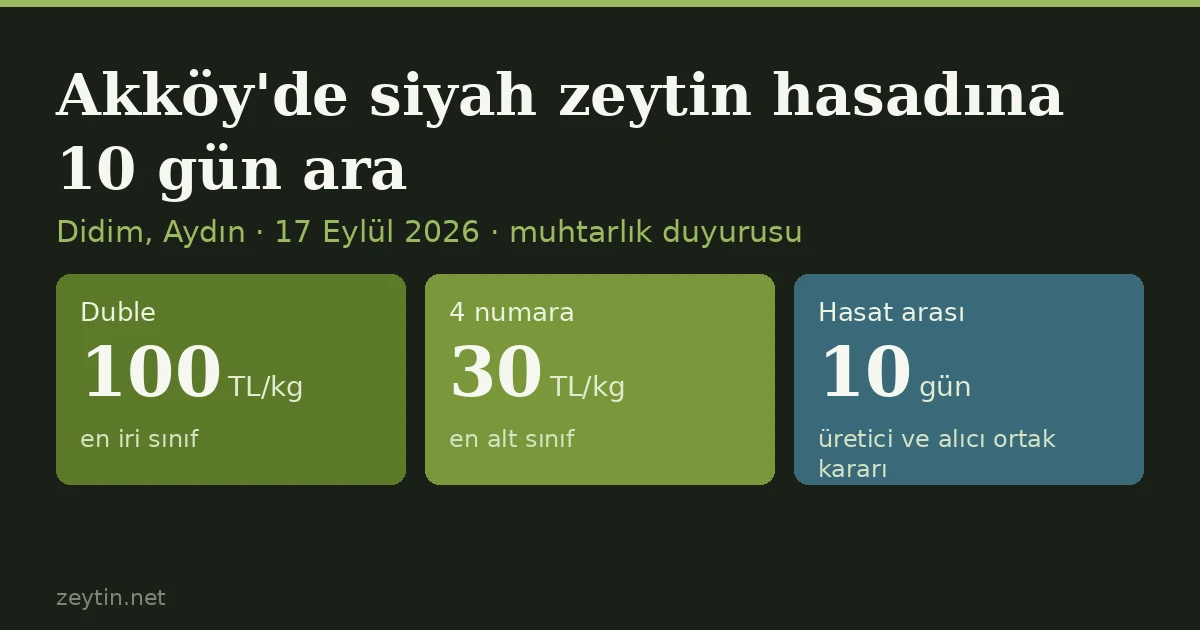
In Akköy, a village in the Didim district of Aydın, growers and olive buyers have jointly agreed to suspend black olive harvesting and buying for ten days, saying announced prices do not cover costs. The price ladder published by the village headman's office runs from 100 lira a kilo for the largest grade down to 30 lira for the smallest. Growers say picking costs alone exceed the price on the lower grades.
 Article
Greece opens the season at €4: no scarcity in the Mediterranean, but pressure on price
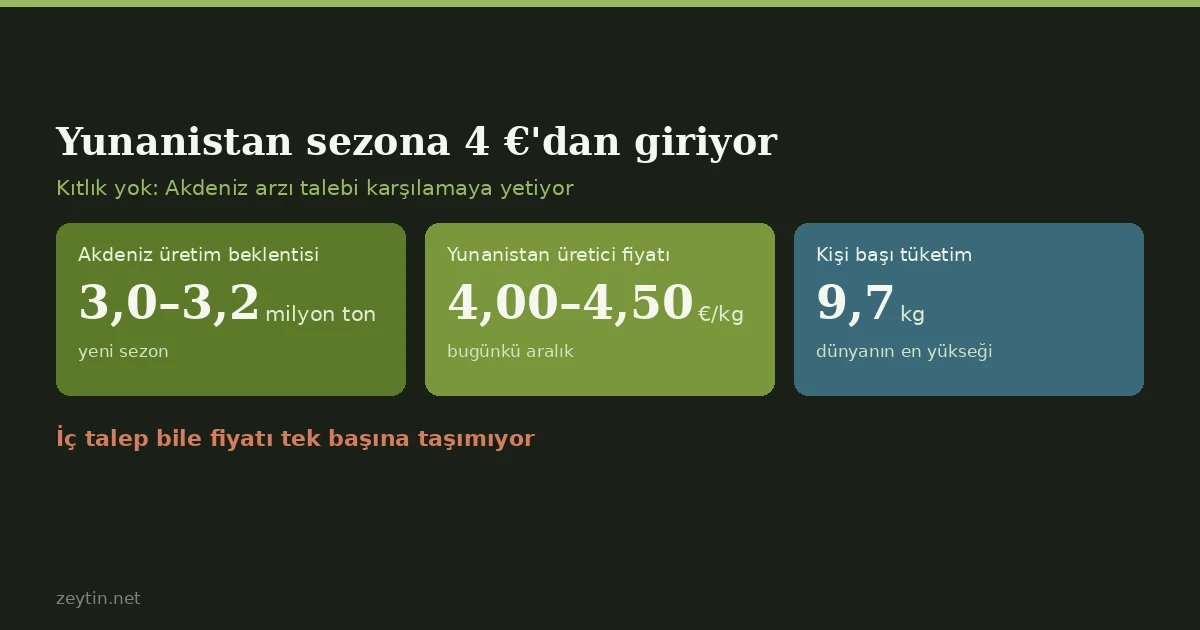
Manolis Giannoulis, president of the National Interprofessional Olive Oil Organization, expects the season to open at around €4 per kilogram. Mediterranean output is forecast at 3–3.2 million tonnes: no record, but enough to meet demand. The market is quiet, buyers are few, and costs plus North African imports keep the pressure on.
 Article
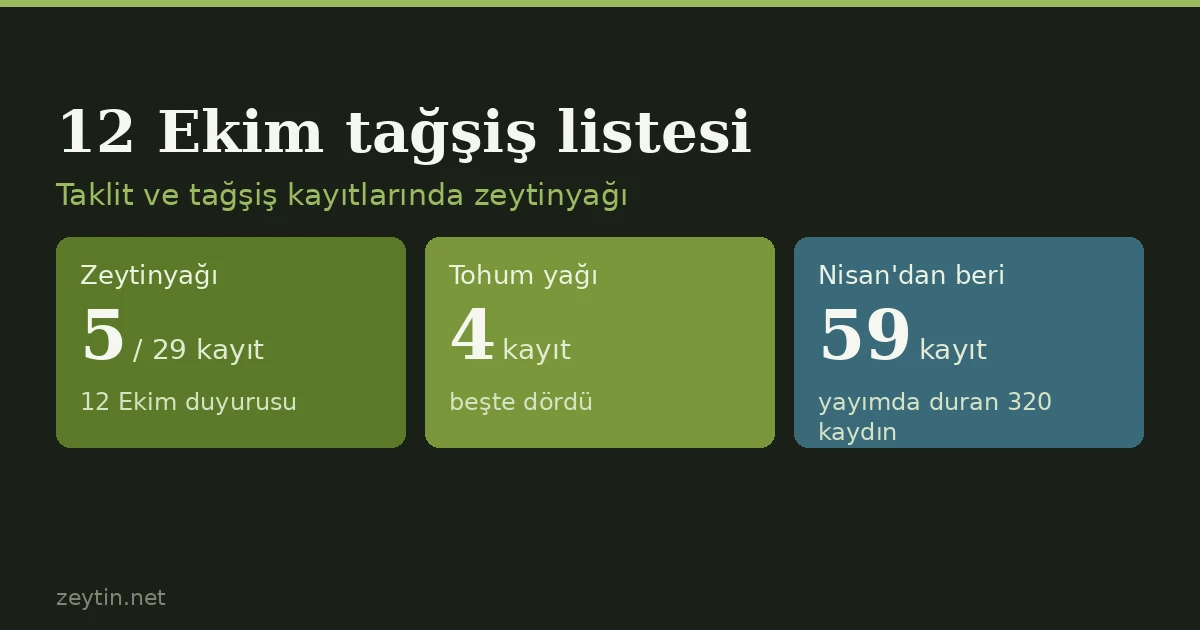
12 October adulteration list: five of 29 records are olive oil, four with seed oil
The ministry's 12 October 2026 notice added 29 records to Türkiye's counterfeit-and-adulteration list, five of them olive oil: four with seed oil blended in, one with lower-grade olive oil. Of the 320 records currently published, 59 are olive oil, and Manisa's count rose from one to three.