Xylella has left Puglia: seven olive trees test positive in Calabria
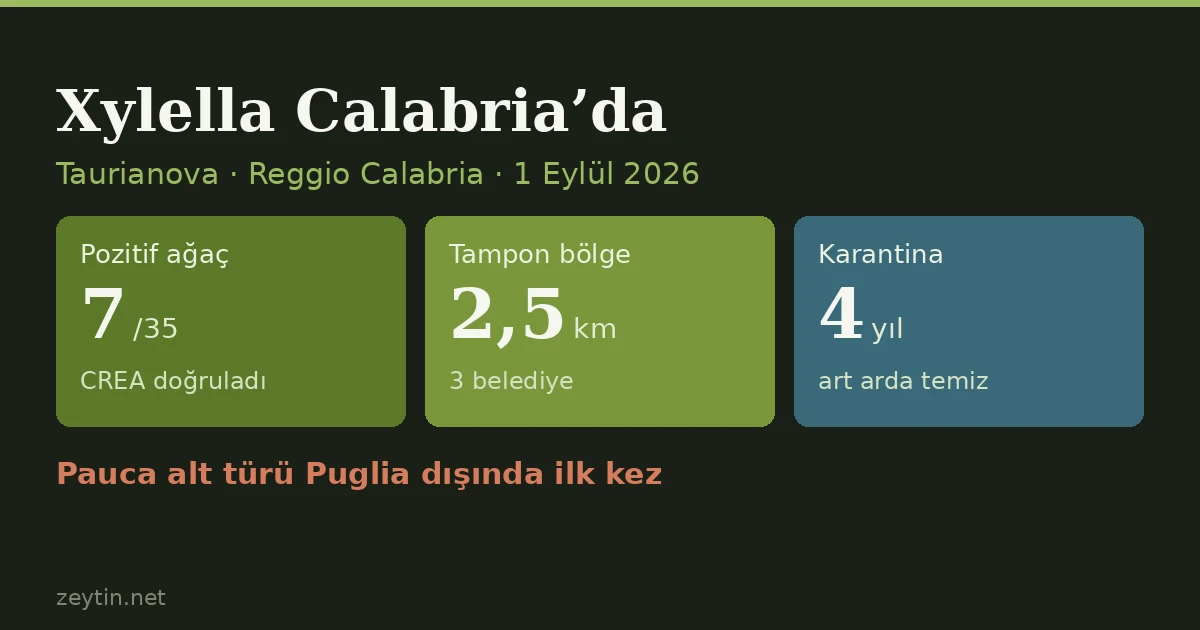
The pauca subspecies of Xylella fastidiosa, which dries out olive trees, had been confined to Puglia since 2013. In Taurianova, Calabria, 7 of 35 samples tested positive; the region issued a quarantine decree on 1 September with a 2.5 km buffer zone.
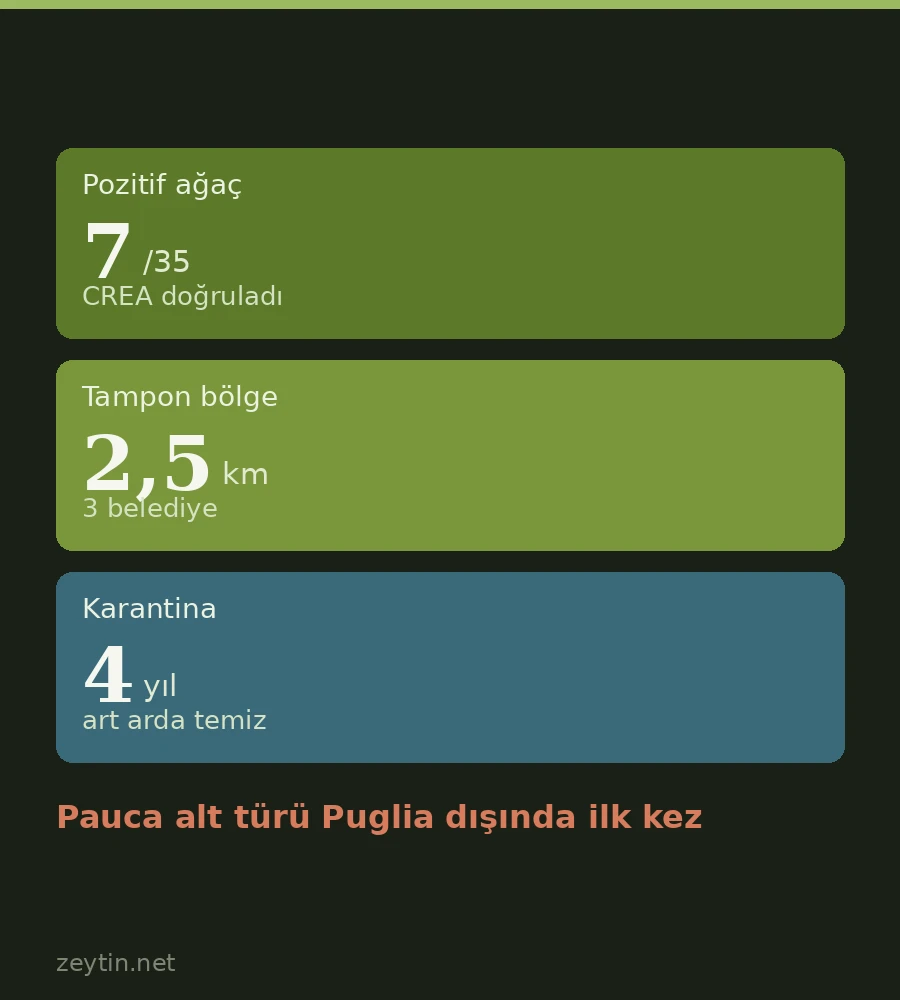
The biggest fear of Italian olive growing for a decade has reached a new region. The Calabria Regional Government announced that Xylella fastidiosa subsp. pauca has been detected in olive trees at Olivetella in Taurianova, in the province of Reggio Calabria. It is the first time the pauca subspecies, which devastates olive trees, has been found outside Puglia since it appeared there in 2013.
What was found
| Taurianova outbreak | Value |
|---|---|
| Plants sampled | 35 |
| Positive | 7 |
| Infected zone radius | 50 m |
| Buffer zone | 2.5 km |
| To lift the quarantine | 4 clean years |
Samples were taken by the regional plant health service and results were confirmed by CREA, Italy's national reference body. The region declared the demarcated area by decree no. 14746 of 1 September 2026 and published its action plan the next day.
What measures are being taken
The infected zone is the 50-metre area around positive trees. Positive trees and susceptible host plants there will be removed after vector control spraying. The order matters: removing trees before spraying can scatter the insects living on them.
A 2.5-kilometre buffer zone surrounds the infected zone, reaching into the municipalities of Cittanova and Terranova Sappo Minulio as well as Taurianova. In this area:
- Moving susceptible plants out of the zone is banned.
- Soil tillage is mandatory from 1 April to 30 May, to destroy the young stages of the spittlebugs (mainly Philaenus spumarius) that develop in weeds and carry the bacterium from tree to tree.
- Intensive monitoring and sampling will continue.
For replanting, the plan recommends cultivars that proved resistant in Puglia: Leccino, Favolosa (FS17), Lecciana and Leccio del Corno. The quarantine can be lifted only after four consecutive years without a positive result.
Why it is so serious
Xylella fastidiosa settles in the plant's water-conducting vessels and blocks water from reaching the leaves. In olives, desiccation starting at the branch tips can kill the whole tree within a few years. In Puglia's Salento peninsula millions of trees dried out, centuries-old groves disappeared and the area's olive oil output collapsed.
The Puglia experience also showed how the disease advances. It was first detected in 2013 in the province of Lecce, around Gallipoli. Over the following decade the epidemic reached the province of Bari via Brindisi and Taranto, even though containment lines were moved north several times. Spittlebugs are decisive: their young stages develop in froth on weeds in spring, and as adults they pick up the bacterium while feeding on olive shoots and carry it to other trees. That cycle is why mandatory tillage is set for April and May.
Calabria's regional agriculture assessor Gianluca Gallo called the situation "the beginning of an epidemic" and stressed the need for rapid action. Alessandro Guagliardi, president of the Calabria federation of agronomists, underlined that no treatment clears the bacterium from a tree and that early diagnosis and fast removal are the only effective tools.
Calabria is Italy's second-largest olive oil region after Puglia. If the outbreak stays at a single point it can be contained, but the Puglia epidemic was also first noticed in a small area.
Is there a risk for Türkiye?
Xylella fastidiosa has not been detected in olives in Türkiye and is on the quarantine list. The bacterium does not travel long distances on its own; it spreads through trade in infected nursery plants and ornamentals. The main line of defence is therefore inspection of imported plant material and avoiding uncertified saplings.
Symptoms growers should know: leaf scorch starting from the tips, sudden drying of a single branch or part of the tree, and the drying spreading year after year. These can be confused with drought, fungal diseases or damage from other olive pests, so suspicious cases should be reported to the local agriculture directorate. The picture most often confused with it is Verticillium wilt, which also causes sudden branch dieback but is a soil-borne fungus and leaves brown discoloration in the vascular tissue of a cut branch. With Xylella, drying tends to move inward from the leaf tips as scorch. Only a laboratory test can tell them apart for certain. We cover common diseases such as olive knot and peacock spot in separate articles.
Read with care
⚠ This is a single outbreak. Surveys in the buffer zone are continuing and the number of positives may change.
⚠ Other Xylella subspecies had already been found in other Italian regions and on other plants in Europe. The significance here is that the olive-killing pauca subspecies has been found outside Puglia for the first time.
⚠ The recommended resistant cultivars can carry the bacterium but succumb to desiccation far less. Read them as "resistant", not "immune".
One rating per visitor; you can change yours at any time. Ratings are real reader votes — no seeded or default scores.
Related
 Article
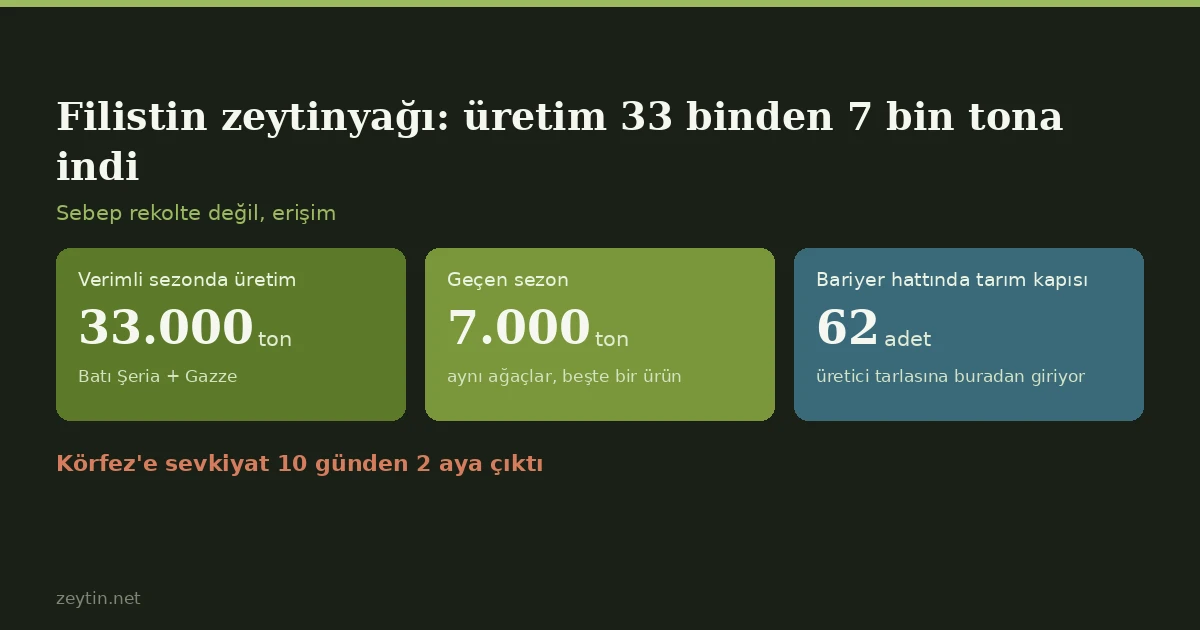
Palestinian olive oil: output down from 33,000 to 7,000 tonnes — the cause is access, not the crop
In a productive season Palestine yields 33,000 tonnes of olive oil; last season it produced 7,000. Seventy per cent of the groves sit in the northern West Bank, reached through 62 agricultural gates, and shipping times have gone from ten days to two months.
Article
Palestinian olive oil: output down from 33,000 to 7,000 tonnes — the cause is access, not the crop
In a productive season Palestine yields 33,000 tonnes of olive oil; last season it produced 7,000. Seventy per cent of the groves sit in the northern West Bank, reached through 62 agricultural gates, and shipping times have gone from ten days to two months.
 Article
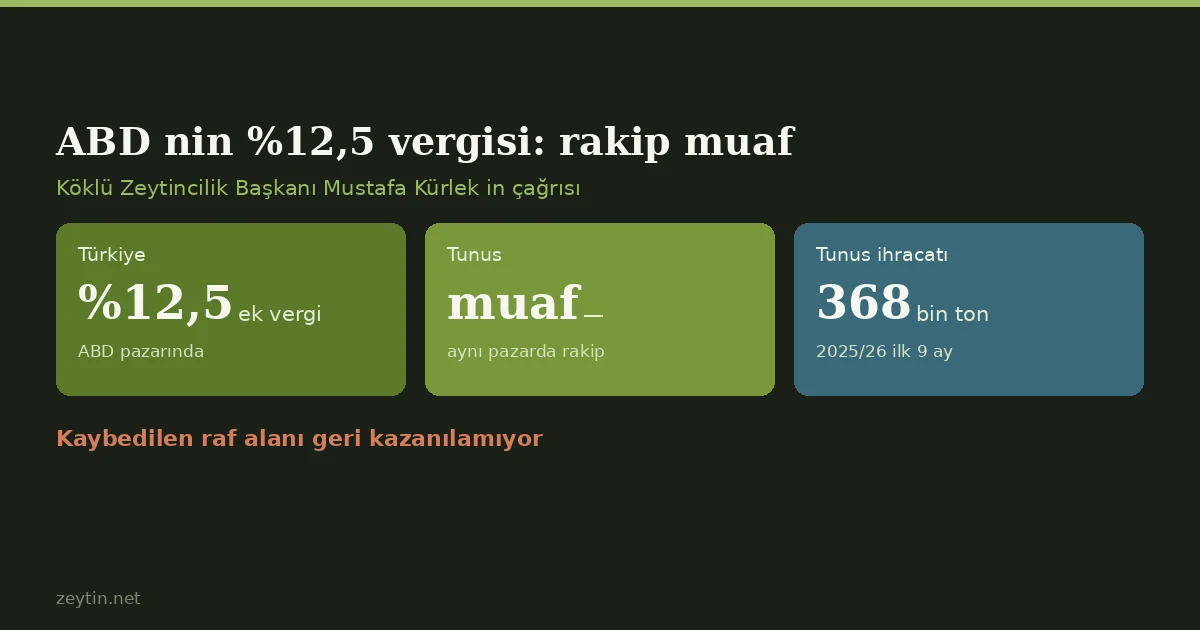
The 12.5% US tariff: the competitor is exempt, the Turkish exporter is not
Mustafa Kürlek notes the 12.5% additional US tariff on Turkish olive products is not applied to competitors such as Tunisia, and calls for DFİF and Eximbank measures.
Article
The 12.5% US tariff: the competitor is exempt, the Turkish exporter is not
Mustafa Kürlek notes the 12.5% additional US tariff on Turkish olive products is not applied to competitors such as Tunisia, and calls for DFİF and Eximbank measures.
 Article
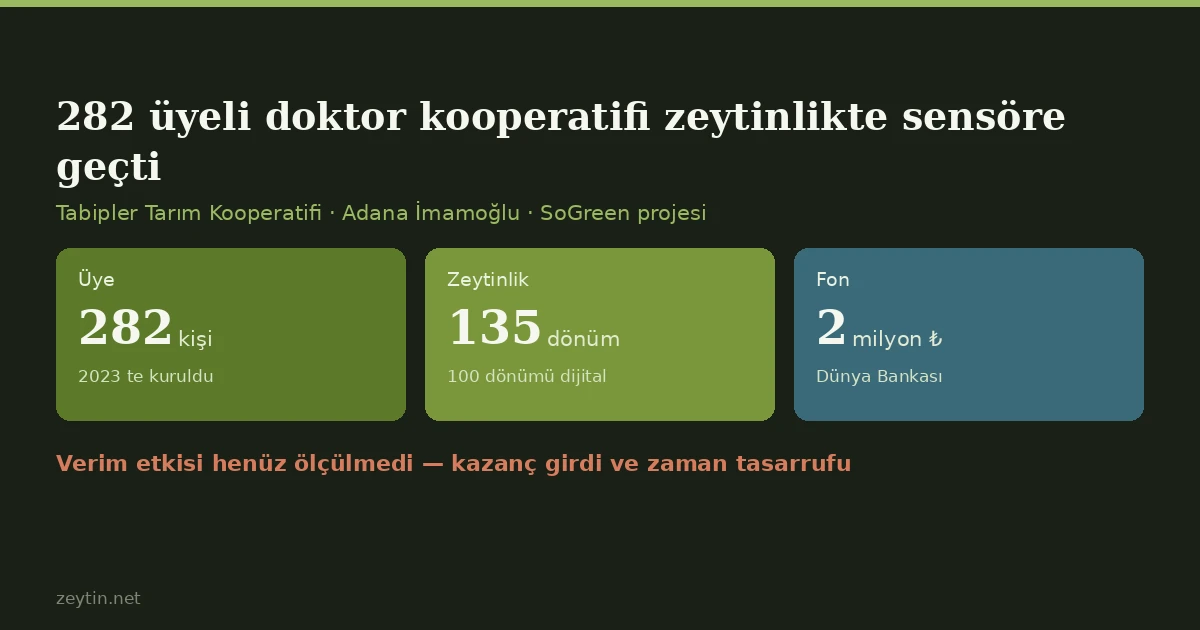
A 282-member doctors' cooperative puts sensors in the olive grove
A cooperative founded by doctors in Adana is monitoring water and fertiliser with buried sensors across 100 of its 135 dönüm of bearing olive grove, funded with 2 million lira.
Article
A 282-member doctors' cooperative puts sensors in the olive grove
A cooperative founded by doctors in Adana is monitoring water and fertiliser with buried sensors across 100 of its 135 dönüm of bearing olive grove, funded with 2 million lira.
 Article
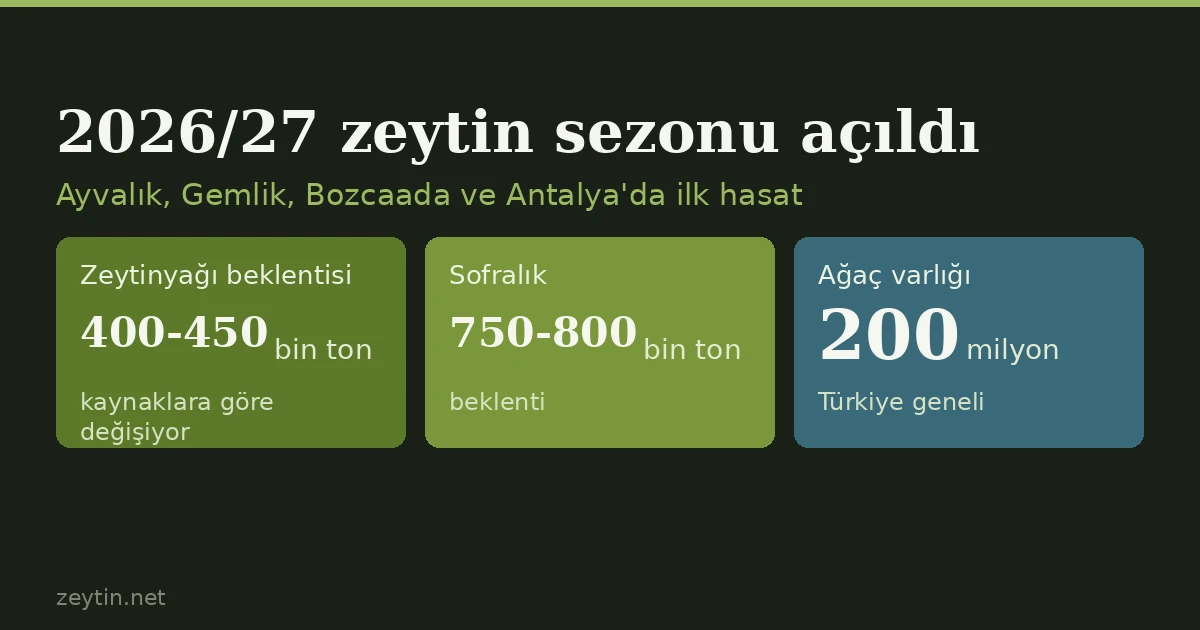
The 2026/27 season opens: first harvests in Ayvalık, Gemlik and Bozcaada
The new olive season opened with three events on 11-13 September. In Ayvalık, an on-year forecast of 400,000-450,000 tonnes of olive oil was voiced; in Gemlik the first olives were picked during the festival; and on Bozcaada the island's first olive oil was pressed with a portable system.
Article
The 2026/27 season opens: first harvests in Ayvalık, Gemlik and Bozcaada
The new olive season opened with three events on 11-13 September. In Ayvalık, an on-year forecast of 400,000-450,000 tonnes of olive oil was voiced; in Gemlik the first olives were picked during the festival; and on Bozcaada the island's first olive oil was pressed with a portable system.