Italy from production giant to trade hub: it exports more olive oil than it produces
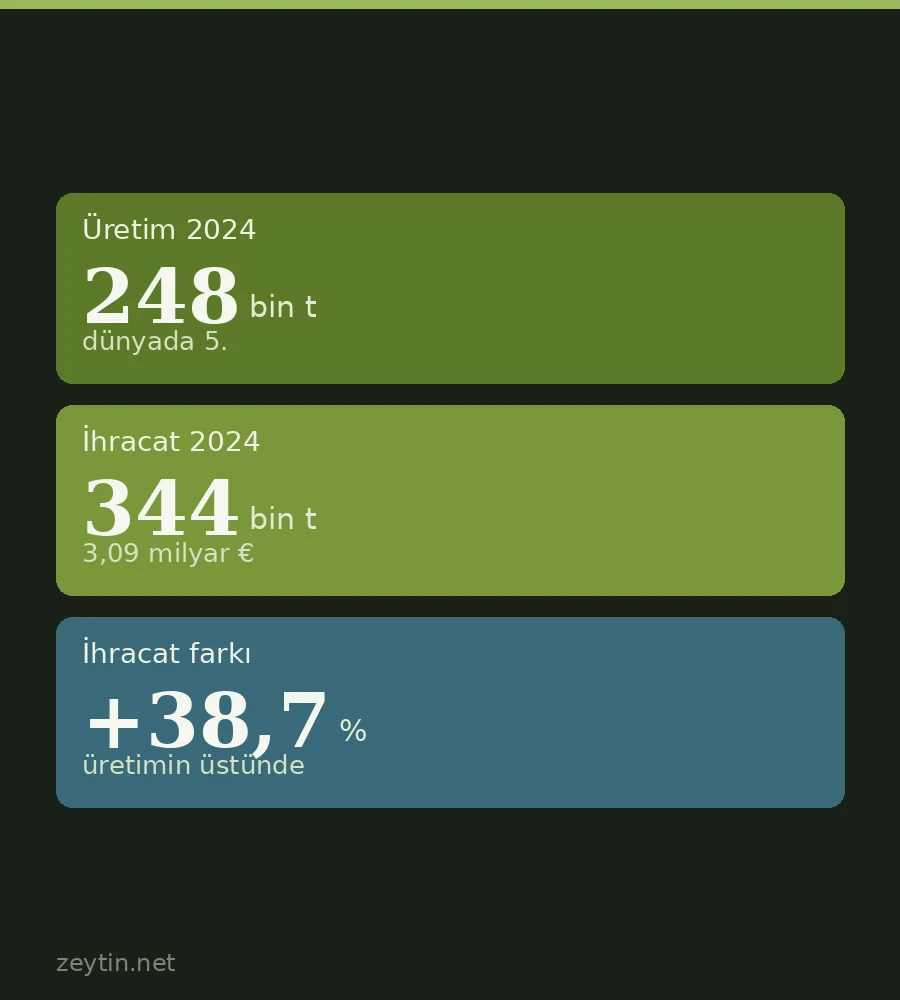
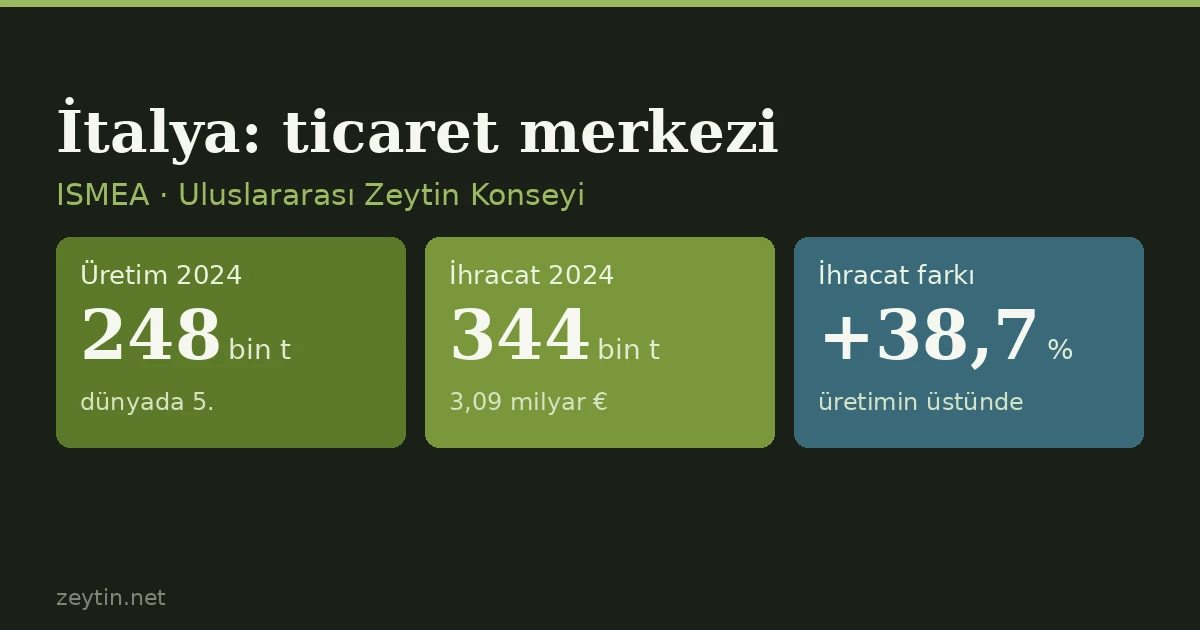
Italy produced 248,000 tonnes of olive oil in 2024 and slipped to fifth place worldwide, yet in the same year it exported 344,000 tonnes worth 3.09 billion euros. The country is now less a production giant than a trade hub that buys oil around the Mediterranean, blends it and sells it to the world.
Italy is one of the first countries people think of when olive oil comes up. Bottle labels on shelves, restaurant menus and food culture all feed that image. The numbers, however, tell a very different story: Italy is no longer a production giant in olive oil but a trade hub that buys oil from all around the Mediterranean, blends it and sells it to the world. Analyses based on two decades of official data that appeared in the trade press in mid-September sum up the picture the same way: production is falling sharply while imports and exports grow.
Production: fifth in the world
According to the International Olive Council (IOC), Italy produced 248,000 tonnes of olive oil in the 2024/25 season, a fall of about 25% on the previous season. That put Italy fifth in the world rankings:
| Country | Production | Change |
|---|---|---|
| Spain | 1,419,000 t | +66% |
| Türkiye | 505,000 t | +135% |
| Tunisia | 340,000 t | +55% |
| Greece | 250,000 t | +30% |
| Italy | 248,000 t | −25% |
| World | 3,572,000 t | +38% |
That Italy went backwards while the rest of the world recovered from drought is no accident. The country's output has been stagnant since the 1990s and barely covers its own consumption. The recovery to around 310,000 tonnes foreseen for 2025/26 does not change that picture.
Exports: more than it produces
According to a report by the Italian public agency ISMEA, in 2024 the same Italy:
- exported 344,000 tonnes of olive oil (+6.8%),
- earned 3.09 billion euros from those exports (+42.6%),
- took about 20% of world exports, making it the second-largest exporter after Spain,
- cut its trade deficit in olive oil by 84.3%.
In other words, Italy exported 38.7% more olive oil than it produced in a year. Imports make that possible. In the first four months of 2025 more than 250,000 tonnes of olive oil entered the country, a volume 66% higher than a year earlier, while spending fell by 13% because prices had dropped. Among non-EU suppliers, Tunisia stands out. About a third of export value goes to the United States, followed by Germany and France.
Why did this happen?
Putting the structure of the two leading countries side by side explains it:
| Indicator | Italy | Spain |
|---|---|---|
| Oil per hectare (2024) | 225 kg | 561 kg |
| Oil processed per mill | 58 t | 747 t |
| Producer extra virgin price (2025) | €6.82/kg | €4.39/kg |
Italy has some 620,000 olive farms, 1.1 million hectares of groves and 4,240 mills. The average farm covers 1.8 hectares. Small, often sloping groves of frequently old trees; high labour costs; the Xylella fastidiosa epidemic that has killed trees across thousands of hectares in Puglia (we recently reported on the disease jumping to Calabria); and climate-driven swings in yield all keep production under pressure. Italian producers sell extra virgin oil at a price about 55% higher per kilo than their Spanish counterparts.
Yet this structure has not pushed the country out of the market. On the contrary, Italy's strength has shifted to selecting, blending and marketing. 42 protected designations of origin and 8 protected geographical indications carry the high-priced niche end, while large brands blend oils bought from different countries and sell them worldwide under well-known Italian labels. The sector's total turnover is 5.8 billion euros.
Where is the world balance heading?
Italy's trading model depends directly on how plentiful total Mediterranean supply is. The International Olive Council's estimates paint this picture:
| Item | 2024/25 | 2025/26 forecast |
|---|---|---|
| Production | 3,572,000 t | 3,440,000 t |
| Consumption | 3,215,000 t | 3,248,000 t |
Production staying above consumption suits Italy as a buyer: when oil is plentiful prices fall, and Italian companies can buy more cheaply and sell with a higher margin. The rise in import volumes alongside lower spending in early 2025 shows exactly that. Conversely, when supply tightens, as in the drought years of 2022-2024, it is this model, which sources much of its raw material abroad, that comes under the most strain.
Tunisia's rise is part of the same balance. Because its own consumption is very low, Tunisia exports most of its oil in bulk, and a large share of it reaches the world after being bottled in Italy and Spain.
What it means for consumers
This model is legal, but it calls for reading labels carefully. Under EU rules the bottle must state the oil's origin: oil made only from Italian olives is described as of Italian origin, while blends carry wording such as "blend of olive oils of EU origin" or "non-EU". An Italian brand does not mean the oil was produced in Italy. We explain how to read the label in detail in our guide how to read an olive oil label.
What it means for Türkiye
In 2024/25 Türkiye produced 505,000 tonnes, more than twice Italy's output, and rose to second place in the world. Even so, it lags far behind Italy in export earnings. The gap is not about production but about brand, packaging and marketing. Italy's ability to sell oil it does not produce is both a warning and an example for countries that cannot move the value of bulk exports into packaged products.
We looked at that gap in our analysis of profitability in olive oil exports, at August's fall in exports in our news story, and at Tunisia's bulk export strategy in Tunisia's olive oil exports.
One rating per visitor; you can change yours at any time. Ratings are real reader votes — no seeded or default scores.
Related
 Article
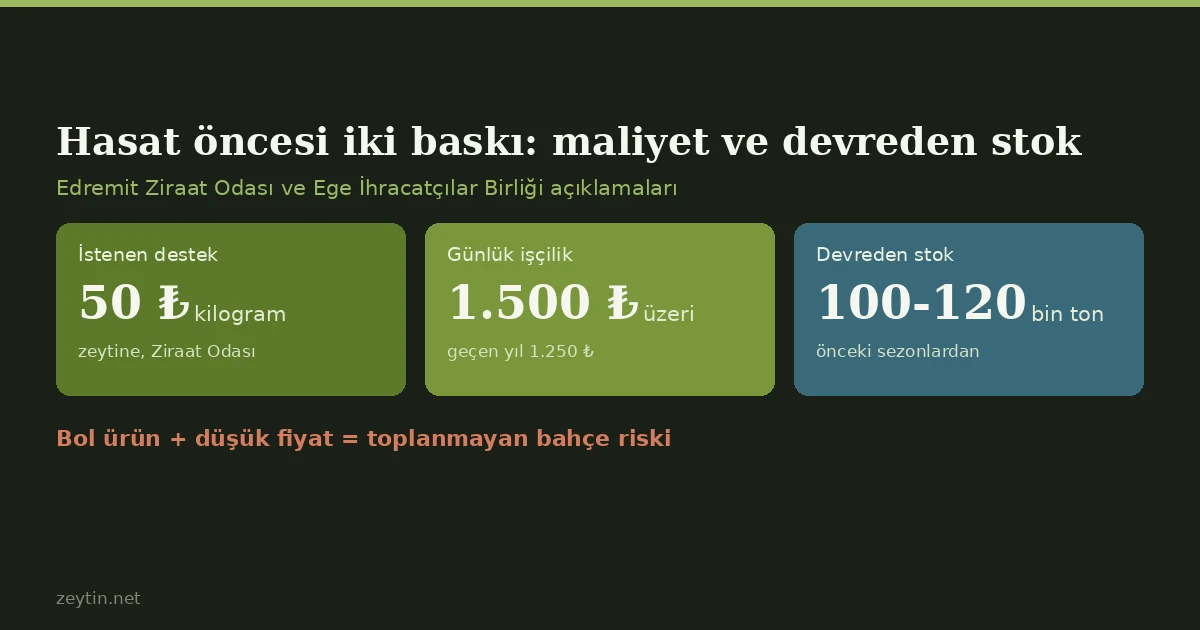
Two pressures before the harvest: costs and 100,000 tonnes carried over
The chamber of agriculture wants 50 lira per kilo; daily labour has passed 1,500 lira. Exporters report 100,000-120,000 tonnes carried over from previous seasons.
Article
Two pressures before the harvest: costs and 100,000 tonnes carried over
The chamber of agriculture wants 50 lira per kilo; daily labour has passed 1,500 lira. Exporters report 100,000-120,000 tonnes carried over from previous seasons.
 Article
Andalusia moves against North African imports: 76% of what arrives is extra virgin
Andalusia's farm sector objects that more than 76% of the olive oil imported into the region in early 2026 was extra virgin. The regional minister has requested exceptional measures under Article 195 of the EU regulation. Türkiye could meet the same door.
Article
Andalusia moves against North African imports: 76% of what arrives is extra virgin
Andalusia's farm sector objects that more than 76% of the olive oil imported into the region in early 2026 was extra virgin. The regional minister has requested exceptional measures under Article 195 of the EU regulation. Türkiye could meet the same door.
 Article
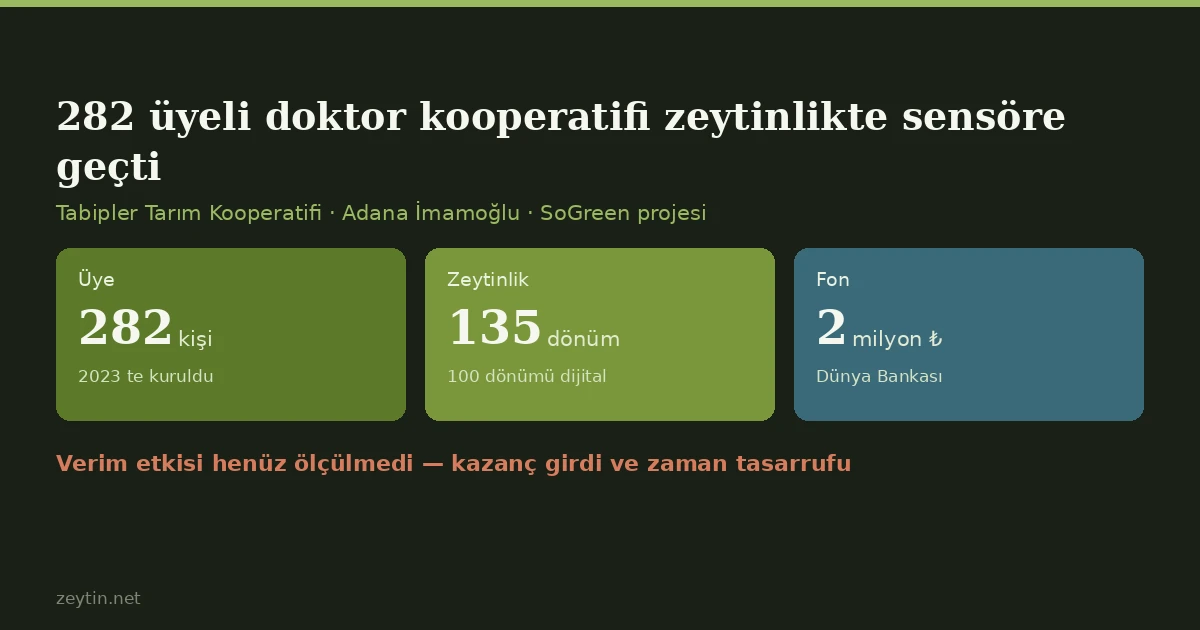
A 282-member doctors' cooperative puts sensors in the olive grove
A cooperative founded by doctors in Adana is monitoring water and fertiliser with buried sensors across 100 of its 135 dönüm of bearing olive grove, funded with 2 million lira.
Article
A 282-member doctors' cooperative puts sensors in the olive grove
A cooperative founded by doctors in Adana is monitoring water and fertiliser with buried sensors across 100 of its 135 dönüm of bearing olive grove, funded with 2 million lira.
 Article
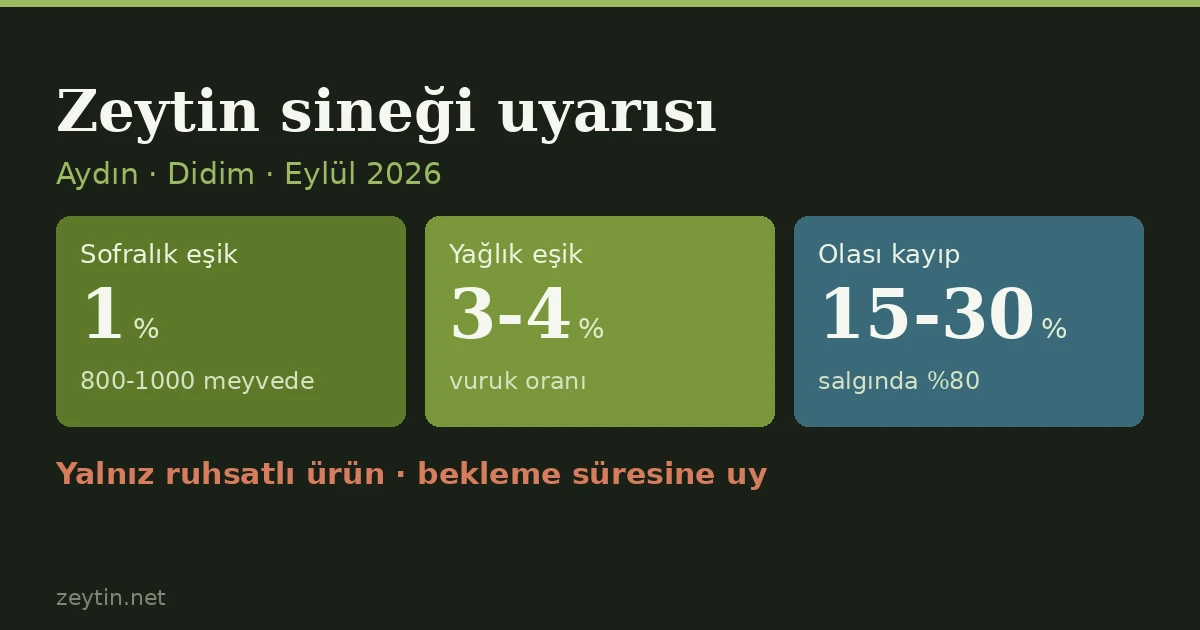
Olive fruit fly warning before harvest in Aydın: check groves, spray only above the threshold
The Didim District Directorate of Agriculture and Forestry, together with the Aydın Provincial Directorate, has warned growers about the olive fruit fly ahead of the harvest. Growers were asked to check groves regularly, monitor pest density and, if needed, act only with products licensed for olives and at the right time. Fly pressure rising in autumn cuts both yield and oil quality.
Article
Olive fruit fly warning before harvest in Aydın: check groves, spray only above the threshold
The Didim District Directorate of Agriculture and Forestry, together with the Aydın Provincial Directorate, has warned growers about the olive fruit fly ahead of the harvest. Growers were asked to check groves regularly, monitor pest density and, if needed, act only with products licensed for olives and at the right time. Fly pressure rising in autumn cuts both yield and oil quality.