Green olive harvest begins in Málaga: 2.5 to 3 million kilos expected for Aloreña
Table olive harvesting has begun in Spain's Málaga province with better prospects after years of drought. The protected-origin Aloreña de Málaga is expected to yield 2.5 to 3 million kilos, and trees are heavily laden with Hojiblanca, which supplies more than 90 per cent of the province's table olives. September heat, however, is shrivelling fruit on rain-fed land.
While the first branches were being shaken to prayers in Gemlik, the table olive season also opened at the other end of the Mediterranean. The green olive harvest has begun in Spain's Málaga province, and this time the mood is more optimistic than in recent years. After several years of severe drought, water that built up over winter and spring has loaded the trees with fruit again.
In table olives, harvesting starts with the varieties that are picked green. While oil olives are left to ripen and change colour, green table olives are picked when the fruit has reached size but is still green and firm. That is why the Málaga harvest is seen as a forerunner of Spain's wider olive season.
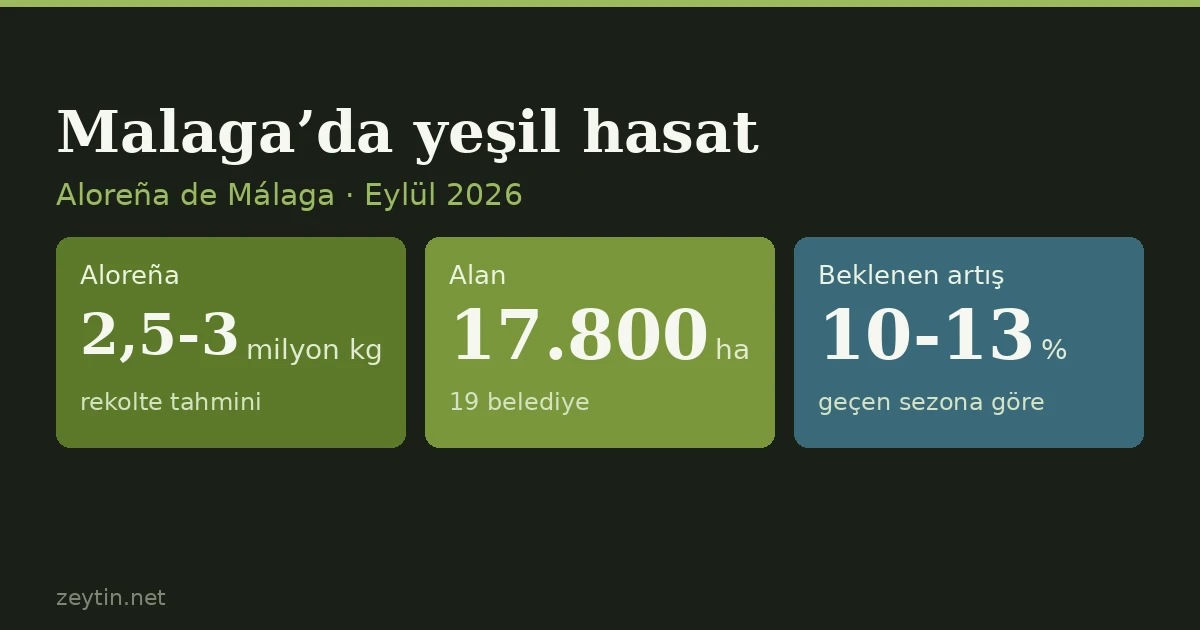
Aloreña de Málaga: 2.5 to 3 million kilos
The province's emblem is Aloreña de Málaga, which holds a protected designation of origin in the European Union. Cracked and prepared with herbs such as thyme, fennel and garlic, it is something like a Spanish cousin of Türkiye's cracked green olives.
Picking of Aloreña has begun and the outlook is positive:
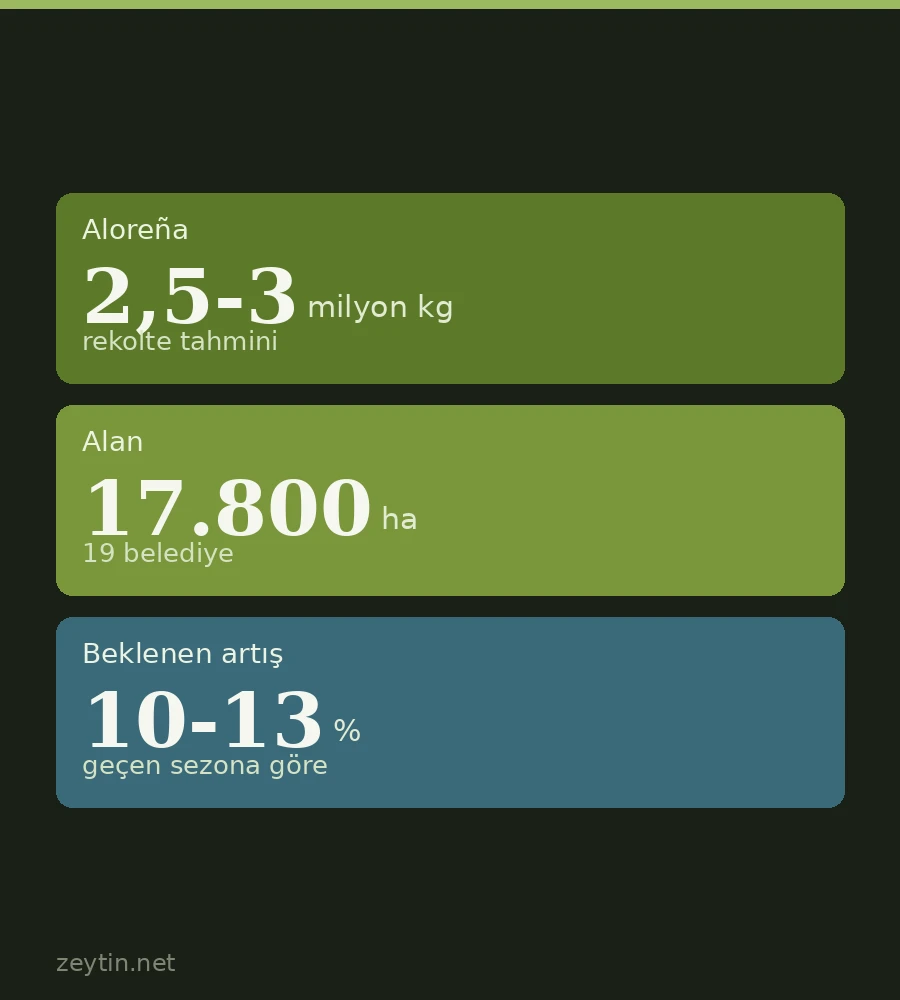
- The crop is estimated at 2.5 to 3 million kilos.
- In the first plots harvested, fruit quality is high and fruit size is satisfactory.
- Aloreña is grown on some 17,800 hectares across 19 municipalities, including Álora, Alozaina, Coín, Pizarra, Cártama, Yunquera, Casarabonela, Valle de Abdalajís and Ronda.
- The harvest supports around 4,000 families in the province.
By tradition, Alozaina celebrates the harvest with a religious procession on 12 October, and the official start is 14 October. The picking that is starting now will therefore peak in October.
Hojiblanca: heavily laden trees
Málaga's main table olive volume, however, depends on Hojiblanca. Used both for oil and as a table olive, it is the most widely grown variety in the province.
| Item | Value |
|---|---|
| Table olive production last season | 56,813 tonnes |
| Of which Hojiblanca | over 51,000 tonnes (90-92%) |
| Expected increase in Málaga this season | 10-13% |
| Forecast Hojiblanca increase across Spain | 12.5% |
| Versus the 4-year average (Spain, Hojiblanca) | +15.6% |
The estimates come from Interaceituna, the Spanish table olive interprofessional body, and Dcoop, the sector's leading cooperative group.
How are green olives processed?
Málaga's two varieties represent two different traditions of processing green table olives.
Hojiblanca and Spanish-style (Seville-style) processing. In the method that accounts for most of world trade, the bitterness of green olives, caused by the compound oleuropein, is removed with a sodium hydroxide (lye) solution. The olives are then washed and placed in brine to ferment for several months. The method is fast, standardised and suited to large volumes; most pitted olives sold stuffed with pepper or anchovy are prepared this way.
Aloreña and natural processing. Aloreña de Málaga, by contrast, is usually prepared without lye. The olive is cracked or split, loses its bitterness slowly in water and brine, and is then seasoned with local herbs. The protected-origin product is close to fresh consumption, has a shorter shelf life and a strong local character. In that respect it is very close to Türkiye's home-made cracked olives and scored olives.
The difference between the two methods shows up in price and market as well: one stands for high-volume exports, the other for a local, high-value product. We examined how the same raw material sells at very different prices depending on processing and marketing in our analysis the same olive, six times the price.
The one question mark: September heat
The picture is good but not certain. Scarce rainfall and high temperatures in recent weeks have caused fruit to shrivel, particularly in rain-fed (unirrigated) groves around Antequera. For table olives that means a direct loss: as fruit shrinks and wrinkles, its grade and price fall. As we explain in our article on the economics of calibre, fruit size largely sets the price per kilo of table olives.
The final outcome of the season is therefore said to depend on the weather in the coming weeks. A few good rains could fill out the fruit and make up the loss; a dry, hot October could pull today's optimistic estimates down.
Why it matters for Türkiye
Spain is the world's largest table olive exporter and Türkiye's direct rival in foreign markets. Swings in Spanish output directly affect international prices and the competitive balance; trees filling up again suggest competition in foreign markets could be tougher this season.
The green table olive season opens at the same time in Türkiye. Products such as the large-fruited Domat and the geographically protected Edremit Gulf green scored olive are picked weeks before the oil harvest, while the fruit is still green and firm. Spanish and Turkish green olives therefore reach foreign markets in the same months and in front of the same buyers, which is why harvest news from Málaga forms part of the background to buying prices in the Aegean.
We looked at the structure of Türkiye's table olive exports in our analysis two-thirds of our exports are table olives, and at the tariff question in the US market in US tariff on Turkish olive exports. The other leading Spanish green olive, Manzanilla, and our report on costs exceeding prices in Spain complete the background to the season.
You can also read how the new season opened in Türkiye in our news story the 2026/27 olive season opens.
One rating per visitor; you can change yours at any time. Ratings are real reader votes — no seeded or default scores.
Related
 Article
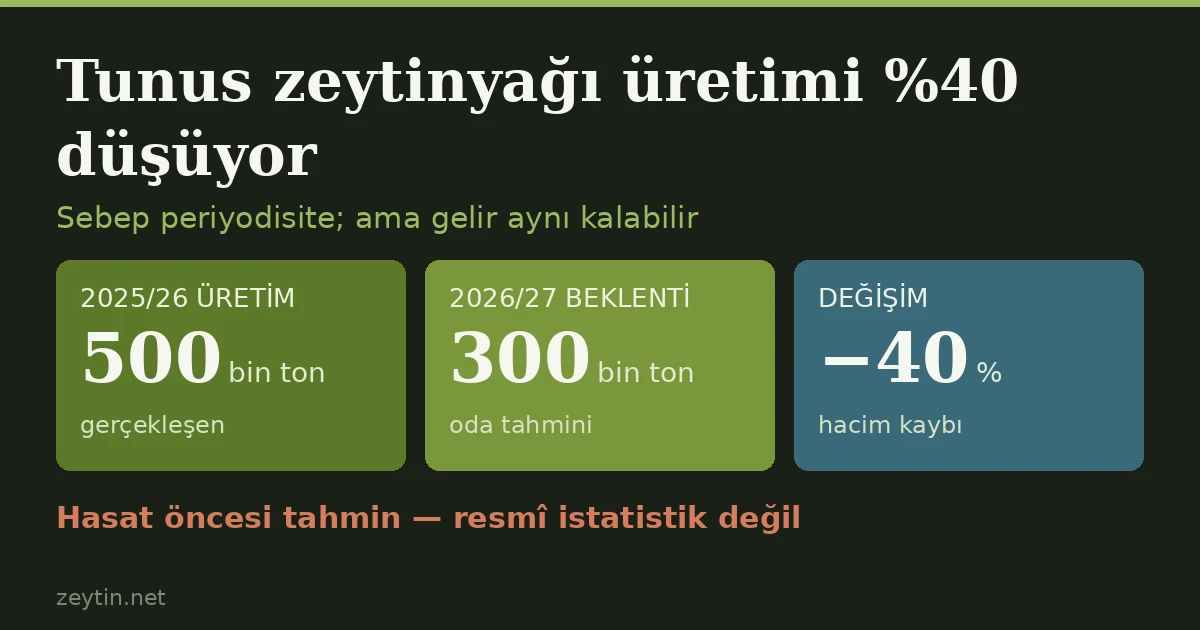
Tunisia's output falls from 500,000 to 300,000 tonnes — revenue may hold
Tunisia's National Chamber of Olive Producers expects olive oil output to fall from 500,000 to 300,000 tonnes in 2026/27, citing alternate bearing. Revenue is still expected to match last season because prices are higher. Türkiye's most direct bulk competitor is shrinking.
Article
Tunisia's output falls from 500,000 to 300,000 tonnes — revenue may hold
Tunisia's National Chamber of Olive Producers expects olive oil output to fall from 500,000 to 300,000 tonnes in 2026/27, citing alternate bearing. Revenue is still expected to match last season because prices are higher. Türkiye's most direct bulk competitor is shrinking.
 Article
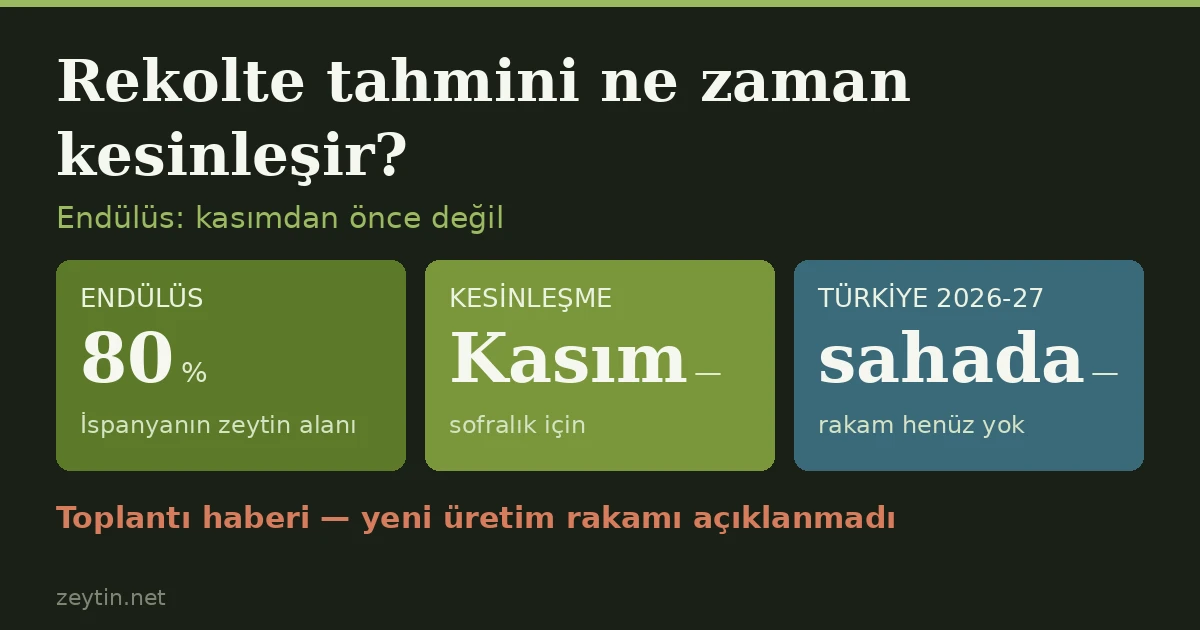
"Not definitive until November": Andalusian growers push back on the crop estimate
Andalusia's agriculture ministry called its first crop estimate "high production"; cooperatives and COAG in Seville objected: recent heat will affect the crop and the estimate is not definitive until November. Türkiye is making its 2026-27 estimate in the field the same week — the same caution applies here.
Article
"Not definitive until November": Andalusian growers push back on the crop estimate
Andalusia's agriculture ministry called its first crop estimate "high production"; cooperatives and COAG in Seville objected: recent heat will affect the crop and the estimate is not definitive until November. Türkiye is making its 2026-27 estimate in the field the same week — the same caution applies here.
 Article
The world's largest bottler is for sale: a €500 million race for Deoleo
Deoleo, owner of Bertolli and Carbonell, holds 22% of global bottled olive oil sales. Italy's Coricelli leads at €500 million, Spain's Dcoop cooperative at €470 million. The Spanish government regards the company as nationally strategic. Because Deoleo is a major bulk buyer, the outcome matters to Turkish exporters too.
Article
The world's largest bottler is for sale: a €500 million race for Deoleo
Deoleo, owner of Bertolli and Carbonell, holds 22% of global bottled olive oil sales. Italy's Coricelli leads at €500 million, Spain's Dcoop cooperative at €470 million. The Spanish government regards the company as nationally strategic. Because Deoleo is a major bulk buyer, the outcome matters to Turkish exporters too.
 Article
3,200 trees and 72 varieties on 14 hectares of stone: the cooperative turning Dalmatian karst into groves
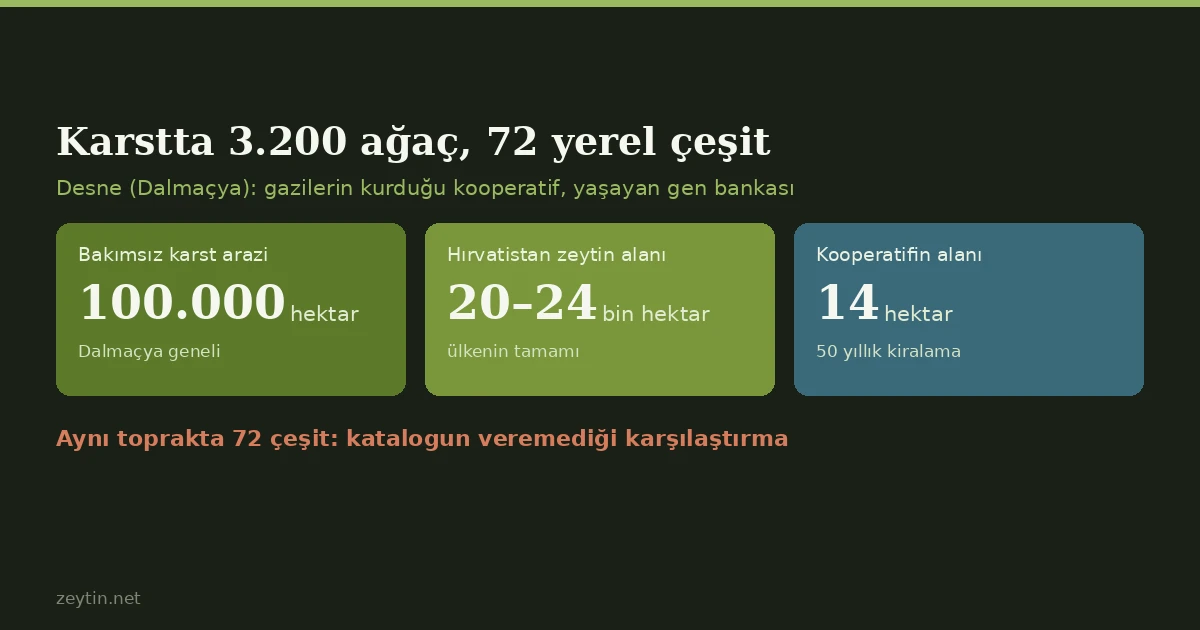
Some 100,000 hectares of karst lie neglected in Dalmatia while all of Croatia has 20,000–24,000 hectares under olives. In Desne a veterans' cooperative has grown 3,200 trees of 72 native varieties on 14 hectares of rock — a grove that doubles as a natural laboratory for climate resilience.
Article
3,200 trees and 72 varieties on 14 hectares of stone: the cooperative turning Dalmatian karst into groves
Some 100,000 hectares of karst lie neglected in Dalmatia while all of Croatia has 20,000–24,000 hectares under olives. In Desne a veterans' cooperative has grown 3,200 trees of 72 native varieties on 14 hectares of rock — a grove that doubles as a natural laboratory for climate resilience.