Extra Virgin, Virgin, Riviera: Olive Oil Grades Explained
What do 'extra virgin', 'riviera' and 'refined' mean on the label? The difference lies in the production method and acidity.
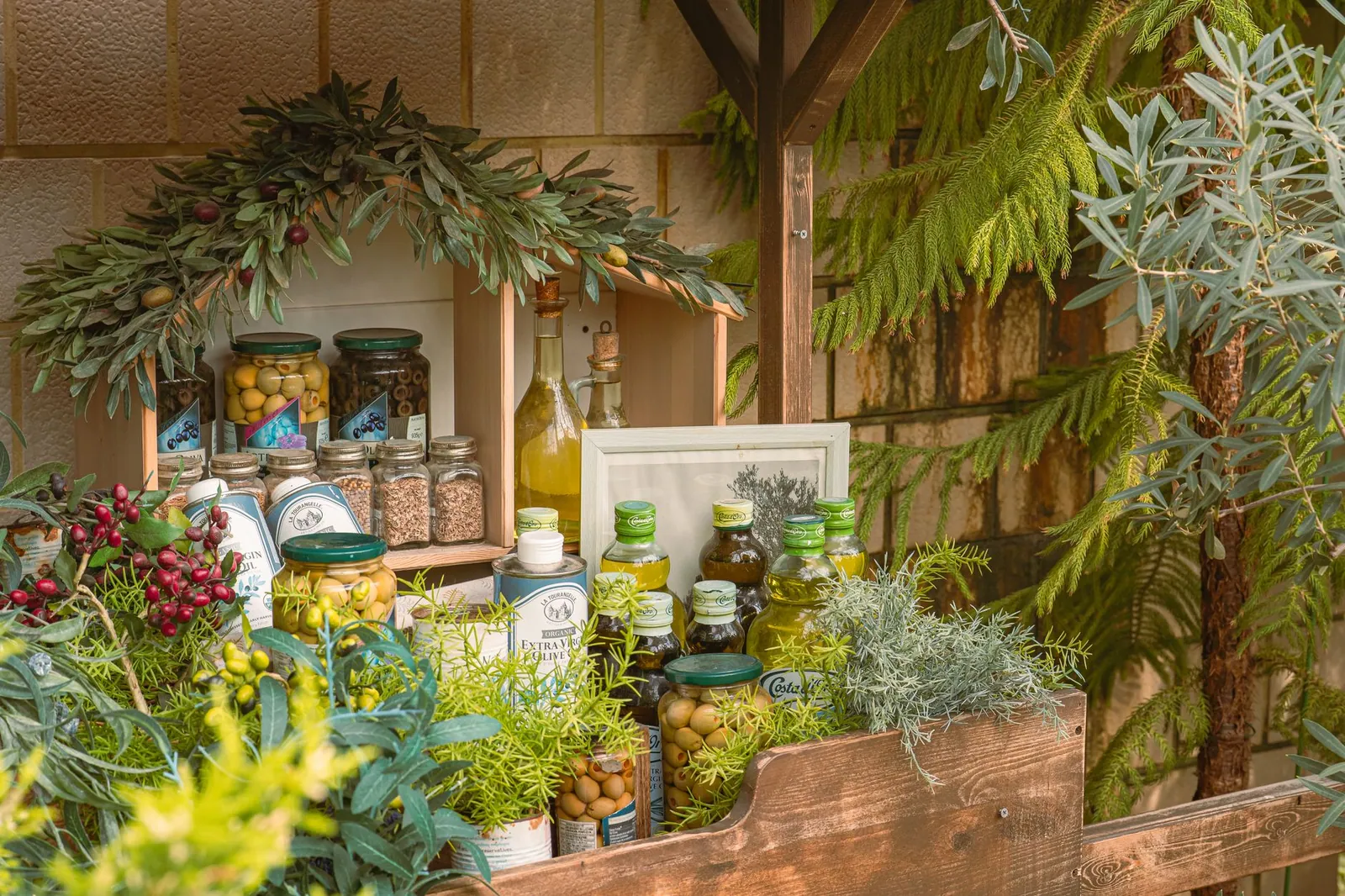
Bottles standing side by side on a supermarket shelf can differ widely in price. The difference comes not from the brand but from the oil's grade. Three things determine the grade: how the oil was obtained, its free fatty acid level, and the verdict of a tasting panel.
The short answer
| Grade | How it is obtained | Acidity | Best use |
|---|---|---|---|
| Extra virgin | Mechanical only, no defects | ≤ 0.8% | Raw use, salads, olive oil dishes |
| Virgin | Mechanical only, slight defects allowed | ≤ 2.0% | Everyday cooking |
| Riviera (olive oil) | Blend of refined and virgin oil | ≤ 1.0% | Frying, oven, baking |
| Pomace oil | Extracted from pulp with solvent, refined | ≤ 1.0% | Industrial use, frying |
What does "virgin" mean?
"Virgin" means the oil was obtained only by mechanical and physical processes: crushing, kneading, pressing or centrifuging, washing and filtering. No heat treatment that alters the oil and no chemical refining has been applied. In Turkish the term is "natürel". "Extra virgin" ("natürel sızma" in Turkish) is the top grade within this group.
Extra virgin olive oil
The top grade. Olives are pressed by mechanical means only; no heat or chemicals are used. Free acidity is at most 0.8%. In addition, a tasting panel must find no defects: the oil must smell fruity and carry no mould, vinegar or sour notes. What tasters look for is explained in tasting olive oil.
This is the grade that works best raw in salads, meze and drizzled over finished dishes; it carries the most polyphenols and aroma.
Virgin olive oil
Obtained mechanically in the same way, but acidity can reach 2% and slight defects are allowed in tasting. It is suitable for everyday cooking. It appears on shelves less often than extra virgin; producers often send this oil into riviera blends.
Refined olive oil
Made by refining defective or high-acidity virgin oil with heat and chemical processes. Acidity drops, but most of the aroma, flavour and polyphenols are lost. It is rarely sold to consumers on its own; it is the main component of riviera blends.
What is riviera olive oil?
The product labelled "riviera", or simply "olive oil", is a blend of refined olive oil and virgin olive oil. The share of virgin oil in the blend is not fixed by regulation and is usually low; it is enough to give the oil some colour and olive aroma. Its acidity is at most 1%. It is cheaper, lighter in colour and milder in flavour.
The name is said to come from the Riviera coast of Liguria in Italy, and to have settled for a time as the trade name for blended oils of this type. On Turkish shelves today its meaning is clear: not extra virgin, but a blend dominated by refined oil.
What is riviera olive oil used for?
- Deep frying: at high heat the aroma of extra virgin oil is lost anyway; riviera is the economical choice.
- Oven and baking: in cakes, savoury pastries and börek, where the oil's flavour is not meant to stand out.
- Heavily spiced dishes: where the fruity aroma of extra virgin oil would disappear under strong flavours.
- Home-made mayonnaise: mayonnaise made with extra virgin oil can turn bitter; a milder oil is preferred.
In salads, meze and vegetable dishes cooked in olive oil, however, riviera does not replace extra virgin; on those plates the taste of the oil is felt directly.
Pomace oil
Extracted with solvent from the pulp left after pressing (pomace), then refined. It does not count as olive oil; it is a separate product and must be labelled "olive pomace oil". There are legal limits for contaminants that can form during processing; where pomace comes from is explained in olive mill waste water and pomace.
Where does the price gap come from?
Two bottles on the same shelf can differ threefold in price. The reason:
One litre of extra virgin oil needs roughly 5-6 kilos of olives, and those olives must be sound, picked on time and processed quickly. Early harvest gives less fruit per tree. Refined oil, by contrast, can use low-quality or even fallen fruit; the defects are removed by refining. The gap calculated from exchange prices is in the price gap between extra virgin and riviera.
Which oil for what?
- Salads, meze, raw use: extra virgin. Because it is not heated, its aroma and polyphenols are preserved.
- Vegetable dishes, sautéing, oven: extra virgin or virgin. The smoke point of extra virgin olive oil is around 190-210 °C; ordinary home cooking stays below it.
- Deep frying: riviera. At high heat the aroma of extra virgin oil is lost anyway, so there is no point using expensive oil.
"You can't fry with olive oil" is a common myth. Although refined sunflower oil has a higher smoke point, olive oil's mainly monounsaturated structure makes it more resistant to oxidation under heat. The details are in is olive oil suitable for frying. Even so, using extra virgin oil for deep frying is not economical.
Label reading guide
On products sold in Turkey, these terms have legal meaning:
- "Natürel sızma zeytinyağı" (extra virgin): top grade, acidity ≤0.8%
- "Natürel birinci zeytinyağı" (virgin): acidity ≤2.0%
- "Riviera zeytinyağı" or just "Zeytinyağı": refined + virgin blend
- "Rafine zeytinyağı" (refined): rarely sold on its own
- "Prina yağı" (pomace oil): solvent-extracted from pulp, not olive oil
"Cold pressed" may appear on a label only if the processing temperature did not exceed 27 °C. "First press" is meaningless with today's technology; continuous systems press only once. For the other lines on a label, see how to read an olive oil label.
Frequently asked questions
Is riviera unhealthy?
No, it is not harmful. Its calories and fatty acid profile are close to extra virgin. But because most polyphenols are lost in refining, the health effects of extra virgin oil should not be expected from it.
Is every bottle labelled extra virgin really extra virgin?
Most are, but adulteration cases do occur. "Extra virgin" products priced well below the market should raise suspicion. Methods and inspection results are in olive oil fraud and adulteration; tips for checking at home are in how to tell good olive oil.
Is sediment in the bottle a bad sign?
Sediment at the bottom is normal in unfiltered oils, even a sign of freshness. But if it sits for a long time it speeds up spoilage.
Is green-coloured oil better?
Colour depends on the olive variety and ripeness; it is not an indicator of quality. Professional tasters use dark blue glasses so colour cannot be seen.
One rating per visitor; you can change yours at any time. Ratings are real reader votes — no seeded or default scores.
Related
 Article
Ödemiş Çekişte Olive Oil: a separate harvest window called “çakır”
Registered in 2020. The certificate names two harvest windows: early (green, November-December) and “çakır” (green turning pink, mid-December to mid-January).
Article
Ödemiş Çekişte Olive Oil: a separate harvest window called “çakır”
Registered in 2020. The certificate names two harvest windows: early (green, November-December) and “çakır” (green turning pink, mid-December to mid-January).
 Article
Bayramiç Olive Oil: aroma compounds defined as percentages
Registered in 2022. The certificate defines aroma by compound rather than adjective: hexanal 36.15%, E-2-hexenal 26.14%. Iodine value 80-93.
Article
Bayramiç Olive Oil: aroma compounds defined as percentages
Registered in 2022. The certificate defines aroma by compound rather than adjective: hexanal 36.15%, E-2-hexenal 26.14%. Iodine value 80-93.
 Article
What are zeytinyağlılar? The logic of Turkish dishes cooked in olive oil
Zeytinyağlılar are Turkish dishes in which vegetables or pulses are cooked with little water in plenty of olive oil until they absorb their own juices, then eaten cold at room temperature. They contain no meat, can be made a day ahead and taste better the next day. Vegetable dishes, stuffed leaves and vegetables, pilaki beans and Aegean wild greens are the four main families.
Article
What are zeytinyağlılar? The logic of Turkish dishes cooked in olive oil
Zeytinyağlılar are Turkish dishes in which vegetables or pulses are cooked with little water in plenty of olive oil until they absorb their own juices, then eaten cold at room temperature. They contain no meat, can be made a day ahead and taste better the next day. Vegetable dishes, stuffed leaves and vegetables, pilaki beans and Aegean wild greens are the four main families.
 Article
Nizip Olive Oil: a registration that sets a floor for its raw material
Registered in 2011. The certificate sets conditions on the fruit, not just the oil: 15-17 mm wide, 19-20 mm long, at least 25% oil. Fruit outside that cannot be used.
Article
Nizip Olive Oil: a registration that sets a floor for its raw material
Registered in 2011. The certificate sets conditions on the fruit, not just the oil: 15-17 mm wide, 19-20 mm long, at least 25% oil. Fruit outside that cannot be used.