Is Olive Oil Suitable for Frying?
The most argued kitchen question. Smoke point is not the only measure; what really matters is how well the oil resists oxidation.
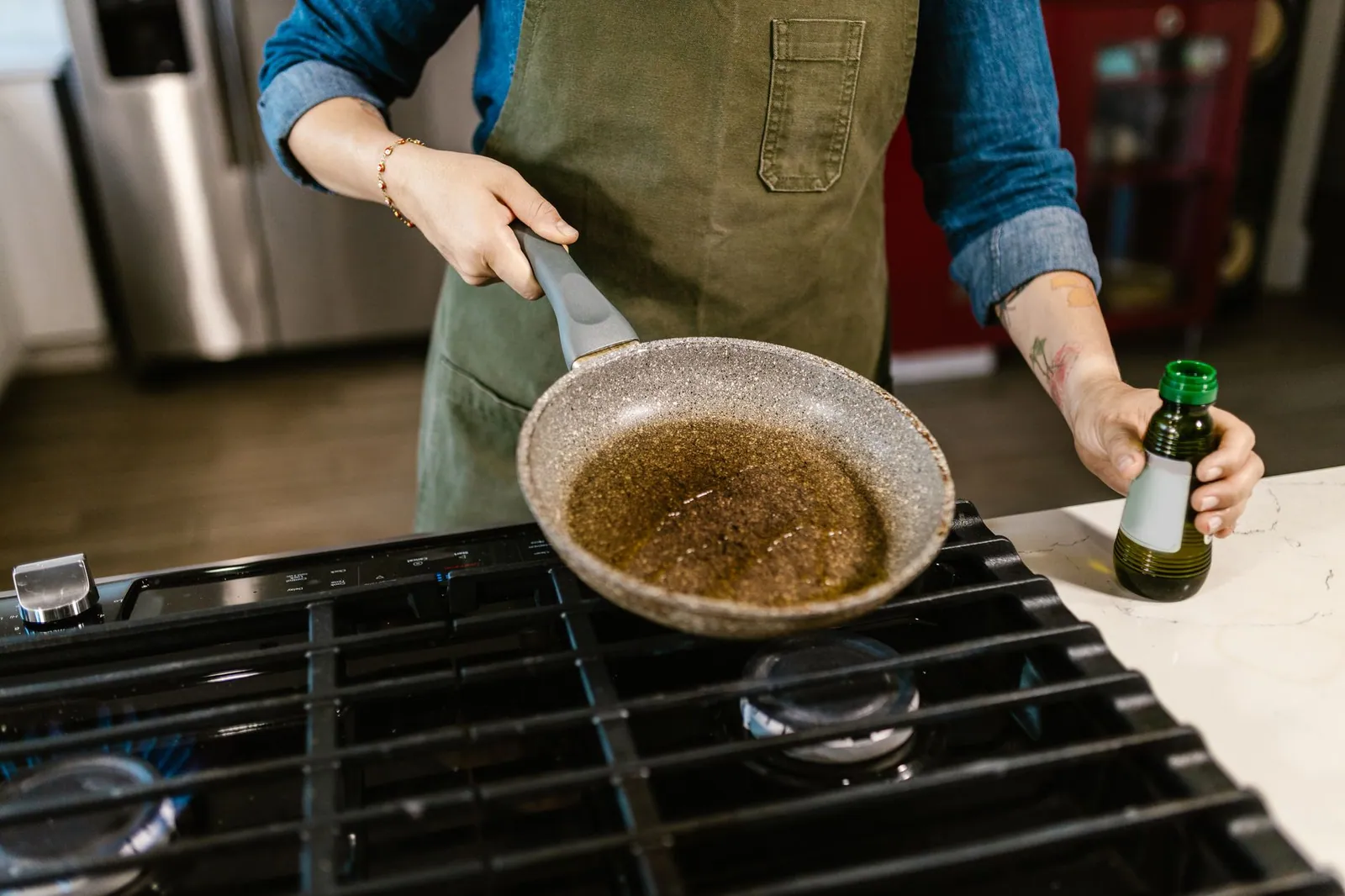
You will often hear that "you cannot fry with olive oil". It is a common belief in which truth and error are mixed; the answer is not yes or no but a question of which olive oil, and for how long.
What is a smoke point?
It is the temperature at which a heated oil begins to smoke visibly. The smoke signals that the oil has started to break down; the taste turns acrid and unwanted compounds form.
Approximate figures:
- Extra virgin olive oil: around 190-210 °C (varying with quality and acidity)
- Refined / riviera olive oil: around 220-240 °C
- Butter: around 150 °C
- Home deep frying is generally done at 170-190 °C
So the smoke point of extra virgin oil sits above the temperature of home frying. The claim that it "cannot be fried with" is not supported by those numbers.
But smoke point is not the only measure
What really counts is oxidative stability: how well the oil resists breaking down under heat. Two things determine it.
Fatty acid composition. Most of olive oil is monounsaturated oleic acid. Monounsaturated fats stand up to heat better than the polyunsaturated fats in sunflower and corn oil, because they carry fewer double bonds open to breakdown.
Polyphenols and vitamin E. Extra virgin olive oil carries natural antioxidants that protect the oil for a while under heat. Refined oil has no such protection.
The other side of it: those polyphenols are consumed during frying. So extra virgin stands up to heat well, but loses its nutritional advantage in the process.
What this means in practice
- Sautéing, pan cooking, oven (180-200 °C): extra virgin olive oil is perfectly usable.
- Deep frying: riviera or refined olive oil is the more economical and sensible choice. The expensive polyphenols of extra virgin will be lost anyway.
- Raw use: salads, mezes, drizzling over a dish — here extra virgin, without question. Its aroma and polyphenols only pay off here.
Points to watch when frying
- Do not let the oil smoke. If it does, the heat is too high; turn it down.
- Do not reuse the same oil repeatedly. Breakdown accumulates with each frying. At home, more than two or three times is not advisable.
- Strain it after frying. Leftover crumbs spoil the oil quickly.
- Discard it if the colour or smell has changed. Oil that has darkened, foams, turns sticky or smells sour should not be used.
- Put food in dry. Wet ingredients spit and speed up the breakdown of the oil.
In short
You can fry with olive oil; what is wasteful is spending extra virgin on deep frying. Which grade suits which job is set out in extra virgin, virgin, riviera.
The information on this page is general information and not medical advice.
One rating per visitor; you can change yours at any time. Ratings are real reader votes — no seeded or default scores.
Related
 Article
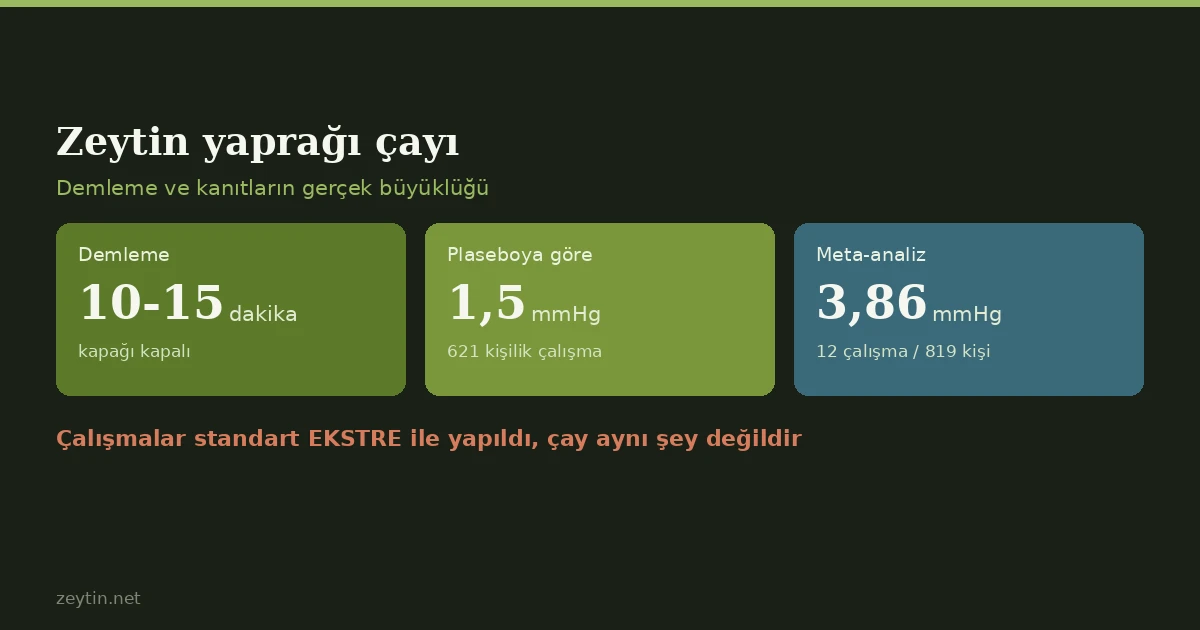
Olive leaf tea: how to make it and what the evidence says
The leaf carries oleuropein and other phenolics. Blood pressure trials show a modest effect, but all used standardised extracts — tea is not the same thing. Steeping, drying and cautions.
Article
Olive leaf tea: how to make it and what the evidence says
The leaf carries oleuropein and other phenolics. Blood pressure trials show a modest effect, but all used standardised extracts — tea is not the same thing. Steeping, drying and cautions.
 Article
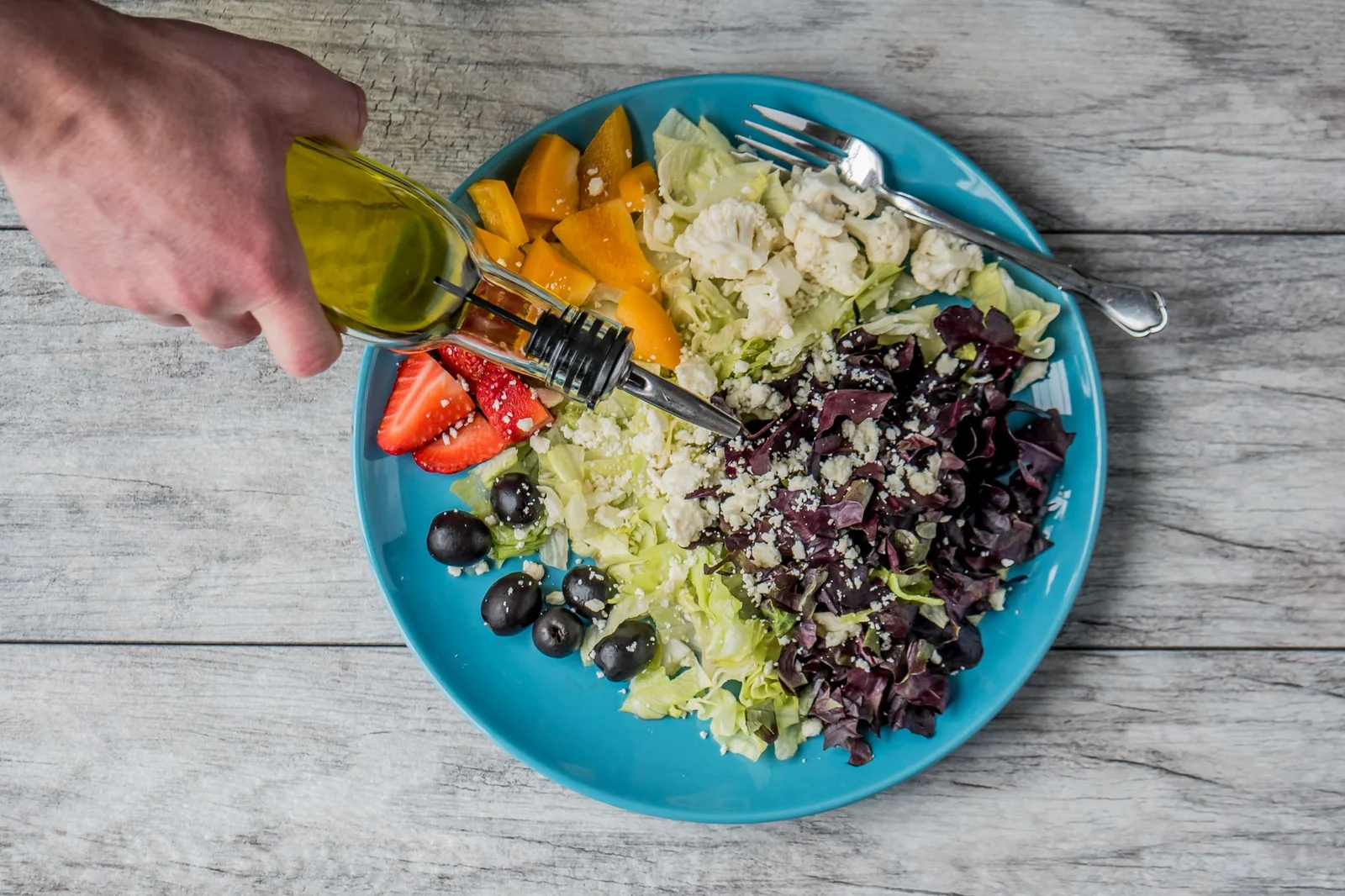
What are the benefits of olive oil?
Authorised claims, topics still under research and unproven claims kept apart — including the EFSA claim and PREDIMED.
Article
What are the benefits of olive oil?
Authorised claims, topics still under research and unproven claims kept apart — including the EFSA claim and PREDIMED.
 Article
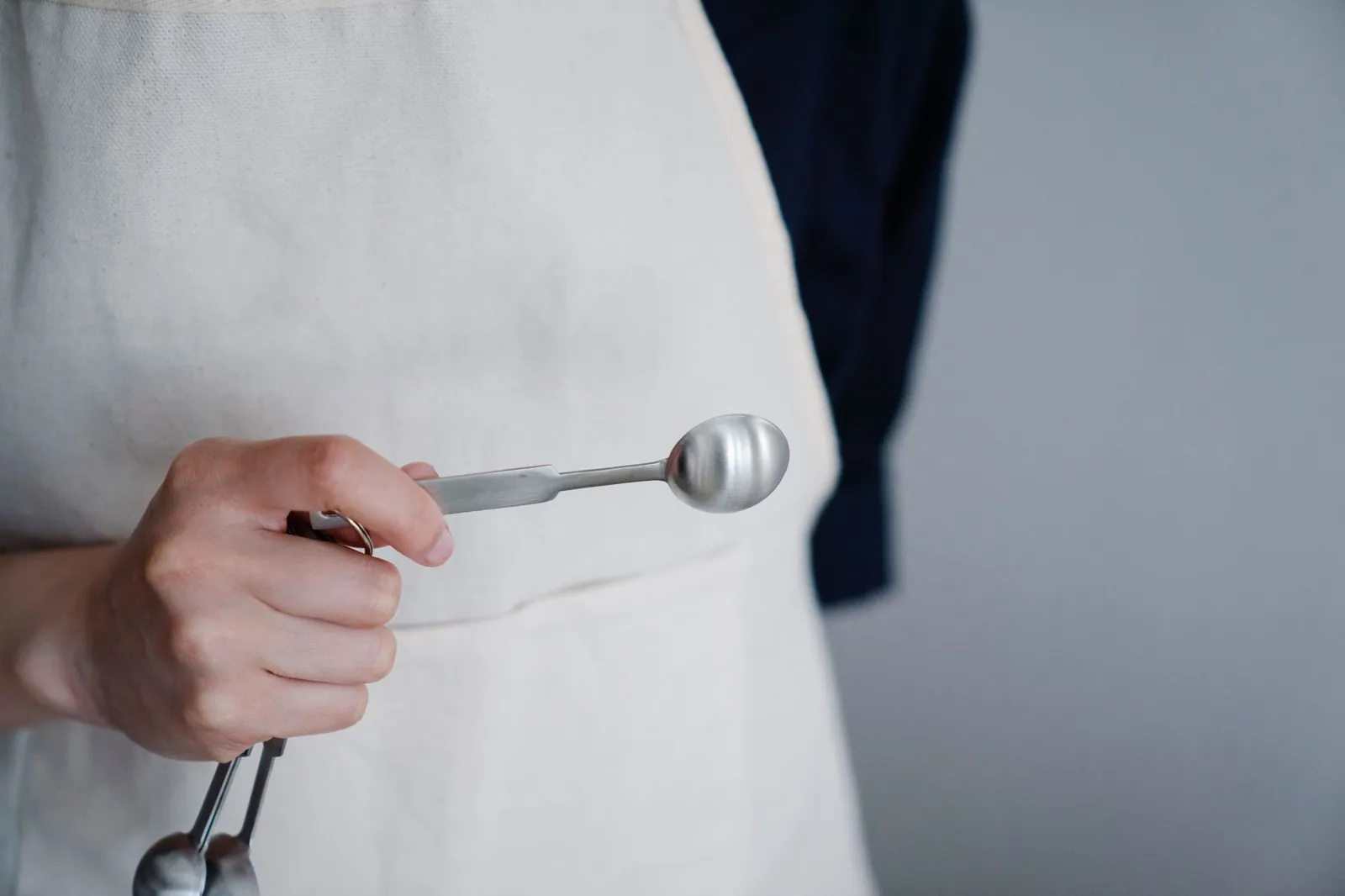
How Much Olive Oil a Day?
Olive oil being healthy does not make it unlimited. A practical look at portions, calories and the logic of replacement.
Article
How Much Olive Oil a Day?
Olive oil being healthy does not make it unlimited. A practical look at portions, calories and the logic of replacement.
 Article
Olive oil or butter? What a 221,000-person study actually found
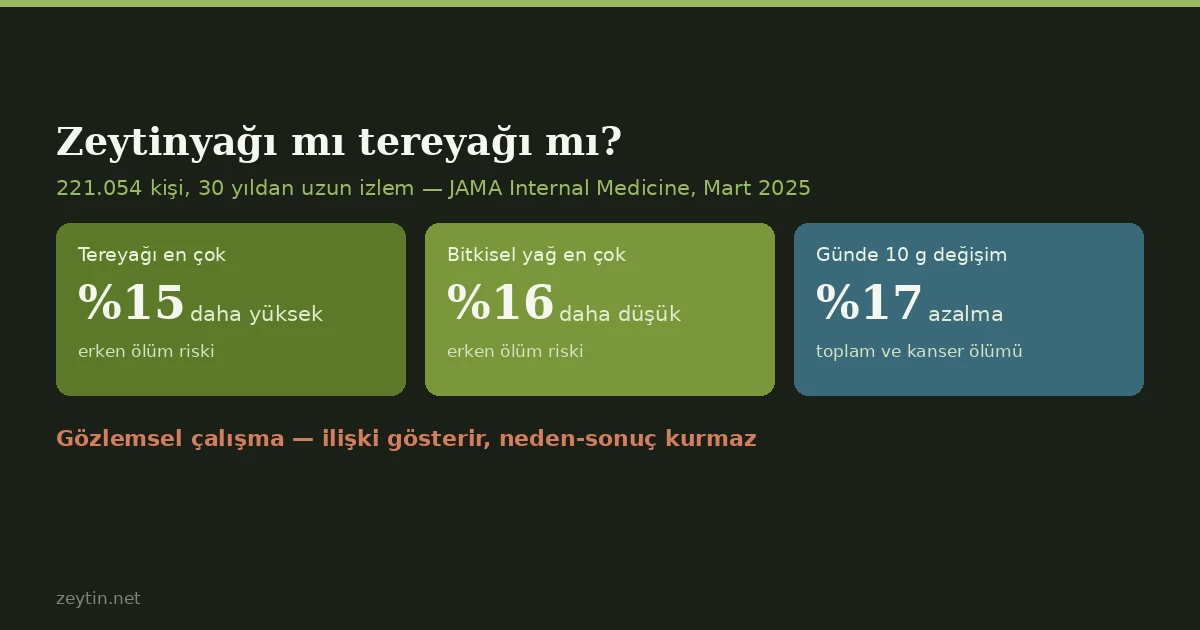
A Harvard-led study followed 221,054 people for over 30 years. Highest butter intake carried 15% higher mortality; highest plant-oil intake 16% lower. We look at what the numbers say — and what they do not.
Article
Olive oil or butter? What a 221,000-person study actually found
A Harvard-led study followed 221,054 people for over 30 years. Highest butter intake carried 15% higher mortality; highest plant-oil intake 16% lower. We look at what the numbers say — and what they do not.