Which olive is healthiest?
In olives the health difference comes from curing and salt, not the variety: nutrition, salt content and green vs black.
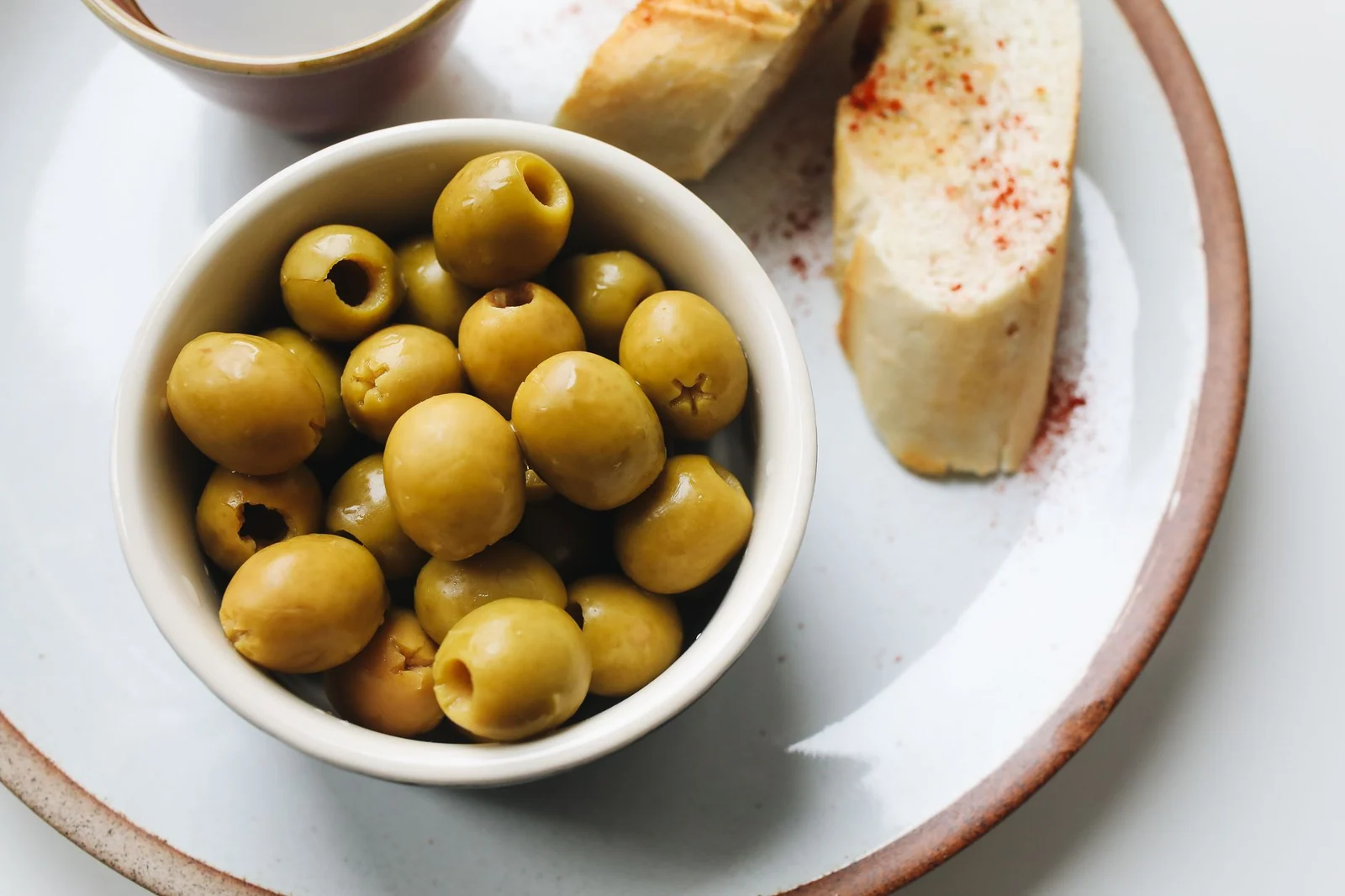
On health grounds the difference between olives comes from the curing method and the salt, far more than from the variety. Saying "this variety is healthier" is misleading; what decides it is how the olive was brined.
t; This is general information, not treatment advice. If you have a condition requiring salt restriction, consult your doctor.
What olives contain
Olives are a fatty fruit, and most of that fat is monounsaturated (oleic acid). Alongside it:
- Polyphenols — oleuropein, hydroxytyrosol and related compounds. These are also what make olives bitter.
- Vitamin E and iron
- Fibre
On calories: because olives are a fatty fruit, the count is high. The portion is a few olives, not a handful.
The real variable: salt
Table olives are preserved with salt, and the level varies considerably between products. For health this is the single most important difference.
Practical steps:
1. Prefer low-salt products. Compare the sodium figure on the label.
2. Rinse them. Soaking before eating noticeably reduces surface salt.
3. Watch the portion. Even a few olives can carry a meaningful amount of salt.
Why the curing method matters
- Natural (dry salt / brine): Bitterness leaves gradually with salt and water. Part of the polyphenols is preserved.
- Accelerated (lye): Bitterness is removed chemically and fast. The process is short but polyphenol loss is greater.
- Oxidised "black" olives: Green olives are darkened by oxidation. The product looks black but doesn't carry the composition of a naturally black olive.
So the meaningful health distinction is not "black or green" but natural or accelerated.
Black olives or green olives?
They are usually the same fruit at different ripeness:
- Green: early harvest. Higher polyphenols (hence more bitterness), lower oil.
- Black (natural): fully ripe. Higher oil, milder taste.
Neither is clearly superior. Green has the polyphenol advantage, black the fatty acid profile — but in both, salt remains the decisive factor.
Who should pay attention
- People with high blood pressure or on salt restriction: portion and sodium figure
- People with kidney conditions: don't plan regular consumption without medical advice
- People tracking weight: the calories come from fat, so keep portions small
Frequently asked
Common advice keeps it to a few; the exact number depends on the person and total salt intake.
Should the brine be drained?
The brine is salty; draining and rinsing reduces salt intake.
Are bitter olives more beneficial?
Bitterness indicates polyphenols, so products that keep some bitterness tend to be higher in them. But extreme bitterness can also mean the curing wasn't completed.
One rating per visitor; you can change yours at any time. Ratings are real reader votes — no seeded or default scores.
Related
 Article
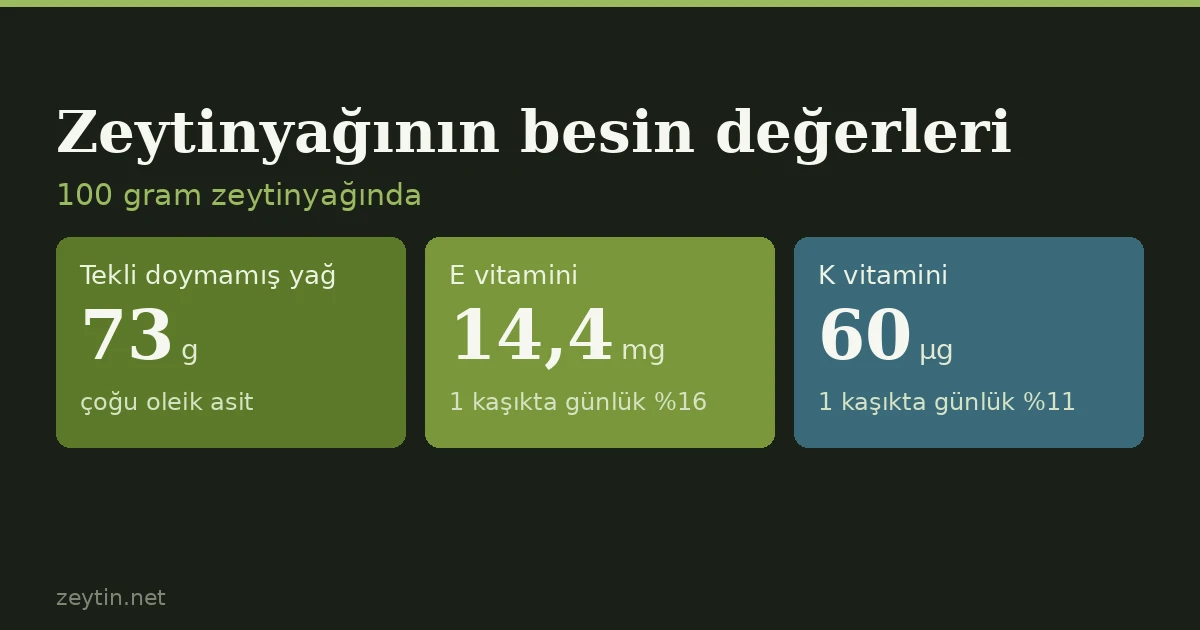
The nutritional profile of olive oil: fatty acids, vitamins E and K, polyphenols
100 grams of olive oil contain 73 grams of monounsaturated fat, 14 mg of vitamin E and 60 micrograms of vitamin K, with no protein, carbohydrate or cholesterol. A per-tablespoon table, and why polyphenols do not appear on the label.
Article
The nutritional profile of olive oil: fatty acids, vitamins E and K, polyphenols
100 grams of olive oil contain 73 grams of monounsaturated fat, 14 mg of vitamin E and 60 micrograms of vitamin K, with no protein, carbohydrate or cholesterol. A per-tablespoon table, and why polyphenols do not appear on the label.
 Article
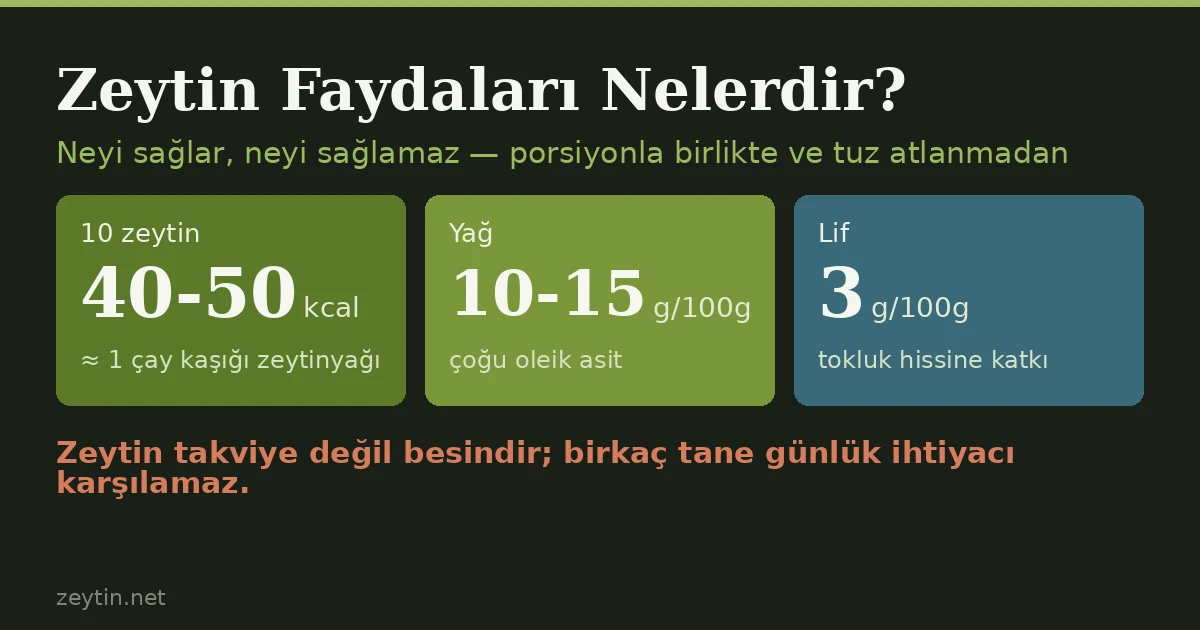
What Are the Benefits of Olives? What Do They Actually Provide?
What olives do and do not provide. Fat, fibre, vitamin E, iron and polyphenols — without overstatement, with portions, and without skipping salt.
Article
What Are the Benefits of Olives? What Do They Actually Provide?
What olives do and do not provide. Fat, fibre, vitamin E, iron and polyphenols — without overstatement, with portions, and without skipping salt.
 Article
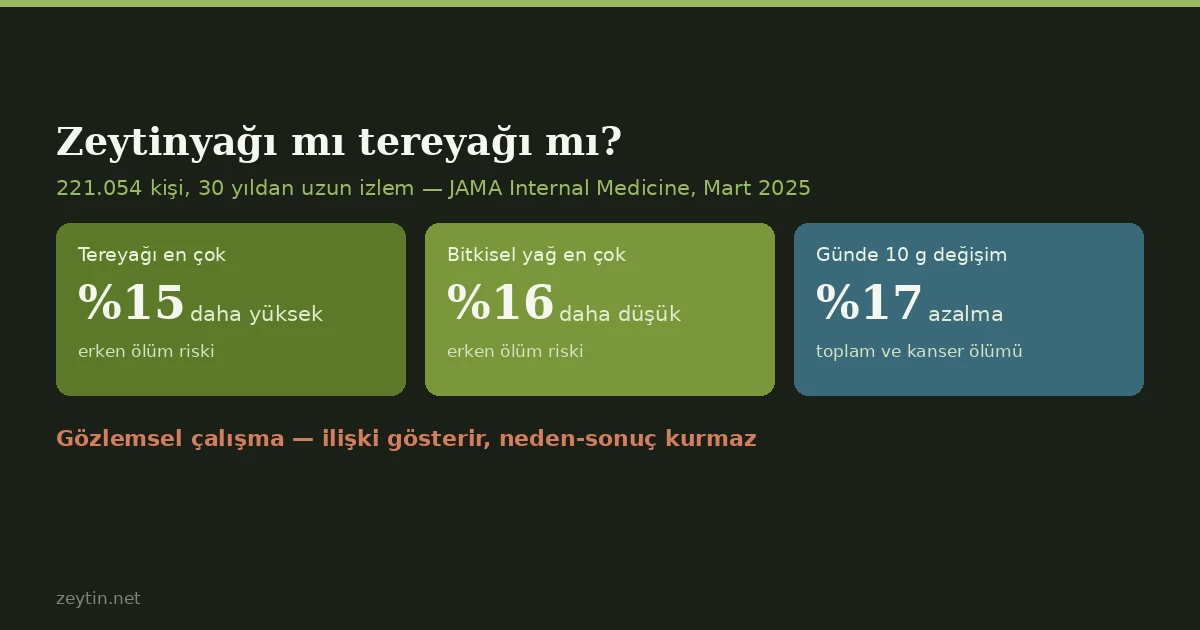
Olive oil or butter? What a 221,000-person study actually found
A Harvard-led study followed 221,054 people for over 30 years. Highest butter intake carried 15% higher mortality; highest plant-oil intake 16% lower. We look at what the numbers say — and what they do not.
Article
Olive oil or butter? What a 221,000-person study actually found
A Harvard-led study followed 221,054 people for over 30 years. Highest butter intake carried 15% higher mortality; highest plant-oil intake 16% lower. We look at what the numbers say — and what they do not.
 Article
Olive leaf tea: how to make it and what the evidence says
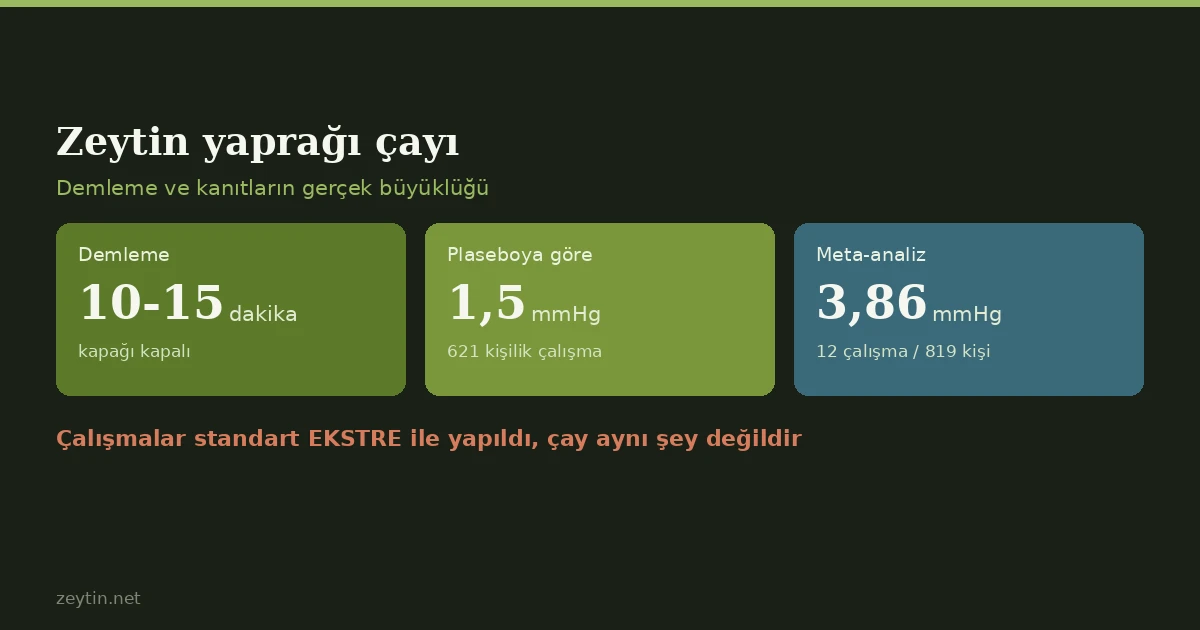
The leaf carries oleuropein and other phenolics. Blood pressure trials show a modest effect, but all used standardised extracts — tea is not the same thing. Steeping, drying and cautions.
Article
Olive leaf tea: how to make it and what the evidence says
The leaf carries oleuropein and other phenolics. Blood pressure trials show a modest effect, but all used standardised extracts — tea is not the same thing. Steeping, drying and cautions.